Trails: Time to Give Back

Summer is most certainly coming to an end in Oregon, and while the days are getting shorter, we are still inundated with smoke from more wildfires than I can count. Oregon is burning, so I’m heading south for an upcoming hike. Stay tuned for more details soon. Blogging will happen, photos will be taken, but I plan to give myself the gift of unplugging from the internets (or 4G) during the hike…posts will come after a short delay.

Even though I haven’t been able to stretch my legs on any long hikes this year, I have been immersed in the land of trail work.

Part of my job as the Oregon Desert Trail Coordinator this year was to lead some trail work trips. It’s so satisfying to maintain trails, especially when they are as overgrown and neglected as some of the ones along the ODT.
But I thought the ODT is a route, not a trail…

Yes, you would be correct, but of the 750 miles (actually current count is 753.5 miles), 11% is along existing trail. These are trails our federal agency partners haven’t been able to work on in many years due to a myriad of reasons, including lack of funding and use. This leads to a vicious cycle of hikers not hiking the trails because they aren’t maintained, and trails aren’t maintained because hikers aren’t hiking them…

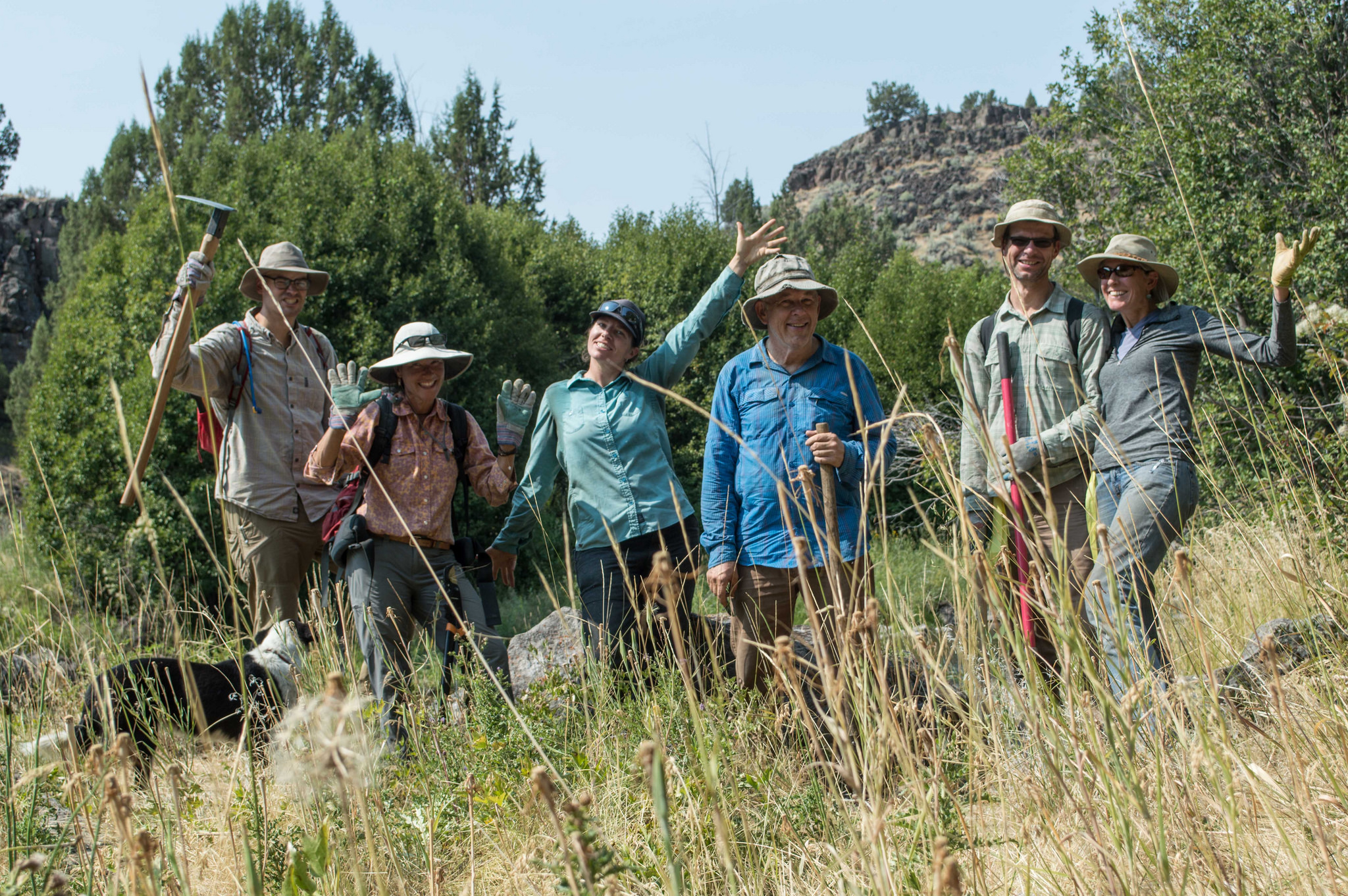
SO, we are harnessing the incredible hard working volunteer manpower to make a dent in some of that maintenance (last year over 500 ONDA volunteers contributed almost 10,000 hours to a variety of stewardship projects including riparian restoration and animal monitoring activities, WOW!). A lot of my work last year involved establishing relationships with the four different BLM Districts and two different National Forests that manage land along the Oregon Desert Trail in eastern Oregon, and this year I worked with those partners to develop four trips.

I’m incredibly proud of my volunteers and the work we did. It had been a full 10 years since I led trail crews around Colorado for the Southwest Conservation Corps, but the memories came flooding back as I swung the Pulaski and built berms along the drain dips with my crews. Trailwork!

A few numbers: 45 volunteers came out for 810 hours of work, and we:

• Built 2 miles of new trail in the Oregon Badlands Wilderness, and transformed a .4 mile cross-country section into trail on the ODT. (See photos here)
• Cleared 11 miles of downed trees from the Fremont National Recreation Trail and ODT corridor, and maintained 3 miles of trail. (See photos here)
• Cleared all the downed trees from the Big Indian Gorge Trail in the Steens Mountain Wilderness (by hand), and brushed over 2 miles of heavily overgrown trail. (See photos here)
• Built a .5 mile high water alternate to the Blitzen River Trail out of Page Springs Campground in the Steens Mountain Wilderness. (See photos here)

I will continue with the work in 2018…there is so much to do! Are you interested in joining me on one of the trips? Some are backpacking based, some are car-camping based. We were packed in by a BLM horse team on one trip, and might even provide some chain-saw training opportunities for another…lots to help with. The ONDA stewardship trips get announced in mid February each year, so I’ll keep you posted here on when those go live, I’d love to have you join me on a trip or two!

 

Disaster Stories

A new podcast, Boldly Went (think The Moth), came to Bend recently and invited a few people to the stage to tell some stories of DISASTER… I shared a harrowing tale of catching myself, the forest, and most of my stuff on fire when I thru-hiked the CDT two years ago. Take a listen and don’t do what I did. (my story starts at minute 14)

Continental Divide Trail Video – Thru-hike 2015 (rough draft. really rough)

I haven’t touched this video project in a year and a half, but who knows when I’ll get to working on it again, so here we go!

Here’s a rough cut of a rough trail.
Epic in so many ways.
CDT, I love you.

And yes, the video ends at 2:11, unless you love the Gorillaz, and then listen to the end of the song.


Continental Divide Trail Movie 2015, part 1 from Renee Patrick on Vimeo.

Idaho Sawtooth Adventure: Day 5 – 1 mile hike, 9 miles packraft

The morning was chilly, and again I woke up on the ground. I have to patch this sleeping pad.


We downed the last of bits of our coffee (weak tasteless coffee at that, but on the flip side we’ve had dark french press the first 3 mornings), and hiked back to where we had cached our boats.

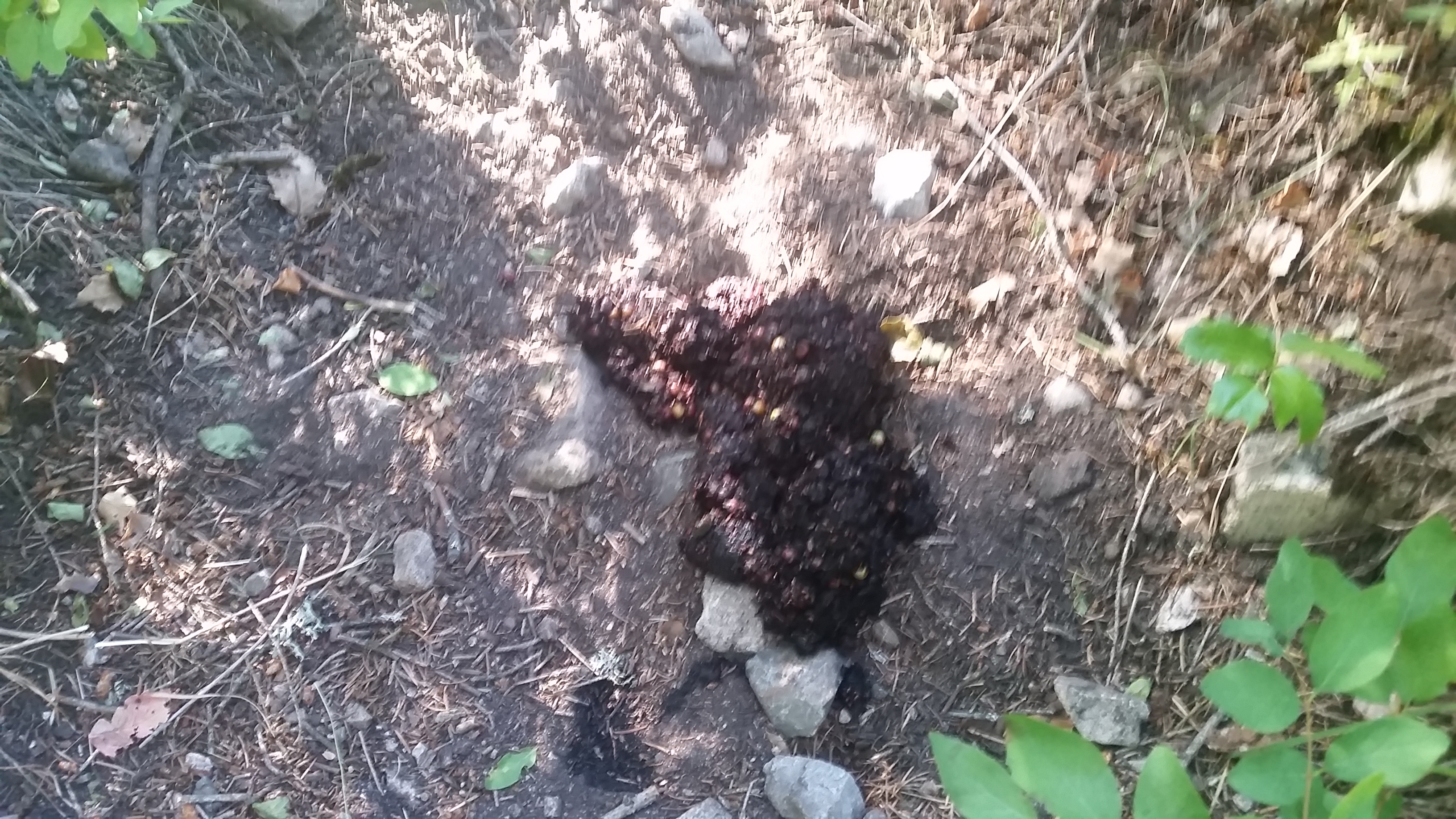
Oooo, that must be a big bear

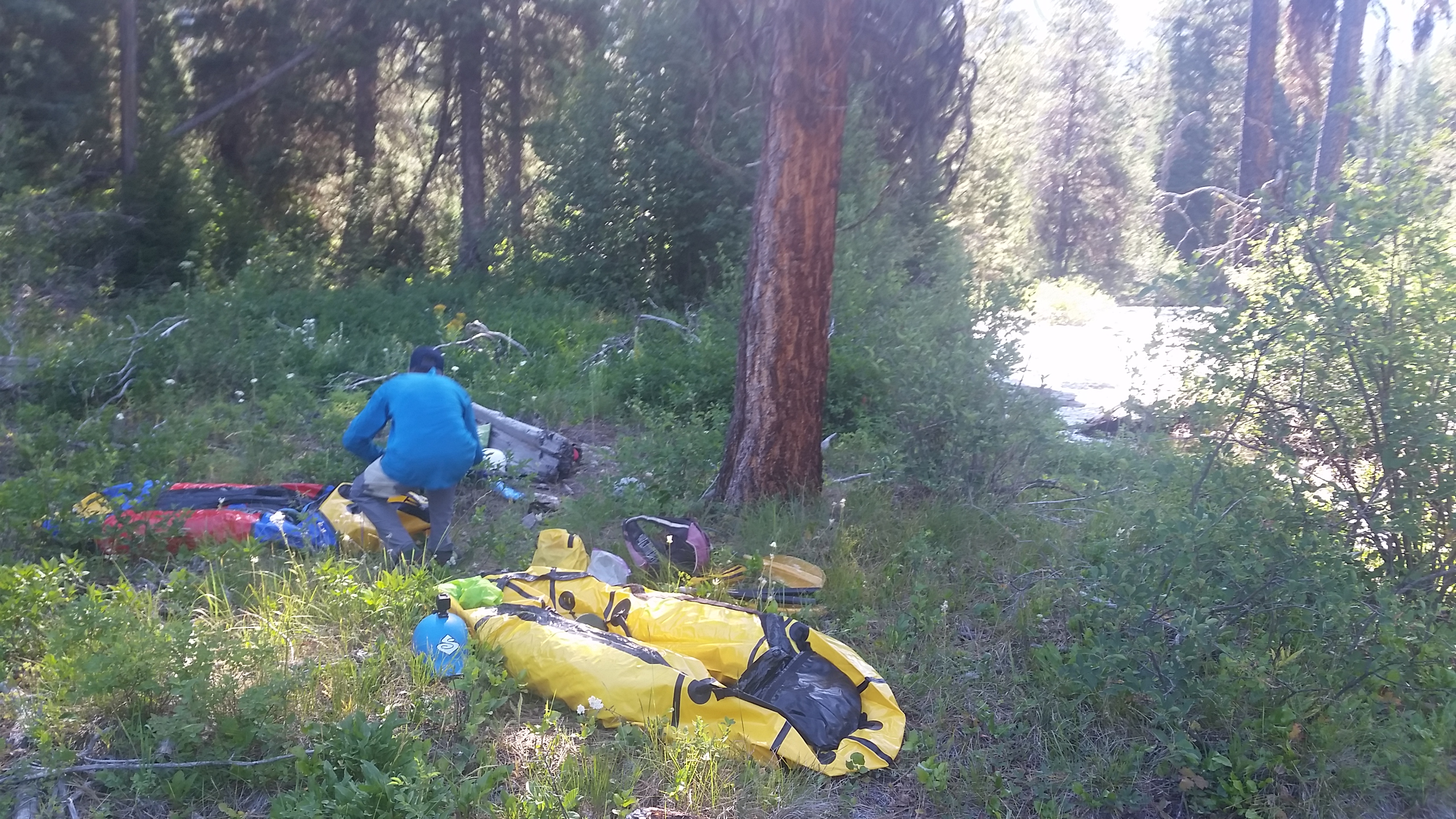
Ensue bushwack. Getting to the river from the trail was a bit of a willow bashing fest, but we finally made it and transitioned to packraft mode. All gear stored inside the boat, day bag with sunscreen, lunch (in this case one packet of hickory smoked tuna. That’s it. Sucks.), and water.

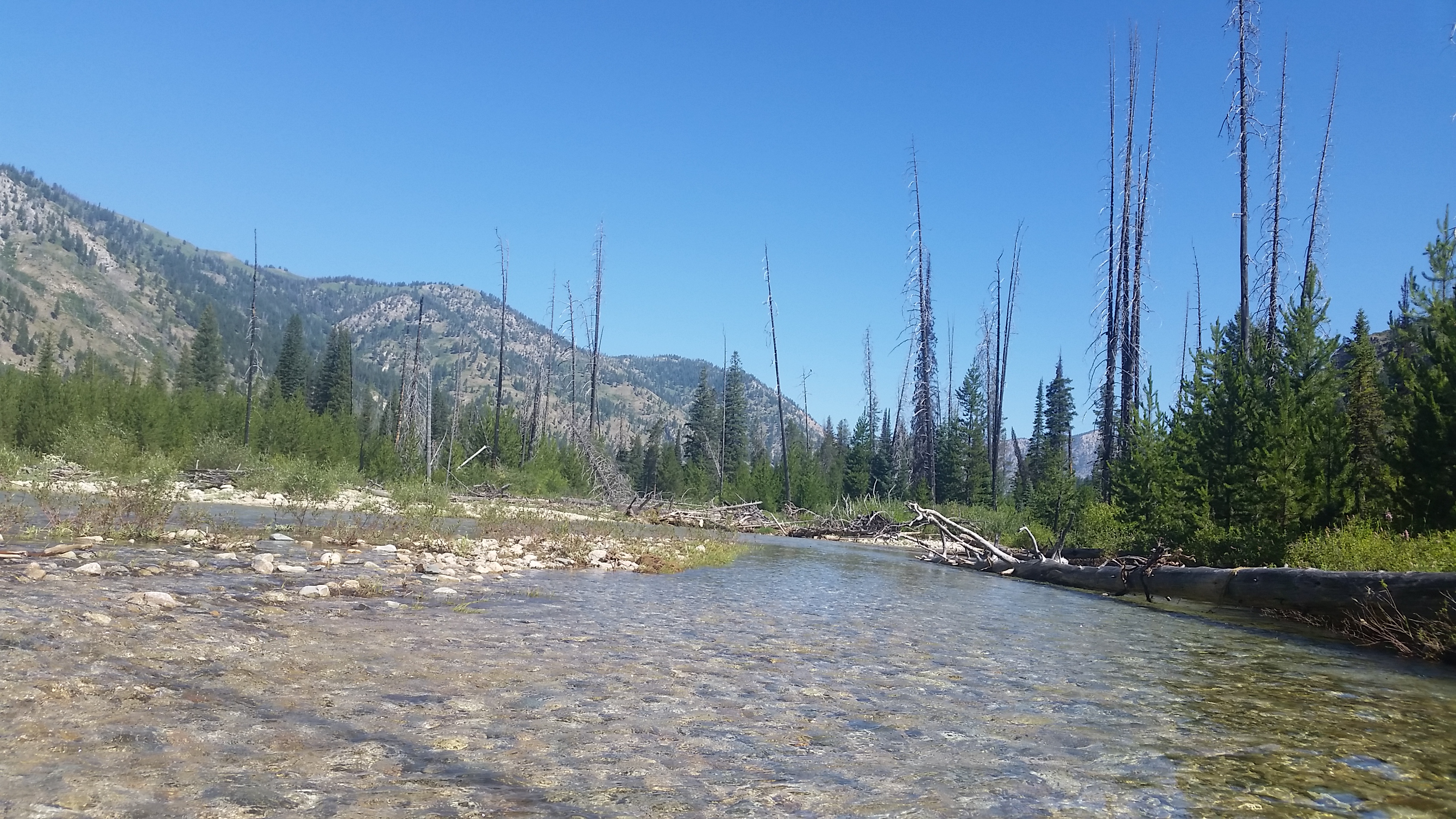
We launch on a swift little current on a narrow log-congested river, gravely braids of river channels everywhere.

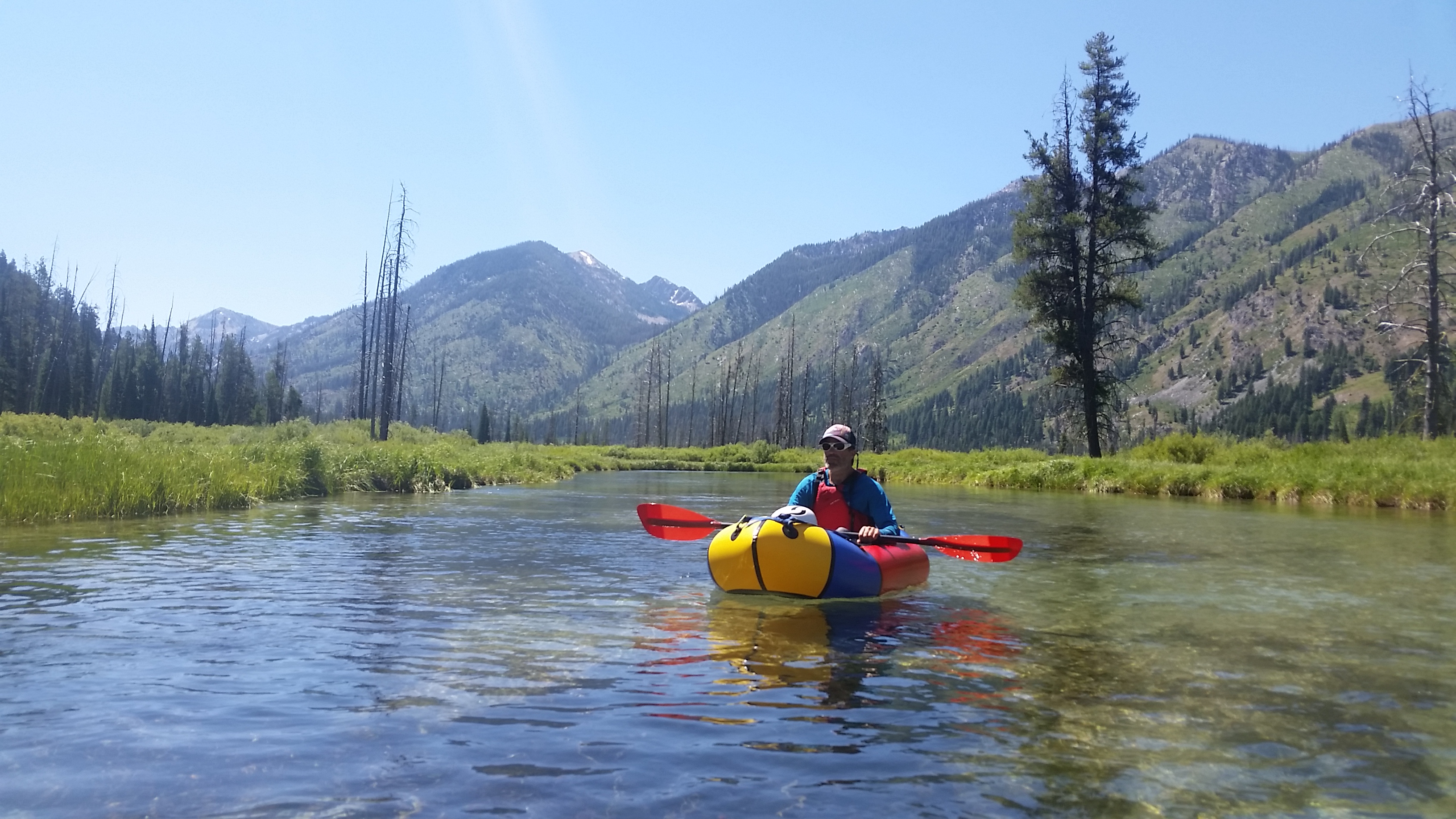
The water was clear and blue and green and it felt like we were flying through the canyon, until we got to logjam, after logjam, after stupid logjam. It was still worth it though. I actually expected more in an un-dammed river in the heart of the Sawtooth Wilderness.

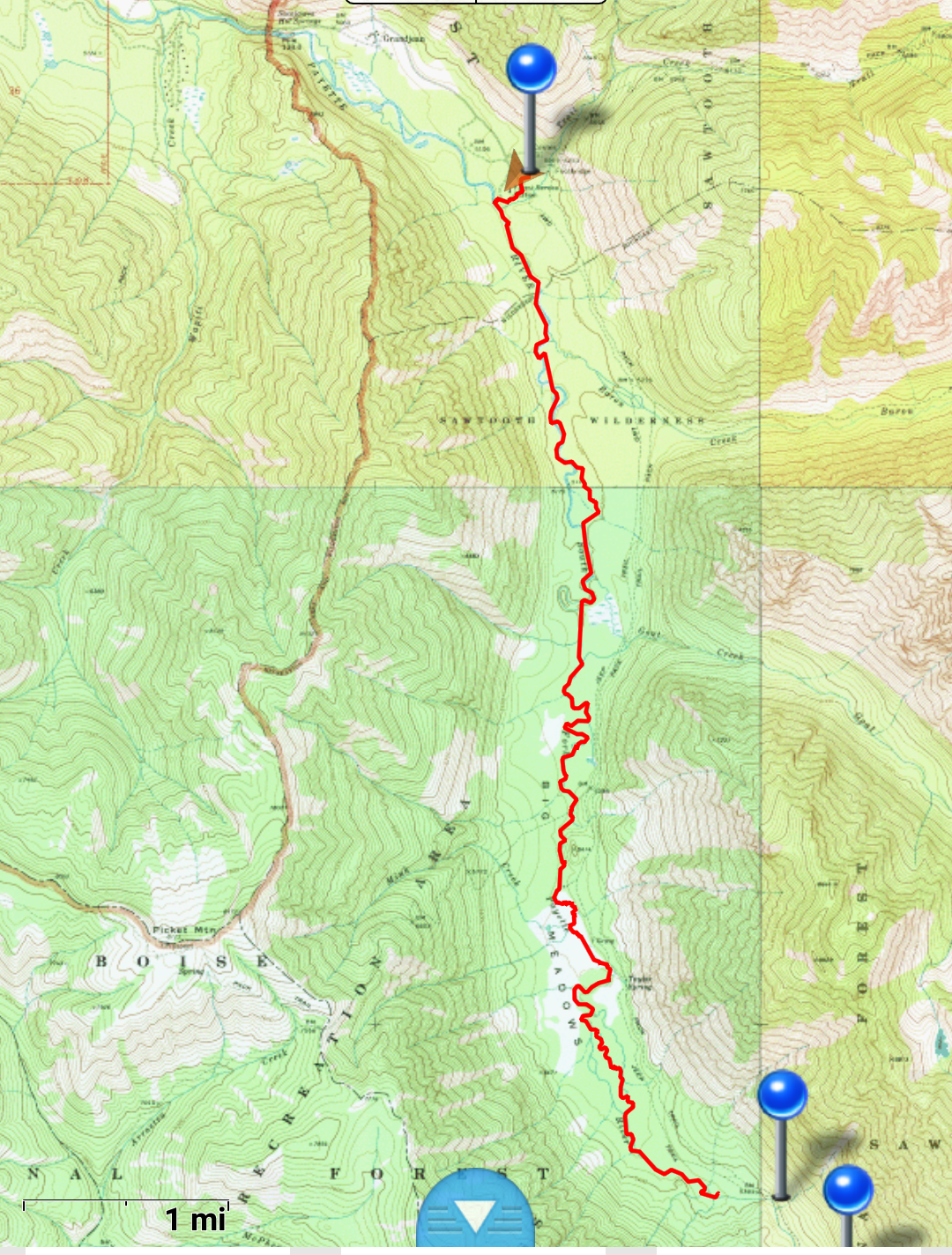
The 4.5 miles of trail turned into 9 miles of river with all the meandering channels, but still worth it.

We were worked by the time we made it back to the car mid-afternoon. We had a short rapidy section about half way, but it was mainly the numerous log jams we had to portage with full boats and careful walking to not impale ourselves on dead trees, or break a leg in a beaver hole. So much fun!! Really!

Idaho Sawtooth Adventure: Day 4 – 10ish miles

It felt like I was sleeping on rock…that’s cause I was. My air beam sleeping pad must have sprung a slow leak, cause I woke up on a lack of air, and it was hard.


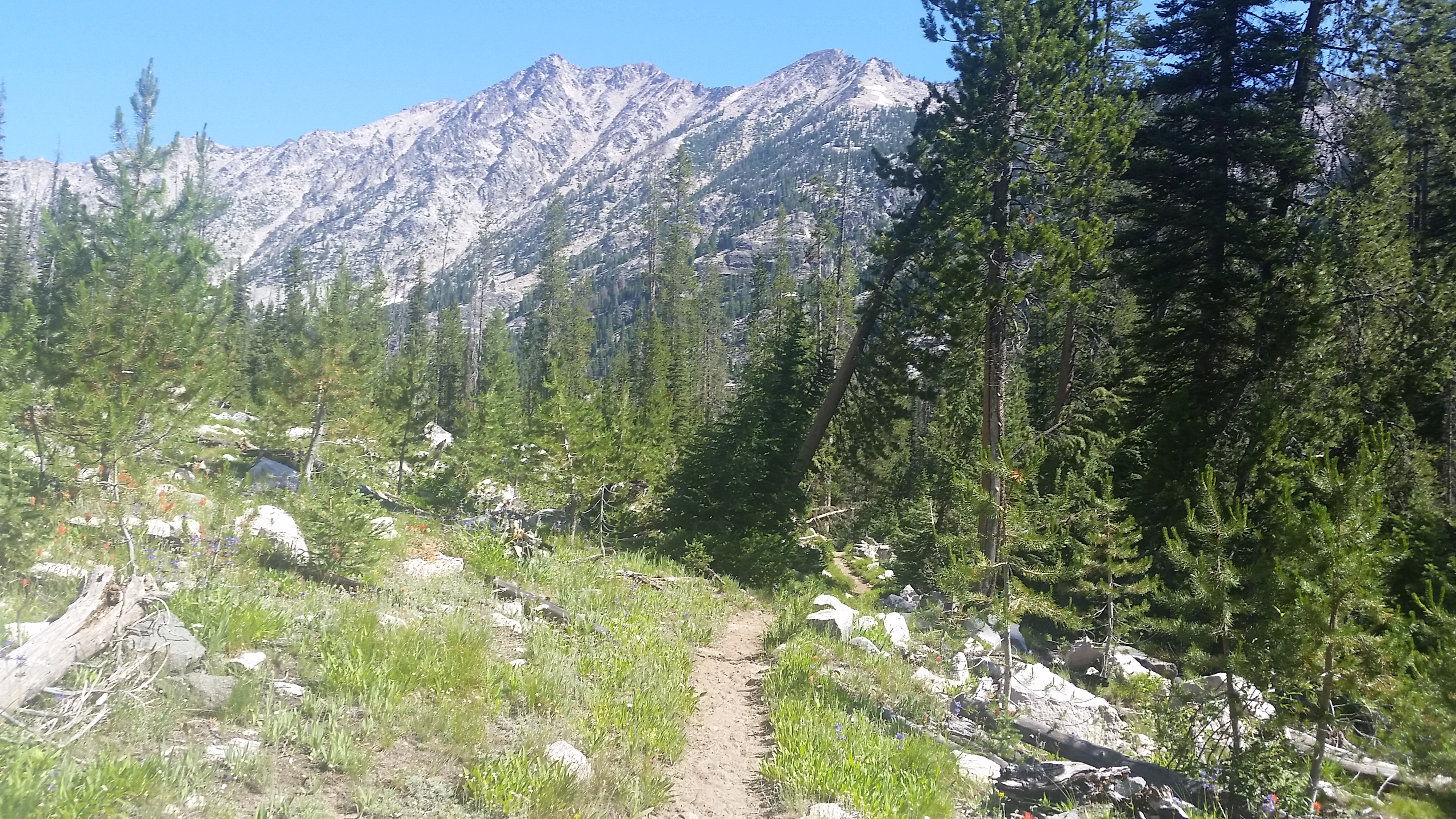
We packed up under the granite towers above us, and started down the many switchbacks to Ardeth Lake. It was beautiful and buggy. We walked down down down the thousands of feet we had hike up a few days before. We were down to the last bits of food, carefully rationed out to get us to the car tomorrow afternoon.

Hammocks came out again for a lunch break, and a train of mules and horses passed us. We’ve seen several mule trains on the trail each day, and because there are still a fair amount of downed trees across the trail, the horses and mules have been forging some huge bypasses up and around them. It’s impressive where horses can go off trail without breaking a leg, but also has me a bit pissed off at the destruction they are causing on the side of the trail. Most of the horse packers carry a saw, and clearing some of the trees would only take a short while. Seems to me if they are using the trail so heavily, that they should help out and clear some of the downed trees as they pass by each day. There are fewer and fewer resources for the forest service to maintain trails…as it is most are done by volunteers. I know the folks from the Idaho Trails Association have their hands full.


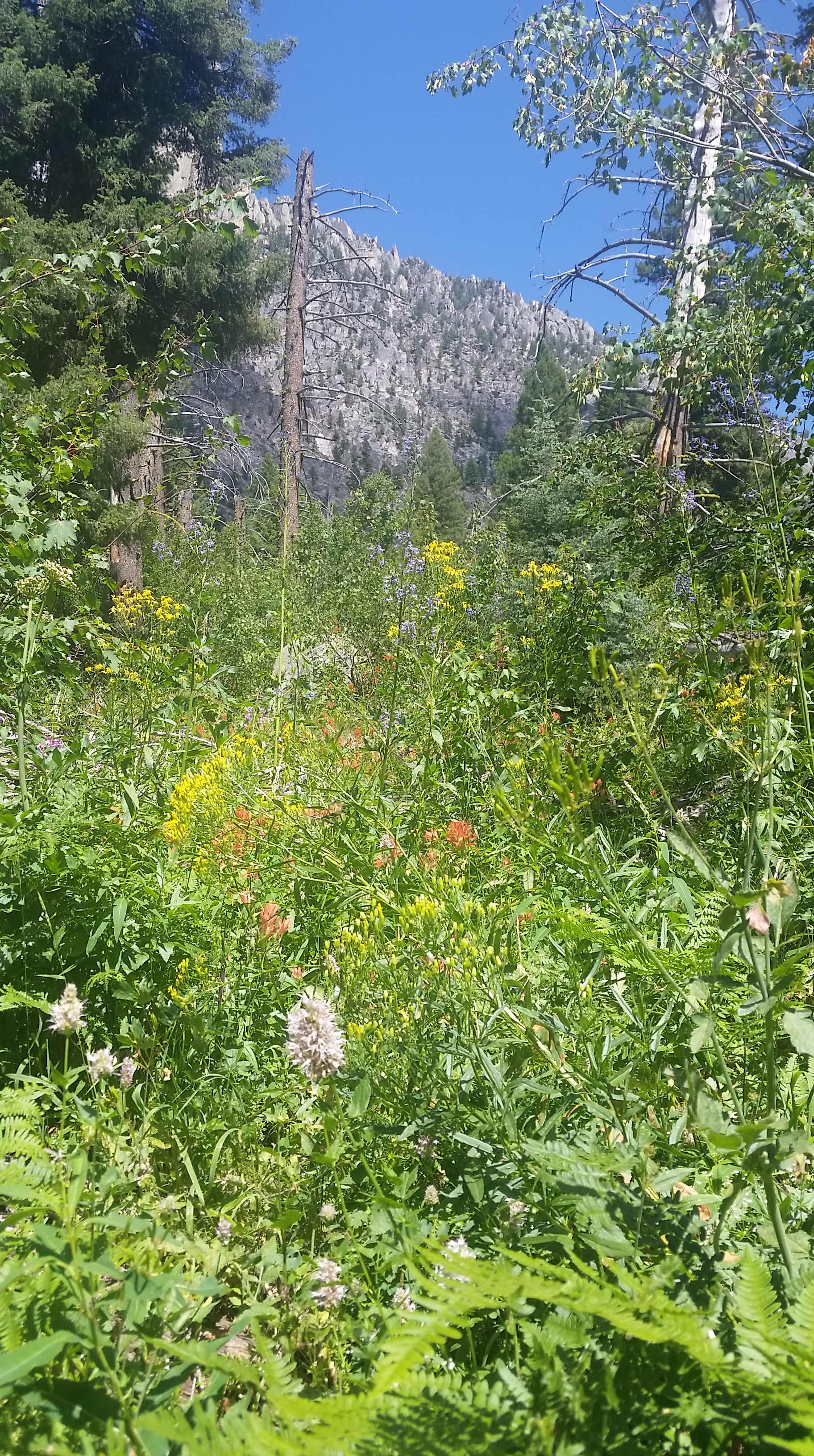
Back to the trail…we continued on and by mid afternoon we were quite stumbly. The more we dropped in elevation, the warmer it got. In fact it was down right tropical around Fern Falls. We had hit prime wild flower season.

Smith Falls

We stumbled into camp, the same camp as night one, and went down to immerse ourselves in the cool water and wash away the heat.


Relief.

Idaho Sawtooth Adventure: Day 3 – 4ish miles

Last evening we climbed the rest of the way up to Edna Lake and what had to be the best campsite in the area. The headwall of the south fork drainage still had snow, in fact a few patches of snow were all around. We decided to make camp here tomorrow morning and spend the day exploring the high alpine lakes.

So this morning after our coffee we packed up and headed to the granite jetty where we wanted to make our camp, set up, and left a few things in the tent while we explored during the day. We decided to hike cross country around one side of the lake to reach the next 2 lakes, and soon had to climb high to get away from mosquito hell.


We popped up over the upper two lakes and almost to an unnamed pass that held its own little lake. As soon as we were up there we knew we had to move camps. It was just stunning with shallow green water and big slabs of granite floating like little islands throughout. We sprawled out on one of the granite islands and I decided I would hike on the trail back to the camp we just set up and bring the gear back here. It wasn’t that far, right?

But then we saw this little lake!

Well by taking the trail back I had doubled the distance to the lower lake, so 2 hours later I arrived back from the errand and decided it was the perfect time to jump in the lake. At almost 9,000’, it was still hot enough for a swim…kind of. Piles of snow were still melting into the water. Brrrr!

Blue line, cross country. Yellow line, trail.

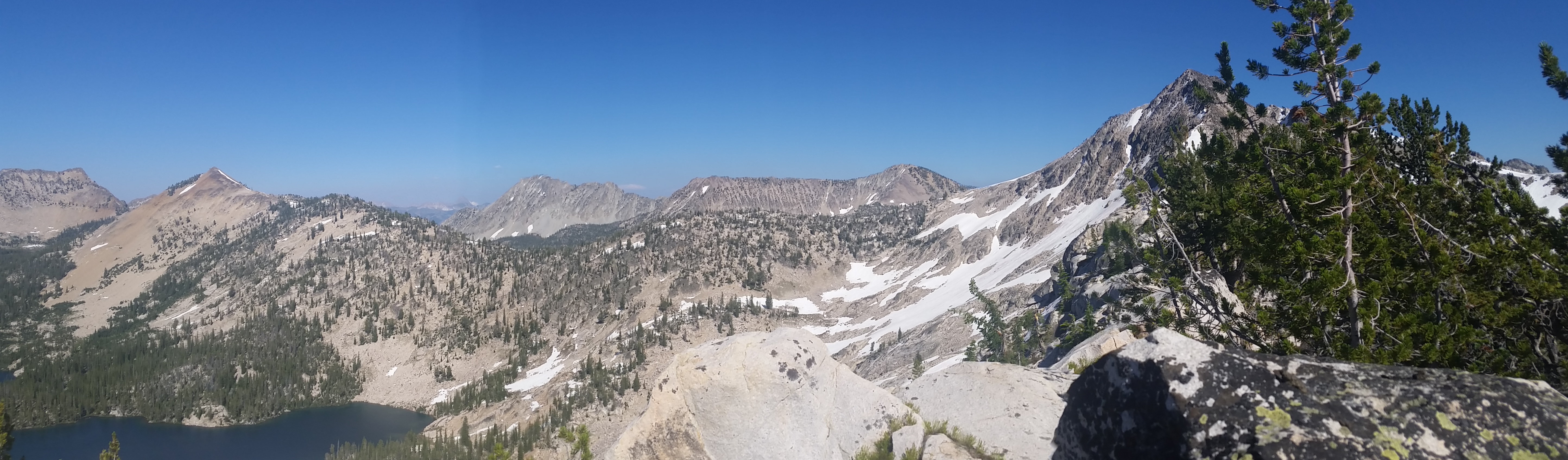
I took a siesta and Kirk went exploring, to come back a short while later with the news that epic views in all directions were just a few hundred feet above the lake. I followed him back up and….

Dude.

Idaho is something else!


We made some mac and cheese high on the ridge and looked at all the world below.

Dude.


Later back at camp we played a rousing game of cards as night drifted down around us.

Idaho Sawtooth Adventure: Day 2 – 3,000 feet of elevation gain and 11 miles

When we woke up it was Kirks birthday! Idaho birthday trip is proving to be a success so far…including waterfalls, and some carrot cake I packed out that is only slightly pulverized.

We were drinking our coffee and looking at the river when a hiker passed by, or he almost passed by before I saw his small pack and tan legs and asked if he was thru hiking the Idaho Centennial Trail. Gentle Ben had been section hiking the trail, getting pushed back by snow and swollen rivers. I was stoked to see a long distance backpacker. He said he had seen no hikers. Almost no hikers at all on the trip.

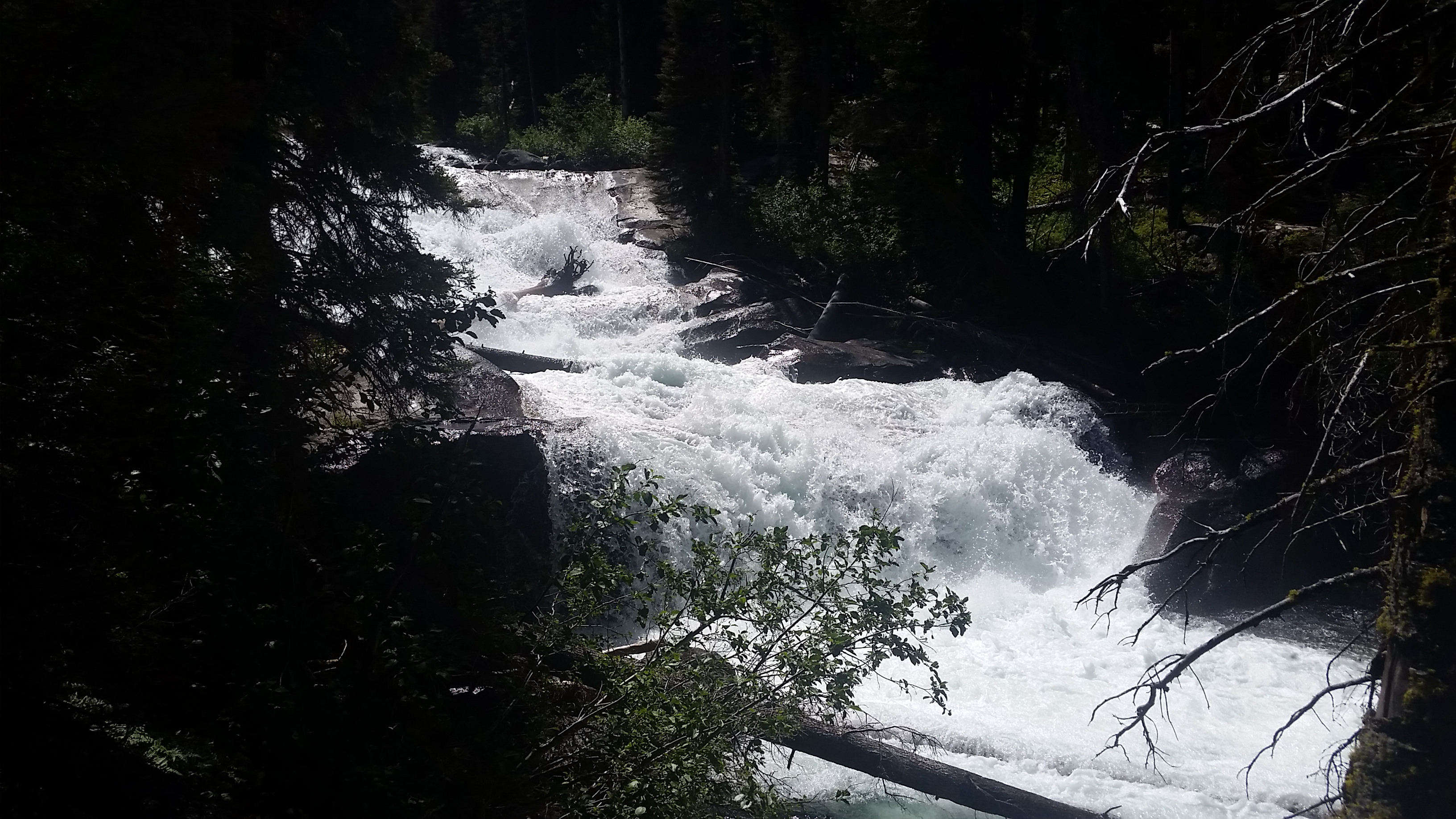
We continue up the river canyon, stopping periodically for views of the river and various waterfalls. Kirk is living up to his trail name of “I’d rather be kayaking” because he squealed with delight at many of the drops. I may have committed to coming back at lower flow and hiking our boats up further to run some rock slidey sections.

We took a long siesta at a river crossing and strung up our hammocks for a nap.

Then onward. We had 3,000 feet of elevation today, no real destination either, but we figured we would continue to go up the South fork…might as well hike up to the headwaters.

Mid afternoon I look down, and in a beacon of light, there sat a fully wrapped orange starburst. Birthday trail magic for Kirk! The trail provides, I always say. I handed him the sun-warmed treat and after unwrapping it, he claimed we needed to bring more starbursts on our hikes.

Early evening found us at Virginia Lake, over 8,000’, and we found a sweet gravel bar to perch our camp at midway up the drainage to Edna Lake. 

Idaho Sawtooth Adventure: Day 1 – 5 miles

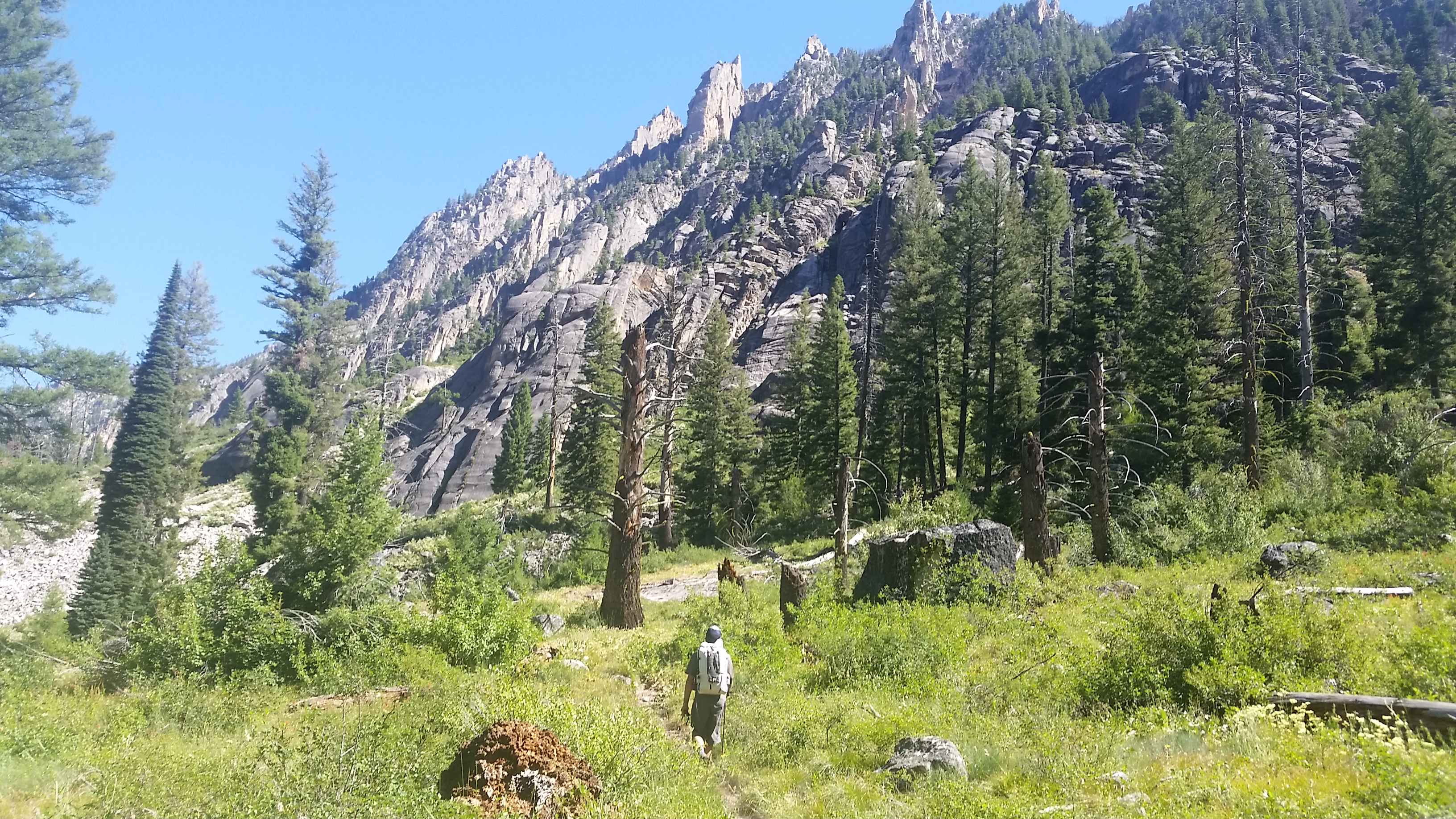
We woke up high on the cliff above the Middle Fork of the Payette and decided to head to the south fork and try our luck on a backpack/packraft adventure into the Sawtooth Wilderness. The fact that it also happened to be along the Idaho Centennial Trail was an added bonus, and oh so convenient.

By the time we made it to Geandjean, the trailhead up the South Fork of the Payette, it was about noon, and a hot sleepy Tuesday afternoon. There were almost no people about, which was awesome for the middle of the summer. We repacked our backpacks and packrafts with 4 days of food and the hope that we would be able to float at least 5 miles until the river canyons up and becomes waterfall and wood-ladened. Something Kirk was looking forward to seeing. He has wanted to boat/packraft the south fork for a long time, and here we were. 

20170718_152634

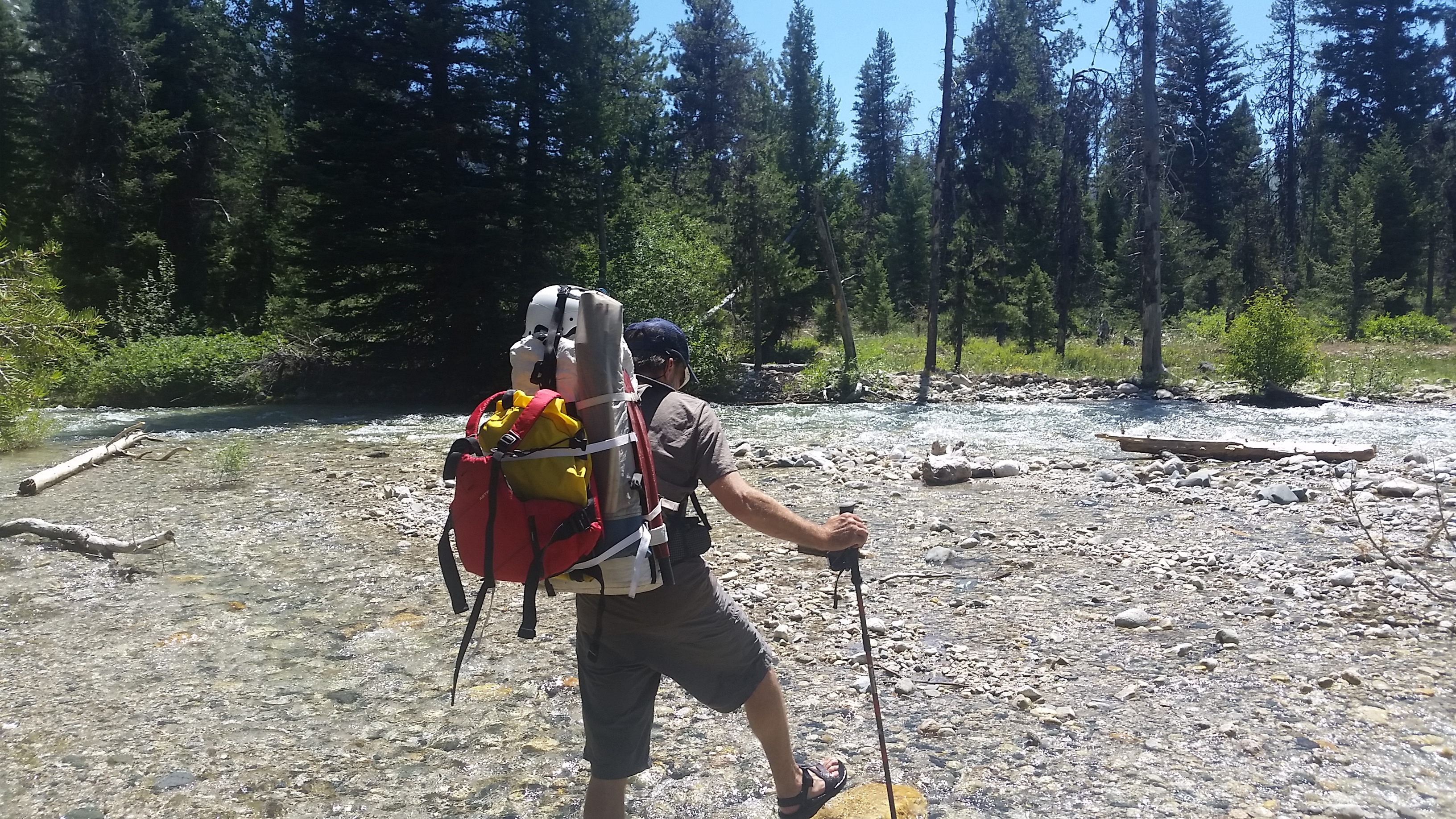
Hot hot hot start to the trail. We walked up about 5 miles, deciding to go for our chacos for the river crossings at Baron Creek and Goat Creek. The river looked tranquil and full of wood. It would be a float on blue-green water through a very green valley. As the canyon started to gorge up we decided to drop our boats and paddling gear to pick them back up for the packraft out. It wasn’t long before we saw a portion of the river forced into a narrow slot in the granite and found a sweet little campsite in view of a massive pour-over. We set up camp, took snacks and the can of PBR i had packed up, and sat with our legs dangling in the water on a big slab of granite. 

Protect Your Public Lands: A User’s Guide

We can’t hike trails without public lands, so I wrote this blog for Oboz about 5 things you can do!


by Renee Patrick

What Designations Does You Favorite Trail Have Photo By Renee Patrick

Image: Take some time to learn about public lands surrounding your favorite trails. Photo by Renee Patrick

After huffing up the 2,000-foot climb out of Big Indian Gorge, my sweat-dampened shirt quickly chilled in the sharp November wind. I was just days from finishing my Oregon Desert Trail section hike with the final 65 mile stretch up and over the monolithic Steens Mountain in eastern Oregon.

I surveyed the miles of alkaline playa 5,000 feet below Steens summit and the vast expanse of public land stretching far into the horizon. That early November morning was just days away from an election that would upset the nation, and jeopardize the future of the very land below my feet.

In the weeks that followed, one thing became clear: I need to act to protect what I love, and the question became: How can I advocate for public lands and have a real impact?

I am fortunate enough to work for a conservation organization, the Oregon Natural Desert Association (ONDA), which has been working for 30 years to protect, defend, and restore high desert landscapes in eastern Oregon. But after multiple conversations with friends who don’t directly work in the conservation field, I realized they too wanted guidance on how to be effective in advocating for the future of our public lands. So I surveyed a few of my colleagues and came up with these action points:

5 Tips on How YOU Can Advocate for Public Lands Protection

1. Focus on public lands close to home

One of the best ways to participate in the public lands debate is to become educated about some of your favorite places. Is your go-to hike on public land? If so, which agency manages it, and does it currently have any protections or designations? We often form personal connections with our favorite places, and those connections can be powerful when a place you love is at risk. Visit your Forest Service, BLM, or State Parks office. Learn more about how they steward your favorite places, ask how you can participate in trail maintenance, or in any upcoming planning processes.

Even the youngest volunteers can make a difference in a conservation organization. Photo by Allison Crotty

2. Join a local conservation organization

Most communities have a variety of nonprofit conservation organizations that work to protect important landscapes and watersheds. Each of these groups may have a specific focus, whether it is sustainability, climate change, river health, or supporting the stewardship of a specific wilderness area. These organizations give a powerful voice to important local and national public land issues, and rely on their members to help support advocacy for restoration activities in the places we all cherish. Consider becoming a member of one conservation organization in your area. Start volunteering, or join them on a hike or stewardship trip. Your donation, membership, volunteer time, or voice can make a difference.

3. Get to know your senators and representatives

Your senators and representatives represent you on the state and national level, so it’s important to let them know where you stand on public lands issues. There is a lot of debate these days about the most effective ways to reach out to your elected officials, but any action is better than no action. Call their offices, write postcards, attend town hall meetings…and make it personal. You don’t have to be an expert on public lands to have a powerful pull. It can be very meaningful for our officials to hear from everyday people who care about public lands, so share your stories, share your concerns, and if they have been supportive of keeping public lands public, thank them!

Get creative with your signs at the next town hall event in your area. Photo by Heidi Hagemeier

4. Hold small gatherings with friends/family

Since so many people take access to public lands for granted, we need as many folks as possible to simply be out talking with their friends/neighbors/family about why public lands are important. Invite some friends over, and over dinner or beers talk about a few of the current threats. One of the main issues you may want to discuss involves proposals to hand over American public lands to the states. Because most state governments can’t afford to manage millions of acres of land, a likely scenario would result in raising taxes or selling our land to the highest bidder in order to pay for costs like firefighting and management. Come up with a list of your legislators’ addresses, and then have everyone write a few postcards and make a night of it! (find more here: https://www.congress.gov/state…, https://www.congress.gov/ -search legislation).

5. Vote

Start local. City, county, state and even school boards have elections between the presidential election years, and we can build a strong voice from the bottom up. Do some research and find out where your local candidates stand on public lands issues. Then make your voice heard on Election Day.

Renee “She-ra” Patrick is the trail coordinator for the Oregon Desert Trail in Bend, OR, and a triple crown hiker, having completed the Appalachian Trail, Pacific Crest Trail and Continental Divide Trail in addition to 6 other long distance trails. When not backpacking, she can be found packrafting, skiing or napping in the backcountry. You can read about her adventures on her blog,www.sherahikes.wordpress.com.