I’ve been planning my Pinhoti thru-hike for most of the year, and now it’s not happening.
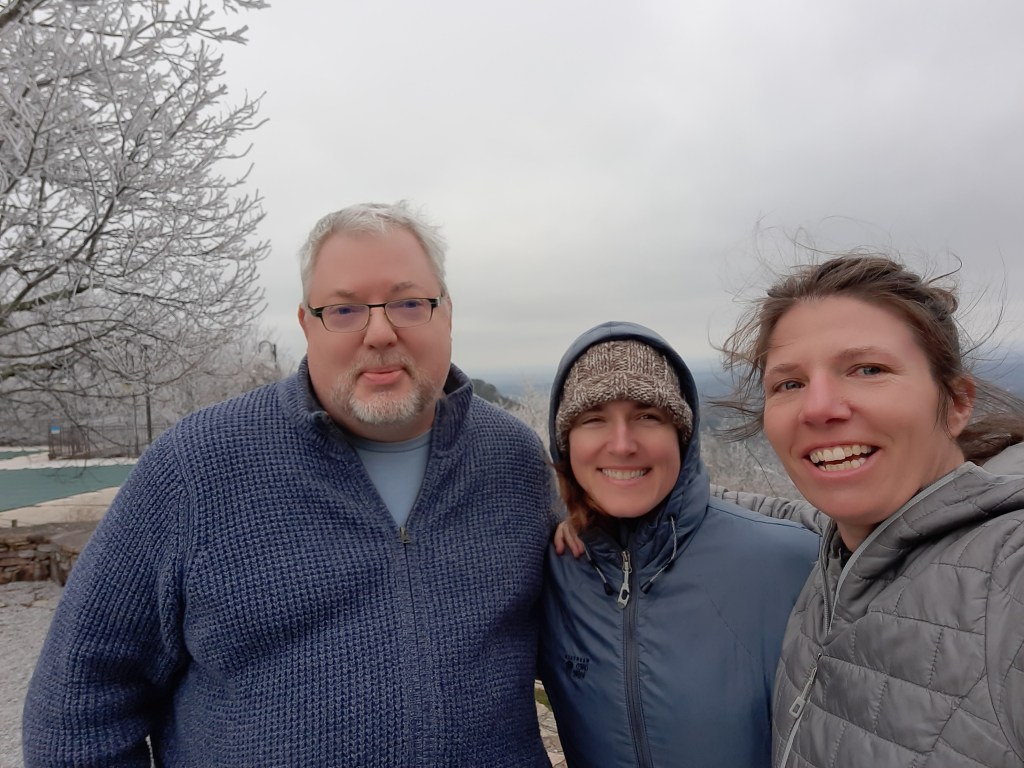
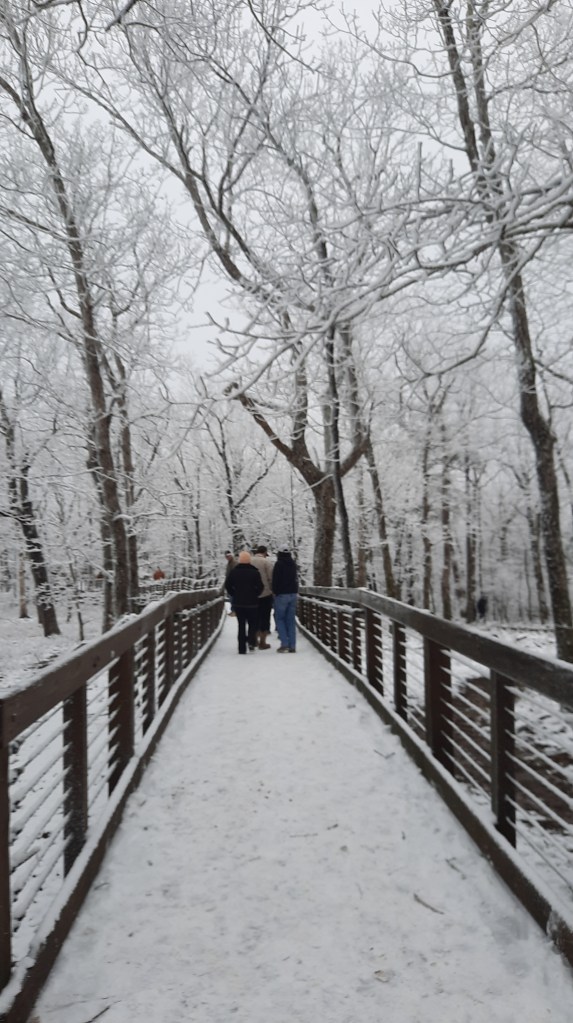
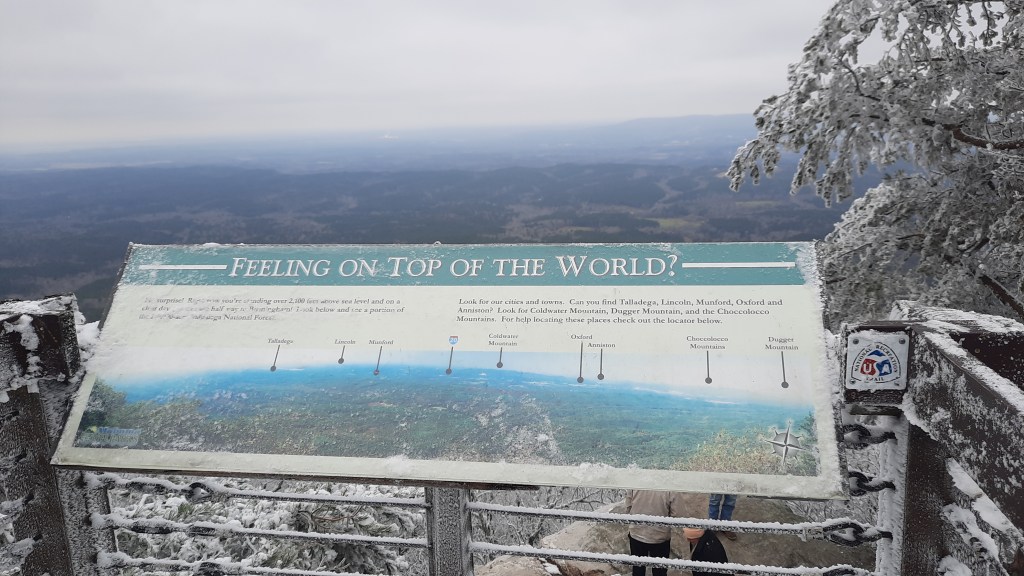
The Pinhoti Trail has been on my radar since 2022 when Cindy and I visited our Peace Corps friend Richard and spent a rare snowy Alabama afternoon at Cheaha State Park.
I’ve been hiding from the reality that this is not the right time to hike for about a week now…an injury (actually a series of injuries) and the devastating hurricane that battered the East Coast have contributed to this change in plans, and oh how I’ve been resisting all of it!
Fortunately, the Pinhoti Trail has been spared the destruction of hurricane Helene, but the Appalachian Trail has not. A full third of the trail is now closed, and it could take a looooong time for a full recovery. There are many ways we can help in sending money and support for the communities affected along the East Coast, and I’ll be modifying my fundraiser soon to recognize East Coast recovery efforts along with raising money for the Oregon Trails Coalition.
September has been the hardest month of my life, hands down. The heaviness of this current moment comes from many different aspects of my life…and most of it I am unable to control. I ache for the solace and peace that extended time in nature brings, but what does that look like if I can’t hike?
My body controls my future at this point….I can’t rush the healing, and I can’t let my stubbornness and determination derail my ability to backpack in the future by heading out too soon with full pack weight.
So, I wait, I plan, I come up with backup plans, and backup backup plans. I still have hope I’ll be able to do some hiking in October, but I have to let go of expectations and take each moment as it comes.
After the hike through the Gila, I attended the Continental Divide Trail Coalition’s Trail Days festival in Silver City to host the first of my Intentional Hiking fireside chats.
A big thanks to Silver City Daily Press for covering the evening and capturing some of the sentiment shared by hikers and community members:
Community members and hikers gathered around a campfire Saturday night at the old Silver City Waterworks to discuss building on the sense of community that draws people along the Continental Divide Trail to Grant County in particular.
The Waterworks opened to accommodate CDT hikers for Trail Days, with about 40 tents booked each night for camping.
Veteran hiker and original CDT ambassador Renee Patrick led the discussion focusing on the relationships between hikers and the communities and people along the trail. She is the founder of Intentional Hiking, which offers an online discussion series about various hiking-related themes. One point of discussion was that hikers need to remember to be humble — they are just one of hundreds each year who make the trip from border to border.
Kristy Lopez, owner of Doc Campbell’s Post in Gila Hot Springs, said she tries to give hikers the benefit of the doubt, but sometimes it can be difficult.
“They say, ‘I hiked all the way from Mexico,’” Lopez said. “Two days ago there was a guy that came in, and I said, ‘That’s awesome. So did all the 12 other people on the porch.’”
But hikers have generally been helpful for her family business, she said.
“We wouldn’t be where we are now if it wasn’t for hikers sitting down with us and spending time to tell us what they need and what they don’t need,” Lopez said.
“I think we have to be humble and be thankful for what we have access to in the communities. Sometimes we forget that,” said hiker Mike “Just Mike” McClue. “It’s amazing to talk to the local people and understand the history. It’s not just about us.”
Michael Darrow, tribal historian for the Fort Sill Chiricahua Apache Warm Springs Tribe, agreed that hikers should know about the history of the land.
“For us, the whole thing is considered sacred land,” he said of the Gila region. “Historical events took place all along the way, and they were special to people in our tribe. Keep in mind some of the things that have taken place before, and it can have an influence on the way you think, the way you feel as you go through the area.”
Likewise, people in communities should get more involved with the CDT, Raul Turrieta said. Locals have gone to the Gila River and the Gila Wilderness for recreation for years, he said, but hiking has not been a big activity for people who live.
“We need to spend more time on hiking, because they don’t really understand how important the CDT is,” he said. “Next year, I would really like to get involved in stimulating the community and bringing in the Mining District also for them to come out and do a lot of hiking.”
Turrieta said it’s also important for hikers to share their experiences with youth to help them get interested.
Overall, the CDT is about connections, Patrick said, including the physical connection across the continent, connection to nature and connection to each other.
“That’s something that long-distance hiking has really helped me realize, is I’m connected to everything, I’m a part of everything,” she said. “Finding that connection is what’s so unique about what we do. It helps us understand that in a way that’s hard to do when we’re in our walls, roofs and Wi-Fi all the time.”
—JUNO OGLE
Stay tuned…I plan to hold another discussion at PCT Days this August!
One of the reasons I keep coming back to long distance backpacking is the pure enjoyment of it all. Sure there is pain, and dirt and a fair amount of suffering, but there is a lot of fun.
When experiences are as intense as thru-hiking can be, you learn a lot about your fellow hikers in those times. Seeing a person’s true colors leads to deep connections that often span years between hikes, and often those most memorable times include a lot of laughter.
Friends, and very funny guys, Squatch and Jester are great at putting those ridiculous moments on film. You should check out Squatch’s series, Walk, Still Walking, Even More Walking and Walked. He caught me on film in Even More Walking at the Hiker Heaven hostel in 2006…while he was interviewing me he was also deploying a fart machine.
Jester’s series Wizards of the PCT and Embrace the Brutality are freaking hilarious, for anyone looking to learn about the non-serious side of thru-hiking, check out these two guys’ movies.
Having fun can include carrying ridiculous things (you gotta find out what the Wizard is in Jester’s movie). I won a whoopie cushion in a raffle at the PCT kick-off in 2006 and carried it for most of the trail.
Why? Cause.
Mags deemed my whoopie cushion not useless, so I carried it.
Yep, still have it on the Oregon/California border, 1700 miles later.
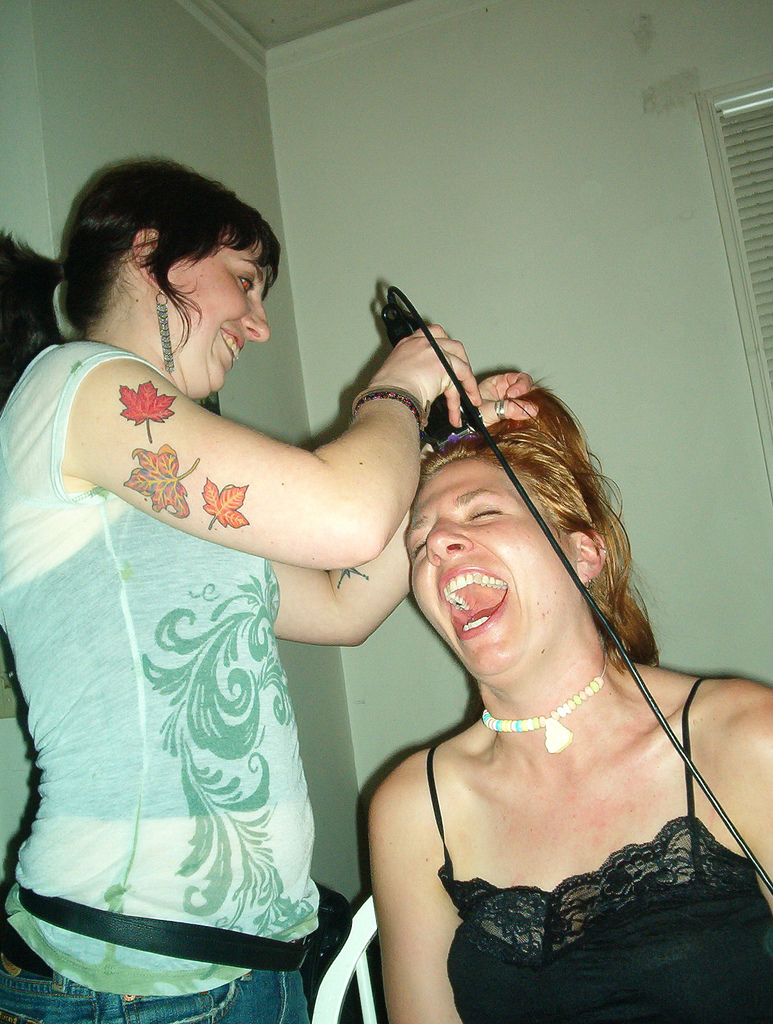
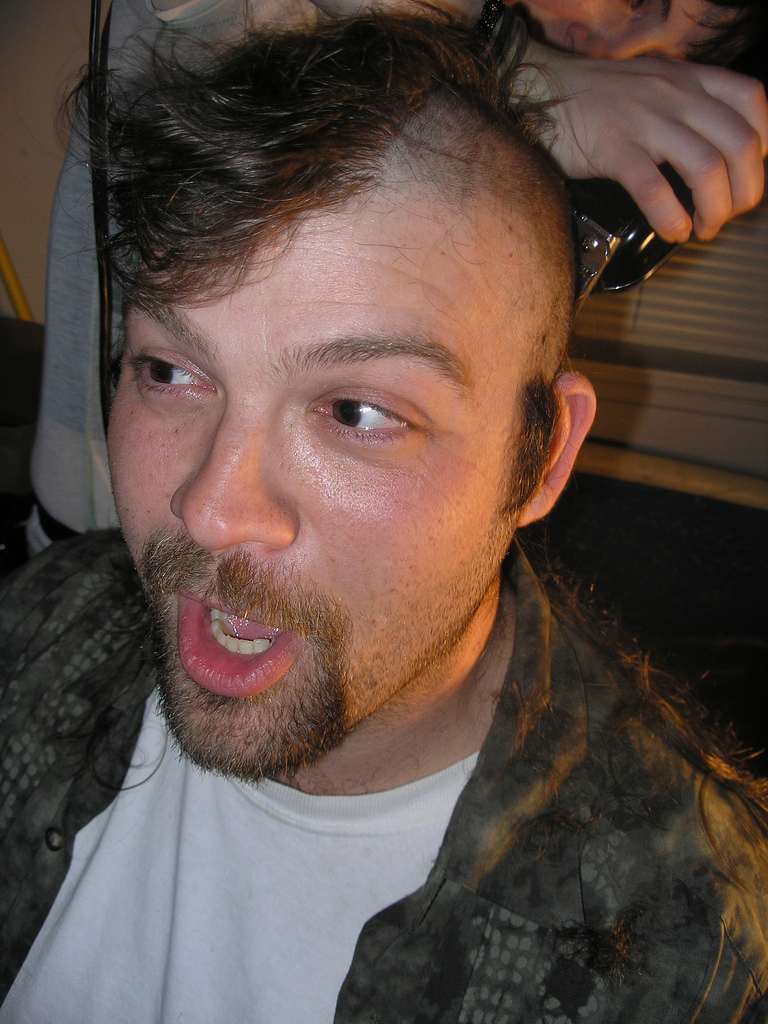
Oh yeah, did I mentioned that I shaved my head prior to hiking the PCT? I had a going away party where for every $5 someone donated to my hiking fund, they could take some scissors to my hair. At the end of the night we shaved it all off and also shaved “PCT” into the back of my head (my friends cut enough of my hair off that I was able to buy the digital camera I took on the trail that year!). That lead to lots more shaving that night…
So one of the best parts of the PCT for me was meeting my dear friend NEMO. That girl knows how to have fun. Along the hike she taught me how to knit.
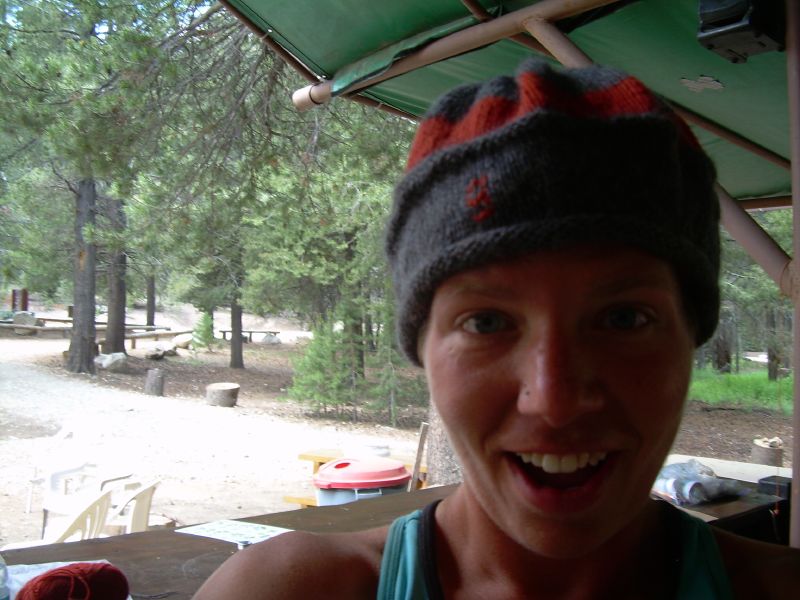
Really, knitting is a pretty good hobby to have on a long trail. Yarn doesn’t weigh much, and you can make useful things like hats for hikers while you walk!
We would knit on all the passes in the Sierra.
I finished my first hat at VVR for my AT hiking friend little g (he later wore it on his PCT hike!)
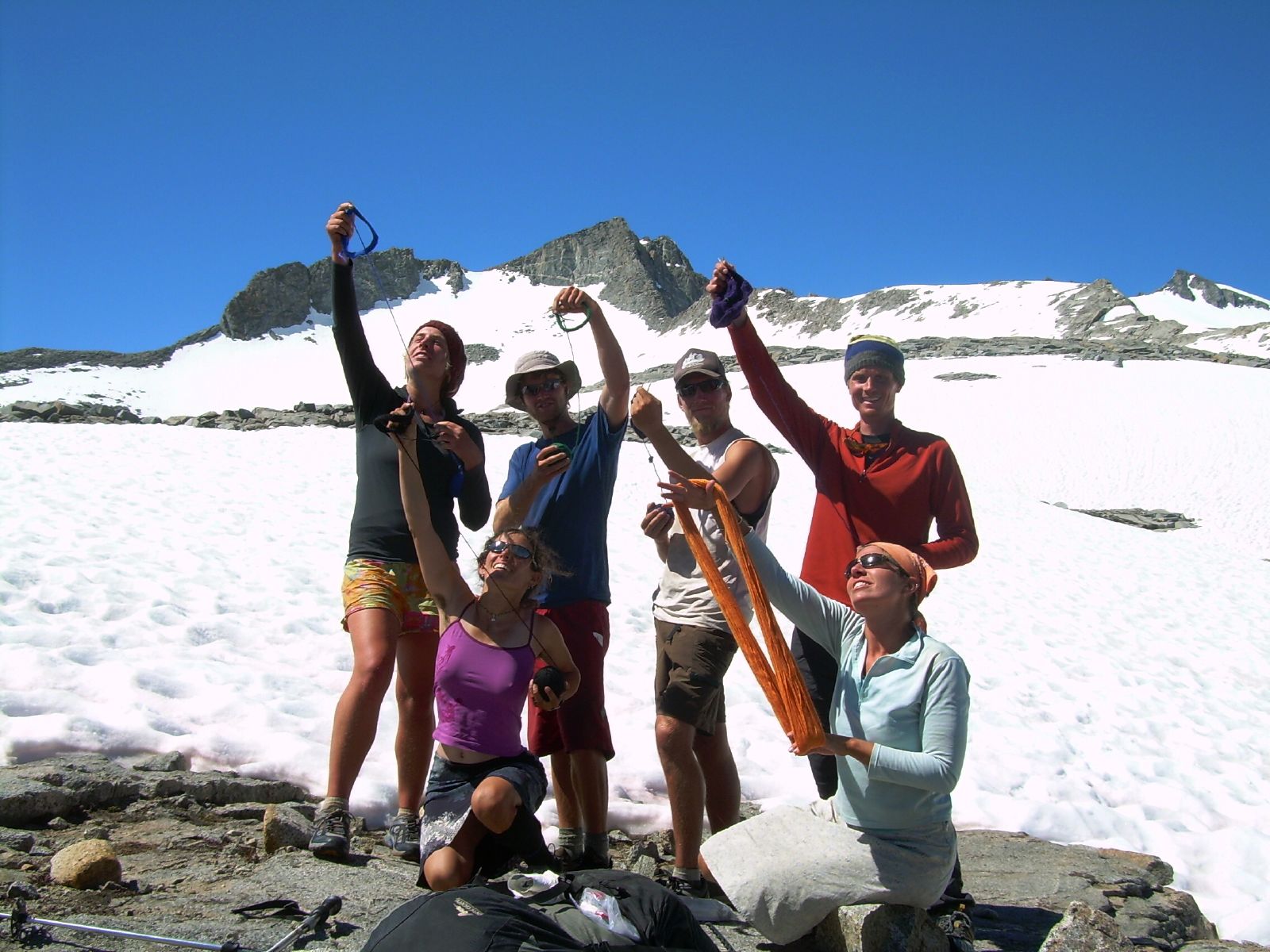
Before long we had a whole crew of hikers knitting. We started calling ourselves the High Alpine Knitting Club…here we are on Donohue Pass.
And then there was the sword. When we got to Ashland, NEMO and I decided to see a Shakespeare play (Ashland is well known for their Shakespeare Festival each year). Well, it just so happened that NEMO found a lightweight sword that she had to give me. (My trail name is She-ra after all, Princess of the Power).
I decided to knight her on the street in Ashland. (Yes, those really were our hiking clothes, we would hit up thrift stores along the trail for new duds when our old ones were wearing out)
And I carried that sword to Canada.
The point of all this (oh man, I have so many more stories!) is to have fun on your hike. Sometimes the seriousness of day-to-day life doesn’t allow for ridiculous antics that you can get up to on a long trail.
Life is far too short to be so serious.
Donna Saufley got in on the shaving action in 2006 too.
Bama & NEMO at Hiker Town. Not quite sure what’s going on there.
When people ask me how I train to hike a long trail, my first response is, “by eating everything I can.” Then I laugh. But it’s kind of true.
Really? You are going to put that into your body? Well, yeah, sometimes…
During a typical 20-30 mile day on the trail most hikers burn around 6,000 calories a day, an amount that is impossible to carry no matter how much peanut butter, olive oil, or chocolate you have in your pack. By the end of a 5-6 month long hike many thrus look like mere shadows of their former selves, as often the body starts consuming muscle once it has burned off all the fat reserves.
Now for women, this isn’t always the case. Our womanly figures like to preserve the baby-making ability, and will hoard the fat/muscle more than our male counterparts. I’ve heard some women say they didn’t lose any weight during a hike, which can come as a surprise to them.
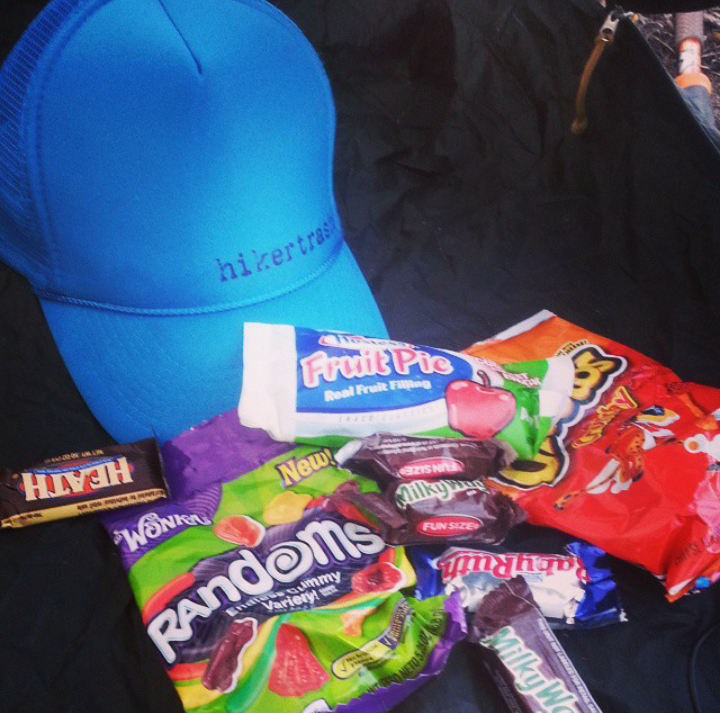
I’ve typically slimmed down quite a bit over the duration of a long trail, but then again, my preparations have included consuming as much cake, beer, and cheetos as possible.
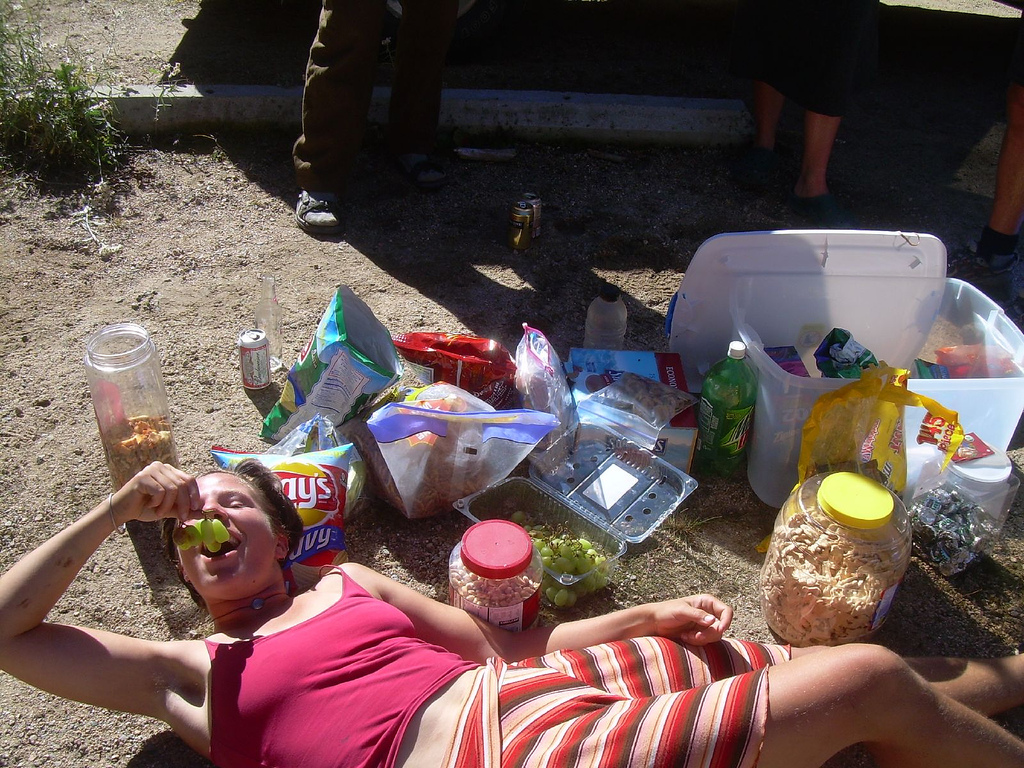
I found an amazing cache of trail magic at Rainy Pass, mile 2,593 on the PCT. At this point you really can eat whatever you want.
This year I’m doing things a little differently. While I probably won’t say no to a pint of IPA from one of our local breweries in Bend, I am keeping up a regular fitness routine, and I do want to eat more nutritious food on the trail.
Over three years ago I started attending the Namaspa yoga studio in Bend that specializes in Baptiste Yoga, an incredibly challenging yoga discipline, that has transformed my body from regular 2-3 sessions a week. I have never been as strong as I am now.
Now this is a full-body strong, not the typical strong that results from 2,000 miles, a condition we like to call the T-Rex syndrome. The T-Rex is a hiker that has tree-trunks for legs, someone who can climb thousands of feet without labored breathing, but can’t throw a rock past the closest tree. Think T-Rex: all leg and no arm.
Oh I hear hikers say they are going to keep their core & arms strong through daily sit-ups and push-ups. But really? At the end of your typical 28 mile day in the mountains it’s all you can do to lift your spoon to your mouth before falling asleep in your Ramen noodles. We expend so much energy during the day it’s unusual for the idealistic fitness routines to last past the first week of a hike.
So this year I’m starting the trail stronger than ever before (thanks to yoga) and also with a steady program of weekend warrioring. Kirk and I usually get out of town as soon as we can on Friday or early Saturday morning to ski, hike, packraft, raft, bike or any of the other 100’s of activities close to Bend.
Last weekend we went packrafting. This is my patented don’t swallow any of the cow-dung water move.
I’m hoping this will make the first month on the trail a little less painful than my previous 7 thru-hikes, but you never know. I’m 37 this time around, and age has a way of throwing aches & pains your way in body parts that you never knew existed.
But really…hiking all day every day is really hard to train for. The first few weeks will suck and your body will hurt, I’ll try to spare you too much whining when I start hiking north!
Oh feet. That’s a whole other issue the first few weeks on the trail.
Getting through the winter months before a thru-hike is agonizing. I hate to say I’m just biding my time, but that’s it in it’s essence. Watching the days pass is easier if I keep really busy, which is a cinch this year as I have a full time desk job and have been freelancing 10-15 more hours a week. That leaves just enough time for yoga, walks, a bit of skiing/hiking/packrafting and, a bit of reading.
Reading has always been my coping mechanism of choice; diving into a good adventure story is like a salve for the ache. I picked up a few books recently at the local used book store that have helped.
The first book, Walking Home, hasn’t really taken my mind of the CDT so much, but fanned the fire of the next adventure.
Alaska weighs heavily on me. I’ve read so many books about Alaskan adventures, and Kristin Gates‘ last few adventures in particular shout possibility. Kirk and I are thinking an extended packraft/hike/ski trp in Alaska is on the docket soon, but until then I’ll dive into books like the one above.
Other treasures like the book True by Michael Melius is a real find. Small independent press books are some of my favorites, and this one in particular is fantastic.
These are some deep thoughts for my mind to chew on as the days continue to get shorter.
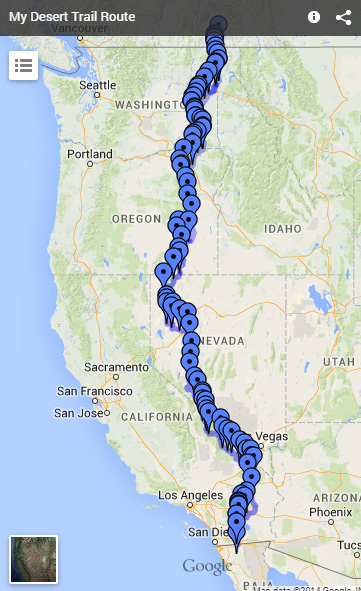
And then there are trail journals. Oh how I love trail journals. I often find an eloquent story-teller and read through their whole five months of daily journals in just a few days or weeks. I’ve been in the middle of Colter’s trip on the Desert Trail lately; his trip is particularly interesting as he’s the first person (i think?) to have hiked this 2,200ish mile route from Mexico to Canada. Just a stone’s throw from the PCT at times, I think people forget there are many other hikes out there to do, of your own devising, or re-erecting the paths of past travelers.
So I continue with my books and journals. Spring will come.
We lost a friend to the mountains this week. When I say lost, maybe I’m wrong. Maybe he’s been there all along. Certainly his spirit and passion has been caught up in ridge-walks and highty elevations for years. Many of us met him on a long trail or on top of a mountain; crossing vast landscape together can bring you to a level of intimacy some will never know outside of their family. But family is what you become after months of sleeping on the dirt, laughing at ridiculous things and marveling that the world can be so beautiful.
Sometimes you never need to actually hike with someone to know you are part of the same family, and know those shared experiences of hiking thousands of miles can almost always bridge the gap.
At the end of the day how can you mourn a life that has been absorbed by the very thing they loved so much? Life is too short. Yes, that is painfully true. And, I have to think that of all the places one could spend their last minutes, the mountain range that frames Central Oregon, the mountain range that is home, is a very fitting place.
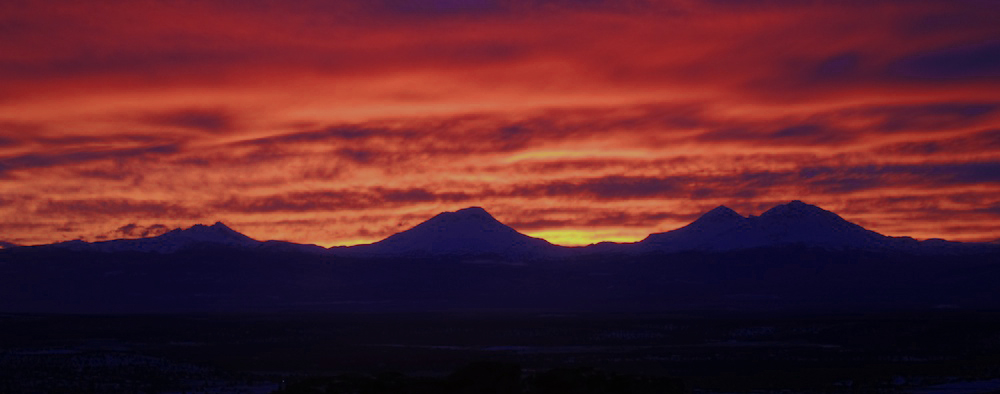
I won’t look at the Three Sisters the same anymore. Ben is up there. He is part of that wilderness now. If anything, it makes my connection with the world that much deeper.










 She-ra Hikes