Survival of the Kindest

The most illuminating aspect of spending decades of my life walking across the world has been welcoming a shared experience with strangers in far-flung places.
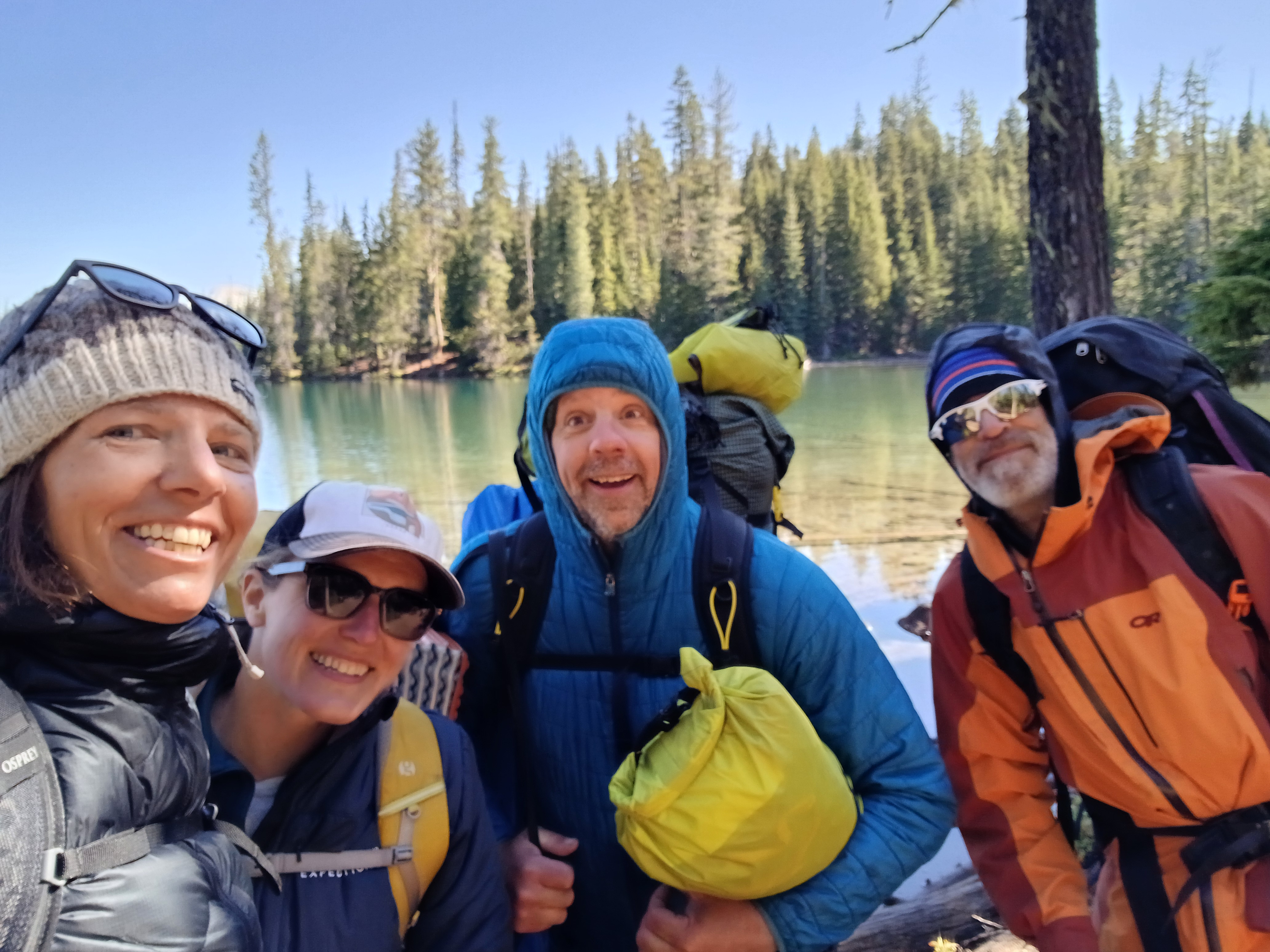
Kindness personified…in all these peeps!

When I met Jesse on the Oregon Desert Trail, I could only see an angry rancher with a gun on the front seat of his pick-up until we started talking about the wonders of nearby Orejana Canyon, and we both turned soft and pleasant. Sue and Don rolled up an impossibly rocky road in their ATV while I was deep in the Superstition Mountains on the Arizona Trail; I started my internal grumble at having my pleasant morning interrupted by a noisy gas engine when they offered me a cold drink and fawned over my efforts. And then there was the time I met another Renee – we were both curious about the other: one, a world traveling solo female hiker meeting another: a former nuclear engineer on the remote Lemhi Pass along the Continental Divide Trail.

It all comes down to curiosity and kindness.

I have been offered more cold water, cold beers, and cold sodas by strangers than by my closest friends and family, and that makes me very happy. That gives me hope. That with face-to-face interactions: my humanity looking at your humanity, me in my dirty pee-stained legs talking with you in your fabric-softened jeans, we can laugh together, trade stories together, and marvel at unexpected connections.

I love strangers. Especially strangers I meet when we both have something to give each other: respect.

I am happy to report that my reliance on the world to keep me buoyed in optimism and hope began long before the cancer started. It began when I started traveling.

Even back in my first days in Zogore when I was the first health education Peace Corps volunteer to live in the subsistence farming community, not to mention the first foreigner, the curious and friendly welcome of the villagers instantly broke the initial barriers of language and culture in that sub-Saharan African community. Sometimes that looked like bored teenagers sitting in the shade with me while I waited for the shuttered health clinic to reopen after lunch. The head nurse, Adama, was supposed to return in the afternoons to reopen the clinic, but sometimes he didn’t. I taught the boys UNO – they taught me how to cheat. We drank millet beer out of calabashes and swatted flies as we waited the long wait.

I believe in survival of the kindest. Not survival of the fittest, which has been misattributed to Darwin for many long years. In Darwin’s first book about humans, The Descent of Man, and Selection In Relation to Sex, Darwin argued for, “the greater strength of the social or maternal instincts than that of any other instinct or motive.”

Survival of the kindest.

Why is it that kindness and connection can be easier to find away from home, when you are raw and vulnerable, or bewildered and in need?

Is that why I was transfixed by the United airlines in-flight entertainment when I started watching the Pole to Pole TV show recently?

In the first episode, I became enthralled when I saw Will Smith find a sincere connection to another human. (You must be thinking here: “Is she really referencing Will Smith twice in recent blog posts? Yes. Yes I am.) Talking about depression will do that for you, especially when each and every one of us has experienced its heavy pull before. Will was talking to professional rugby player – turned polar explorer, Richard Parks, in a tent after they traveled on skis over Antarctic ice. The camera zoomed in when both men became teary-eyed. Richard was explaining how he broke his shoulder during a rugby game, and when he couldn’t play anymore, he floundered with an identity that didn’t apply anymore (sound familiar??). Will…well in his case, you probably know about the slap heard round the world and his accompanying fall from grace.

“When you are the center of the storm, the key is to keep moving through it,” Richard said. “We need to be willing to step into the unknown.”

And suddenly I sat up in my cramped airline seat. His words echoed how I’ve been thinking about living a life with cancer. Wait, even before then… even when I didn’t know how to deal with the countless cases of malaria, AIDS, and Guinea Worm in Burkina Faso, especially when the village nurse didn’t come back to work.

I pressed play on the next episode. The next leg of Will’s journey took him to the Amazon to meet snake expert Bryan Fry. Bryan and Will were trying to find a large Anaconda and learn about indigenous ways of life when something slid into place in my brain: If you add our assured mortality to the qualities of curiosity and kindness, meditations on death really rounded out my new way of understanding the world:

We are all curious. We all benefit from kindness. We all die.

Bryan had spinal meningitis as a kid, and when he didn’t die, he decided to devote his life to finding venomous animals that might provide new cures to diseases like his. His purpose and curiosity drove him into deep caves and jungles to find the elusive toxins. I watched as Will and Bryan’s eyes welled with tears in the conversation. Did this TV show mean to reveal what happens when people are vulnerable with each other?

In order to find the really big snake, the two visit Waorani elder Penti Baihua. The Waorani live very close to nature, with very little between their skin, the jungle, and their way of life. It turns out the snake, and in turn the tribe, is threatened by oil drilling. The drilling portends the death of an ecosystem, and Penti then says, “When I walk the jungle is when I feel most free.” Haven’t I said the very same thing? Just without the jungle part?

There are connections here that I’m just starting to pull on with this blog post. If I pull too hard, I’m going to have to write a book about it, so I’ll just outline some things that are jumping out at me.

Documenting this very scene in the TV show and discussing the Waorani’s fight to save their home, even highlighting the activism and political mobilization they are engaged in, is the essence of what I’ve begun to mull over…I call it creative activism. Creative activism is using our particular talents (like the expertise of the National Geographic storytellers and camera people) to help communicate dire social or environmental problems to the world in order to activate others’ curiosity and kindness when faced with death.

What is my part to play as a creative activist? Could it be writing this very blog? For another creative activist I admire, check out Jeremy Collins’ book Eventually a Sequoia.

Ok, before I get too meta about it, I’m going to rein it in and go back to what I learned on the airplane.

Will Smith goes to the Himalayas and meets some strangers to talk about finding happiness (turns out, happiness doesn’t necessarily involve going to this gorgeous mountain range, but, I mean, it doesn’t hurt, right?)

It immediately becomes apparent that in those experts’ eyes, happiness is closely tied to experiencing death. The guide narrowly escaped dying in a car crash. Another had a brother who got advanced cancer. Will? A death of ego.

These folks hiked up to a remote monastery to speak with a Buddhist monk who said, “When you turn your full attention to death, you understand what is important and what is not.”

Will went on to extrapolate, “Staring at death introduces you to freedom.”

Chills.

It’s as if everything I’ve been thinking and processing over this past 18 months now has been summed up in this show. In fact, almost everything I’ve been thinking and living is also outlined here.

The courage to follow curiosity.

How can I be happy versus how can we be happy?

Freedom through movement.

Who are we when we react to death?

Goodbye Dad

Dad as a pilot in the Air Force


The picture of dad finishing the Chicago Marathon with a giant grin on his face is one of my favorites. Sure, the photo was taken over four hours into his run, but he is doing it, doing what he set out to do and accomplishing his goal. We trained for that marathon together my senior year of highschool, but a chance at a state volleyball tournament veered me from the race that day, so I trained again on my own, years later, to finish my marathon. But it wasn’t running the race that mattered, it was the time we had together on the training runs that I remember.

Dad and I would lace up our shoes and head to the Rock Island Trail that stretched over 20 miles from just outside of Peoria to the little town of Dunlap where my brothers and I went to school. On weekends we would stride beneath the leafy deciduous trees for our long runs, not talking, just running.

I don’t have a lot of the photos I’m referencing with me, but they are the ones I remember. My brother wants to digitize the hundreds of photos we have from growing up, which is great. Here are my parents on their wedding day. Snazzy maroon tux Dad!


My Dad and I never really talked much, I learned to be comfortable with silence, with another’s presence without having to fill the space with words and distractions. We were comfortable like that. Like father, like daughter.

I can see myself in his goal-drivenness. And of course, my Mom is that way too. We decide something, we do it. We want to achieve something, and we work towards it.

I think I also got my voracious love of reading from him. He was always reading something, and I followed suit.

I grew up at the University of Wisconsin, Stevens Point, where he worked in computing services on the campus. I remember a fantastic mural of Leonardo da Vinci’s The Vitruvian Man made up of thousands of little tiles of animals and plants. I spent hours in the natural history museum wondering at dinosaur skeletons and other treasures. I took art and Shakespeare classes during the long summers, and I know my love of knowledge grew during those years.

When we later moved to Peoria, Illinois, so he could become Bradley University’s Director of Computing, he would walk out of the house in suits, a very respectable man. When I started attending Bradley after high school, I got a job in his department and would stop in to say hi a few times a week. Those summers, I worked with a crew cleaning computers in trashed dorm rooms, readying them for the next year, and still stopping in to visit with Dad from time to time.

Once I joined the Peace Corps and started my hiking career, I didn’t make it home much, but when I did, he and Mom were always moving in some new direction. While I was in grad school, they decided to build their earth sheltered home in the middle of the Illinois countryside, not far from the Illinois River near the little town of Havana. He called that poured concrete home with dirt on the roof their hobbit hole and it was the most lovely, comfortable nest…although cell phone signals didn’t often make it through the 5 feet of dirt on the roof.

It was a conventional life filled with lots of unconventional highlights, like the hobbit hole.

In 2020, it was undeniable. My Dad’s memory was going. In a gut-wrenching decision, my parents decided to leave their dream home in the midst of the pandemic and move down to Louisiana, where my Mom grew up. The promise of an extensive family to assist during this trying time and close access to medical care helped make the decision easier. The hobbit hole was at least an hour from a hospital, and only one brother and his family were left in Central Illinois to help out.

My mom still has multiple siblings in the Lafayette area, and they stopped by frequently to visit. Cousins would bring food, and as my dad’s dementia became full-blown Alzheimer’s over the 5 slow years of his decline, the help increased. When I came to visit, Dad and I would walk around the neighborhood every day. He loved his walks…much like I do. For a while they had a little German Schnauzer, Lily, and he would share the same daily joke with me on our walks, “She’s leaving a pee-mail,” he would grin as Lily lifted a leg on yet another mailbox. I would laugh and ask him about the air force again…those older memories were rooted deeper, and he could usually recall some tidbit with interest.

It was hard to see Dad decline into memory loss, and at the end, a vacant stare, but often with a sweet smile on his face.

Sweet is the right word for it. I was visiting for the holidays last year when I was diagnosed with cancer. At first, we didn’t tell Dad what was happening because we weren’t sure if he would understand or perhaps get upset. Instead, when he learned about my illness, he wanted to give me anything he could from his body to make me whole again. He offered up his veins, his blood…anything he could to help me get better.

When I got out of the hospital on Christmas Eve in 2024, I was able to go home with my parents, Kirk, and my brother Dan. It was the best Christmas present ever. And we still walked! By that time, my Dad had full-time caregivers with him at all times, even during the night. My mom was committed to keeping him at home where he was most comfortable, and while I was waiting to be stable enough from my neck surgery to fly back to Oregon to start my cancer treatments, we would walk. Dad and I holding hands, me with my neck brace on, shuffling along, and Dad with his Panama hat on, weaving on and off the sidewalk, our caregivers following close behind me. April on his side, Kirk on mine.

I didn’t know those would be the last walks we would take together, but man, oh man, they were everything. We didn’t always talk. We just moved at the same pace, side by side.

Dad fell this spring and broke his hip. Some kind of connection broke between his mind and his body, and he never walked again. Mom made him the most comfortable she could at home, and he was put on hospice care. I visited a few times, he sometimes recognized me, sometimes not, but we didn’t need to talk, I was sure he could feel my presence and we could sit in silence as we had often done.

We were all able to visit him one last time in June.


My Dad passed away on August 4, just a few weeks shy of his 77th birthday and my parents’ 51st wedding anniversary.

We all came together to share some wonderful memories of Dad after his passing. Jeff, Mom, Me, Nick, and Dan in front. ❤️


He was the best Dad.

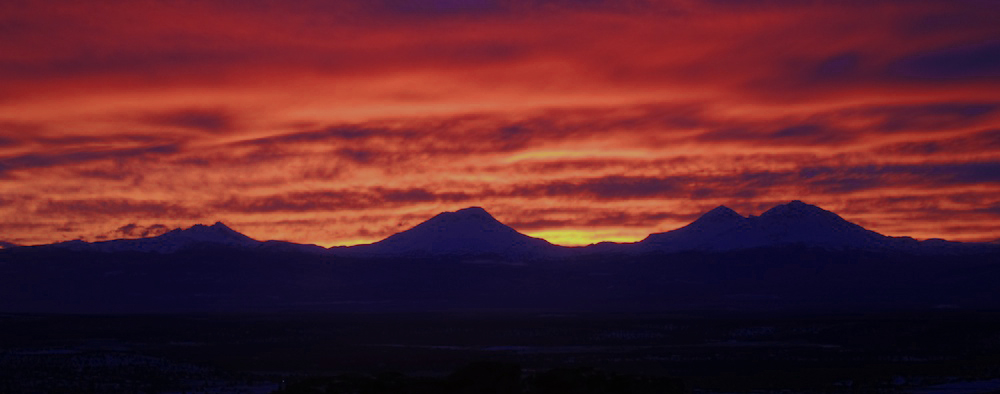
I won’t look at the Three Sisters the same anymore

bendday2 (11)

We lost a friend to the mountains this week. When I say lost, maybe I’m wrong. Maybe he’s been there all along. Certainly his spirit and passion has been caught up in ridge-walks and highty elevations for years. Many of us met him on a long trail or on top of a mountain; crossing vast landscape together can bring you to a level of intimacy some will never know outside of their family. But family is what you become after months of sleeping on the dirt, laughing at ridiculous things and marveling that the world can be so beautiful.

Sometimes you never need to actually hike with someone to know you are part of the same family, and know those shared experiences of hiking thousands of miles can almost always bridge the gap.

At the end of the day how can you mourn a life that has been absorbed by the very thing they loved so much? Life is too short. Yes, that is painfully true. And, I have to think that of all the places one could spend their last minutes, the mountain range that frames Central Oregon, the mountain range that is home, is a very fitting place.

I won’t look at the Three Sisters the same anymore. Ben is up there. He is part of that wilderness now. If anything, it makes my connection with the world that much deeper.

10262097_569994893098859_3730686354370634096_n