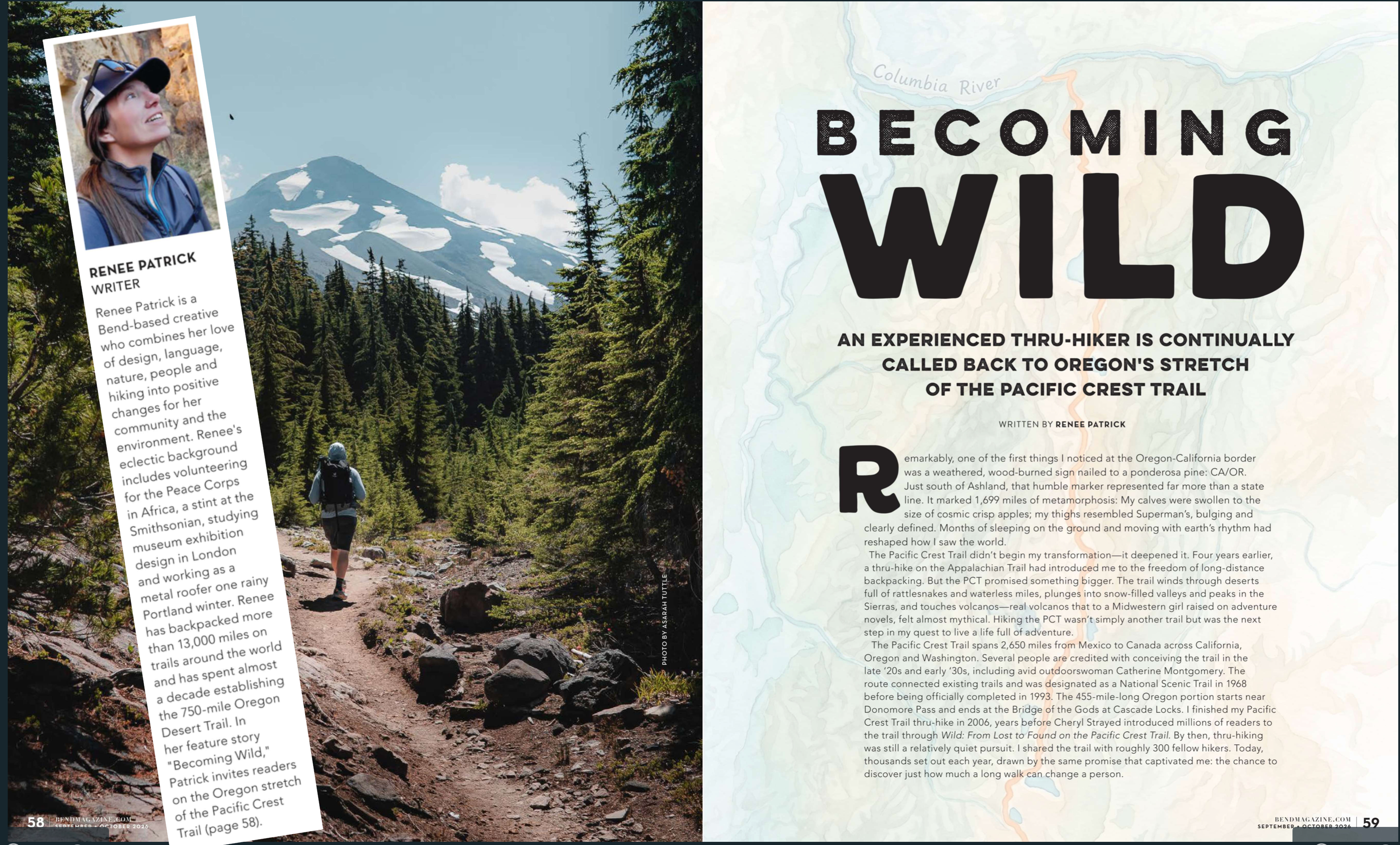
When Bend Magazine asked if I would write an article about my thru-hike on the Pacific Crest Trail 20 years ago, I was thrilled to be able to share a few slices of the experience that changed my life.
Even though I feel many miles away from the person I became on that trip, I know she underpins all of what I do and how I see the world now.
Click here to read the full story on Bend Magazine‘s website.
Getting edited for a travel magazine was something new to me, and even though they added lots of practical tidbits to the story, I prefer one of my earlier drafts which I’ll share with you here.
I don’t know if it’s frowned upon to share a draft of an article that becomes something else at the end, but here I am, doing it!
Wander through the Wonder on the Pacific Crest Trail
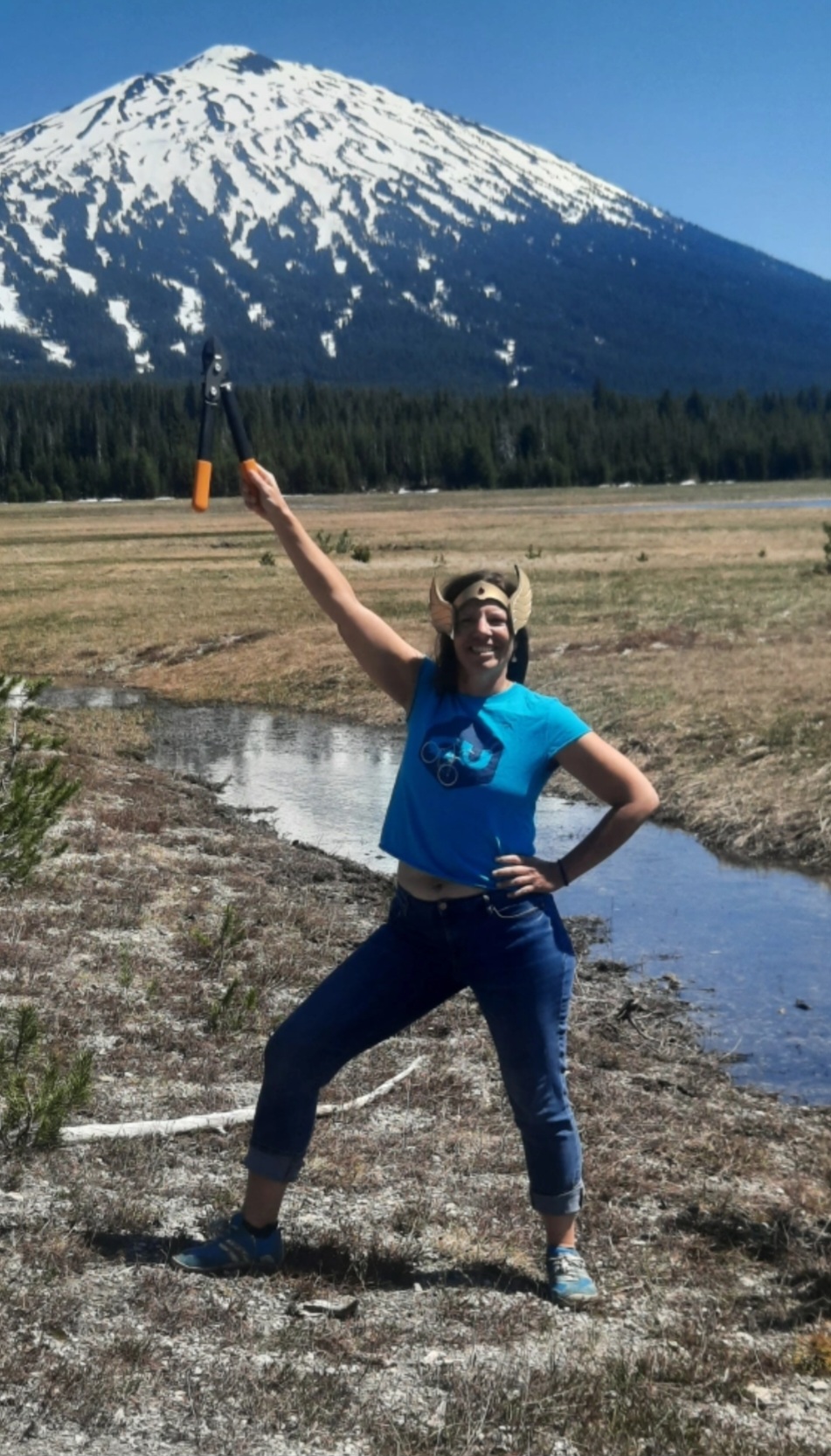
Years later I still rock out as She-ra. This was my birthday in 2024 shortly before my cancer diagnosis. I’m carrying a lopper I received that day to mark my move into trail maintenance and stewardship. My hiking journey had come full circle.
At the Oregon/California border of the Pacific Crest Trail I found a simple wood-burned sign nailed to a ponderosa pine. That sign, just south of Ashland, marked the transformation my body had taken over the previous 1,699 miles: my calves were swollen to the size of cosmic crisp apples, blisters were a thing of the past, and my thighs bulged out like Superman’s. By the time I walked up to that sign the miles had honed me into an invincible hiking machine, and now, Oregon was to be savored.
Oregon proved to be the indulgent treat I had waited for, especially when I gazed at the fathomless depths of Crater Lake with a water bottle full of wine; I watched the stars wink into being that soft evening and resolved to live this trail life forever. The granite expanse of mountains in California were astonishing, but the standalone chain of basalt and pumice peaks was somehow more welcoming. The trail gently ushered me through the gateway of volcanos, high cool lakes, and the kind of trail where the mind could wander around the wonder of the Pacific Northwest.
To this mid-western girl, the thought of walking the far-away lands of the PCT reminded me of the adventure books I devoured as a girl. Back then I wanted to live a life full of exploration and exploit; I still do. I walked to Canada that year, five months after I left the Mexican border, and my quest to live and work outside the bounds of the ordinary brought me back to Central Oregon two years later; I came back to hike. The trail in Oregon was originally named “The Skyline Trail” before it became part of the PCT, and it was aptly named. Our local tread ushers you along the shoulders of volcanos including South, Middle, and North Sister; past Mt. Washington; Three Finger Jack; and the hulking Mt. Jefferson.
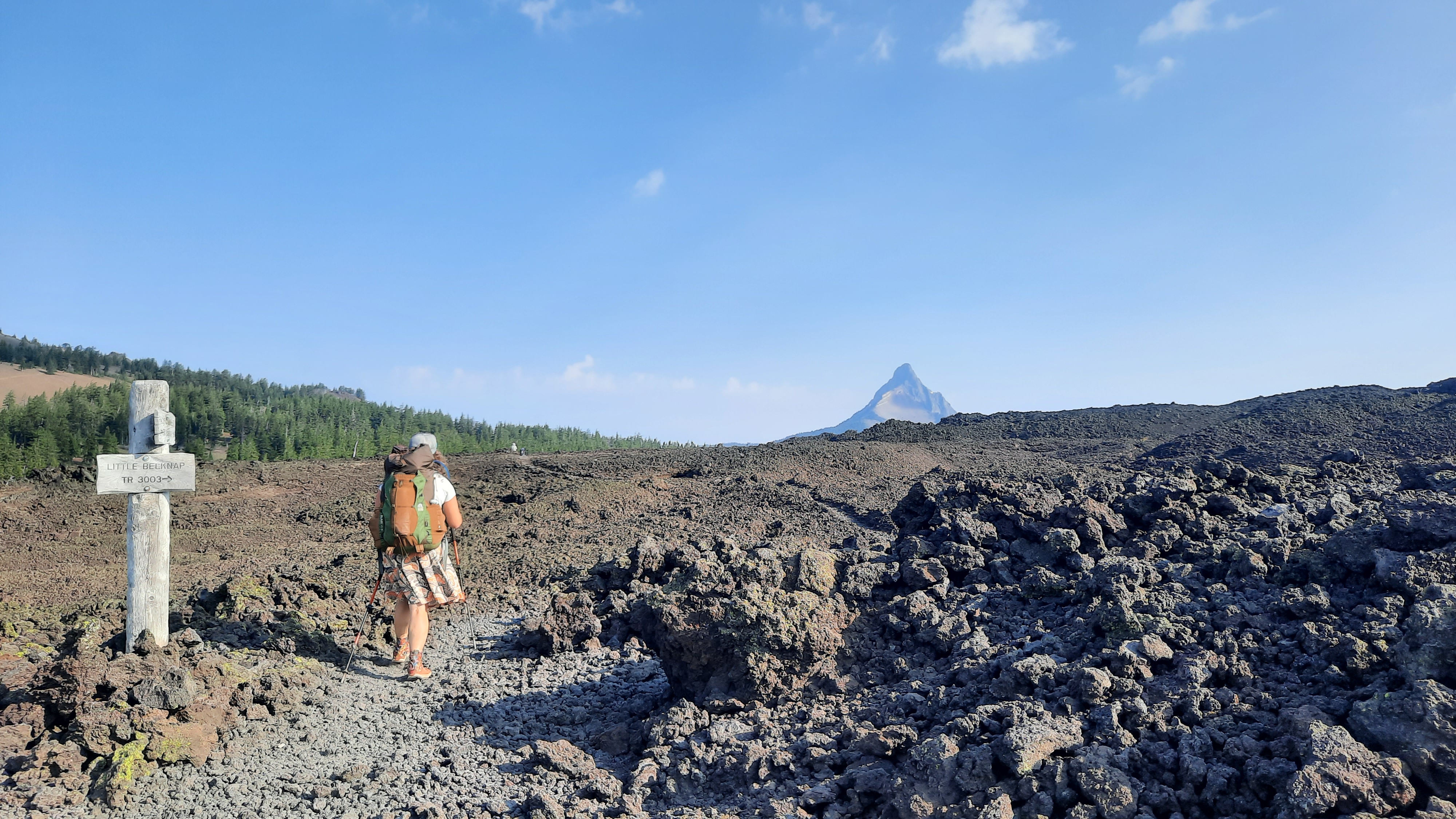
Nemo approaching Mt. Washington
The PCT was the brainchild of avid outdoorswoman, Catherine Montgomery, back in 1926. I thru-hiked the trail 80 years later in 2006, well before another notable woman, Cheryl Strayed, made the PCT famous in her book, Wild. Cheryl stopped her 1995 hike at Cascade Locks, 455 miles on the opposite side of Oregon from that CA/OR sign, but you need not hike for months to find the respite that she did on trail. Those who want to experience the iconic volcanic section of the Oregon PCT will need a Cascades Wilderness Permit for a day hike or short backpacking trip, but it’s worth it! Gear shops in Central Oregon employ knowledgeable hikers that can help with gear choices or would be happy to pour over maps with you. Ready to head out? From Santium Pass, a short 6-mile hike will find you walking below the summit of Three Finger Jack. At Willamette Pass a 3-mile walk uphill ushers you to the clear blue waters of Rosary Lakes where you can camp and swim. Elk Lake is only a mile off trail, and if you head to the resort for lunch you are sure to see hungry thru-hikers that can’t resist the idea of cheeseburgers and beer so close to the trail.
In the years since moving to Oregon’s dry side, I’ve discovered that all the seasons offer different excitements. Cooler fall temps mean a lack of bugs, and when permit season ends in mid-October, it’s easy to head up for a short day-hike from Mirror Lakes trailhead or McKenzie Pass; well-trained eyes can spot delicious Chanterelle mushrooms, a welcome addition to any trail meal.
In the winter Ray Benson Sno-Park hosts cross country ski trails along the PCT; I’ve made it a new year’s tradition to sluice through the snow. For backcountry adventurers, skiing into Mt. Thieson’s shoulder to snow camp will give you a thrill every time you peak outside the tent on long winter nights, and a rigorous day-trip could even be made out of the skin-track up South Sister or Broken Top.
You are not excluded from the wonder if you can’t (or don’t want to) walk the dusty miles. Hang out at one of the mountain passes with a cooler of cold drinks or pick up a thru-hiker trying to get into Sisters for a shower and a meal. You will be able to identify them by their skinny, dusty legs (could be dirt or tan) and the tiny backpack. Give a hiker a ride or soda and you just might make a friend for life.
Another reason to explore the PCT is to learn more about this amazing planet we live on. Maybe your interests lie in history, or is geology your thing? Trail guidebooks, apps, and kiosks illuminate specific details about each area, and now in the age of cell-phones, it’s common for hikers to download podcasts or audiobooks about what interests them. Many use iNaturalist or Seek apps to learn the names of flowers and trees around them, and some may even contribute to a community science project about the flora or fauna they find.
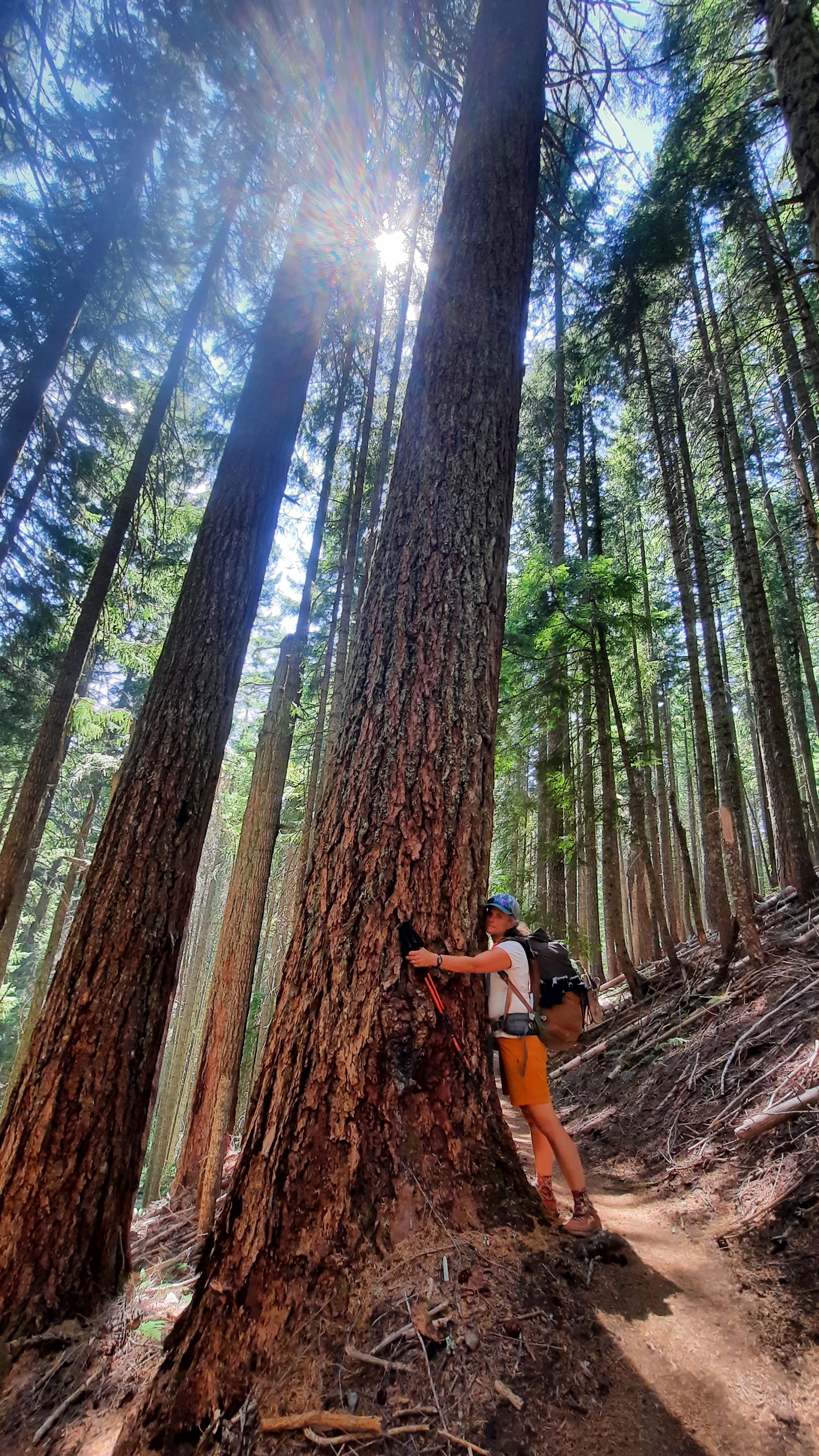
There is much to discover about the land along the PCT, but my favorite part is the connection I make to place. The trail becomes home, and in fact has been home to many since time immemorial. The richness of a life lived outside can be measured in sunrises, in the number of clouds that slowly drift overhead. My wealth increases each time I take a nap under a ponderosa tree, listening to the wind swaying the heavy branches overhead. I smell tangy manzanita in the summer heat and feel the sun warming me into my slumber. I sink into the forest floor and know I am connected to this place. I am part of it. We all are. To hike is to go home.
As I’m working on writing stories from my decades of hiking, I decided that I will share some of them here periodically…I’m sure these will probably look a bit different in their final form, but I find it’s great fun to share what I have now, rather than waiting for that “one day.”
Insignificance along the Oregon Coast Trail
October 2023
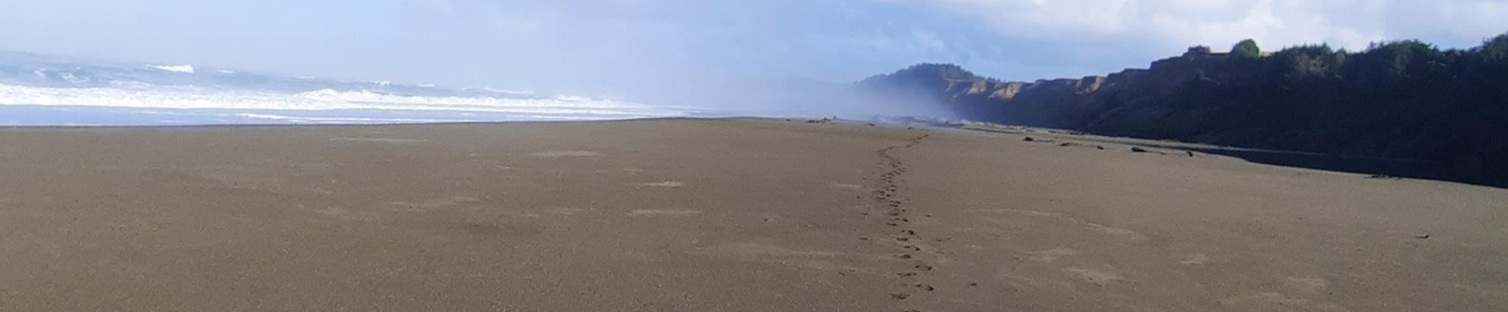
I walked up to Elk River in a panic. The tidal water looked too deep and dark for me to cross. Despite hiking as fast as I could through the damp and dark early hours, it looked like I might be out of luck. Low tide was another ten hours away, and if I had to wait, my day was shot.
I knew hiking the Oregon Coast Trail would be a challenge, but it’s really not fair how tides and swells and eroding cliffs throw up the gauntlet. Other trails don’t behave like this. Other trails are obedient in their stabilized soils and rocky steps. The trail out here doesn’t care that I have to walk through deep sand and journey into the night if I can’t cross this river. She doesn’t care if I slip, splash, and dunk myself on the way across, or if my shoe is sucked off into the sifting sand. The audacity!
I didn’t see a choice, so stepped into the flow.
My crotch is wet!
I panicked while resisting the pull of the ocean. The sea was hungry, but my thick thighs prevailed and hoisted me through the last of the current and onto the sandy bench above the flow.
I peeled off the pack and spread out my tyvek ground cloth. Not much point in it though, I was already soaked, and sand had snuck into every crevice; I felt new chafe on multiple levels.
Socks off, feet out. I lay spread-eagle on the ground and listened to my breath slow.
In. Out.
Inn. Ouut.
Innn. Ouuut.
I watched the clouds move along their own current overhead before closing my eyes to the brightness.
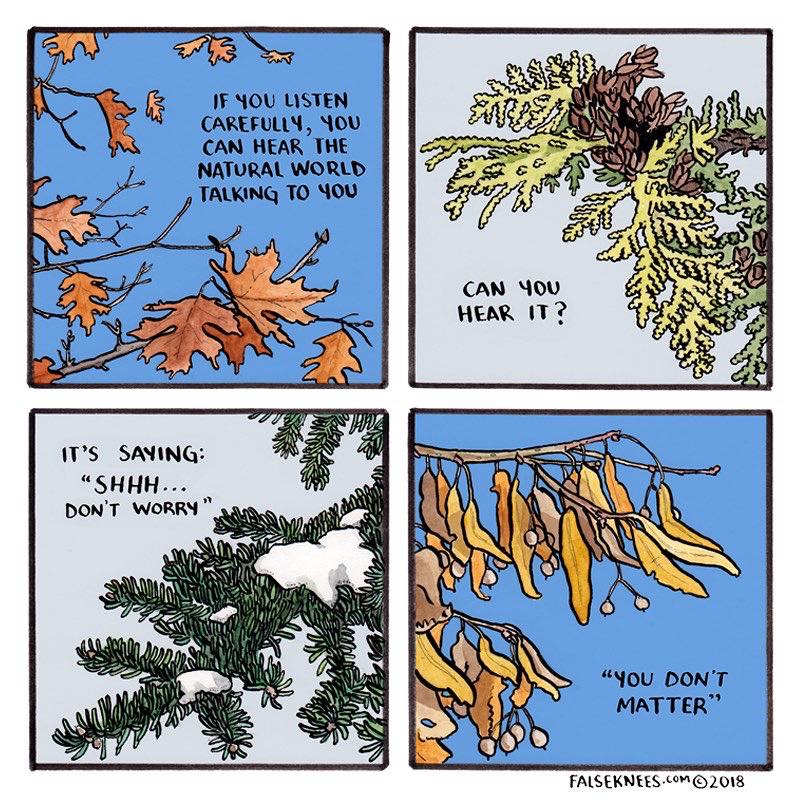
One thing became clear: I am not the most important thing here. I am not important at all.
There was no one around to have witnessed my panicked crossing, and I laughed at the absurdity of it all.
I don’t matter. None of this matters.
The ocean does that: puts me in my place.
I thought: this is what forever will feel like. It will feel like the ocean, where I am a drop in an unfathomable depth of the unknown. Suddenly, I could take anything that came my way. The thoughts that weighed on me minutes before seemed lighter against the backdrop of the sea. Anxiety about starting my new business? Doesn’t really matter. The last argument Kirk and I had? Nah. My Dad’s dementia? What?
I’ve felt this way before: when looking at pancake layers of rock in Utah, when surveying the mountainous horizon from the summit of Mt. Whitney, when gazing up at the Milky Way from the Alvord Desert. That abyss? That’s deep time, and I’m here in it.
I thought about Rumi saying, “You are not a drop in the ocean. You are the entire ocean in a drop.” It took me a minute before the concept set up in my mind…what helped was pulling out a scene from a late 90s movie.
Remember the part from Men in Black where alien blasters Will Smith and Tommy Lee Jones realized the cat they had been toting around had a glass marble on its collar, and that glass marble was what the aliens had been after all along? The closer you looked at the marble, the deeper it went. There were stars and galaxies inside, and the magic of cinema zoom showed us that an entire universe was contained within that sphere.
The grain of sand between my toes used to be part of a mountain. That mountain used to be the sea floor. The sea floor used to be covered by glaciers. It doesn’t end, so maybe I won’t end either? I’ll become a part of it all, if only a scrap of food for a tree that will preside over the Deschutes River, and then get covered in lava the next time South Sister erupts.
It’s all good. I’m all good.
I shaded my eyes from the intense sun as I struggled to place myself.
This morning I welcomed the sunrise on my walk, this first day of spring. When I returned home to dabble with some writing, the tears came. (aided by this song…)
My heart is shredding. I’m finally pulling away from my role in crafting the Oregon Desert Trail experience, and it’s much harder than most things I’ve left behind over the years. I’ve evolved through this experience, as a human and a hiker. I have become an environmentalist, and in some ways I feel like a mother.
The grief for what I’ve lost with the change of my body feels incredibly tender; I just can’t bear to continue to steward what I can’t hike. Maybe my attitude will change, but for now it’s too much.
This morning, I cried as I read over years of adventures I’ve had out there. I’m trying to pull out some stories for a collection of hiking essays I’m working on. I thought that hiking stories would be a fun distraction from the cancer memoir, but in a way, both are opening me up to a world of hurt in a way I wasn’t expecting.
The Oregon Desert Trail isn’t just a trail; hikers are embarking on an experience in trying to bridge a cultural, ideological, and political divide.
I think this article from 2018 continues to be one of the best summaries of the larger picture of what the Oregon Desert Trail represents, and what I was trying to do with the experience. Can thru-hiking change the world? I certainly think so, even if it’s just through one conversation at a time.
The trail that cuts through the Wild West of rural land-use politics in Oregon’s high desert.
Ryan “Dirtmonger” Sylva crested a canyon rim and faced an endless expanse of sagebrush. He was hours from any sort of town, after spending days swimming through ice water in Louse Canyon, along a tributary of the Owyhee River in the remote reaches of Southeastern Oregon. He eyed two riders on horseback angling toward him.
“My impressions of the area were from the Malheur-takeover thing. It was really rural and I wasn’t sure what I’d encounter,” says Sylva, a nomadic brand ambassador for outdoor-gear businesses. “Suddenly, I’m walking across this empty expanse and there’s this cowboy coming toward me.”
The riders, a cattle rancher and his son, asked Sylva what he was doing there. Sylva had grown used to puzzled looks from the denizens of the isolated desert, but this time it felt confrontational. Yet by the end of the conversation, he says his views on rural Oregon changed.
Sylva is one of 26 long-distance hikers to finish the 750-mile Oregon Desert Trail. It’s not a hiking trail in the traditional sense. It’s a big conceptual “W” that the Oregon Natural Desert Association (ONDA), a nonprofit dedicated to high desert conservation, scribbled on a tapestry of public lands throughout Lake, Harney and Malheur counties. Unmarked sections require extensive route finding. Stretches of up to 40 miles are waterless.
The trail’s visitation numbers are small, but its true potential is carving a middle path through a longstanding legal feud between ranchers and environmental groups. It’s emblematic of a decades-long public lands debate in the American West, a struggle that has encompassed national publicity campaigns, intractable legal fights, armed takeovers.
As it traverses miles of stunning desert, the trail also explores the philosophy, biology, politics and economics that have made Eastern Oregon a hotbed for natural-resource conflicts. It invites conversation about the urban-rural divide, about land-use policy, about the relative values of traditional agrarian industries and the new-age economy of recreation tourism.
The conflicts in Eastern Oregon run so deep that ONDA, the biggest player in the environmental camp, and rural politicians and ranchers find it difficult to even sit at the same table. But lately they’ve been talking, or at least thinking about it. And the trail has something to do with it. “The more we talk, the more [the ranchers] share why they love the desert,” says Renee Patrick, ONDA’s Oregon Desert Trail coordinator. “When we get out there on the land, we find we have more in common.”
The route spotlights the natural beauty of public lands in counties where a chunk of the populace thinks the government shouldn’t own land at all. On January 2, 2016, armed militants occupied the Malheur National Wildlife Refuge in Harney County. Rancher Ammon Bundy led the takeover to protest the conviction of the Hammond brothers for burning 139 acres of public land in 2001 near Steens Mountain. One occupier was shot and killed, and a dozen others pleaded guilty to conspiracy to obstruct federal officers, firearms violations, theft and depredation of federal property.
Jesse Laird, a rancher in the Warner Valley of Lake County, agrees with Bundy’s message but not his methods. “I felt like the way they went about it was wrong,” he says as he drives his black Suburban toward the looming monolith of Hart Mountain. “They should have gone on a speaking tour.”
Laird turns and points south to a cluster of dun-colored hills. The Oregon Desert Trail drops into the Warner Valley from there, he says. It runs along a paved road, then assails the escarpment of Hart Mountain, entering a national wildlife refuge.
Laird is not shy about his views regarding the Oregon Natural Desert Association and its desert trail. He encourages people to experience the wilderness, he says. His wife, after all, is a professional wildlife photographer. But he’s concerned about the association’s proposal to have the trail designated as a national recreation trail. “I’m scared of designations,” he says. “Special designations always cause special problems.”
In the midst of a flurry of conservationist legislation, President Lyndon B. Johnson’s administration elevated the status of hiking with the National Trails System Act in 1968. In a speech several years prior, the Democrat paid tribute to “the forgotten outdoorsmen of today,” which he defined as “those who like to walk, hike, ride horseback or bicycle.” The resulting legislation created National Scenic Trails, mammoth routes of more than 100 miles that pass “nationally significant scenic, historic, natural or cultural landmarks.”
Debuted in 2013, the exceedingly difficult Oregon Desert Trail has attracted few takers compared with existing National Scenic Trails. According to an informal survey conducted by the Pacific Crest Trail Association, 912 hikers this year have completed the now famous route linking the Mexican and Canadian borders in 2018. Ten people this year have finished the Oregon Desert Trail.
Despite the small number of completions, tourism agencies and the outdoor industry are funding Oregon’s longest thru-hike. The state tourism agency Travel Oregon earmarked the route as one of seven projects that will benefit from its forever fund. Hotels, restaurants and other tourist-facing business donate a portion of their proceeds to the fund. Projects must improve the visitor experience, restore the landscape and provide volunteer opportunities for Oregonians. Last year each of the grantees received around $6,000, a destination specialist with the agency says, and a smaller figure is expected this time around.
Linea Gagliano, a spokesperson for Travel Oregon, says the forever fund money will go toward public meetings and other initiatives to address ranchers’ concerns. “Knowing there was controversy around it, the funds are going to community engagement,” she says. “So it’s something that will enhance communities and not something people feel they just can’t get behind.”
Big outdoor-gear brands have lent support to the trail. The Bend REI store gave grants totaling more than $17,500 for trail maintence. Sawyer Products, an outdoor-gear manufacturer, chipped in around $1,000, and Cnoc Outdoors $2,500. MSR, one of the biggest names in the outdoor industry, promoted the trail on its Summit Post blog.
The unconventional route has also attracted travel write-ups in national publications including The Washington Post and The New York Times. In 2014 The Oregonian reported that the Oregon Natural Desert Association petitioned the U.S. Department of the Interior to study the trail as a possible addition to the National Recreation Trails system.
Seeking to represent ranchers, who are powerful players in the rural economy, the Lake County government petitioned the Oregon Natural Desert Association in January 2014 to halt part of the designation process. They feared that a proposal to connect part of the desert trail to the Fremont National Recreation Trail marked an early step in scenic trail designation. Malheur County commissioners sent a similar letter.
Laird and other ranchers in Lake County don’t have a problem with the trail as is, but they fear designation could pave the way for scenic buffers of up to a quarter-mile on each side. In those buffer zones, agencies could ban motorized use and grazing. Along the Pacific Crest Trail, land trusts have succeeded in converting private land to public to make buffers that preserve a natural experience and allow easier access.
There’s a yawning gap between what rural communities think the Oregon Natural Desert Association is doing with the trail, and what ONDA says they’re doing. Lake County commissioners Bradley Winters and Dan Shoun say ONDA and the Bureau of Land Management have ignored their concerns about designation. “They pretty much couldn’t answer any of our questions about the use, and future use,” Shoun says. The last time Winters sat down in person with an ONDA representative was several years ago.
Three sections of the route—in the Fremont-Winema National Forest, the Pueblo Mountains and Steens Mountain—have received National Recreation Trail designations, but Patrick says ONDA is no longer actively pursuing designation for the rest of the route. “Nothing is off the table,” Patrick says, “but we’re trying to think through this thoughtfully.”
It wasn’t the only time communication broke down in the design of the trail. Alice Trindle, regional manager for the Eastern Oregon Visitors Association in Baker City, barely averted a publicity crisis. She killed an article about the new trail out of fear of offending ranchers.
“There were things [in the article] that really invited the visitor along the trail to go under barbed-wire fences and through gates,” Trindle says. “It didn’t have the respect for those traditional land managers, the ranchers.”
A rancher and owner of a horsemanship business, Trindle is deeply in touch with the region’s traditional industries. While tourism is growing, agriculture and ranching still sustain a large slice of Eastern Oregon’s economy. According to the state employment department, crop and animal production supplied 7.5% of private-sector employment and 7.1% of private-sector wages in 2017. A total $1.7 billion of agricultural products were sold in Eastern Oregon in 2012, the most recent year for which data from the census of agriculture is available. Livestock sales alone generated $762 million.
“There’s a lot of distrust for the big-city environmentalists,” Batty says. “But there are a lot of people in the business community learning to see the value of tourism and willing to overlook the political aspects of it.”
— Thomas Batty
Tourism revenue in Eastern Oregon, though small by comparison, climbed steadily each year, from $316 million in 2010 to $383 million in 2017, according to Travel Oregon figures. About 900 jobs directly related to tourism were added in that time. Gagliano says the past few years in particular have seen a significant jump. There are also secondary effects that ripple through the economy.
Although posters promoting the Oregon Desert Trail hang everywhere from the historic saloon in Paisley to the Summer Lake Hot Springs resort, Lake County businesses have yet to realize gains from the project. Sylva, an experienced thru-hiker, says he can’t see annual Desert Trail thru-hikers ever exceeding 20.
Tourism in Lake County is still largely the domain of the rodeo and a trickle of agri-tourists. Many ranchers don’t know or care that the nascent Desert Trail exists. “They make it up as some big deal,” says John O’Keeffe, a rancher in Adel, a few miles down the road from Laird. “If somebody wants to go out and walk, they can walk there now. You don’t have to make a big effort to make it a trail.”
Thomas Batty, who owns Tall Town Bike and Camp, one of the few outdoor stores in Lakeview, says he’s stocked a bit more fuel for ODT hikers, but otherwise the trail hasn’t made much impact on his business. He thinks that could change, however, as the recreation-tourism sector gains steam. Lakeview is seeing increased visitation from the Timber Trail, another relatively new long-distance route focused on mountain bikers, and the Desert Trail could follow suit.
“This is a pretty conservative area. There’s a lot of distrust for the big-city environmentalists,” Batty says. “But there’s a lot of people in the business community learning to see the value of tourism and willing to overlook the political aspects of it.”
Patrick says most of the tourism boost comes not from thru-hikers but from those who tackle small sections. The immense challenge of the trail plays to the aspirations of the weekend warrior. “The 750-mile ideal is really compelling,” Patrick says. “It’s a reason to go back.” She estimates that each year around 250 people hike segments.
“They’ll buy lunch, dinner, probably spend the night, fill their gas tank while they’re out there,” Gagliano says. “It’s bringing in much-needed economic numbers.”
Duane Graham, owner of the Summer Lake Hot Springs resort, shuttles in a handful of grateful hikers each year from an ODT trail junction 6 miles down the road. In a county where one new job is the equivalent of 520 in Multnomah County, and a group of five people makes a town, no visitor is insignificant.
“We probably will never have the numbers the [Pacific Crest Trail] has,” Patrick says, “but it’s a way to highlight the desert that works with the landscape.”
Given the air of general confusion, red-faced speculation or flat-out indifference in Lake County for the nascent trail, it would have been difficult to expect good results when Patrick ambled into the Warner Valley and ran into Laird at his ranch.
“Oh,” he said, “you’re She-ra.” Patrick was shocked that this rancher knew her “trail name” — a moniker, like “Dirtmonger,” that thru-hikers adopt during their journey. Laird explained that he had been following her blog and the trail’s development, and that he was concerned about possible buffers. Patrick expressed gratitude for the water holes developed by ranchers. Without them, she said, the Desert Trail hikers would go thirsty.
“I felt she was being very transparent and very honest,” Laird says. “I don’t feel like she is — it feels horrible to say — like the other ones there [at ONDA]. A lot of the other ones are out to get us.”
Part of the entrenched attitude of the ranchers comes from their long-standing relationship with the land. In 1867, Laird’s great-great-grandfather arrived in the Warner Valley with the U.S. Army. The Lairds carted in juniper posts on wagons to the Warner wetlands, setting up fencing and water holes for cattle. The early homesteaders fought off sporadic attacks from the Paiute Tribe as they migrated from Reno to Burns. Family folklore has it that one season, the Lairds housed an elderly woman whom the tribe had abandoned. Though she was blind, she always knew when the tribes were attacking. The only property the Lairds lost was one white horse.
Not long after, in the early 1900s, the O’Keeffe family arrived from County Cork, Ireland. They raised sheep but converted to cattle in the 1960s because of labor issues. John O’Keeffe took over the operation from his father in the 1980s after earning an agricultural economics degree from Oregon State University.
O’Keeffe has lived nearly his entire life in Adel, Oregon, 30 miles east of Lakeview. The Adel store, the only store in the unincorporated town, springs straight out of a Western. A group of ranchers in leather chaps and cowboy hats occupies the center. O’Keeffe, a 56-year-old, weather-beaten rancher, wears a white cattleman hat and a grey knit sweater. Laconic and even-tempered, he gives off an air of wisdom, the product of a lifetime of education and experience.
On an afternoon in early November, O’Keeffe’s pickup reeks of smoke. He spent the morning burning the grass around his ranch buildings with drip torches. The burning creates a buffer that starves wildfires of fuel. O’Keeffe is chief of the local firefighting association, a volunteer group that tackles small blazes before they turn into “project fires.” The nearest actual fire department is a 40-minute drive away in Lakeview.
Apart from fire, in any given year O’Keeffe battles droughts, floods, blizzards, coyotes and disease. In winter he drives around all night picking up freezing calves and warming them in a heat box. While ensuring the survival of his herd, he revitalizes the land; he rotates grazing areas, for example, to give native bunchgrasses a chance to store root reserves.
Relatively recently, the environmental movement arrived with new ideas about preserving biodiversity. The 1964 Wilderness Act directed the Secretary of the Interior to review every roadless area within National Park and Forest land every 10 years for a special class of protection. The act famously defined wilderness as land “untrammeled by man, where man himself is a visitor who does not remain.” The legislation banned motor vehicles and harvesting natural resources to maintain an intriguing but profoundly unscientific standard: “primeval character.”
In fact, many varieties of man, from Native Americans to ranchers, have come and gone from land thereafter protected as wilderness. Ranchers say their proactive management strategies, from rotational grazing to prescriptive burning, helped prevent fires and maintain rangeland health.
“I think it’s a fundamental difference in the viewpoint,” O’Keeffe says. “We’ve been grazing here for over 100 years, and it’s still in good condition. We’ve learned a lot about range management over the years and how to graze so that this is sustainable.”
In the 1980s and 1990s, some environmentalists, uniting under the cry “Cattle free by ’93,” argued that sustainable grazing was an oxymoron. In 1987 a Bend resident took out a classified ad urging fellow environmentalists to come by Thursday night if they were interested in protecting public land in the high desert. Each member at that first meeting donated $5, and they dubbed themselves the Oregon Natural Desert Association.
The nonprofit dedicated itself to preserving biodiversity in the fragile high desert. In 1991 it pioneered a method of citizen-led wilderness inventories later adopted by the Bureau of Land Management. In 1994 it convinced the U.S. Fish and Wildlife Service to remove livestock from Hart Mountain, a highlight of the Desert Trail near the Laird ranch, to protect pronghorn antelope and sage grouse. Perhaps most significantly, in 2000 the nonprofit led the effort to establish the first wilderness area in Eastern Oregon, Steens Mountain.
The organization quickly earned the ire of local ranchers. Now, depending on whom you talk to, ONDA is a dirty word. “Most of the ranchers despise them,” says John Ross, owner of the Frenchglen Hotel, a midway stop along the Desert Trail. “They don’t like them ’cause they send environmental things through the federal government and figure out other ways to make it tough on them.”
In 1994, the same year ONDA protected Hart Mountain, Laird’s family lost access to greener late season feed on some 25,000 acres on the Warner wetlands. Laird says invasive Canada thistle proliferated when his cattle were barred from grazing. For another eight years, from 2005 to 2013, the Laird family chose to intervene in a lawsuit filed by ONDA against the Bureau of Land Management over grazing on Big Juniper Mountain. In the effort to preserve their grazing allotments, Laird says, the family quite literally bet the ranch.
O’Keefe remains bitter about the results of a recent case in which ONDA contested the Bureau of Land Management’s inventory of lands with wilderness characteristics. The organization argued for protecting areas with existing roads and water holes, areas O’keefe doesn’t consider wilderness. He says, “they flat out didn’t take in the whole picture.” The negotiations are ongoing.
Actions meant to safeguard the environment, ranchers say, ended up hurting it. After ONDA’s concerns prompted the U.S. Fish and Wildlife Service to remove cattle from Hart Mountain, Laird says, coyotes preyed on deer instead. Cougars came down from the mountains into the Plush valley. “It is an area of critical environmental concern because the BLM bought it,” he says.
The chance meeting between Laird and Patrick laid a small plank in a bridge that needs to span the chasm between environmentalists and ranchers. Patrick was impressed that Laird followed her blog, showed commitment to ranching sustainably and took time after they met to attend a presentation that she gave in Lakeview. By the end of their conversations, she said, “I felt we were able to agree on the beauty of this land.”
The Oregon Desert Trail begins with little flourish or fanfare. A small wooden sign for the Tumulus Trail, hidden a mile down a rough four-wheel-drive road, marks the official start. The route enters the Oregon Badlands Wilderness Area, one of the first ONDA campaigned to protect. In the early 2000s, the Oregon Cattlemen’s Association and a group representing ATV users fought the designation, but the environmental group won. ONDA offered to buy grazing permits at an estimated cost of $100,000, winning over some ranchers. In 2009 Congress designated 29,180 acres as wilderness.
I ran into a local duck hunter near the start of the trail. He said his family owned a ranch in nearby Alfalfa, and he spent nearly 40 years hiking the Badlands with no map or compass. Now, he says, he hardly goes there anymore. There are too many people.
I couldn’t agree, as I didn’t find any more people on a 20-mile loop in the Badlands. The first seven miles of the Desert Trail offered a small sampling of its difficulties. I carried eight pounds of water uphill through sand. The route meandered through scant double-track, almost as if it was designed to lose hikers in a twisted maze of basalt and juniper. I navigated using a map and compass, and REI’s Hiking Project iPhone app, but was still fooled once by a deceptive side trail.
For those hiking longer segments of trail, getting lost and running out of water is a serious possibility — so serious, in fact, that ONDA’s Desert Trail resources run red with legal disclaimers. Patrick notes there haven’t been any cases yet of missing hikers, and she’s been meeting with rural responders. But those words of caution are not enough to appease ranchers and politicians whose rural counties foot the bill for finding lost hikers from cities. “If they get lost,” says Elias Eiguren, a fourth-generation rancher in Arock, north of Rome in Malheur County, “it’s hard to find them and hard to get to them.”
The land exhibits the stunning characteristics of congressionally protected wilderness. Western juniper trees grow much larger than usual. Basalt tumuli, remnants of 80,000-year-old lava flows from a shield volcano, rise up in cracked and tortured sculptures. Mule deer bound through the woods. Everywhere there is solitude and silence.
Patrick says a key function of the Desert Trail is educating hikers about public land like the Badlands. “We need these public lands in order to have long-distance routes,” she says. The route runs almost entirely on public land, and its guidebook describes in detail the eight types hikers will encounter. There are several precursors to wilderness designation, including lands with wilderness characteristics, wilderness study areas and citizen-proposed wilderness. Areas of Critical Environmental Concern also receive special protections to preserve wildlife and plant habitat.
Environmentalists say all these designations are necessary to protect land as it progresses through the lengthy legislative process. Ranchers see needless bureaucracy. Both Laird and O’Keeffe feel crushed beneath layers of wilderness designations.
The dispute can be described as a tug-of-war between two philosophies. The debate dates to the turn of the 20th century, when naturalist John Muir and forester Gifford Pinchot butted heads over their visions for a public-lands system. Some environmentalists, and the authors of the Wilderness Act, sought Muir’s approach of preservation, returning the land to an untouched state. Of course, that prompts a question about what “untrammeled wilderness” means on a planet that is evolving every second. Loggers and ranchers argued instead that conservation — proactive management and responsible resource use — actually lead to better outcomes for the ecosystem. Generally, both sides agree to a mix of both approaches, but the exact ratio is up for debate.
Eiguren falls into the latter camp. He runs 500 head of angus cattle, and he says he’s become frustrated by wilderness and monument designations blocking his efforts to care for the land. “ONDA would like to see the straight 1964 wilderness,” Eiguren says. “If we don’t interact with this land, it dies.”
Toward that end, Eiguren helped found the Owyhee Basin Stewardship Coalition. The group of ranchers and local families is advancing a new management plan for the area. The plan calls for temporarily lifting some wilderness designations to allow ranchers to remove invasive cheatgrass and medusahead rye, introduce appropriate perennial grasses and shrubs, and develop water holes for cattle and wildlife. Eiguren says the coalition is taking feedback on its concept paper and hopes to present to the legislature in the next few years.
The rancher says tensions with ONDA have cooled since the push for the Owyhee Canyonlands monument, a campaign sponsored by Keen and other outdoor-gear manufacturers, along with environmental activists. But the whole thing feels like a dry grassland in summer — it could ignite at the drop of a match. “I think we’re talking more, just because there isn’t a big issue right now,” he says. “Things could get tense in a hurry.”
“I think we’re talking more, just because there isn’t a big issue right now. Things could get tense in a hurry.”
— Elias Eigurn
When Sylva opened a conversation with the cowboy at the edge of Louse Canyon, he kept talking about the nearby Owyhee monument. He seemed cautious. He suspected Sylva might be a clueless urbanite or, worse, an ONDA member.
But then they began poring over maps. The rancher helped Sylva find a water source; Sylva pointed the rancher toward his missing cattle. “He definitely let his guard down when I was communicating about the land,” Sylva says. “He then had a respect for me that I knew the area and was able to help him find his cows.”
The Oregon Desert Trail evokes suspicion in some rural ranchers and politicians, but others see an opportunity for common ground. Unlike many other ONDA projects, the Desert Trail has benefited from the support of ranchers. Patrick spent long hours talking with the many private landowners along the route. She never ran into pushback, she says. Some ranchers even offered hot showers or water caches for hikers.
Laird and I certainly do not think the same way about wilderness or the Malheur takeover. But in just an afternoon, I could empathize with some facets of his frustration. He doesn’t want to get 15 signatures on a 34-page document to access one water hole. He doesn’t want a hiker from Portland pulling up fences on Hart Mountain without understanding the families who put them there 150 years ago.
Those dialogues might seem like small steps, but considering the decades of bitter legal battles that have characterized this land, they are giant leaps. The opportunity for further bridge building and discussion among polarized groups sets the Oregon Desert Trail apart from its long-distance brethren.
“I saw polar opposites probably more than any place I’ve walked,” Sylva says. “It’s all intertwined around public land. But there’s still that common bond, and it all revolves around the landscape.”
11/14/18: This article has been edited to reflect the following corrections. The U.S. Fish and Wildlife Service, not ONDA, made the descision to remove cattle from Hart Mountain. In the ligitation over Big Juniper Mountain, ONDA sued the Bureau of Land Management, the agency that owned the land on which the Lairds ran their cattle. The Lairds voluntarily intervened in the case.
***
My comment post publication: I want to address one issue mentioned in the article about hikers going under fences and through gates. There are hundreds of fences on public land throughout Eastern Oregon, and it is perfectly legal to go over or under those fences or through the gates. I urge respect above all, and want hikers to realize that not all fences mean private land, and not all private land is fenced. I have clearly marked private land on the ODT maps so that hikers can know where they can and can’t go. Gates are to be left as they are found. We as hikers want to be respected as we travel through public lands, and the land owners want to be respected for their livelihoods and traditional ways of life. I also urge hikers to think about the people who lived on the land and traveled through it before modern civilization. Eastern Oregon has the oldest traces of humans in North America along sections of the Oregon Desert Trail; sites of First Nations people are dated back to over 14,000 years ago, and another site hasn’t been verified, but dates back to over 16,000 years ago. Hikers will pass by many areas of significance to these original habitants of Oregon.
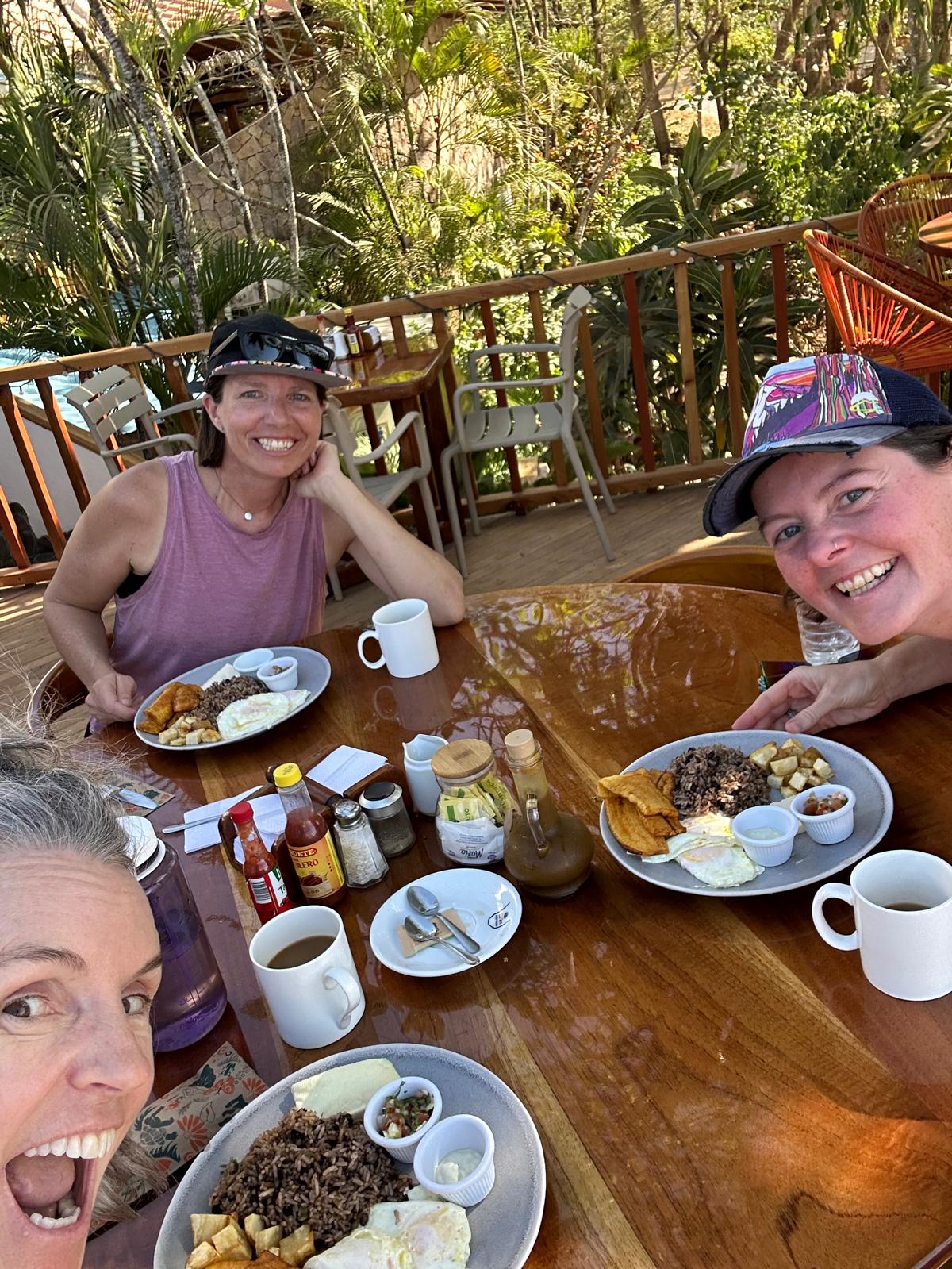
“Leap and the net will appear.” I found myself saying to Bumblefoot, a 33-year-old PCT hiker from Canada who sat across from me at breakfast in Costa Rica this morning. The very fact of a conversation that veered towards the existential angst of living in a world of infinite choice, possibilities, and uncertainty was a beautiful thing. That we were both PCT thru-hikers? Mind-blowing.
My sojourn in this Central American country is coming to an end soon, and it’s been a wonderful investment in time, energy, and money…despite needing to pop frequent pain medications and wear my neck brace from time to time.
As most of you know, I’m operating under the “retire as I go” life plan, as I have done most of my life. This trip to Costa Rica fits right into that philosophy – even with incurable cancer. Strike that…especially with incurable cancer. I need to live as hard as I can right now because my next brain MRI is scheduled for shortly after I return. Someone in my position can’t get off the treadmill of living in three-month intervals between scans and labwork and doctors’ appointments. The possibility of being struck down at any point still lingers close to the surface of everything I do, so I’m practically throwing myself at life.
The jarring whiplash of existence with an incurable disease when I’m feeling pretty good right now is agonizing. Is it incurable or terminal? What is the right terminology? People in my writing retreat this week asked why I use the word incurable when chances are that I will die from this disease. That word choice is intentional. It’s easier to live when I say incurable, much as it’s easier to live when I say remission rather than NED (no evidence of disease). Some in my position would never use the “R” world to explain their current state. The reality is an NED status is a snap-shot in time, and the tests used to determine that status can’t see down to cancer cells smaller than 8 mm, so there very well could be some dangerous little buggers still swimming around in my body, waiting for my immune system to drop its surveillance, or stressors to mount to a point where the barrier has worn down and they can take hold again. In a way, I use the word remission as an illusion of control. Illusions mean everything. I choose to believe I’m cancer-free. I choose to believe I can live a full and fulfilling life despite my physical disabilities. I choose to live.
I came to Costa Rica to take part in a writing retreat with my friend and fellow hiker Anish (aka Heather Anderson) and to explore my book ideas with the other participants. Something that kept surfacing when I noodled on my memoir, was that I refuse to operate from a place of fear – the fear that would keep me from fully engaging in life. I refuse to give in to the fear that could keep me at home, wrapped in bubble wrap, instead of walking the beach in search of sea turtles and dodging crocodiles in the nearby estuary. That’s not how I’m choosing to live.
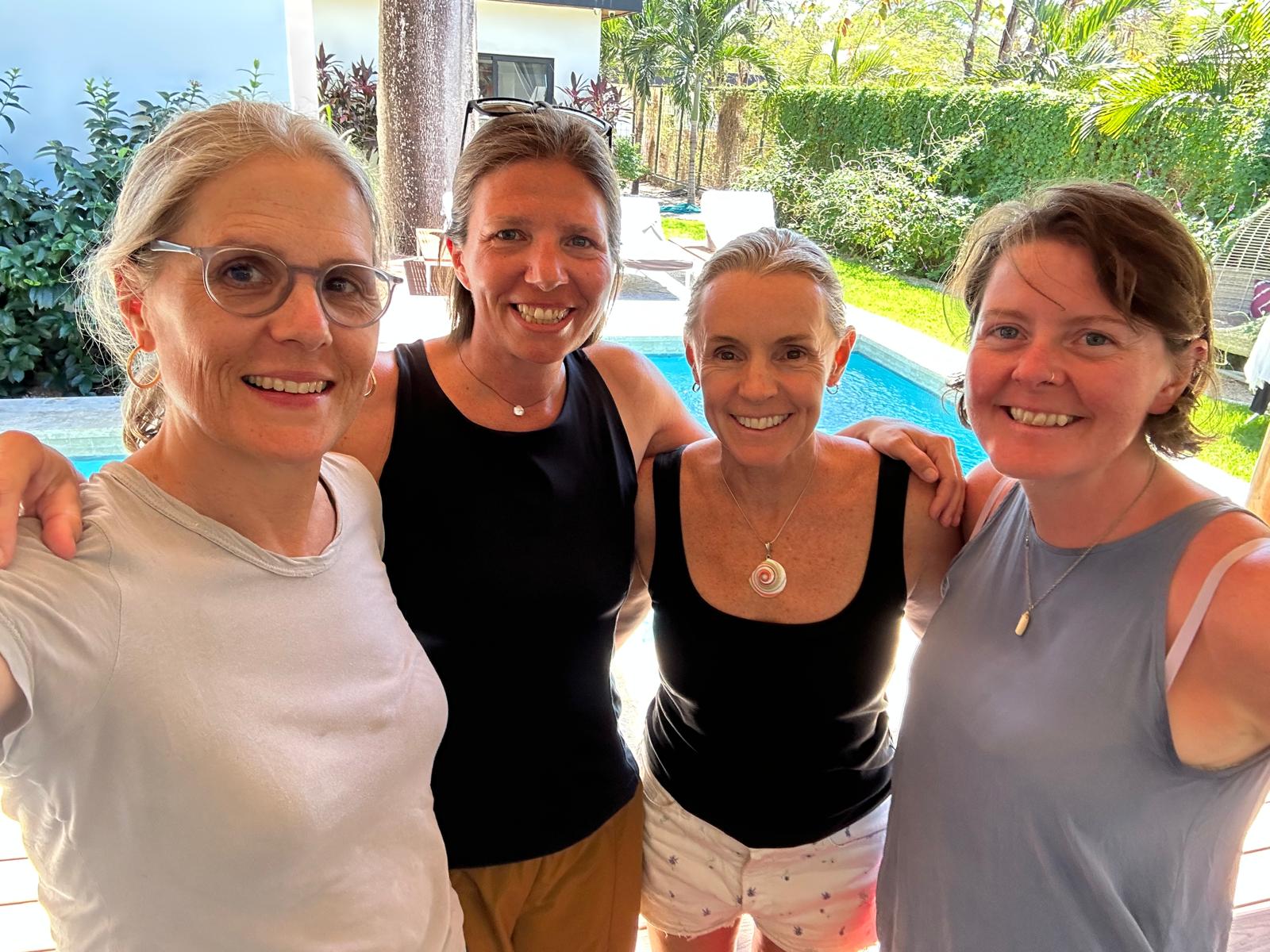
The retreat participants: Boo, moi, Heather & Johanna
I’m choosing to live, especially after watching Andrea Gibson’s documentary yesterday, Come See me in the Good Light. That film highlighted the fragility of what we are dealing with here. If Andrea can die three years after the first diagnosis, then so can I. Cognitive dissonance then reared its head when I read an enlightening Substack post by Oncologist Daniel Flora, When the End Doesn’t Come, about how many of us with incurable cancers are living far beyond their initial life expectancy and enter a kind of limbo where we know we might be like Andrea, but we also might live for 20 more years. WTF? Can you imagine living the rest of your life thinking that you might be given a death sentence every three months? Even when you are feeling good? Welcome to my world.
Jenny (or Bumblefoot) and I have talked about life in the way most people only achieve in years-long friendships. That’s the magic of meeting someone on a long trail, in a foreign country, or when living with stage-four cancer, or in this case, all three. She and I both expressed our delight in sitting across from one another and finding out we had a shared experience. The serendipity of it all. I relayed a story about when I had just arrived in London for grad school and was very uncertain that I had made the right decision. I sought out refuge from my oscillating emotions on a visit to the Museum of London. I walked in the door and was greeted by one of those life-sized cardboard cut-outs that you can put your face into. The cutout? He-Man, thrusting his sword into the air, calling upon the power of grayskull, much like I had done the previous year on the top of Blood Mountain on the Appalachian Trail when I received the trail name She-ra. Well, that museum exhibit and silly photo I took with my face shoved in the cardboard cutout became a sign that I was in the right place in the right time. I gave myself permission to follow the breadcrumbs of my curiosity and fully invest in life in London. I feel the same way about Costa Rica, not just because I was getting to learn from Heather and her process in writing three books about thru-hiking (heads up, you can buy her new book Farther now), but also because the main facilitator, Johanna Garton, grew up close to me in Wisconsin. I went to school in Waupaca, and she, 40 miles away in Appleton. I live for those coincidences. I live for those breadcrumbs. Coming to Costa Rica and investing in this retreat means I’m on the right track.
So I’m going to continue trusting the world. Continue to believe that I can do this, that I can live a full life despite the pain and uncertainty. I hope you can too.
P.S. Johanna has a few more writing retreats coming up this year. Soak in the pura vida vibes in Playa Grande and get some excellent feedback and direction on your writing project. Find out more here: Costa Rica Writing/Yoga Retreat
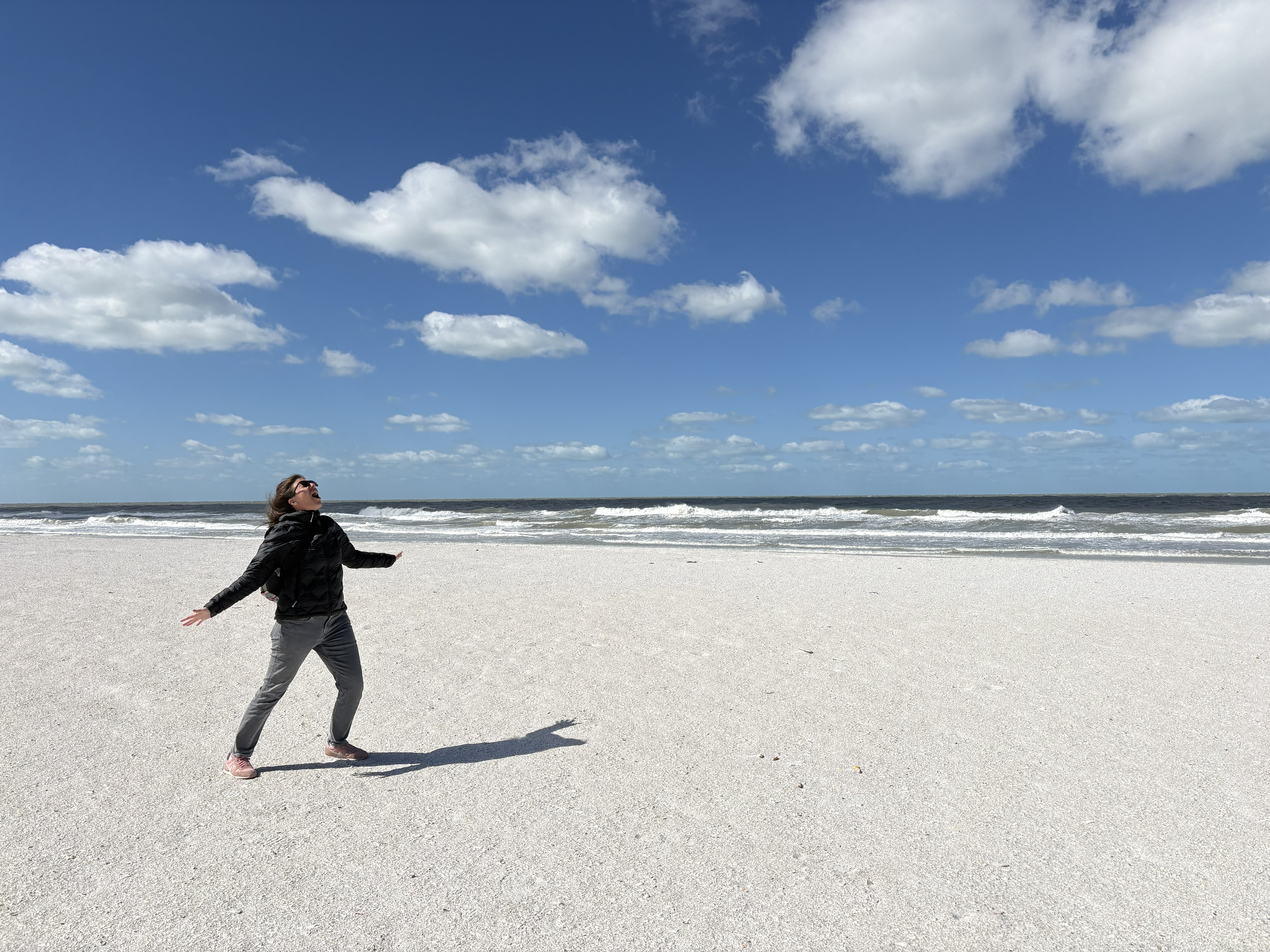
I just got home from a visit with my good friend Mary. I don’t even remember her snapping this pic, but it resonates. Big time. Is my howl about our seemingly unescapable trap of war, abuse, violence, climate change, and a robot sentience that will change humanity forever? Oh yes, it could be. It could also be an agonizing scream about confronting what my body may or may not be able to do in the future, the ever-present pain, the memory of how I filled my days just a short while ago, and the uncertainty of it all. Or maybe it was just a howl to howl.
We walked that beach for miles and miles. I walked more last week than I have in any of the months since returning from the Camino in September. Mary is a triple crown hiker too. We were supposed to hike the Hayduke Trail together this year, in the before times that is.
Letting go of the before times is proving to be a level of difficulty that I haven’t been able to manage yet. I still keep getting trapped up in what I used to be able to do. In fact, just two years ago in the 8 months before I got injured/sick, I paddle boarded the John Day River, backpacked a 100-mile section of the Idaho Centennial Trail, backpacked around Big Bend National Park for a few days, hiked a loop through the Gila Wilderness along the CDT, created and hiked a short 3-day loop around Smith Rock State Park, skied up to Broken Top to camp/ski over Memorial Day Weekend, packrafted the Umpqua River, hiked the Lost Coast Trail on the NorCal coast, backpacked 60 miles of the PCT again, and day-hiked into the Eagle Cap Wilderness. That year represented my typical outdoor adventure pace. I went hard, but also a bit slower as the years had extracted some toll on my body.
In my struggle to get over the fact that I will never adventure like that again, I’ve been revisiting some of my past exploits. This video that I filmed with Oregon Field Guide in 2017 really sums it up. Establishing the Oregon Desert Trail was the pinnacle of my adventuring, and being able to translate those adventures into something tangible was everything. To create the current version of the route, I packrafted, skied, hiked, navigated, sweated, bled, howled and more…I laughed and glowed, at moments I burst with joy, and at others, cried with fatigue. This movie shows you the reality of the kind of experiences I think we need more of, that I wanted more of.
It was all so good, and I’m glad I could go that hard for so many years before I was struck down.
And that takes me to something my visit with Mary left me with: a reminder of how resilient I am, have been, and continue to be. Two things can be true at the same time: I am damaged, and I am resilient. I choose resilience.
How am I doing? Let’s see. It’s the last day of 2025. It’s the eve-eve of my next PET scan, or the first PET scan since my cancer has been in remission. I’m not doing well. In a way, my remission has been haunting me, especially fiercely the past month or so.
I’ve been dismal and down in this season of laughter and joy, but I’ve been high too…these emotions rollercoaster through me, sometimes on an hourly basis, where I can be delighted and hopeful, followed by a deep sorrow that drips off me and weighs my body in heaviness.
Ask me to my face, and yes, I’m doing fine, “Grateful to be here!” I reply cheerfully. To a few, I’ll say, “I’m struggling,” like when Kirk comes home to find me in tears and just enfolds me in a big hug. To myself, I say, “What is the point?” I’m finding this listlessness is manifesting in me forgetting to take my meds. I’ll have breakfast or lunch and then realize two hours later that my pillbox is still full. I hurriedly eat a handful of nuts or a spoonful of peanut butter to soften the landing of the gel caps on my stomach lining.
I am haunted. Haunted by what these next few scans will reveal.
If the scans show there are no new growths, then I have to accept that the increasing pain and discomfort I’ve been feeling over the last month is either in my imagination or my body still coming to terms with being irreparably damaged.
If the scans show there are new growths, maybe it’s a relief? Then these next months will be a series of appointments, and I don’t need to think too much. I will just need to go with it and renew my low-sugar, low-processed food habits.
It’s like I’m just now figuring out how to live with this disease, and it’s not going smoothly. I know all the tricks and tools: go for a walk, get coffee with a friend, read a book, go to yoga, tell Kirk and my closest friends the truth, take a bath. And it all works, for a short while. It pulls me up and out of the funk, but now it seems my default state is in the muck when before it was in the air, floating on thermals above the fray.
And there has been joy….really, there has been – islands of happiness, or just plain contentedness.
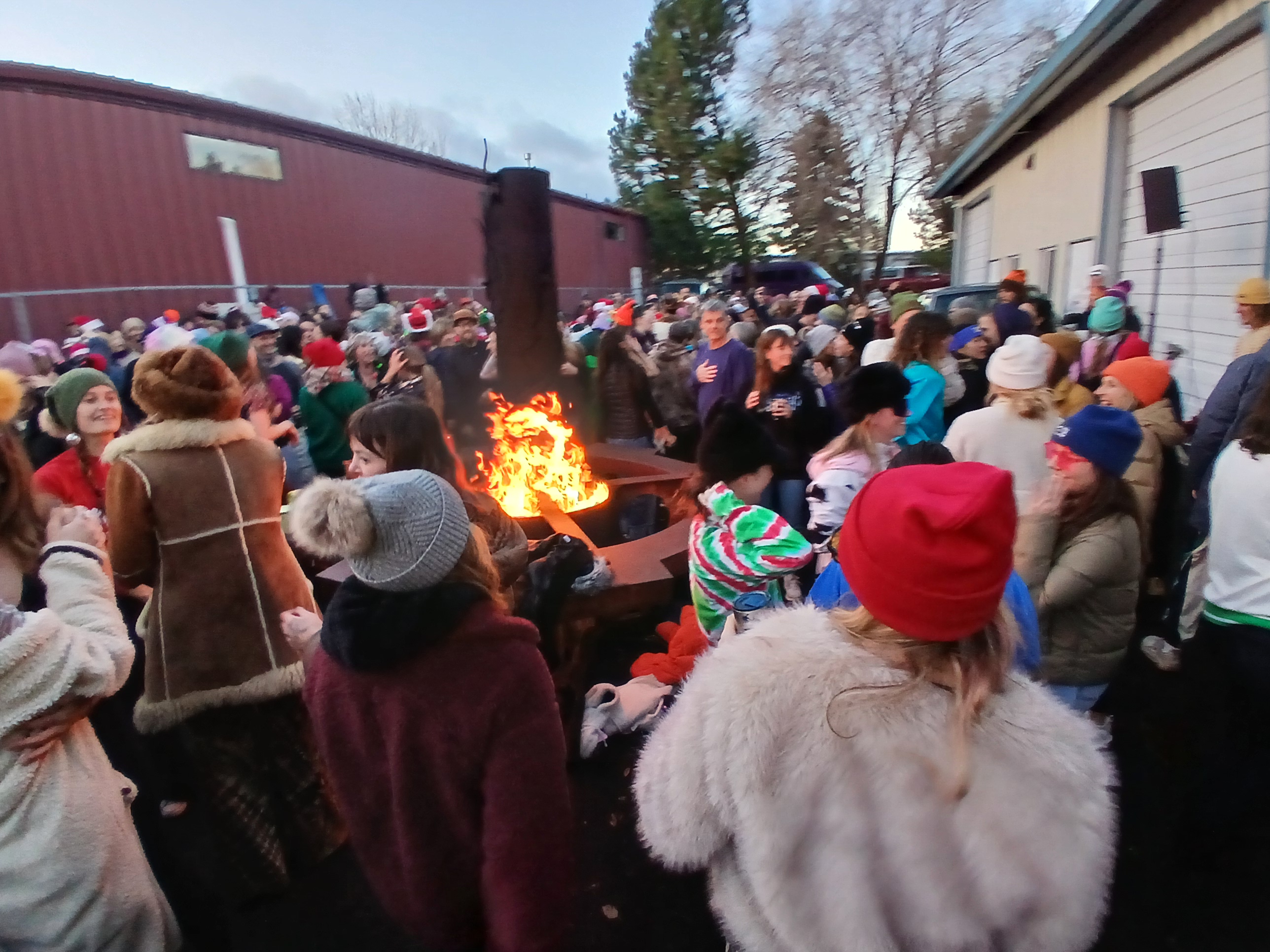
Christmas with my mom and brother.
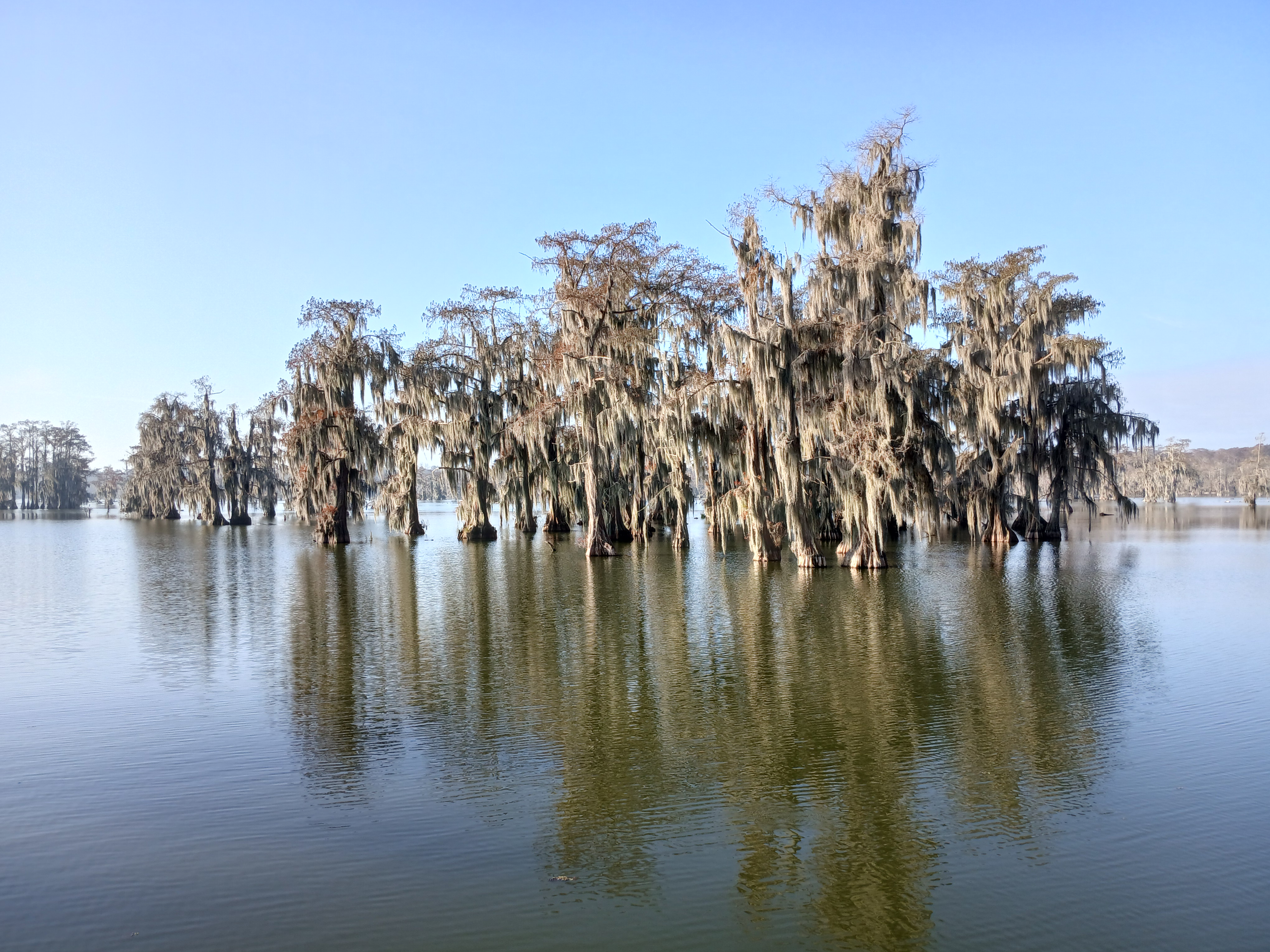
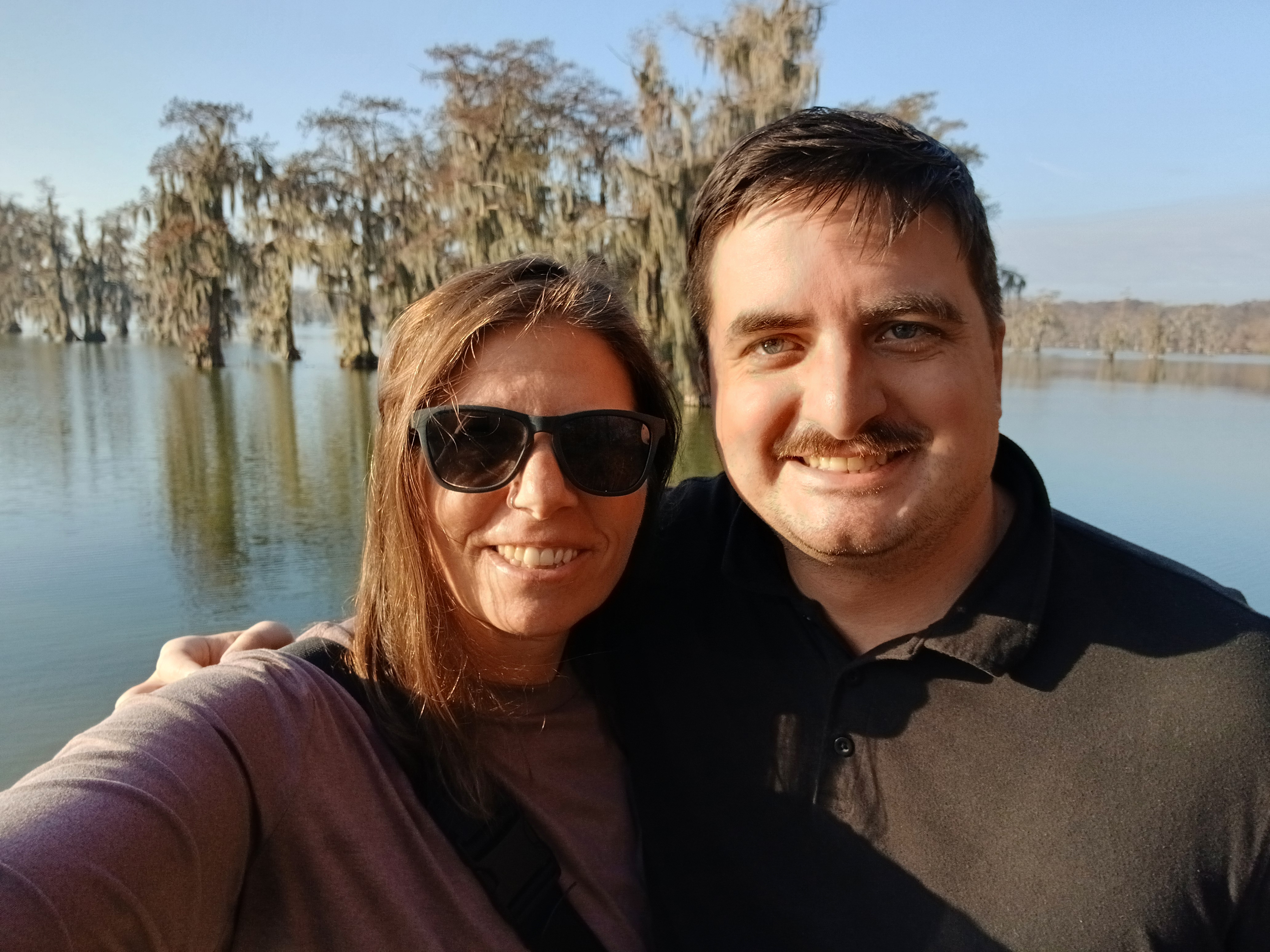
Dan and I walking along the Lake Martin swamp where we saw a huge gator sunning himself on a log.
Brooke and Adryon meeting us for dinner and my first sip of a Red Chair beer in a few years.
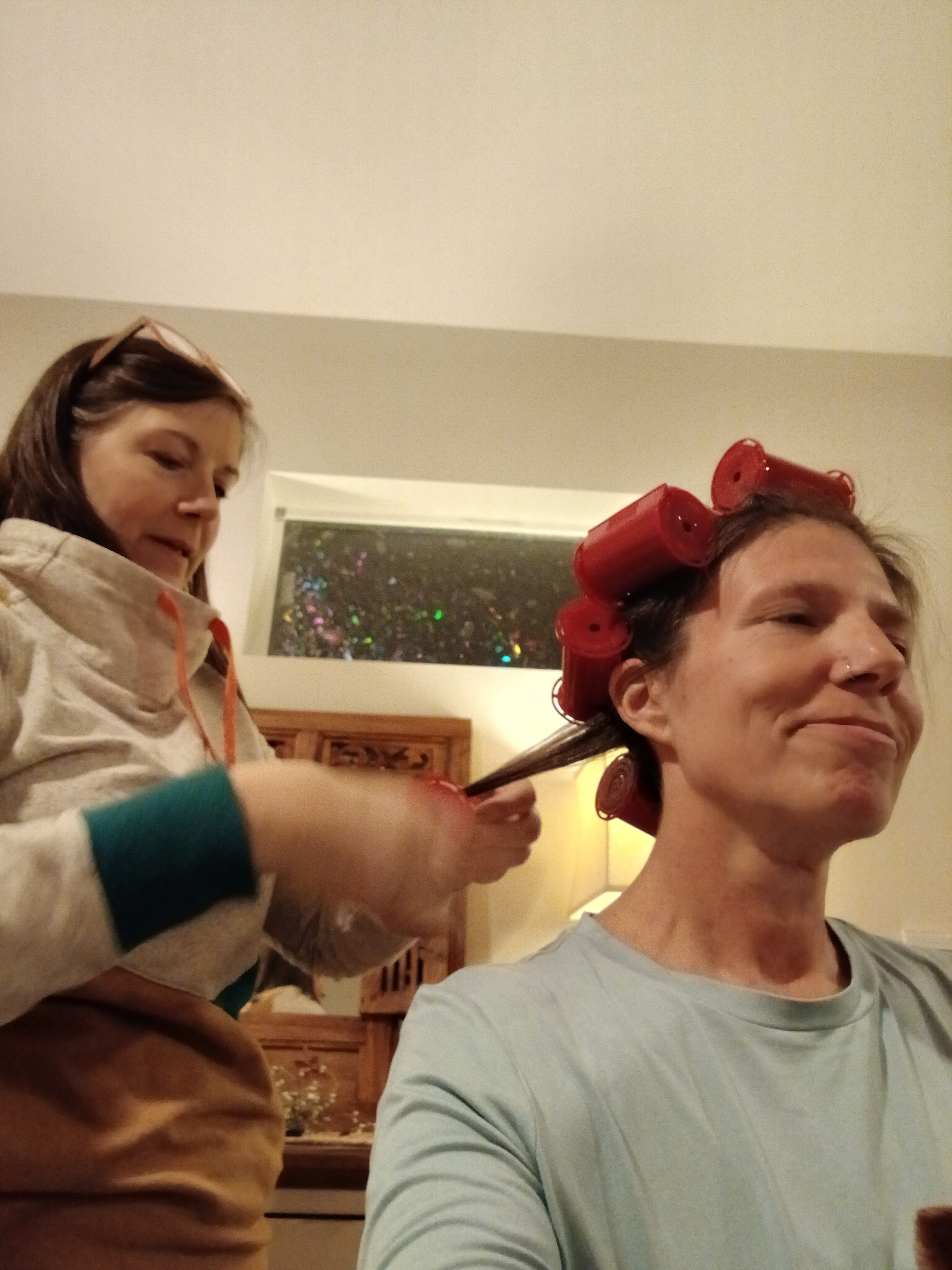
Carrie giving me a make-over.
Marina having us over for quiche and cheesecake.
Cross country skiing again.
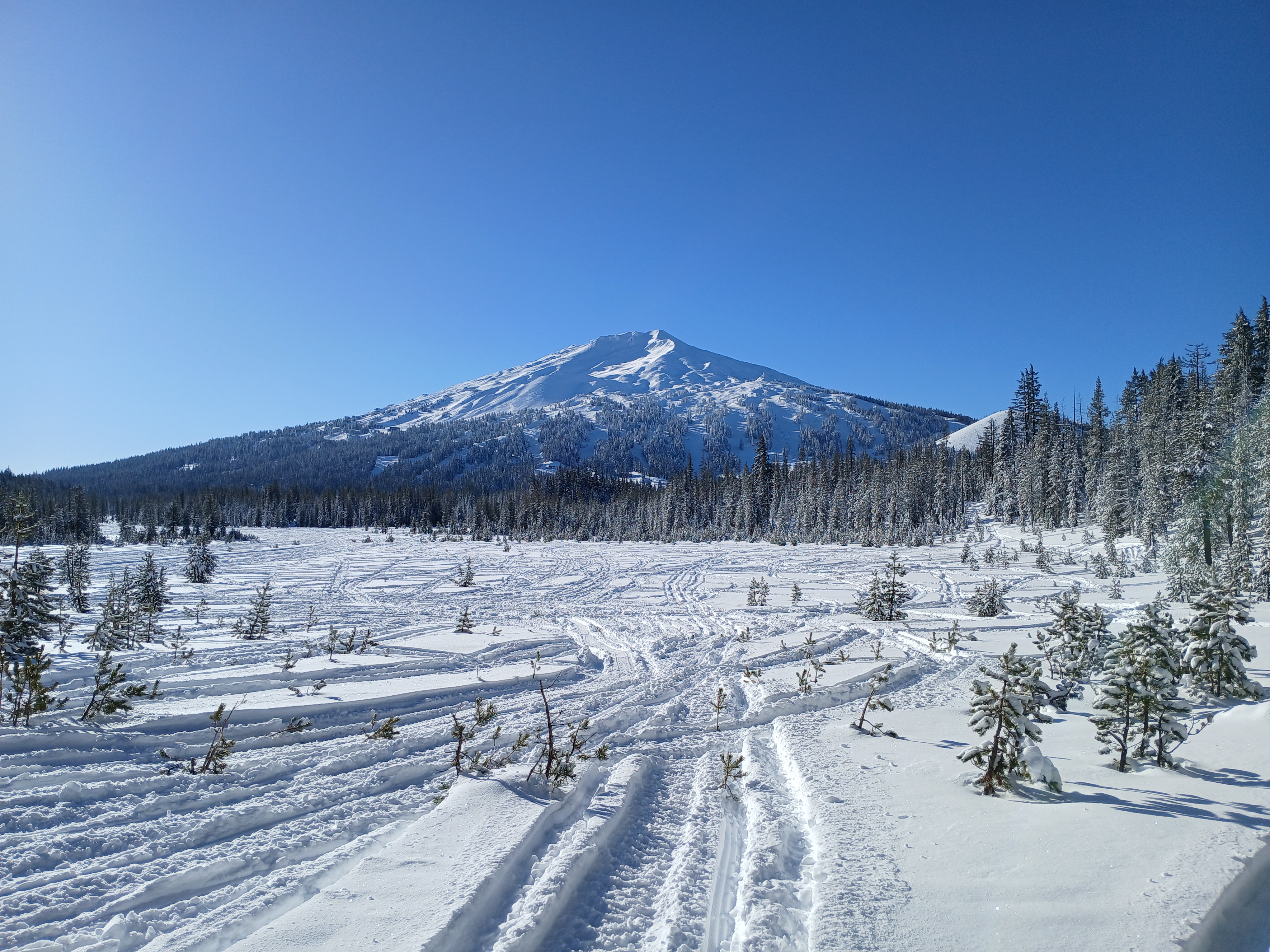
Kirk bought me new cross-country skis with metal edges for Christmas. They are quite a luxury as I have only ever owned garage-sale skis from decades past. We took them out to our favorite snow park the day after I got home from Louisiana; the sun on my face, and the quiet swooshing of the skis in the tracks were a balm to my overthinking brain.
Before we left the parking lot, I couldn’t seem to remember how my ski boots worked. It had only been two years since I had skied last, but it was like I had never worn these boots before. Turns out I had grabbed Kirk’s boots, which I had in fact, never worn before. Ha! I can still laugh at myself. The skiing was good, until it wasn’t. It turns out that I can’t use my left pole, and I can’t go uphill. The pressure of the poles, especially when trying to climb anything, hurts my left shoulder too much. In fact, four days after the last ski, my neck and shoulders are so sore that I’m taking daily pain meds again. Is this cancer? Or is this skiing for the first time in two years?
Keep going. I just have to tell myself to keep going.
Maybe the pressure valve that is questioning my damaged body will be released after these next scans, and then I can keep going. I have a number of things I want to do in the new year, but am waiting for these scans to make any plans… I want to be grateful, but I am not sure how to feel most days. Sometimes my morning walk will be enough to trick my brain into being hopeful, and I come home and make my smoothie of broccoli sprouts, spinach, ginger root, flax, chia, hemp seeds, nuts, and strawberries, but sometimes the hope masks itself in feeling normal and takes me to the bakery where I stand in line for something sweet.
I investigate other hiking options: llamas! I could hike with llamas! Or do a car-supported hike, as many people do on long trails when they meet friends or family at road crossings, the car filled with camping gear, water, and food. Or I could do another Camino – I’ve already started outlining what the Camino Ingles would look like. Or tap the friends who said the would sherpa for me. Oh, and then there are the carts. I asked Reddit about hiking with carts, and after a lot of “you’re stupid for asking that question,” I got a few helpful replies, but ultimately I think carts work best on pavement, and that’s not the kind of hiking I’m hoping to do right now.
Is this clinging to hiking an unwillingness to give up the last 24 years of my life when hiking was my all and everything? Probably. I was one of those lucky few who found what lit them up inside, who found what I wanted to do for the rest of my life, who found true freedom and purpose in a life lived on trail. I’m not quite willing to give that up, which may be, or probably is, at the root of my despair.
There are many disabled folks who continue to hike: Bill Irwin hiked blind. Wheelchair Bob is out on the PCT all the time, and a local friend, Geoff Babb, even invented the Advenchair, an all-terrain wheelchair, so he could still get around after his stroke. Hiking with a disability takes more time and more effort, but it’s possible. It’s possible. It’s possible.
Oh, the effort though. I’m getting caught up in the effort of doing all the “right” things to help mitigate my body feeling like a 500-pound elephant sinking into the sea. A part of me knows I will get through this, and may even return to my resting disposition in the clouds. A part of me knows letting myself feel the feelings may be the only way through, and a part of me needs to keep finding the effort that leads to small joys.
This isn’t a cry for help, I’ve done that already. This is an effort to be real with you about those “How am I doing?” questions.
I guess the next update will be in the aftermath of my PET scan, brain MRI, and labs. I’ll be a completely different person then.
2025’s Thanksgiving on the River Crew – Cindy, Kirk & Moi (photo courtesy of Cindy)
Kirk and I have had a Thanksgiving tradition of heading to water for the last 10+ years. It probably started because he just loves a flowing river, and even though my river time had been limited before we met, I quickly took to the eddies and riffles as he showed me the ropes of paddling, rafting, and floating downstream.
One of our first trips was a packraft adventure on the North Fork of the John Day River. You can read all about it here:
click for the full post…
We had many other adventures on the water, most frequently coming back to the banks of the Lower Deschutes River as it usually had the most water of any of Oregon’s rivers in late November. We would invite various friends, sometimes it would snow, sometimes it would drop into the single digits, and sometimes those friends never returned for another water-logged Thanksgiving trip…the cold really highlights how a four-day sufferfest can drive people indoors, even if we bring multiple pies.
This year my longtime friend Cindy decided to brave the unknown, and possibly rainy weather to accompany us on our float, and she was rewarded with mild temperatures and minimal splashing as I had asked Kirk to find the smoothest and driest lines through the rapids – my neck and spine still can’t tolerate much jostling.
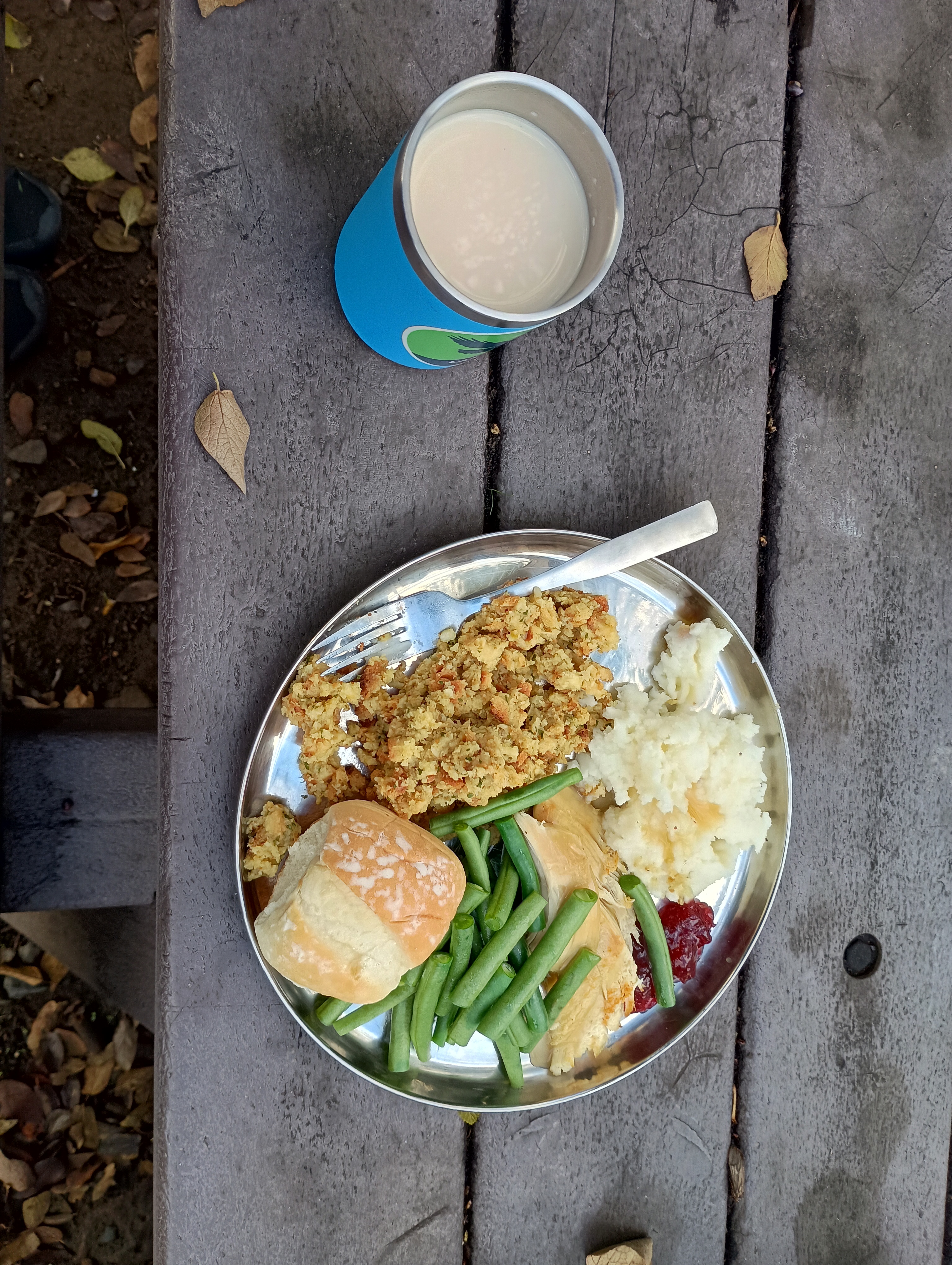
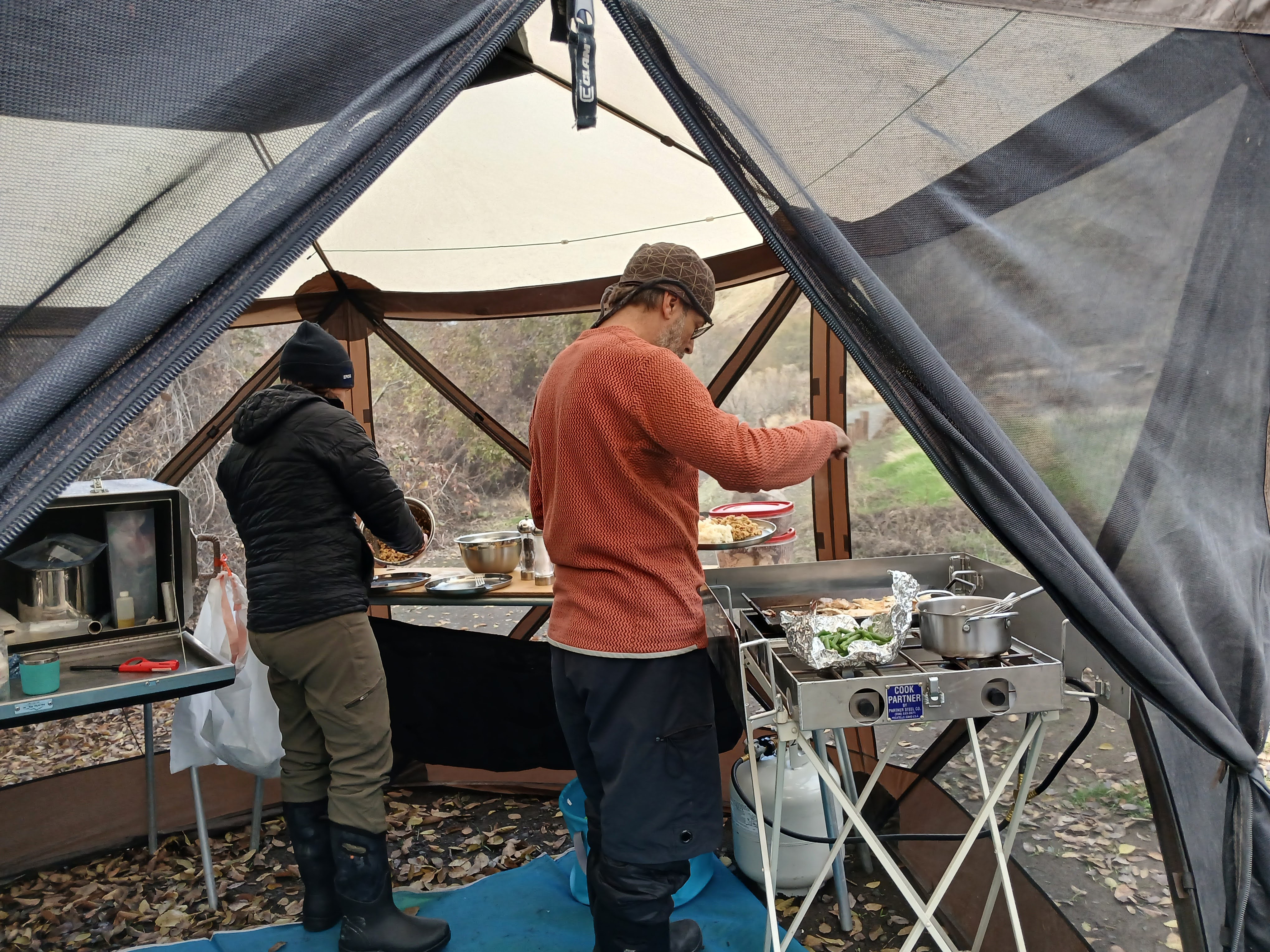
We launched on Thanksgiving morning and pulled over a few miles later to reheat our feast. I don’t think it was the best of our efforts as my turkey cooking the day before was a bit too zealous and left the meat on the dry side, and we skipped the fancy side-dishes for instant potatoes, stovetop stuffing, canned cranberry sauce, and store-bought pumpkin pie, but it was all gravy. As Edward Abby says, “Hunger is the best sauce,” and the smell of the cooking turkey had started my mouth watering a full day before our dinner.
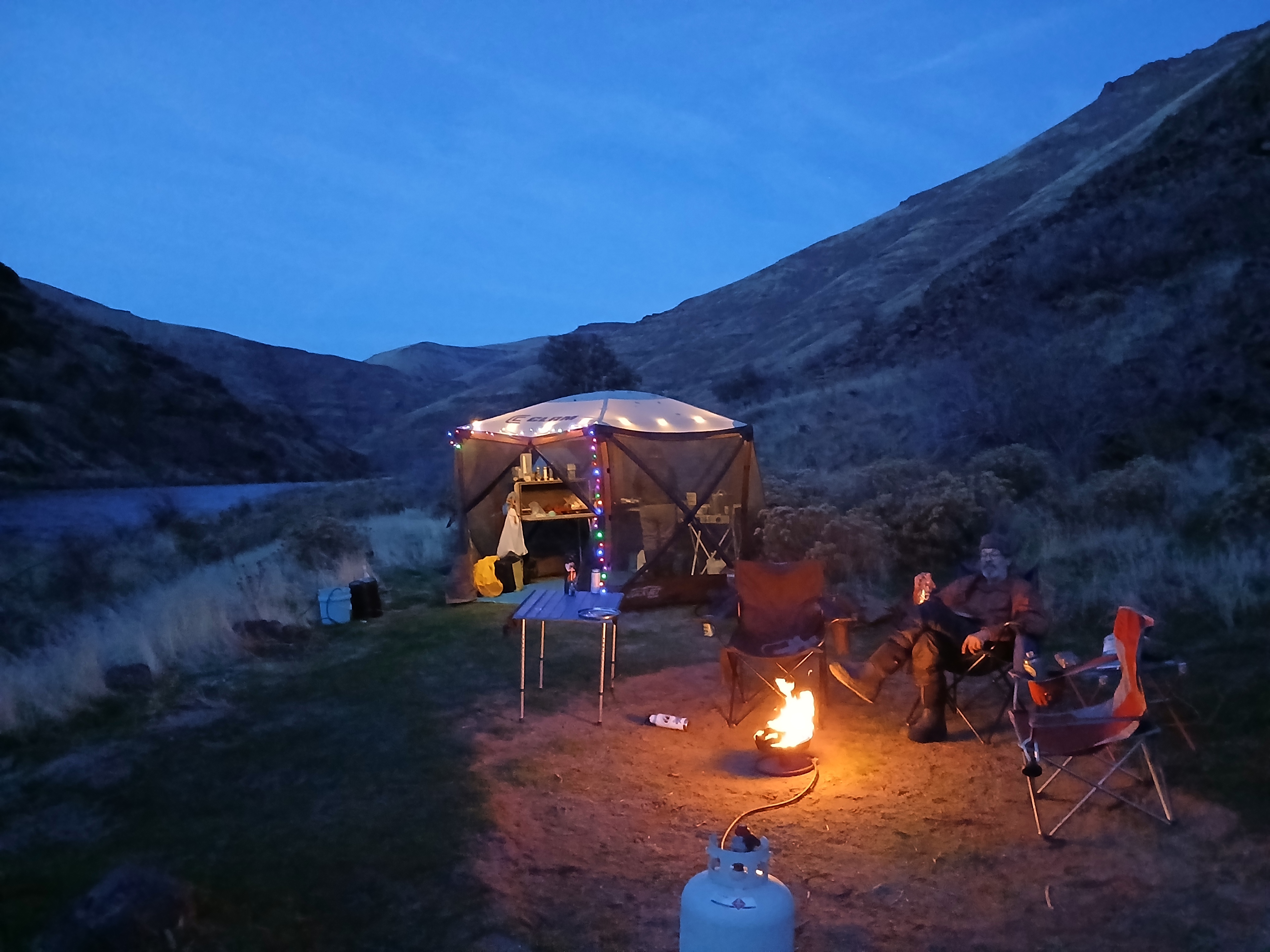
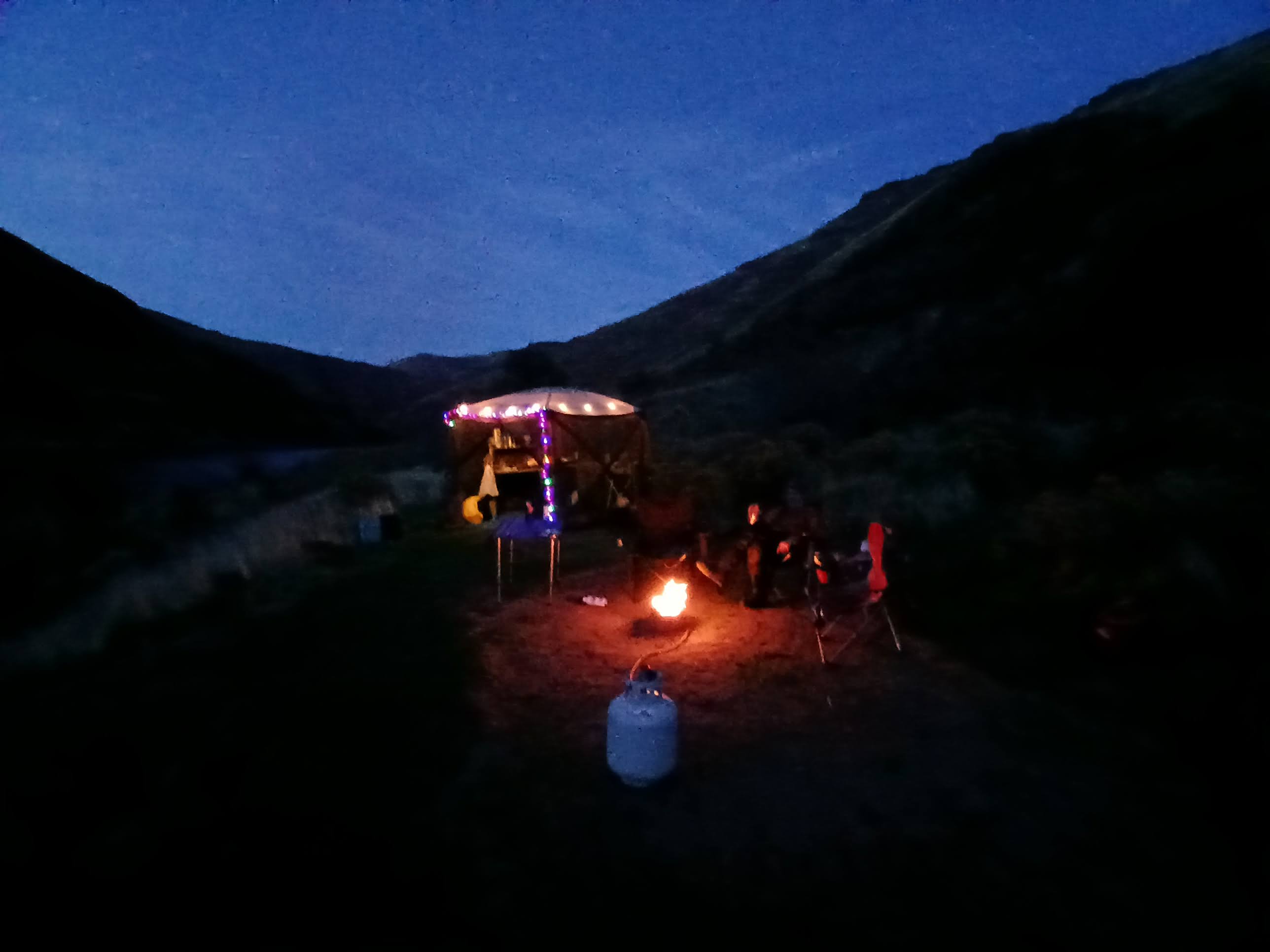
Dark comes early in late November, but I added some festive cheer with some battery-powered lights and hot cider.
The skies were blue and the nights dark, and we all got a solid 10 hours (or more!) of sleep each night.
It is such a gift to be on the river during this time of year. The blue heron was our steady companion each day on the water, and the sound of the current hushed any background noise that we carried over from day-to-day life.
Carrie and I got out of town last weekend.Did some real pretty walking.
I’ve had some learning moments during my Camino planning.
First, I had intended to wait to book most of my lodging until I got there and discovered how my body was doing, but the scarcity mindset set in, and I became worried that most bookable options would be booked, especially since I’m using a luggage transfer service. So I went ahead and planned out the whole 170 miles and choose mostly hostels (or albergues) with a few hotels here and there so I would be assured a good night’s sleep and some quiet on occasion. But 170 miles in two and half weeks means I’m going to be walking some long days. Can I do it?
Then I went to book the luggage transport service to each spot, figuring the more I did from home, the less I would have to do there when I am faced with my body and the miles, so I looked at three different services: Caminofacil, Tuitrans, and Pilbeo. Many of the places I had booked didn’t show up on their ready made list of delivery spots! Arrrg. One service said I should change my plans to places that did show up on their list, but another said I could contact the lodging, get some info, and pass it back to them, and they would make it happen. So I went with those guys. I went with the flexible peeps who would have my back. And as I worked through the list yesterday, I discovered a lot of my lodging WAS on their list….their list being a hodge podge of addresses and names that sometimes didn’t match the exact title of the hostel, thus the confusion. Whew. It was more work than I had planned, but good to note if you plan to hike the Camino in the future and use luggage transport. Start your booking process with the transportation folks and book from their list.
In other news, I got my chemo port removed this week! Woot! If you haven’t seen a chemo port before, picture a quarter-sized, no, maybe a bit larger… a half-dollar-sized round disk that’s about a quarter inch thick implanted beneath your skin between your collar bone and your breast. It can be on the left or right side; mine was on the right, closer to the lung tumor. It has three raised bumps on the surface, so the skin tightens around it and looks a bit alien. A tube comes off it and is threaded through a vein in your neck so that sometimes people will say, “What’s that in your neck?” When it’s time for chemo, I lather the thing up with lidocaine cream and put a bandage on it before going to the hospital. The lidocaine will numb the skin, and the nurses use a special needle to puncture the skin and port….the three dots guiding them in like the lights on a runway. The tubing is taped to the skin for the multiple courses of drugs that will be injected directly into your vein that day. It saves your arms from being destroyed by the chemo. My chemo was the kind that only needed to be injected once a month, but others get it daily or weekly. So getting this thing removed is a big step towards living with active cancer in my past.
When talking with the doctors during the removal, they asked how long I had had it in, and how long my treatment was. All of their eyes got wide when I said I got the port in January, the chemo lasted until April, and I reached “no evidence of disease” by July. “Wow!” they said. “That’s fast!” I know, I quipped back. “And I had tumors from head to thigh! 27 just in my brain!” It seems surreal to say it even now. How did I get better so fast? Is my body really that responsive to the chemicals and radiation? To the diet changes, supplements, love, and positivity from all of you? I feel like I’m a Radical Remission example, except to get that moniker, you need to have been in remission for three years. I’ve been in remission for one month. I have a ways to go, but I’m off to a good start!
Lets see, what else does the Portugal prep prep look like?
I walked 9 miles the other day, that’s training!
How about my current iteration of a gear list:
In the roller carry-on (transported each day)
Neck pillow (for the plane – that red-eye on the way over will be killer)
Inflatable pillow (for the hostels – works well to get proper neck alignment at night)
Rainpants (in suitcase when not raining – I usually wear a trash-bag rain skirt, but I figured this was front-country the whole time, I’ll be more civilized!)
Altras (I’ve never really worn them before, but they are light and I don’t need the ruggedness of my usual Oboz)
Orthotics (In case you didn’t know, I’m old)
Socks
Warm hat (in suitcase when not cold)
Mittens (in suitcase when not cold)
So there you have it folks! Next up: more walking.
Kirk and I took a day hike up to the base of 3 Finger Jack last weekend. It may look extreme, but this point is only 2ish miles from the trailhead! The worst part was driving up the washboarded dirt road, which was much harder on my neck than the hike.
I mentioned my intention to hike some of the Camino de Santiago thru Portugal in one of my last posts, and now, buoyed by all the good health news, I’m making it happen…and all of a sudden, the trip is soon, very soon (like September soon!)
I’ll be writing here daily while I walk, and now my time is filled with logistics like:
Whats up with the whole luggage transport system? Since my back/neck/shoulders still can’t support a pack I’ll be paying to have my roller carry-on bag transported each day. There are several companies that offer the service, and you only need to book 48 hours in advance, so that leaves room for serendipity…especially important because I don’t know how many miles per day my body will tolerate yet.
How do I book hostels, hotels, or auberges? Fortunately, many of these lodging options leave half their beds open for first-come walkers….In the day and age of cell phones and reservations, that is amazing, and again leaves some time for the hike to evolve as I see how the miles are feeling. I do have the first three nights booked, though.
Visa? Not needed
Money? Debit and credit cards will work, although I’ve had to check the international fees for both…since my trip is relatively short, just a few weeks, it sounds like getting cash from ATMs along the way will be an advisable way to go
Gear? I’m experimenting with a few different lumbar packs to carry things like a raincoat, umbrella, snacks, and water…I used the Gossamer Gear Piku this past weekend on a day hike, and loved how light it was, although the larger capacity (nine liters) means I can still put too much weight in it, like I did for a walk around town this week 😬. I have a Mountainsmith lumbar pack on order to try, although it comes off the shelf much heavier at 1.56 lbs vs the Piku at 8.9 oz.
Blogging? I thought I would bring my Surface tablet with keyboard to write at cafes along the way, but on my hike around town, it seemed heavy in the pack…I could just type on my phone like I do on regular backcountry hikes…we’ll see. I’ll take some more hikes with it and decide later.
Language? I’ve been taking some Portuguese lessons on Duolingo, but a big portion of the way will be in Spain (about 100 miles vs 70ish in Portugal), and I don’t have time to get good at two languages. Anyway, I hear English is pretty prevalent, and I can always rely on Google translate.
Sleeping? Since I’ll be in a bed each night and can transport whatever fits in my roller carry-on, I’m planning to bring my 40-degree feathered friends quilt, an inflatable pillow, and a silk liner for the beds. I hear i will need to be alert for bed bugs, so I am getting versed I need what to look for.
Food? It will be quite an urban experience, so I’ll have cafes and restaurants all along the way. I will also probably take advantage of grocery stores and hostel kitchens to buy and make my own meals…as for eating restrictions, I’m going to be a bit looser with my diet and eat what is fresh and authentic…I want to immerse myself in the experience, and if that means an occasional glass of wine or pastry with lunch, so be it!
Navigation? I bought the Wise Pilgrim guidebook and app, and I also made my own data book in miles vs kilometers, and have the route uploaded onto Caltopo, which I’ll use on my phone too.
There will be other questions that come up as I’m putting this trip together, and I’ll probably post once or twice more to share that with you. I’ll also post my gear list and anything else you might find interesting. Have other questions? Leave a note in the comments!
I see this as the first of many Camino-style hikes I plan to take since my body is different now, and as I’ve mentioned to some of you, I see developing these type of hiking opportunities for the less-able bodied or people who simply want to eat good food and sleep in beds as a potential pivot for my business once I’m able to start working again. Exciting!
I grew up listening to this song by the Scorpions, and it still brings a pang of longing and sadness, and is it hope? And I didn’t know the full undercurrents of the song at the time, but its wistful tone certainly resonated with me.
And I have been facing so much change recently, it’s hard to get my bearings. Especially in the month or so since the news of my promising scans…it seems I’m on the verge of seeing a life for myself again, but of course I’ve still been living a life…but you know what I mean. I’ve had to live in the present for the past six months, so much so that looking beyond the next week or few weeks just didn’t seem possible. But all this word salad is to say the only constant is change and I’m grateful that I’ve had such a secure base of loved ones that have provided enough stability that I can weather the winds of change with a bit of grace. It’s like I’m a blade of grass, blowing in the wind. Sometimes the wind is whipping me around, bending me almost to the ground and roughing me up, but you all keep me grounded, set in place, so that the wind can try and rip me up, but it can’t. My roots are too deep.
Woo, can you tell it’s 3am and I’m back in my early morning writing phase? 😄
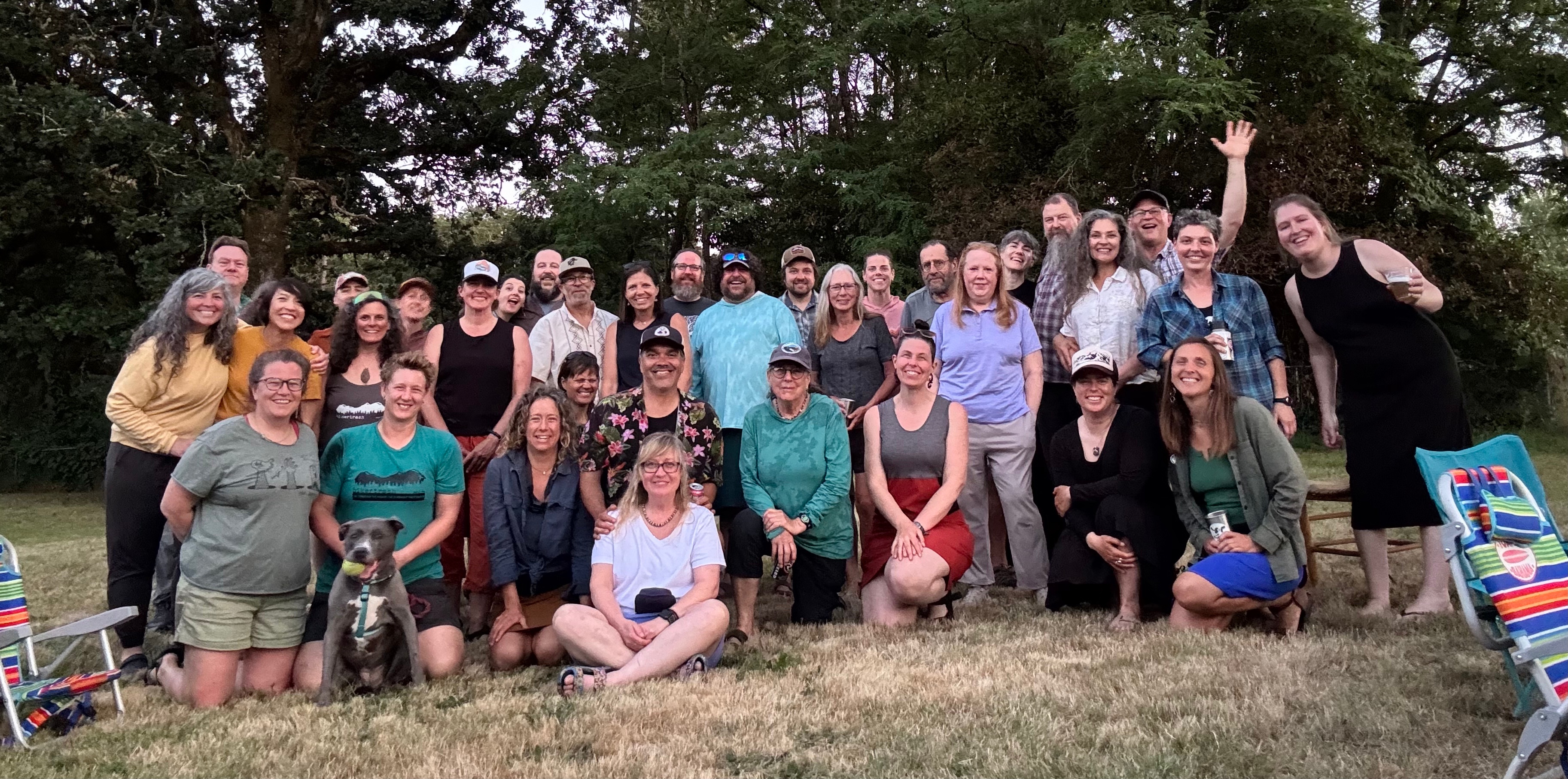
I’m sure you are all eager to hear about the big birthday party bash…it was fabulous! I think almost 50 people came out to Amber’s place in Corvallis. People brought flowers and snacks, fresh strawberries from nearby farms, and so much joy. It was such a lovely gathering….even though something got to me. It might have been a bad sandwich, or the heat, or some pain I’ve been having in my left shoulder, but I vomited several times on Saturday and it aggravated my throat enough that I lost my voice, and it left me with barely a whisper. Really, it left me mostly listening to everyone around me chatting about adventures past, present, and future. And so much serendipity happened! Dr. Grant, a hiker I had met at the Cascade Ruck last year came, and just happened to be heading down to hike the Bigfoot Trail, and wouldn’t you know it, Fireweed, who is on the Bigfoot Trail board and was planning on giving her a ride to the trail was also up for the party and the two met for the first time. Dr. Grant even got a ride down from the party on Sunday to start hiking the trail. And Anne, Amber’s wife, connected with my good friend Sage when I remembered they were both from the same very small northern Californian town…so small that of course their paths had crossed many years ago when both lived there, yet they were meeting at the party, of all places, years later.
The magic of people, good people, is a big part of what is keeping me going. Such kind and generous people. Sue, a volunteer that I’ve had on a couple of ONDA volunteer trips, came as she lived in Corvallis, and wrote to me later and said “I knew no one, except you, when I showed up. Yet— I knew immediately this is “our community”. You, your life, your work, brings out the good in people —- just like the mountains, the rivers, the oceans, as we traverse this earthly landscape.” That is just everything. My heart is full.
Sue!
So yes, I was sick and it lingered the next day, but we ate bagels and drank coffee in the shade of Amber and Anne’s giant sequoia tree in her yard, playing “move with the shade” as the morning sun shifted in the hot day.
Nemo and Pouch (my PCT 2006 besties) won the award for having traveled the farthest…from upstate NY! Just for the weekend!
We called ourselves “Team Primary” in the North Cascades on the PCT because we were in blue, yellow, and red rain jackets half the time.
There were so many people I hadn’t seen in ages who came out. I couldn’t have asked for a better party. I hope to have many, many more. Some suggested it be an annual thing! Who wants to host next time?
And of course, Amber’s Nomadic Pizza was a huge hit. She and our friend Megan sweated for hours slinging pies for us in the hot, hot wood-fired food cart, and it was so delicious. (Amber can cater private events like my party…please book her if you have something coming up!)
The pizza guru, Amber
This week has been one full of doctor’s appointments and hanging with my little brother Dan. He just bought a new car and wanted to stretch its legs and see me too. Dan is in the Air Force based in San Antonio, so he drove three days up, arriving just in time to go out to dinner with Kirk and me on my actual birthday (Monday, June 9….the best day of the year!).
He took me to meet my new oncologist and to wrap up with my old one. He took me to get more labs done and along with another MRI. We took walks along the river and drove up to the mountains for an afternoon, too. It was a chill but wonderful visit. Thanks Dan!
Doing the tourist thing in Bend.
I have more appointments before I head out again to visit my parents next week. All three of my brothers will be down there too, so it will be another busy week. My dad’s Alzheimer’s is progressing, and his time is limited, so I’m glad we are all able to gather together.
So even though my prospects of health continue to improve, I’m still caught living in the moment, paying attention to each day as it comes. The peonies that I got for my birthday are a good reminder of that…each day they open a little more, changing ever so slightly, but changing, so that it’s worth stopping and appreciating them in each slight phase. Sure, I could think ahead to when they are dead and gone, but why do that when they are vibrant and alive and in front of me now? Enjoy them. Enjoy this. Enjoy the moment.














 She-ra Hikes