Oregon Desert Trail Section 25 – Day 2 – 12 miles

The wind flapped our tents and tarps all night long and the full moon made the night seem like dawn for most of the hours we all tried to sleep. In the morning we were all a little blah with the lack of sleep, but the day promised mostly downhill terrain and the epic painted canyon and three finger gulch… A bit of incentive to get going.

I overshot one of our first waypoints, but hiking a parallel route gave me the opportunity to share route wisdom: you don’t have to follow the exact waypoints…the beauty of a route is that there is no one way, the waypoints are a suggestion of travel… so now let’s figure out how to reconnect! We found a road that wasn’t on the maps that led right to the next water source, and in fact I think we saved .2 or .3 miles with the altered path.

There is no “one way” on a route, find the path of least resistance

The mystery road


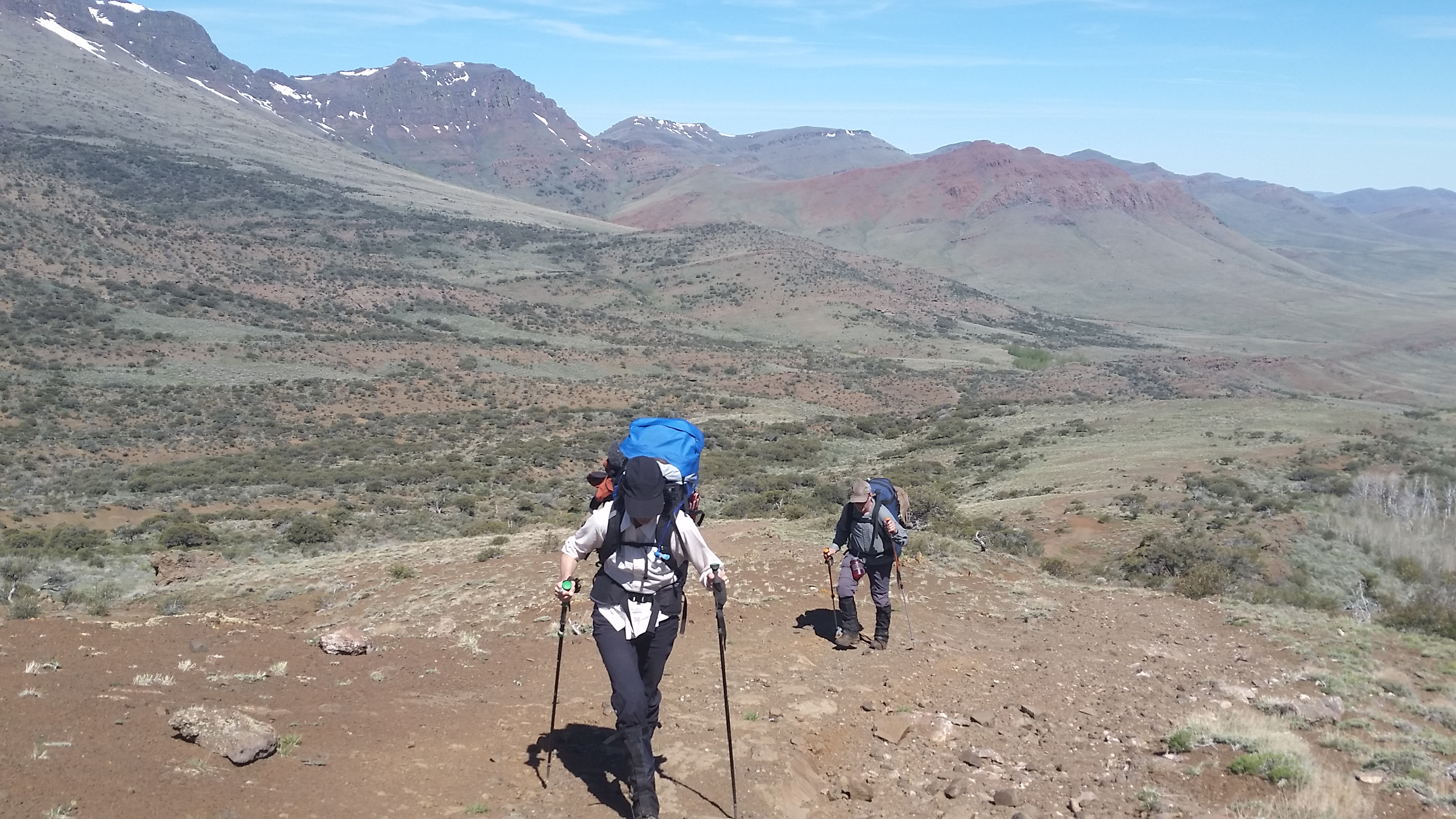
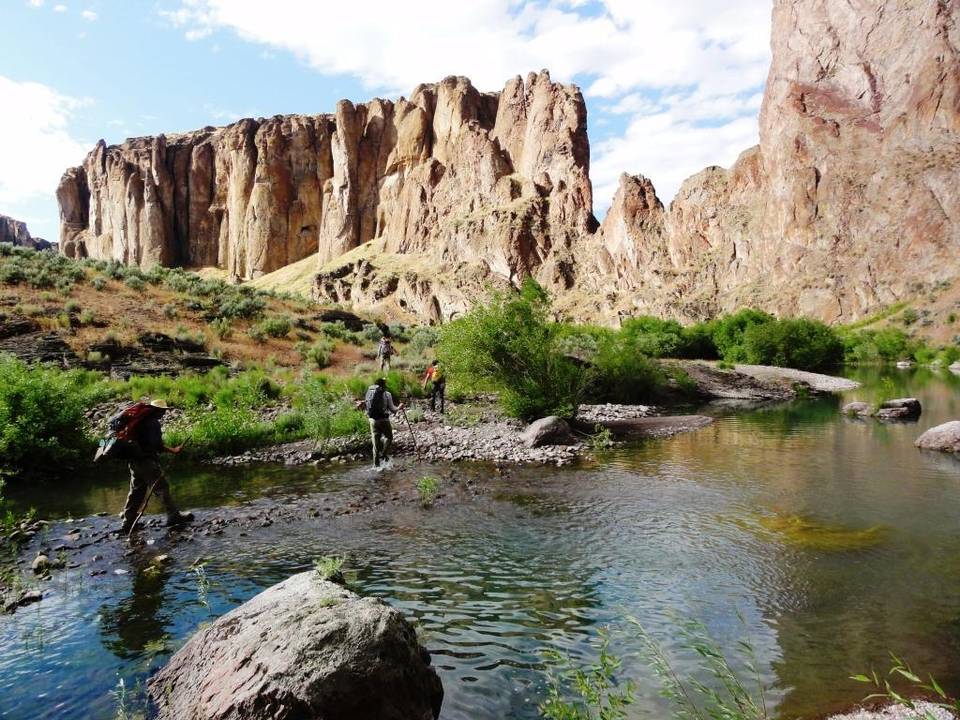
We got to painted canyon late morning and soon we were taking off packs and down-climbing multiple pour overs. Huh, I didn’t know we were in store for the scrambling, but it was fun even though it did take us a long time to get through. The colors were amazing and once the canyon opened up it was simply astounding. I want to come back with a week of food and just explore.

We have to go down what?


I felt bad hurrying us along as the area was so epic, but we needed to keep moving to get to camp. We were definitely not going at my usual pace, and I was finding it was a little challenging to figure out how fast we were going to get through some sections.


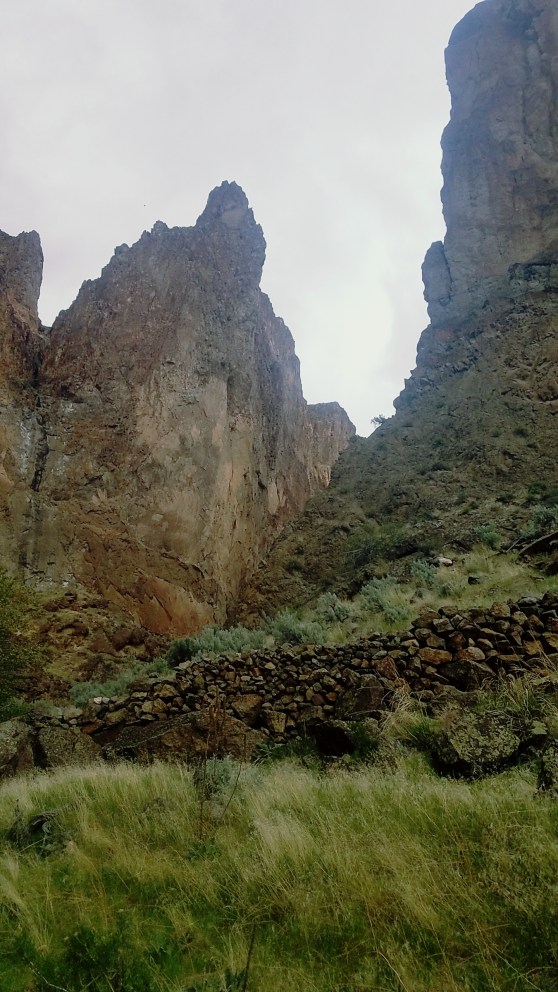
But we motored after a nice extended break, and even though we were supposed to be walking a cross country section, the wild (feral) horse and cow trails were so well defined it seemed like a real trail. The late afternoon was all downhill, and once we got to Three Fingers Gulch and the canyon choked up with rocks below the towering walls of rock, we were all feeling the miles. There were rock corrals and walls going up the steep canyon walls, and it was definitely one of the coolest areas we’ve hiked. A highlight of the ODT for sure.

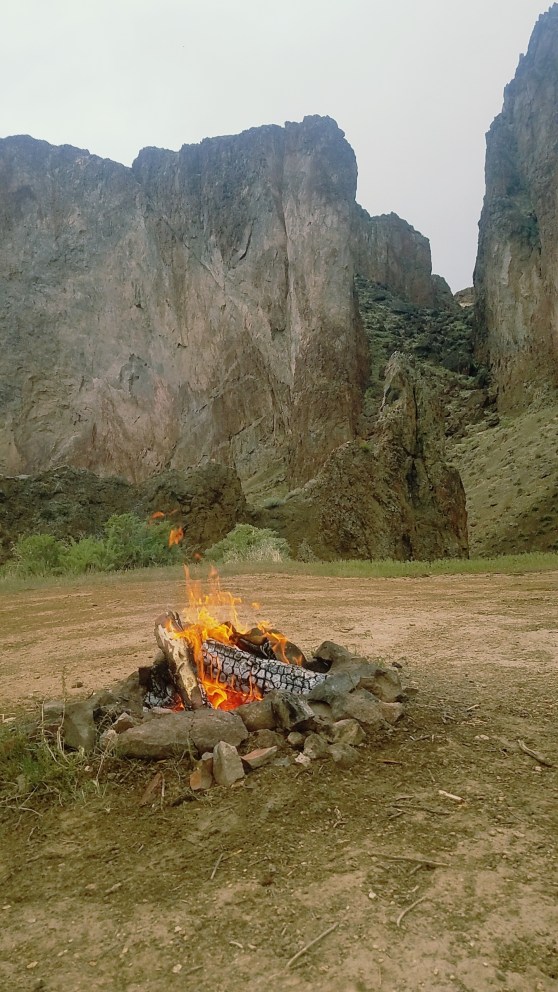
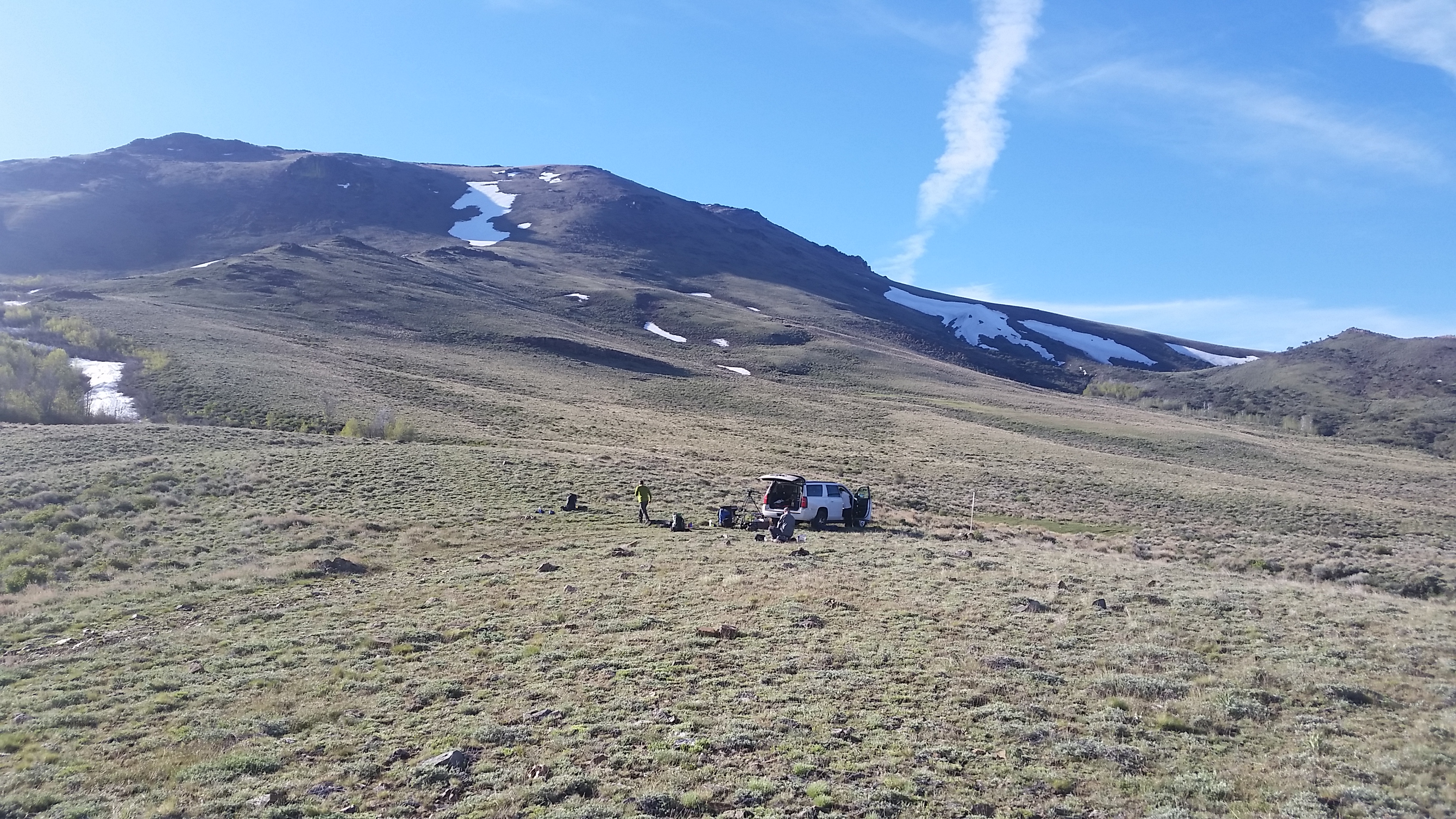
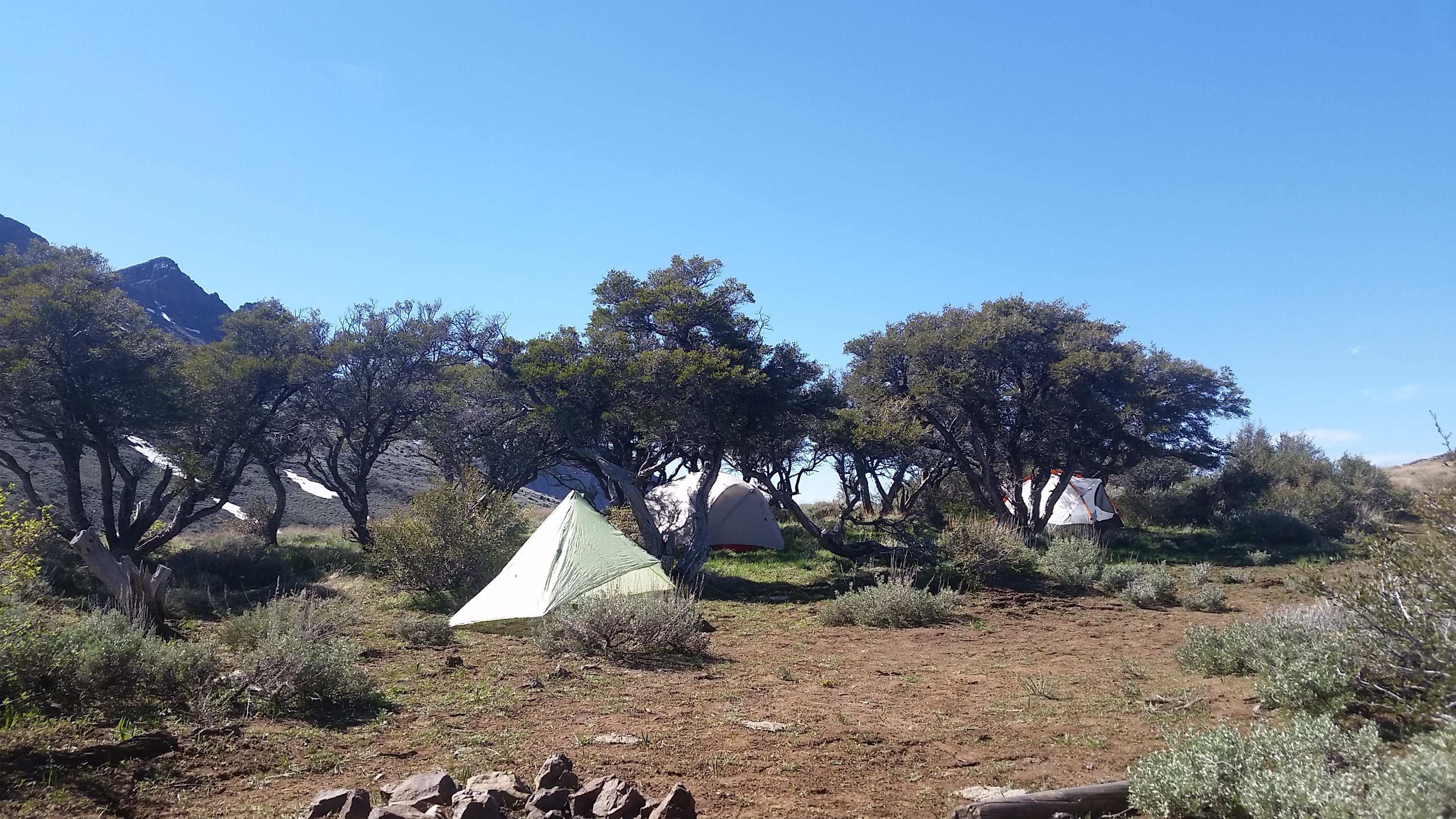
Right before we got to our camp spot where Tim had once again driven in, it started to rain a cold rain. We hurried to see he had started a fire and had a big shade tarp up that everyone was huddled under.

Home for the night


So good.

Oregon Desert Trail Section 25 – Day 1 – 8.5 miles

In 2016 it was my plan to packraft to Leslie Gulch and hike the final 30ish miles to the Eastern terminus of the Oregon Desert Trail at Lake Owyhee State Park. Temps well over 100 degrees changed my mind, so I ended up paddling the last stretch to the dam. So there are some miles I haven’t hiked yet in the Owyhee and this year it is my plan to complete the Owyhee section on foot.

The perfect opportunity arose to finish section 25, or the final stretch of the route, this April. I’ve been working with Tim Davis and a group he founded, Friends of the Owyhee, for while. Last April I came out and led a hike with him for a group of interested folks around Leslie Gulch. This year we decided to step it up a notch and I would lead a group of 12 on the final 27 miles for a 3-day backpacking trip.

I met Tim and 2 of his board members, MJ and Becky, on Thursday evening after I drove down from La Grande where I had given an ODT presentation the night before at Eastern Oregon University. We camped in Leslie Gulch under a huge moon and got up early the next day to drive to the park. Three of us left our cars at the end of the section so we could run shuttle on Sunday, and drove the 3 hours around to the start. Yes, that’s right folks, a 27 mile hike had a 3 hour shuttle.

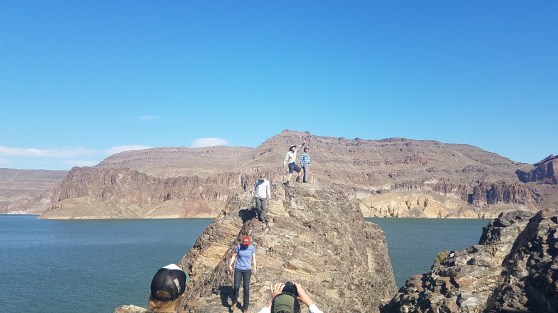
We met the group in the parking lot of Indian springs campground and all hiked out to the rock jetty together, the finish (or start) of the route, depending on how you want to go.

We put packs on and immediately made a route change. We had 2,000’ to climb up, and could either walk the original route up the steep Birch Creek Canyon, or walk a road along side that was slightly longer due to switch backs. I personally wanted to walk the road because of the warnings of poison ivy other hikers had warned me about (I’m extremely sensitive… I hate that plant) and the others were more than happy with that decision. As we walked up and saw how brushy it was we were all glad.

Our group was a mixed bag, some had hiked a lot, but never cross country, and others had not hiked much and soon thought they had bitten off more than they could chew. I had only planned 7ish miles for the day, so kept encouraging water, breaks, and an easy pace.

When we made it to the top of the first climb we broke out the map and compass and did a little practice at setting a bearing to reconnect to the ODT route and talked about route choices, micro adjustments, and fence hopping. We would cross a few fences, all on public land, but that required some finesse.

We were joined by Sarah and Andrea who were geologists for the Vale BLM district, and they talked rocks while we took a break, I learned some stuff!

The last few miles were on a gentle uphill, but folks were fading and we slowly made our way up. A few clouds gave us some relief from the heat, and by the time we made it to our high point at 4,800’ the wind was crazy strong.

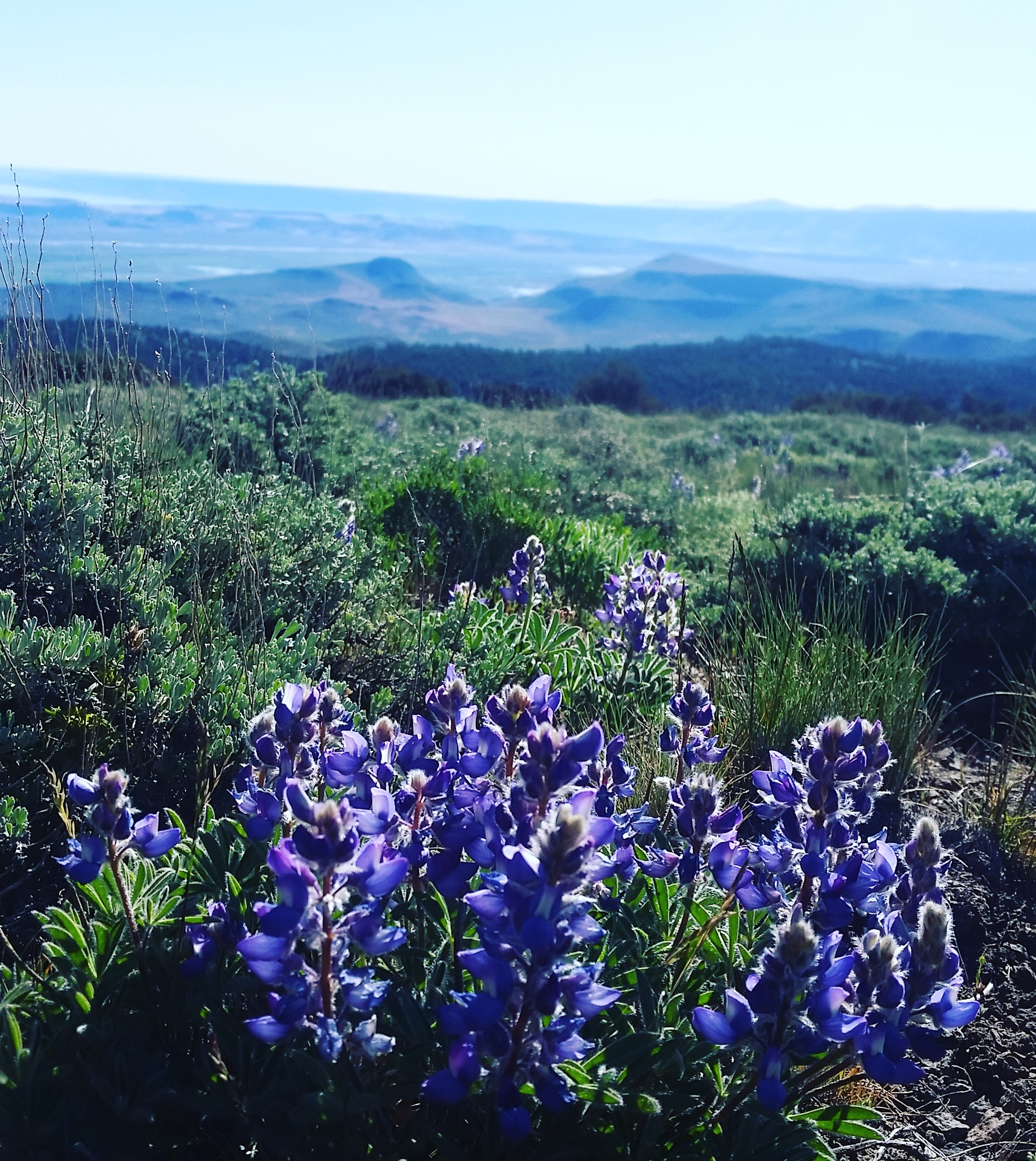
Owyhee clover

Tim and MJ drive some back roads and were waiting for us at camp with coolers full of cold drinks, and hot water for our dehydrated meals.

Ahhhhh. First day backpacking for me of the season… Feels so good.

Hiking with Oregon Field Guide

I’ve had a good amount of office time this spring, but I planned a trip to the Pueblo Mountains along the Oregon Desert Trail perfectly with a crew from Oregon Field Guide at the end of May. I’ve been talking with Danika, a producer for Oregon’s PBS outdoor show (and recently winner of 4 NW Emmy awards!) for the past six months about doing a segment on the Oregon Desert Trail, and had already filmed with them once on a snowy February afternoon near Bend. I’ve been watching Oregon Field Guide for years, and they’ve done a number of segments on long distance hiking, including one of my favorites on Lint, my favorite triple, triple crowner.

I had hiked through the Pueblos, a remote mountain range south of the Steens Mountain that juts up against the Nevada border, last year about this time, and remembered plenty of water, flowers and patches of snow. The weather at the end of May was glorious, and I hoped for the same this year. I met Danika, our camera-guru Todd, and volunteer and outdoors man extraordinaire, Vic, at Fields Station on a Monday night. I finished up my amazing milkshake from the store, and hopped in their car. We had decided to drive up a two-track road as high as we could to get closer to the route in the middle of the range.
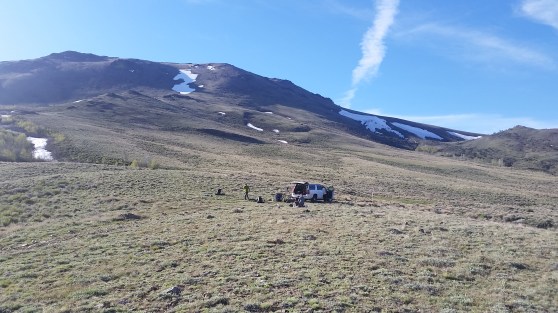
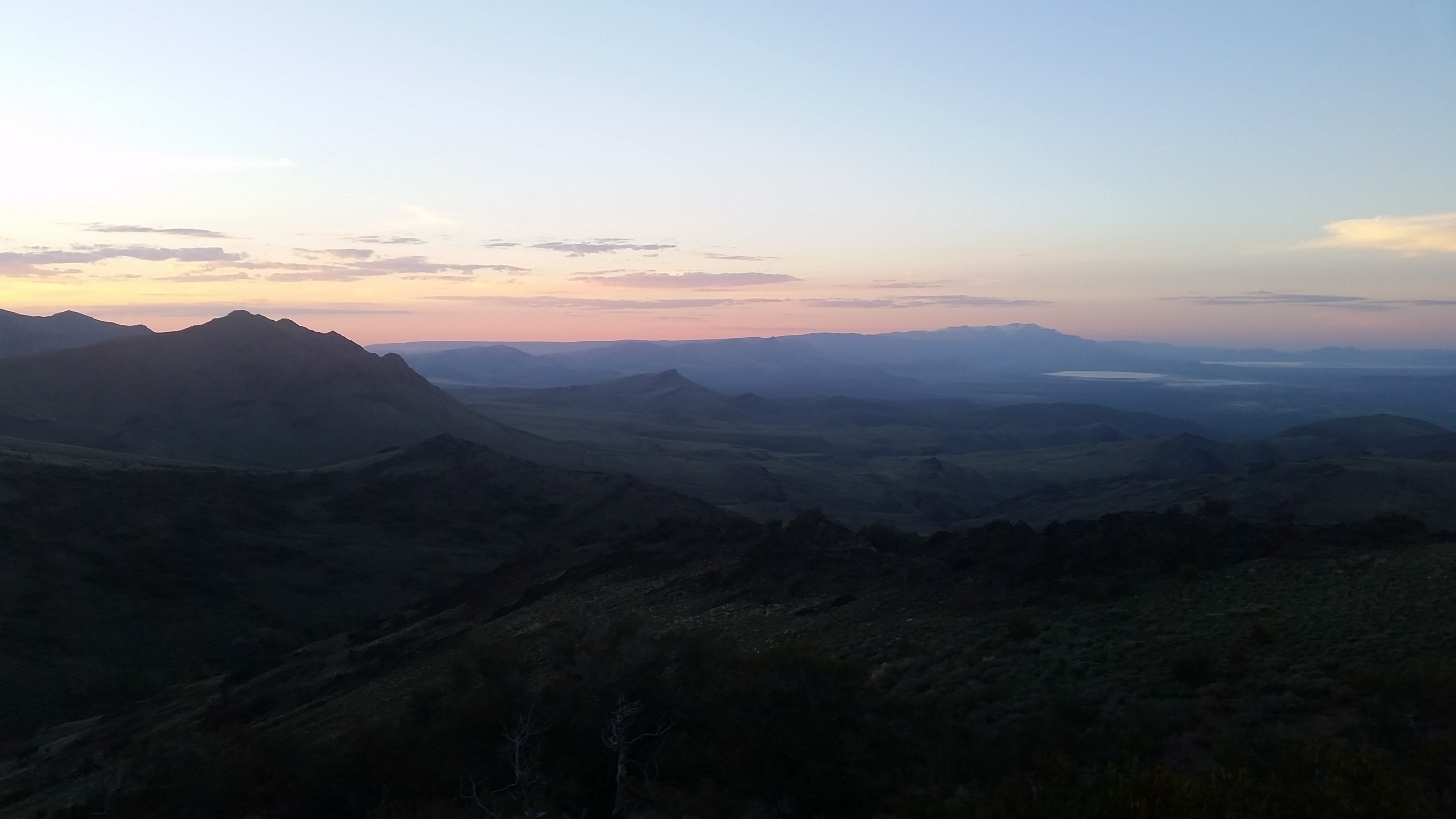
It turns out all the camera gear is HEAVY, and the closer we could get, the better. It would also be Danika’s first backpacking trip! I tried to reassure her that our packs aren’t normally filled with extra batteries, microphones, and the such. We made it about 2.5 miles from the ODT at Ten Cent Meadows, and decided to make camp on a high ridge with an amazing view over to the Steens, Alvord Desert, and the north part of the Pueblo range.

https://www.facebook.com/plugins/video.php?href=https%3A%2F%2Fwww.facebook.com%2Foregonfieldguide%2Fvideos%2F1305683846148197%2F&show_text=0&width=560

Above is a video Todd shot of the sunset on our first night.

The next day we packed up all the gear, Todd having the camera bag/backpack that looked like one of the most uncomfortable packs in all history. It’s amazing where some of these Oregon Field Guide cameras have gone over the years. Apparently this camera was about 10 years old, and had been up mountains, on rivers, and just about everything in between.
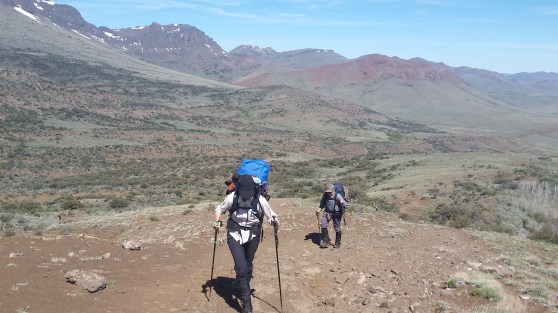
We found a sweet little grove of mountain mahogany to set up camp for the next few nights, and soaked in the views.
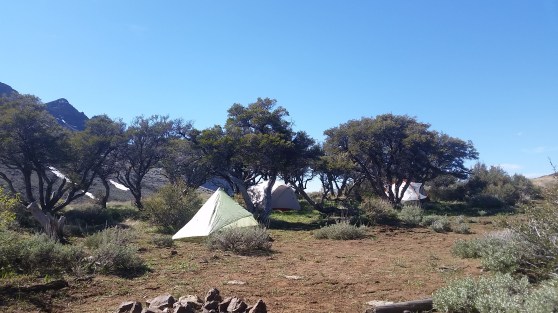
We did a little filming that afternoon, took a short jaunt on the trail, did a longer interview segment overlooking the Alvord, and retired at a reasonable hour.
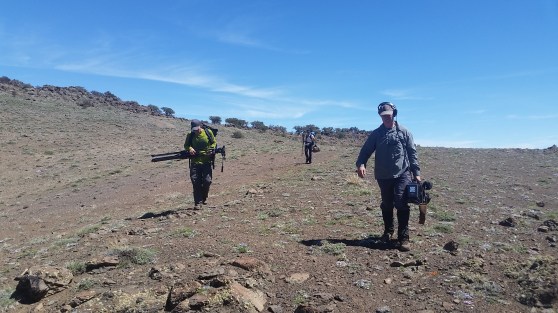
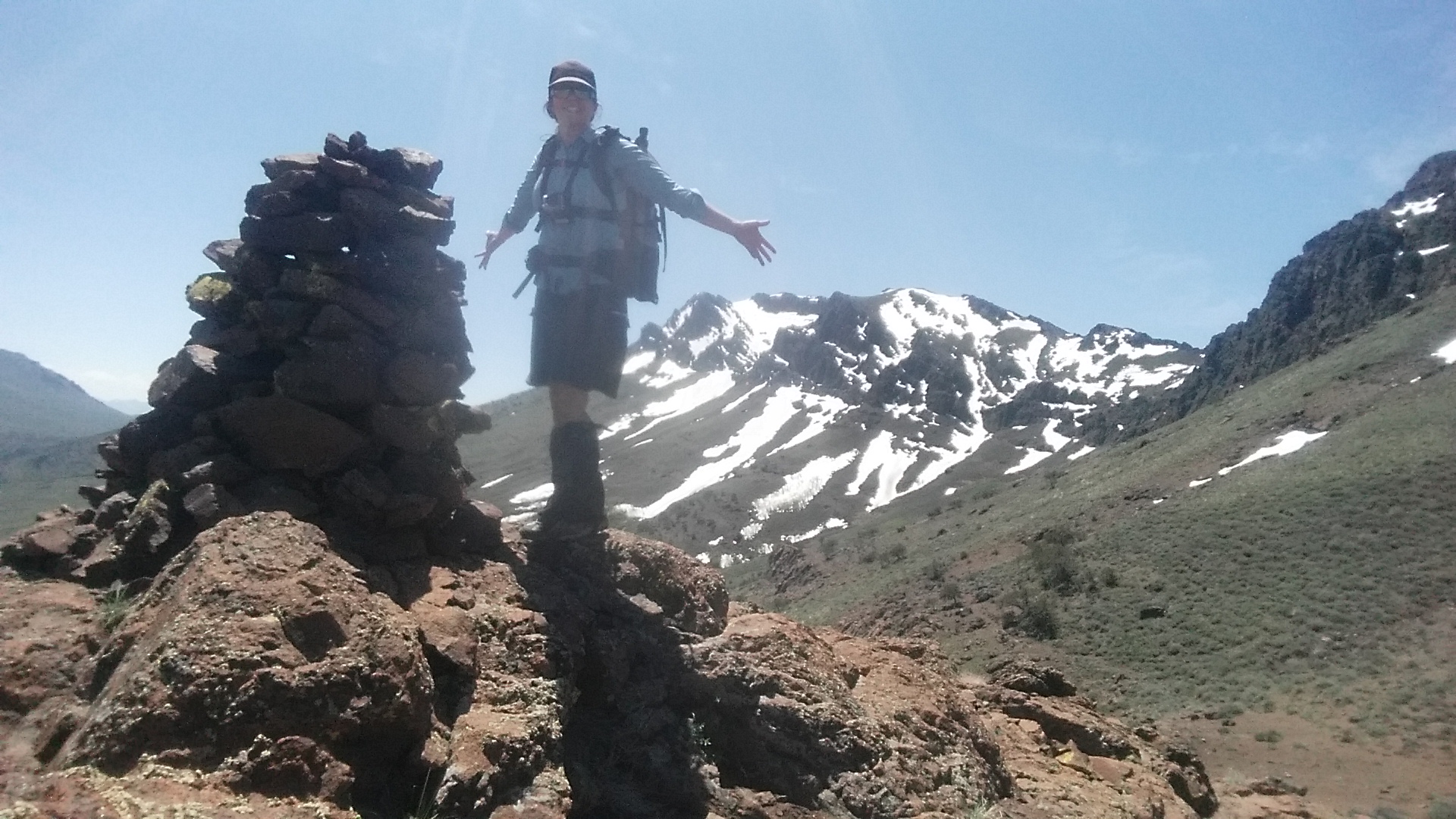
In the morning we packed up, prepared to be out most of the day. The Pueblos section ties in to the older Desert Trail route that was established in the 1980s. The Desert Trail folks are working to build a Mexico to Canada desert route, and had already designated a few sections, including this one we were on. The Pueblos are a challenging cross country hiking experience that follows the ridgeline for much of the range, and the DTA built a series of 5-6′ cairns to mark the way. Many of these cairns are still standing, and we decided to hike cross country aiming for cairn 22 on a far saddle.

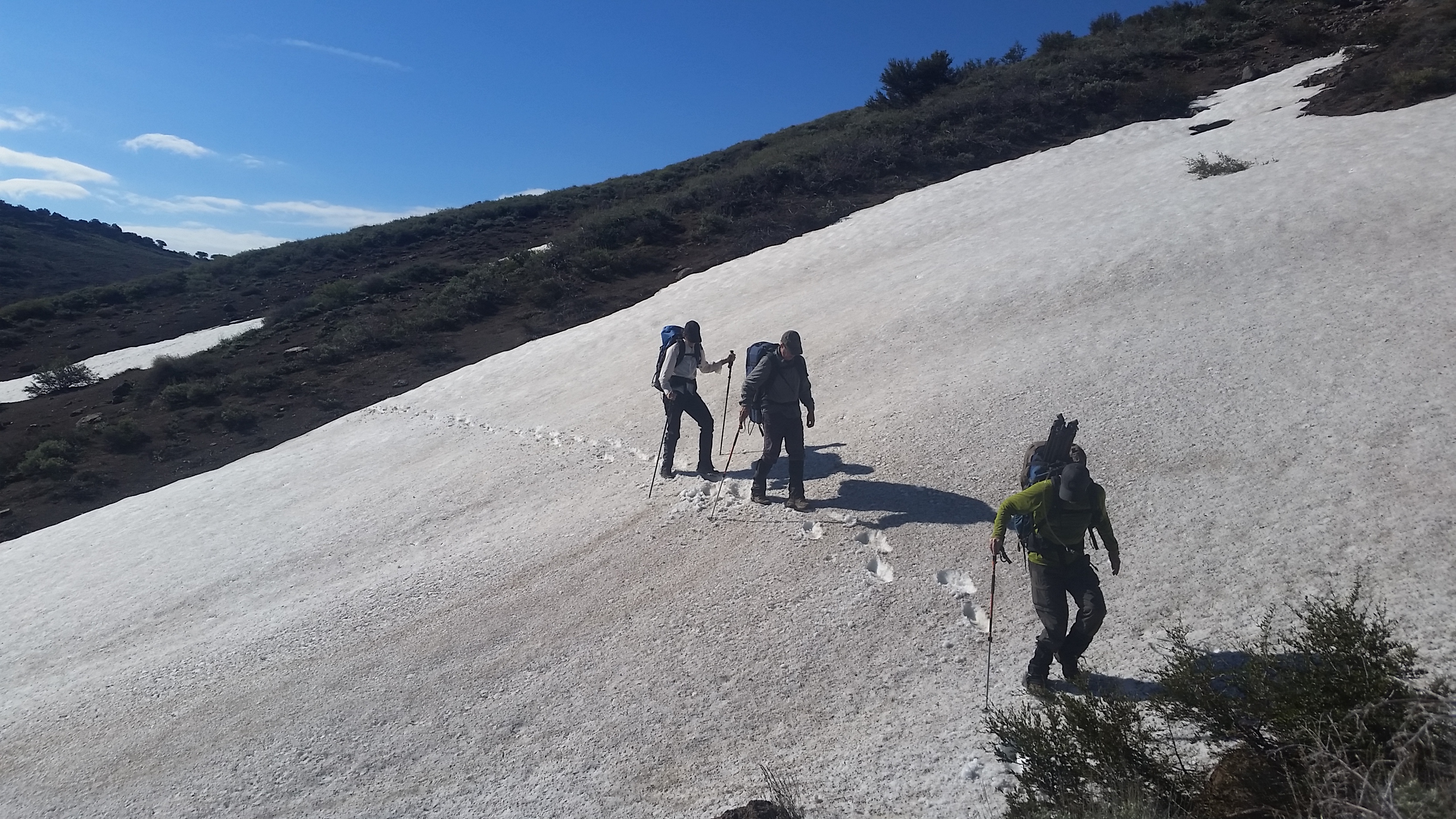
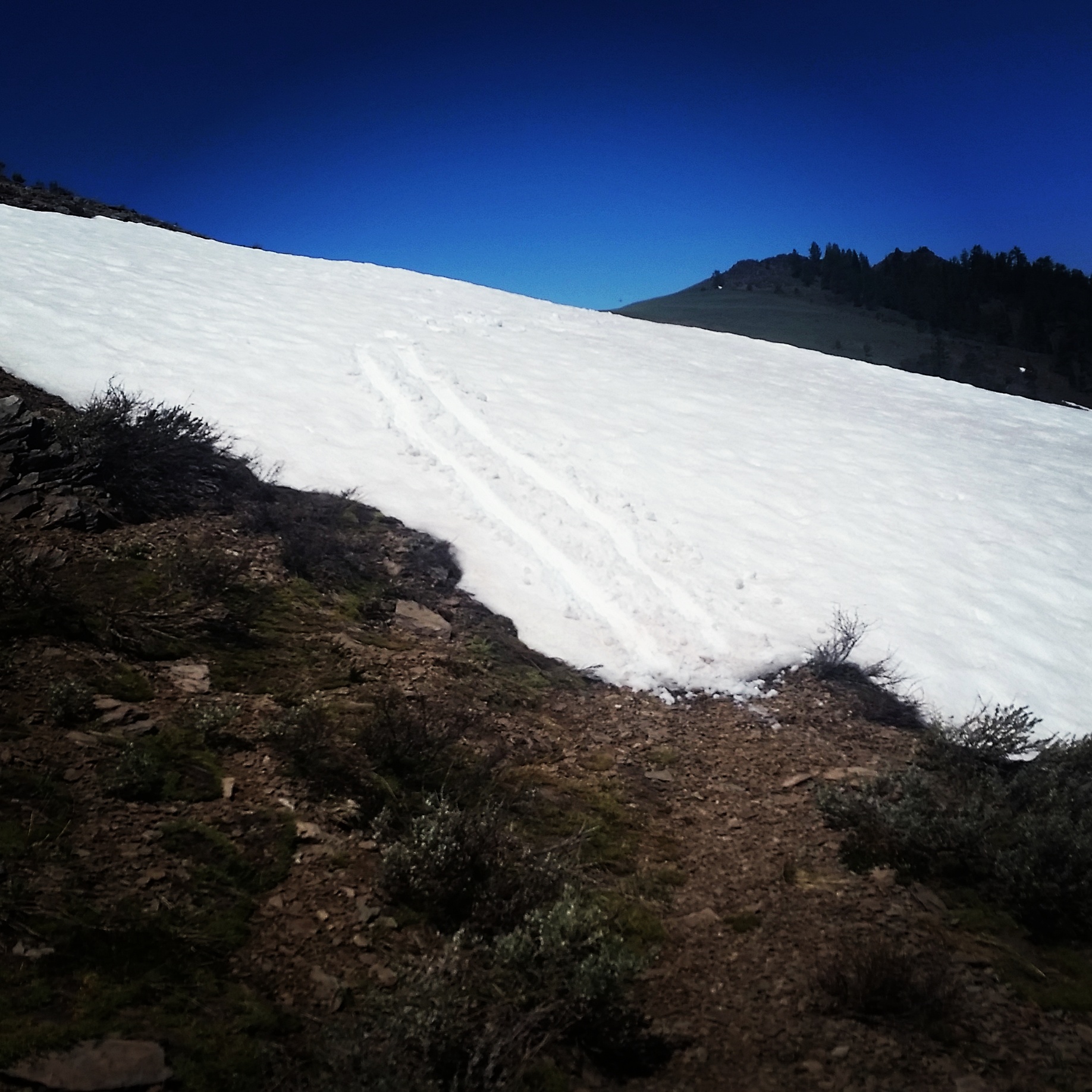
Right away we had some snow patches to cross, but I saw opportunity…opportunity to shoe ski!
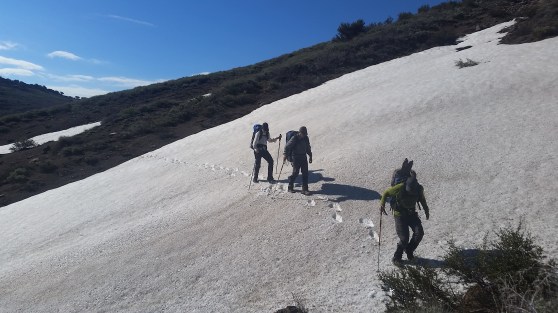
We did lots of takes in and out of the think brush, walking along the exposed slopes, walking up to cairns, it gives me new appreciation for all that goes into film projects. We made it to cairn 22 by lunch and tried to find shelter out of the increasing wind.

The hike back was a little quicker as we did most of the filming on the way in, and by the time we made it back to camp we were all ready for a siesta.

The night was WINDY and COLD and we were all in our sleeping bags well before dark because it was the warmest place to be. Welcome to backpacking Danika!

We packed up in the morning and headed back to the car, taking a shortcut because the crew was used to cross country hiking by now and saw a path that made more sense than the way we had come. The ODT is rubbing off on them already! The beauty of cross country hiking is going where you want to go…

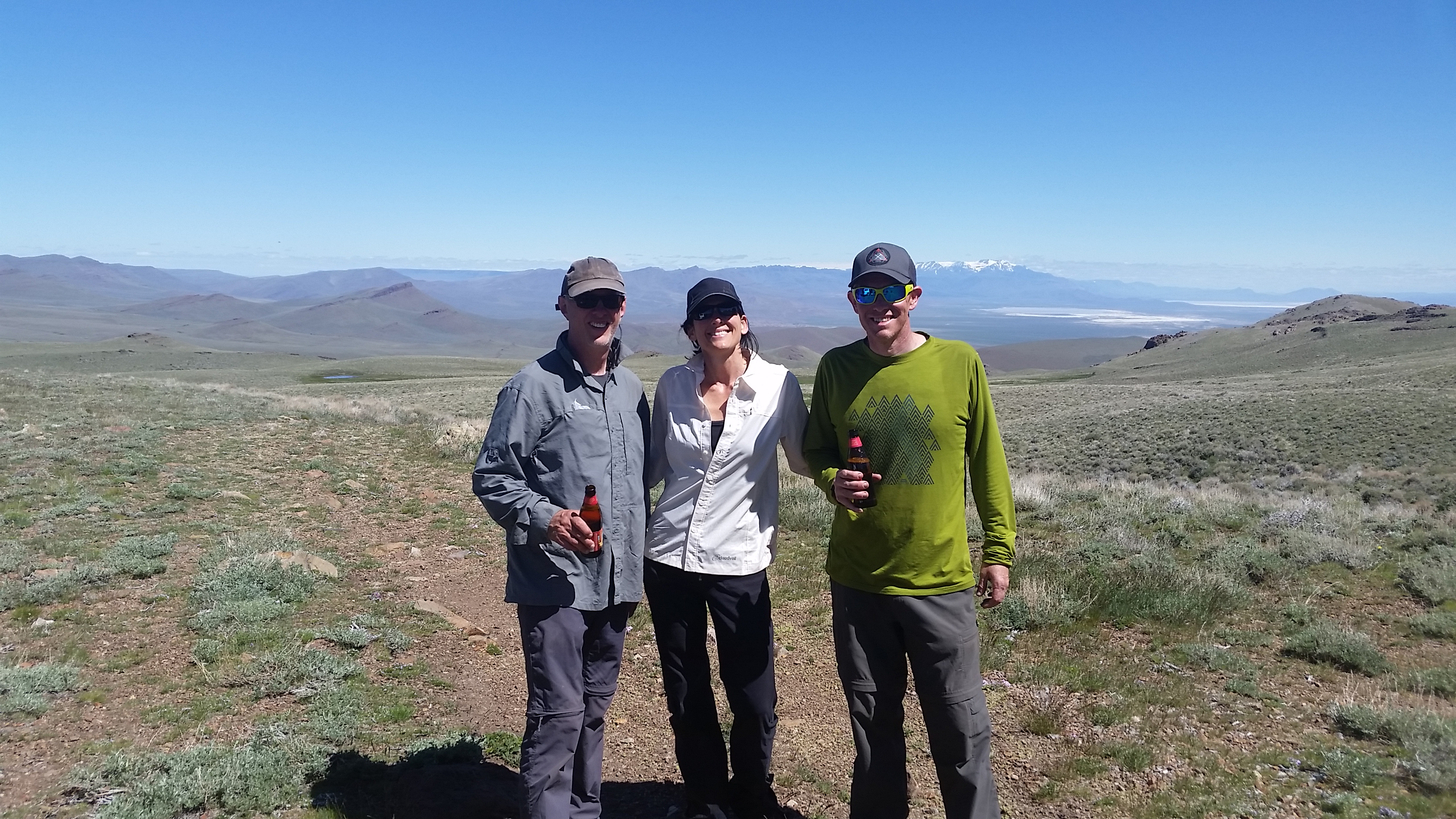
We toasted our trip with beers and chips back at the car and packed up for the ride back to Fields Station. We hadn’t seen any pronghorn on the hike, so we were all on alert as we headed the 3,000′ down to the valley below. We spied a momma and her baby a head of us on the road, and I think Todd was able to get a little footage. The Pueblos are known for big horned sheep, but they must have been feeling shy for we didn’t see any on the trip.
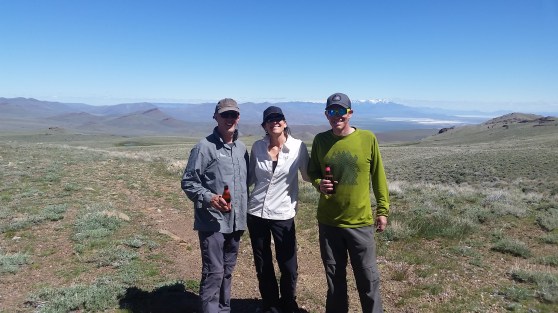
Back in Fields we all devoured huge portions of food in the cafe and checked into the house we had rented for the night. We did a little filming in the store, and Sandy, Nancy, and the crew there were all good sports about it, even when I walked in and out of the store 10 times, eating a milkshake to get a good shot…we wanted to get some of the character and splendor of a place like Fields Station after hiking in the mountains, and I think the crew now knows first hand how delicious the food will taste and the shower will feel after being dirty for a few days. Hunger is the best sauce.

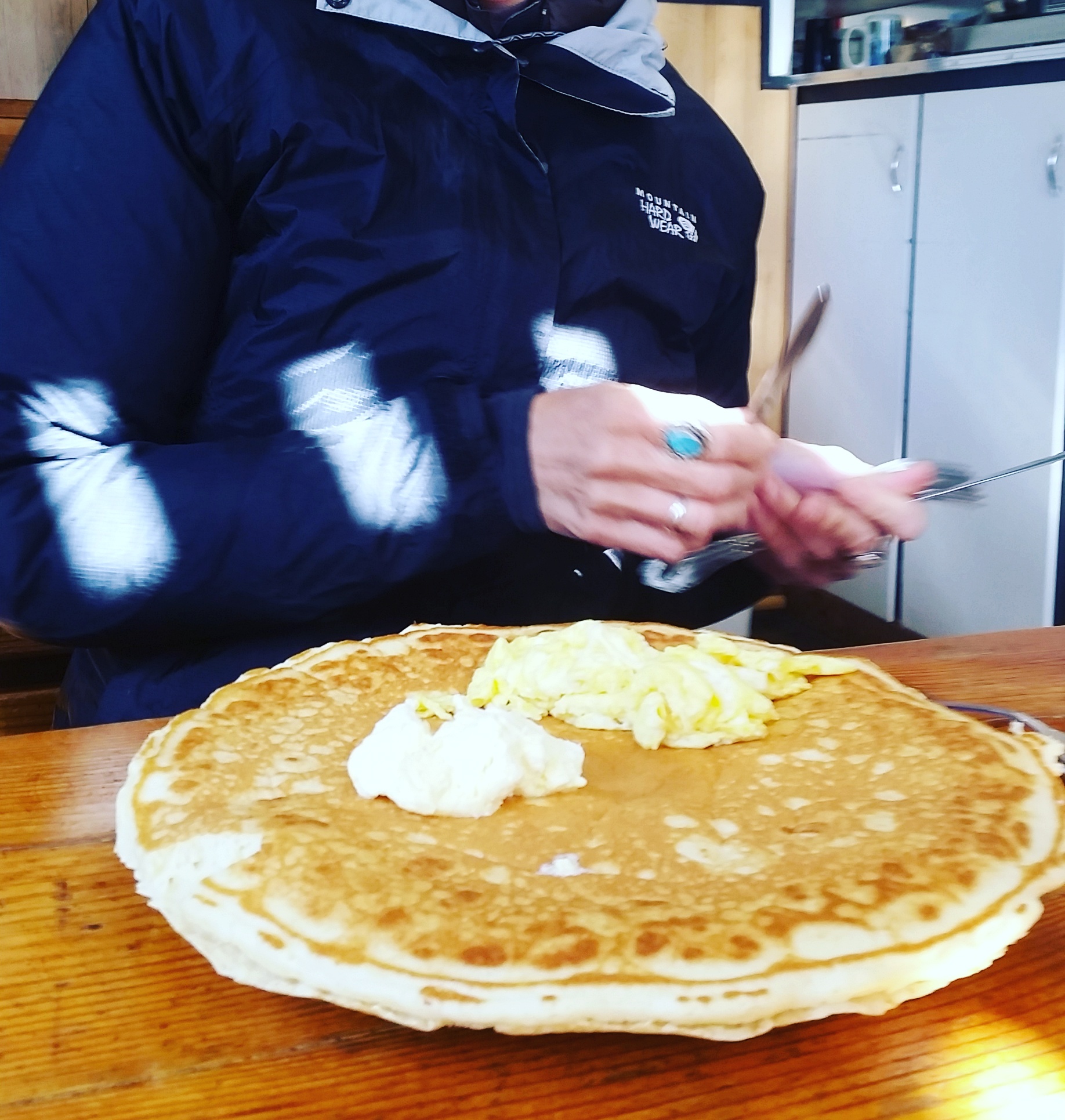
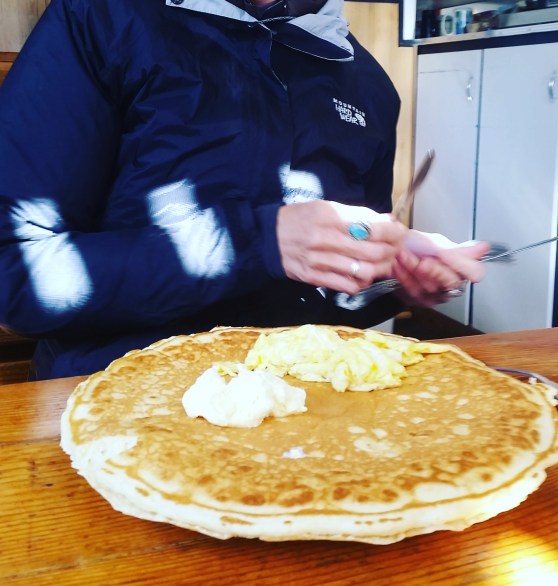
The next morning we returned for breakfast, and the biggest pancake I’ve seen outside of Seiad Valley on the PCT (pancake challenge on the ODT anyone??)
We parted ways, and I headed out to visit the family that runs Rock Creek Ranch between Frenchglen and Hart Mountain. I had a great visit with the Millers, and found out all sorts of interesting facts about the area and their family which have been homesteading in eastern Oregon for generations (whisky stills in some of the old canyons, tunnels in the mountains…)

I was headed to the Fremont to hike for a few days on the ODT and scout out a section I’ll be returning to with a trail crew at the end of June. I enjoyed some sweet ridgewalking, made lots of notes on down trees and tread that needs to be cleared, and had a chill few days on the trail, even running into Kat, a current ODT thru-hiker.
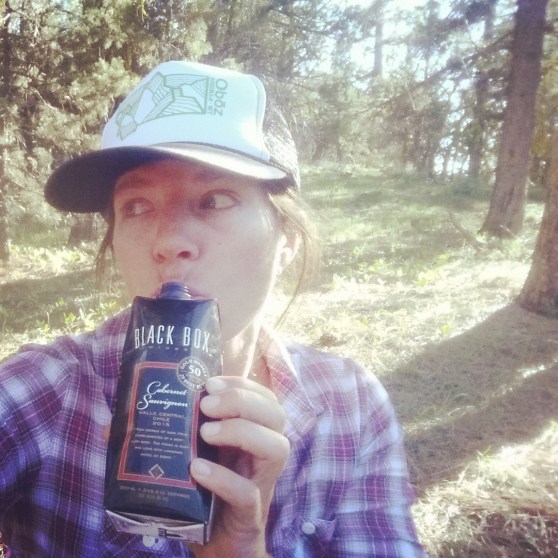
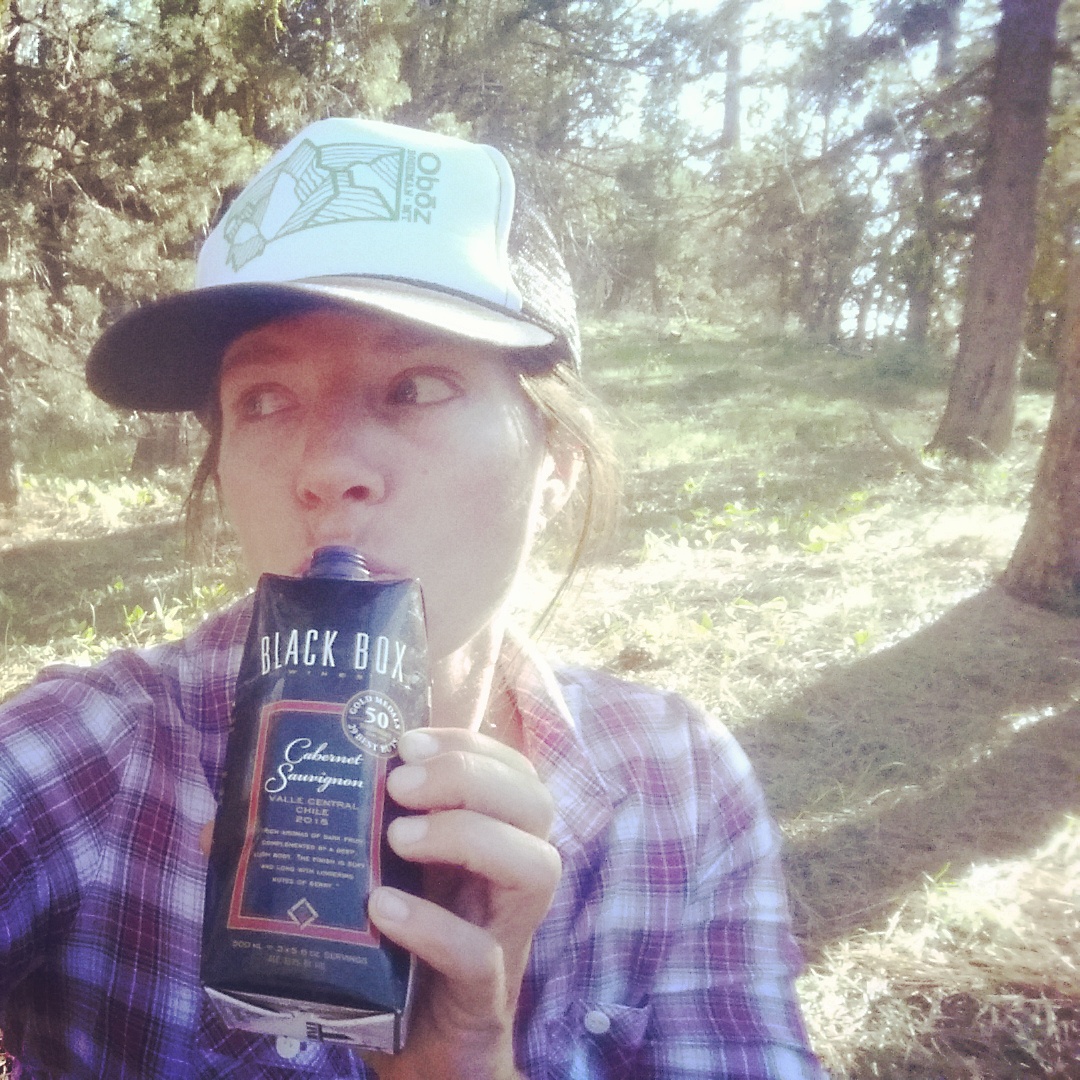
Car camping in the Fremont…black box time!
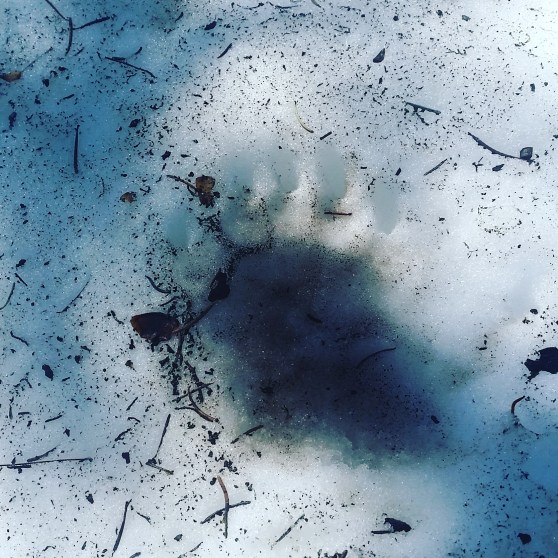
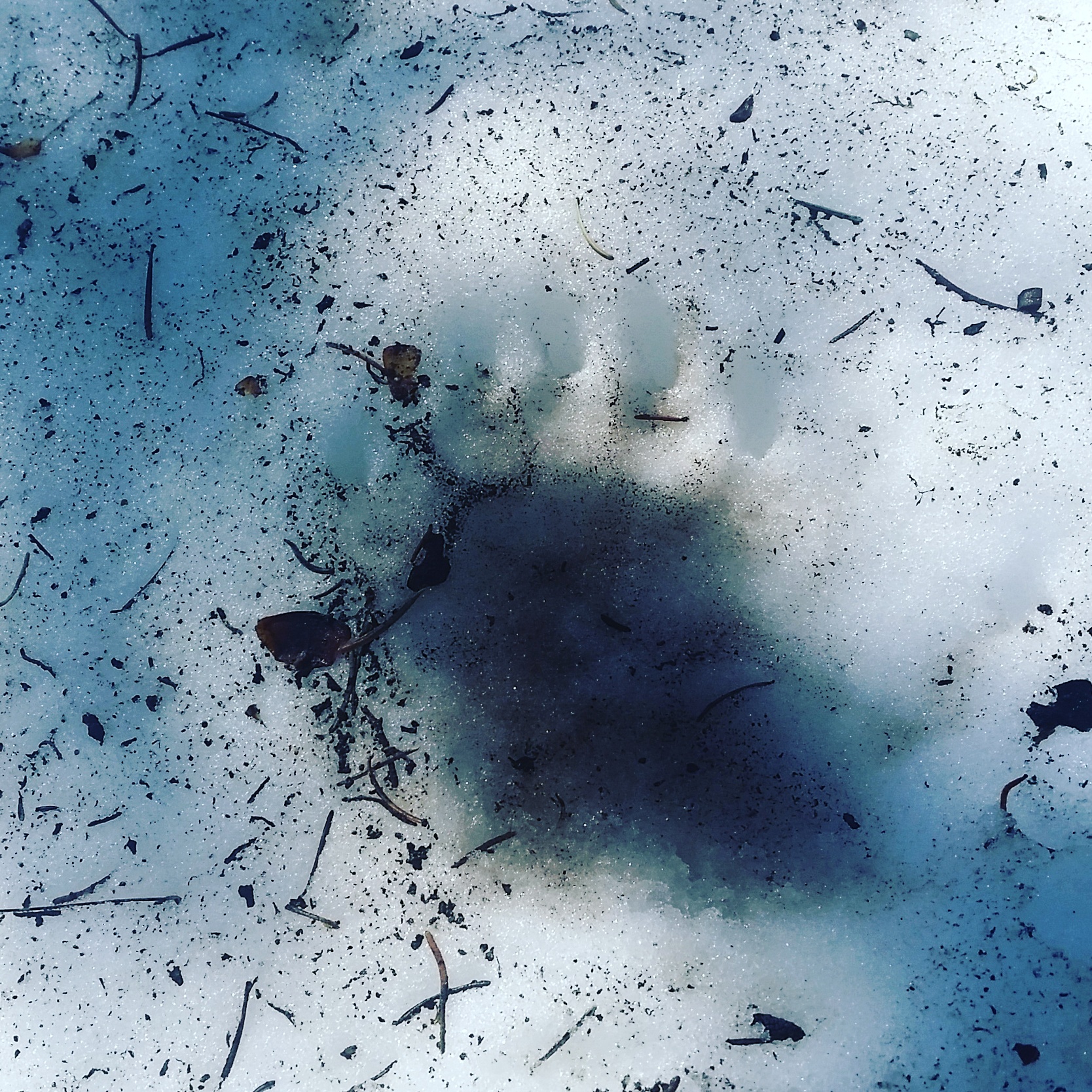
Be bear aware
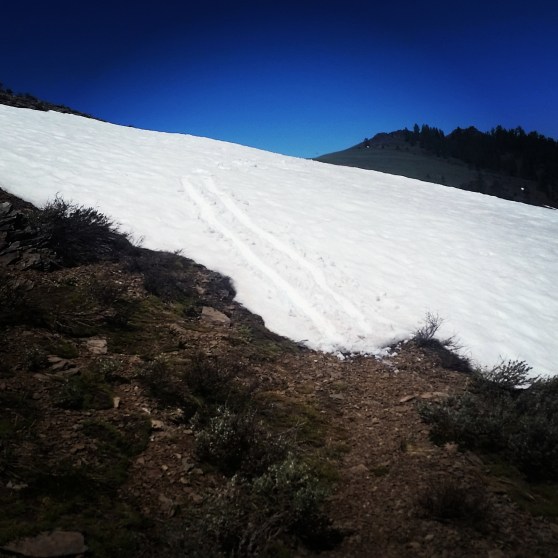
Shoe ski in the Fremont too
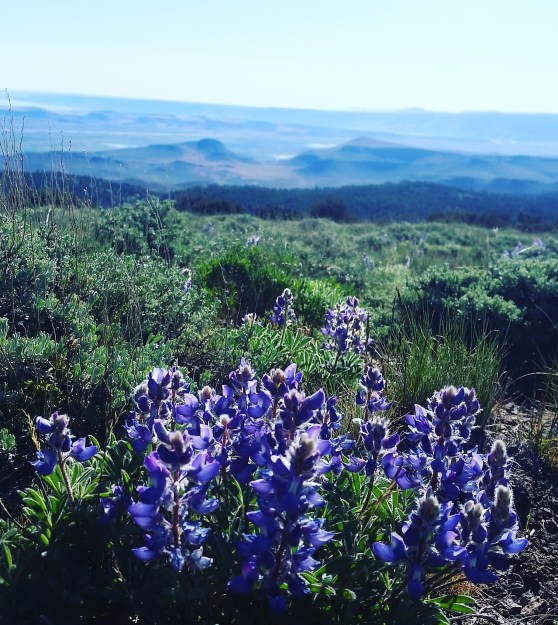
Not a bad week on the ODT!

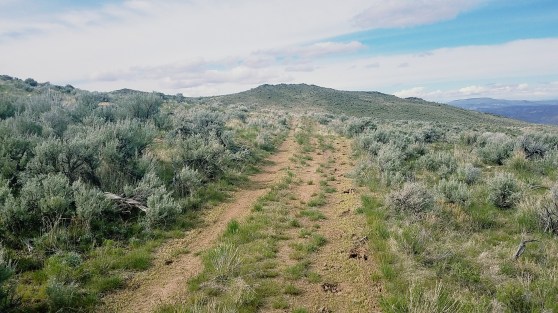
The Oregon Desert Trail is Hot!

I’ve given a few more interviews about the Oregon Desert Trail recently:


The desert between Boise and Bend is the latest long-distance hiking destination


Hiking 350 Miles on the Oregon Desert Trail
From the Oregon Badlands to the edge of the Steens Mountain Wilderness, the western half of the Oregon Desert Trail is a long—and gorgeous—haul.


By Ramona DeNies at Portland Monthly (see article for photo slideshow)
Renee Patrick is no stranger to serious mileage. An experienced long-distance hiker, she’s logged more than 10,000 of them in the last dozen or so years, conquering the Appalachian Trail, the Continental Divide Trail, and the Pacific Crest Trail. She transfers that love of the wide open to her work for the Bend-based Oregon Natural Desert Association. ONDA advocates for the protection of a huge swath of the state’s public land: the high desert that stretches from central Oregon’s sagebrush sea to the stunning Owyhee Canyonlands. Patrick, more specifically, coordinates the unofficial trail that cuts through this vast territory: the 750-mile Oregon Desert Trail.

The ODT is not, Patrick cautions, for the casual backpacker. Much of the trail is unmarked and some stretches aren’t even, well, trail. “ODT stays on public lands,” says Patrick, “which means following private fence lines in certain places—respect the fence!—and navigating by GPS in others.” When Patrick feels the need to commune with the trail she stewards, she packs her sleeping bag, a tent only if wet weather is forecasted (she’s a “cowboy camper” who prefers to sleep by starlight), some high-calorie provisions, and a lot of water.

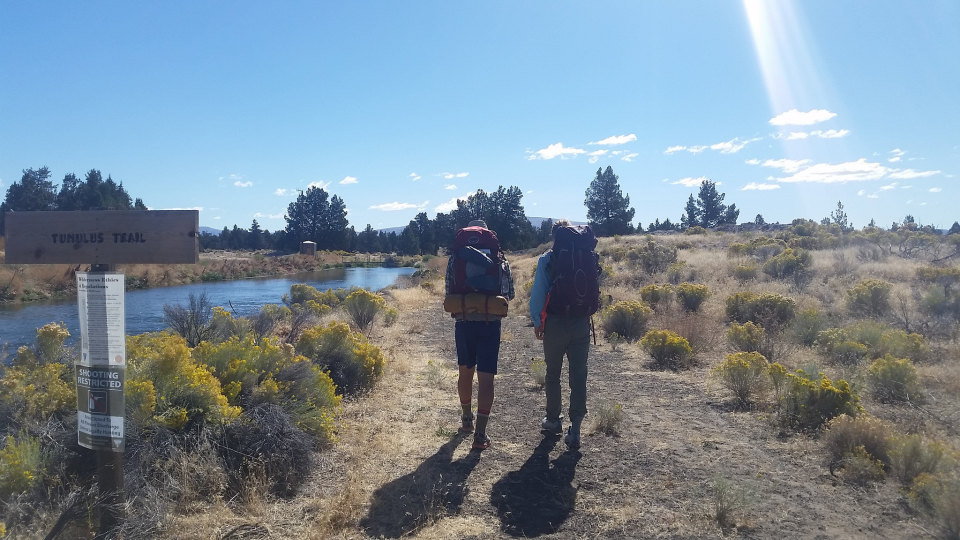
The landmarks and sweeping vistas of the entire ODT are too plentiful for one slideshow, so here, Patrick shares a selection from the trail’s westernmost half. It’s a stretch (sections 1–12 in ONDA’s guide) that travels through the Oregon Badlands Wilderness, the Deschutes and Fremont National Forests, and Hart Mountain National Antelope Refuge. Patrick navigated the entire route over several treks in the spring and fall of last year. For aspirational hikers who live west of the Cascadian rain shadow, the trail’s closest access point—it’s western terminus—is located at the Badlands’ Tumulus Trailhead a mere 20 miles from Bend. 350-some-miles later, Patrick sets the halfway point at the tiny town of Frenchglen, which boasts a cozy hotel (a state heritage site) that’s perfect for propping up some tired and dusty feet—and crossing one epic adventure off your Oregon bucket list.

This is how it feels to have completed the Oregon Desert Trail 


Wow, what a journey this year! I’m sitting in my hotel room in Fields making hitch sign in hopes of getting a ride to Frenchglen where my car is parked. Of course that will happen after I devour a breakfast worthy of a hiker that has been on the trail much longer than I have.

I’ve never section hiked a trail before, and loved dabbling in the different mountains and canyons of eastern Oregon during 3 different seasons. From when I started in May, it has been over 5 months and 5 different trips to pick away at the miles.

Immersing myself in the hike, and the job, and in supporting other hikers has felt like a great coming together of all my past experiences; I have never felt so incredibly engaged on every level. and there is so much to do! So many other areas to explore, connections to make, and hikers to tell about this route.

I has a great realization recently…I went to grad school for museum exhibition design…a field I’ve never actually worked in besides my internship at the Smithsonian years ago. But at the heart of my desire to design three dimensional spaces to share an idea or artwork or knowledge, is facilitating an experience. The more interactive and immersive…appealing to all senses, the better. My exhibit has become the desert of Eastern Oregon.

The trail is an introduction to a landscape, and through maps and guidebooks and research into the incredibly rich history, geology, land  management, and wildlife, I feel like the information the trail has the ability to impart is endless. Walking for weeks in the immense sagebrush seas and craggy fault block mountains, soaking in the numerous hotsprings, eating at the small cafes, and meeting folks who have homesteaded out here since the westward expansion is facilitating an experience much larger and deeper than I ever could have in a museum.

Dude.

I’ll leave you with one of my first video experiences talking about the trail. Ultrarunner Christof Teuscher has been producing a video series, about his 17 day, 15 hour run of the entire 750 miles this summer! and stay tuned for some upcoming podcasts by Cascade  Hiker Podcast where I talk about the ODT and hiking.

Oregon Desert Trail (5th & Final Section Hike): Day 4 – 22 miles (784.5 total)

Ahhh, I woke with another soak in the hotsprings this morning. I made myself a cup of french press as is custom, and saw the first glimmers of light from the massive desert sky. I didn’t linger though, cause I knew I had over 20 miles to hike today, and I wanted to get to my ending point of Fields before the store closed at 6pm.

I was hiking by 7, and had a quick stop at Frog Springs which would be my only potable water for the day. Most of the water around here is too alkali, brackish, or has high levels of arsenic. Good idea to pay attention to the water report around here folks!

I walked on dirt roads for most of the morning, and then had some cross country sections that had me wishing for pants. Whatever it is that looks like sagebrush but pointier, feels like a thousand sharp needles. Ouch.

Lunch

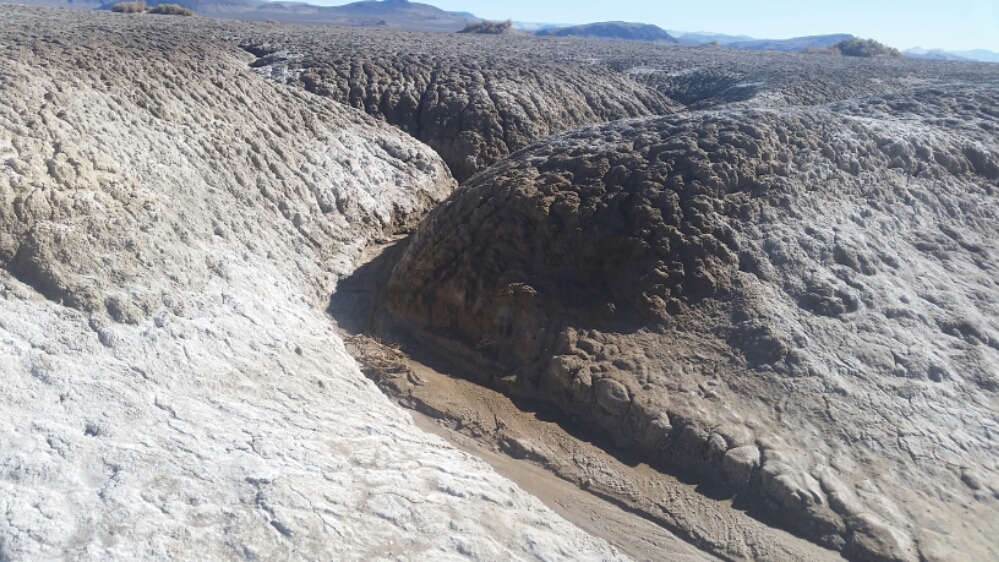
I was on the playa and getting close to Alvord Lake. Cool sand and mud formations started popping up, and a white crust started coating the ground. At one point I started walking on the dry lakebed, and saw numerous tracks of ATVS that had done the same….but it had rained since the summer, and I sank into mud in places. I had several muddy streams to cross and I started to worry about quicksand, not knowing if that was a thing around here.


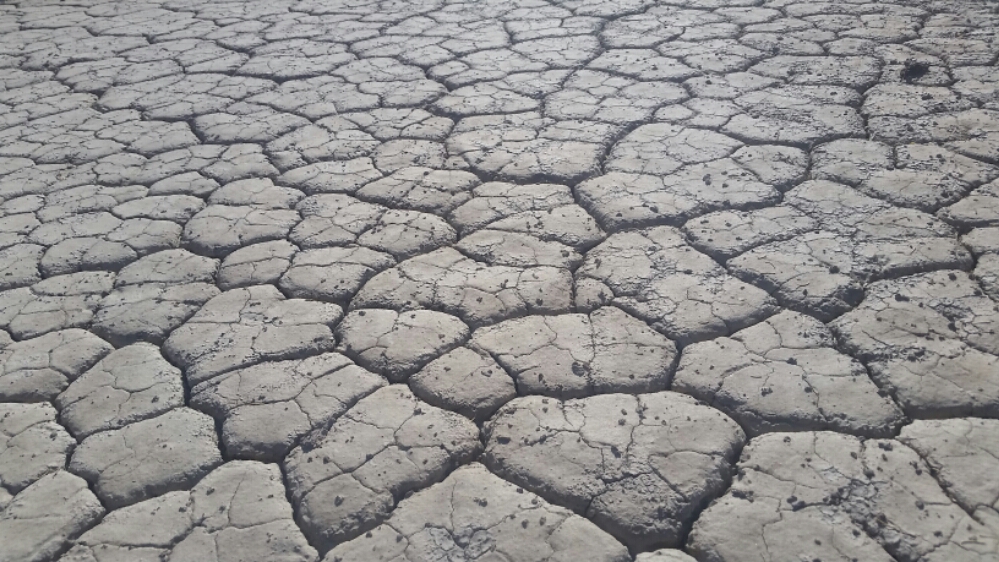
The patterns in the desert earth were infinitely interesting, and I loved the hike despite worrying about getting sucked down into the ashy alkali mud.

I knew I was approaching Borax hotsprings when the earth’s crust turned whiter and I could start to see steam rising from the countless scalding pools. These pools are too hot and temperamental to soak in, and it was here that I decided to skip up to Frenchglen back in June because I had blisters the size of small children on my feet.


I was back! Back at the scalding pools of arsenic water, and that only meant one thing! I had finished the Oregon Desert Trail!

Well, almost. I was still over 6 miles from anywhere, but fortunately I had booked a room at the Fields Sation and had a few hours to get there before the store closed.


6 miles takes forever when you are done with a thing, but texting and instagram helped pass the time. That and some Pandora.


When I got to Fields I order a beer and a round for anyone who wanted one. I only had one taker, but had a great time chatting with Sandy, Nancy and my domestic beer drinking new friend.


I missed the last call for the grill, but Sandy offer to microwave something for me, so I grabbed a frozen dinner and burrito to take to my room. Celebration time!

Oregon Desert Trail (5th & Final Section Hike): Day 2 – 20 miles (762.5 total)

I didn’t sleep well, actually I don’t think I slept at all. I don’t know why my body does to me. And i knew I had a big day ahead of me, climb 2,000 feet up to the top of the Steens which appeared to have snow, and then drop down 5,000 feet to the Alvord Desert with some gnarly bushwacking.

I saw the impending snowy wall get bigger as I hiked up, I was nervous my route might have a lot of snow, but the closer I got the more doable it seemed. I still had some ice and snow to contend with, it was mearly my snail pace that kept me plugging along. 

When I got to the top, it wasn’t the top. Just kidding! There were a few false summits and by this time I was either walking on crusty snow, or slogging through drifts of a few inches. Still ok since I’m used to snow travel, but I wouldn’t recommend hiking this in November to many people. I had a few miles on the Steens Loop road where I got to see down to the desert below, so stunning!


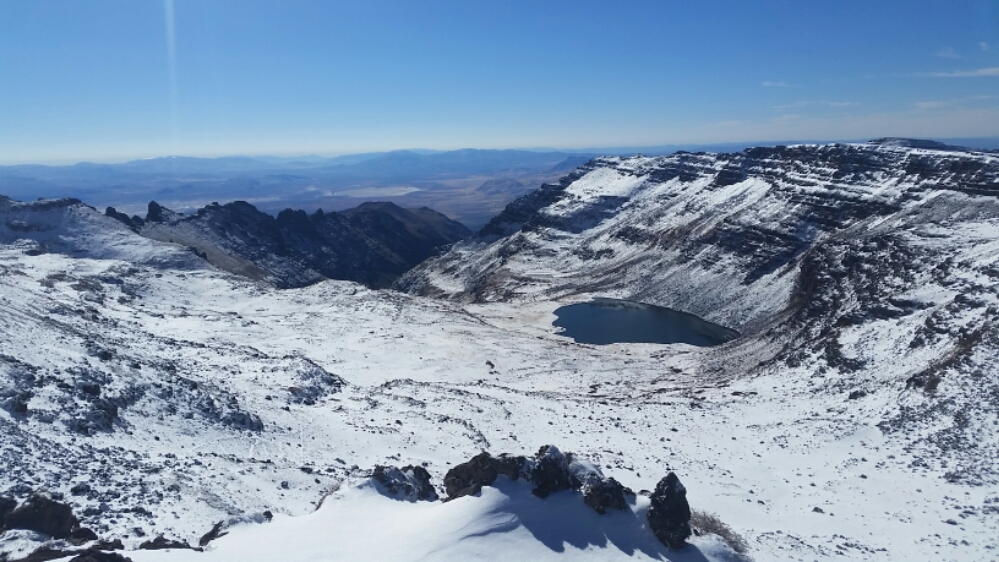
As I approached the trail to Wildhorse Lake I was nervous the snow and steep trail wouldn’t be passable. It was getting icy and i had to walk through increasingly deep snow drifts, but I knew the trail was south facing so hoped the snow would at least be soft.

The first 5 steps were the worst and I kicked steps in. I could see the trail covered with snow, but there was a lot of rock showing, so I was reassured I could get myself down. It was after noon by this point and the snow was nice and soft. Yes!!


By the time I made it the the lake’s outlet I wasn’t feeling so hot. I think I had been driving myself hard this morning, and barely eaten anything, hadn’t drank enough water and was going on no sleep, so I took the next hour and lay down on some rocks…there was still snow all around. I couldn’t eat, which isn’t a good sign, but drank some drink mix and closed my eyes. I was starting to doubt I could make it another 10 miles down to the desert, but I finally got up and tried.


The first bit I descended open terrain and passed several waterfalls, but after a while the bushwacking got intense. Fireweed this summer had some particularly rough words for this section and I echoed her sentiment. It got even worse and couldn’t tell where I was supposed to navigate around some huge rock formations and lots of loose dirt. I just didn’t get this part…will have to see if anything else makes sense here. I finally saw the big cairn that marked my last pass; remnants from the 1980s Desert Trail route. Soon I was cruising on a dirt road. Man, there is nothing like some intense bushwacking to make you appreciate a dirt road! I was feeling much better and was able to eat my lunch at an earlier break.

Where am I supposed to go????

I flew down the road, and at Tuffy Creek took a road that wasn’t on my map down to the Alvord Hot Springs. It was after dark when I got there and was thrilled to find soda and chips for sale. Electrolights and salt!!


I checked in for a campsite and chatted with Rose the caretaker for a while. Then set up my tarp, ate some mac and cheese and went for a soak in the hotsprings. Bliss!!!!!!!!!