Sunshine Coast Trail – Day -1 (repost for formatting)

We set our alarms for 5:30am since we wanted to get on the first ferry out of Vancouver, but we were both up before that and hit the road in the dark. (sleep is hard when excitement is high)

Playing the ferry game was going to be one of the more challenging aspects of getting to the start of a trail. Nemo had been able to reserve us a spot on a noon ferry, but we were hoping to switch that to the 7:30am boat…. We had another one to catch after this one! We lucked out and parked our car at the end of the line at the terminal (an impressive feat of logistics and crowd management) . Coffee shops and bathrooms were all over the place for the hundreds of people waiting to cross. We killed about an hour outside my car, oooing and awing as the day lightened up enough to see the water and mountains around us.

We drove onto the first ferry (Horseshoe Bay to Langdale), parked, and proceeded to explore… A gift shop! Cafe! Sundeck! We were totally the tourists with the dinner plate eyes walking around in glee.

We got in line for breakfast and by the time we were sitting down with our eggs and bacon, the ferry was docking. Throwing the leftovers in a take-out box, we got back in the car and drive off the first boat. We then had to drive about an hour to our next ferry at Earl’s Bay.

We cruised in a long line of cars that were loaded up with bikes and boats and coolers…. August on the Sunshine Coast was high tourist season and we were in the middle of it. The day was cool and overcast, which was a great relief to everyone we had met so far. The summer had been hot, much hotter than usual, and fires were all around up here too. Climate change was changing things rapidly, even on the cool and watery coast of BC.

We saw a man hitching, so pulled over and offered him a ride to the next town. He was a first nation’s member and explained he was on the way to pick up his fish. The tribes have fishing rights off the coast, but the runs had been low or non-existent for the past few years. This year was different, and the salmon had come back. There were enough fish from the tribe’s catch this year to allocate each family 50 large fish…a true bounty that would fill their freezers and bellies for months to come.

After dropping off our new friend we continued on the windy road to the next ferry at Earl’s Landing. We were toward the end of the line and crossed our fingers that we’d make it on the boat and not have to wait another 2 hours for the next one. Lucky girls! We were one of the last ones to drive onto the ferry and high fived each other…. Almost there! For this ferry ride we sat at the front of the boat on the sun deck and watched the world go by as we floated to Saltery Bay.

We passed parts of the Sunshine Coast Trail that clung to the side of the steep coastal mountains, and now knew why there were 22,000’ of elevation gain…. It was rugged and achingly beautiful, and it was obvious that there wasn’t much flat ground on these mountains.

We finally drove into Powell River about 30 minutes later, and found Nemo’s friend Courtney’s place. Turns out Courtney lives a short walk from the trail! We figured we’d walk into her place on the evening of day 2, and could leave our resupply with her. So fantastic!

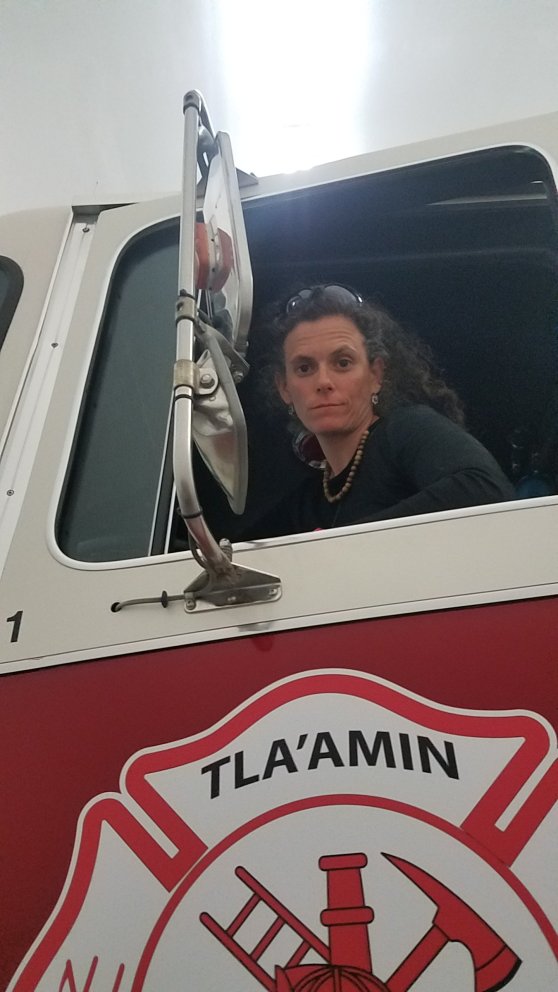
The rest of the day the two old friends caught up, we packed up our food, bought some last minute items, wolfed down an excellent fish dinner at her friend’s food truck, and walked the beach at nearby Tee sho som. Courtney worked as a volunteer firefighter in the community and also taught preschool there. We visited the firehouse and Nemo explored another career path.
We pitched our tent in her yard and before going to sleep had a bear walk through the yard. Hello nature!! We would need to be careful of bears on this trip, but it is prime berry season, so we hope the main tenants of this peninsula will be otherwise occupied and not interested in some dirty smelly she-hikers.

Tomorrow, the trail.

Sunshine Coast Trail – Day -2 (repost for formatting)

I was up at 5am for some last minute packing. Nemo was flying into the Portland Airport at 10am…a 3+ hour drive from home in Bend. We had been sending an increasing number of messages to the effect: “almost back together again!!!!”

10353132_10152449025578887_5469143853106916643_n

Nemo knit me a birthday She-ra hat on the PCT

Nemo and I met while hiking the PCT 12 years ago, and we got along so fabulously that we hiked well over half of that trail together, and have continued to hike every few years: the Northville Placid Trail, a few hundred miles of the Arizona Trail, and many trips to her local mountains in NY’s Adirondacks. We had been planning a hike together for over a year…and the day was here!!

Originally we had talked about going back to the Wind River Range which had featured prominently in both of our CDT thru-hikes (Nemo is a triple crown hiker too), but then she came up with the idea to hike the Sunshine Coast Trail. It just so happened that her high-school friend lived in Powell River, a stop along the trail, in a very hard to reach spot on the watery and rugged British Columbia coast. So we looked into it more: 180 kilometers or 110 miles, several ferry rides and/or water taxi rides to the start, Canada’s longest hut to hut trail, and 22,000’ of elevation gain. What!?!?? It sounded AWESOME.

I ordered a guidebook and soon put together one of the most useful documents of any long trail: a data book. There was one of sorts in the back of the guidebook, but it was all in kilometers and I wanted miles for my feeble American brain.

Nemo worked on logistics, figuring out the ferries and things. It turned out we would be passing through Vancouver BC and right by the place of another friend of ours from the PCT: Peppie. Peppie had married another thru-hiker from 2006, Ben, and they now had 2 children. They had just moved to Vancouver from Seattle and were currently at her folk’s house in North Vancouver.

On my way over Mt Hood to Portland this morning I saw a woman hitching at Frog Lake where the PCT crosses the highway. I pulled over and offered her a ride to Government Camp, a resupply stop 15 miles down the road. “Where in the world is Carmen Sandiego” (or Carmen for short… that’s one of the longer trail names I’ve heard of) was thru-hiking and in fact had tried to hike the Sunshine Coast Trail in the past! She was from Ontario, Canada and had to get off when she stepped on a hornets nest and was badly stung. I shivered when she told me… I was very allergic to wasps. Regardless I thought it was a good sign as most people I had been talking to about the trail had never heard of it.

I made it to the Portland Airport just as her flight was arriving, and we jumped in the car for a LONG day of driving. I5 through Seattle was stop and go traffic even though it was the middle of the day. The drive took longer than we expected, and we made it through the border crossing about 5pm. The border agent asked us how we knew each other, and I thought: “do you want the long version or the short version?” We gave him just the bare minimum and passed through with flying colors. We got to Peppie’s folks place just as dinner was ready and proceeded to spend the evening drinking good wine and catching up under the Vancouver skyline (it was an amazing house with an incredible view).

Sleep was sweet.

Sunshine Coast Trail – Day 1: 10 miles

Nothing gobbled us up during the night, and I woke early to go inside and make coffee.

By 9am we were in Courtney’s car and heading toward Lund and the bakery. We’ve been hearing about the bakery and both of us try not to pass up pastries if we can help it.

We were meeting Erik, Courtney’s friend, who has a boat and had agreed to take us to the start of the trail at Sarah Point. Turns out the logistical challenges don’t just include timing the multiple ferries to get here, but you have to figure out how to get to the start of the trail. A jeep road goes out there, but it’s not well traveled and can be knarly. One option we considered was walking the road (one hiker we met did this). There are water taxis you can hire, and when Nemo inquired and a price of $150 was quoted, we decided to pass on that.

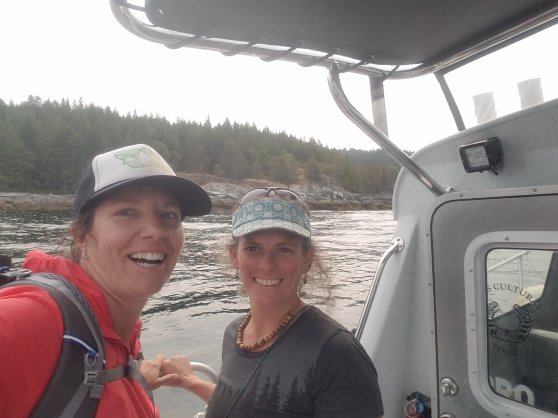
Erik owns a tour boat (and is also part owner in the food cart and fishing boat we visited last night) he is part of the Tla’amin nation and serves on the volunteer fire department with Courtney. The boat ride is short, so we were grateful for the help…and we could save our $$ for things like pizza and pastries. We bought Erik a few goodies from the bakery and then hopped on the boat and we were on the way!

Starting a trail by water is pretty darn cool, but it gets cooler. Erik is a Cultural Resource Manager for the area and has done extensive archeological surveys of the islands we were passing. He showed us a petroglyph of a porpoise which historically indicated good hunting grounds, and pointed out spots where they found burial spots from thousands of years ago.

30 minutes later we were at Sarah Point and Erik explained with the low tide we would have to walk to the front of the boat, climb on the other side of the rail, and jump onto the rocks. What?? Come again??? Jump off the boat?? Hell yes! Again, coolest start to a trail ever!!!! We carefully held onto the side of the boat and had to make it onto some wet rocks covered with sharp razor clams… No blood was lost and we didn’t fall into the water. Success!!

We watched Courtney and Erik motor away and we climbed up the rocks looking for the trail. He brought us right to it, and we found a sign that marked the start of our 110 mile trail.

We watched Courtney and Erik motor away and we climbed up the rocks looking for the trail. He brought us right to it, and we found a sign that marked the start of our 110 mile trail.

Bring it on!!

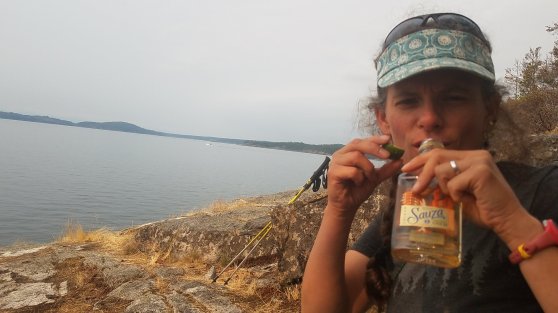
After photos and shots of tequila (we don’t mess around), we started walking.

The trail went up, and down. The grades were short and steep and was primarily tree bound. The terrain was lush and covered in mosses and ferns. It reminded me of hiking in the Oregon coastal range.

We hiked and took breaks. The best break came at Wednesday Lake where we stripped down and jumped into a cool and refreshing lake. It was perfect. The air was much more humid than I usually experience, and had been sweating up a storm. The water felt devine.

We went on a few more miles and decided to call it a day at the Manzanita Hut with vast views over to Vancouver Island all the islands and water in between. So beautiful.

There was a hiker here who had started a few days before us. Riar, had walked the jeep road to the start, and we talked around the picnic tables. This was his first solo trip and first time sleeping out alone, so seems stoked to have others around. Interesting guy, from Sesquatchawan, was from India and served in the Indian Army, but had been living in Canada for four years and was heading to engineering school in the fall.

The horizon looks hazy and may be a little smoky, but the sky above us looks clearer, maybe clear enough to see some of the percid meteor shower tonight! But my eyes feel so heavy…

Sunshine Coast Trail – Day 0

We set our alarms for 5:30am since we wanted to get on the first ferry out of Vancouver, but we were both up before that and hit the road in the dark. (sleep is hard when excitement is high)

Playing the ferry game was going to be one of the more challenging aspects of getting to the start of a trail. Nemo had been able to reserve us a spot on a noon ferry, but we were hoping to switch that to the 7:30am boat…. We had another one to catch after this one! We lucked out and parked our car at the end of the line at the terminal (an impressive feat of logistics and crowd management) . Coffee shops and bathrooms were all over the place for the hundreds of people waiting to cross. We killed about an hour outside my car, oooing and awing as the day lightened up enough to see the water and mountains around us.

We drove onto the first ferry (Horseshoe Bay to Langdale), parked, and proceeded to explore… A gift shop! Cafe! Sundeck! We were totally the tourists with the dinner plate eyes walking around in glee.

We got in line for breakfast and by the time we were sitting down with our eggs and bacon, the ferry was docking. Throwing the leftovers in a take-out box, we got back in the car and drive off the first boat. We then had to drive about an hour to our next ferry at Earl’s Bay.

We cruised in a long line of cars that were loaded up with bikes and boats and coolers…. August on the Sunshine Coast was high tourist season and we were in the middle of it. The day was cool and overcast, which was a great relief to everyone we had met so far. The summer had been hot, much hotter than usual, and fires were all around up here too. Climate change was changing things rapidly, even on the cool and watery coast of BC.

We saw a man hitching, so pulled over and offered him a ride to the next town. He was a first nation’s member and explained he was on the way to pick up his fish. The tribes have fishing rights off the coast, but the runs had been low or non-existent for the past few years. This year was different, and the salmon had come back. There were enough fish from the tribe’s catch this year to allocate each family 50 large fish…a true bounty that would fill their freezers and bellies for months to come.

After dropping off our new friend we continued on the windy road to the next ferry at Earl’s Landing. We were toward the end of the line and crossed our fingers that we’d make it on the boat and not have to wait another 2 hours for the next one. Lucky girls! We were one of the last ones to drive onto the ferry and high fived each other…. Almost there! For this ferry ride we sat at the front of the boat on the sun deck and watched the world go by as we floated to Saltery Bay.

We passed parts of the Sunshine Coast Trail that clung to the side of the steep coastal mountains, and now knew why there were 22,000’ of elevation gain…. It was rugged and achingly beautiful, and it was obvious that there wasn’t much flat ground on these mountains.

We finally drove into Powell River about 30 minutes later, and found Nemo’s friend Courtney’s place. Turns out Courtney lives a short walk from the trail! We figured we’d walk into her place on the evening of day 2, and could leave our resupply with her. So fantastic!

The rest of the day the two old friends caught up, we packed up our food, bought some last minute items, wolfed down an excellent fish dinner at her friend’s food truck, and walked the beach at nearby Tee sho som. Courtney worked as a volunteer firefighter in the community and also taught preschool there. We visited the firehouse and Nemo explored another career path.

We pitched our tent in her yard and before going to sleep had a bear walk through the yard. Hello nature!! We would need to be careful of bears on this trip, but it is prime berry season, so we hope the main tenants of this peninsula will be otherwise occupied and not interested in some dirty smelly she-hikers.

Tomorrow, the trail.
Sunshine Coast Trail – Prep

I was up at 5am for some last minute packing. Nemo was flying into the Portland Airport at 10am…a 3+ hour drive from home in Bend. We had been sending an increasing number of messages to the effect: “almost back together again!!!!”

Nemo and I met while hiking the PCT 12 years ago, and we got along so fabulously that we hiked well over half of that trail together, and have continued to hike every few years: the Northville Placid Trail, a few hundred miles of the Arizona Trail, and many trips to her local mountains in NY’s Adirondacks. We had been planning a hike together for over a year…and the day was here!!

Originally we had talked about going back to the Wind River Range which had featured prominently in both of our CDT thru-hikes (Nemo is a triple crown hiker too), but then she came up with the idea to hike the Sunshine Coast Trail. It just so happened that her high-school friend lived in Powell River, a stop along the trail, in a very hard to reach spot on the watery and rugged British Columbia coast. So we looked into it more: 180 kilometers or 110 miles, several ferry rides and/or water taxi rides to the start, Canada’s longest hut to hut trail, and 22,000’ of elevation gain. What!?!?? It sounded AWESOME.

I ordered a guidebook and soon put together one of the most useful documents of any long trail: a data book. There was one of sorts in the back of the guidebook, but it was all in kilometers and I wanted miles for my feeble American brain.

Nemo worked on logistics, figuring out the ferries and things. It turned out we would be passing through Vancouver BC and right by the place of another friend of ours from the PCT: Peppie. Peppie had married another thru-hiker from 2006, Ben, and they now had 2 children. They had just moved to Vancouver from Seattle and were currently at her folk’s house in North Vancouver.

On my way over Mt Hood to Portland this morning I saw a woman hitching at Frog Lake where the PCT crosses the highway. I pulled over and offered her a ride to Government Camp, a resupply stop 15 miles down the road. “Where in the world is Carmen Sandiego” (or Carmen for short… that’s one of the longer trail names I’ve heard of) was thru-hiking and in fact had tried to hike the Sunshine Coast Trail in the past! She was from Ontario, Canada and had to get off when she stepped on a hornets nest and was badly stung. I shivered when she told me… I was very allergic to wasps. Regardless I thought it was a good sign as most people I had been talking to about the trail had never heard of it.

I made it to the Portland Airport just as her flight was arriving, and we jumped in the car for a LONG day of driving. I5 through Seattle was stop and go traffic even though it was the middle of the day. The drive took longer than we expected, and we made it through the border crossing about 5pm. The border agent asked us how we knew each other, and I thought: “do you want the long version or the short version?” We gave him just the bare minimum and passed through with flying colors. We got to Peppie’s folks place just as dinner was ready and proceeded to spend the evening drinking good wine and catching up under the Vancouver skyline (it was an amazing house with an incredible view).

Sleep was sweet.

July in the Mountains – Waptus River

Repost from Adventures with Packraft

Kirk and I had the first week of July slated for a week of vacation, and we still hadn’t decided on where to go until the day before we left.I figured: draw a 10-hour driving circle around Bend (I didn’t want to drive farther than that), but turns out that includes the whole Pacific Northwest. Not much help.

We looked at packrafting the Bruneau and Jarbidge rivers in SW Idaho, but at low flows the rocks are reported to be tearrrrifying…tear…if..ying…tear. No thanks.

We thought about the Olympics, but we would be looking at a 4,000’ climb to get up the good alpine stuff, and we weren’t feeling THAT ambitious.

We thought about rafting the lower main Salmon River, but it is a very popular stretch, and open to jet boats… With July 4th happening during our week off, we knew it would be one of the busiest vacation weeks of the summer.

So, when Kirk came up with a combo backpacking and packrafting trip in the Alpine Lakes Wilderness in Washington, it sounded perfect. I had hiked through the Alpine Lakes area 12 years ago on the Pacific Crest Trail, but that September the whole stretch was drenched in rain and fog and I really didn’t see much. I was excited to go back and hike a little bit on the trail, check out some high alpine lakes, and do some packrafting.

It was hard to decide where to go even then. The area is massive and so full of mountains, rivers, lakes and trails that it really makes Central Oregon and our Cascade range look like child’s play.

We let the rivers decide where we would go.

We drove to Cooper Lake on Friday and camped on the side of the road (Washington has so many free roadside campsites!). Kirk has been checking out the Cooper River, a short, stout whitewater run, that was over my head, so next we drove up the Cle Elum River. It looked promising, then we hiked in to the river Kirk really wanted to check out, the Waptus.

We were worried it wouldn’t have enough water, but when we got to the confluence, it looked doable. It would be a mellow river with a few gorges…unknown gorges involving extensive scouting… so it would be a real adventure!

We left the parking lot with a week’s worth of food, boats, backpacking gear, and if we had weighed our packs I bet we were both tipping 60-70 pounds. It was painful. So painful that I wasn’t sure my body could do it, and I have rarely felt that! We were to hike in 9 miles with the full load. Eeeeeee!

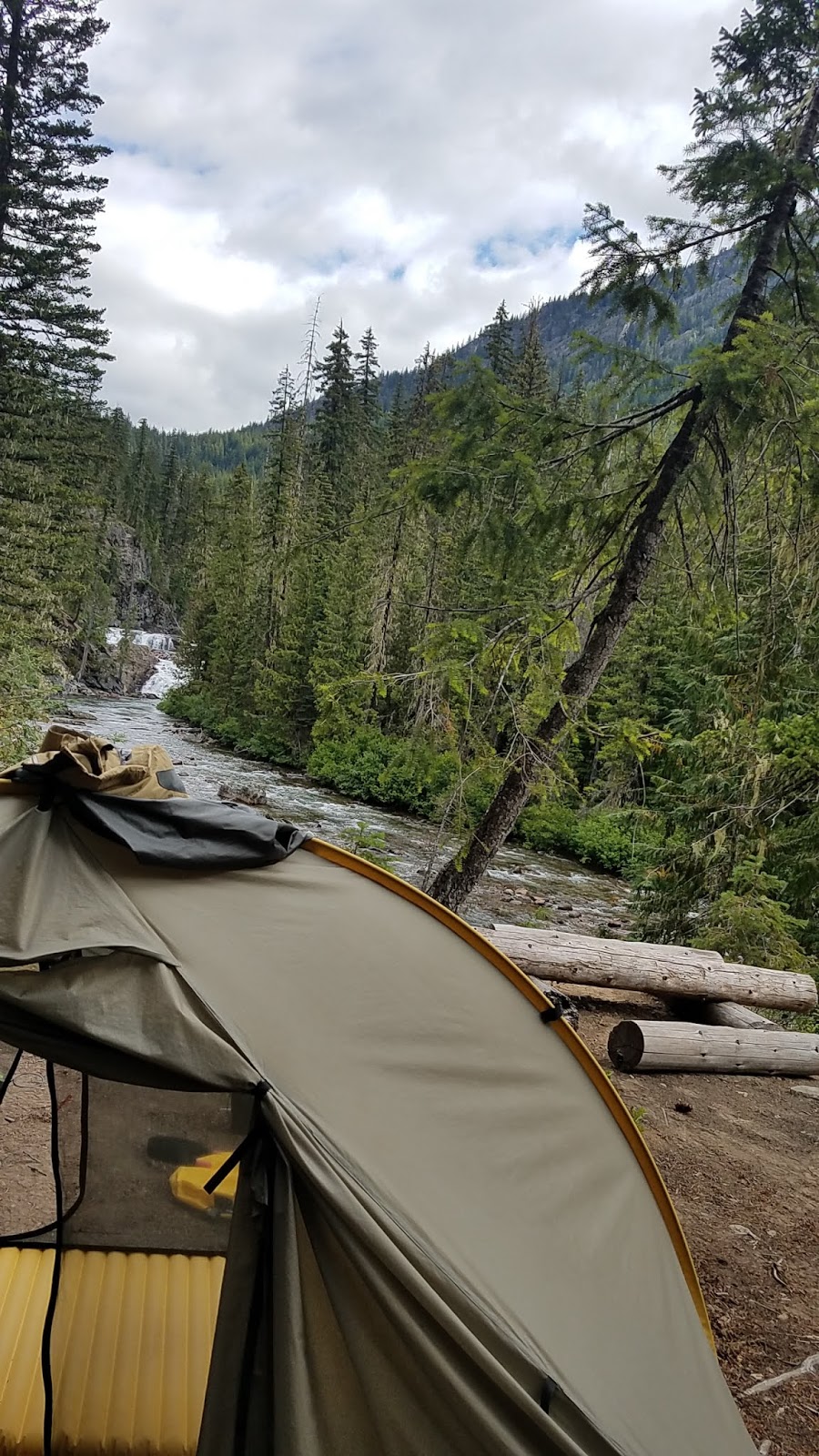
We made camp the first night about 4 miles in at the top of one of the gorges with what looked like a fun granite slide and drop. We had already passed a waterfall with a series of no-go drops, so we already knew the river would hold more surprises, and we would have to portage some stuff.

We huffed and puffed our way to Waptus Lake (on the PCT) and cached our boats.

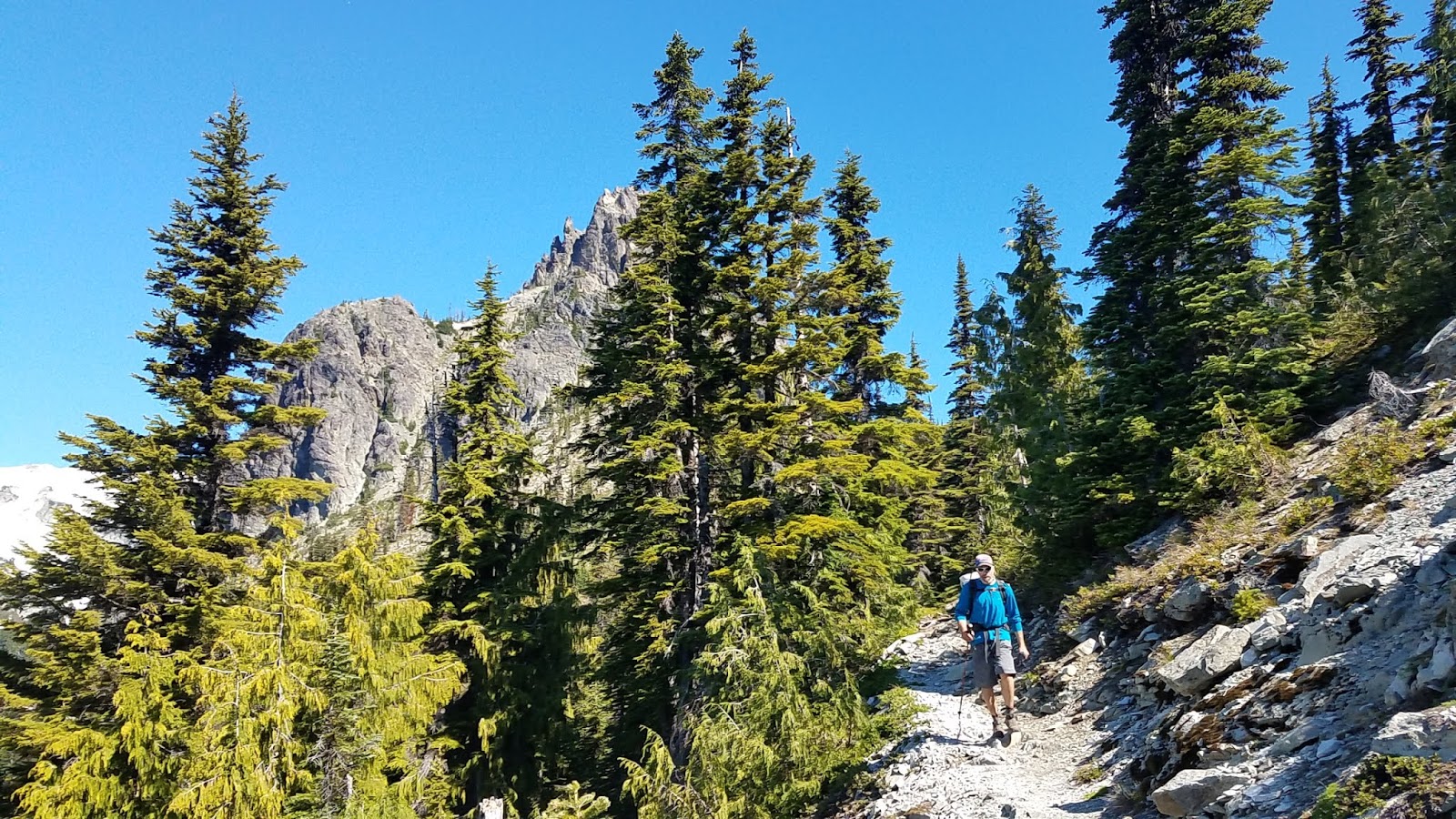
We spent the next few days hiking to some incredible lakes including Spade lake (holy cow, the trail goes straight up and reminded me of the Appalachian Trail…no switchbacks up the 2,000’ climb. Brutal.)

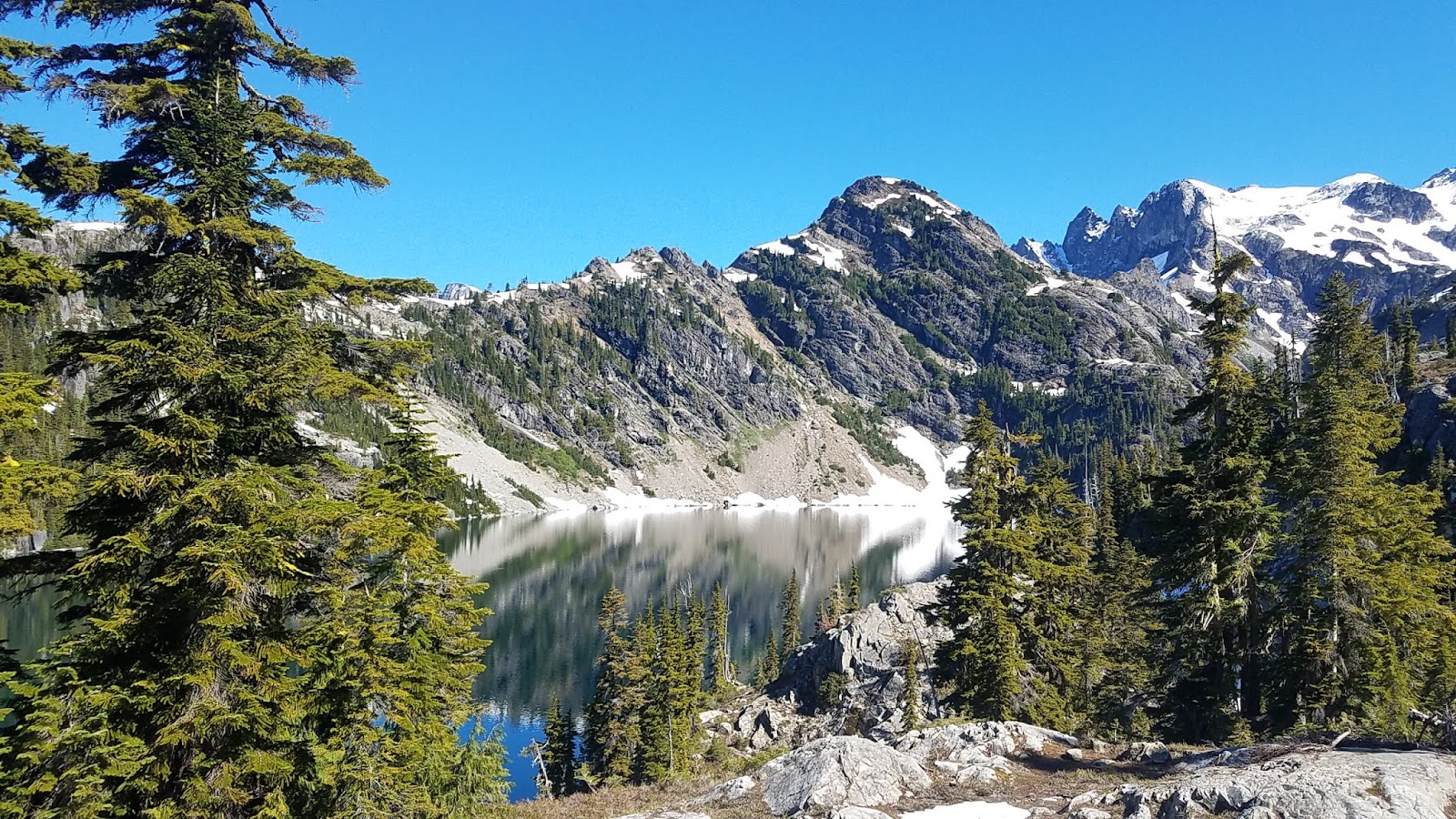
Then we went up to Deep Lake.

And Peggy’s Pond by Cathedral Pass. Wow!

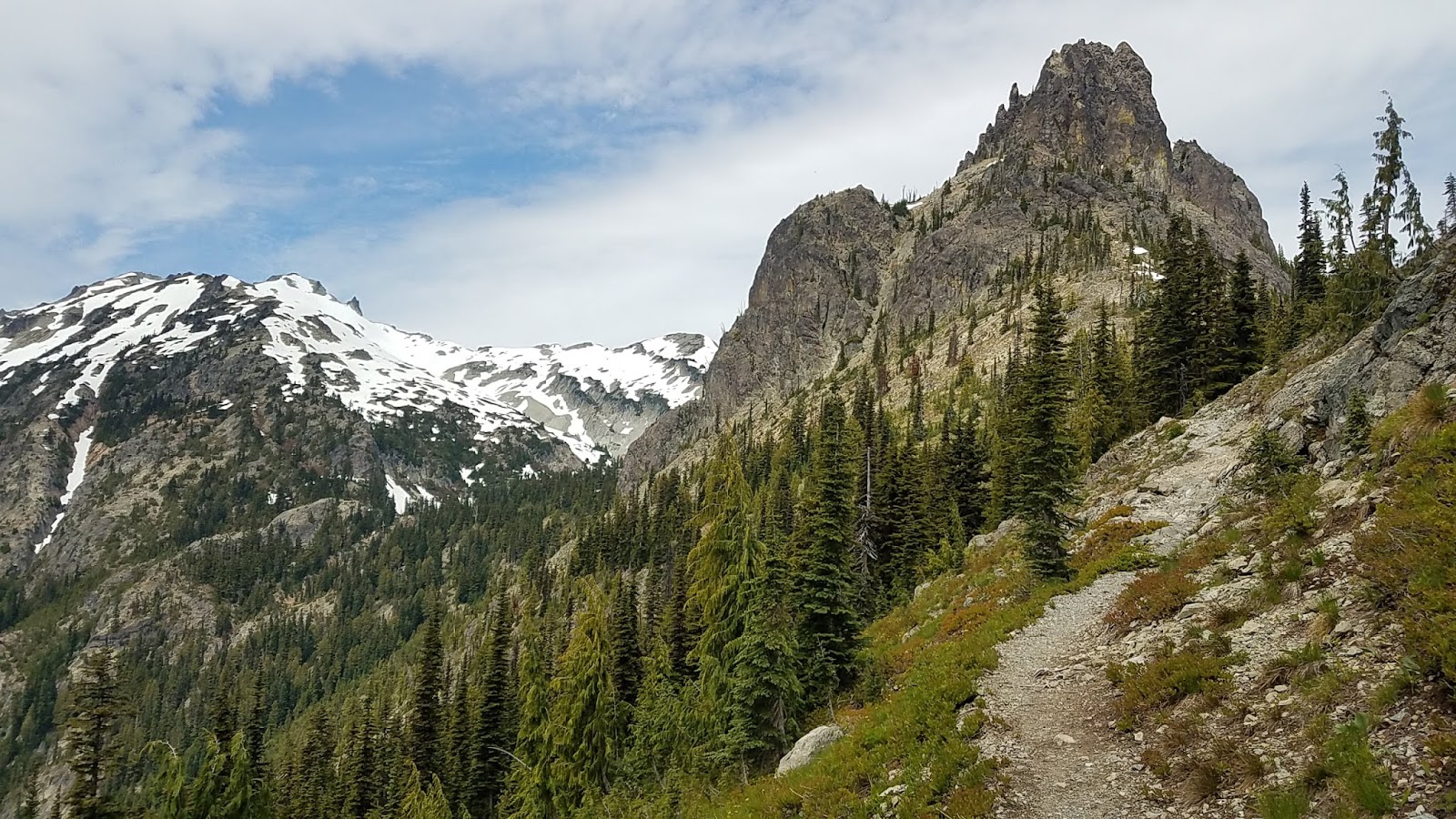
This was on the PCT but I didn’t remember any of it.

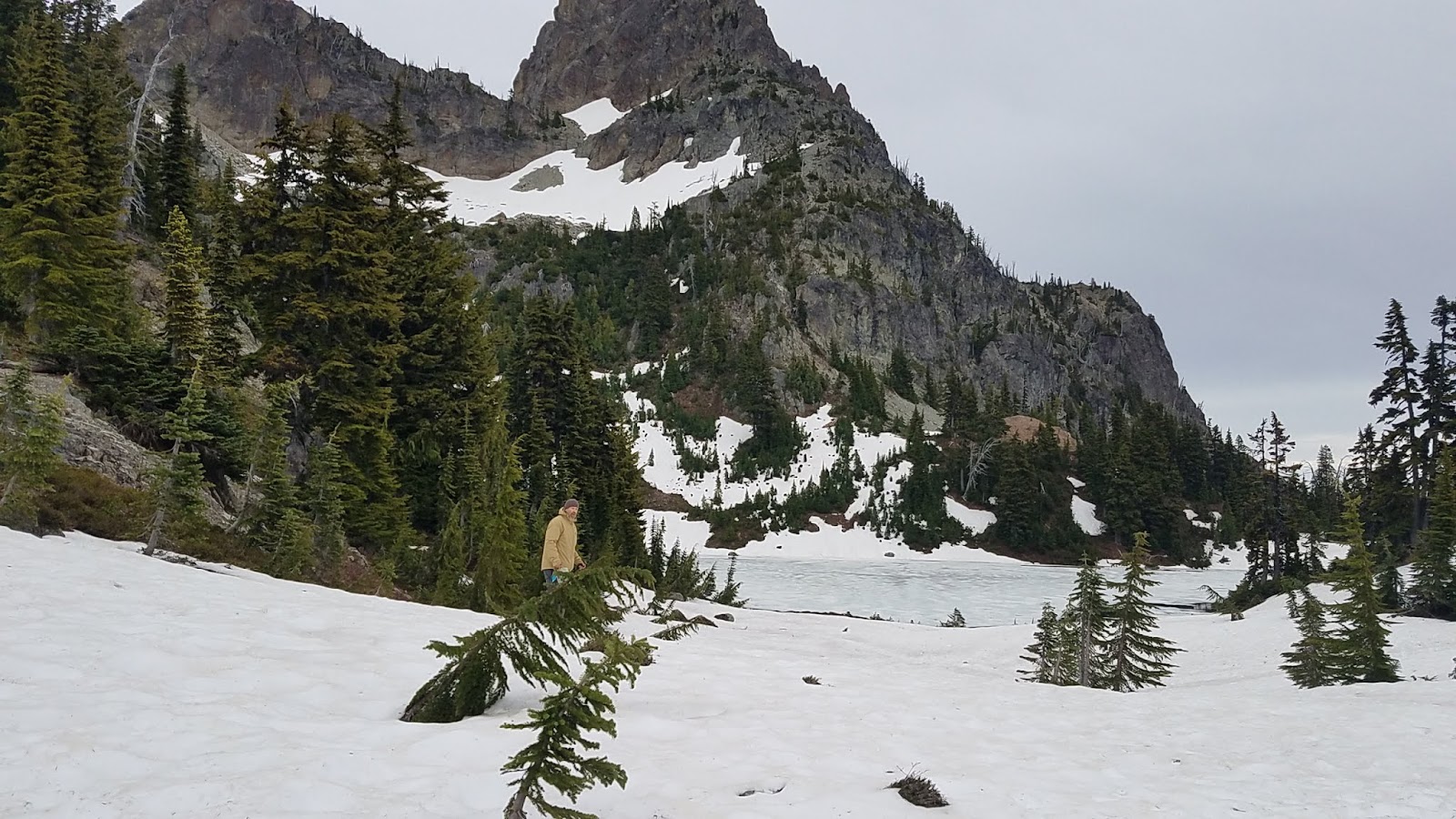
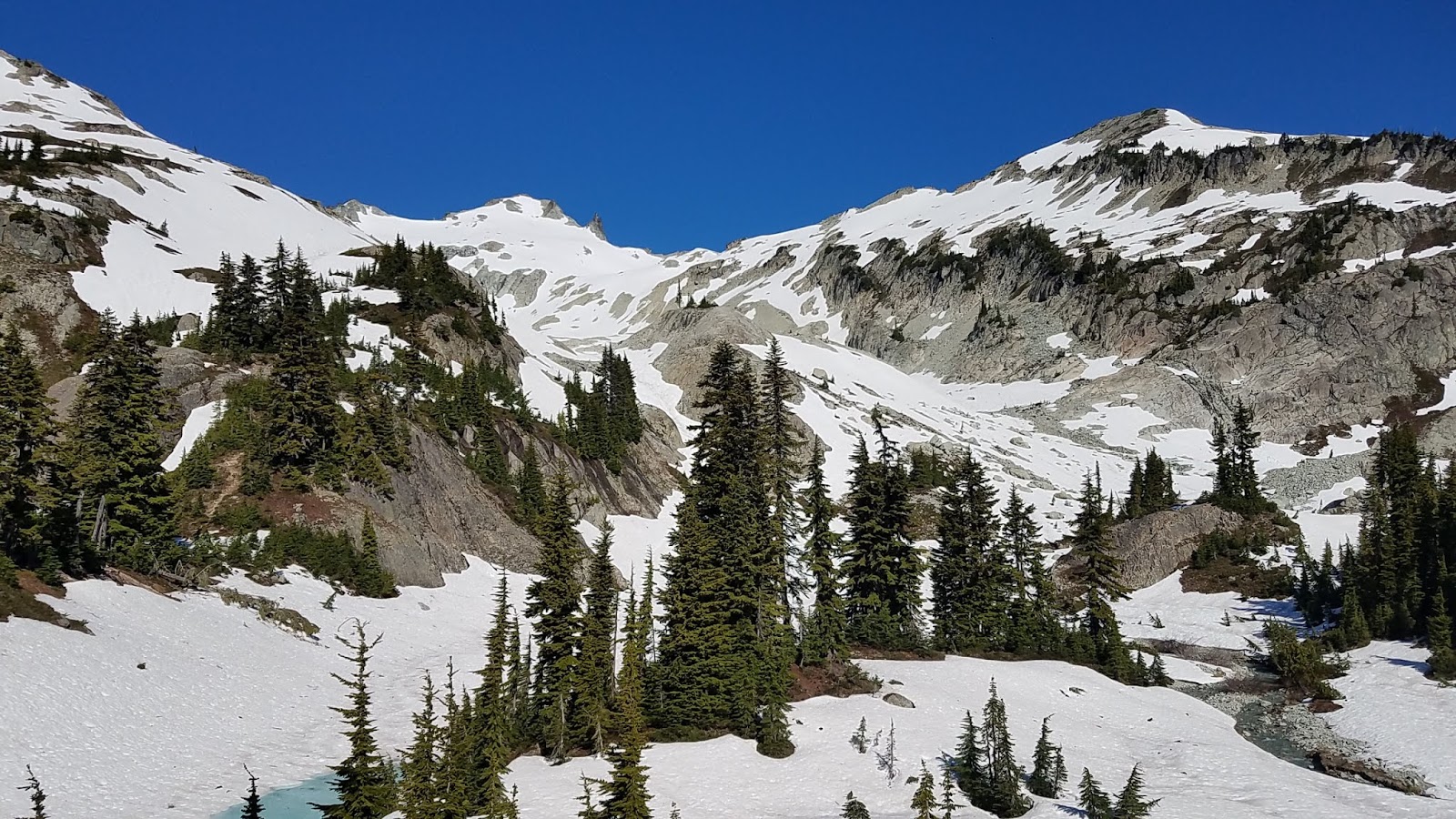
Peggy’s pond was still under snow but we found a dry patch under the towering Mt. Daniel for an incredible view. I must say, PCT hikers don’t know how good they have it. The minute the trail intersects a path that doesn’t continue to Mexico and Canada, the character changes immediately…no switchbacks, quick elevation changes, scree. But on the other hand it is efficient.

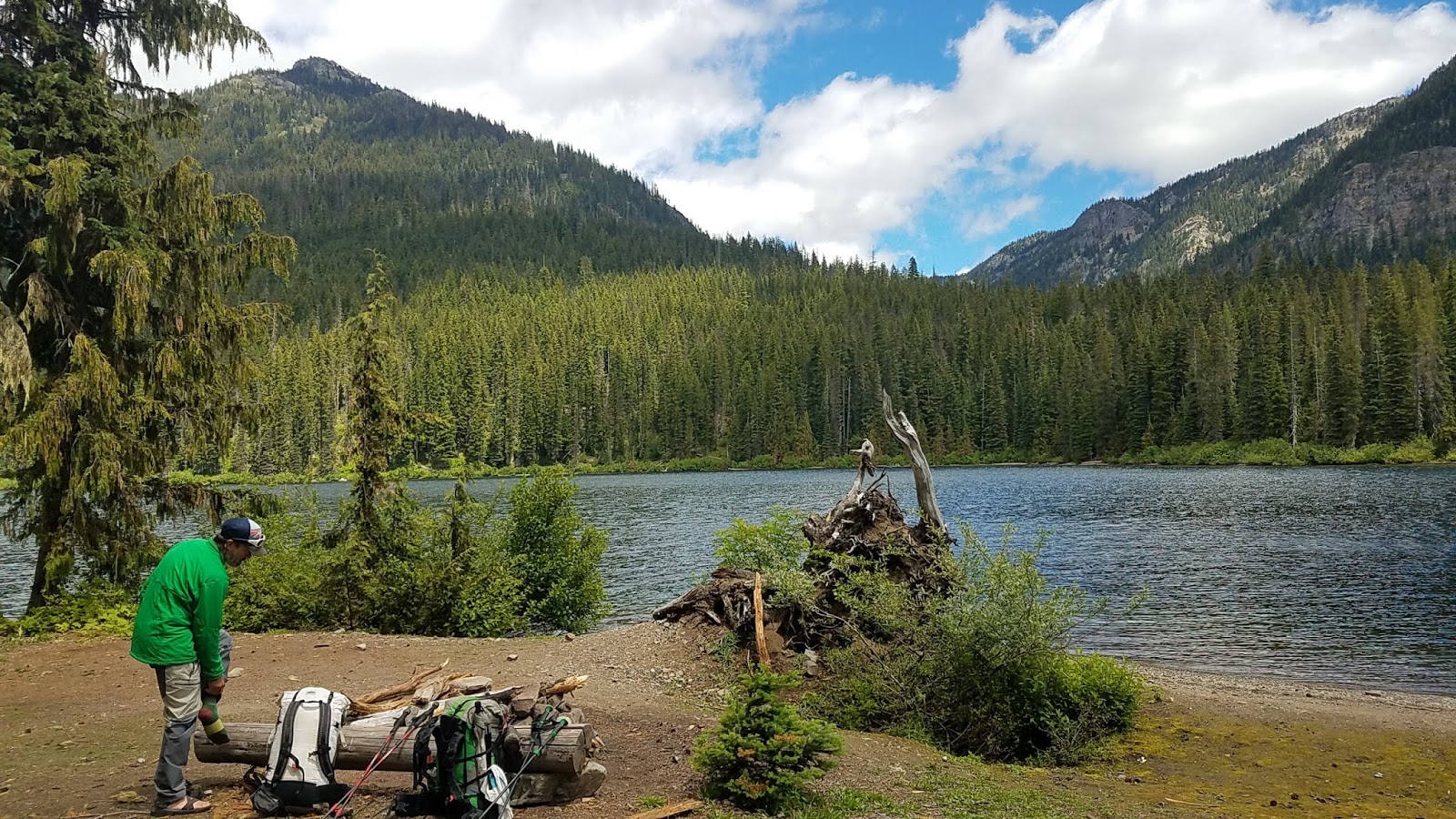
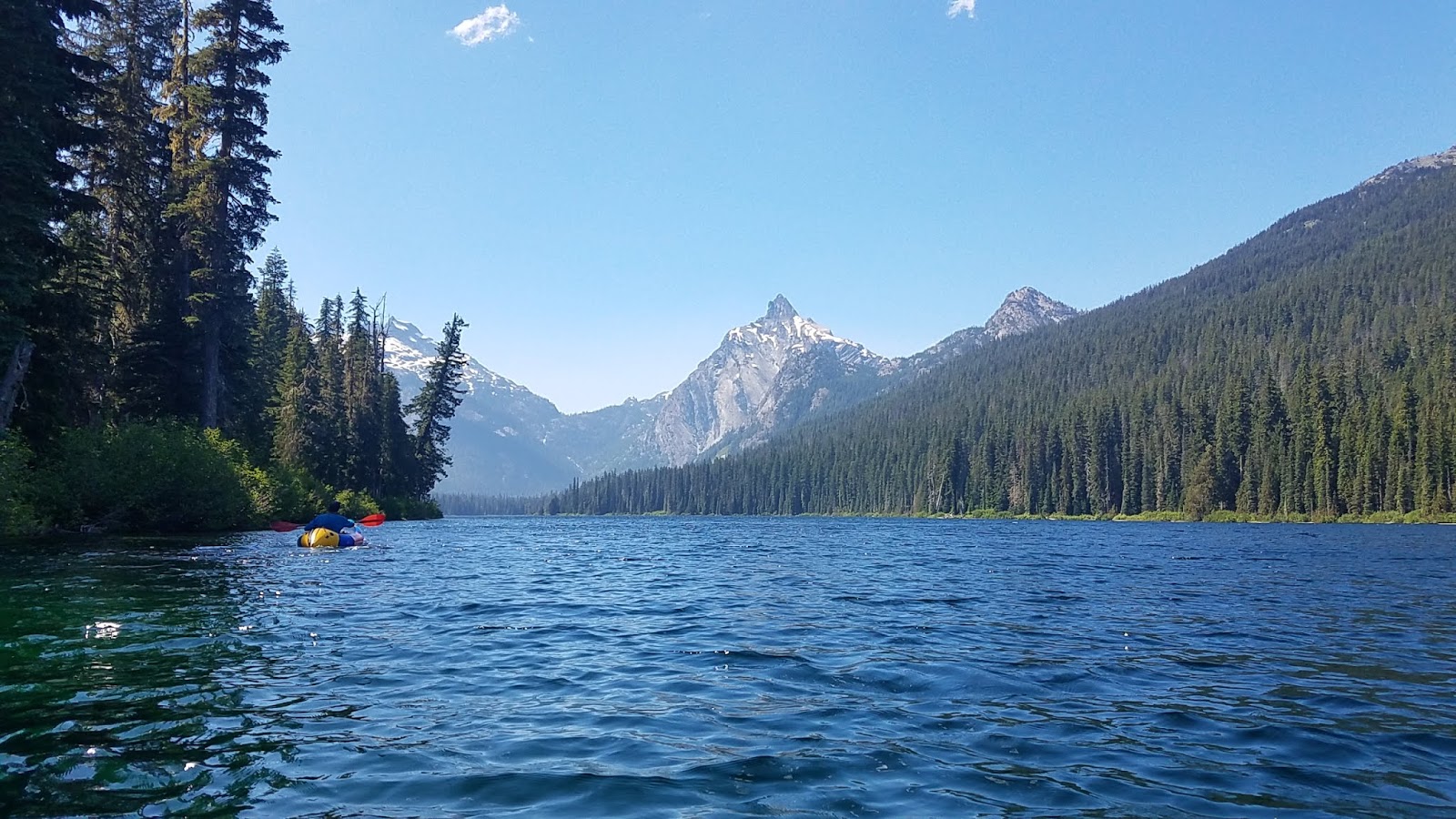
We made our way back to Waptus Lake and our boats on a hot sunny afternoon, so I had to dive into the lake. COLD. Yes the lake is fed by snowmelt, and yes it was unbearably refreshing. We inflated our boats and paddled around a bit and enjoyed the bliss after some pretty challenging backpacking.

The next morning we loaded up the boats to see what Waptus River had to offer.

The calm and pleasant paddle out of the lake lasted about a mile before the first gorge.

We got out river left to scout, and could tell the entrance was clean, but we didn’t climb the next bluff to see deeper into the canyon. It’s crucial to scout these places because they are so committing. Once in a granite gorge like this, there is no out. Often sheer cliffs prevent portages or walking around rapid, and narrow canyon walls can easily trap logs and make deadly barriers. So, since we couldn’t see farther in, we decided to do the smart thing and walk around.

The portage on river right looked more doable, so we picked up our fully loaded boats and walked around.

On top on the river right side we dropped boats to get a better look at the rest of the gorge, and to our dismay saw it was a go. The gorge was clean and runnable, but we were already mostly around and wouldn’t go back. Bummer, but we should have either taken the time to scout the whole thing, or be happy we made a smart choice with the unknowns we were facing.

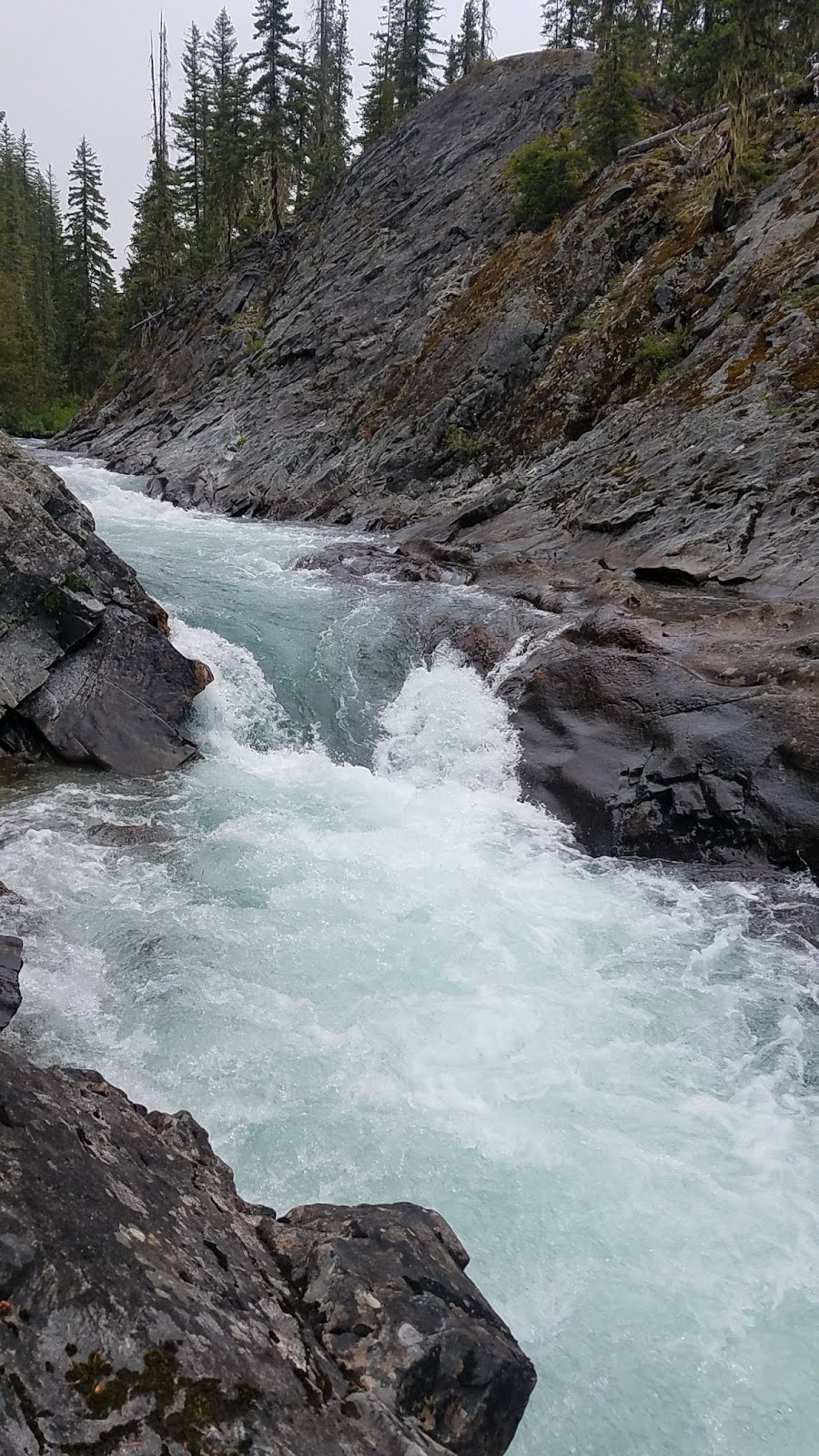
The next 4ish miles were a braided river channel complete with several knarly log jams and gorgeous deep aquamarine pools.

We huffed and puffed over the log jams and had several clear miles before the next gorge.

First we ran the granite slide and drop that we had scouted on the hike in. Fun!

We pulled over and had lunch, and decided to scout the next gorge, the whole gorge, this time. It looked to be about a mile long, so we left our boats and bushwhacked up and down the steep cliffs.

We were able look down the steep wooded slopes for most of it, and it was clean. No logs blocking the way, but a few of the rapids were in the Class IV/-V range with no portage  / scouting potential, and I didn’t feel comfortable running them.

Kirk wouldn’t boat it alone (any Class V packrafters out there that don’t mind some brutal backcountry wilderness river trips? Kirk could use a big water adventure partner). Anyway the whole gorge ended with a series of waterfall drops (35′ triple drop) that looked good if you had a hardshell (not so good for a packraft), but no way to set safety on the second crux drop of the triple drop .

So we walked back to our boats while dodging a quick thunder storm, and picked up our boats to  make the whole journey back again.

We made camp with a view.

For our last day of paddling it appeared from the topo lines on the map that we might have another gorged section on our hands, but after launching that morning and padding for a short while, we realized the terrain wasn’t as narrowing as it looked, and it was all a go.

We were in some fun Class II/III water!

Beautiful pools of water peppered with fun rapids marked most of the run that morning. Towards the end of the run the drops started to get bigger, in the Class III+ range, but all were clean and good splashy fun.

I wore my gopro for the boating, so got a lot of footage of the river, stay tuned for a video!

Hiking a Route vs. Hiking a Trail: Part 2 – How to develop the skills for route-finding.

Part 2 of my Routes vs Trails is up on the MSR – Mountain Safety Research blog! Thanks to some badass fellow hikers, I think we came up with a good list of suggestions on how to progress your skills to start hiking more routes. Maybe I’m biased?? 🙂


My heart lurched as I scanned the snow-covered forest floor looking for any hint of a path through the trees. The hiker whose footsteps I was following knew where they were going, right? When those footsteps made an unexpected turn in the snow, doubt crept in. Had the footsteps lead me astray? Was I lost? I pulled the map from my pocket, determined that, wherever I was in this thick forest, if I headed north I would intersect a road…eventually. I followed my compass bearing for almost an hour before crossing a dirt road draped with melting patches of snow. Yes! I did it! Now I set to the task of finding my next landmark to figure out where on the map I had ended up. I’m not lost! Just not exactly sure where I am…

Route Finding | The Summit Regsiter
Photo by Quoc Nguyen

My backcountry navigating skills were put to the test again and again when I hiked the fledgling Arizona Trail nine years ago. Even though I was hiking a developing trail, many sections required route-finding. In times like these having the skills to find yourself again is crucial.

If you want to hike a route, you need a solid backcountry skill set. Developing those skills will open up new possibilities for spending extended time in the backcountry.

In part 1 of this series, we looked at the differences between a route and trail. Now, we’ll look at how to acquire the route-finding skills needed for that off-trail hiking.

As the Oregon Desert Trail Coordinator, I spend a lot of time helping people feel comfortable and confident with off-trail travel. For this piece, I polled some of the most accomplished route creators and hikers I know for their advice. Liz “Snorkle” ThomasCam “Swami” HonanJustin “Trauma” LichterSage Clegg, and Paul “Mags” Magnanti all have extensive experience and play an active role in educating hikers new to the trails and the backcountry.

How to develop your skills

  • Take a navigation class: Learning how to navigate with a map and compass from an experienced instructor is a great start. Your options include watching online tutorial videos, taking a class at your local outdoor store, and signing up for a guided field trip.
    Route Finding | The Summit Register
    Photo by Renee Patrick

Trauma took an outdoor education class in college that had him wandering around the canyon country of southern Utah for three months, for which he got college credit. Sage learned to use a map and compass at 14 when she enrolled in an Outward Bound course. Mags took an Appalachian Mountain Club course in “the wild, remote lands of Rhode Island” just prior to his AT thru-hike.

  • Practice: “Once you feel comfortable with the basics, it’s time to use those skills,” explains Mags. Practice your navigation. Then practice again BEFORE you head out on a challenging route.
    • Practice on trails: “To learn, I always carried a map on hikes that are ontrails, and frequently checked the map to make sure I always knew about where I was,” Snorkle says. “Following along on the map, I got a feel for how topo lines translated into hills or ridges so when I really needed those skills, like on cross-country sections or when the trail disappears, I had a better idea.”
    • Practice NEAR trails or very visible landmarks: “Practice in a place you can fail,” Sage suggests. “Go off-trail between two easy-to-find ‘handrails’ like a river and a road, or between two established trails. If you get off course you can always bail to familiar turf by traveling towards the handrail.”
    • Practice micro-navigation: The art of making small route choices on the ground, or “micro-navigation” is just as important as the skills you learn in navigation classes. “What is the best way to get around that gap before the pass? Should I go left or right on the talus slope? This type of navigation mastery can only come with experience,” Mags explains.
    • Practice in an urban setting: Snorkle suggests, “Put together a complicated walking route with lots of turns, go for a trip, and practice with a paper map. If you’re really lost, you can always check your phone or find a ride home.”
  • Anticipate the terrain: Beyond knowing where you should be on the map now, look ahead and predict what you will do next. Will you cross a creek right before you need to make your turn? You can be on the lookout for the creek that will indicate your next move. Study your maps right before your hike to get a lay of the land, and repeat at each break.
  • Go with more experienced people: “I started hiking off-trail before I was ever a thru-hiker,” Snorkle says. “I went with more experienced hikers, watched what they did and learned from them. I followed along on my own maps, made educated guesses, and then checked in with them for confirmation.”
  • Learn on maps before GPS: GPS devices and smart phones have become incredibly common and utilitarian, especially when hiking off-trail. However, it’s still important to have the analog skills of map reading and navigating. Devices can break, technology can lead you astray; it’s vital to always carry paper maps and know how to use them.
  • Scout the route before your hike: Swami says, “I’ll go over my proposed route several times, identifying notable landmarks, challenging stretches, potential camping areas and possible exit routes in case of an emergency.” If your route has a GPS track, upload it to Google Earth and review the trip with detailed satellite imagery.
    Route Finding | The Summit Register
    Photo by Sage Clegg
  • Build skill development into your objective: “Each adventure can be a learning experience, as much as it is an opportunity to visit a new place,” Trauma explains, “I try to add a skill that I can improve on into the core goal for each trip I take. This also helps create a challenge that keeps me interested and inspired.”

Other considerations

  • Take extra safety precautions: “Prior proper planning prevents piss poor performance,” Trauma advises. Err on the side of caution regarding the amount of food, water, clothing you will carry and the distance you plan to travel per day. On routes, these variables are often quite different from backpacking on an established trail. “I leave a detailed description of my proposed route with friends or family before setting out,” Swami says. “Consider carrying a personal locater beacon, such as a SPOT or Garmin inReach.”
  • Be aware of private public land issues: It is your responsibility to know the rules and regulations on public lands, Each land management agency has different protocols regarding caching, permits, access and more. Do your homework. It is also your responsibility to know how to avoid going on to private land. Not all fences indicate private land, and not all private land is fenced. Many GPS apps have private land layers, and hunting unit paper maps often show private land parcels.
    Route Finding - The Summit Register
    Photo by ONDA
  • Be willing to adapt: “Mother Nature doesn’t have a copy of your itinerary,” Swami likes to say. “The keys to hiking a route are preparation, adaptability and objectivity. If you aren’t sure that a particular area will be navigable, have a Plan B. Never be too wedded to a particular course.” Carry a map of the entire area you’ll travel through, so you’re able to find a new route if plans change.

Once you have the experience and skill level to head off the beaten path, being successful in remote backcountry settings falls to making good decisions. Listen to your body, observe the terrain and weather, carry the resources you need to make route decisions in the field, and remember to enjoy yourself! Taking a rest day, or a side trip for ice cream, are good decisions if they keep your morale high and your feet happy.

When you’ve mastered your backcountry skills, I hope to see you out on the Oregon Desert Trail! This 750-mile route through the most scenic places in Oregon’s high desert will challenge – and reward – you.

Route Finding | The Summit Register
Photo by Randy Aarestad

Oregon Desert Trail Section 7 – Day 3 and beyond

The Oregon Timber Trail basecamp on Winter Rim was epic

If I don’t write these hiking journals while I’m on the trail life intercedes and it gets away from me. It’s been 2 weeks since my Section 7 hike and in between I helped lead trail crews for bikepacking route, the Oregon Timber Trail, of which the ODT shares 50 miles of single track in the Fremont-Winema Forest, and then led trail work for a group of Oregon Natural Desert Association volunteers in the Badlands Wilderness for National Trails Day, and now I’m down near Denio, NV scouting a way around the brushy and fantastically frustrating bushwack in Denio Canyon and meeting with some landowners in the area.

Whew. This is my job!

I stayed the night at the Running G Farm near Denio Canyon with an awesome couple, Katie and Garrick. They rent out a bunkhouse to hikers and others, and as I found out, that stay may come with a steak fed from the grass right outside the window. So delicious. (check out the town guide I put together for info on the farm and a ton of other places to stay and visit in SE Oregon http://www.onda.org/OregonDesertTrail it’s on the Plan a Trip page under Trail Resources)

Also the Diamond Inn in Denio is open again. It’s been closed about 6 years, but Jeff the owner just got it going about 2 weeks ago. I felt welcomed right away when I stopped in, and before I knew it the rest of the patrons were buying rounds and filling me in on some local history.

I missed seeing Dirtmonger by a few days on his Mexico to Canada Desert Trail hike (the Desert Trail overlaps with the Oregon Desert Trail in the Pueblo Mountains and Steens Mountain). He will be the second person to ever thru hike this route that’s been around about 40 years.

Lots going on, and when trying to decide what I wanted to do for my birthday this weekend, I think instead of the usual camping trip or outdoor adventure I might just play it close to home and have a Bend birthday. When I’m out all the time for work. It’s a luxury to be home!

The trails will disappear if something doesn’t change

Remember in my last post where I lamented the state of trails and the lack of funding for our federal agencies to maintain them to the level they need?

Well I was listening to Emory’s By Land episode with friend Clay Jacobson from the Idaho Trails Association and they got into much more detail.

Listen here

If you are a hiker who wants to continue hiking trails, a trails advocate who wants more actionable stats or a policy maker who can make a difference regarding federal budgets, give it a listen.

We can’t keep relying on volunteers to maintain the bulk of our trail systems, and hundreds of miles of tread are being lost each year as is.

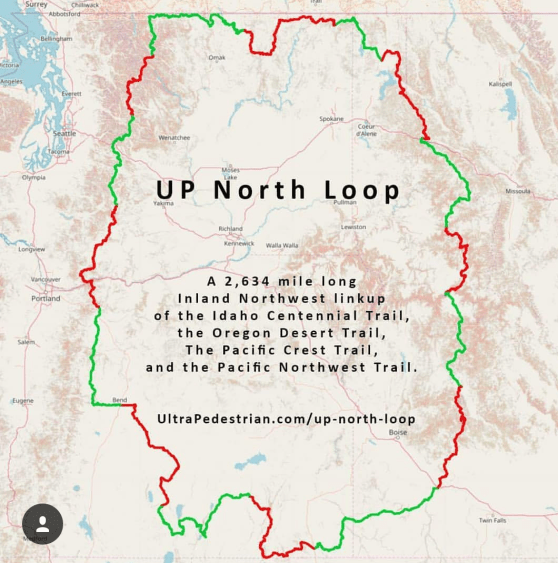
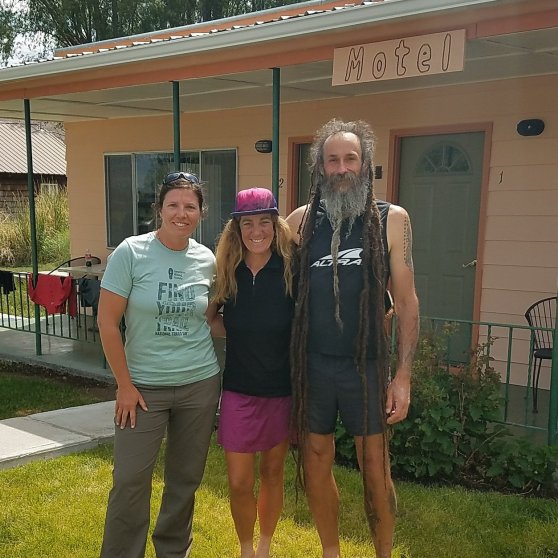
On another note I’m down near Fields this week and had the great pleasure of running into team UltraPedestrian on their epic hike from the Idaho Centennial Trail to the Oregon Desert Trail to the Pacific Crest Trail to the Pacific Northwest Trail… A journey of close to 3,000 miles.

Amazing! I knew when I started working on the Oregon Desert Trail that it would be a natural next step to connect into other trail systems. And here they are, the first to do it!

Oregon Desert Trail Section 7 – Day 2 – 20 miles

Not a good night of sleep, but that is my normal on night one now. Sigh.

I whipped up a meal replacement drink for breakfast, just to try it out… and I decided that I will continue to eat solid foods. I really like eating, and drinking my calories just doesn’t do it for me.

My legs felt heavy and slow, probably the lack of sleep and minimal breakfast, but I was still moving at a decent pace. When I took my first break I gave Kirk a call, he had been rafting on the John Day and we missed each other before I left town. The morning was hot so I took off some layers to get a little sun on some white skin, but it looked like the clouds were moving in. A quick check of the weather confirmed that, in fact rain and lightning is in store for the whole week… That could make for some interesting trail work.

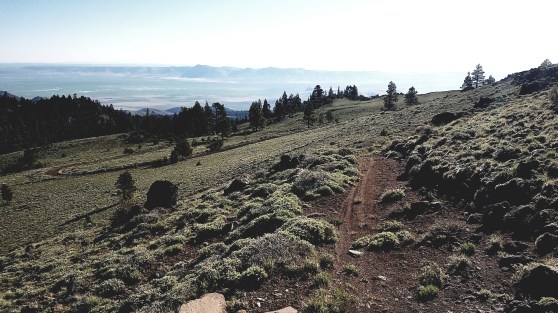
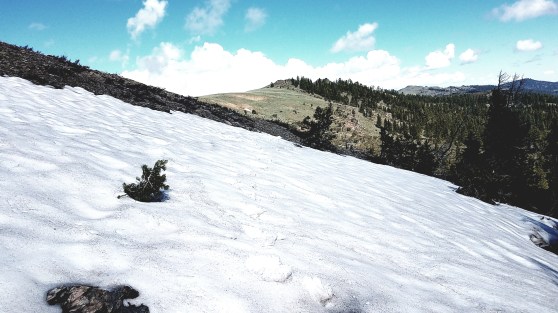
a tiny patch of snow was still clinging to the trail

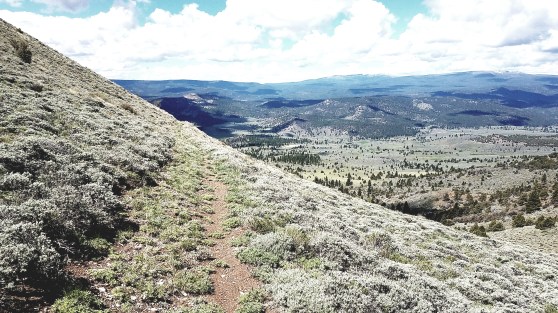
the views…

I had lunch at Moss pass, and after about a mile the trail tread started to go downhill. Literally and figuratively. The next 5 miles or so were in poor shape, at times the tread completely covered with vegetation. It’s daunting to stay on top of this stuff! The Forest Service has a hint of the budget they really need to be able to do their job like trail work, and they rely heavily on volunteers to make up the difference. A lot of the trails aren’t hikeable because the maintenance has been deferred so long. Many of them around the country were built by the civilian conservation corps when the government put people to work around the time of the great depression, and we have this amazing legacy of trails now. I would love to see a modern CCC so we could maintain them. Or we could adequately fund our land management agencies so they can do the jobs they are mandated to do…
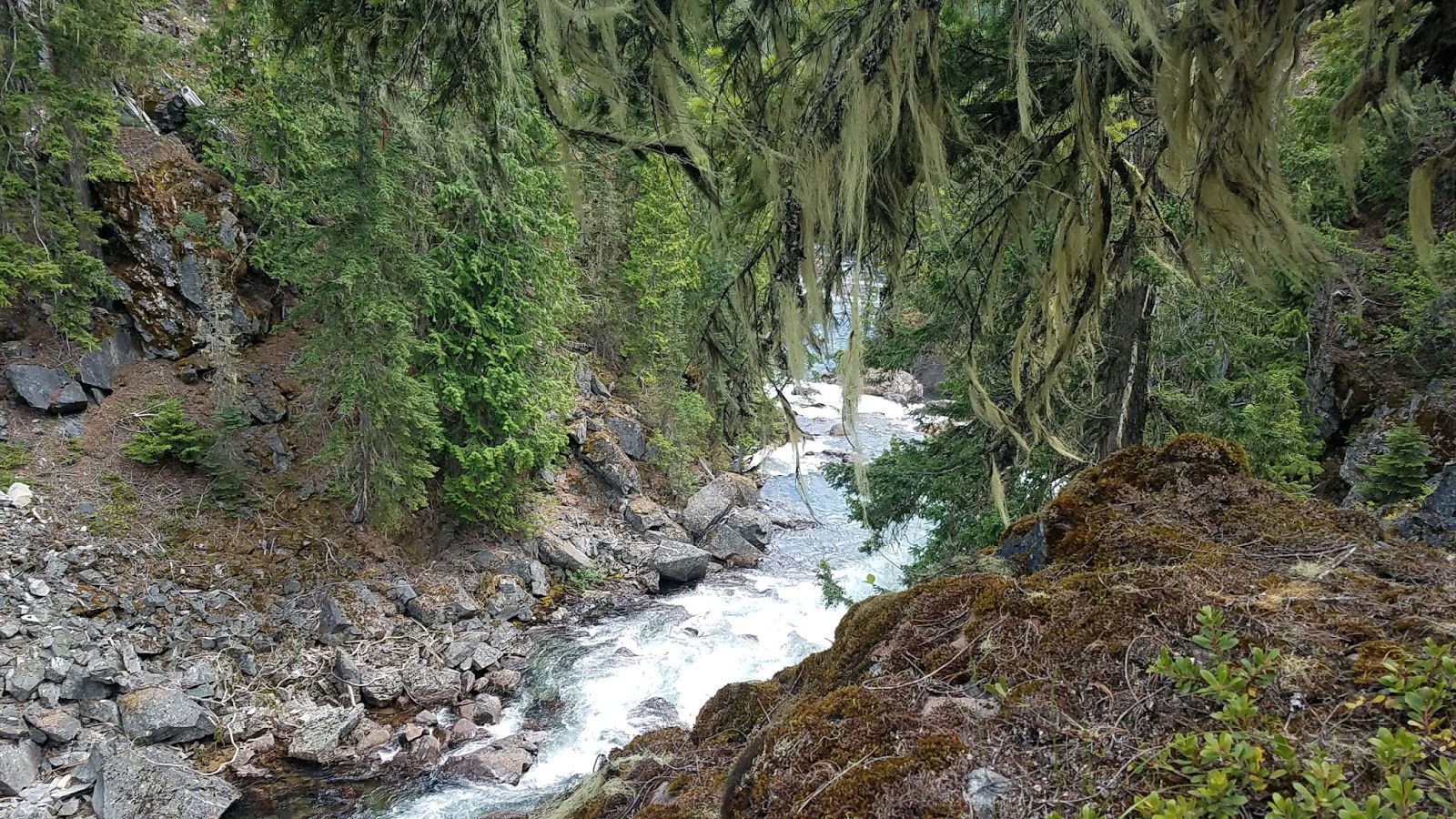
More hiking. I didn’t get rained on, but walked into an area that must have gotten hammered because everything was soaking wet and I was sliding around in the mud. I got some water from a cow infested creek before climbing up a little to find a camp spot.

I only left home yesterday but I smell like I’ve been out for weeks, I’m muddy, sweaty and bloody from a few scrapes… it doesn’t take long out here and I’m even dreaming of pizza even though I didn’t earn it yet!