A cold night on the Blue Mountains Trail….probably about 3am, writing and drinking coffee as I tend to do!
Good morning folks.
It’s 2:02 am and I’m officially asking for your sleep advice.
Any and all suggestions are welcome!
Please provide:
Tips for falling asleep in the first place
Tips for staying asleep
Tips for getting back to sleep once I wake up
Foods that will help?
Rituals that will help?
What are the sounds/music/podcasts that will help?
Meds that will help?
Meditations/breathing that will help?
Lay it on me.
I’ve come to this pattern in my sleepless nights where I look forward to the dark and early hours when my brain has had 3-4 hours of sleep and I can get in some good reading or writing time. The house is quiet and I can indulge in having hours by myself to play.
I know a part of getting past this sleep interruption and into a solid 8-hour REM cycle will be interrupting this enjoyable part of my day, which may be tricky to do.
Are there other ways to go about it? Maybe I sleep for 4 hours, get up for 4, and go back for 4? I tried to go back to sleep yesterday morning for a few hours, but only lasted about an hour and never really fell asleep again. Just lay there and rested with my eyes closed.
I’ve been focusing on sleep for the past few days. Well, my focus is on getting more sleep – whether that is actually happening is debatable. My routine: At about 7 or 8pm I take my evening meds (some of which include sleep aids….much more on medication today, I’ve decided to go into a deep dive on the pills. What am I even taking??).
I put on my Husco wrist and ankle bands, my over-the-ear-headphones, plug them into my phone, and choose a sound/vibration sequence to fall asleep to. My options include (Wow, I had no idea there were this many until I typed them all out):
Stillness – Helps you quiet unwanted noise in your head
Relief – Aids inthe alleviation of pain and discomfort on a physical level
Ancestral – Awakens Ancestral memories held in your DNA
Integrate – Balances and harmonizes body, mind and spirit
Expand – Opens up the mind gate to higher consciousness and meditative states
Safety – Allows for comfort and release of fear
Calm – Deeply relaxes you so that you sleep soundly and wake up rested
Heal – Relaxes your energy centers and releases built-up anxiety
Serenity – Quiets the mind so that you remain completely awake and sharply aware
Regulate – Helps bring body systems back into balance after trauma, shock or stress
Vitality – Revitalizes what has been depleted in body mind or spirit
Peace – Creates calm in the midst of chaos and agitation
Ground – Brings you back into your body and anchors your energy to the earth
Tranquility – Soothes jangled nerves, transforming anger and frustration into inner stillness
Focus – Allows for easier access to problem-solving and synthesis of new material
Comfort – Gently washes away worry and soothes emotional grief states
Mystica – Reawakens magic and reconnects to primal memory
Release – Facilitates access to memories and resolution of deep-rooted issues
Harmonize – Synchronizes what is out of sync in body, mind or spirit
Clarity – Uncluttered the mind, quiets random thoughts and opens the door to inspiration
Free – Transcends feelings of entrapment and helplessness
Renew – Resources what is out of balance due to illness, stress or trauma
Oceana – Facilitates connection to life’s mystery and your fluid nature
Elevate – Frees your mind and spirit to soar
Opening – Increases mental perception and expands the body’s energy centers
Create – Stimulates and expands the creative flow
Rejuvenate – Stimulates the life force to enable cell repair and regeneration
Soothe – Reduces fear and anxious thoughts
Bliss – Opens the heart and mind to love and well-being
Awake – Brings body and mind back to a state of alertness
Transcend – Opens the mind to realities beyond the collective consciousness
Balance – Harmonizes yin (feminine) and yang (masculine) energies to create a sense of equilibrium
Nurture – Connects you to feelings of safety and warmth, generating a sense of support and well-being
Relax – Alleviates extreme stress and anxiety while deeply relaxing mind and body
It has become a ritual to get ready for bed this way:
I get all snug under the covers,
sometimes put my bed into zero-gravity mode (feet above head – I play with the sleep settings quite a bit, but I do like my legs elevated most nights),
take my neck brace off,
fluff a down pillow behind my head,
lay back,
put on the earphones,
Cover my eyes with a lavender-sented eye pillow that Carrie made for me years ago,
turn off the lights,
And pick one of the vibration experiences to start with. I usually choose a 30-minute sequence and often fall asleep before it finishes. Everyone once in a while I stay away through the full session and will pick another.
About two hours later my bladder wakes me up. I have a new pee-device that I can use when I wake up! This is a new addition to my cart this week. It fairs much better with my middle-of-the-night aim than the psytle did.
About this time I tend to hop on a device and scroll for a while (I know, I know…big that’s a big no-no for sleep interruption), then I’ll queue up a podcast or two, swap my over-the-ear headphones for some earbuds and sink back into the bed to have someone talk at me for the next hour or two. Often I’ll fall asleep, but sometimes I hang in there and listen to the episodes.
That might take me to midnight or 1am. After talking with one of my docs last week I decided to play with sleep meds this week. I’ve been deferring my 10mg of melatonin for a few hours, and instead of taking it at 7pm will take it one of the first few times I wake up. So far I haven’t noticed that helps much.
I know my meds are messing with my natural rhythms quite a bit, that’s why I want to do a deep dive into all of them tonight. But to be honest, I wasn’t sleeping well for MONTHS before my diagnosis. I was quite haggard, and my neck was a real problem.
Well, my ribs were too. Laying myself down and then sitting up last fall was a major chore. When I needed to set up I would roll over to my left shoulder and brace my arms on the wall (my bed was close enough to the wall that I could get some traction on it), I would brace my legs off the left side of the bed, and squeeze my abs enough so that I could evenly transfer the weight between my arms/shoulders, abs, and legs to lift myself to a sitting position. It didn’t always work out well and I might get a spasm out of the movements. Then I would scoot myself to the end of the bed to brace my legs again and hang onto the wall to stand up. I’m glad it’s not that much of a production anymore. The pain in my neck and back prevented me from getting good sleep pretty much up until my surgery in December.
And I haven’t even told you about my pillow fiascos! As you may remember, part of my thinking this past fall was that I was sleeping on my neck wrong, and perhaps everything could be solved if I could just find the right pillow to make things write. I started with a TEMPUR-Cloud Adjustable Pillow. It had removal filling so I could try and move the material around to find just the right scoop of the neck so that the meat of my head would rest a little lower than my neck…I spent alot of time looking into the placement of the neck and shoulders into alignment when I was sleeping. I am usually a side sleeper too (both sides please)! But with my intercostal injuries, I couldn’t lay on my left side; and on infrequent occasions, I would be able to find comfort sleeping on my right shoulder for a few hours before inevitably returning to my back position.
The problem with the Tempur pillow was that I was the one doing the adjusting and scooping out of filling. I had Kirk take a tape measure to my back to see if I could work on getting that alignment right, but I just didn’t trust that my efforts were working, and my neck still hurt, so I quickly abandoned that.
I had been seeing a Physical Therapist during this time, so I talked about pillow placement with them and ended up buying a version they sold at the clinic to try out. I figured they knew, right?
It ended up looking something like this:
I slept ok on it for a while, but by the middle of the night/morning, my shoulders would ache so bad that it would take hours of a heating pad in the morning to ease the pain so that I could feel an inkling of normality. And normality was in short supply this fall. I also think the bed we were sleeping on was too soft, and I was sinking into the mattress a bit too much, which was janking up my neck height too.
We needed a new bed for a long time before this, but putting an investment of a $5,000-$8,000 bed into the budget last fall just wasn’t going to happen. So I continued to suck it up and sleep poorly.
That’s about it for the pillow antics. Again, everything changed when I got to Louisiana and had surgery. My reasons for not sleeping now are less neck pain, than awareness and letting my brain turn on instead of keeping it dark and sluggish in the early morning hours. And maybe some pain.
Back to this week:
The big news is that I have started walking! Soooo, the next phase of cancer-independence has begun! I didn’t rush into it this week. Wednesday was the day, but I started like most of the others with my 6am med cycle. Kirk made me a coffee, and I putzed around on the computer for a while before deciding to get up. The only thing we had on our agenda that day was a 2:30 blood draw for my genetic testing (finally! I got the blood drawn, and will have another full biopsy next week).
Mid-morning I asked Kirk to get the walker out. His work buddy Greg gave us a walker to use along with a lot of other medical items that he had on hand for his Mom when she needed them. The walker was brand new, cherry red, and featured a platform where I could carry stuff or sit on should I get to the middle of the room and suddenly get tired.
Walking didn’t feel as weird as I might have thought; I lost count of the weeks I hadn’t been walking, but standing up next to those handlebars felt natural, and the steps came easily. I walked around the house and immediately started tidying things up. Ha, it’s hard not to!
I toured the house, inspected the fridge, and took a seat in the living room. Very satisfying. Using the walker is key because of its carrying capacity, but I did also take a few short walks without it. I’ll play around with movement for the rest of this week and my PT will come to the house next week and give me some proper exercises to work on.
So I didn’t really sew my walking oats until yesterday morning (or steam my oat milk).
I woke shortly after midnight and decided to get up. I loaded up my walker with a few books and headed out into the living room.
Tucked under one of my delicious new wool and cashmere blankets, I finished one of the books my friend Phyllis had loaned me.
Then I figured it was coffee time, so made my way to the kitchen to make myself an areopress. Mr. President had gifted us with a bunch of different types of dark roast, and my lovely friends Cookie Monster and Purple Rain sent me a big bag of the CDT blend of Triple Crown Coffee too.
I scooped some coffee into the areopress with a bit of decaf (seems like the right thing to do…. cut down a little bit on my caffeine intake), and put some oat milk into the frother.
Taking my latte back to my chair I felt that I was returning to a little bit of the life I once led prior to all of this. I’ve always been an early bird…really early. A typical morning last year BEFORE all the sickness would have me waking up at about 4am, I would make a cup of coffee and read/scroll until about 5:30 when I would either get ready for a 6am yoga class down the street at Namaspa, or get ready for a sunrise walk. I would do one or the other every day, and have for years.
6am yoga is about the best and only time I’ll make my way to the studio. The classes are small, the teachers are friendly familiar faces, and the baptist power flow at 90 degrees is just about the perfect way to wake up. I’ve been going to the 6am class 2-3 times a week since 2011. (I can be a creature of habit, and I credit my yoga habit with a lot of my general fitness.)
My sunrise walks have also been a source of great joy over the years. During the winter I would sometimes turn them into a sunrise ski, and often would meet my friend Marina at the Virgina Meissner snow park for a quick tour around the Tangent Loop. Other times I would head to Swampy snow park by myself and follow the blue diamonds into the woods with my headlamp until enough light would glow around me and I could fully immerse myself in the white world. My morning skis are one of the great joys of life. And they will be again, I know it!
Oh mornings, I love you.
This morning I got out of bed about 2am, went ahead and made myself a coffee, and finished one of my new Atlantic magazines.
So lets talk meds!
Here is my schedule:
4am
dexamethasone x 2 4mg tablets (steroid)
take with food (usually some nuts that I keep in the snack tray on my cart)
6am
levETIRAcetam x1 500 mg tablet (anti-seziure med)
gabapentin x1 300 mg capsule (nerve and bone paid med)
folic acid x1 mg tablet
ondansetron x1 8 mg tablet (anti-nausea, usually only days 4-8 after chemo as needed)
For days 0-3 after chemo I take a prochlorperazine x 10 mg tablet three times a day as a preventative nausea measure.
methadone x1 tablet (long-acting pain reliever)
Just last week I started methadone to replace the oxyCODONE I had been taking for months. I could take oxy anywhere from 2-8 hours apart depending on the pain levels I was feeling, but it was all over the place and now I feel much more even by taking methadone twice a day…it evens it all out, and I can always take an oxy for break-out pain as needed.
Methadone usually comes with a prescription to Naloxone which can quickly reverse an opioid overdose.
10am
Some kind of laxative like Miralax and/or smooth move tea
12pm
gabapentin x1 300 mg capsule (nerve and bone pain med)
ondansetron x1 8 mg tablet (anti-nausea, usually only days 4-8 after chemo as needed)
6pm
methadone x1 tablet (long-acting pain reliever)
7pm
gabapentin x1 300 mg capsule (nerve and bone pain med)
sennosides-docusate sodium x2 (laxative)
levETIRAcetam x1 500 mg tablet (anti-seziure med)
LORazepam x1 1 mg tablet
ondansetron x1 8 mg tablet (anti-nausea, usually only days 4-8 after chemo as needed)
middle of night
X1 10mg Melatonin or x1 mg Lorazepam (If I don’t take it at 7pm – or THC)
this is my new attempt at altering my sleep schedule this week, to take one of the above when I wake up the first or second time.
I set alarms for the above times and have a spreadsheet for each day and time so Kirk and I can check off that I actually took the med. Don’t worry, it’s color-coded.
Alright, lets learn more about these meds!
Lorazepam
What is it?
Lorazepam belongs to a class of medications called benzodiazepines. It is thought that benzodiazepines work by enhancing the activity of certain neurotransmitters in the brain.
Lorazepam is used in adults and children at least 12 years old to treat anxiety disorders.
Lorazepam is also used to treat insomnia caused by anxiety or temporary situational stress.
Lorazepam is sometimes used to treat nausea and vomiting from cancer treatment and to control agitation caused by alcohol withdrawal.
Warning:
Lorazepam can slow or stop your breathing, especially if you have recently used an opioid medication, alcohol, or other drugs that can slow your breathing. These effects can be fatal.
Things to avoid while taking this med:
Do not drink alcohol. Dangerous side effects or death could occur.
Avoid driving or hazardous activity until you know how lorazepam will affect you. Dizziness or drowsiness can cause falls, accidents, or severe injuries.
Common side effects:
dizziness
Sedation
drowsiness
weakness
feeling unsteady
Dexamethasone
What is it?
Dexamethasone is a corticosteroid that prevents the release of substances in the body that cause inflammation.
Dexamethasone is used to treat many different inflammatory conditions such as allergic disorders and skin conditions.
Warning:
You should not use dexamethasone if you have a fungal infection anywhere in your body.
Dexamethasone can weaken your immune system, making it easier for you to get an infection or worsening an infection you already have or have recently had.
All vaccines may not work as well while you are taking a steroid. Do not receive a “live” vaccine while you are taking this medicine.
There are many other diseases that can be affected by steroid use, and many other medicines that can interact with steroids.
Things to avoid while taking this med:
Avoid being near people who are sick or have infections.
Avoid drinking alcohol while you are taking dexamethasone.
Do not receive a “live” vaccine while using dexamethasone. The vaccine may not work as well during this time, and may not fully protect you from disease. Live vaccines include measles, mumps, rubella (MMR), polio, rotavirus, typhoid, yellow fever, varicella (chickenpox), and zoster (shingles).
Common side effects:
fluid retention (swelling in your hands or ankles);
increased appetite;
mood changes, trouble sleeping;
skin rash, bruising or discoloration;
acne, increased sweating, increased hair growth;
headache, dizziness;
nausea, vomiting, upset stomach;
changes in your menstrual periods; or
changes in the shape or location of body fat (especially in your arms, legs, face, neck, breasts, and waist).
LevETIRAcetam
What is it?
It is used to treat seizures.
I had a few seizures after getting chemo the first time. Could be because of my brain tumors?
Warning:
Tell all of your health care providers that you take this medicine (levetiracetam tablets). This includes your doctors, nurses, pharmacists, and dentists.
Have blood work checked as you have been told by the doctor. Talk with the doctor.
Do not stop taking this medicine (levetiracetam tablets) all of a sudden without calling your doctor. You may have a greater risk of seizures. If you need to stop this drug, you will want to slowly stop it as ordered by your doctor.
A very bad reaction called angioedema has happened with this medicine (levetiracetam tablets). Sometimes, this may be life-threatening. Signs may include swelling of the hands, face, lips, eyes, tongue, or throat; trouble breathing; trouble swallowing; or unusual hoarseness. Get medical help right away if you have any of these signs.
Tell your doctor if you are pregnant, plan on getting pregnant, or are breast-feeding. You will need to talk about the benefits and risks to you and the baby.
This medicine may not work as well during pregnancy. Talk with the doctor.
Things to avoid while taking this med:
Avoid driving and doing other tasks or actions that call for you to be alert until you see how this medicine (levetiracetam tablets) affects you.
Talk with your doctor before you drink alcohol or use other drugs and natural products that slow your actions.
Common side effects:
Stomach pain or diarrhea.
Feeling dizzy, sleepy, tired, or weak.
Nose or throat irritation.
Trouble sleeping.
Headache.
Upset stomach or throwing up.
Not hungry.
Flu-like signs.
Gabapentin
What is it?
Gabapentin (Neurontin, Gralise, Horizant) is a medicine used to treat partial seizures, nerve pain from shingles and restless leg syndrome. It works on the chemical messengers in your brain and nerves. Gabapentin is from a group of medicines called anticonvulsants.
Neurontin (gabapentin) is used to treat pain you may have from shingles (postherpetic nerve pain). It is also used with other seizure medicines for partial onset seizures in patients 3 years and older.
Warning:
Gabapentin can cause life-threatening breathing problems, especially if you already have a breathing disorder or if you use other medicines that can make you drowsy or slow your breathing. Seek emergency medical attention if you have very slow breathing.
Some people have thoughts about suicide while taking seizure medicine. Stay alert to changes in your mood or symptoms. Tell your doctor right away if you have any sudden changes in mood or behavior, or thoughts about suicide.
Seizures may increase if you stop using gabapentin suddenly. Ask your doctor before stopping the medicine.
Do not stop using gabapentin suddenly, even if you feel fine.
Things to avoid while taking this med:
Avoid driving or hazardous activity until you know how gabapentin will affect you. Dizziness or drowsiness can cause falls, accidents, or severe injuries.
Common side effects:
fever, chills, sore throat, body aches, tiredness;
headache;
swelling of your legs and feet;
trouble speaking;
vision problems, dizziness, drowsiness;
tremors, problems with balance or muscle movement; or
nausea, vomiting.
Folic acid
What is it?
Folic acid (vitamin B9) is a B vitamin supplement that may be used to prevent and treat folate deficiency (low blood levels of folate) that can cause megaloblastic anemia. Folic acid may also be used to control high levels of homocysteine, prevent serious birth defects in pregnant women or women who think they may be pregnant, and prevent methotrexate-induced folate deficiency in people prescribed methotrexate.
Research is ongoing, but folic acid may have other benefits, such as reducing the risk of certain cancers, supporting mood and cognitive function, and possibly reducing the risk of dementia and the development of autism spectrum disorder (ASD).
Warning:
May increase the risk of seizures in some people with epilepsy receiving phenobarbital, primidone, or diphenylhydantoin.
Common side effects:
nausea
loss of appetite
bloating or gas
stomach pain
bitter or unpleasant taste in your mouth
confusion or trouble concentrating
sleep problems
mood changes, such as depression or excitement
impaired judgment.
Ondansetron
What is it?
Ondansetron blocks the actions of chemicals in the body that can trigger nausea and vomiting.
Ondansetron is used to prevent nausea and vomiting that may be caused by surgery, cancer chemotherapy, or radiation treatment.
Ondansetron may be used for purposes not listed in this medication guide.
Warning:
You should not use ondansetron if you are also using apomorphine (Apokyn).
You should not use ondansetron if you are allergic to it or to similar medicines such as dolasetron (Anzemet), granisetron (Kytril), or palonosetron (Aloxi).
Before taking ondansetron, tell your doctor if you have liver disease, or a personal or family history of Long QT syndrome.
Things to avoid while taking this med:
Ondansetron may impair your thinking or reactions. Be careful if you drive or do anything that requires you to be alert.
Common side effects:
diarrhea or constipation;
headache;
drowsiness; or
tired feeling.
Prochlorperazine
What is it?
It is used to treat anxiety.
It is used to treat upset stomach and throwing up.
It is used to treat schizophrenia.
It may be given to you for other reasons. Talk with the doctor.
Warning:
Tell your doctor and pharmacist about all of your drugs (prescription or OTC, natural products, vitamins) and health problems. You must check to make sure that it is safe for you to take this medicine (prochlorperazine tablets) with all of your drugs and health problems. Do not start, stop, or change the dose of any drug without checking with your doctor.
Have blood work checked as you have been told by the doctor. Talk with the doctor.
This medicine may affect certain lab tests. Tell all of your health care providers and lab workers that you take this medicine (prochlorperazine tablets).
Dizziness, sleepiness, and feeling less stable may happen with this medicine (prochlorperazine tablets). These may lead to falling, which can cause broken bones or other health problems.
Call your doctor right away if you have signs of liver problems like dark urine, feeling tired, not hungry, upset stomach or stomach pain, light-colored stools, throwing up, or yellow skin or eyes.
This medicine may cause the results of some pregnancy tests to be wrong. Talk with the doctor.
Things to avoid while taking this med:
Avoid driving and doing other tasks or actions that call for you to be alert until you see how this medicine (prochlorperazine tablets) affects you.
To lower the chance of feeling dizzy or passing out, rise slowly if you have been sitting or lying down. Be careful going up and down stairs.
Low blood pressure has happened with drugs like this one. Sometimes, this has been deadly. Talk with the doctor.
Talk with your doctor before you drink alcohol or use other drugs and natural products that slow your actions.
Be careful in hot weather or while being active. Drink lots of fluids to stop fluid loss.
Low white blood cell counts have happened with drugs like this one. This may lead to a higher chance of infection. Rarely, infections have been deadly. Tell your doctor if you have ever had a low white blood cell count. Call your doctor right away if you have signs of infection like fever, chills, or sore throat.
Common side effects:
Dizziness.
Feeling nervous and excitable.
Constipation.
Dry mouth.
Feeling sleepy.
Methadone
What is it?
Methadone is a long-acting opioid medication that is used to reduce withdrawal symptoms in people addicted to heroin or other narcotic drugs, and it can also used as a pain reliever. Methadone is highly regulated medication (Schedule 2 Controlled Substances Act) and when used for OUD is only available through approved opioid treatment programs (OTP) that involves regular monitoring, counseling, and drug testing to make sure that patients are making progress in their recovery.
When methadone is used for pain it should only be used for pain that is severe enough to require daily, around-the-clock, long-term opioid treatment when no other treatment options have helped adequately. This medicine is not for use on an as-needed basis for pain.
Methadone works by activating the opioid receptors in the brain and nervous system, it is usually taken orally as a liquid or tablet.
Warning:
You should not use this medicine if you have severe asthma or breathing problems, or a blockage in your stomach or intestines.
MISUSE OF METHADONE CAN CAUSE ADDICTION, OVERDOSE, OR DEATH, especially in a child or other person using the medicine without a prescription. Keep the medication in a place where others cannot get to it.
Taking opioid medicine during pregnancy may cause life-threatening withdrawal symptoms in the newborn. See below for more information on using this medicine in pregnancy.
Fatal side effects can occur if you use opioid medicine with alcohol, or with other drugs that cause drowsiness or slow your breathing.
I had to take and EKG test before I was prescribed this med because Methadone may cause a life-threatening heart rhythm disorder.
Things to avoid while taking this med:
Do not drink alcohol. Dangerous side effects or death could occur.
Avoid driving or hazardous activity until you know how this medicine will affect you. Dizziness or drowsiness can cause falls, accidents, or severe injuries.
Grapefruit may interact with this medicine and cause side effects. Avoid consuming grapefruit products.
There are many dangerous drug interactions with methadone. Tell your prescribing doctor about all medications that you take.
Common side effects:
dizziness, drowsiness;
nausea, vomiting;
increased sweating; or
pain, redness, or swelling where the medicine was injected.
OxyCODONE
What is it?
Oxycodone is an opioid analgesic used to treat moderate to severe pain, it changes how you feel pain by blocking pain signals in your body. Oxycodone works by activating opioid receptors in the nervous system, as it is an opioid agonist. Oxycodone is a prescription medicine used for moderate to severe pain when other pain medicines when do not work well enough, or are not tolerated.
Oxycodone can be used as a single-ingredient pain reliever (Oxycontin, Roxicodone) and is also available in combination preparations with acetaminophen (Percocet).
Oxycodone is a controlled substance Schedule II, which means it has an accepted medical use but may lead to severe psychological or physical dependence and has a high potential for abuse.
This medicine should only be used for an extended period of time if the pain remains severe enough to require an opioid analgesic and other treatment options continue to be inadequate.
Warning:
You should not stop using this medicine suddenly. Follow your doctor’s instructions about gradually decreasing your dose.
Your doctor may recommend you get naloxone (a medicine to reverse an opioid overdose) and keep it with you at all times. A person caring for you can give the naloxone if you stop breathing or don’t wake up. Your caregiver must still get emergency medical help and may need to perform CPR (cardiopulmonary resuscitation) on you while waiting for help to arrive.
Things to avoid while taking this med:
Do not drink alcohol. Dangerous side effects or death could occur.
Avoid driving or operating machinery until you know how this medicine will affect you. Dizziness or severe drowsiness can cause falls or other accidents.
Avoid medication errors. Always check the brand and strength of oxycodone you get from the pharmacy.
Common side effects:
headache,
constipation,
feeling sick (nausea),
feeling sleepy (drowsiness),
dizziness,
tiredness,
stomach pain,
vomiting,
itching, red eyes, or flushing.
Sennosides-docusate sodium (over the counter med)
What is it?
Docusate is a stool softener. Senna is a laxative.
Docusate and senna is a combination medicine used to treat occasional constipation.
Docusate and senna may also be used for purposes not listed in this medication guide.
Common side effects:
gas, bloating;
diarrhea; or
mild nausea.
Melatonin (over the counter med)
What is it?
It is often used to help with jet lag or trouble sleeping and comes as tablets, capsules, an oral liquid and chewable gummies.
Melatonin is also a natural hormone your body secretes in response to darkness to help maintain your wake-sleep cycle (also called “biological clock”). The wake-sleep cycle is the process of sleep and wakefulness; in humans this averages 8 hours of nighttime sleep and 16 hours of daytime activity.
Natural melatonin levels usually peak between 11PM and 3AM. Nighttime levels are roughly 10 times higher than in the daytime. Levels fall sharply before daylight, and are barely detectable in the daylight hours. The rise and fall in natural levels signal wake and sleep times, known as our circadian rhythm.
Shorter periods of natural melatonin production occur in the summer with longer days, and longer periods of production occur in the winter. Light at night (such as from smartphones or the TV) blocks production and can lead to sleep disturbances. Age also lowers nighttime melatonin release, which may contribute to the problem of insomnia and early awakening often seen in older adults.
Things to avoid while taking this med:
Avoid driving or operating machinery for at least 4 hours after taking melatonin, or until the drowsy effects are no longer present.
Avoid using this medication with other prescription medications, over-the-counter drugs, or dietary supplements without asking your doctor, pharmacist or other healthcare provider.
Avoid alcohol while taking this medication.
Avoid coffee, tea, cola, energy drinks, or other products that contain caffeine, as it may counteract the effects of the melatonin.
That’s it! Well, that’s it for now. My meds have been changing almost weekly, and once we figure out this darn mutation I’m sure the drugs will all change again. We are still probably weeks out from knowing the results, especially since I won’t get my new biopsy until next week, so I stay patient. Or try to.
Today is a good day though! I’m meeting with my Radiation Oncologist to discuss further treating my ribs. I would say 75% of my pain is in the ribs, front, back, top,and bottom, so any relief I can get there will be amazing.
So that about wraps it up for the day, but friends, I like hearing from you when I post these diatribes.
Would you mind sharing something with me today?
How about one thing you are looking forward to today. That’s today, Friday, February 21. Give me something good. Give me something hopeful. It can be a snuggle with your cat, it can be the first sip of your tea, it can be your morning walk or whatever!
This was on our “Can’t plan a pandemic” Gila Wilderness River Trip in March of 2020. Quite the adventure!
I’ve had a good couple of days since my second chemo treatment, and that even includes a stomach-blow-out near-miss yesterday. I have been handling this round like a champ, and I do have to credit my care team who has tweaked the meds and formulas that I’m on to give me a smoother ride. Thank you!
All of this does make me reflect on the incredible changes that have come to the chemotherapy realm for us cancer patients. The chemo of old would make your skin peel off. It would turn the soles of your feet black, it would poison your tear ducts and make all of your hair fall out. Unfortunately, we are not immune from the cumulative effects of this poison in our body. A quick search tells me over time these things can compound as:
Dental problems
Early menopause
Hearing loss
Heart problems
Increased risk of other cancers
Infertility
Loss of taste
Lung disease
Nerve damage
Memory issues
Osteoporosis
Problems with digestion
Reduced lung capacity
But it’s worth knowing that not everyone who has cancer treatment gets each of the late effects. Different chemotherapy medicines cause different late effects. So if I didn’t receive the chemotherapy medicines that can cause infertility, I shouldn’t be at risk for that effect (I’m too old anyway, so there!)
But that pushed me in the direction to find out what really has changed, and why? Is now really the best time to get cancer because things have gotten so much better? Why and what does that mean?
This article does a pretty good job at giving an overview, and I’ll distill it here:
Checkpoint Inhibitors
The 2010’s started with clinical trial results centered on the use of checkpoint inhibitors, drugs that unleash a powerful immune system attack on cancer cells and the results helped usher in a new era of cancer immunotherapy.
Checkpoint inhibitors seek to overcome one of cancer’s main defenses against an immune system attack.
Immune system T cells patrol the body constantly for signs of disease or infection. When they encounter another cell, they probe certain proteins on its surface, which serve as insignia of the cell’s identity. If the proteins indicate the cell is normal and healthy, the T cell leaves it alone. If the proteins suggest the cell is infected or cancerous, the T cell will lead an attack against it. Once T cells initiate an attack, the immune system increases a series of additional molecules to prevent the attack from damaging normal tissues in the body. These molecules are known as immune checkpoints.
This is where the cancer gets sneaky, but the drugs got sneaky too. Tumor cells often wear proteins that reveal the cells’ cancerous nature, but they sometimes commit what might amount to identity theft, arraying themselves in proteins of normal cells. Research has shown that cancer cells often utilize immune checkpoint proteins such as CTLA-4 and PD-L1 to suppress and evade an immune system attack. Deceived by these normal-looking proteins, T cells may allow the tumor cell to go undisturbed.
The superpower of checkpoint inhibitors come into play here because their goal is to remove the blinders that prevented the T cells from recognizing the cells as cancerous and ultimately for the immune system to lead an assault on them. Huzza!
Demystifying cancer genetics
I won’t lie, this is the silver bullet I’m waiting for.
The sequencing of human cancer genomes over the past decade has demystified the genetics of cancer. We now have a blueprint of cancer genes in every type of cancer and information about the frequency and type of mutations that occur. This has revealed new genes and pathways important for cancer development and in some cases has already led to new approved cancer therapies.
Genetically sequencing tumor tissue samples guides the therapeutic agents selected for a subset of cancer patients. This tailored approach, termed precision medicine, selects patients most likely to respond and spares those that are unlikely to respond from untoward side effects. Recent discoveries that it’s possible to sequence DNA in the blood to detect cancers provide hope that this approach can be used to identify cancers earlier and follow the response to therapy.
Identifying high-risk individuals
Nooooo, please not the cheeto test.
If there was a cheeto test to help identify cancer, I would have been in trouble a long time ago. Cheetos contain Yellow 6, the third most widely used dye and has been linked to adrenal gland and kidney tumors in animal tests and contains small amounts of carcinogens. But all joking aside, we have real agency over how high-risk we allow ourselves to be based on what we eat, where we live, and more. This topic does sink me into a vegetative funk because of how bad the environmental toxins have gotten around the world. Here are just a few ways we are being poisoned on a daily basis:
Industrial Emissions. Factory and manufacturing industries produce common emissions during production. Sulfur dioxide, nitrogen oxides, and volatile organic compounds may be deteriorating air quality and causing acid rain.
Agricultural Chemicals. Pesticides, herbicides, and fertilizers in agriculture have adverse effects, most of which end up in water bodies through infiltration. If released into the water, these chemicals can pollute it, harm aquatic organisms, and get into the water being used as a drinking water source.
Household Products. Many common-use products, ranging from cleaning detergents to paints to solvents, are normally enriched with dangerous chemicals. Disposal or accidental spilling of these products pollutes the soil and water resources, threatening the lives of people and nature.
Waste Disposal. Industrial, agricultural, and domestic waste, when not disposed of properly, pollute the environment through the release of toxic substances. Most dumps, uncontrolled dumping, and Waste disposal through burning contribute to the emissions of some compounds like heavy metals, dioxins, and POPS into the environment, including the soil.
And the pathways to these exposures include:
The air we breath. Interior pollutants mostly result from cigarette smoking, the use of cleansers, and emissions from cooking, while exterior pollutants are from industry chimneys, automobiles, and suspended particles. Suspended particulate matter, nitrogen oxides, and volatile organic compounds are dangerous because they cause respiratory and cardiovascular diseases.
The water we drink and bathe in. Drinking water that is contaminated is dangerous due to such contents such as heavy metals, pesticides, or industrial chemicals and brings with it diseases such as gastro and neurological disorders. Rivers, lakes, or oceans that get polluted by the effects of polluted water from agriculture, industries, and inadequate disposal of wastes also disrupt ecosystems and health-related perils by consuming polluted fish or exposing themselves to those water bodies.
The soil we grow our food in. Pesticide residue and fertilizer in agricultural soils can contaminate groundwater and enter the food chain. Sediment pollution in urban areas is facilitated by industrial operations, waste disposal, and vehicular emissions, which increase the concentration of heavy metals and other dangerous substances that are toxic to plants and human health.
The food we eat (damn you cheetos! Why are you so good??) Pesticide residues become potentially toxic when fruits and vegetables are consumed raw due to their accumulation in the human body, which results in several hazardous effects, such as endocrine disruption and cancer. Furthermore, processed foods contain chemicals like food dyes, preservatives, and even flavoring agents, which are feared to have various effects on the human body in the long run.
Enough of that…lets get back to why things are better now that we have all thoroughly dispaired in how things are worse. 😦
Personalized therapy
We finally know that one size does not fit all. This allows us to personalize therapy to a much greater extent than ever before. In some patients, this means we can treat them with less-intensive therapy and still obtain excellent results. Others may require more extensive therapy or benefit from a different therapeutic approach. For all patients, this means better, more effective care, fewer side effects, and, for many, a longer life.
Translating findings to clinical medicine and improving equity
Ah yes, improving equity and access. SOOOOOOOOO much can be gained by improving equity and access, especially in the medical realm.
We’ve made strides in ensuring that evidence from cancer research studies actually makes its way into clinical practice. For too long, research findings often seemed to remain in academia without being translated to clinical medicine.
Professional and patient advocacy organizations have undertaken a variety of steps to not only implement these advances in the clinical setting but also to make sure they’re sustainable. For example, organizations such as the American Society of Clinical Oncology (ASCO) and cooperative research groups regularly inform the broader public about research results and work at the state and federal level on behalf of patients. The development of “implementation science” is having a sizable impact on clinical practice.
Where equity issues have traditionally involved issues such as race, gender, and socioeconomic status, we’re broadening the focus to include considerations of gender identity, patient location (where patients receive treatment may affect their outcome), and treatment of the very youngest and oldest patients. These efforts will help ensure that advances in cancer medicine reach all populations.
So yes, there is more hope than ever that I (we) can go through these intensive cancer treatments and live a well-adjusted life after the fact. I’m not under the illusion that things will go back to normal, and the 25 year-old-Shera will be able to do the same things as the 50-year-old Shera can, but I know there can be a quality of life where backpacking, adventure, and regular time in nature is still a reality.
Now I want to talk about the gifts I received this weekend:
Carrie
Kirk
Brooke and Adryon
Mr. President (AKA Bill Tickner)
Robert Andrews
I want to name a few of my lifelines, not to make them blush (are you blushing?) but because each of these folks is an example of what is happening on a much larger scale for me lately. Their energy and gifts are fractal in nature. (Do you love fractals as much as I do?) In fact, some may say fractals are a lever to change the world.
Fractals are self-repeating intricate patterns that are found throughout nature. From trees, leaves, flowers, ferns, to the tissues and cells of our brains, lungs, kidneys, our artery network and capillaries to the mountain ridges, river beds, or coastlines, fractals form an integral part of our surroundings and our own being. To put it simply for the purpose I want to illustrate here, I have been experiencing patterns of kindness and generosity from my community in just a small sampling of my weekend interactions…and these interactions can have much larger and important implications beyond me and the weekend. These people shared their gifts of time and energy with me, and that pattern multiplies the more they and I do the same for others in our lives. By doing on the small scale, we can impact the large scale. We can pay it forward to make real change around us.
Hippy love for all! 🙂 Ok, back to the peeps and a brief ode to their awesomeness
Carrie. Oh Carrie. Carrie and I have known each other since middle school when I moved to Dunlap, Illinois as the awkward 12-year-old who still thought I could perm my straight hair and look cool. I did not look cool, especially as I tried to coax my locks into any of the gravity-defying hairspray styles of the early ‘90s, but somehow, she saw through the bad hair and became friends. We even spent a few years at Bradley University together (senior year housemates!) and in 2008 she made the leap out to Bend, Oregon and moved here to find out how the other side lives (having spent a corporate career in finance in Chicago and NY). Bend has been a welcome change of pace and now I get to have her as a neighbor and bestie and see her all the time! This weekend Carrie came over to give Kirk a respite. He escaped to the snow and climbed some buttes and worked those legs that hadn’t seen skis yet this year. (that is a feat in itself…Kirk and I are usually skiing ASAP in the year and spend almost every weekend in our camper up in the snow parks cross-country skiing, skate skiing, downhill skiing, or back country skiing. This winter has been an ADJUSTMENT, and Carrie’s gift was giving him the time to enter the white room. She also helped me do some paperwork, scan some items for insurance, prepare some things to mail, and most importantly, introduced me to the Apple TV show, Shrinking. We sat on our bed eating some delicious vegan lasagna that Marina had dropped off the night before and sank into some TV time together. It’s the little things, and I needed my Carrie time this weekend!
Kirk. What can I say about Kirk? He does all the things, he takes it in stride even when I get a little snippy and start demanding things 20 steps ahead of where we are now. “When you fill my water, can you also make me a mint tea, but put it in the blue cup, and bring me some blue berries and remember to check the mail, and bring me the book from the other room and after that I might want some lunch and I’ll need to use the bathroom. Oh and my feet are cold, do you see any socks that I left out, and the room is a bit funky, can you light a candle? Sometimes I see him take a deep breath and untangle the list of demands I just threw at him, sometimes he turns it back at me: “one thing at a time” and I’m forced to slow down and ask just one things at a time. It’s not always pretty, but we are managing, and Kirk has made all of this infinitely more tolerable and even pleasurable in ways. My Captain Kirk!
Brooke and Adryon. These ladies, the above folks have been making up my core team and I am all the better for it. We’ve been friends with Brooke and Adryon for well over 10 years now, and I believe it all started over some really good snacks – probably cheese. We bonded over snacks and the friendship blossomed to much much more over the years. B & A are my rocks, they bring us things we didn’t even know we needed, grocery shop to make sure the fridge is full, send us funny videos and texts throughout the day, cook us amazing food and make yummy juices. This weekend we were going to go over to their place for dinner, but the stomach erupting episode had intervened in my plans, and I opted instead to stay in bed and eat saltine crackers. They came over and we had just as good of a time as we would have over a risotto dinner at their place. Good friends can make any space better.
Mr. President. Bill’s trail name is Mr. President, and even though I’ve only known him for about a year, he has brought a wonderful energy and presence into my sphere. Bill joined the board of the American Long-Distance Hiking Association last year, and he had big ideas of ways to introduce long-distance backpacking to new audiences, and provide them with the knowledge and tools they would need to be successful out on the trail. The ALDHA West rucks are an annual event series that takes place in Feb/March each year, and I have been going to them for years, both as a presenter to talk about new trails like the Oregon Desert Trail, but also to participate in the community and help bring a welcoming tone to curious thru-hiking types. Last year Mr. Pres and I developed an online webinar “thru” the lens of climate change where I hosted a panel of expert hikers to talk about the challenges of snow, water, and fire that hikers will encounter on the trails. You can watch it here:
So, putting the panel together is what brought us together, but it just grew from there, and when he was traveling up from the Bay area to go to next weekend’s ruck in Cascade Locks (there is still time to register folks! Check it out: https://www.aldhawest.org/rucks) he asked if he could stop by and say hi. Oh man, what a wonderful visit! He brought beautiful flowers, and I had just mentioned that I was looking to expand my dark roast coffee collection, and he brought up five different varieties from the Bay. Oh lucky me!! But the best part is the conversation of course. Bill has been doing amazing things getting an ALDHA-West Diversity Scholarship Application open to help fund and outfit new hikers with all they need to start thru-hiking. You see, we think thru-hiking can (and has) changed the world, and the more people out there hiking the better, especially those who don’t traditionally feel safe or welcome in the backcountry. Bill put together a self-sustaining scholarship for new hikers (this year’s recipients will be announced soon!) and we spent the afternoon talking about how hiking, empathy, connection, and community can help right a lot of the wrongs we are feeling in the world. There are those fractals again! We will be doing our best to fractal these thoughts and energy into the world, and if you are so inclined to pick up on some of it and pass it on, all the better!
Robert Andrews. This was the cream on the top of the weekend. I don’t know Robert well, he came on my trail work trip to the Steens Mountain in September when things were starting to fall apart for me. I had been planning to thru-hike the Pinhoti Trail right after our trip and since Robert grew up in Alabama, we had lots to talk about, including how in the world to pronounce “Sylacauga” Alabama. I still find it to be a tongue twister. So in a way Robert was there from the beginning of all of this. So, I might as well go into another phase of my troubles that I haven’t touched on before…(Lets make this a new section, I can come back to finish up on my great visit with Robert after…)
The Neck/Shoulder Problems
Ok, so I told you the other day about how all this began, with a trip to the Wallowas sitting all crunched up in the front of our truck and then pulling my intercostal muscles later that month when I was visiting my parents. But the next part is a critical piece to the puzzle.
I normally lead a few stewardship/trail work trips for the Oregon Natural Desert Association each year, even now that they are a client of mine since I started by businesses. I had a trip scheduled to do some trail work at Reynolds Pond right outside of the Badlands Wilderness just a few weeks after tearing my ab muscles, but I was determined to still lead the trip, preform very light duty, and wear a brace and be responsible like a good injured trip leader would. It was just a day trip, and I did a pretty good job at giving direction. The first part of the day we removed an old barbed-wire fence line from near the pond that wasn’t needed anymore; we unclipped the wire, spooled it up and carried it back to cache it in one spot. The second half of the day we were helping improve the ADA visibility of the trail…some crushed gravel had been added to the trail, and our task was to find rocks to line the path to make it a more visible barrier and to block/prevent any sharp drop-offs into the lake that someone in a wheelchair or is visibility impaired might need some help identifying. I might have pushed it a bit too far in the afternoon rock gathering session. I kept a straight back, lowered myself to the ground, and picked up the smallest rocks I could still reasonably carry to add to the trail. I was definitely overcompensating for my hurt abs, and for some reason keeping a very straight back and not engaging the core seemed like a good idea.
Ok, that trip happened and nothing major came of it, so I decided that I could do the same for a 4-day trail work trip to Steens Mountain Wilderness for National Public Lands Day. I traditionally run these trail maintenance days, and we have a great working relationship with the Burns BLM District, so I was looking forward to the project we had on deck to continue reestablishing the Fred Riddle Trail – a project we started last year
I wore my lumbar brace like a good trip leader, let everyone know I was on light duty, tried to duty as light as I could (which is honestly hard for me), and overall did a pretty decent job of not reinjuring myself….at least at the beginning. Steens Mountain is almost a day’s drive for my volunteers who came from Portland, so we had 2 full days of work planned with travel days on either side. (AND Steens is the half way point of the Oregon Desert Trail. If you haven’t immersed yourself in the ODT yet, check out this video that Oregon Field Guide produced on the trail a few years ago….
And I have a daily blog too from my hike in 2016 out there. (You can really go down the rabbit hole if you want to)
So, end of day 2, I was feeling ok, but there was a tightening in my left shoulder. As the night progressed it started getting tighter and soon I was feeling something like a spasm coming on in my neck…it became so painful that I begged off early to bed where I ended up laying in my tent in excruciating pain all night long. Something had triggered neck spasms in the left side of my neck that were so debilitating that no pain meds I had could touch it, every swallow brought on a 5-second spasm, and I lay there in agony with tears running down my face unsure how I would get home the next day.
A few hours before sunrise I managed to emerge from the tent, Leslayann, a new volunteer friend (who has actually been reading my blog for years and wanted to meet me) woke up too and helped me slowly pack the truck with gear. I wasn’t sure if I should drive since my neck and shoulders were so compromised, but ultimately, I decided to risk it and once the truck was all packed started the long slow drive out. By this time my neck had been spasming for at least 10 hours and I loaded up on ibuprofen and it had started to slow down on the drive, thank goodness. It took me five hours to drive back to Bend and I immediately went to the urgent care and let Carrie (who also happens to work at ONDA) know what was happening with me, so she could help out. I had no idea what had caused the spasms other than I was carrying my body weirdly from the intercostal muscle injury. The clinic didn’t do any x-rays because there really wasn’t a mechanism for injury, and we chalked it up to sleeping on my neck wrong. Carrie helped me get home and return the vehicle to ONDA. I picked up some muscle relaxers and called it a day.
This whole time, by the way, I had been intending to fly out the next morning to attend the Pinhoti Fest in Alabama, and start my 400-hike that weekend. The plan was to hike south to north on the Pinhoti Trail, connect to the Benton MacKaye Trail and follow that to Springer Mountain and finish at the southern terminus of the Appalachian Trail to then get a ride and go to the Benton MacKaye Trail Fest before heading home.
Part of my long-distance trail consulting business strategy is to identify trails that could be improved and hike them to do an analysis of what and how they could be enhanced to help the hiker experience. I didn’t have a contract to do the work on either trail, but I wanted to hike, and they seemed like trails that were established enough but could use a little polishing on the edges to make them the best they could be…so I was trying to establish relationships with the leaders of both trail orgs at the same time. Maybe paid work would come out of it later.
But I was in pain and didn’t think I could hike. I postponed my flight a week, and that also happened to be the weekend Hurricane Helene hit the east coast. It was a perfect storm of my body revolting and extreme damage to the trails out east. That next week I got some acupuncture, still convinced that I could walk off whatever was happening to my neck and shoulders and that I just needed to calm it down. But I was thinking the Pinhoti might not be the best trail to hike. The Alabama sections faired ok, but it seemed a bit tone-deaf to go frolicking through the woods next to some of the most extreme devastation that part of the country had ever seen….and my plan had been to end at the AT, and that was all closed too. So I came up with my back-up plan to hike the Oregon Coast Trail.
The Oregon Coast Trail would be the perfect solution! I could take public transportation to it, I could hop off at any time if my injuries were too much for the hike, there were plenty of towns and friends and people I could tap if I needed some extra help. It was the win win, and I was all packed. Kirk and I took the camper that next weekend up to Waldo Lake so he could get in some foil boarding, and the plan was he was going to drop me off in Eugene on Monday morning before he made his way down to the Sotar raft factory to drop off one of our rafts that needed to be repaired. I would take the bus up to Astoria, see my friend Amy McCormick while up there, then start the hike.
Saturday morning though, I had the unfortunate realization that I would probably not be hiking. I was doing some exercises for my neck and shoulders when I tweaked something again and immediately everything froze up and I lost much of my mobility. We still went up to Waldo that weekend, but I was walking around on egg shells trying not to trigger anything else, knowing that what was happening would take a while to deal with. My October hike was off.
Over the next month I saw doctor after doctor. Chiropractor visits, PT visits, massage, acupuncture…pretty much everything I could think of to calm my neck and shoulders down. It kind of worked, ish? But then on November 1 I slipped and fell in 7/11 and everything got much worse. You know that story by now.
So the abs combined with the neck and shoulders, combined with the lower back all equaled out to a very messed up body. I had registered for the Partnership for the National Trail System conference in Tuscon in November and was determined to still go and participate as I could in the events. I took the wheelchair service through the airports on the way there and back, that helped, and I kept my heating pad and tens unit on stand by so I could plug in and treat at a moments notice. I was in pain the whole time I was there, but grinned and beared it. I had a wonderful time connecting with new friends and old and made a lot of fantastic connections that I know will be fruitful in the future.
My last conference of the year was for the Oregon Outdoor Recreation Summit, I am the chair of the Oregon Trails Coalition who hosts the summit, and we had a fabulous few days at the Sunriver Resort to talk about all things trails around the state. I was keeping the pain at bay, but barely so, and had to skip out on some of the fun like ice skating and late-night dance parties.
My trip to Lousiana happened the following week, but not before a fresh set of muscle spasms started on the right side of my neck and shoulder…thus far it had only been on the left. I was a mess and was looking forward to having my Mom take care of me for a few weeks…and well, we all know what happened when I got down there.
So now you know all the ins and outs of my injuries, so lets get back to Robert!
Robert signed up to bring me dinner this weekend via my Meal Train, and even though we didn’t know each other well, I remembered that he had worked for High Desert Orthopedics and probably had some insight into what I was dealing with.
He was texting with Kirk and mentioned wanting to bring a model/replica of a spine so we could talk about what was going on, I was immediately excited to have him over. And what a knowledge drop! We talked through my imaging, what I was experiencing in my spine, and even what some solutions might be to my collapsing C7 (not necessarily surgery!!! I was stoked to hear there might be non-surgical options!) and that got us into his whole field of practice as a Physiatrist. A what? A Physiatrist. It’s not a well-known position in the spine world, but plays a really important part in all of it.
A physiatrist is a medical doctor who specializes in physical medicine and rehabilitation. They diagnose the cause of the pain and develop a comprehensive treatment plan. They treat conditions of the bones, muscles, joints, brain, and nervous system. These could range from back pain to cancer to multiple sclerosis, and physiatry is a medical specialty that deals with the treatment of people who have a disability, chronic pain, or some other physical problem. The specialty is sometimes called physical medicine and rehabilitation. Physiatry uses physical therapy, pain medicine, and other procedures to treat people rather than surgery. It looks at the physical, vocational, and social needs of the patient. Unlike other medical specialties, it aims to treat the whole person.
Robert was the perfect person to talk about all this with, and on top of that he brought a delicious curry lentil soup with some fresh striatta bread. AND we talked about food. He’s been vegan for a long time, and recommended that I check out chef Ottolenghi for some delicious and simple recipes. I mean, check this one out: https://ottolenghi.co.uk/pages/recipes/mushroom-risotto-crispy-mushrooms-kecap-manis-drizzle
Drool
So those are a few of my gifts from the weekend. I’m feeling energized (although it’s 2:12am and I need to lay down now) and am ready for another week of WTF is happening now???
Last March I took one of those week-long, 7-day food, 6-liter water hikes in the desert portion of the Idaho Centennial Trail. And it was COLD.
Today’s visual:
I made it out of the bedroom and am sprawled out in the green pleather recliner found in the corner of the living room with my trusty wheeled cart of goodness parked beside me. Let me tell you about this cart! It has 3 tiers:
Tier 1 (the top)
I have a bamboo tray for books and journals: in it right now are the following:
My medical/book journal with a uni-ball 1mm bold point pen (this is quite a delight to write with)
Books: Bets by Carrot Quinn, World of Wonders by Aimee Nezhukumatahil, The Mission Walker by Edie Littlefield Sundby, One Long River Song by Brian Doyle, Writing Wild by Kathryn Aalto, and West with Giraffes by Lynda Rutledge
Another bamboo tray with earbuds, an external power bank, a tablet, remotes to the bed, and the light behind the bed, 2 phones (I am still trying to transfer my old phone to a newish phone and it’s taking forever so I just keep the 2 phones around) and a headlamp
Water
Another bamboo tray with personal items: glasses, contact solution, wet-wipes, hand sanitizer, various creams, and such
A desk organizer with spots for pens, paperclips, cough drops, hair ties, letters to mail, it’s a veritable junk-drawer sprawl of stuff,
Tier 2 (the middle)
Bamboo tray of thank you cards (Glen Van Peski has been amazing at keeping me stocked with all sorts of cards and notes for me to send my thanks….he was one of the first people who impressed me with his thoughtful note-card habit. It’s always a wonderful feeling to get a handwritten card from someone you admire, and I am thankful he is keeping me in supplies so I can write to all of you! (by the way I need so many of your addresses…especially for all of you go-fund-me people, I’ll track you down somehow, or you can just email me your addresses??)
Bamboo tray of cards that have come in (I love mail! Thank you!!!)
Magazines (including my new subscription to The Atlantic along with the last edition from my old Harpers subscription) some coloring books, laptop, random reading magazines and such, and a section with my full plug-in earphones and sound vibration cuffs;
Tier 3: medications, overflow medications, pee bottle, extra water bottle, snack bucket, puke bucket;
The control center: on the back of the cart is the technology center. Kirk has it wired up so any cord or plug I might need is available via an attached power strip, so said power strip can be plugged in wherever I am: in the bedroom or in the living room and we can have the juice when we want it. This cart is everything!
So today. It’s late afternoon, so the winter sunlight’s low angel suddenly breaches the slats between the blinds to confront me full on. I bask, then wiggle, then wince to try and get away from the aggressive rays…I am unable to cover or protect, and am suddenly transformed into a large pinned bug with a new sympathy for ants and magnifying glasses everywhere. I manage a garbled “help” out to Kirk who is napping on the couch a few feet away, “Please close the blinds or move the sun or something!” The imagery of a fat crusty bug pinned to my chair is suddenly too much. Because I am that fat crusty bug. I’m pinned.
I do realize this phase of my illness is passing, and may not happen again. Does that make it bittersweet? The relying on my partner to do everything little thing from freshen up my tea to wheel me to the bathroom to put on my socks? We joked that we didn’t think we’d get to this level of intimacy for many more decades…the wiping of bodily fluids and soothing of back sores, that sort of thing, but here we are, doing it, and with a laugh on our faces most of the time. I guess if you can still laugh about it it can’t be that bad?
So my body might be able to break free soon, and I’ve been taking liberties. Kirk might say a bit too many liberties.
I’ve been standing a bit more with my cart in one hand, moving slowly about, or just standing to stand. My hips seem to be taking it ok, there isn’t a worrisome bone ache when I do stand, so that is encouraging. The radiation might be finally taking effect! I’ll do some more standing these next few days until mid-week when I plan to unleash a walker out of the garage and take some tentative baby steps, much like I did some 46 years ago in a farmhouse in Wisconsin.
And they will have to be baby steps! My legs have shriveled up into ghosts of their former power (I know, I tend to glorify my muscular body from before times…the times when I could hike 30-miles a day across challenging terrain carrying 6 liters of water, 5 days of food, and enough supplies to be self-sufficient and solo for a week. (And sometimes those supplies included a book and a small box of wine…a girl’s gotta live, right?) I have always been intent on living it up, especially on solo hikes where I can do and be and exist with no one watching, no one judging, just me and the whole wide world. Now that’s a level of freedom I am looking to regain on the other side of this. Being alone in nature. It’s unlike anything else you can experience in your lifetime. It’s true acceptance and love.
But I digress. I’m a bug for a week longer, and then this brief phase of dependence drains away as I gain more muscle and movement. I will have certain limitations for a while longer of course. Driving…I won’t be driving until my neck brace comes off, and even then, I have a sinking feeling there might be another surgery waiting for me in the wings to address my 80% collapsed vertebrae. It will really suck to have to start the clock all over for a 3-month stint of recovery, but this is my ugly winter and spring phase. Let’s get all the sucky things out of the way now so that I can emerge this summer ready for fun and sun. (maybe????).
There are still so many unknowns about what’s next…the latest development is almost too devastating to think about, so I’ve been somewhat avoiding it. My biopsy didn’t work. Somehow the piece of tissue they took from my back on December 19, and the full C4 tumor they removed on December 21 either didn’t have enough DNA to extract the mutation information they needed, or the sample was compromised and old enough by the time It was sent to the lab, or it just didn’t get where it was supposed to go, that we have to redo the whole biopsy now, sometime in the next week or two. My oncologist is beside himself in frustration. It’s frustrating. We thought we were waiting on a super duper long test, but in actuality, someone probably knew it wasn’t viable and was just biding time before getting in trouble. The flip side? Dr. Schmidt did say my body was responding to the chemo…I had some labs taken from my port (now found protruding out of my right chest above the breast below the clavicle) when I went into the clinic on Thursday morning for my second chemo treatment. My labs are looking good, I’m responding (although in what vague ways I’m not entirely sure), and he claims that he would want me to go through the four full rounds of chemo before introducing any fancy-schmancy mutation-fighting drug into my system anyway. So maybe we aren’t losing that much time after all, But we may be losing the time they would have to concoct or research the perfect pill combination that will send my cancer cells packing. It is what it is.
I think the other side of my “eventual silver bullet of a drug” news is that I could get more radiation. Maybe I want to get more radiation. I’ll have to talk to my docs. Now that proton therapy plans to wait until the magic drug takes effect, maybe it’s time to radiate my ribs and cervical spine some more. After all, I still have tumors growing in the bits of the C4 vertebrae they didn’t remove, I still have tumors all up and down my neck and spine, and man, what I would give for some bone-boosting rays to relieve some of that pain and give me the confidence to sit up straight again. But really, it’s the ribs. My stomach and ribs are feeling quite tender, my guts are feeling diseased and I’d love give them a break. We’ll see, this is a full care-team (care bear stare anyone??) effort, and everyone needs to be on board with next steps.
If I don’t get any additional radiation-between-chemo-sessions I could be looking at a few weeks of downtime. And by downtime, I mean sitting through infusions every three weeks until the end of March? And what would happen then? Would I be fully walking? Would I be in any more pain? Would the wonder drug be dispensed at that time and I can start re-engaging in life again? My re-engagement strategy looks something like this: daily sunrise walks along the river, a really good cup of coffee with foamed oat milk (a splurge Kirk and I got this week, a milk frother!), several trips to the senior center to walk in their resistance pool or do some light pool PT, yoga, walks with friends, more walks with friends, lots of reading…and the reading 🙂 so many fabulous books have been gifted to me these past few weeks that I’ll have enough reading material to last me for quite a while. Which, if you didn’t know, I like to read.
When I was deposited in Zogore, my village in Burkina Faso for Peace Corps in 1999, my coping mechanism was reading. I kept track of the books I would lug back on my trusty green trek bicycle from the hostel in Ouahigouya once a week tallyed up some 230 titles. I tend to think my coping mechanism was a bit healthier than some others I could have indulged in.
I will start cooking. I’ve always had this romance with cooking, or rather eating. I love to eat, but often get impatient in the whole cooking phase because I just want the taste in my mouth as quickly as possible. But in this is a period of intentionally slowing down, and with my new-found respect and interest in vegan cooking and baking I want to take the extra time to do it right.
There are cashews to soak, there are grains to grind, there are sprouts to grow. I hope to take delight in these culinary pursuits even though they never really captured my attention before. But I have some good teachers and role models too. Two of my besties have been impressing us with their culinary skills for years now, and have also had me and Kirk over for a few Sunday dinners lately. We sit and snack while Brooke and Adryon whirl and twirl around the kitchen making delight after delight. Our job isn’t half bad, we get to play with the new babies, Arlo, their sweet Great Pyrenees puppy who seems to double in size every time we see him, and Remy, his kitten companion. Those two are absolutely precious together, and even when Arlo gets a little rough with Remy, the cat hasn’t brought out the claws yet to bat him back or show him size isn’t everything. Booke and Adryon’s cooking, their wonderful home, endless kindness, generosity, and animal love have been a major life force for me these past few months. I know they will have plenty of tips and cookbooks to share with me should this cooking idea of mine really take off. (or maybe I’ll just eat good food at their house, we’ll see!).
I did splurge on a bunch of juicing stuff when I first got home, and I do want to spend more time doing that. One of the websites I’ve been following has folks making and drinking copious amounts of juices throughout the day, and in some of the comments people share that they spend 2-hours making juice every day. 2 hours! We’ll see if I have time to commit to a 2-hour juice pressing regime. After all, I’ll be walking, reading, swimming, eating, cooking, visiting with friends, reading, puzzling (don’t want to forget puzzles!), writing, watching movies, playing Zelda (I hear that game might be up my ally), and more.
So maybe I’m not ready to be out of my pinned bug phase after all. It’s pretty quiet and sweet in here. Not much is expected or demanded of me, in fact, I’m the one doing all the demanding. Snack please! Can you grab me some warm socks? I dropped a book, I dropped my snack, I dropped my sock and I can’t pick it up. Kirk will be ready for the next phase, but again, will he miss rubbing cream on my back and ushering me to the bathroom several times a day? Only time will tell.
This bug is going to get snug in her rug for another go at sleep tonight. Putting on a podcast has been helping to occupy the brain enough that it finds its way back into the dark slumber, so I might give that a try here soon.
This blog could get boring real quick once routine settles in and I”m no longer wondering and wandering down the mental hallways of medical jargon and uncertainty, but that’s the beauty of a blog. You and I are on this journey together. I’m not really sure of where I’m going and what I will encounter…. much like on a thru-hike!
If you have spent any time on this website, you will find hundreds of daily entries from hikes that span over 20 years. My daily writing practice when I’m hiking has become a valued part of the entire thru-hiking experience, and I expect this will be similar. What will I write about when I’m a month into my immunotherapy treatment and it’s working? What will I write about when the tumors are shrinking and I’m walking every day? Hang with me and we’ll find out 🙂
Developments these past few days:
I finished up my first radiation treatments
I am about to start my second chemo treatment
I had a consult with the Proton Therapy Clinical Trial doctor in Seattle
A Peace Corps friend sent a pie from the famous Julian Pie Company along the PCT in Southern California
I struggle to sleep
I think about walking again
Not a bad list looking back on it! Do you want to hear more?
I finish up my first radiation treatments
As multiple doctors in my care team have mentioned, I am a complicated case. I have multiple serious issues going on at the same time in my body, and there has always been a question of what to address first so we don’t impede future treatments.
Radiation has been at the top of that list. I went into a radiation deep dive a few days ago when I was getting started, and now I’m done! I had one full treatment focused on my ribs (front and back) and the rest on my hips/lower back.
I think of the ribs as almost ground 0. That’s where a lot of these problems started (ignoring the source tumor in the lungs of course). Many of you don’t know the full story of how my troubles started last summer…to catch you up, I can point to Labor Day. Kirk and I spent Labor Day weekend up in the Wallowas in NE Oregon. We took the camper and did some day hiking into the high country and finished off the weekend with a splendid gathering with the Greater Hells Canyon Council folks just outside of Enterprise. If you haven’t already gathered from my 2020 ground-truthing hike of the new Blue Mountains Trail for GHCC, it was a fabulous experience, not just to help find a good alignment for a new long-distance trail, not just to help establish ways for a conservation organization to harness the interest and engagement of the recreation community to speak up on behalf of landscapes we walk through, but for the amazing people I met and continue to call friends to this day. NE Oregon and the people about a seven-hour drive from Bend are quite dear to me.
Ok, back to the start of the injury. Kirk and I were driving back to Bend on Monday afternoon and I was all smushed up in the front seat of the truck. Legs tucked under and to the right, bags of snacks, and just random stuff tucked all around me. At some point, I crunched down to grab something off the floor and I felt a little tug in the muscle on my left ribcage. Oofta. I didn’t even give an outloud “ouch, but it was clear that I pulled or tweaked something in that twisted up front seat crunch. Hmmm. It wasn’t too bothersome, and I felt like it was something that a few good yoga sessions could stretch out and calm down. But, I didn’t end up going to yoga that week. Just a day later my family had a medical emergency. I got the call on Tuesday, and by Wednesday was on a plane to Lafayette, Louisiana where my parents live.
I won’t go deep into details here, but my family needed help and I went to help. Over the next few weeks I tried to pitch in and be helpful, and one of those helpful activities was moving around some furniture for my mom. We remember it differently, but on a Sunday afternoon my cousin Lanie was visiting and we were either moving the bed, or changing the bedding, and I did a bend and twist move and was met with a pop and pain from my left rib cage, the same spot I had tweaked a week before in the truck.
It was a doozy!
I immediately cried out and knew something was very wrong. We wrapped me in ice packs, shoved ibuprofen down my gullet, and Lanie drove me to the nearest urgent care. An x-ray didn’t show any skeletal problems so I was given painkillers and muscle relaxers. Some googling later revealed that I had torn my intercostal muscles, or ripped the muscle from the bone of my ribs. The move comes with a trademark popping noise and immediate pain.
There isn’t much to be done for such an injury: just hot and cold therapy, epson salt soaks, pain killers, and rest. But let me tell you! It was debilitating. I had trouble using my core muscles for anything, and had trouble knowing how to sit, sleep, and even hold or carry my body.
From that point on in early September my rib muscles haven’t healed. The ribs are central to everything in how my body moves, and what is going on now!
I have tumors growing on the rib cage, both where I tore the muscle from the bone, and other spots too. It’s as if the lesions are giving me a bear hug, and I have a constant achy-soreness from those spots even today. So that is where my first radiation treatment was focused. The plan was to stop those bear-hug lesions from growing, so focused on that first.
The next five radiation treatments were focused on my hip, pelvis, lower back, and left femur. All more bone-munching tumor spots.
This is the site of another injury. Do you see partially why it took so long to get to cancer? I had all of these physical injuries going on we just thought they weren’t healing properly, or kept interfering with each other’s healing processes. I also thought perimenopause might be rearing its multi-symptom devilish head and impacting my body’s normal ability to heal and carry on.
So this injury happened on November 1 on a snack run. Ok, It was a cheeto and wine run.
Picture a rainy Friday afternoon. I had just finished up working for the day and was relaxing in my home office with some Below Deck and a hankering for cheetos. I hopped in the car to run the 2 blocks down to 7/11 (how terrible of me! To drive just two blocks. Sorry…it was pouring?) having left the house in my slippers (a delicious pair of glerups with almost no traction on the bottom). At the store I quickly turned down a wet aisle only to find myself flying through space in a slow-motion “noooooooooooo” moment.
I had walked right by the “caution wet floor” sign in 7/11 to step off the carpet and into pain. I slipped and landed hard on my right glute, whiplashing my neck on the way down. I lay down on the floor after the fall and tried to get my bearings. I knew my right hip was hurting, and my neck was considerably re-injured (I’ll tell you more about neck injury another time…my neck and shoulders had been a major problem for the past month and this fall really set things back).
The clerk came over immediately to check on me, and I was talking to her when I passed out. I was out for about a minute or two and was thoroughly confused to find myself on the floor of 7/11 when I came to. A police officer happened to be in the parking lot; he came in to check on me and the paramedics were called. As a wilderness first responder, I knew all of the vitals and assessment routines the paramedics went through with me. I was LORx4 (meaning I remembered everything about the incident, who I was, where I was, etc.) and my vitals were normal.
They helped me stand up, I limped around the store a bit, and they gave me the choice to head to the hospital or go home. I chose home, I knew I was messed up, but I didn’t see there was anything a hospital visit would accomplish. I called Kirk to come pick me up but by the time we got home a short while later the pain in my hip and neck had only increased, so we decided to head to urgent care and seek some additional help after all. Even if it was some additional pain pills or a pat on the back, I thought it was worth following up on.
We were offered x-rays of my neck and hip, which I took, but none of the imaging showed anything concerning, it seemed to be all muscular once again. My hip was tightening up and I sat in a wheelchair for the first time and was wheeled out to the car to go sit on some ice packs on the couch.
Ok, so this is the injury that weakened my lower back and hip… these are the places the tumors also started growing sometime between November 1 and now.
After the fall I started getting lower back spasms and had lots of stiffness and pain in my right glute. I started using crutches after that because it hurt too much to put my full weight on my right leg, but because I had also reinjured my neck, I had to be very careful not to put too much of the crutch weight on my upper back because that was spasming too. Oh yeah, and my rib tear was spasaming. I was a hot mess at this point. And if you remember, I had been planning to thru-hike the Pinhoti Trail in October with a backup plan to hike the Oregon Coast Trail, but neither happened because of my multiple injuries – AND this was all BEFORE I fell in 7/11. Have I lost you yet? This gauntlet of injury and pain (and resulting cancer??!?!?!) is quite bewildering. If you want to read how I coped with not thru-hiking for a month, take a look at my Virtual Oregon Coast Trail story map that I made to occupy myself while I couldn’t move).
Ok the lower back and hip have tumors on them and we radiated that area, finishing up yesterday. Great! I think we can now move on to:
I am about to start my second chemo treatment
More back story needed! If you didn’t like words you would have stopped reading long ago, so I’m just going to keep spilling them out on the page for you.
So, I was diagnosed with cancer in mid-December while visiting my parents again in Lafayette. This was a social visit, a pre-holiday vacation to spend time with my lovely parents. Yes, I was still in pain, and in fact had new shoulder spasms just that very week that I was concerned about, so enlisted the help of my Mom to find me some acupuncture that I could do during my visit to try and help calm things down. We even wondered if flying down from Oregon was a good idea given the injured state of my still-not-healing body, but my desire to be down there overruled any pain, and I made slow and careful moves through the airports until I was safely deposited in Louisiana.
Over the next few days I started seeing a multi-faceted healer that my cousin Darryl Jude had recommended. I immediately liked Daniel Cadona. He combined modalities and seemed to be the first practitioner who wasn’t afraid to stray outside the lane of purely their massage/acupuncture/PT/chiro focuses. By the third treatment though, he had concerns. My body wasn’t responding in ways he was expecting and strongly suggested I get a CT scan immediately.
This was on a Wednesday afternoon. My mom and I left his office, drove over to my aunt’s place, and made a plan. One other side note: my family is extensive and strongly entrenched in the Lafayette medical system. We have many nurses, doctors, and healers among us, so heading to my aunt’s to figure out the right next step was key!
We decided to go to an urgent care that could do a CT scan and that place thought I should go to another facility (I forget all the names here) so we ended up at an emergency room a short distance away where I was put through the CT scanner.
My Mom and I were hanging out in one of the curtained cubicles back in the action zone when a few folks entered the room with a C-collar. Their demeanor was serious. All the air quickly left the room as they pulled up images of the CT scan, and they didn’t mince words. They went right for “Cancer.”
The scan revealed multiple tumors in my spine, and my lung, and one tumor had completely replaced my C4 vertebrae and was pressing into my spinal column. They were so professional about all of it, and quickly put on the neck brace and explained they needed to put me in an ambulance and take me to the bigger hospital. My spine could collapse and I needed surgery stat.
In the span of minutes I went from, “man, perimenopause sucks and is making my body heal too slowly” to “I have cancer and need to make sure I don’t get paralyzed.
It was incomprehensible.
My mom rode in the ambulance with me, and I was admitted for what was to be a week at Oschner Lafayette General.
I’ll talk about the hospital surgery story another time. I’m trying to get us to the point where I’m getting my second chemo treatment! Enough with the back story!
Ok. Lafayette was a world of its own, and for all the places for this to happen, in the place where I had cousins on every corner, many working in health care, my parents and uncles and aunts, it was the best place for me to be for all of it, and I’m so grateful for the way they took care of me during this time. My family is the best.
During this time Kirk flew down and we ended up spending 2-3 weeks there until I was stable enough from the surgery to travel back to Oregon. There had been the question of where to get treatment. Many were advocating for MD Anderson just a short way away in TX, but I wanted to be in Oregon. My friends, my businesses, my life was in Oregon and it just made sense to start getting treatment there, after all, treatment could take months!
It was recommended that I seek out a National Cancer Institute to get started, and it just so happens that Portland’s OHSU was one of those. I asked my Louisiana doctors to send referrals there (in fact my surgeon was from Oregon and practiced at OHSU! Now that is a crazy small world, he was just working in Lafayette the weekend I had surgery as part of a residency change. Ok, I can’t drop that without one more WTF coincidence.
The first surgeon that we talked to, a surgeon that has operated on several family members and was well loved and known in the Lafayette community, was initially going to operate on my spine, but had scheduling issues, thus referring me to OHSU doc, BUT as were were talking, he asked about Oregon and come to find out, he Just partially retired and BOUGHT A HOUSE DOWN THE STREET FROM ME IN BEND. That seemed worthy of all caps. Can you believe it??????? I walk by his house every day (when I’m walking).
I know the universe is watching out for me. All the prayers and vibes and positive thinking on my behalf have been working, is working, and this was just one more sign of that.
But how does this relate to my second chemo treatment starting? Geez.
So I was trying to get referrals to Portland. Kirk and I return to Bend. Nothing is happening. I called OHSU, they said they’d get back to me real soon. I make an appointment with my primary care doctor. That doesn’t happen for about a week and a half after I get home. I’m basically sitting at home with cancer wanting someone to do something, and nothing is happening.
I make calls and finally have some random appointments with a palliative care doctor. I’m grasping for straws at this point, and wasn’t even really sure what a palliative care doctor could or would do for me. But that’s when everything changed.
I met with Dr. Blechman at Summit Medical on a Wednesday morning. My friend Carrie was going to pick me up after the hour appointment, but soon I was calling her to come help me through the afternoon. Dr. Blechman took it all very seriously and shortly after meeting me walked down the hall to talk to Dr. Schmidt, the oncologist in the office, and shortly after I met with him, had another CT scan, got some labs done, and by the end of the day had my first chemo treatment scheduled for the next day.
FINALLY!!!
Since then I have put my full trust in Dr. Blechman, Dr. Schmidt, and Dr. Boehling. They are taking control and are making things happen.
So now we are playing catch-up with my cancer. It grew fast and fierce, and until we know what exactly it is (or what turned it on and what mutation is making things go haywire over the past few months) we are putting band-aids on.
Perhaps ideally what might have happened is I had gotten a seamless transition between Louisiana and Oregon so that I quickly went into treatment to start working on this, but it didn’t go down that way. We might have gotten started on the genetic testing back when my first biopsy was done on December 19, but that didn’t happen and now it’s February 13 and we are still waiting.
No matter. I got my first chemo treatment on January 16, and I’ll be getting my second in just a few hours! Progress! That brings us to:
I had a consult with the Proton Therapy Clinical Trial doctor in Seattle
My Radiation Oncologist, Dr. Boehling, was clear from the beginning that I was a complicated case. Ha! Tell me about it! In addition to the tumors on my cervical spine, ribs, back, I had lots of tiny tumors in the fluid outside the brain…which means they are mobile and can travel through the spinal and brain fluids and be tricky to treat with traditional radiation.
He thought I might be a good candidate for a clinical trial up in Seattle. (I covered some of this the other day) and I finally had the consult with that doctor yesterday. She was awesome. Dr. Halasz was thorough and reassuring and didn’t think I needed to rush into any proton therapy. Instead, she thinks there will be real progress when we know more about my mutation and can find out if there are targeted medications/immunotherapies to try first.
She thinks my brain fluid tumors could be targeted once we know more about that pesky mutation, we can see how that’s working, and if needed I can always go up to Seattle for some treatments should I need it. I don’t have many symptoms of brain fluid tumors, I am **relatively young and healthy** and that’s that! Whew! That was a wonderful and reassuring call, and I’m not making plans to be in Seattle the rest of the month, So we wait again, wait on that mutation, and eat (and celebrate) because:
A Peace Corps friend sent a pie from the famous Julian Pie Company along the PCT in Southern California
We got home yesterday afternoon from a quick run into the hospital to get an EKG (in preparation for another medication I will take), and as Kirk is rolling me into the house in the wheelchair I spy a box that says pie.
“Is that a pie???” I ask him. There are many steps to getting me and all our stuff back into the house, so it was maybe 30 minutes later before he reported that yes, a pie! And hands me a card from Janeen.
Janeen and I were Peace Corps volunteers together in Burkina Faso back in 1999! It’s been so crazy wonderful how people have been popping back up into my life from literal lifetimes ago with things like PIE! And a pie from one of the most famous stops along the Pacific Crest Trail in Julian. I’m not sure what Janeen’s connection is to the PCT or Jullian, or maybe she is just that thoughtful and knows my thru-hiking personality enough to think creatively about food and hiking, but WOW! What a treat.
Yesterday was a day of celebration for all the reasons I’ve been writing about, so I happily ate a big warmed-up slice of Apple Mountain Berry Crumb. YUMMMMMMMM Thank you Janeen!!!!!
This brings us to the present moment in fact. The moment where:
I struggle to sleep
I may be struggling to sleep, but I sure am enjoying writing in the middle of the night, sipping from my ice water I have perched on the little cart/stand Kirk and I built for all my bed-side needs, and munching on pistachio nut.
I know I need to sleep more, I haven’t been napping that much, and my body needs it, so hopefully that will change soon. So I’ll close this blog tonight with the final development:
I think about walking again
Dr. Boehling’s radiation focus on my lower back/hip has been to help me get mobile again. Thank you! The radiation should help with the pain and should harden up the bone so that I’m not at risk of fracture when simply putting weight on it. Through my treatments this past week I haven’t noticed a change in my pain, I still have what I call a burning sensation through my lower back, but with time the radiation should have the desired effect, and I should be able to start trying to talk again.
I’m giving it a week and then we’ll pull out the walker that Kirk’s work buddy Greg is letting us use.
I know not to push it too far too fast. I haven’t been walking in over a month now, and my legs are tiny little shadows of the muscular behemoths they once were
I stood around a little more yesterday afternoon and am playing with putting a little more time and weight on the body. The doctor said to let pain be my guide and to pay attention to the structural pain versus the general burning pain that I’ve been feeling.
So I have a timeline and I have a goal. To walk. As simple and complex as that. My life will be much more mine when I can walk. Soon!
Hiking part of the Desert Trail with the DTA in Death Valley
It’s another midnight hour and I’m slowly waking up to the glowing screen on my tablet. It’s balanced on my lap with one of those bean-bag platforms. I’ll tell you, this contraption has been a game changer. I can balance bowls of soup on here, and if I wear a bib tucked into my c-collar, I can feast in bed with minimal mess.
Sure I could lay back and try for sleep again, but I feel like writing, so I’m gonna write.
There have been so many things to adjust to with this new body over the past few months, and by far one of the biggest adjustments has been wearing the c-collar ALL THE TIME. I’ve been wearing it full-time since my back surgery on December 21, and if my timing is right, I have another 5 and a half weeks to go. It does come off at night now when I can fully rest my neck against a solid surface and lower the top of my bed down with the remote we got for our adjustable spilt king Tempurpedic bed (game changer!) This bed has been worth every penny, especially because of all the tumors in my back and spine and ribs, I can’t lay down by myself. And the split means Kirk and I have our own sides. I don’t have to wake him up in the middle of the night when I want to raise my head or legs slightly…. I can’t stress enough how important it is for him to get enough rest to deal with me. Really! There have been some rough spots when I was on so many medications and I wasn’t quite sure what I could take when, and with what, so I was getting up every few hours during the middle of the night to take another pill. That meant Kirk got up too. I had had a few instances where I thought I was self-medicating properly, but then would later find pills in my lap, unsure if they actually got in my mouth, or not. On one occasion I was sure I hadn’t taken an oxy, only to go practically comatose an hour later when the second dose went into effect. We decided I needed supervision after that instance.
But we did finally get some help with spacing out the meds with one of the pharmacists…I have a detailed spreadsheet (of course I do!) that lists all the meds and the times of days I could take them and the hours apart they needed to be taken (some were every 4 hours with food, some every 6-8 as need, some once a day at morning or night). It was a spreadsheet of confusion and heartache, but she helped us whip it into shape with the primary goal of having as many hours of uninterrupted sleep as possible. Things have been much better since then. There is nothing worse than a sleep-deprived Kirk trying to deal with all the day-to-day stuff. We gotta get that man some rest.
But then there is my bladder! I can’t get myself into the bathroom on my own, and in fact our old mill house is so old that the door to the bathroom is narrow enough that we need to park the wheelchair in the hallway, then I need to stand up using the crutches (that my lovely friend Meredith is letting me borrow) to then crutch my way into the toilet. That production is too much for your average pee, so we have a system where I sit on some towels on the edge of the bed and pee into a jar using my backpacking psytle. It works! But I need Kirk there to help hold the jar, stabilize me on the bed, all the things. I’m trying to be more independent there because again, some nights I’m getting up every 2 hours and he is not getting solid REM sleep. I can certainly pee into a container by myself…well at least we are trying that technique for a few nights.
Back to my neck. I get a few hours of neck-free relief. But as soon as I sit up again, it’s collar on. The titanium plate that replaced my C4 needs to steady itself in my body with all the titanium screws that were embedded into the surrounding tissue, and apparently, my bone will grow back into the screen they provided…so I think that’s some of the sensation that I’ve been feeling…bone growing back! I know I still have tumors back there, so I wonder is the bone growing in compromised? I have lots of questions, and since we are still waiting on finding out more about my genetic mutation, the approach my care team will take, and mulling over some of the recent MRI test results that were posted to my account, I’m going to take us into a new segment of this blog called:
Interpreting a My-Chart test result in the middle of the night with no doctor supervision
The real doctors out there might be shuddering as I go into this segment, but for those of you who get test results posted days or even weeks before someone explains them to you, you know what I’m talking about. How can you not investigate?
This test result was from an MRI I had on my neck and spine on February 1. I know that I’m at risk of reading something out of context or doing a deep dive into a new terminology or new finding without having the full grasp of the situation. I know that, but here I am, publicly sharing them with you in the middle of the night. Weee! Lets go!
I’ll attempt to break down the top findings of the MRI below:
The primary finding was “Scattered osseous metastatic disease involving the left C4 pedicle, as well as the C7, T2, and T3 vertebral bodies as described above, with a severe pathologic anterior compression fracture of C7, with approximately 80% central and anterior vertebral body height loss.”
Ok, we knew about the other tumors and the big chuck of tumor left in the C4 pedicle, but the part of the sentence that threw me for a loop was “a severe pathologic anterior compression fracture of C7, with approximately 80% central and anterior vertebral body height loss.” What the what?? I spiral and cry. I’ve been sitting on this one for a week not sure what it really means…but I’m going to try to and wrap my head around it below. Hang in there with me.
The next result was “Postsurgical changes of prior C3-4 and C4-5 ACDF, without MR evidence of hardware complication.”
Hmmm, ok, I’m reading that as a positive and they haven’t found any hardware complications with my C4 surgery spot. That sounds ok. They did fuse the C4 to the C3 and C5 with titanium screws to prop it back up (they said I might have gotten a smidge taller in the process). So no real new information here, moving on!
Mild multilevel degenerative changes throughout the cervical spine as described above, most notable for mild left neural foraminal narrowing at C6-7.
I went to Chat GPT on this one (I know, I know, you can pass judgment on me another time, I happen to find it useful to reference and cut down on the crazy google results I get when I try to find answers…)
Mild multilevel degenerative changes: This refers to the early stages of wear and tear (degeneration) on the discs or joints in the cervical spine at multiple levels (more than one location) in the neck. “Mild” means that these changes aren’t severe, but they are noticeable.
Throughout the cervical spine: This indicates that the changes are present in multiple areas of the neck, not just one specific level. As described above: This suggests that the previous part of the report has detailed the specific levels of the spine where these degenerative changes are happening.
The most significant finding is mild narrowing of the neural foramen on the left side at the C6-7 level of the cervical spine. The neural foramen is a space through which the spinal nerves exit from the spinal cord. Narrowing of this space can put pressure on the nerves, leading to symptoms like pain, numbness, or weakness. “Mild” indicates that the narrowing is not severe, but it may still cause mild symptoms.
Further investigation beyond Chat GPT told me that Foraminal stenosis is like what happens to an electrical cord when you shut a door on it, wedging it between the door and frame. Eventually, the pressure on the cord can damage it, affecting how it conducts electricity. Likewise, foraminal stenosis can put pressure on affected nerves. Eventually, that can affect signals traveling through the nerve and cause nerve pain, and sometimes, permanent nerve damage. It goes on to say it’s quite common: Some studies indicate up to 40% of people have at least moderate foraminal stenosis in their lumbar spine by age 60. That increases to about 75% In people aged 80 and older. However, most people with foraminal stenosis don’t know they have it, even when it’s severe. Only 17.5% of people with severe foraminal stenosis have symptoms.
So in the grand scheme of things, this isn’t one of those problems that is rising to the top of the list, and some of the complications will probably be addressed with one of the numerous cancer treatments I’m getting. The internet tells me a cure could be as easy as some solid rest and PT! And as long as I’m symptom-free, I probably don’t need treatment. Whew!
Lets get back to that “severe pathologic anterior compression fracture of C7, with approximately 80% central and anterior vertebral body height loss.” though. What is that all about?
Turns out the fracture in the C7 isn’t new. I remembered something about the C7 when we were getting all the test results in Louisiana, and there was even a bit about a hole being drilled in the bone by a tumor. What other shenanigans did that tumor get up to down there? That vertebrae was completely overshadowed by C4 at the time. Lets go back.
An MRI on 12/18 reported: There is also a fracture along the superior endplate of C7 with mild loss of height. The remaining vertebral heights are preserved. And interestingly ”Osseous metastatic disease in the lumbar spine and sacrum, with pathologic fracture along the superior endplate of L2. L2 is the back rib where my biopsy was taken, they had mentioned a fracture in that rib, but for the life of me can’t imagine what it was from.
So what happened between December 18 and February 1? I have much more compression in my C7 with 80% loss of height. Lets look at where all these bones and things are in the back.
Ok, lets break it down: Severe pathologic anterior compression fracture of C7:
Severe: The fracture is significant or advanced.
Pathologic: This means the fracture is caused by an underlying disease or condition (like osteoporosis, a tumor, or infection), rather than from an injury or trauma alone.
Anterior compression fracture: “Anterior” refers to the front of the vertebra, and “compression” means that the vertebra has been squashed or collapsed in a way that it loses its normal height. So, it is a collapse in the front part of the C7 vertebra (the 7th cervical vertebra in the neck).
With approximately 80% central and anterior vertebral body height loss: This means that the height of the C7 vertebra has been significantly reduced. Specifically, it has lost about 80% of its normal height in the central and front (anterior) parts of the vertebra. This indicates a major collapse of the bone structure in that area.
Yep, I gathered that, so treatment options? What might I expect?
The treatment for a severe pathologic anterior compression fracture of C7, especially with significant height loss, will depend on several factors, including the underlying cause of the fracture (like osteoporosis, a tumor, or infection), the severity of symptoms, and the patient’s overall health.
Conservative (Non-Surgical) Treatments:
Bracing or Collars: A cervical collar or brace may be used to immobilize the neck and provide support during healing. This can help prevent further movement or strain on the fractured vertebra. (already doing that!)
Pain Management: Medications, such as non-steroidal anti-inflammatory drugs (NSAIDs), acetaminophen, or opioids (for severe pain), may be prescribed to control pain. Muscle relaxants can also help with muscle spasms. (already doing that!)
Physical Therapy: Once pain is managed, physical therapy may help to strengthen the muscles around the neck and improve mobility. This can also aid in preventing further injury and help with posture correction. (I’ll be doing that after the collar comes off)
Activity Modification: Rest and avoiding activities that could strain the neck, such as heavy lifting or twisting motions, is often recommended. (definitely doing that)
Treating the Underlying Condition (it makes sense that we will probably go this route first):
Tumor-related fractures: If the fracture is due to a tumor, treatment might involve chemotherapy, radiation therapy, or surgery to remove the tumor, depending on the type of tumor. (yes, yes, makes sense)
Surgical Treatments: (maybe some of this will come up? Now at least I know what some options might be…)
Vertebroplasty or Kyphoplasty: These are minimally invasive procedures used to treat compression fractures. In vertebroplasty, a special bone cement is injected into the fractured vertebra to stabilize and strengthen it. In kyphoplasty, a balloon is used to create space in the vertebra before injecting the cement, which may help restore some of the lost height in the vertebra.
Anterior Cervical Discectomy and Fusion (ACDF): If the fracture has caused instability in the cervical spine or if there’s nerve compression, surgery may be done to remove damaged or compressed discs and fuse the vertebrae together to stabilize the spine.
Spinal Fusion: If the fracture is severe and the vertebra is unstable, the surgeon may decide to perform a spinal fusion, where the fractured vertebra is fused with adjacent vertebrae to prevent movement and reduce pain.
Cervical Laminoplasty or Laminectomy: In cases where there is pressure on the spinal cord or nerves, procedures like laminectomy (removing part of the vertebra to relieve pressure) or laminoplasty (surgical modification of the vertebra to relieve pressure) may be performed.
Alright folks, I’m exhausted. That was a good long mid-night run of words and googling and I’m ready to lay down for a while again.
I have a new request of you though! I’ve been enjoying my morning cup of coffee (half decaf, oat-milk latte) with some music. I would love for someone to organize a collective morning music mix that I can listen to when I wake up and feel the coursing black gold running through my veins (bonus points for good dark roast coffee recommendations!).
I created a collaborative spotify playlist called “Renee’s morning coffee playlist” and I put in one of my favorite morning songs, Three Little Birds by Bob Marley.
When I worked in wilderness therapy the first few years I lived in Bend we would often wake the kids up with a song. Three Little Birds was one of my favorites to sing. I don’t sing, but the sentiment and love in the lyrics seemed to transcend my morning voice. It was a simple pleasure we had out there. The morning song.
Three Little Birds Song by Bob Marley & The Wailers
Rise up this mornin’, smile with the rising sun Three little birds pitched by my doorstep Singin’ sweet songs of melodies pure and true Sayin’, “This is my message to you” Singin’, “Don’t worry about a thing ‘Cause every little thing is gonna be alright” Singin’, “Don’t worry, don’t worry ’bout a thing ‘Cause every little thing’s gonna be alright”
I have been waking about 11pm, then midnight, then 1am.
Each time I reach consciousness again, I either decide to get up and do something (doom scroll? Read? Write thank you cards?) or to release back into to the darkness. Usually, I choose darkness at least once or twice; put on my headphones, and queue up a soothing frequency playlist or chill podcast. And it does the trick, for a while, and the soft sounds usually lull me back into the night.
I am probably waking up because of the burning in my lower back. The burning comes and goes with the waves of pain meds that I do or don’t take, and can only be described as cancer eating at my bones. The cancer is making a mid-night snack of my pelvis, and in turn, it turning my core fragile and unreliable. This week though, there is a new burning on the block!
I’ve had three radiation treatments so far, with three more scheduled next week. The radiation techs line targeted rays of poison lined up with neat little tattoos they’ve imprinted in my skin, so they can get the same placement day after day. The tattoos are basically ink freckles, but they are my first, and I’ve been brainstorming ways to highlight or connect them when this is all over. Perhaps some kind of constellation art work or line art?
The whole idea around radiation is that high doses of x-rays targeted at just the painful bits of my body will kill the cancer cells, or at least slow their growth by damaging their DNA. When the damaged cancer cells die, the body will slowly remove them (clean up on aisle one!). And that is likely to be part of the burning that wakes me up in the night. Unfortunately for me in this moment (tonight, not sleeping) is that it will take weeks before before the DNA is damanged enough for the big die-off. So I must be patient. I’m really learning to cultivate patience these days! But patience will pay off because the cells give up the ghost for weeks or months after the radiation ends.
Soooo. When will I know that my back and ribs have recovered enough for me to use them again? And by use I mean walk?
I’m not sure.
I think my body will feel better soon (less burning), my lower back might feel stronger, and apparently, the radiation will also eventually harden the bone, especially where the cancer has been nipping at the marrow. (correct me if I’m wrong people!). Once the bone is hard and I can put my weight on it, I know my world will change. I’ll be able to emerge from this cocoon that Kirk and I have built (a very lovely and cozy cocoon by the way!) and I’ll be able to go to the bathroom by myself, be able to feed myself, be able to bath by myself…I’ll be able to return to a kind of freedom that disappeared before I even knew to lament it when this all started in December…
But there are also side effects. The radiation can kill off the healthy cells too, with the main side-effect being fatigue, and of course, each person’s fatigue is different. What kind do I have? I’m not even sure yet. After my first treatment I felt a little foggy and took a short nap when I got home, but for the past two days I’ve been returning from the hospital and enjoying short visits from friends, not even ignoring the pull of a nap, just embracing the external love in these short visits that friends have been treating me to. The visits continue to be an energy source for me, so perhaps they are just counteracting the radiation naps…
Do you want to hear about a few more side effects? They are most definitely not sexy. In no particular order:
Hair loss (just in the areas they are blasting, i.e. my ribs and pelvis…that doesn’t sound so bad?)
Sun-burn feelings. I’ve already started noticing a bit of raw and sensitive skin, and I stoked up on a variety of creams and salves to help soothe the skin should it erupt. Nothing on the surface has started bubbling like a sunburn though.
Diahhera. Honestly, diahhera would be a welcome change because I’ve been dealing with the opposite problem for months now because of the oxycodone and steroids that I’ve been taking. I mean, I don’t want a leaky bum, but maybe the two issues will counteract each other and I can just return to my usual constitution. (a girl can dream!)
Lets see, other side effects could be nausea, and bladder problems, that sort of thing, but because the radiation is all focused on at or below belly-button level, I should not suffer the the memory loss or headaches that others experience. That might all come later anyway.
To my uneducated-midnight-googling-understanding, the immediate effects of the radiation will be weaker bones that are prone to more fractures (send over the bubble wrap everyone!) but then in the next month the the bone will regrow, thus turning my Swiss cheese hip and lower back into more of a carbon steel network of integrity that can support my weight again, at least enough so that I can make it to the kitchen and make myself a piece of avocado toast. What will this mean for backpacking? Oofta. That I have no idea. There are so many other problems going on with my back and spine, that I am not even going to guess, but I do know that I’ll have to change my approach to long trails for a while and embrace the no-carry, luggage transport systems, or at least enlist the help of friends like the beautiful Julie Tadlock who offered to be my sherpa. (I just might take you up on that Julie!)
So I think that sums up my radiation situation. And of course, all of this can change, and probably will change. You see we still don’t exactly know what kind of cancer I have. I know! All this time and we don’t know?? When I was first diagnosed in Louisiana they took a biopsy from my back rib (one of the easiest places to access a tumor at the time), and also removed the giant nasty tumor that had eaten away at my C4. Both were sent for testing and essentially came back with the same results: the origin of the tumors were the lungs. So that just told us the basics, my cancer started in the lung, and those lung cancer cells were traveling my body and setting up shop in other places and growing. The big missing piece we don’t have yet is what particular genetic mutation is my cancer? (and get this, there could be more than one!). What turned these cancer cells on? When the doctors know what specific mutation I have (and recent estimates have put the total number of possible mutations for cancer at more than 10,000!) we can do so much more.
Cancer mutations
Ready for science class? All the cells in the body have the same genes, but each cell uses only the genes it needs. That is, it turns on (activates) the genes it needs at the right time and turns off other genes that it doesn’t need. Turning on some genes and turning off others is how a cell becomes specialized, such as becoming a muscle cell or a bone cell, for example. Some genes stay active all the time to make proteins needed for basic cell functions. Other genes are shut down when their job is finished and can be turned on again later if needed.
While we all have basically the same set of genes, we also have differences in our genes that make each of us unique.
The ‘code’ or ‘blueprint’ for each gene is contained in chemicals called nucleotides. DNA is made up of 4 nucleotides (A, T, G, and C), which act like the letters of an alphabet. Each gene is made up of a long chain of nucleotides, the order of which tells the cell how to make a specific protein.
Some people have changes in the nucleotides of a gene, which are known as variants (or mutations). For example, one nucleotide ‘letter’ might be switched for another, or one or more letters might be missing, when compared to most other people’s genes.
Gene variants can have different effects on the proteins they code for. For example:
Some gene variants might not have any noticeable effect on the protein.
Some variants might lead to very minor changes in the protein. For example, a variant might result in a protein that’s shaped a little differently and is therefore a bit less effective than the ‘normal’ version of the protein.
Some variants might have larger effects. For example, a variant might result in a protein that doesn’t work at all.
Gene variants that lead to changes in proteins can affect all of the cells with that variant, which might even affect the whole body.
The overall effects of some gene variants might not necessarily be ‘good’ or ‘bad.’ For example, gene variants account for differences in people’s hair or eye color. On the other hand, some variants can lead to a disease (such as cancer) or increase the risk of a disease. These are referred to as pathogenic variants. (These are also what many people think of when they hear the term mutation.)
Ready to go further down the mutation rabbit hole with me?
Gene variants, including mutations, can be either inherited or acquired.
An inherited gene mutation, as the name implies, is inherited from a parent, so it’s present in the very first cell (once the egg cell is fertilized by a sperm cell) that eventually becomes a person. Since all the cells in the body came from this first cell, this mutation is in every cell in the body, and can also be passed on to the next generation. This type of mutation is also called a germline mutation (because the cells that develop into eggs and sperm are called germ cells) or a hereditary mutation.
It typically takes more than one gene mutation for a cell to become a cancer cell. But when someone inherits an abnormal copy of a gene, their cells already start out with one mutation. This makes it easier (and quicker) for other mutations to happen, which can lead to a cell becoming a cancer cell. This is why cancers related to inherited mutations tend to occur earlier in life than cancers of the same type that are not inherited.
Inherited gene mutations are not the main cause of most cancers.
An acquired gene mutation (probably what I have) is not inherited from a parent. Instead, it develops at some point during a person’s life. Acquired mutations occur in one cell, and then are passed on to any new cells that come from that cell. This mutation cannot be passed on to a person’s children, because it doesn’t affect their sperm or egg cells. This type of mutation is also called a sporadic mutation or a somatic mutation.
Acquired mutations can happen for different reasons. Sometimes they happen when a cell’s DNA is damaged, such as after being exposed to radiation or certain chemicals. But often these mutations occur randomly, without having an outside cause. For example, during the complex process when a cell divides to make 2 new cells, the cell must make another copy of all of its DNA, and sometimes mistakes (mutations) occur while this is happening. Every time a cell divides is another chance for gene mutations to occur. The number of mutations in our cells can build up over time, which is why we have a higher risk of cancer as we get older.
So, the way I understand it, something triggered a cell to mutate in my body. When? Maybe last summer when I started having injuries that didn’t heal? Maybe earlier…the lung tumor could have been be-bopping along slowing gathering mass for years, not really affecting much around it until a change of some kind turned it into overdrive.
But I do know that if there is a time to get cancer, it is now. Technologies and treatments have come a long way, even in the last decade!
Immuno-oncology research is changing the landscape of cancer treatment by harnessing the immune system to attack cancer cells. So, once we know what my mutation is, my doctors can develop an immunotherapy to train my immune system to find and destroy cancerous cells. There are several different immunotherapy types, but all immunotherapy works by training your immune system so it can do more to fight cancer.
Soooo, because we don’t know what my mutation is yet, all the treatments I’ve been getting so far (chemo & radiation) are essentially band-aids they are slapping on my body to do something, anything, to slow the cancer growth down. The real work will start when we know what the mutation is, know what it responds to best (very likely chemo and radiation), with the added superpower of immunotherapy to really get in there and do the work to help my body rid itself of those snaggle-tooth cancer cells.
There’s More
Ok, there is more. It’s possible I have more than one mutation (very likely indeed) and the one outside my lung is a bit of a beast of a different kind. Last time I had imaging done there were something like 27 small tumors in and around my brain. Eeek. The good news is that my brain is still sharp, I’m not getting headaches (well a few small ones here and there) and the other slew of side-effects I could be feeling from brain tumors are holding off.
What makes my brain unique is that most of the tumors are growing in the fluid OUTSIDE the brain. They are growing in the cerebrospinal fluid and leptomeninges, or the membranes that surround my brain and spinal cord. And I’m special! If I do indeed have this kind of cancer, only 4-7% of people with non-small cell lung cancer develop this type. Sooo. this type of cancer is in fluids, and fluids move, which can cause treatment issues for the normal pathways like chemo and radiation. Fortunately, my docotors are so sure I have this type, that we are am pursuing a clinical trial up in Seattle that will use a special kind of proton therapy to work on it.
What is Proton Therapy?
Like standard X-ray radiation therapy, proton therapy can destroy tumors. Both treatments work by keeping cancer cells from dividing and growing. The advantage of proton radiation therapy is that my doctors can better match the treatment to my tumor’s size, shape and depth with the goal to do less damage to nearby healthy tissue.
Protons are charged particles, not rays. Physicians can direct protons to go into your body, give off the most radiation when they reach your tumor and stop right there. Less radiation hits the healthy tissue in front of your tumor. Almost none reaches the healthy tissue beyond your tumor. (There is little to no exit dose compared to standard radiation therapy.) Less damage to healthy tissue can mean fewer side effects, better quality of life and better long-term health.
So, good news? Goodish news? None of this is good news, but we are getting closer to answers, and answers will help us find solutions.
I am taking as much agency as possible in my fight against these cancer-laced-body parts. I have to feel like I have some control over the situation, even in the small ways. Some of those actions include:
Sound and vibration therapy – I invested in a Huso system – a vibrational frequency, human toning & world-class sound engineering patented system. A few times I day I put on wrist and ankle pads that are placed on major acupuncture meridians, and wear a fancy corded headset that streams healing tones that are organically sourced, uniquely calibrated, and transmitted throughout the entire body to deliver a total mind-body experience. You may have heard that some sounds and music can kill cancer, one of the highlight pieces of cancer-killing music is Beethoven’s 5th Symphony. This seems to be as much of a rumor as anything, but why not try all the things when faced with cancer? And I happen to enjoy Beethoven, so even if those pesky cancer cells continue to jam out to the tunes, I’ll be benefiting from some sound therapy anyway.
Food and nutrition – Now food and nutrition aren’t as cut and dried as I imagined it would be when I started looking into foods that would give me the nourishment I needed to weather radiation and chemo. I found an old article in Harpers that talked about the benefits of fasting a few days before and after chemo. Upon further research, “Emerging evidence suggests that fasting could play a key role in cancer treatment by fostering conditions that limit cancer cells’ adaptability, survival, and growth. Fasting could increase the effectiveness of cancer treatments and limit adverse events. Yet, we lack an integrated mechanistic model for how these two complicated systems interact, limiting our ability to understand, prevent, and treat cancer using fasting.” I’ve been losing weight, and keeping food down and energy levels up has seemed more important to me during this time. I’m in active chemo treatments and will be starting radiation soon, so keeping what little energy levels up is my main goal. I started wanting to eat a vegan diet, but have since been incorporating in a bit of dairy…those cheeses! I was born in Wisconsin anyway, and most of my doctors tell me to eat what my body wants. I haven’t wanted many meat products, so I’m eating lots of small fruit, nut, and vegetable plates, along with copious smoothies. There are even anti-oxidants debates out there, which can really throw you down the rabbit hole of overthinking everything. Of course, anti-oxidants are good, right? Numerous cancer-fighting cookbooks that friends have been giving me toute the nutrition powerhouse values of things like broccoli and avocados, but then there are articles like this that say…wait a minute: Should I Avoid Antioxidants During Cancer Treatment? My current technique. Eat mostly fruits and veg, have a cup of coffee in the morning, drink lots of tea, and let things come naturally.
Clearing clutter – Kirk and I have been living in our small Bend house for almost 15 years now, and even though it’s only about 900 sq feet, we’ve done a great job of stuffing every closet and shelving unit with the maximum clutter. My dresser drawers and closet has been a mess of too many t-shirts, pairs of carharts, workboots, hiking shoes, mismatched merino socks and such. I even had 5 bridesmaid dresses packed into the back of the closet from the late 90’s when highschool and college friends got married! Time to go. Nemo has been systematically going through the clutter with me and efficiently dropping it off at a donation center shortly after it leaves my sight. There is no time for nostalgia here, and my brain already feels more calm and peaceful when thinking about what pair of sweatpants I’m going to wear today. Oh yeah, I have invested in much more loungewear for my bed-ridden days. I might as well be comfortable! And a wonderful new addition has been a floor-length fleecy robe which makes me feel quite decadent.
To work or not to work, going on disability?? – A friend and one of my first yoga teachers in town , Pam, has been dealing with a similar cancer journey to me over the past year. I wasn’t engaged with her struggles right away last spring/summer when she was experiencing what I am now, but friends and conditions have brought us closer together and her wisdom and very applicable experiences are soothing and helpful. In fact, we have the same care team (who is comprised of people who treat us like individual, unique, and interesting humans. It’s fantastic! Some even started researching the Oregon Desert Trail and my thru-hiking background before I even met them. They talk to me as an important part of the team that will figure out the best way to attack and beat back this cancer, and that makes a world of difference). One of Pam’s kernels of advice was to consider applying for disability and not working. She is an environmental lawyer, a very important kind of work these days, but she ultimately decided that this first year to 18 months is so critical to keeping to body healthy, calm, and balanced with good inputs, exercise, great people, and thoughts, that she hasn’t been working. I started looking into what claiming disability will mean for me, and also chatted with my accountant, and I think I’m going to take a similar path. I am thinking about finishing up some contract work in February, and then will throw myself into the deep end of long hours to heal, sleep, read, meditate, and plan hikes (I’m particularly drawn to all the Caminos now! Perhaps later this year when I have the energy I’ll head out for a few weeks on a pilgrimage where I don’t have to carry much weight, the walking is relatively mild, I’ll meet people from all over the world, and I’ll immerse myself in cultures so rich that I will be filled up. I’ll be honest though, when I first thought about putting a pause on the businesses I started so recently, It made me cry. I have invested so much and 100% believe that the work I want to do will help all hikers and help get more people outside, which in reality is how we will heal the world, by helping people see they are a part of nature, not separate from it. Now though I imagine a forced long-term sabatticle like this could do wonders for my evolution in thinking about humans and nature, and if I’m centering walking and hiking in my treatment plan who knows what good ideas will come out of it when I’m ready to start earning a paycheck again? And to be honest, I have cancer. A cancer that’s going to need a lot of treatment and work. I have to give myself time to deal with this…so I’m not planning on closing either business, just keep them going, minimally. I can’t make any money on disability, or at least at first, but maybe I can work for free or volunteer my time when something seems like a good fit? The monthly disability income is extremely modest (around $1,700), but I’ve been a dirtbag most of my life and Kirk and I think we can make it work.
Ignore/or do my best to not worry about insurance – I’ve started getting bills from the week I spent in the hospital in Louisiana. When I talked to my insurance company they said because it was a life-threatening situation that the hospitals just needed to get credentialed with them, and the bills should be paid. I called up on a few new bills I received only to find out none of the Louisiana hospitals or doctors, or ambulances had billed my insurance, or even tried to get credentialed. This is frustrating because I had detailed conversations with all those people before I left the state, wrote out instructions on who to contact and how to get credentialed, and nada. WTF? My insurance company is going to try and help me call them to ask them to submit invoices, but why do I have to go to this level of work to deal with it? Having cancer is stressful enough, and I taxed out all my type-A personality techniques to make sure the Louisiana folks had what they needed so they could get paid, and now over a month later, nothing has happened. I’m trying not to let the blood-curdling dollar signs of dread fill my veins, but my heart quickens every day or so when I get a new bill notice. Yikes. I do think my insurance company will help me, but PLEASE, Oschner Lafayaffe General, if anyone out there is reading this, submit the freaking paperwork to get credentialed with Pacific Source so they can pay you please!
Surround myself with friends – friends have started stopping by, bringing meals, book recommendations, and flowers and I am all about it! I have always gained energy from other people and this is no different. Oh sure, there are days when I just don’t have the bandwidth, but everyone so far has been understanding, and sure, the visits are sometimes short, a quick hour to chat and catch up….and I love hearing about how others are doing. I want to live vicariously through their ski trips or rafting adventures. I want to hear about the school plays and the latest doggie antics. Even though the scope of my life has narrowed quite a bit, I want to participate in life, and people bringing me bits of their lives to share is quite a gift. For those of you out of town, a friend has even offered up her guest quarters (which are VERY nice by the way), so even if you want to come for an afternoon visit, but driving all the way over from the valley or out of state seems too much for a short trip, let me know and I can put you in touch. I want to see more lovely faces as time and energy allow 🙂
Walking – I’m not walking yet, but I will be! I’m thinking about walking all the time, and the only PT I can do since I can’t put any weight on my bones is flexing my leg muscles and rotating my ankles…so I’m doing that with abandon. My legs have never been so skinny, i’ve always had big meaty thighs that are really good at climbing mountains, so I’ll have a long way to go to work back up to those t-rex thighs, but I will, oh yes, I will!
Staying positive – writing these updates, getting your cards and DMs and donations are all going into my bucket of optimism and positivity. Thank you. Thank you. Thank you. I know I can’t repay the kind of support I’ve been receiving through this, so I will do my best to pay it forward, I think that’s a recipe for a better life anyway, right? Harness the goodness that has come into your own life and spread it out to others around you. It can be infectious. Let’s blanket the world with love, gratitude, support, and kindness.
Today finds me three days into my chemotherapy treatment, in a sort-of keeping food down, bit-nauseous-bit-pukey state. Yes, chemo is everything I have heard of, and nothing I thought I’d have to deal with.
I started treatment in Bend, which turns out to be a big relief because of all the modifications Kirk and I have been making to the house to help me get around and access the things I need during this time. Now the proposition of traveling a few hours to see my doctors seems unimaginable, and in fact, my oncologist lives just a few blocks from me (not that he’s making house visits…at least not yet!).
The agonizing period of waiting for treatment to start is now over, and things seem to be moving along at a pace I am having trouble keeping up with, but I appreciate the sense of urgency in my care team because yes, it is all quite urgent. I can’t walk anymore, so I am regulated to a wheelchair for now, so that’s adding a whole other layer to this uncomfortable state of being I find myself in. Apparently the tumor in my right hip/lower back is weakening the bone to a degree that my doctors worry about a fracture should I put my full weight on it. Fortunately the hip/lower back is the first place they will target in my radiation treatment, which should start soon. Radiation will harden the bone, blast away the cancer, and reduce my pain so maybe I can get some of my mobility back.
Kirk is taking a leave of absence to help me through this time, and I’m so grateful because I can’t do much of anything on my own any more, other than spill things and drop things on the floor out of reach. My fabulous friends in Bend have been keeping me fed and entertained, and will be starting a meal-train soon, so those who want to show their support through food (my favorite kind!) will be able to sign up to do so shortly.
I’m sure there is plenty more you all wish to hear about, but at this time know that I’m well cared for, at home, and getting through this moment by moment.
Much love to all of you who have contributed to my support, sent me letters and texts, and shown their love. I am so grateful to all of you.
Friends, I finally found out what has been wrong over the past four months…it’s nothing I ever imagined…I have cancer
I found out last week when visiting my family in Louisiana for the holidays, and had to have an emergency surgery to stabilize my spine and remove one of my vertebrae, which had been weakened by a tumor.
We are still waiting on a diagnosis and more, but am trying to stay positive and harness She-ra’s power to confront this thing.
What is 2025 going to look like? I have so many plans for the business, for my adventures, with friends and loved ones, but now I’m going to have to really lean into the mantra I have for myself on the trail: one step at a time.
My journey from here will be TBD, but isn’t everything always, anyway?
Some dear friends have organized a fundraiser for me to help me get started on the road to treatment, healing, and health. I have no idea what insurance, expenses, treatment, and adjusting my life to this new reality will be like, but I am grateful to have the support to face the next steps. The outpouring from friends and family has been incredible, and I know I’ll need all this positive energy to get to the other side of the cancer.

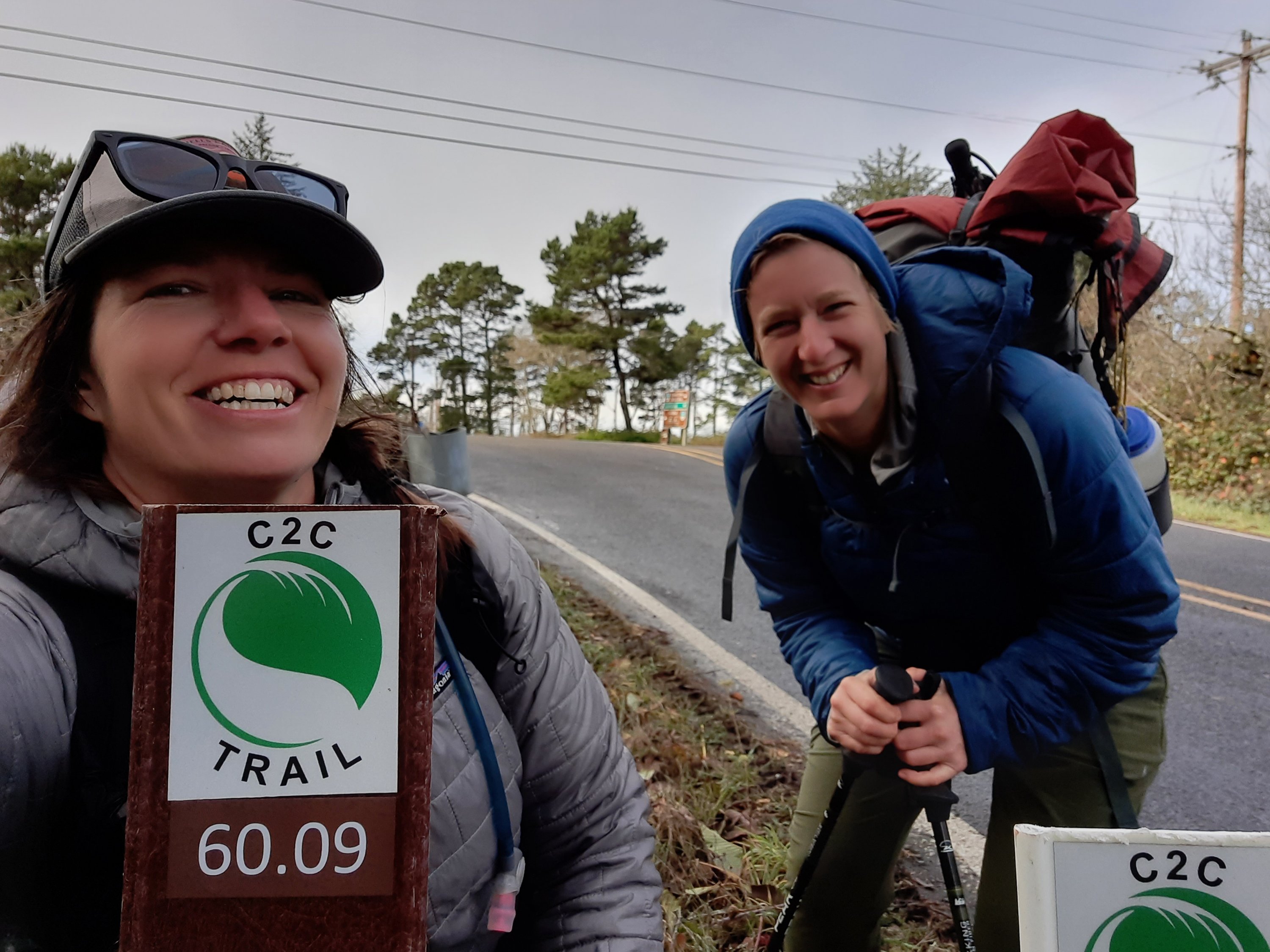


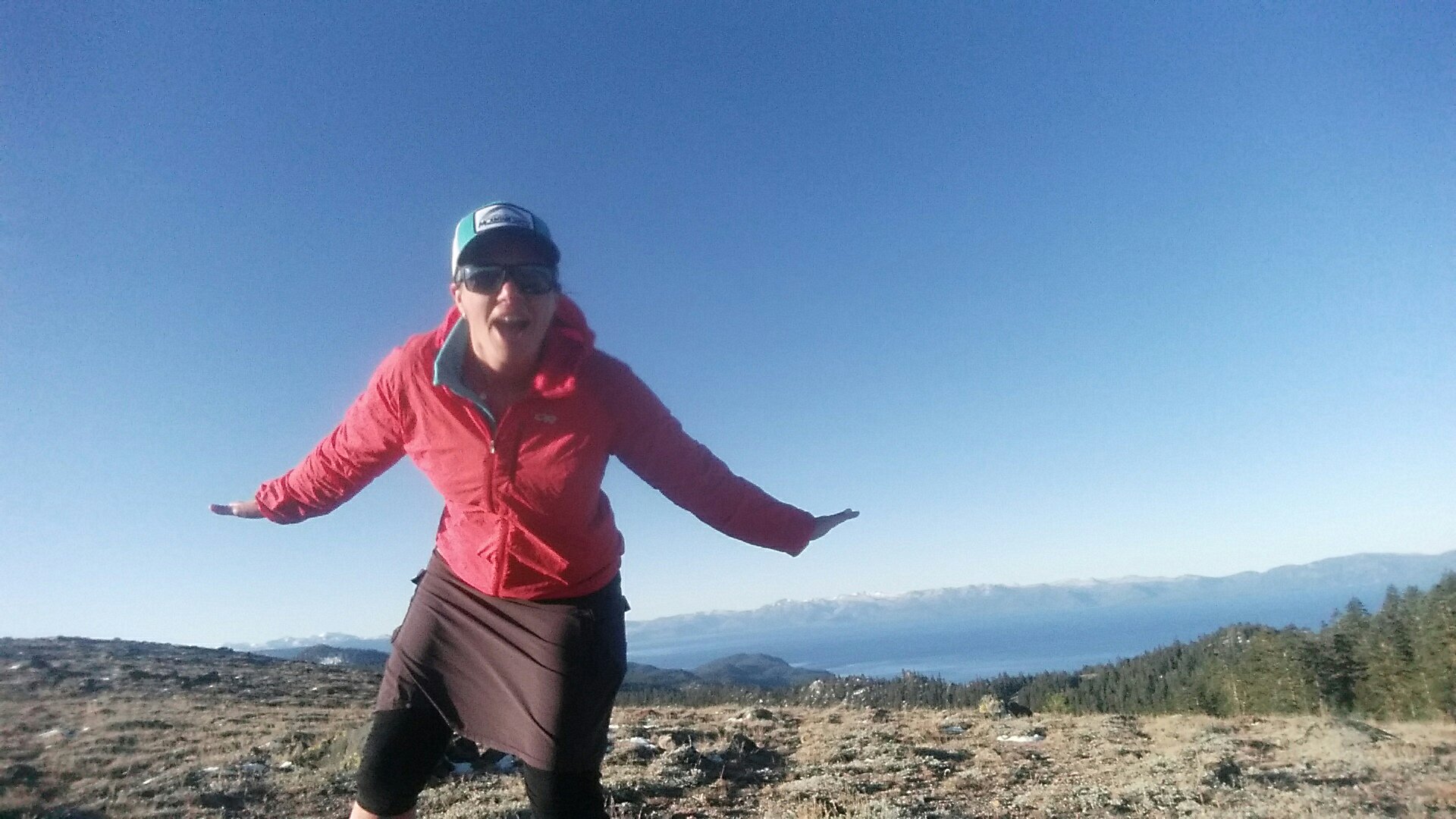


 She-ra Hikes