When I was growing up, I believed the world was magical and filled with wonder and surprise. A childhood spent in nature only confirmed it. And then there were the movies and books I read. I already mentioned the all powerful Wizard of Oz, but this past week I’ve been going down the rabbit hole of all the childhood delights: Alice in Wonderland, The Neverending Story, The Last Unicorn, Mary Poppins, The Princess Bride, and most of them hold up. Screen time back in the day wasn’t like it is now. I would watch these once a year, or once we got a VCR, maybe monthly, because most of my time was spent outside…my mom would push me and my three brothers outside, and I am so grateful for that now.
Do I still believe in magic and majestic adventures?? I will admit that the wind has been taken out of my sails these past eight months (eight months of sickness so far!!!), but the magic has shown up in many of my relationships with you, and I find I’m so rich in amazing people in my life.
And now that things are about to change, I can dive back into the wonder and awe that nature brings into my life. My hiking will be different now, but I know it will continue to bring complete strangers into my life and that they will quickly become great friends. And it doesn’t even have to be a thru-hike. I had an incredibly moving walk this weekend. Of course, spring had a lot to do with it, Bend is practically bursting at the seams with flowers and birds, and green everywhere….which is saying something for the desert. My walk helped to wipe the darkness from the corners of my mind. A darkness that was dragging me down to its sleepy hopelessness. (That reminds me of another movie: Legend, the 1985 version with a young Tom Cruise!) I took a walk and had some fantastic laughs with friends, and the world became whole and hopeful and wonderful again. Even if this is my last spring, this feeling is life, and I’m quite in love with it all. A walk is the engine for all the feels.
But thru-hiking, man, it just doesn’t get much better than that, and finding a good hiking partner that helps you see color is a real gift.
Check out this video I made of a short thru-hike of the Sunshine Coast Trail with Nemo back in 2018.
This sums up the feeling fairly well:
Will I carry a pack again in the wilderness? Will I be able to immerse myself in the far backcountry for weeks at a time? I don’t know, but I do know I have to make peace with this new body, or this new reality. And work? What the heck am I going to do if the focus of my business before was hiking a long trail to evaluate how to make it better, safer, easier for hikers to be successful? To make new trail resources and help a trail organization communicate with their hikers? Maybe I can help develop more hut-to-hut or bnb-to-bnb type trails in the US (Europe is spoiled for them) since those might be the only trails I can hike for a while. Maybe I’ll revamp the National Recreation Trails designation (something I’ve been wanting to do for years now! And a post for another day).
The news I got this week has helped fuel these thoughts. I know, I know, you will say I buried the lead, but I had my scans this week and met with my oncologist, and…it’s working! I’m officially in maintenance mode!! That means no more chemo for now. He said my body was chemo-d out…and man, do I feel it. I am still so tired. I have no appetite, I’m still losing weight and am quite nauseous, but the farther away I get from chemo, the more my body should find its equilibrium. The treatments have been working and he said I’m responding really well to the Tegresso and chemo…the combo helped to knock the tumors back a bit, and some of my brain ones are completely gone! I mean, I still have tumors, and might the rest of my life, but they are in check now. I’ll continue with the daily targeted med indefinitely and hope that I can regain my strength. This is a life-long disease, but I can see a life again.
There were tears of happiness yesterday when I heard the news….I’m bursting with the news.
So, things are happening this May! I’ll be on the road a lot, and you might not hear from me for a while. I have some nature bathing to do, visiting family to do, and even a spot of vacation with Kirk…he has dealt with so much these past eight months. I hope you all have a Kirk in your lives who is there for you when something completely unexpected and wild is thrown at you like this was.
Don’t worry, I will still keep blogging…it’s my way of processing this whole thing, and has been the way I’ve been sharing my hikes with you for over 20 years now. You could fall down the rabbit hole of my hiking journals for weeks and months if you explore some of my past hikes in this blog. And there will be future hikes, I can just feel it. And I still have more I want to explore…more memories and past lives, it’s fun to rummage around in my youth to tease out the elements that have led me to where I am today.
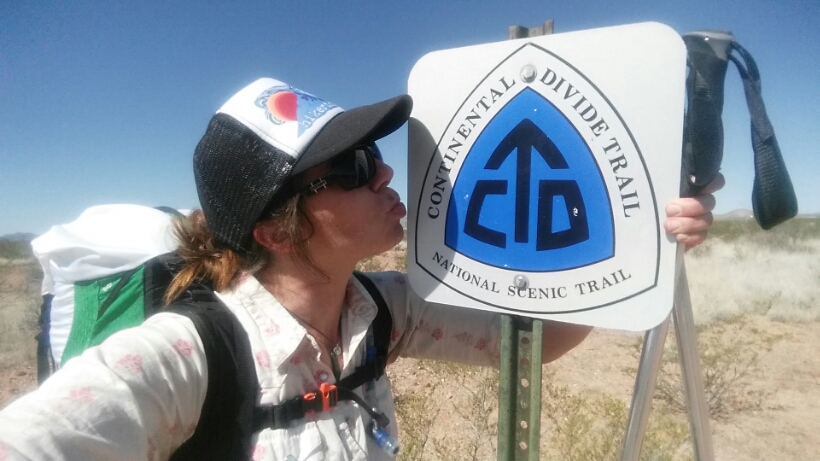
10 years ago this month I started my thru-hike of the CDT. In other words, a lifetime ago.
I have some scans next week, the first scans since early February, right when my chemo started.
To say I’m nervous would be downplaying the swing of emotions I’ve been experiencing.
I go from: “I feel so much better, I bet this is all under control…the 27 brain tumors, the tumors on my ribs and neck and spine, oh yeah, and the one in my lung, they are all under control and I can go into maintenance mode starting next week without any further chemo or radiation. Wooo! I’m excited to find out!”
To: “My ribs still feel sore and so do my neck and shoulders, what if there are new tumors on my shoulders and the ones on my ribs grew. Oh, I’m going to be in chemo forever, I’m scared!”
There are so many things I’ve been waiting to plan until I get these scans—the next few months at the very least. Will I get to visit my parents and go on a vacation with Kirk? Will I have some time to breathe and get my energy back? Will my body recover enough for me to start doing some longer day hikes? Will I be able to spend big chunks of time outside camping and adventuring?
Will I get to raft the John Day River?
I can’t do any of things things until I get these scans done and meet with my oncologist next week. 😬
Ahhhhhh!
But the good news? I didn’t get sick in Wisconsin…at least yet. The trails conference had about 800 people there from all parts of the country and internationally….and we didn’t even have our federal agency partners there (too much chaos…people have jobs, they don’t. They have a budget, but not for travel. Ooops they lost their jobs again. All of this is crippling the very people we need to take care of our public lands. 😭)
I wore a mask most of the time, but it is still wonderful that I came home without a sore throat or a cold. My immune system must still be putting up a good fight!
Melissa and I in Madison…I went to high school and college with Melissa, some great friends came up to visit me after the conference. And thanks Anne for the photo!There’s that almost normal feeling again!
Maintenance mode of cancer seems like a swan song to me. To go months between scans, months of living a life. But that is when I will need to be most diligent…to eat clean, to exercise, to be postive, to plan for the future. That is when I need to keep the cancer at bay…yet I know it’s not a reflection of my goodness, my ability to do the right thing to prevent the cancer from growing…but it does feel that way. I’m good if my cancer doesn’t grow. I’m bad if it does. It doesn’t work that way, does it?
Have you been following Suleika Jaouad? Ever since I read Between Two Kingdoms, I’ve been keeping tabs on her. She has a new book out and a big huge book tour, but her cancer came back right as she was getting ready for one of the most exciting times. It can happen to all of us at any time. It’s sobering and scary. BUT, check out her new book: The Book of Alchemy…my copy should be getting here any day.
The yard is exploding in flowers…and weeds. I’ve been wanting to try to weed, but getting on my knees and digging in the dirt seems like a challenging prospect. I talked to my PT about it yesterday, and she suggested small spurts of work… bite-sized chunks of yard work and gave me a few poses to try out to prevent immediate fatigue, and I’m still nervous about it. I am also interested in trying a gentle aerobics session in the pool at the senior center, but she also cautioned me that those seniors can be deceptively strong…and to try not to keep up with them. It’s just so crazy to me. A year ago I was so strong and fit…and now I need to be careful of my energy when weeding. It’s just not fair.
Kirk and I just finished watching the new TV show Dark Matter (I love Jennifer Connelly BTW, ever since I would binge watch Labyrinth as a kid, she has been one of my favorites…David Bowie too! I know all the lyrics to the songs in that movie. David Bowie…swooon) The premise is all about multiple universes…an infinite number of universes and for every decisions or inflection point in our lives, there is a spinnoff of another life lived by another version of you with different outcomes. (It’s like another TV show I liked, Fringe). And I think, there is another Renee out there who doesn’t have cancer. There is a Renee whose cancer is more advanced, who already didn’t make it, who found it early, who doesn’t even like to hike…It’s infinite and mind-bending to think about. But I can’t go there, I know I shouldn’t go there, to think about me in a different context…I mean, what does it help the reality of now? To think what if we had found it early, and I recovered without it haunting me the rest of my life? To think what if I never got it in the first place, and I was planning a thru-hike of the Theodore Solomons Trail this summer? Nope…not going there.
Instead, I think about what I might do if my scans next week go well. The trips I’ll take, the relief I’ll feel.
Should I be writing updates when things are heavy and dark? Maybe that’s exactly when I should be writing updates.
I learned yesterday that a friend from college’s husband, who has stage 4 lung cancer with the EGFR 20 mutation (mine is EGFR 19) is not doing well and has moved into hospice. OMG, I keep thinking this is something I will move past, but it’s claiming people I know!
And some family members are really not doing well.
And more hair is falling out.
And my pet’s heads are falling off.
(Sorry, that’s a Dumb and Dumber movie quote that my highschool friends and I used to reference incessantly)
The gravity of my situation has been feeling so heavy lately. This last round of chemo really got me for some reason. I’m much more nauseous that I’ve been since the first round and can’t walk as far…and I am still struggling to eat enough to keep my energy levels up.
Enough! Chin up!
I keep hearing positivity is the key, but do I have to be positive every freaking minute? Can I feel the weight of this and cry and rage every once in a while? Of course. There are no rules, but are there? There are so many books that I’ve been reading about how to live with cancer, how to eat with cancer, how to survive cancer, and there seem to be rules….but they are different for everyone, so we can’t tell you exactly what they are, but know that if you don’t follow them it won’t be good, or might not. We don’t really know why some people make it out and some don’t. So do the right thing, we just don’t know exactly what the right thing FOR YOU is, so figure it out.
Ahhhhhhhh!
I know my body is fighting. Is that why my hair is falling out now, and I have no appetite? Or is that the poison of chemo working its way through all the cells in my body? Or is that the cancer advancing?
How about some good news? I made it to Madison after spending all day sick in bed the day before my flight. I even looked at flying out a day or two later, but ticket prices were RIDICULOUS to reschedule, so I put on my big girl pants, packed a puke bag, and hoped for the best.
I had a delicious breakfast where I felt like a normal person. Normal!
And I made it. Travel day wasn’t too bad after all, and I had a wonderful dinner catching up with Jasmine. We laughed over the “turkey vultures” bit (see the last blog if you don’t know what I’m talking about) and remembered that it really was “pig vultures”. We were trying to get under our little brothers’ skin after all. “Pig Vultures!” we would screech as we peddled away down the country roads. They would circle and circle the intersection on their bmx bikes, hurling insults back at us as we laughed hysterically and coasted down the hill on our bikes, giddy with freedom.
Jasmine!
It was fun to tell stories, and apparently, we lived about a mile from the Ice Age Trail…I knew we were close, but not that close!!! A national scenic trail was evolving in my backyard and I didn’t even know it existed! It was designated as an NST in 1980, I was three, so yes, it was most definitely there. I have to hike it. I have to live long enough to hike it. And Jasmine’s mom still lives in the house I know so well, she can be my trail angel! She just doesn’t know it yet. In fact, I have a friend thru-hiking it right now, and he calls it a pub crawl, so maybe I can arrange for some of my gear to be transferred from town to town so I don’t have to carry much, and there isn’t much elevation gain, so maybe this is a trail I can hike in my cancer years??
Whitney and I went out for dinner with Luke last night, the executive director of the Ice Age Trail, and we talked a lot about it. That’s the magic of these trail conferences: you get to meet the people that do the thing! And that thing is trails, which I love so much!
Jasmine also told me that she remembered that I was very philosophical when I was growing up, and remembered lots of deep conversations that we had during sleepovers. While dealing with a bout of nausea in the hotel room yesterday, I did finish watching Wicked online, the prequel to the Wizard of Oz. Then I had to watch the Wizard of Oz of course, and was immediately reminded of its influence in my life growing up.
Gotta love the saltines!!
Back then we just had a TV with a few channels. It was even before the VCR days. The Wizard of Oz would come on once a year around Easter (wait a minute….Easter is this week, in real life!). The story of a long walk, meeting kind strangers you ended up loving and having good and scary adventures with, must have planted the seed for what would become my thru-hiking life. That and the Ice Age Trail in my backyard (right by Fountain Lake where we spent sooooo many days swimming) and my dreamy philosophical nature.
Check out this map:
The x is where I lived, the circle is where Jasmine lived, and the + is where our other friend Katie lived. My freaking back yard!!!
I feel down, but then I start thinking about how many trails there are left to hike, how many places to see and people to meet, and I get excited again. And sure, I probably won’t be hiking the Hayduke Trail that I had planned to do in 2026, and the Great Divide Trail in 2027 for my 50th birthday, but there are plenty of other trails where I don’t have to carry 7 days of food and 8 liters of water on my back that can be added to my list.
I’ve had really good runs of sleep lately, and then there will be a night like tonight where I can’t get beyond the first few hours of good sleep (I can almost always fall asleep with ease, thankfully!) So here I am, before midnight! Gasp. And writing. I will most likely be up for a few hours and then will go back to bed, but I aim to enjoy these few hours, and what better way to honor the deep night than to write?
I had a successful chemo session yesterday! I was joking with my neighbor Jan across the street…we saw her and her husband Greg on their bikes just as we were getting home from my infusion.…joking that we celebrate being healthy enough to get poison injected into our veins. Totally ironic. Jan had her own brush with cancer a few years ago and is now living life to its fullest. Riding bikes to go get a burger for Greg’s birthday…they are both about 80! They go skiing, Greg makes rock art, Jan bikes to yoga, and they are both very civically involved. What good role models. 🙂 I’m so lucky to have so many people in my life who are busy living. Who spend every day (or almost every day) doing exactly what they want with the people they love. And yes, that involves those still working, too. I have always put emphasis on doing work that I believe in and that energizes me, and the end result of living in that manner is that I tend to surround myself with others living that way too. It’s a great gift.
In fact, when I couldn’t sleep before getting up, I was listening to an On Being podcast on just that subject. Give it a listen:
And I love that both the guests, Atul Gawande and Krista Tippit, gave a nod to Annie Dillard’s quote: “How you live your days is how you live your life.” You have probably read it before in my blog journals. It’s a question I have long kept at the center of my decision-making. I like to live as if each day would be full enough, joyful enough, rich enough to be my last. Before, it was never about death; it was about living a fun, fulfilling, inspired, adventurous life. I’ve had conversations with friends before when they were deliberating a heavy decision…I often say, “There are no bad decisions; some just may be more work than others.” I believe that. And also there is so much time! I look back at the 20-year-old me, and I’m so grateful that I threw my hat in with the peace corps. So many people put too much weight into the job decision right out of college; it seemed so critical that it will set the tone for the rest of your life, but in truth, there is so much time. I’ve had 20 different careers, and sure, now I can look back and draw the connective thread between them all (well, most of them, I still get hung up on the metal roofing gig!) and see how they all make sense. But at the time, they sure didn’t. It was following my curiosity and seeking to learn something from each experience. By taking on the position of student in my jobs, I was usually able to gain a skill that could be used later on, and then it often was easier to know when it was time to move on. Objective complete, next! What else is out there?
Of course, we are living in different times. Generations ago, people kept their jobs for their entire adult lives. Granted, they also had pensions and a social system and work culture that invested in them…we don’t have that now, and it’s much more accepted to hold many, many jobs….it’s now important to tell a good story about how and why you moved around so much.
Man, I’m still getting hung up on the whole short life span with a stage 4 diagnosis. I’m also still determined not to let that slow me down in the “maintenance phase” of life after chemo. I also realize that when I wrap up this first round, it might be the first of several chemo cycles, but hopefully, there will be long phases of maintenance in between where I can live a semi-normal life. It’s hard to fully conceptualize, though. I started seeing a new PT who specializes in oncology patients, and she was encouraging me to think of my daily energy battery as having a finite life. Even walking slower will help conserve the battery, so walk slower, strive to only have one doctor’s appointment a day….to be very conservative with my energy so I’m not totally toast at the end of the day. And I have been. I tend to live my best life before noon or early afternoon and then retire to the bedroom to nap and rest the remainder of the day. Can I get better about spreading my energy out? Will I have more energy when the chemo is done? I’m not working, but I am still chair of the Oregon Trails Coalition board (although I’m about to bring on a co-chair to help share the duties, which will be a huge help!), and I’m also volunteering to help support Oregon Desert Trail hikers. I have tended to ODT hikers for nine years, and I can’t stop now! At least while I have energy. Finiate energy. And then the books, reading the books you all have sent me. I try to make time for that! I just started Mike Beaty’s suggestion, Ursula K. Le Guin’s Earthsea series (thanks Mike, loving it so far!) and an advanced copy of a book that Snorkle sent about the queerness of nature (fasinating!) and have another on deck, Thirty Below, a story of the first all-women’s ascent of Denali that my friend Lori, or Shake N Bake sent me, AND I just got a volume of poetry in the mail yesterday by an unnamed gifter, Marge Piercy’s Made in Detroit. Thanks stranger!
So many books to read, so little time.
How do I want to spend my days? Reading! Walking, visiting with friends and family, spending time with Kirk, netflix and chill (with popcorn), and travel…and fortunately I do have travel on deck. I’m feeling pretty rich right now. Rich in life (not to be mistaken with money…)
I love the excitement of a trip coming up. I keep adding things to my packing list, things I want to bring to Madison, things that I want to do in Madison.
I’ll be seeing one of my childhood best friends, Jasmine. Our houses were within biking distance from each other in the countryside of Almond. I would bike her home, then she would bike me home, and I would bike her home and vice versa. We could spend whole afternoons doing that, making fun of our brothers who liked to bike in circles at the intersections of our roads “turkey vultures” we would cry out as we peddled past. When we weren’t biking back and forth we might be climbing trees, or making forts in the cornfield, exploring the woods behind her house or mine, or making up ice skating routines in the yard ice rink her dad would make with the garden hose when it was cold enough to keep for a while. AND Jasmine hiked the PCT a few years ago! Kirk and I drove out to meet her and her partner at an Oregon trailhead near Mt. Hood. I brought plenty of food and beer, of course, and we marveled that two of us from Almond, Wisconsin, were PCT hikers. Love it.
Then I’m going to see all the friends that are actually attending the conference, like Allgood (my birthday brother…he is a June ‘77 baby just like me, although I’m a few days older). He just got a job with the hiking app Far Out and will be attending on their behalf. Then there is Steph and Chelsea and Jodi, and probably plenty more from the Oregon Trails Coalition, and then there will be all the other folks I met at trail conferences over the past few years. Exciting!
Then I’ll cap off the week with a visit from some high school friends who are driving up from Central Illinois. We all graduated from Dunlap High in ‘95, and as luck would have it, they just came out to Bend last summer for my birthday! Kelly, Melissa, Celena and Hanna got to see Bend for the first time, and we’ll get to hang out again…quite a moving thing because we all lost Missy less than two years ago to lung cancer. We’ll miss Carrie, our other high school bud who is back in Bend (she moved here about 8 years ago), but I’m spoiled; I get to see Carrie all the time 🙂
Hanna, Carrie, Me, Melissa, Kelly & Hanna’s daughter Emma, Celena must have been taking the photo. We drove to Pilot Butte for sunset after a wonderful birthday dinner.
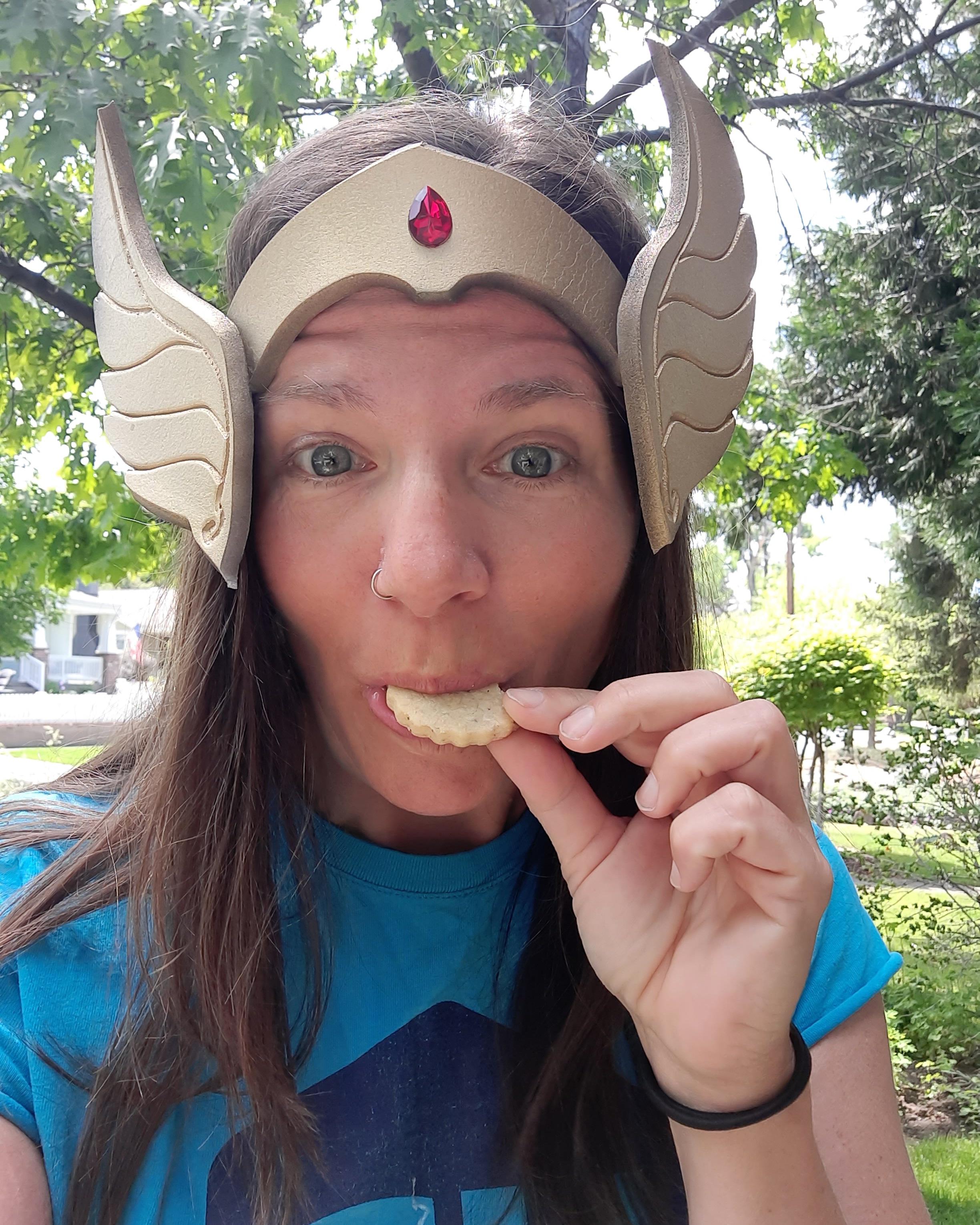
To explain the top photo a bit….we drove up to Elk Lake to have lunch that day when we pulled over for this photo opp with Mt. Bachelor. NEMO sent me a she-ra crown for my birthday, and Kirk gave me some loppers, so I had to carry both around and pose as much as possible 🙂
So again, how do I want to live my days? With friends! Doing fun things!
The therapist I’ve been seeing even suggested to ask myself what this cancer year (years?) has allowed me to do, and if I’m honest, I’ve been able to refine my life down to the very essentials: spending time with people I love: Kirk, friends & family; reading; writing; and travel. And maybe it’s ok to be grateful? Oh man, that’s a hard one. To be grateful for the cancer while also fighting the cancer. It’s a complicated dynamic we have going on for sure.
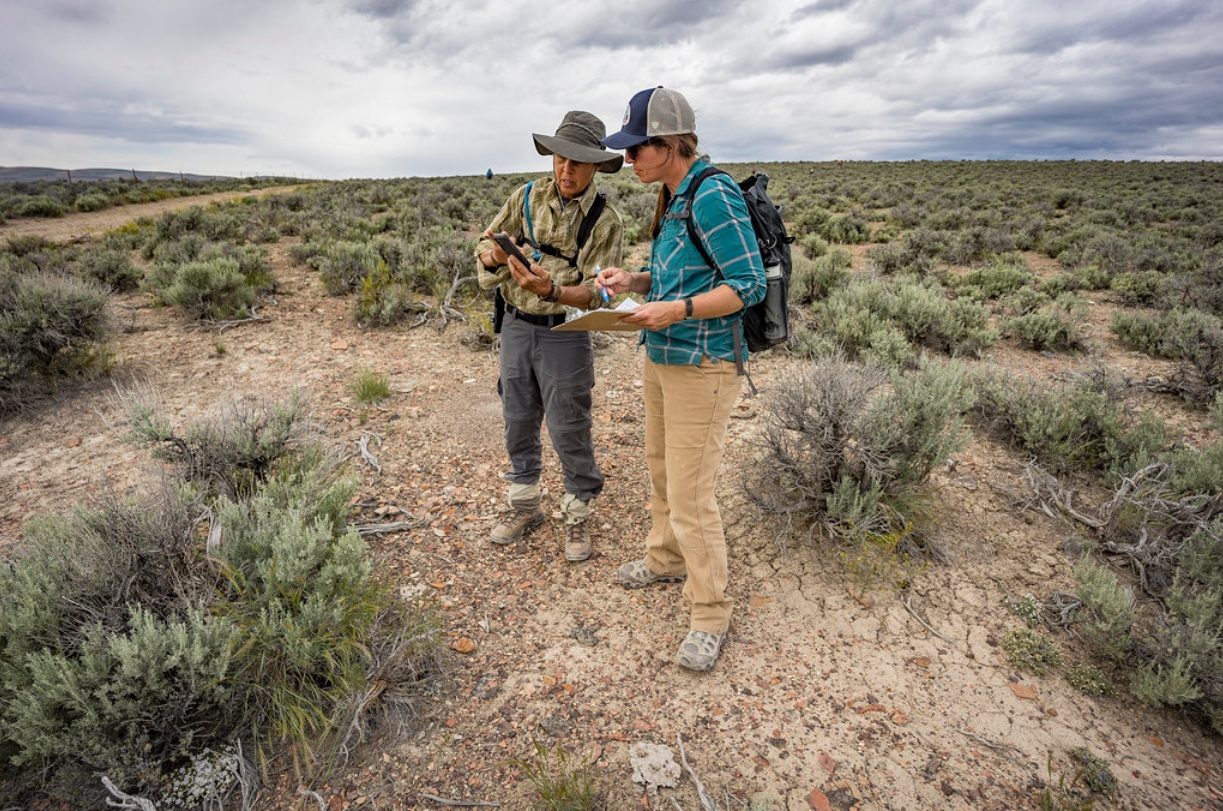
Photo from my 2022 trip to the McDermitt Caldera where we monitored the area. Photo by Gary Callicott.
So close, yet so far.
I went in for chemo yesterday, but my platelet count was too low, so they sent me home in hopes that my numbers will be better next week and I can get the infusion.
Sigh.
I’ve just been exhausted this week. As in, I don’t have much energy to move and could sleep all day. My acupuncturist said it was probably low protein (BTW I have an amazing oncology acupuncturist in town, Kym Garrett; if you have cancer and want acupuncture, she is the one. I always come away with something extra, and she goes above and beyond connecting me with the right resources at the right time, she said my recent hair loss could also be explained by low protein.) Nooooooo, I’m not (or didn’t think) I was that vain, but when I put my hair in a ponytail recently and realized it was much thinner than I remember, it was a gut punch. 😮
I immediately googled medication side effects, and sure it could be a side effect of the chemo, of the tegresso, of low protein, and maybe I’ve had it going on for months…When I was in the c-collar, I had my hair up in a bun all the time so didn’t take notice, but wow. Now I’m starting to feel like I have cancer.
I could barely make it on my short walk loop yesterday, and felt like I was dragging my feet the whole way.
Ok. protein. I’ve started asking around more about diet, too. The facebook group for my mutation says there is no proven cancer diet that helps all types of cancer and all people, and you really have to find what your body responds the best to. The truth is I’m struggling to get enough protein by just eating vegan. Well, this week I haven’t wanted to eat much at all, which is another side effect of EVERYTHING. So I’m starting to experiment more with other proteins: eggs, yogurt, protein shakes, and some fish. I need to find what works for my body. I want my energy back! (And some hair, please).
I’m also soooooo ready for a change of scenery. I love how cozy we’ve made our house, but get me out of here! We are spending the weekend at a friend’s cabin and I couldn’t be more excited. Excited to get out of the house, excited to spend time by the river they live near, excited to have something different to look forward to. The days are bleeding into one another and I am in a haze of same-ness. And I still have the Wisconsin trip coming up. 🤞
Soon I’ll be on maintenance mode for the cancer (at least that’s what Dr. Schmidt says) and it couldn’t come at a better time because the oncology floor of the medical center I’m going to is closing in a few months. It’s pretty terrible and apparently a shareholder decision after all the medicare/medicaid hoopla going on in the federal government. Have any of the changes affected you? It’s affecting me, and it sucks. It will be a blow for the community because with less services, more people will not get the care they need on a timely basis, I shudder to think about how far my cancer could have gotten if Dr. Schmidt and Dr. Blechman hadn’t started my treatments immediately when I had my first appointment in January. If I had to wait another few weeks or month to see an oncologist, which is the way it was going. I shudder daily when I look at all that is eroding around me and the fear among friends who work for the federal government.
Oh, and if you care about one of the last intact habitats for the sagebrush steppe in the West, and the health of one of the biggest priority habitats for the greater sage-grouse in Oregon, please take some time and comment:
This is what I used to do, take groups of environmentally conscious volunteers out into the high desert to learn about important issues and do stewardship activities that support these landscapes. This was in the McDermitt Caldera in 2022 – I celebrated my birthday on this trip! There was nowhere I’d rather be. See more photos here.Photo by Gary Callicott.
A lot of us rose our voices in protest when this devastating project was given only a 5 day comment period (normal comment periods are 30 days…this may have been breaking the law to only give us 5 days), so I was thrilled to see our outcries resulted in the comment period being extended to April 25 at 4:30pm (pacific time).
Find more information here and comment: EplanningUi
The red line is my crude attempt at showing where the Oregon Desert Trail is in relation to the potential mining project.
And remember this photo? (I thought I posted it to my blog, but it was just my Facebook account)
This is the photo of a local rancher who does not want the mining to happen. He will lose his livelihood if the mine goes through, and this is the website of the People of Red Mountain, a committee of traditional knowledge keepers and descendants of the Fort McDermitt Paiute, Shoshone and Bannock Tribes who are working in coalition with allies to protect their ancestral homelands. When I led the group of volunteers to monitor this area a few years ago, the People of Red Mountain had countless stories for us about how sacred these lands were and are. I saw first hand what would be lost, the sagegrouse and Lahontan cutthroat trout that will be decimated, the Lahontan cutthroat could likely go extinct….and for an Austrailian company, No. Nope. Please speak out.
Location: Will send address once you register to attend.
Contribution: Suggested $20 donation per person to cover costs, any additional funds raised will be donated to Renee’s cancer fund (cash is great, we’ll also have venmo info available at event if you wish to donate that way).
Camping: see below.
***
Festivities will start around 3pm. Amber will be slinging pizzas from her wood-fired food cart, Nomadic Pizza, from 5-7pm, and we’ll have a keg, wine, non-alcoholic drinks, and other snacks available.
A porta-potty will be on site for use. And if you plan on camping or coming back in the morning (see below for more camping deets), we’ll have coffee and bagels on Sunday. If you do stay overnight please plan on helping us clean up with a departure time by 10am.
Please bring:–
a snack/side-dish to share (afternoon snacks, desserts, late night snacks)
camp chair
mug/cup for beverages
a musical instrument (if you play!)
good vibes
yard games
Other notes:–
Please leave pets at home for the party, FYI – Amber does have a dog.
Your $20 will help us fund the pizza party and any left over $ will go to Renee’s cancer fund.
Space for camping at Amber’s house is limited depending on interest, please plan on tent only camping (for about 20-30 tents), or you can sleep in your car. Her address will be sent after registration along with some other lodging options (there is no real space for RVs but there is a near-by park & lots of hotel/air bnb options in the area too.) We suggest setting up your tent later in the evening so there is room for yard games and dancing and general merriment.
Amber only lives about 2 miles from downtown Corvallis – you could walk or bike to the party if you plan to stay in town!
If you are interested in helping out, we could use a few extra folks to help us with some logistics on Sat & Sun. Bellow there is a spot where you can indicate your interest and we’ll be in touch! Things like picking up the keg, helping direct parking, picking up coffee Sun morning, etc. (Oh, does someone want to make a birthday cake???)
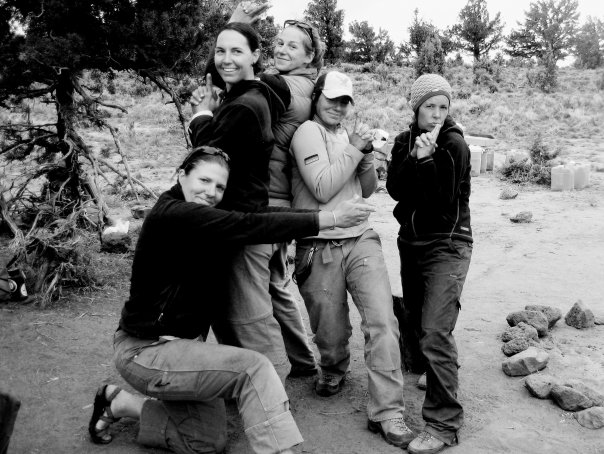
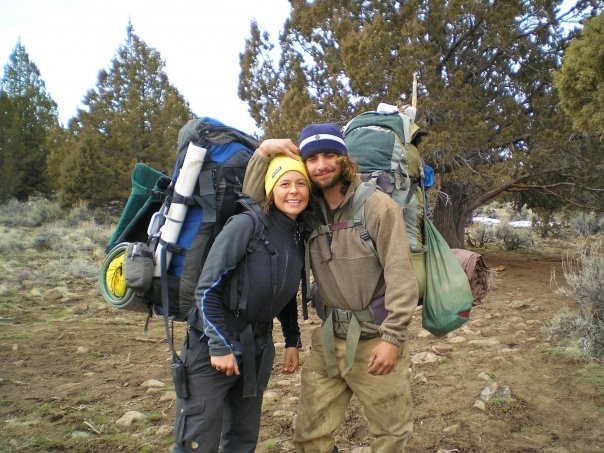
The ladies of wilderness therapy! (I borrowed the photos in this post from my friend Julie…Julie, I hope you don’t mind!!)
I haven’t sent an update in a while, I think primarily because I’ve been sleeping. Until today that is! Here I am, up at 1:38am again. Yesterday I slept until 5:30am, the day before, 4 something. I’m going to have to learn to write these updates in the daylight if I keep sleeping like I have been. I know! Good problem to have!
But today when I woke feeling fairly rested at 1:38am, it seemed like a good time to get up and write.
My tiredness seems to come whenever I slow down now. If I sit long enough, no matter what time of day, I get sleepy and can close my eyes to the sweet darkness and drift away. Some days I have to rouse myself or I might sleep all day. It can be a struggle to get up, but when I do, I can be fully engaged and feel great. It’s just that sleep is always there for me now if I want it. What a difference!
Another big difference: my collar. I didn’t wear it at all yesterday! And I went on my longest walk to date! My legs are feeling it, though. I have the soreness that I used to get after all day with a pack on, and now I get it after a three-mile walk.
My rash is mostly gone now, but I have a nasty infection on both big toes. Again, another side effect of the tagresso. It’s not so painful that I can’t walk, but it’s uncomfortable and preventing me from starting to do some pool sessions, which I’m super eager to do. Our senior center here has a current pool, so will be great for walking. I had my last home-visit from the PT this week, I’ll start seeing a new one as an out-patient next week, that means going to their clinic for session. Hannah, my PT, encouraged me to start playing with a full range of motion in my arms, head, neck, and back….and I think that will be much easier to explore in the pool. My head has more movement, but I have a limited range of motion, so it will be another week or two before I start driving again. I need to be able to turn my head, and right now can only do so for a few inches on either side. My left is a bit more frozen than my right, but that tracks as all my neck and shoulder problems happened on the left side.
This is as almost normal as I’ve been in six months!
I can’t believe it’s been six months since I hurt myself – no, it’s actually seven! The first tweek of my intercostal muscles happened in early September, I was almost completely incapacitated for October and November, and December was the month of my diagnosis and surgery. In January I started chemo and was in a wheelchair, February was more of the same, and in March, I emerge. April will be more chemo but I will be focused on recovery.
I haven’t had a scan since early February, so I don’t know if all of this chemo, radiation, and medication is working, but the fact that I’m so much more mobile tells me something is happening. I’m eager to take another scan, maybe at the end of April or early May, and see how much cancer’s butt I kicked.
Pam gives me great hope. We walked yesterday, and I learned that she just had her one-year since cancer happened anniversary and is doing fablously. We talked on the walk, and the hard truth is that wiith our level of cancer, the kind that was caught late and has spread so far and wide, we will never really be in the clear. There is always the chance it will start growing again. What we have, though, is a mandate to live as cleanly and in tune with our bodies as we can. We will always need periodic scans for the rest of our lives, but she helped me see that instead of fearing the the scans, and fearing that they will show the cancer has come back, we can choose to see them as early warning signs, an early warning sign to start treatment at a much earlier stage than we experienced the first time around. It’s easier to treat if you find it early, and with scans every three months, that will likely be the case.
It’s also true that we have to accept a shortened life span….that our lives will most likely be shorter than if we hadn’t had our cancer turn on. I’m not sure yet how to process that. I choose to believe that I might live until 80 instead of 90. That it won’t be short as in soon short. We basically take our targeted cancer meds (tagresso for me) until it stops working. A few months? A year? 10 years? And then we take a different med for as long as that works, and so on. At least both of us have other meds to take. Pam’s mutation is different than mine, but she has something to fall back on should the med she is currently taking stop working.
She mentioned that the book, A Year to Live, has been helpful to read, and I will probably order it soon. I think this is a book for all of you, too. It “teaches us how to live each moment, each hour, each day mindfully–as if it were all that was left. On his deathbed, Socrates exhorted his followers to practice dying as the highest form of wisdom. Levine decided to live this way himself for a whole year, and now he shares with us how such immediacy radically changes our view of the world and forces us to examine our priorities. Most of us go to extraordinary lengths to ignore, laugh off, or deny the fact that we are going to die, but preparing for death is one of the most rational and rewarding acts of a lifetime. It is an exercise that gives us the opportunity to deal with unfinished business and enter into a new and vibrant relationship with life. Levine provides us with a year-long program of intensely practical strategies and powerful guided meditations to help with this work, so that whenever the ultimate moment does arrive for each of us, we will not feel that it has come too soon.”
What would happen to the world if we all examined our priorities and lived carpe diem? Lived each day to its fullest? If we were grateful for every day and the people in it? I know we would live in a different world. Maybe a kinder one?
All of this brings to mind wilderness therapy. Many parents who sent their children to us in a wilderness therapy program thought they might lose them, that without an extreme intervention like spending months in the desert, that their child might be gone, gone to depression, suicide, drugs, violence, hate, bad decisions… With such an extreme change of surroundings, that they may come to value life again.
And I think it works. Many people ask me if wilderness therapy works, and I think yes. Of course there are bad players and stories in the media about programs that mistreated the students and such, but that was not my experience. I think for every story of bad, there are 10, maybe 100 stories of good. I am still quite connected to my fellow wilderness therapy cohorts from 17 years ago. Wilderness therapy is what brought me to Bend after all, and in fact, it was my PCT friend Jack who encouraged me to think about it as a career option. He had started working for the company, Second Nature, in Utah, and when I was done with my trail crew year in Colorado in 2007, I returned to Portland (to my metal roofing winter) and applied to the Second Nature program based in Central Oregon.
Before I was offered a job, though, I had to go through a week of training and learn all about the program as if I was a student. If that doesn’t cultivate empathy for what a student will go through, I don’t know what will. I did my week of training in January of 2008 with three feet of snow on the ground. Talk about extremes! We had to hike through the snow (there was so much that we had to modify our original plans…there was just too much to hike to our usual spots in the desert), sleep under tarps, learn to bow-drill to have a fire, and were immersed in the world of using wilderness as an intervention in a kid’s life. After all, nature is the best teacher.
I survived our week of training in the snow and was offered the job. I returned in April to officially move to Bend, and fortunately ended up in a house filled with current and former Second Nature staff. My first years in Bend and in that house were fantastic. I lived between downtown and the Old Mill (the same neighborhood where I currently live), and my housemates were the best kind of people. Many of the women I lived with had finished their time with Second Nature and knew exactly what I was going through. Others were still working there but on opposite shifts from me. Second Nature split the staff into two different shifts. Our schedule started on a Tuesday, and we would work 8 days on, 6 days off. So I would go into work on a Tuesday morning (when I moved to Bend I didn’t have a car so would bike to base, often on studded bike tires if it was snowy) where we would receive training about some element of therapy, and then drive out to the field. The field was in the high desert…not too far from parts of the Oregon Desert Trail in fact! I was living in the desert before it was my job to usher hikers through the desert. Oregon’s desert features heavily in my life. When we arrived from our hour and a half drive, we met our groups of students (there were usually 3-4 different groups) and transitioned with the staff from the other shift. When we came in, we brought the staff treats, and they eagerly hovered around staff tree and stuffed down bagels with salmon and cream cheese, (that was a commen eighth-day treat…and wow does it taste good after a solid diet of rice and beans for a week!)
We would circle up and learn about how the previous week went, and then last week’s staff would be off for their week of freedom, and we would dig into the week with our group.
Like I said before, many of the kids were there because their lives weren’t working at home and their parents feared for them. Feared they might not be around much longer unless something extreme happened, and the Oregon desert was quite extreme. Some had never camped before, some had never seen snow before. Our program was year-round, so even in the coldest of cold, we were out there camping with our students. Of course, there were protocols for things like extreme cold and extreme heat, and all the students had to be medically cleared to come into the program. We were very vigilant of safety and health concerns and spent alot of time on health checks while we were there. A nurse would come out to the field every week, and we were trained to pay attention to any little thing (this is where the Wilderness First Responder training came into play). Each student was assigned a therapist, and what I thought was the great thing about our program was that the student’s parents were also in therapy with the same therapist every week. As field staff, we would help implement the therapy assignments for the week and overall just acted as solid role models – using appropriate communication and conflict mitigation techniques. We were on 24/7 for 8 days. We had to be the role model staff and keep our cool even when the students were not on their best behaviour.
Nature was the intervention, and love of nature and hiking, and spending time outside was what I brought to my groups. We hiked a lot in the program; we hiked most days, and the students who were farthest along in the program learned to navigate with map and compass and we had them lead the hikes. Bow drilling was a core feature in our program, and when a student came in, much of their time was focused on learning how to bow-drill. We would harvest our bow drill sets from the desert, juniper branches made good bows, and the sage made great spindles, fire boards, and nests to blow our embers into flame. Of course, we as staff had to be able to bow drill and teach the students the craft, and often the frustration of learning to make fire was a good way to learn how a student dealt with hard things and then we processed those emotions together. I had my own outbursts when I was learning, and it took weeks and weeks before I could confidently make fire on demand, and wow, that feeling when you could…it was powerful!
I won’t go into many other details as there were certain confidentiality pieces to the job, but I did see change in the kids. They would spend months with us, usually 3 months, and slowly and surely they would go from seeing the desert as a prison to seeing the desert as a living place of wonder. I would smile when they would draw our attention to the sunset, chuckle when we saw a mountain blue-bird hovering over the sagebrush only to dive into it to catch a snack, and beam with pride when a student led us with map and compass to a far-away camp – all cross country hiking in the juniper and sagebrush sea. We usually didn’t know what happened to our students when they finished our program. Often, wilderness therapy was just one step in their journey towards a healthy adult life, and they needed to focus on the next step, and we needed to focus on the new students.
But I don’t think I will ever have a more stressful and difficult job than wilderness therapy. Nothing could be harder than being in charge of 10 students for a week, being in charge of their mental and physical well-being in the middle of the desert. I would return home absolutely drained (after having devoured our bagels with salmon and cream cheese at staff tree) to just collapse in the shower and wash a week of dirt and campfire off (it was often a bower = beer in the shower, for ultimate reintegration). I would collapse just long enough to change and go out for beers with the rest of my team to process the week, eat good food, and tell stories from the week. Wilderness therapy was another very intense experience, much like Peace Corps and thru-hiking…and very bonding. Like I said, many of the other staff I worked with are still friends today, and we all marvel at the shenanigans and wild stories from our time out there. Like the tree that was hit by lightening in camp, or the coyote that pooped on our food drop; the intense cold we would have to endure in the winter, or the endless games of dogs (hacky sack) we played in the dirt. Those were some great times, some trying times, some exhilarating times, and I lasted two years. The average span of a field staff in a wilderness therapy program at the time was 6 months, and I lasted two years. I went on to work for the publishing company in town next, and even when I was at my busiest and cranking out a 40-page art magazine a month, it was never more stressful than dealing with a sick student at midnight in the desert. There can never be anything more stressful than being in charge of a person’s life, it just didn’t compare.
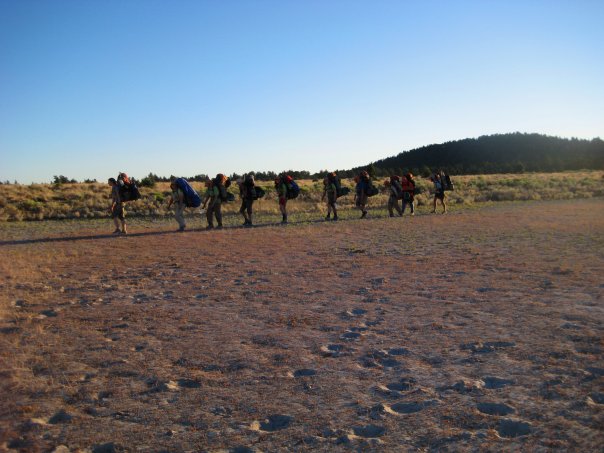
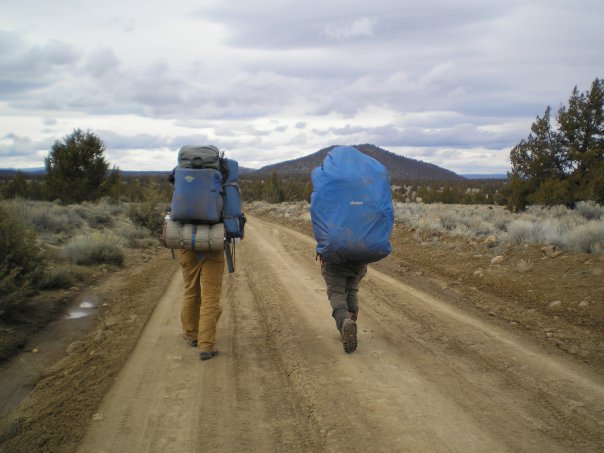
Our packs were so heavy too! Look at those danglies!
I became a better person because of wilderness therapy. All the communication techniques and sessions on manipulation and processing emotions worked on me, too. I had to take a hard look at myself during this time, especially when trying to teach others about these things, and then role model those techniques for an entire week, every other week, for years. Sure, I’m definitely not perfect, but I’m more aware now. So much more aware.
To all my wilderness therapy friends out there reading this, thank you for making my first few years in Bend so memorable, so impactful, and so amazing. It wasn’t always enjoyable, it wasn’t always pretty, but it was always so much fun to be in the desert with you.
I saw the neck surgeon this week to evaluate my collapsing C7 and look at my C4 three months post surgery, and I got the all clear! The doc said the C7 doesn’t have to be addressed, and that I can live with it (we didn’t talk about backpacking, I have a feeling a full-weighted backpack might paint a different picture). I then took some x rays which showed that my C4 is appropriately healed. So that means I can start taking my c-collar off. Get ready for some neck!
So the last few days I’ve been spending more time with it off, getting used to the weight of my head again. I’m practicing turning my head and nodding again, all things I haven’t been able to do for three months. A bulk of the work will come to play with my PT. I’m transitioning away from the in-home PT to an outpatient situation, and it’s like I’m graduating or something…I’m slowly being positioned to live without daily doctors appointments and check-ins. We are also looking at decreasing my meds…I’m already off the steroids and we are looking at the pain meds next. Am I in pain anymore? It’s hard to say. Are the meds masking pain or do I even have pain any more? I have discomfort for sure, but pain?
All this is coming as I look at making my first trip to the trails summit in Wisconsin in three weeks. Can I be ready to walk around without my collar most of the day in three weeks? Can I have a glass of wine at a happy hour in three weeks? Can I sleep without an adjustable bed in three weeks?
The rash is still rashing, but it’s not getting worse, I guess it’s clearing up, maybe a little?
I still feel the cancer in my spine and in my ribs. Is the tagresso doing it’s job? Maybe a little?
I’ve been sleeping a lot. Like half the day away, but again, I’m not fighting it. But I feel like I’m in a bit of a daze all the time. Sleeping so much puts a dream-like quality to everything. If I’m not myself right now it’s because I’m a dazed and dreamy version of myself.
I’m struggling with the habit of productivity. I went on a walk with a friend yesterday and we talked a bit about it. She wondered if it was a mid-western quality…this need to always be moving some ball forward, even when dealing with stage 4 cancer. What am I trying to be productive about? Well, writing here for one, diving into my past for two, and putting out there that I want to write a book (Really! Sometimes that just seems insane), and then writing thank-you cards for everything. That it’s ok to let some or all of it go. I know that it is, but the blog serves as a processing time as well, and it is keeping you all in my life, which I really need these days.
I got a card from a stranger, a hiker that has been reading my blog for years but I’ve never met, and I needed to read that card that day. It made such a difference in my morale and mood. I need all of you in my life, so I want to be productive enough to update the blog to keep you all informed and close. I need all of you.
I got another card recently from a volunteer that came on one of my trail work trips last year. I only met her that one time, and she wrote the most beautiful card with gifts of song and book recommendations. I love that, that kind of thing fuels my day, and I’m thrilled to add to my reading list too 🙂
So all of this to say, I don’t know where my need to be productive comes from, but I don’t want to give up the need to write, and sure maybe I’ll stitch some of this together into something that could be called a book, but I do want to give up the idea that I’m going to come out the other side of this looking for a publisher. I want to give myself time to just be. And right now that looks like a lot of sleeping. Not as much reading as I’d like (reading puts me to sleep right now), but I’m just going to let it be and not fight against it.
You will probably have to remind me of that from time to time!
In all honesty, I’ve seen a lot of change this week. For one, I’ve been sleeping! Something flipped last weekend and suddenly I was sleeping most of the night and sleeping throughout the day. I couldn’t sleep enough. I was in a dis-combubulated haze of sleep for a few days there, and didn’t fight it. I don’t know if it was transitioning from Trazodone to Magnesium Glycinate and a sleep THC/CBD tincture, or maybe it was decreasing the steroid I was taking, or maybe it was my body saying, “enough,” but it was time.
I’ve also been seeing changes in the form of some of those side-effects from my new mutation drug, Tagrisso. There was a line about adult acne in the list of side effects, and a few days ago my legs erupted in a red rash of something. It’s not really itchy, but it looks bad. Real bad. I had a consult with the docs this week and they prescribed a steroid cream for it, and my acupuncturist suggested drinking celery juice for it’s anti-inflammatory and cooling qualities (Note: for those of you suffering from high blood pressure, try some celery juice!) I fully believe that food is medicine, and hope to be learning more and incorporating more food medicines through this journey of mine.
What else has been going on? Oh it’s winter again, or it was for a while this weekend. Snow and ice have covered the ground and curtailed some of my daily walks…I think that has added to my malaise.
And I’ve lost my taste for coffee…I’ve gone several days without it, which is very odd. Oh and my stomach is a mess. I can’t seem to digest anything.
So in general I’ve been living in a foggy state of existence this week. I’m not sure if I’m snapping out of it? I woke up at 1am this morning and got up, so we’ll see.
As for shows, Kirk and I just finished season 1 of Severance, and just started season 2. Go Mark and the Innies!
In general all the changes seem to be not so productive. I haven’t seen a big difference in my pain levels, in the feeling in my spine and ribs. I hope the new med is working, but I guess we won’t know for a while. At least I don’t feel like the cancer has changed course since I started Tagrisso, but who knows.
I don’t think I’m going to deep dive into past stories today. Not feeling it.
Instead I’ll open one of those books and read until my eyes can’t stay open and then go to bed again.
What to do when all is chaos and uncertainty? The world around me is in chaos, and the body I inhabit is in chaos. I feel as though I’m balancing in the middle of this turmoil, in the eye of the storm. A step in either direction could be enough to suck me into the swirling blackness, or, I stay huddled in the calm center feeling relatively at peace… a disturbed, disjointed peace.
I’m going to start talking to a therapist. I’ve never done that before, but as I keep brushing up against the swirling madness all around me, it seems like a good idea. Is it better to ignore the bad all around me, or better to face it? Do I risk letting it in if I face it?
Does it help knowing that we are not alone? There are so many people in my life that have let me into their confidence, who have given me a glimpse into their personal eyes of the storm. Is that easier to do when both of us are dealing with some crazy shit? Perhaps it is.
One form of distraction has been to look at cheap places to stay in Europe. Check this website out. This morning I jumped on and first filtered for France. (I used to speak french 20 years ago in Burkina Faso, I know how to order breakfast and ask where the toilet is, I should be good, right?) Then I filtered for proximity to the sea, I choose 100m or less. Then I simply sorted by price. The results? I can stay in an apartment with a view of the ocean in France for a week for less than $300. From here I can monitor the cheap airfare websites, and depending on the window of time I have to travel, can easily book a flight, and find one of those cheap apartments almost anywhere in Europe. Why Europe? Why not? It’s somewhere? It’s anywhere? It’s relatively safe? I’m already out of my element, why not go further?
So yes, there is this insatiable desire to travel right now. I have my 170-mile Portuguese Camino trip all mapped out. I made a data book (translation: a spreadsheet of distances and logistics), and if I have a two-week window to walk it later this year I’m going to do it. At a 10-mile-a-day pace with a luggage transportation service and hotel or hostel lodging each night I can do it for a pretty reasonable price tag and not hurt myself. Surely I can walk 10 miles a day by this fall?
But those windows! Those windows of time and opportunity have been changing daily. I may have to get chemo infusions throughout April now…which I was thinking would be ending in March. I don’t have a good plan for my neck yet either. The three-month mark since my Corpectomy surgery is up on March 21, but with another collapsing vertebrae, and cancer still ravaging the entire region around neck and upper spine, is it really a good idea to take the brace off? My doctors are trying to get me in to see a specialist, but they are all so busy. The appointment I did have for March is now in April. Meanwhile my neck wants to be free…I am doing some exercises that my PT has recommended, and some of that is just sitting still with the brace off. Just balancing my head alone is a challenge right now. (Ahh, I just took it off, why not? I can sit still while writing).
Meanwhile we are nailing down details for my birthday party in June…that is something I can plan. I’m relishing the planning phase. So fun. It’s going to be so great to see many of you and eat Amber’s excellent wood-fired pizzas and play lawn games. I’ll open up the sign ups in about a week, so stay tuned!
Where shall we go tonight? It’s 1:26am and I have an oat milk latte on deck to get me though the next hour. Maybe we visit hikertrash? The hikertrash period of my life spanned from 2014 – 2017. Well, it really originated years before that…so tuck yourself in, here is the full story:
It starts with design. I love graphic design. Because I went to college from 95-99 we were in the early stages of multimedia and computer design software programs. I got to use the early versions of Photoshop and Illustrator and really test the limits of the programs. It was so much fun, and I made a couple of multimedia CD Roms during college (does anyone remember those?).
Senior year I made my poetry class the focus of my project. I asked each student in class to pick one of their poems, I recorded each of them reading their work, then I found a piece of art and music that I thought accompanied their poem well. When viewing the CD Rom, you would navigate by moving a piece of what looked like refrigerator poetry with the poet’s name on it up to a certain spot on the screen, then their poem would come up on screen. As the voice read the words, the words moved up the screen all the while music was playing. I had so much fun making that CD Rom, but unfortunately it’s lost to the fast-moving technology junkyard now. It can’t be played anymore, and so lives on in my memory of the thing, and now here on the page.
So anyway, graphic design. I loved (love) all aspects of it, and even when my attention was captured by hiking and sleeping on the ground, I always knew I had some skills I could dust off if needed. When I moved to Portland in 2004 after finishing grad school, the job I found was for a sign shop, Sign Wizards, where I would make signage for a wide variety of businesses. The one aspect that was very Portland and I really lucked out in, was following in the footsteps of a very creative and eclectic bike nerd at the sign shop, Dylan VanWeeldon. Dylan had cultivated relationships with many of the bike builders in town and would make logos, paint masks, decals and more for them. I inherited many of those relationships and really geeked out at helping to make frame art for bike builders like Ira Ryan, Sweetpea Bikes, and Aherne Cycles (and some of them are still around today, over 20 years later, woot!)
I also had to dial in my graphic design chops and create clean line art that could be traced by a router and made into a 3-dimensional shape. Now that was miles away from the messy layers of Photoshop that I had a habit of creating in college, and miles away from the multimedia timing of a voice to a line of poetry. It stretched me. The work stretched me.
One of my jobs was at the Portland airport. Back in 2005ish the airport opened a connecting passage to bridge two different areas of the airport, and our sign shop was hired to create all the new signage for the concourse connector, and of course, that spilled out into the concorses too as the arrows and all those big overhead signs had to be changed. Let me tell you about the Portland Airport blue PMS color….there were 10 different blues that had been used over the years! How to choose the blue that would match in one concourse, with a slightly different blue in the other one? Should I make them all the same blue or match to the existing blue? Then there was the different thickness of the aluminum used to make the signs. Again, sometimes we were only replacing one segment of a 4 piece overhead sign, do I match thicknesses or make all 150 different signs in the order with different thicknesses and different blues? It was quite the nightmare. But I learned. Oh how I learned! Then I had the pleasure of learning that what an architect draws is not what gets built in real life. I was given architectural renderings of what the moving concourses would look like in the new connector, and I had to design and order signs that would fit on the walkways, things like “watch your step” and “no babies on the rails”. I designed and ordered based off the prints and imagine my surprise when we showed up for the install and the actual walkway was a completely different design with no place to put the signs I had ordered three months prior based on the specs. WTF? How does anything get built?
Ok, that was my graphic design job from 2004-2006 before I left to hike the PCT.
What was next? That probably would have been 2008 when I moved to Bend to work in wilderness therapy. Wilderness Therapy will be a different story, but all the while I was traipsing about in the high desert with teenagers that really didn’t want to be there, I was still playing with design, and made some paint masks for “hikertrash,” a phrase that was ripe in the thru-hiking community. Hikertrash is both a badge of honor and a derogatory phrase. Dirt is the great equalizer on the trail and even the most well-behaved and proper among us has their hikertrash moments when they wash out their dirty socks in a grocery store bathroom, or they stink up a restaurant because they are too hungry to take a shower first before eating when they get to town. I by no means own the phrase hikertrash, have not tried to trademark or copyright it, I simply offered my own version of it to the world. Lint was a good friend at the time and he had hikertrash in an old english font tattooed across his belly, so I made a version of that and painted it onto his pack and made a few t-shirts from it that first year in Bend.
Lint was also the tall bike friend that I have already mentioned in some of my Portland memories. I thought tall bikes were so cool, and made a tall bike design that I started to screen print on things.
Oh, let me tell you about screen printing!
Kirk and I had started dating at this time, this was 2009 in Bend, and I decided to teach myself how to screenprint. I went to Goodwill and bought an old picture frame and some sheer curtains. I stapled the curtain to the frame and picked up some photo emulsion from Michaels. I printed my tall bike design onto a transparency (remember those from school all you OGs out there?), coated the picture frame screen in photo emulsion, then put my transparency on it, set it in the sun for like 20 minutes, then rushed it inside to rinse out the negative of the tall bike which would leave a stencil of sorts that I could then place on a shirt and ink…voila screen printing!
That first screen was junky and didn’t work great, but I still have it. It’s the origins of my first business! I traded up after that and bought actual screens to work with, and started Bike Bend Wear. Based off my first tall bike silhouette, I designed a bunch of other bike silhouettes, purchased used clothing from goodwill and other thrift shops, would screen print my design onto them, then sell them at bike events around town. Cyclocross was the big thing back in the day, so I usually had a booth at the races. It never made me any money. I always spent more on supplies than I made, but I had fun and it was a way for me to get creative and stay in the graphic design world for a bit while I was working in the outdoor industry.
Bike Bend Wear was only around for a few years, then I started working for Cascade Publications in 2010. I had just finished up a seasonal logistics gig at the Outward Bound base out of Odin Falls (Central Oregon) when I got a job to design and lay-out a monthly 40-page color art magazine and write feature articles. It was a HUGE career leap for both me and Pamela Hulse Andrews who hired me, and it quickly became apparent that my job was really the job of 3 people. I was supporting Pamela’s other publication, Cascade Business News, by designing ads and writing profile articles, while compiling and designing the monthly Cascade A&E. I was WORKED.
Many of the online versions of the magazine are still available if you are interested…
I had an editor’s column to write each month, a feature article to write about our cover artists, and any number of other articles that appeared in the magazine. Pamala would work as the air traffic controller and feed me press releases to place in the magazine, some with adequate photo sizes, others without. I got really good at finding ways to make art and photos work, tracking down the people who could send me the right files, and working fast. I was working soooooo fast. I had only one mode, and that was work as fast as humanly possible. I also had to learn the ways of printers. We changed printers several times during the four years I worked for there, and each time we got down and dirty with paper quality, 4-color presses, printing profiles, and more. Wow, again. Lots of learning.
Somehow during this time I had decided to thru-hike the Continental Divide Trail in 2015, and while dripples of Bike Bend Wear were still happening here and there, a friend and fellow-thru hiker in town suggested we start a business together. I had a few hikertrash designs out there and on shirts that people were wearing, and Brian Frankle was a business guy who saw potential. He had successfully started the backpack company ULA, (still around today) and sold it, and was dabbling in other business pursuits in town.
Brian has since become a big boating buddy of ours. The longer the river trip the better!
Together in 2014 we decided to launch hikertrash as a brand.
I had a number of new designs, we would get stuff printed in town: hats, shirts, coozies, etc. and sell online while raising money for the triple crown trails. This was in the day before the drop-ship companies, and it quickly became apparent the business was really about inventory and shipping, not so much the fun design side of things. I had a blast going to hiker events where I would often do live screen printing on the hikers and their clothing, and Kirk even made me a screenprinting press out of recycled materials (well 98% recycled materials, some of the screws were new).
We officially ran the business from 2014 until 2017. We had hats on all the triple crown trails! We had hikers tattoo my designs onto their bodies! It was all a rush, and even better to be giving back to the trails at the same time.
Ultimately both Brian and I tired of being a shipping company, and in 2017 decided to sell to another hiker friend of ours, Boomer, who had plans for a hiking pole company. It never really got off the ground and hikertrash ended up going away a short while later.
BUT hikertrash lives on, there are still hats out there, there are still shirts out there. I still have all the old designs, and even have thoughts of reinvigorating the brand as a fundraiser for my cancer year…it’s complicated though. I am looking into ways of getting the designs back out there, but not as a company, strictly as a fundraiser, but it gets messy with taxes and income and all of that. I still think it would be a worthy pursuit, especially if I have time, but only if it can be relatively easy and I don’t become a shipping and inventory hub again. I think with the drop ship printing capabilities today there is probably a solution, but it’s the back end stuff I’m just not sure about. I guess this is where I ask you all for your ideas and suggestions. Do you see a way where I can use a service like Printify to design a bunch of hikertrash merchandise, and then sell it online with the proceeds being a fundraiser for me, an individual? Without a bunch of tax and accounting headaches? Let me know…
(It’s now 2:22 and I just heated up some vegan banana bread I made yesterday…it’s delicious! I used flax for eggs, almond flour for regular flour, and flax oil for vegetable oil. It doesn’t hold together real well, but it tastes delicious!)
I think that’s enough remembering for tonight folks…time to find some photos for this post and get it out there into the world. Thanks again for coming on these night-time ramblings of mine, it’s great fun on my end. 🙂










 She-ra Hikes