Get creative with what you love

Some of you probably know that I’m a graphic designer, and over the years have enjoyed making logos and designs in the hiking community.

I was thrilled to help out friend and fellow badass hiker Mandy “Purple Rain” Bland with a logo for her company, Purple Rain Adventure Skirts. I’ve been wearing her skirts for the past 4 years and can confidently say they are my favorite piece of hiking gear.

I think this logo embodies Mandy and the brand so well…take a look and consider a skirt for your next hiking adventure. They look great in town too.

Hiking a Route vs. Hiking a Trail: Part 2 – How to develop the skills for route-finding.

Part 2 of my Routes vs Trails is up on the MSR – Mountain Safety Research blog! Thanks to some badass fellow hikers, I think we came up with a good list of suggestions on how to progress your skills to start hiking more routes. Maybe I’m biased?? 🙂


My heart lurched as I scanned the snow-covered forest floor looking for any hint of a path through the trees. The hiker whose footsteps I was following knew where they were going, right? When those footsteps made an unexpected turn in the snow, doubt crept in. Had the footsteps lead me astray? Was I lost? I pulled the map from my pocket, determined that, wherever I was in this thick forest, if I headed north I would intersect a road…eventually. I followed my compass bearing for almost an hour before crossing a dirt road draped with melting patches of snow. Yes! I did it! Now I set to the task of finding my next landmark to figure out where on the map I had ended up. I’m not lost! Just not exactly sure where I am…

Route Finding | The Summit Regsiter
Photo by Quoc Nguyen

My backcountry navigating skills were put to the test again and again when I hiked the fledgling Arizona Trail nine years ago. Even though I was hiking a developing trail, many sections required route-finding. In times like these having the skills to find yourself again is crucial.

If you want to hike a route, you need a solid backcountry skill set. Developing those skills will open up new possibilities for spending extended time in the backcountry.

In part 1 of this series, we looked at the differences between a route and trail. Now, we’ll look at how to acquire the route-finding skills needed for that off-trail hiking.

As the Oregon Desert Trail Coordinator, I spend a lot of time helping people feel comfortable and confident with off-trail travel. For this piece, I polled some of the most accomplished route creators and hikers I know for their advice. Liz “Snorkle” ThomasCam “Swami” HonanJustin “Trauma” LichterSage Clegg, and Paul “Mags” Magnanti all have extensive experience and play an active role in educating hikers new to the trails and the backcountry.

How to develop your skills

  • Take a navigation class: Learning how to navigate with a map and compass from an experienced instructor is a great start. Your options include watching online tutorial videos, taking a class at your local outdoor store, and signing up for a guided field trip.
    Route Finding | The Summit Register
    Photo by Renee Patrick

Trauma took an outdoor education class in college that had him wandering around the canyon country of southern Utah for three months, for which he got college credit. Sage learned to use a map and compass at 14 when she enrolled in an Outward Bound course. Mags took an Appalachian Mountain Club course in “the wild, remote lands of Rhode Island” just prior to his AT thru-hike.

  • Practice: “Once you feel comfortable with the basics, it’s time to use those skills,” explains Mags. Practice your navigation. Then practice again BEFORE you head out on a challenging route.
    • Practice on trails: “To learn, I always carried a map on hikes that are ontrails, and frequently checked the map to make sure I always knew about where I was,” Snorkle says. “Following along on the map, I got a feel for how topo lines translated into hills or ridges so when I really needed those skills, like on cross-country sections or when the trail disappears, I had a better idea.”
    • Practice NEAR trails or very visible landmarks: “Practice in a place you can fail,” Sage suggests. “Go off-trail between two easy-to-find ‘handrails’ like a river and a road, or between two established trails. If you get off course you can always bail to familiar turf by traveling towards the handrail.”
    • Practice micro-navigation: The art of making small route choices on the ground, or “micro-navigation” is just as important as the skills you learn in navigation classes. “What is the best way to get around that gap before the pass? Should I go left or right on the talus slope? This type of navigation mastery can only come with experience,” Mags explains.
    • Practice in an urban setting: Snorkle suggests, “Put together a complicated walking route with lots of turns, go for a trip, and practice with a paper map. If you’re really lost, you can always check your phone or find a ride home.”
  • Anticipate the terrain: Beyond knowing where you should be on the map now, look ahead and predict what you will do next. Will you cross a creek right before you need to make your turn? You can be on the lookout for the creek that will indicate your next move. Study your maps right before your hike to get a lay of the land, and repeat at each break.
  • Go with more experienced people: “I started hiking off-trail before I was ever a thru-hiker,” Snorkle says. “I went with more experienced hikers, watched what they did and learned from them. I followed along on my own maps, made educated guesses, and then checked in with them for confirmation.”
  • Learn on maps before GPS: GPS devices and smart phones have become incredibly common and utilitarian, especially when hiking off-trail. However, it’s still important to have the analog skills of map reading and navigating. Devices can break, technology can lead you astray; it’s vital to always carry paper maps and know how to use them.
  • Scout the route before your hike: Swami says, “I’ll go over my proposed route several times, identifying notable landmarks, challenging stretches, potential camping areas and possible exit routes in case of an emergency.” If your route has a GPS track, upload it to Google Earth and review the trip with detailed satellite imagery.
    Route Finding | The Summit Register
    Photo by Sage Clegg
  • Build skill development into your objective: “Each adventure can be a learning experience, as much as it is an opportunity to visit a new place,” Trauma explains, “I try to add a skill that I can improve on into the core goal for each trip I take. This also helps create a challenge that keeps me interested and inspired.”

Other considerations

  • Take extra safety precautions: “Prior proper planning prevents piss poor performance,” Trauma advises. Err on the side of caution regarding the amount of food, water, clothing you will carry and the distance you plan to travel per day. On routes, these variables are often quite different from backpacking on an established trail. “I leave a detailed description of my proposed route with friends or family before setting out,” Swami says. “Consider carrying a personal locater beacon, such as a SPOT or Garmin inReach.”
  • Be aware of private public land issues: It is your responsibility to know the rules and regulations on public lands, Each land management agency has different protocols regarding caching, permits, access and more. Do your homework. It is also your responsibility to know how to avoid going on to private land. Not all fences indicate private land, and not all private land is fenced. Many GPS apps have private land layers, and hunting unit paper maps often show private land parcels.
    Route Finding - The Summit Register
    Photo by ONDA
  • Be willing to adapt: “Mother Nature doesn’t have a copy of your itinerary,” Swami likes to say. “The keys to hiking a route are preparation, adaptability and objectivity. If you aren’t sure that a particular area will be navigable, have a Plan B. Never be too wedded to a particular course.” Carry a map of the entire area you’ll travel through, so you’re able to find a new route if plans change.

Once you have the experience and skill level to head off the beaten path, being successful in remote backcountry settings falls to making good decisions. Listen to your body, observe the terrain and weather, carry the resources you need to make route decisions in the field, and remember to enjoy yourself! Taking a rest day, or a side trip for ice cream, are good decisions if they keep your morale high and your feet happy.

When you’ve mastered your backcountry skills, I hope to see you out on the Oregon Desert Trail! This 750-mile route through the most scenic places in Oregon’s high desert will challenge – and reward – you.

Route Finding | The Summit Register
Photo by Randy Aarestad

The trails will disappear if something doesn’t change

Remember in my last post where I lamented the state of trails and the lack of funding for our federal agencies to maintain them to the level they need?

Well I was listening to Emory’s By Land episode with friend Clay Jacobson from the Idaho Trails Association and they got into much more detail.

Listen here

If you are a hiker who wants to continue hiking trails, a trails advocate who wants more actionable stats or a policy maker who can make a difference regarding federal budgets, give it a listen.

We can’t keep relying on volunteers to maintain the bulk of our trail systems, and hundreds of miles of tread are being lost each year as is.

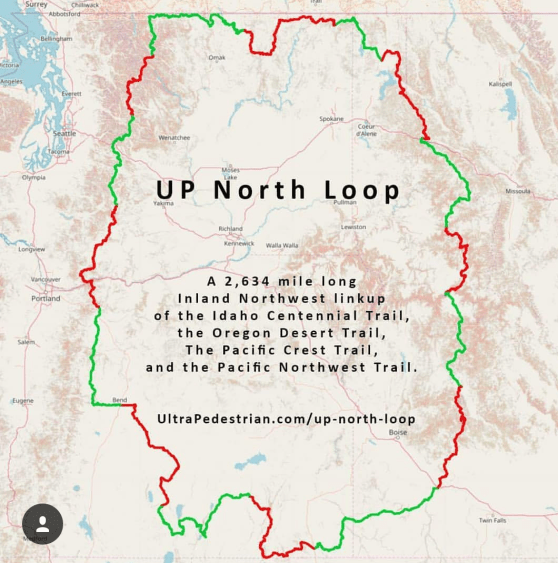
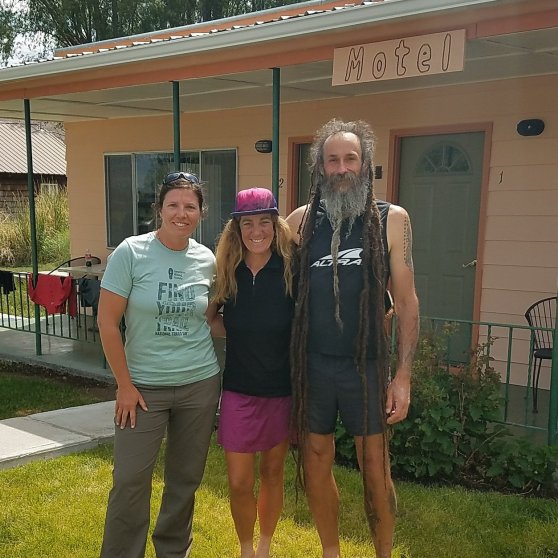
On another note I’m down near Fields this week and had the great pleasure of running into team UltraPedestrian on their epic hike from the Idaho Centennial Trail to the Oregon Desert Trail to the Pacific Crest Trail to the Pacific Northwest Trail… A journey of close to 3,000 miles.

Amazing! I knew when I started working on the Oregon Desert Trail that it would be a natural next step to connect into other trail systems. And here they are, the first to do it!

Hiking a Route vs. Hiking a Trail: Part 1

I wrote an article for MSR’s blog the Summit Register. I’ve been wanting to write this for at least 2 years, as a lot of what I do is help people figure out how to hike a route like the Oregon Desert Trail.

This one was fun as I was able to poll some other route creators (and incredible hikers, and pretty awesome people): Liz “Snorkle” ThomasCam “Swami” HonanJustin “Trauma” LichterSage Clegg, and Paul “Mags” Magnanti.

Give it a read!

Routes vs. Trails Part 1

20180429_111848

By Renee Patrick, Oregon Desert Trail Coordinator for the Oregon Natural Desert Association

Let’s say you’ve already tackled a long hike like the Appalachian Trail, Pacific Crest Trail, Colorado Trail or one of the other well-established long-distance backpacking trails around the world.

Where do you go from there?

Making the leap to hiking less defined routes can provide the next big challenge.

Route vs Trail - MSR Summit Register
Photo: HagePhoto

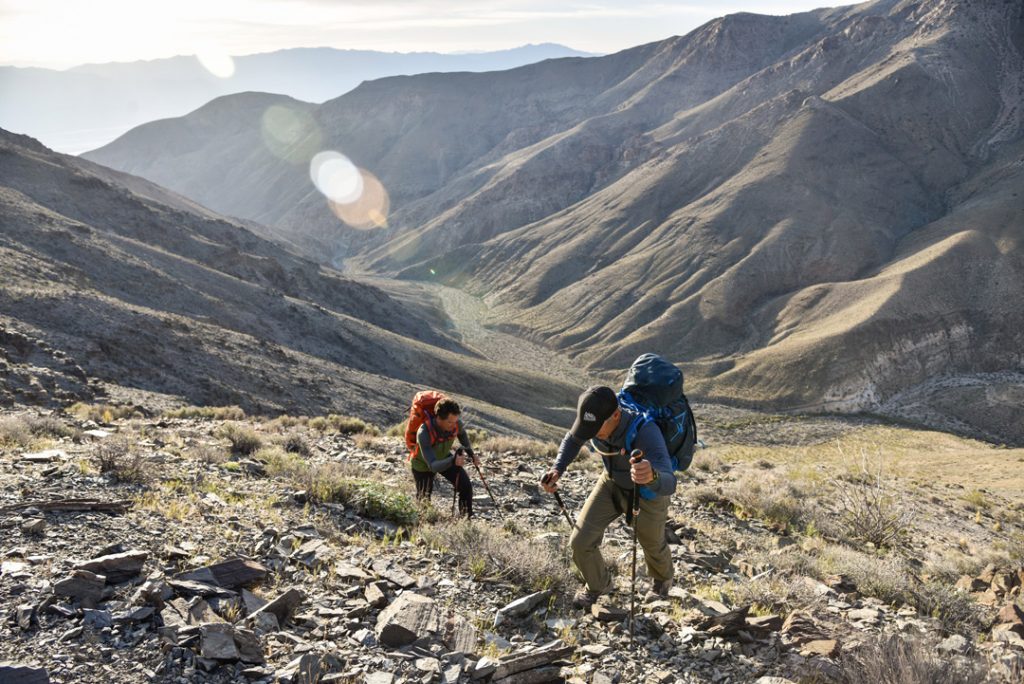
Routes, unmarked and often undefined, offer a totally different backcountry experience, and they tap into a different set of skills. An impressive thru-hiking resume alone doesn’t prepare one for the route-finding, remote and rugged terrain, and navigational demands of a long-distance route.

Still, it’s those very challenges that can make route hiking alluring to experienced backpackers.

Developing solid backcountry navigational skills gives hikers the freedom to travel with confidence and safety when the going gets tough, and opens up the possibility of exploration beyond well-trodden trails.

I’ve slowly been building my backcountry skill-set since first setting foot on the Appalachian Trail for a thru-hike in 2002. Fast forward 10,000 miles and 16 years, and I now find myself working as the Oregon Desert Trail Coordinator (hint: it’s a 750-mile route, not a trail). One of my primary goals has been to help backpackers figure out how to successfully hike a route, so I decided to check in with some of the most accomplished route creators and hikers I know for their tips.

Liz “Snorkle” ThomasCam “Swami” HonanJustin “Trauma” LichterSage Clegg, and Paul “Mags” Magnanti have not only spent extended time hiking away from established trails, they all take an active role in educating hikers new to the backcountry. I’ll talk more about how to develop a good skill-set in part two of this post; for now let’s start with identifying the differences between a route and a trail, and the reasons you might want to try a route.

Route vs Trail - MSR Summit Register
Photo: Scott Rinckenberger

What’s the difference between a route and a trail?

Some of the best-known routes in the country are the Hayduke TrailOregon Desert Trail and Grand Enchantment Trail. Lesser-known routes include the Hot Springs TrailDesert Trail and Northern New Mexico Loop. If they’re all just routes, why do they have “Trail” in their name?

The truth is there’s no “rule-book” defining a route versus a trail, but, if there were, some of the qualifying factors might be:

  • No dedicated signage: Many routes exist only as a line on the map and a series of waypoints, not as a physical representation on the ground. These routes might tie into existing trail systems that have signage, but you won’t find any dedicated signage on most routes.
  • Often no trail: Most often, the goal of a route is landscape-driven (such as hiking the length of a geological feature like the Grand Canyon or hitting as many hot springs as possible).
  • Road walking is to be expected: After a challenging cross-country bushwhack, a 10-mile road walk can be a welcome prospect for its ease, a brief respite from navigation, and an efficient way to move from one section to the next.
  • Navigational skills required: Established single-track trails are linear. In contrast, routes demand solid navigational skills. You must be able to read a topo map and translate the lines and symbols to what you see on the ground and vice versa. Reading a map and reading the terrain are both essential to route hiking—and finding!
Route vs Trail - MSR Summit Register
Photo: The Comfort Theory

The benefits of tackling a route versus a trail

  • Flexibility and exploration: Hikers may find themselves sizing up the landscape and deciding to take an alternate path. They might do this to avoid deep snow, explore what looks like a cool feature on the map, catch an epic sunset, or simply to hike the shortest way to town because of a gnawing hiker hunger. Experienced hikers view routes as a suggestion of travel, and they can make small route adjustments as they hike, making for a highly flexible and personalized experience in the backcountry. Instead of following a pre-determined trail, someone hiking a route can move through a landscape in the most efficient way. Mags explains, “You are no longer on a crowded trail but are truly immersed in the backcountry.”
  • It can take a lot longer: Hiking off-trail can take much longer to tick off the miles than on an established path. “Time spent in all types of conditions (e.g., snow, bushwhacking, mud, boulder hopping, swamps, soft sand, flat easy terrain, etc.) will teach you how fast (or slow) you can hike in any given environment,” Swami says.
  • No “one way” to hike a route: When appropriate, route travelers also have the freedom to choose how to travel through a landscape. Sage was the first hiker to complete the Oregon Desert Trail (ODT) in 2013, but she did so on a bike as well as on foot. Likewise, I’ve known hikers to packraft part of the Hayduke Trail on Utah’s rivers, and I paddled a “water alternate” on the 140-mile Owyhee River when completing the ODT a few years ago.
  • Opportunity for deeper engagement: Hikers need to pay attention, really pay attention, to their surroundings to be successful on a route. That heightened level of attention allows for a deeper engagement with the landscape and ecosystem around you. You could carry a plant guide and spend some time learning about all the flowers you keep stepping around, or perhaps carry some reading material about the Native Americans that used to travel the same ground thousands of years ago.
  • Anyone—including you—can make a route: “I don’t have any specific formula or preferences when creating a route,” Swami says. “Sometimes I look for pure wilderness experiences. Other times I’m drawn by historical, cultural and culinary elements.” Snorkle has become an expert at creating urban routes, where she hikes a path through a city and makes a point to visit local breweries, bakeries, and other points of interest. Creating routes like this might sound a bit arbitrary, but the only way to experience off-the-beaten-track places is to get, well, off the beaten track.
Route vs Trail - MSR Summit Register
Photo: Jeremy Fox

Important considerations for hiking a route

  • Routes aren’t appropriate everywhere: “Be ready for some Type 2 fun. Bushwhacks can be miserable at the time, but in retrospect they make good memories,” Trauma advises. Trees can play a big role in whether a cross-country section is doable or not. Cross-country in a heavily forested area can be extremely difficult if the vegetation is thick, or down trees create huge obstacles. Likewise, I learned cross-country hiking in southern Arizona can be next to impossible. It wasn’t for the trees, but the cacti. I tried to hike what looked like a fairly straightforward short cut, but after 30 minutes I had covered only 30 feet of desert terrain. I turned around, having already lost a fair amount of blood to the thick stands of Cholla and other various kinds of cacti.
  • Route ethics: Hiking off-trail can be empowering, but be sure to use common sense and practice good ethics when deciding if you should leave the trail. Mags has some great tips including: respect local regulations and rules for the area you are hiking through, keep group sizes small, and spread groups out to avoid tramping down a trail. Heavily impacted areas or high alpine zones are usually not the best terrain to explore off-trail because established trails provide an important way to consolidate use in sensitive areas.

I’ve heard it said that true adventure is when you are uncertain of the outcome. That is certainly true of routes when they have so many variables, but I would add that the key to a successful adventure is making good decisions. This includes carrying the 10 essentials and adhering to all of the safety precautions you’d normally take—plus more.

In part two I’ll cover tips from our seasoned hikers to help you acquire the skills to make those good decisions so that you can hike these routes or start making some of your own.

A Day in the Life of a Trail Coordinator

I would say at least a third of my time as the Oregon Desert Trail Coordinator is spent in eastern Oregon. Much of what I’m trying to accomplish on the ODT revolves around creating a trail culture in the small desert communities of Oregon’s dry side, and also working within those communities to see how the ODT can meet their recreation needs, or perhaps identify other recreation opportunities in those areas.

Wednesday morning I woke at 6am, sipped at several cups of hot black coffee, and packed for a few days on the road. I loaded up the 1994 Jeep Cherokee (one of the only ONDA rigs with studded tires) and by 7am was pulling away from the house. The highway south towards La Pine was busy with morning commuter traffic, and as the miles sped by and the elevation slightly increased, the snow started to blanket the forest with white. We’ve had a very mild winter this year, but the snow and rain have started to fall this March, providing some much needed moisture in the desert.

Just south of the small forested town of La Pine, I made a left turn onto highway 31, one of the few paved roads that heads south east. If you keep following this road, eventually it will dump you out in Reno, NV, but before that some of the iconic scenes of the desert appear: Fort Rock (where 10,000 year old sagebrush slippers were found in a cave in 1938), Hagar Mountain (a pointy iconic mountain with a fire tower lookout you can rent), Summer Lake and Winter Rim (words can’t do this area justice, just EPIC) and the popular Summer Lake Hotsprings, the town of Paisley (a charming little town at the base of the massive Fremont National Forest) and Abert Rim (one of the largest fault block mountains in the country, a 30 mile long fault that rises 2,500’ above the highway below). I turned before the highway reached the tall town of Lakeview (Oregon’s highest elevation city) and took road 140 towards Adel, a spot on the map not many will pass.

The goal of this trip was to check in with some of the small communities that provide services to hikers in Adel and Plush, meet with a new trail angel in Plush who wants to help out hikers, hike a potential alternate route into the Hart Mountain National Antelope Refuge from the base of Hart Mountain, soak in the Hart Mountain Hotsprings, head to Lakeview for to give a presentation about the Oregon Desert Trail to the Lakeview Chapter of the American Association of University Women, and then head back to Summer Lake the next day for a meeting with another potential trail angel who wants to help with water caching in one of the drier sections of the ODT.

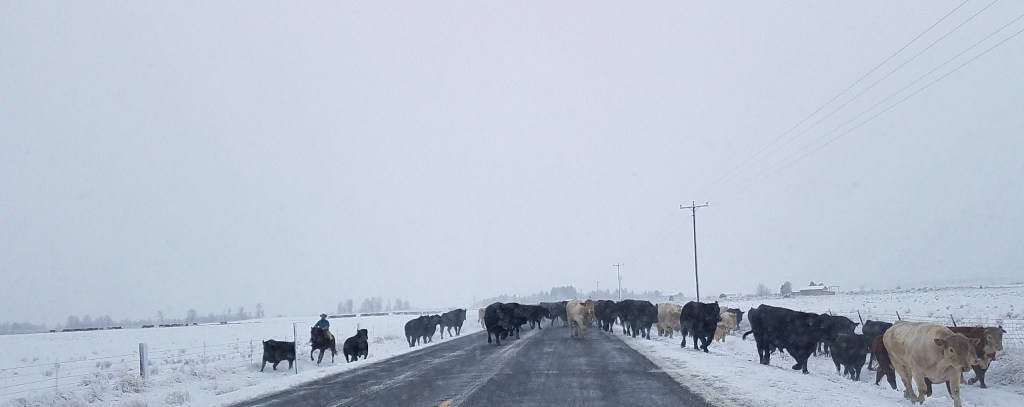
A lot of driving, yes, but of the many trips I’ve made to this part of Oregon in the past 2.5 years, I never get tired of the drive. After leaving the last bits of forest behind on Wednesday morning, the snow became deeper and highlighted all the ruffles of sagebrush that carpeted the landscape, and BOOM made the ridges and faults of Winter Rim and Abert Rim just explode with beauty. Before I got that far though, outside of Silver Lake I had to slow for a group of cows being ushered down the highway by four cowboys moving their stock to some spring grazing grounds (probably). Ranching is still one of the dominate industries in south east Oregon, although I think recreation will continue to help diversify the economy out here.
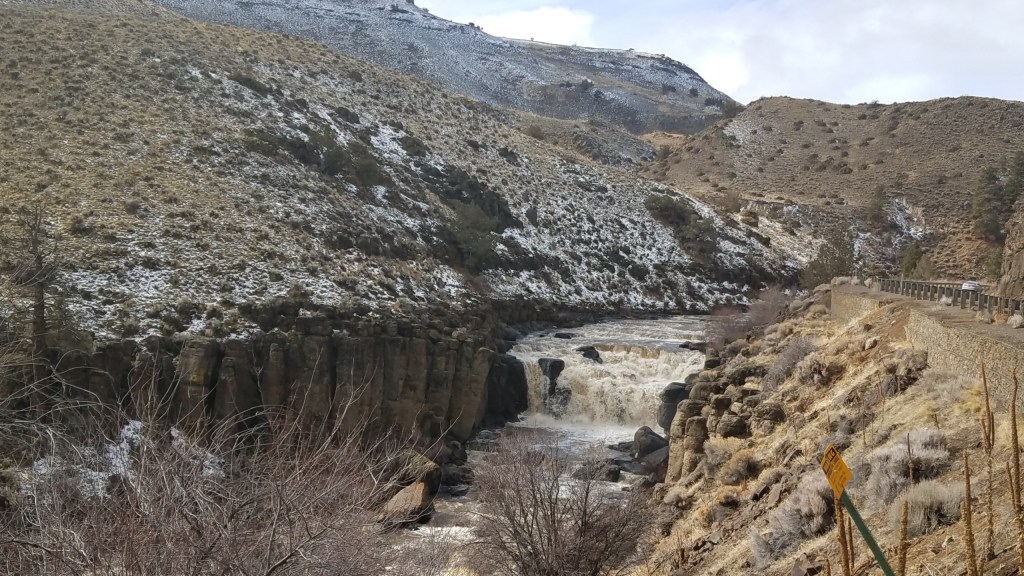
When I turned off on the road to Adel, I started to look at my phone for reception. I needed to call in for a conference call for a new organization I was a part of, an organization of conservation, recreation, and outdoor industry folks intent on advocating for more funding and protection of our landscape. Although the remoteness of this part of Oregon is real, there is an awful lot of cell phone reception out here (Verizon!). I passed the Warner Ski Area, but the lift wasn’t running today. I don’t think they’ve had enough snow to open more than a few days this year. The road followed Deep Creek, a waterway Kirk and I have had our eyes on for a few years; just a few miles before Adel the creek plunges over a 20’ tumble of boulders in a waterfall that Kirk is itching to run in his kayak.
I found my sweet spot for the cell phone, and noted the pull-off on the road. I would return after my lunch in Plush for my phone call. On to the Hart Mountain Store. This little oasis is an important stop on the Oregon Desert Trail. The route essentially goes through town, and has almost everything a hiker would need…all in one place. The store can be your resupply (if you aren’t picky), restaurant, bar, post office, gas station, and community gathering place. When I hiked through in 2016 I spent the better part of a day here eating a massive double bacon cheeseburger, drinking a few beers, and reading a book I grabbed from their take-one-leave-one shelf before heading off to the cozy tiny house a local couple rents out (Hart Mountain Cabin). Plush is also close to a hot spot for the Oregon Sunstone, a orangish/pinkish stone that features in many pieces of local jewelry. In the store you can buy some of the sunstone creations, in addition to a variety of other random and interesting items.

I ordered the French Dip, and Joelle, my trail angel to be, the chilli mac. Joelle was volunteering nights this week to help the refuge trap and monitor sage grouse, our iconic “canary in the coalmine” bird that indicates the health of the Sagebrush Steppe landscape. As a biologist her previous work was primarily among shore-birds, but she was enjoying this new drier landscape and the different life found within.

After lunch I left Dave (owner of the Hart Mountain Store) with a few more ODT brochures for the store counter, and a fresh copy of the Town Guide.

I jumped back in the Jeep and headed back towards the pull-out near Adel for my conference call (Plush is one of the only communities out here with absolutely no cell phone reception. Which is quite refreshing I must say!). Ah technology. Many of the folks were calling in from Portland, some from Bend, and others, I’m not sure where. We talked policy, the new Oregon Office of Outdoor Recreation, future events, and so forth.

About two hours later I drove up to the Adel store to fill up the tank with gas. Cody, the new owners’ son, poured me one of the Oregon IPAs they had on tap, and I caught up on a little laptop work and ate a few tater-tots. I also gave him a copy of the Town Guide; his parents had purchased the store last fall and soon after I had stopped in to say hello, and explained they were now an ODT trail town. The family had moved down from Redmond (near Bend) and were enjoying the quieter pace of life in the Oregon Outback. I had updated the information on the store, and wanted to leave them with a copy of the guide.

Then back to the car. I had my sights set on camping at the Hart Mountain Hot Springs, a free campground deep in the Hart Mountain Refuge, but the snow had been falling, and I wasn’t sure if I’d be able to drive into the spot. The hot springs are on top of Hart Mountain, another large fault block mountain, and Plush and Adel sit in the valley below. I drove up the long grade to the refuge Headquarters almost 2,000’ above the valley. The snow was falling heavily and I couldn’t see any car tracks ahead of me. At the headquarters I would turn off onto a smaller road for another 5 miles to the campground, but after looking at the large flakes falling heavily from the sky, decided not to go. While I knew I could get in there, and the forecast only said about an inch of snow was expected…the snow doesn’t always obey the forecast, and I decided to head to a campground at the base of the mountain instead. No soaking for me this time, but I’ve enjoyed the steaming waters before.
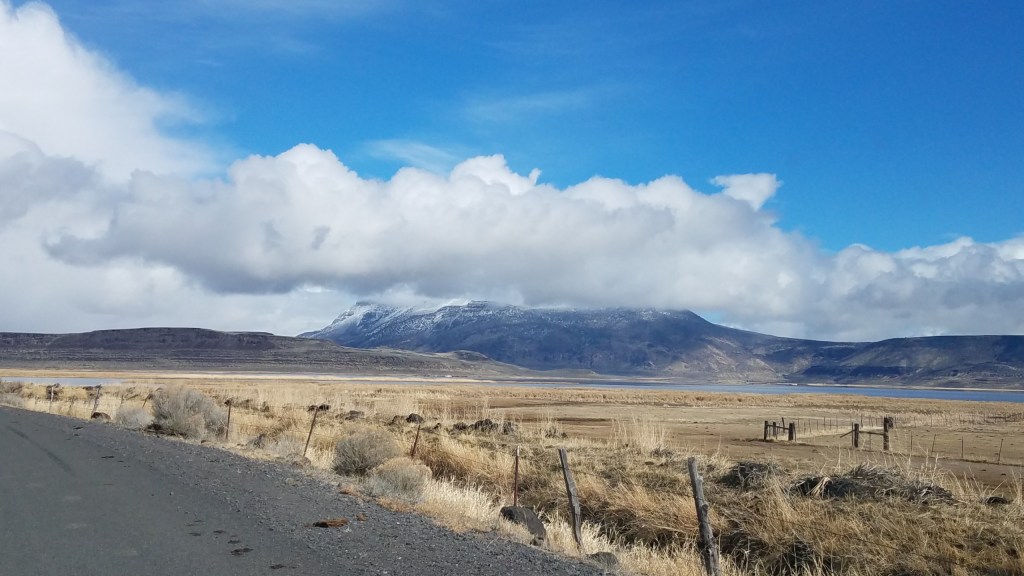
Hart Mountain blanketed in clouds…the view from Adel.

I pulled into the quiet site just before dark to park and get all cozy in the back of the jeep. I brought my -20 degree sleeping bag, paco pad (4” inflatable foam pad Kirk and I use for river trips), and down pillow. Roughing it? Not really! I read for a few hours before turning off my headlamp for the night. There were no lights in any direction, and if it hadn’t been snowing, I would have been able to see the stars brighter than many places in the country.

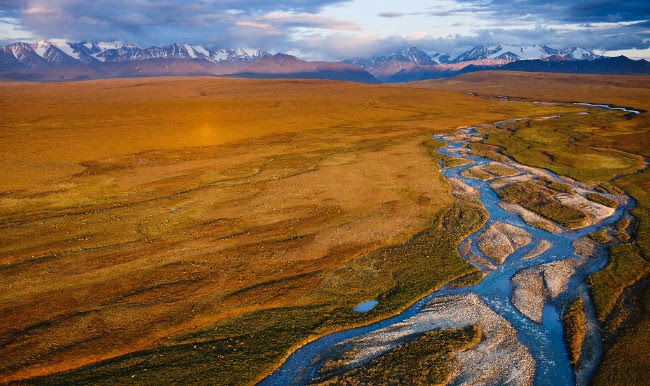
Arctic Refuge Drilling, we can stop it!

I wrote about the Arctic Refuge Drilling issue in my last post, and even though the budget resolution that would open up this sensitive area up to drilling passed both the house and senate, there is still time. Action items below! Please make a call today.

Read more below from the Conservation Alliance:

Congress Votes in Favor of Drilling in the Arctic National Wildlife Refuge, But the Fight is Not Over
The battle to protect the Arctic National Wildlife Refuge from oil drilling continues.

Two weeks ago, the Senate took the first step toward opening the Arctic Refuge to oil drilling by voting against an amendment to remove Arctic drilling from its budget resolution, then narrowly passing that resolution. Less than a week later, on Thursday, Oct 26th, the House adopted the Senate’s budget resolution in a 216-212 vote.

The good news? We have successfully fought this battle before. In 2005, the Arctic Refuge faced a similar threat. Republicans controlled both the House and Senate, and the White House, and all wanted to open the Arctic Refuge to oil development.  Republican leadership used the same convoluted budget process they are using today to advance Arctic drilling.  The Senate and the House voted then to drill the Arctic Refuge using the same sequence of votes in 2005 as they did earlier this month, but Arctic Refuge supporters remained steadfast. At the 11th hour, the cultural significance and unmatched beauty of the Arctic Refuge ultimately prevailed, and Arctic drilling was struck from the 2005 budget.

Read more on our blog.

ACTION ALERT:  Take Action to Protect the Arctic Refuge
Each step in the budget process requires our community’s attention. Now that Congress has passed a budget resolution, the next stage in the process is called reconciliation. Reconciliation is the part in the process where we will see actual legislation that would open the Arctic Refuge to drilling. This Thursday, November 2nd, the Senate Energy and Natural Resources Committee is holding a hearing to discuss potential oil drilling in the Arctic Refuge (as instructed by the resolution).

It’s important our elected officials understand how you feel about opening the Arctic National Wildlife Refuge to oil development. Below are four important actions you can take today to join the fight to protect the Arctic Refuge:

  1. Call or tweet Alaska Senator Lisa Murkowski (202-224-6665 / @lisamurkowski) and Alaska Senator Dan Sullivan (202-224-3004 / @SenDanSullivan) and tell them that you do not agree with drilling in the Refuge and that the fast-tracked budget process is an unethical method to use on such an important topic.
  2. Call or tweet Maine Senator Susan Collins (202-224-2523 / @SenatorCollins) and thank her for voting in support of the Arctic Refuge in the Budget Resolution process.
  3. Call or tweet Arizona Senator John McCain (202-224-2235 / @SenJohnMcCain) and ask him to help the public understand his reasons for voting down the amendment that would have kept the Arctic Refuge out of the budget process.
  4. Call or tweet your representative and ask them to tell GOP leadership to keep #ArcticRefuge drilling out of the tax bill. #NoArcticRider #ProtectTheArctic

Trails: Time to Give Back

Summer is most certainly coming to an end in Oregon, and while the days are getting shorter, we are still inundated with smoke from more wildfires than I can count. Oregon is burning, so I’m heading south for an upcoming hike. Stay tuned for more details soon. Blogging will happen, photos will be taken, but I plan to give myself the gift of unplugging from the internets (or 4G) during the hike…posts will come after a short delay.

Even though I haven’t been able to stretch my legs on any long hikes this year, I have been immersed in the land of trail work.

Part of my job as the Oregon Desert Trail Coordinator this year was to lead some trail work trips. It’s so satisfying to maintain trails, especially when they are as overgrown and neglected as some of the ones along the ODT.

But I thought the ODT is a route, not a trail…

Yes, you would be correct, but of the 750 miles (actually current count is 753.5 miles), 11% is along existing trail. These are trails our federal agency partners haven’t been able to work on in many years due to a myriad of reasons, including lack of funding and use. This leads to a vicious cycle of hikers not hiking the trails because they aren’t maintained, and trails aren’t maintained because hikers aren’t hiking them…

SO, we are harnessing the incredible hard working volunteer manpower to make a dent in some of that maintenance (last year over 500 ONDA volunteers contributed almost 10,000 hours to a variety of stewardship projects including riparian restoration and animal monitoring activities, WOW!). A lot of my work last year involved establishing relationships with the four different BLM Districts and two different National Forests that manage land along the Oregon Desert Trail in eastern Oregon, and this year I worked with those partners to develop four trips.

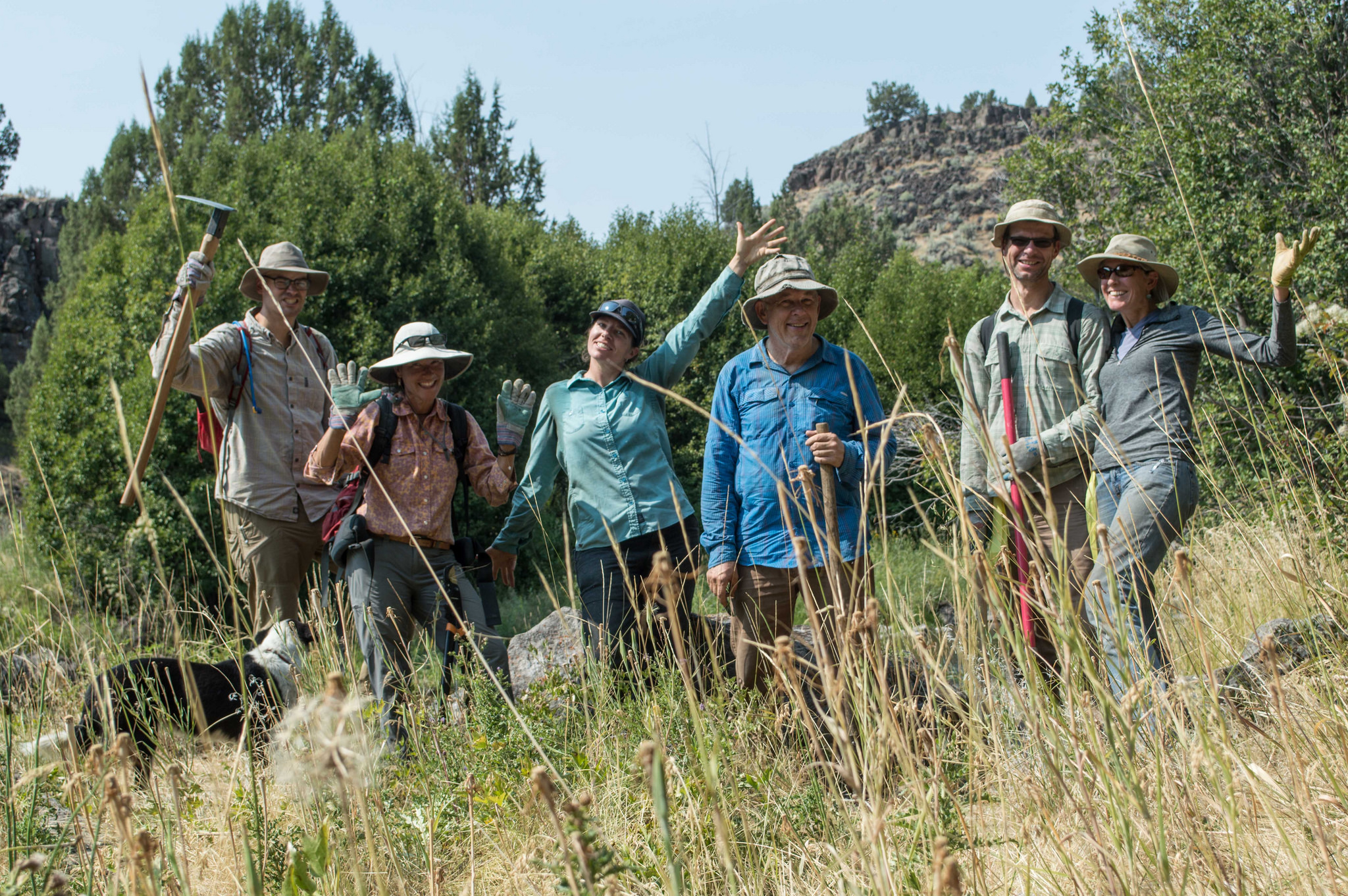
I’m incredibly proud of my volunteers and the work we did. It had been a full 10 years since I led trail crews around Colorado for the Southwest Conservation Corps, but the memories came flooding back as I swung the Pulaski and built berms along the drain dips with my crews. Trailwork!

A few numbers: 45 volunteers came out for 810 hours of work, and we:

• Built 2 miles of new trail in the Oregon Badlands Wilderness, and transformed a .4 mile cross-country section into trail on the ODT. (See photos here)
• Cleared 11 miles of downed trees from the Fremont National Recreation Trail and ODT corridor, and maintained 3 miles of trail. (See photos here)
• Cleared all the downed trees from the Big Indian Gorge Trail in the Steens Mountain Wilderness (by hand), and brushed over 2 miles of heavily overgrown trail. (See photos here)
• Built a .5 mile high water alternate to the Blitzen River Trail out of Page Springs Campground in the Steens Mountain Wilderness. (See photos here)

I will continue with the work in 2018…there is so much to do! Are you interested in joining me on one of the trips? Some are backpacking based, some are car-camping based. We were packed in by a BLM horse team on one trip, and might even provide some chain-saw training opportunities for another…lots to help with. The ONDA stewardship trips get announced in mid February each year, so I’ll keep you posted here on when those go live, I’d love to have you join me on a trip or two!


Disaster Stories

A new podcast, Boldly Went (think The Moth), came to Bend recently and invited a few people to the stage to tell some stories of DISASTER… I shared a harrowing tale of catching myself, the forest, and most of my stuff on fire when I thru-hiked the CDT two years ago. Take a listen and don’t do what I did. (my story starts at minute 14)

Protect Your Public Lands: A User’s Guide

We can’t hike trails without public lands, so I wrote this blog for Oboz about 5 things you can do!


by Renee Patrick

What Designations Does You Favorite Trail Have Photo By Renee Patrick

Image: Take some time to learn about public lands surrounding your favorite trails. Photo by Renee Patrick

After huffing up the 2,000-foot climb out of Big Indian Gorge, my sweat-dampened shirt quickly chilled in the sharp November wind. I was just days from finishing my Oregon Desert Trail section hike with the final 65 mile stretch up and over the monolithic Steens Mountain in eastern Oregon.

I surveyed the miles of alkaline playa 5,000 feet below Steens summit and the vast expanse of public land stretching far into the horizon. That early November morning was just days away from an election that would upset the nation, and jeopardize the future of the very land below my feet.

In the weeks that followed, one thing became clear: I need to act to protect what I love, and the question became: How can I advocate for public lands and have a real impact?

I am fortunate enough to work for a conservation organization, the Oregon Natural Desert Association (ONDA), which has been working for 30 years to protect, defend, and restore high desert landscapes in eastern Oregon. But after multiple conversations with friends who don’t directly work in the conservation field, I realized they too wanted guidance on how to be effective in advocating for the future of our public lands. So I surveyed a few of my colleagues and came up with these action points:

5 Tips on How YOU Can Advocate for Public Lands Protection

1. Focus on public lands close to home

One of the best ways to participate in the public lands debate is to become educated about some of your favorite places. Is your go-to hike on public land? If so, which agency manages it, and does it currently have any protections or designations? We often form personal connections with our favorite places, and those connections can be powerful when a place you love is at risk. Visit your Forest Service, BLM, or State Parks office. Learn more about how they steward your favorite places, ask how you can participate in trail maintenance, or in any upcoming planning processes.

Even the youngest volunteers can make a difference in a conservation organization. Photo by Allison Crotty

2. Join a local conservation organization

Most communities have a variety of nonprofit conservation organizations that work to protect important landscapes and watersheds. Each of these groups may have a specific focus, whether it is sustainability, climate change, river health, or supporting the stewardship of a specific wilderness area. These organizations give a powerful voice to important local and national public land issues, and rely on their members to help support advocacy for restoration activities in the places we all cherish. Consider becoming a member of one conservation organization in your area. Start volunteering, or join them on a hike or stewardship trip. Your donation, membership, volunteer time, or voice can make a difference.

3. Get to know your senators and representatives

Your senators and representatives represent you on the state and national level, so it’s important to let them know where you stand on public lands issues. There is a lot of debate these days about the most effective ways to reach out to your elected officials, but any action is better than no action. Call their offices, write postcards, attend town hall meetings…and make it personal. You don’t have to be an expert on public lands to have a powerful pull. It can be very meaningful for our officials to hear from everyday people who care about public lands, so share your stories, share your concerns, and if they have been supportive of keeping public lands public, thank them!

Get creative with your signs at the next town hall event in your area. Photo by Heidi Hagemeier

4. Hold small gatherings with friends/family

Since so many people take access to public lands for granted, we need as many folks as possible to simply be out talking with their friends/neighbors/family about why public lands are important. Invite some friends over, and over dinner or beers talk about a few of the current threats. One of the main issues you may want to discuss involves proposals to hand over American public lands to the states. Because most state governments can’t afford to manage millions of acres of land, a likely scenario would result in raising taxes or selling our land to the highest bidder in order to pay for costs like firefighting and management. Come up with a list of your legislators’ addresses, and then have everyone write a few postcards and make a night of it! (find more here: https://www.congress.gov/state…, https://www.congress.gov/ -search legislation).

5. Vote

Start local. City, county, state and even school boards have elections between the presidential election years, and we can build a strong voice from the bottom up. Do some research and find out where your local candidates stand on public lands issues. Then make your voice heard on Election Day.

Renee “She-ra” Patrick is the trail coordinator for the Oregon Desert Trail in Bend, OR, and a triple crown hiker, having completed the Appalachian Trail, Pacific Crest Trail and Continental Divide Trail in addition to 6 other long distance trails. When not backpacking, she can be found packrafting, skiing or napping in the backcountry. You can read about her adventures on her blog,www.sherahikes.wordpress.com.