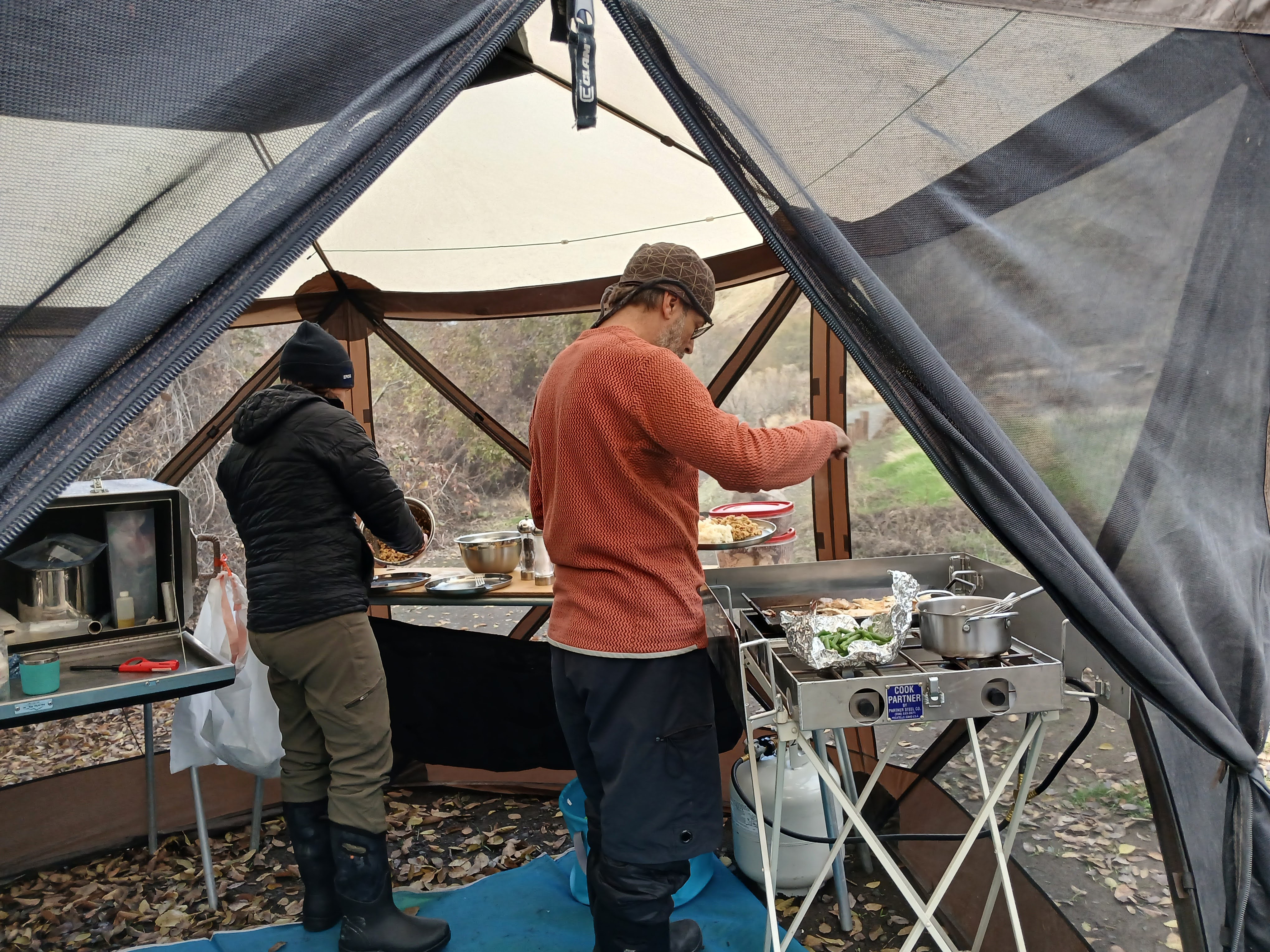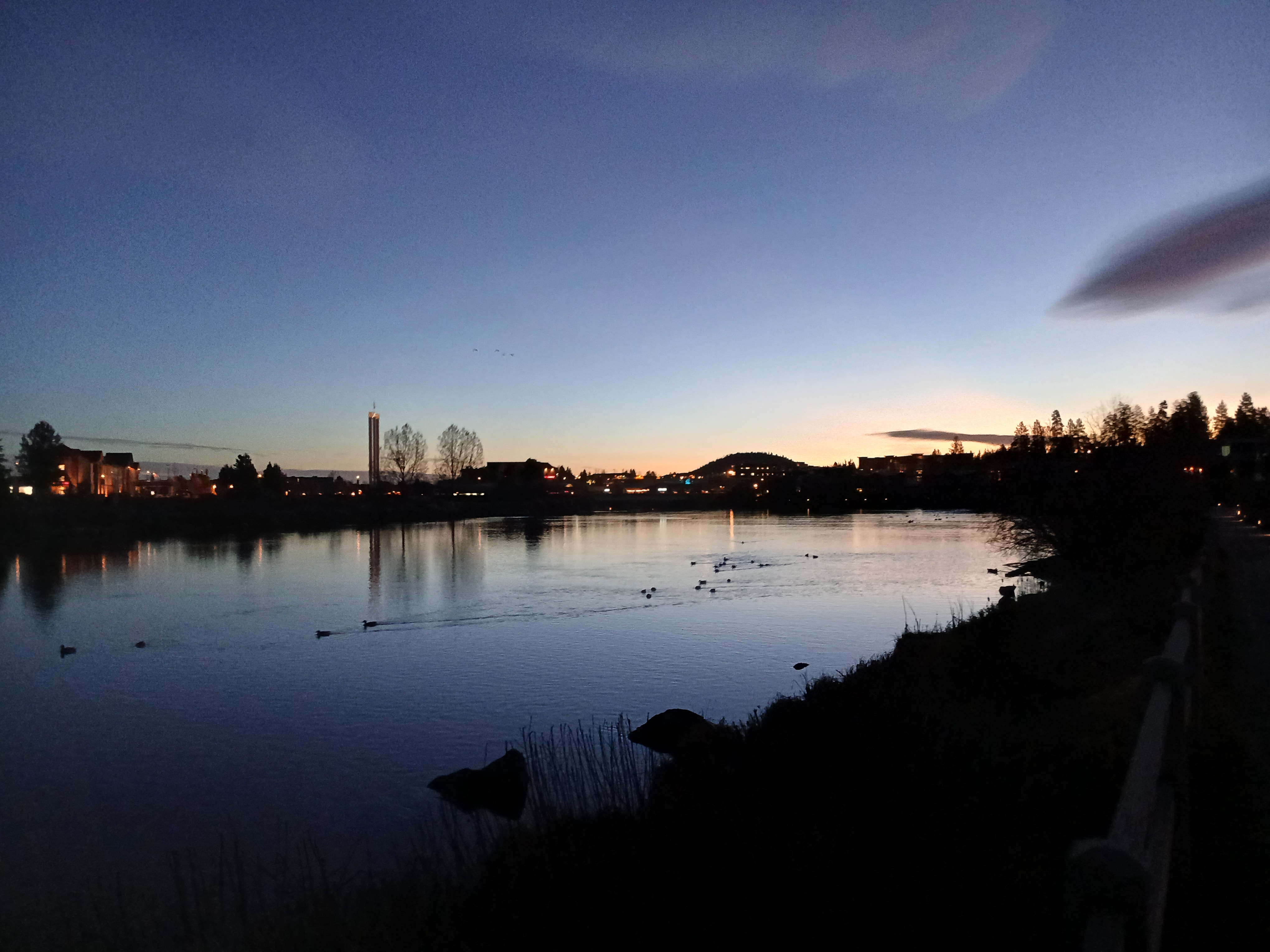
Saying Goodbye to the Oregon Desert Trail

This morning I welcomed the sunrise on my walk, this first day of spring. When I returned home to dabble with some writing, the tears came. (aided by this song…)

My heart is shredding. I’m finally pulling away from my role in crafting the Oregon Desert Trail experience, and it’s much harder than most things I’ve left behind over the years. I’ve evolved through this experience, as a human and a hiker. I have become an environmentalist, and in some ways I feel like a mother. 

The grief for what I’ve lost with the change of my body feels incredibly tender; I just can’t bear to continue to steward what I can’t hike. Maybe my attitude will change, but for now it’s too much.

This morning, I cried as I read over years of adventures I’ve had out there. I’m trying to pull out some stories for a collection of hiking essays I’m working on. I thought that hiking stories would be a fun distraction from the cancer memoir, but in a way, both are opening me up to a world of hurt in a way I wasn’t expecting. 

The Oregon Desert Trail isn’t just a trail; hikers are embarking on an experience in trying to bridge a cultural, ideological, and political divide. 

I think this article from 2018 continues to be one of the best summaries of the larger picture of what the Oregon Desert Trail represents, and what I was trying to do with the experience. Can thru-hiking change the world? I certainly think so, even if it’s just through one conversation at a time.

Walking on a Knife’s Edge – Oregon Business

The trail that cuts through the Wild West of rural land-use politics in Oregon’s high desert. 

Ryan “Dirtmonger” Sylva crested a canyon rim and faced an endless expanse of sagebrush. He was hours from any sort of town, after spending days swimming through ice water in Louse Canyon, along a tributary of the Owyhee River in the remote reaches of Southeastern Oregon. He eyed two riders on horseback angling toward him.

“My impressions of the area were from the Malheur-takeover thing. It was really rural and I wasn’t sure what I’d encounter,” says Sylva, a nomadic brand ambassador for outdoor-gear businesses. “Suddenly, I’m walking across this empty expanse and there’s this cowboy coming toward me.”

The riders, a cattle rancher and his son, asked Sylva what he was doing there. Sylva had grown used to puzzled looks from the denizens of the isolated desert, but this time it felt confrontational. Yet by the end of the conversation, he says his views on rural Oregon changed.

Sylva is one of 26 long-distance hikers to finish the 750-mile Oregon Desert Trail. It’s not a hiking trail in the traditional sense. It’s a big conceptual “W” that the Oregon Natural Desert Association (ONDA), a nonprofit dedicated to high desert conservation, scribbled on a tapestry of public lands throughout Lake, Harney and Malheur counties. Unmarked sections require extensive route finding. Stretches of up to 40 miles are waterless.

The trail’s visitation numbers are small, but its true potential is carving a middle path through a longstanding legal feud between ranchers and environmental groups. It’s emblematic of a decades-long public lands debate in the American West, a struggle that has encompassed national publicity campaigns, intractable legal fights, armed takeovers.

As it traverses miles of stunning desert, the trail also explores the philosophy, biology, politics and economics that have made Eastern Oregon a hotbed for natural-resource conflicts. It invites conversation about the urban-rural divide, about land-use policy, about the relative values of traditional agrarian industries and the new-age economy of recreation tourism.    

The conflicts in Eastern Oregon run so deep that ONDA, the biggest player in the environmental camp, and rural politicians and ranchers find it difficult to even sit at the same table. But lately they’ve been talking, or at least thinking about it. And the trail has something to do with it. “The more we talk, the more [the ranchers] share why they love the desert,” says Renee Patrick, ONDA’s Oregon Desert Trail coordinator. “When we get out there on the land, we find we have more in common.”

The route spotlights the natural beauty of public lands in counties where a chunk of the populace thinks the government shouldn’t own land at all. On January 2, 2016, armed militants occupied the Malheur National Wildlife Refuge in Harney County. Rancher Ammon Bundy led the takeover to protest the conviction of the Hammond brothers for burning 139 acres of public land in 2001 near Steens Mountain. One occupier was shot and killed, and a dozen others pleaded guilty to conspiracy to obstruct federal officers, firearms violations, theft and depredation of federal property.

Jesse Laird, a rancher in the Warner Valley of Lake County, agrees with Bundy’s message but not his methods. “I felt like the way they went about it was wrong,” he says as he drives his black Suburban toward the looming monolith of Hart Mountain. “They should have gone on a speaking tour.”

Laird turns and points south to a cluster of dun-colored hills. The Oregon Desert Trail drops into the Warner Valley from there, he says. It runs along a paved road, then assails the escarpment of Hart Mountain, entering a national wildlife refuge.

Laird is not shy about his views regarding the Oregon Natural Desert Association and its desert trail. He encourages people to experience the wilderness, he says. His wife, after all, is a professional wildlife photographer. But he’s concerned about the association’s proposal to have the trail designated as a national recreation trail. “I’m scared of designations,” he says. “Special designations always cause special problems.”

In the midst of a flurry of conservationist legislation, President Lyndon B. Johnson’s administration elevated the status of hiking with the National Trails System Act in 1968. In a speech several years prior, the Democrat paid tribute to “the forgotten outdoorsmen of today,” which he defined as “those who like to walk, hike, ride horseback or bicycle.” The resulting legislation created National Scenic Trails, mammoth routes of more than 100 miles that pass “nationally significant scenic, historic, natural or cultural landmarks.”

Debuted in 2013, the exceedingly difficult Oregon Desert Trail has attracted few takers compared with existing National Scenic Trails. According to an informal survey conducted by the Pacific Crest Trail Association, 912 hikers this year have completed the now famous route linking the Mexican and Canadian borders in 2018. Ten people this year have finished the Oregon Desert Trail. 

Despite the small number of completions, tourism agencies and the outdoor industry are funding Oregon’s longest thru-hike. The state tourism agency Travel Oregon earmarked the route as one of seven projects that will benefit from its forever fund. Hotels, restaurants and other tourist-facing business donate a portion of their proceeds to the fund. Projects must improve the visitor experience, restore the landscape and provide volunteer opportunities for Oregonians. Last year each of the grantees received around $6,000, a destination specialist with the agency says, and a smaller figure is expected this time around.

Linea Gagliano, a spokesperson for Travel Oregon, says the forever fund money will go toward public meetings and other initiatives to address ranchers’ concerns. “Knowing there was controversy around it, the funds are going to community engagement,” she says. “So it’s something that will enhance communities and not something people feel they just can’t get behind.”

Big outdoor-gear brands have lent support to the trail. The Bend REI store gave grants totaling more than $17,500 for trail maintence. Sawyer Products, an outdoor-gear manufacturer, chipped in around $1,000, and Cnoc Outdoors $2,500. MSR, one of the biggest names in the outdoor industry, promoted the trail on its Summit Post blog.

The unconventional route has also attracted travel write-ups in national publications including The Washington Post and The New York Times. In 2014 The Oregonian reported that the Oregon Natural Desert Association petitioned the U.S. Department of the Interior to study the trail as a possible addition to the National Recreation Trails system.

Seeking to represent ranchers, who are powerful players in the rural economy, the Lake County government petitioned the Oregon Natural Desert Association in January 2014 to halt part of the designation process. They feared that a proposal to connect part of the desert trail to the Fremont National Recreation Trail marked an early step in scenic trail designation. Malheur County commissioners sent a similar letter.

Laird and other ranchers in Lake County don’t have a problem with the trail as is, but they fear designation could pave the way for scenic buffers of up to a quarter-mile on each side. In those buffer zones, agencies could ban motorized use and grazing. Along the Pacific Crest Trail, land trusts have succeeded in converting private land to public to make buffers that preserve a natural experience and allow easier access.

There’s a yawning gap between what rural communities think the Oregon Natural Desert Association is doing with the trail, and what ONDA says they’re doing. Lake County commissioners Bradley Winters and Dan Shoun say ONDA and the Bureau of Land Management have ignored their concerns about designation. “They pretty much couldn’t answer any of our questions about the use, and future use,” Shoun says. The last time Winters sat down in person with an ONDA representative was several years ago.

Three sections of the route—in the Fremont-Winema National Forest, the Pueblo Mountains and Steens Mountain—have received National Recreation Trail designations, but Patrick says ONDA is no longer actively pursuing designation for the rest of the route. “Nothing is off the table,” Patrick says, “but we’re trying to think through this thoughtfully.”

It wasn’t the only time communication broke down in the design of the trail. Alice Trindle, regional manager for the Eastern Oregon Visitors Association in Baker City, barely averted a publicity crisis. She killed an article about the new trail out of fear of offending ranchers.

“There were things [in the article] that really invited the visitor along the trail to go under barbed-wire fences and through gates,” Trindle says. “It didn’t have the respect for those traditional land managers, the ranchers.”

A rancher and owner of a horsemanship business, Trindle is deeply in touch with the region’s traditional industries. While tourism is growing, agriculture and ranching still sustain a large slice of Eastern Oregon’s economy. According to the state employment department, crop and animal production supplied 7.5% of private-sector employment and 7.1% of private-sector wages in 2017. A total $1.7 billion of agricultural products were sold in Eastern Oregon in 2012, the most recent year for which data from the census of agriculture is available. Livestock sales alone generated $762 million.  

“There’s a lot of distrust for the big-city environmentalists,” Batty says. “But there are a lot of people in the business community learning to see the value of tourism and willing to overlook the political aspects of it.”

— Thomas Batty

Tourism revenue in Eastern Oregon, though small by comparison, climbed steadily each year, from $316 million in 2010 to $383 million in 2017, according to Travel Oregon figures. About 900 jobs directly related to tourism were added in that time. Gagliano says the past few years in particular have seen a significant jump. There are also secondary effects that ripple through the economy.

Although posters promoting the Oregon Desert Trail hang everywhere from the historic saloon in Paisley to the Summer Lake Hot Springs resort, Lake County businesses have yet to realize gains from the project. Sylva, an experienced thru-hiker, says he can’t see annual Desert Trail thru-hikers ever exceeding 20.

Tourism in Lake County is still largely the domain of the rodeo and a trickle of agri-tourists. Many ranchers don’t know or care that the nascent Desert Trail exists. “They make it up as some big deal,” says John O’Keeffe, a rancher in Adel, a few miles down the road from Laird. “If somebody wants to go out and walk, they can walk there now. You don’t have to make a big effort to make it a trail.”

Thomas Batty, who owns Tall Town Bike and Camp, one of the few outdoor stores in Lakeview, says he’s stocked a bit more fuel for ODT hikers, but otherwise the trail hasn’t made much impact on his business. He thinks that could change, however, as the recreation-tourism sector gains steam. Lakeview is seeing increased visitation from the Timber Trail, another relatively new long-distance route focused on mountain bikers, and the Desert Trail could follow suit.

“This is a pretty conservative area. There’s a lot of distrust for the big-city environmentalists,” Batty says. “But there’s a lot of people in the business community learning to see the value of tourism and willing to overlook the political aspects of it.”

Patrick says most of the tourism boost comes not from thru-hikers but from those who tackle small sections. The immense challenge of the trail plays to the aspirations of the weekend warrior. “The 750-mile ideal is really compelling,” Patrick says. “It’s a reason to go back.” She estimates that each year around 250 people hike segments.

“They’ll buy lunch, dinner, probably spend the night, fill their gas tank while they’re out there,” Gagliano says. “It’s bringing in much-needed economic numbers.”

Duane Graham, owner of the Summer Lake Hot Springs resort, shuttles in a handful of grateful hikers each year from an ODT trail junction 6 miles down the road. In a county where one new job is the equivalent of 520 in Multnomah County, and a group of five people makes a town, no visitor is insignificant.  

“We probably will never have the numbers the [Pacific Crest Trail] has,” Patrick says, “but it’s a way to highlight the desert that works with the landscape.”

Given the air of general confusion, red-faced speculation or flat-out indifference in Lake County for the nascent trail, it would have been difficult to expect good results when Patrick ambled into the Warner Valley and ran into Laird at his ranch.

“Oh,” he said, “you’re She-ra.” Patrick was shocked that this rancher knew her “trail name” — a moniker, like “Dirtmonger,” that thru-hikers adopt during their journey. Laird explained that he had been following her blog and the trail’s development, and that he was concerned about possible buffers. Patrick expressed gratitude for the water holes developed by ranchers. Without them, she said, the Desert Trail hikers would go thirsty.

“I felt she was being very transparent and very honest,” Laird says. “I don’t feel like she is — it feels horrible to say — like the other ones there [at ONDA]. A lot of the other ones are out to get us.”

Part of the entrenched attitude of the ranchers comes from their long-standing relationship with the land. In 1867, Laird’s great-great-grandfather arrived in the Warner Valley with the U.S. Army. The Lairds carted in juniper posts on wagons to the Warner wetlands, setting up fencing and water holes for cattle. The early homesteaders fought off sporadic attacks from the Paiute Tribe as they migrated from Reno to Burns. Family folklore has it that one season, the Lairds housed an elderly woman whom the tribe had abandoned. Though she was blind, she always knew when the tribes were attacking. The only property the Lairds lost was one white horse.

Not long after, in the early 1900s, the O’Keeffe family arrived from County Cork, Ireland. They raised sheep but converted to cattle in the 1960s because of labor issues. John O’Keeffe took over the operation from his father in the 1980s after earning an agricultural economics degree from Oregon State University.

O’Keeffe has lived nearly his entire life in Adel, Oregon, 30 miles east of Lakeview. The Adel store, the only store in the unincorporated town, springs straight out of a Western. A group of ranchers in leather chaps and cowboy hats occupies the center. O’Keeffe, a 56-year-old, weather-beaten rancher, wears a white cattleman hat and a grey knit sweater. Laconic and even-tempered, he gives off an air of wisdom, the product of a lifetime of education and experience.

On an afternoon in early November, O’Keeffe’s pickup reeks of smoke. He spent the morning burning the grass around his ranch buildings with drip torches. The burning creates a buffer that starves wildfires of fuel. O’Keeffe is chief of the local firefighting association, a volunteer group that tackles small blazes before they turn into “project fires.” The nearest actual fire department is a 40-minute drive away in Lakeview.

Apart from fire, in any given year O’Keeffe battles droughts, floods, blizzards, coyotes and disease. In winter he drives around all night picking up freezing calves and warming them in a heat box. While ensuring the survival of his herd, he revitalizes the land; he rotates grazing areas, for example, to give native bunchgrasses a chance to store root reserves.

Relatively recently, the environmental movement arrived with new ideas about preserving biodiversity. The 1964 Wilderness Act directed the Secretary of the Interior to review every roadless area within National Park and Forest land every 10 years for a special class of protection. The act famously defined wilderness as land “untrammeled by man, where man himself is a visitor who does not remain.” The legislation banned motor vehicles and harvesting natural resources to maintain an intriguing but profoundly unscientific standard: “primeval character.”

In fact, many varieties of man, from Native Americans to ranchers, have come and gone from land thereafter protected as wilderness. Ranchers say their proactive management strategies, from rotational grazing to prescriptive burning, helped prevent fires and maintain rangeland health.

“I think it’s a fundamental difference in the viewpoint,” O’Keeffe says. “We’ve been grazing here for over 100 years, and it’s still in good condition. We’ve learned a lot about range management over the years and how to graze so that this is sustainable.”

In the 1980s and 1990s, some environmentalists, uniting under the cry “Cattle free by ’93,” argued that sustainable grazing was an oxymoron. In 1987 a Bend resident took out a classified ad urging fellow environmentalists to come by Thursday night if they were interested in protecting public land in the high desert. Each member at that first meeting donated $5, and they dubbed themselves the Oregon Natural Desert Association.

The nonprofit dedicated itself to preserving biodiversity in the fragile high desert. In 1991 it pioneered a method of citizen-led wilderness inventories later adopted by the Bureau of Land Management. In 1994 it convinced the U.S. Fish and Wildlife Service to remove livestock from Hart Mountain, a highlight of the Desert Trail near the Laird ranch, to protect pronghorn antelope and sage grouse. Perhaps most significantly, in 2000 the nonprofit led the effort to establish the first wilderness area in Eastern Oregon, Steens Mountain.

The organization quickly earned the ire of local ranchers. Now, depending on whom you talk to, ONDA is a dirty word. “Most of the ranchers despise them,” says John Ross, owner of the Frenchglen Hotel, a midway stop along the Desert Trail. “They don’t like them ’cause they send environmental things through the federal government and figure out other ways to make it tough on them.”

In 1994, the same year ONDA protected Hart Mountain, Laird’s family lost access to greener late season feed on some 25,000 acres on the Warner wetlands. Laird says invasive Canada thistle proliferated when his cattle were barred from grazing. For another eight years, from 2005 to 2013, the Laird family chose to intervene in a lawsuit filed by ONDA against the Bureau of Land Management over grazing on Big Juniper Mountain. In the effort to preserve their grazing allotments, Laird says, the family quite literally bet the ranch. 

O’Keefe remains bitter about the results of a recent case in which ONDA contested the Bureau of Land Management’s inventory of lands with wilderness characteristics. The organization argued for protecting areas with existing roads and water holes, areas O’keefe doesn’t consider wilderness. He says, “they flat out didn’t take in the whole picture.” The negotiations are ongoing.

Actions meant to safeguard the environment, ranchers say, ended up hurting it. After ONDA’s concerns prompted the U.S. Fish and Wildlife Service to remove cattle from Hart Mountain, Laird says, coyotes preyed on deer instead. Cougars came down from the mountains into the Plush valley. “It is an area of critical environmental concern because the BLM bought it,” he says.

The chance meeting between Laird and Patrick laid a small plank in a bridge that needs to span the chasm between environmentalists and ranchers. Patrick was impressed that Laird followed her blog, showed commitment to ranching sustainably and took time after they met to attend a presentation that she gave in Lakeview. By the end of their conversations, she said, “I felt we were able to agree on the beauty of this land.”

The Oregon Desert Trail begins with little flourish or fanfare. A small wooden sign for the Tumulus Trail, hidden a mile down a rough four-wheel-drive road, marks the official start. The route enters the Oregon Badlands Wilderness Area, one of the first ONDA campaigned to protect. In the early 2000s, the Oregon Cattlemen’s Association and a group representing ATV users fought the designation, but the environmental group won. ONDA offered to buy grazing permits at an estimated cost of $100,000, winning over some ranchers. In 2009 Congress designated 29,180 acres as wilderness.

I ran into a local duck hunter near the start of the trail. He said his family owned a ranch in nearby Alfalfa, and he spent nearly 40 years hiking the Badlands with no map or compass. Now, he says, he hardly goes there anymore. There are too many people.

I couldn’t agree, as I didn’t find any more people on a 20-mile loop in the Badlands. The first seven miles of the Desert Trail offered a small sampling of its difficulties. I carried eight pounds of water uphill through sand. The route meandered through scant double-track, almost as if it was designed to lose hikers in a twisted maze of basalt and juniper. I navigated using a map and compass, and REI’s Hiking Project iPhone app, but was still fooled once by a deceptive side trail.  

For those hiking longer segments of trail, getting lost and running out of water is a serious possibility — so serious, in fact, that ONDA’s Desert Trail resources run red with legal disclaimers. Patrick notes there haven’t been any cases yet of missing hikers, and she’s been meeting with rural responders. But those words of caution are not enough to appease ranchers and politicians whose rural counties foot the bill for finding lost hikers from cities. “If they get lost,” says Elias Eiguren, a fourth-generation rancher in Arock, north of Rome in Malheur County, “it’s hard to find them and hard to get to them.”

The land exhibits the stunning characteristics of congressionally protected wilderness. Western juniper trees grow much larger than usual. Basalt tumuli, remnants of 80,000-year-old lava flows from a shield volcano, rise up in cracked and tortured sculptures. Mule deer bound through the woods. Everywhere there is solitude and silence.

Patrick says a key function of the Desert Trail is educating hikers about public land like the Badlands. “We need these public lands in order to have long-distance routes,” she says. The route runs almost entirely on public land, and its guidebook describes in detail the eight types hikers will encounter. There are several precursors to wilderness designation, including lands with wilderness characteristics, wilderness study areas and citizen-proposed wilderness. Areas of Critical Environmental Concern also receive special protections to preserve wildlife and plant habitat.

Environmentalists say all these designations are necessary to protect land as it progresses through the lengthy legislative process. Ranchers see needless bureaucracy. Both Laird and O’Keeffe feel crushed beneath layers of wilderness designations.

The dispute can be described as a tug-of-war between two philosophies. The debate dates to the turn of the 20th century, when naturalist John Muir and forester Gifford Pinchot butted heads over their visions for a public-lands system. Some environmentalists, and the authors of the Wilderness Act, sought Muir’s approach of preservation, returning the land to an untouched state. Of course, that prompts a question about what “untrammeled wilderness” means on a planet that is evolving every second. Loggers and ranchers argued instead that conservation — proactive management and responsible resource use — actually lead to better outcomes for the ecosystem. Generally, both sides agree to a mix of both approaches, but the exact ratio is up for debate.   

Eiguren falls into the latter camp. He runs 500 head of angus cattle, and he says he’s become frustrated by wilderness and monument designations blocking his efforts to care for the land. “ONDA would like to see the straight 1964 wilderness,” Eiguren says. “If we don’t interact with this land, it dies.”

Toward that end, Eiguren helped found the Owyhee Basin Stewardship Coalition. The group of ranchers and local families is advancing a new management plan for the area. The plan calls for temporarily lifting some wilderness designations to allow ranchers to remove invasive cheatgrass and medusahead rye, introduce appropriate perennial grasses and shrubs, and develop water holes for cattle and wildlife. Eiguren says the coalition is taking feedback on its concept paper and hopes to present to the legislature in the next few years.

The rancher says tensions with ONDA have cooled since the push for the Owyhee Canyonlands monument, a campaign sponsored by Keen and other outdoor-gear manufacturers, along with environmental activists. But the whole thing feels like a dry grassland in summer — it could ignite at the drop of a match. “I think we’re talking more, just because there isn’t a big issue right now,” he says. “Things could get tense in a hurry.”

“I think we’re talking more, just because there isn’t a big issue right now. Things could get tense in a hurry.”

— Elias Eigurn

When Sylva opened a conversation with the cowboy at the edge of Louse Canyon, he kept talking about the nearby Owyhee monument. He seemed cautious. He suspected Sylva might be a clueless urbanite or, worse, an ONDA member.

But then they began poring over maps. The rancher helped Sylva find a water source; Sylva pointed the rancher toward his missing cattle. “He definitely let his guard down when I was communicating about the land,” Sylva says. “He then had a respect for me that I knew the area and was able to help him find his cows.”

The Oregon Desert Trail evokes suspicion in some rural ranchers and politicians, but others see an opportunity for common ground. Unlike many other ONDA projects, the Desert Trail has benefited from the support of ranchers. Patrick spent long hours talking with the many private landowners along the route. She never ran into pushback, she says. Some ranchers even offered hot showers or water caches for hikers.

Laird and I certainly do not think the same way about wilderness or the Malheur takeover. But in just an afternoon, I could empathize with some facets of his frustration. He doesn’t want to get 15 signatures on a 34-page document to access one water hole. He doesn’t want a hiker from Portland pulling up fences on Hart Mountain without understanding the families who put them there 150 years ago.

Those dialogues might seem like small steps, but considering the decades of bitter legal battles that have characterized this land, they are giant leaps. The opportunity for further bridge building and discussion among polarized groups sets the Oregon Desert Trail apart from its long-distance brethren.

“I saw polar opposites probably more than any place I’ve walked,” Sylva says. “It’s all intertwined around public land. But there’s still that common bond, and it all revolves around the landscape.”

11/14/18: This article has been edited to reflect the following corrections. The U.S. Fish and Wildlife Service, not ONDA, made the descision to remove cattle from Hart Mountain. In the ligitation over Big Juniper Mountain, ONDA sued the Bureau of Land Management, the agency that owned the land on which the Lairds ran their cattle. The Lairds voluntarily intervened in the case.

***

My comment post publication: I want to address one issue mentioned in the article about hikers going under fences and through gates. There are hundreds of fences on public land throughout Eastern Oregon, and it is perfectly legal to go over or under those fences or through the gates. I urge respect above all, and want hikers to realize that not all fences mean private land, and not all private land is fenced. I have clearly marked private land on the ODT maps so that hikers can know where they can and can’t go. Gates are to be left as they are found. We as hikers want to be respected as we travel through public lands, and the land owners want to be respected for their livelihoods and traditional ways of life. I also urge hikers to think about the people who lived on the land and traveled through it before modern civilization. Eastern Oregon has the oldest traces of humans in North America along sections of the Oregon Desert Trail; sites of First Nations people are dated back to over 14,000 years ago, and another site hasn’t been verified, but dates back to over 16,000 years ago. Hikers will pass by many areas of significance to these original habitants of Oregon.


If you want to read even more, Oregon’s Poet Laureate, Ellen Waterston, also wrote a fantastic book on the subject: Walking the High Desert: Encounters with Rural America Along the Oregon Desert Trail

I Choose Resilience

Despite the horrors, I choose resilience.

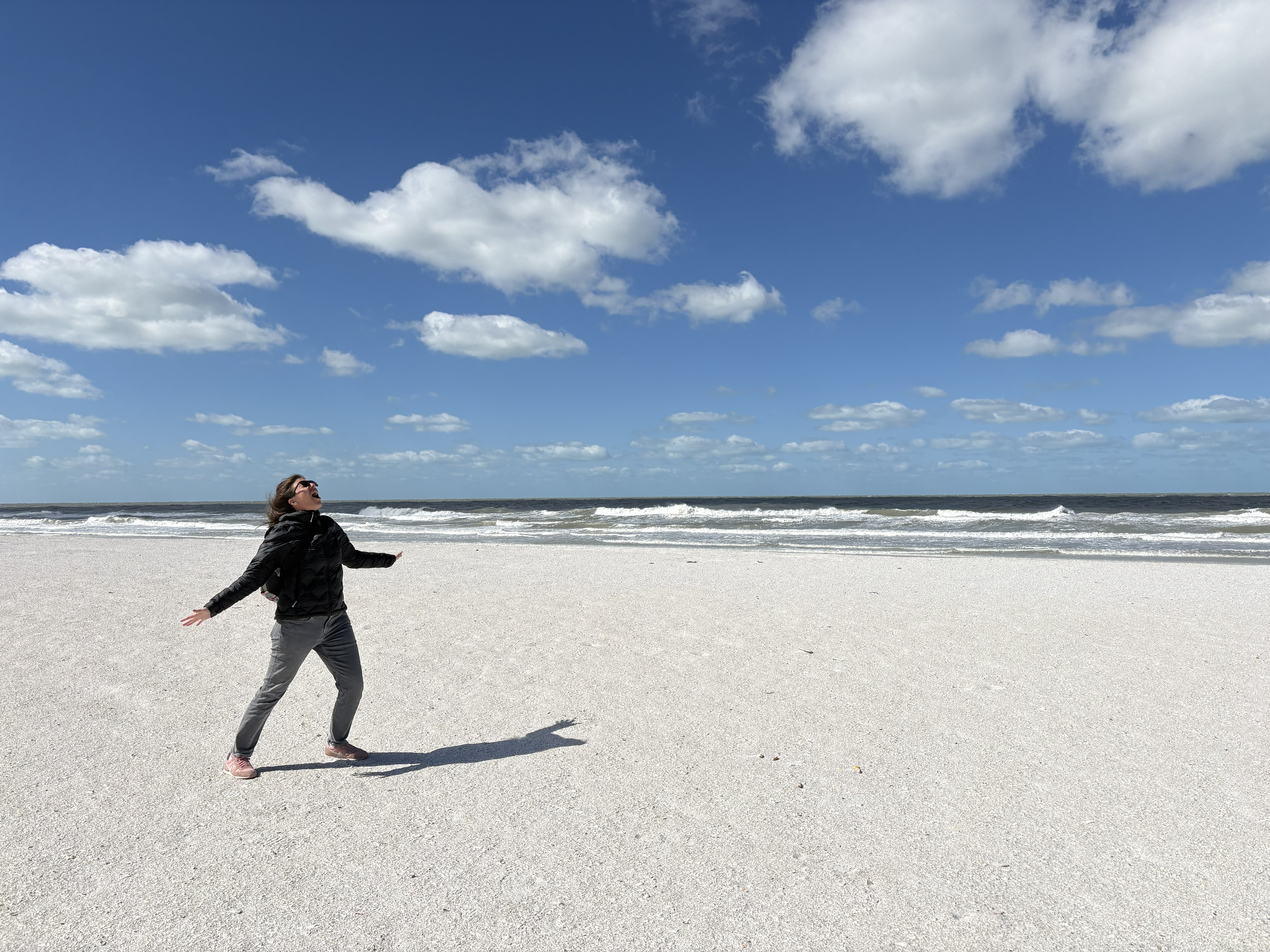
I just got home from a visit with my good friend Mary. I don’t even remember her snapping this pic, but it resonates. Big time. Is my howl about our seemingly unescapable trap of war, abuse, violence, climate change, and a robot sentience that will change humanity forever? Oh yes, it could be. It could also be an agonizing scream about confronting what my body may or may not be able to do in the future, the ever-present pain, the memory of how I filled my days just a short while ago, and the uncertainty of it all. Or maybe it was just a howl to howl.

We walked that beach for miles and miles. I walked more last week than I have in any of the months since returning from the Camino in September. Mary is a triple crown hiker too. We were supposed to hike the Hayduke Trail together this year, in the before times that is. 

Letting go of the before times is proving to be a level of difficulty that I haven’t been able to manage yet. I still keep getting trapped up in what I used to be able to do. In fact, just two years ago in the 8 months before I got injured/sick, I paddle boarded the John Day River, backpacked a 100-mile section of the Idaho Centennial Trail, backpacked around Big Bend National Park for a few days, hiked a loop through the Gila Wilderness along the CDT, created and hiked a short 3-day loop around Smith Rock State Park, skied up to Broken Top to camp/ski over Memorial Day Weekend, packrafted the Umpqua River, hiked the Lost Coast Trail on the NorCal coast, backpacked 60 miles of the PCT again, and day-hiked into the Eagle Cap Wilderness. That year represented my typical outdoor adventure pace. I went hard, but also a bit slower as the years had extracted some toll on my body.

In my struggle to get over the fact that I will never adventure like that again, I’ve been revisiting some of my past exploits. This video that I filmed with Oregon Field Guide in 2017 really sums it up. Establishing the Oregon Desert Trail was the pinnacle of my adventuring, and being able to translate those adventures into something tangible was everything. To create the current version of the route, I packrafted, skied, hiked, navigated, sweated, bled, howled and more…I laughed and glowed, at moments I burst with joy, and at others, cried with fatigue. This movie shows you the reality of the kind of experiences I think we need more of, that I wanted more of.

It was all so good, and I’m glad I could go that hard for so many years before I was struck down.

And that takes me to something my visit with Mary left me with: a reminder of how resilient I am, have been, and continue to be. Two things can be true at the same time: I am damaged, and I am resilient. I choose resilience.

Survival is a Creative Act

For today’s walk I listened to music. It’s a simply wonderful combination: walking and song.

I want you to have an experience with these posts; there are links to songs, videos, other websites, and many various adventures. So here is your invitation to leave the tab open and return to find the link to the podcast or watch the movie. Take a walk and play the song. Think some thoughts and make some notes, or just leave space to let them emerge as the morning or afternoon unfolds. You may need an hour, or two…sometimes you might need a week for your brain to untangle and release. At least that’s how I work. You do you.

Today’s song is Frank Sinatra Jr’s Black Night. If you liked that one, you also might like The Ocean by Richard Hawley, The Rip by Portishead, or Empire Ants by The Gorillaz. The crescendo of each song echoes somewhere deep inside. You know how I wrote about using sound vibrations earlier this year to help kill the cancer? I think that’s what these songs do too. They vibrate something vital inside me, and the result is elation and joy. I hope for you too. 

Today I want to talk about creativity as a force for survival.

When my neck started spasming last year, the aspen trees in the glaciated gorges of Steens Mountain had just started to turn gold. I was leading a trail maintenance trip for National Public Lands Day, and I knew something was very wrong. I was due to fly out the very next day to start a 400-mile thru-hike of the Pinhoti Trail, which I would connect to the Benton MacKaye Trail, turn east, and hike to its terminus at Springer Mountain (also the start of the Appalachian Trail). I planned to bookend the hike with a visit to Pinhoti Fest before I started walking, and finish with the Benton MacKaye Trail Association’s Annual Meeting and Hike Fest at Unicoi Lodge in Helen, Georgia. I intended to make further connections with the founders and stewards of both trail organizations to explore how I could add my expertise to their trails with my long-distance trail consulting business. This was a working hike, but also my vacation. Where do I stop and my job begin? I’ve never really known, having always (or most of the time) worked within a passion.

That beautiful fall day changed everything. Once my neck started to spasm on the last evening of the trip, the jolts continued to shock me, racing from my brain, down my spine. I had no clue what was going on, and quickly said an early goodnight to my volunteers as tears streamed down my face. I thought rest and lying down might ease the bewildering condition, but no. My neck spasmed about every five minutes during the long, late-September night. I cried with fear and pain, hoping the others couldn’t hear the extent of my anguish. Something was very wrong.

I avoided facing the truth even after I managed to make the five-hour drive back to Bend and directly to an urgent care. An exam showed nothing of concern, so we blamed the spasms on a few nights of a poor pillow. I could still hike, right? Meanwhile, on the East Coast, Hurricane Helen had just hit land, tearing up the communities, towns, trails, and mountains where I had planned to hike. I rebooked my flight for a few days hence to see how my neck and the storms would play out.

This wasn’t supposed to happen, to my body or the inland communities along the Appalachians, but one thing was clear: much of the region I was planning to hike in was devastated. On the bright side, the Alabama portion of the Pinhoti Trail was spared, but it seemed in poor taste to frolic down the trail when people were suffering just a short distance away in Georgia. 

The east coast hike wasn’t going to happen, so I fixated on the Oregon Coast Trail. This 413-mile hike was close to home, had many towns (meaning I could find an easy out if my neck continued to give me grief), and I had already planned to be away from work for a month, so I threw myself into last-minute planning to walk a month along the sea. 

I planned to travel to and from the trail all using public transportation; it would be a cool experiment! Since my passion is my work, I started to turn this trip into another opportunity to evaluate the resources and infrastructure of the trail to see how I could improve it from a hiker’s perspective. I decided to start my hike a week out from that urgent care visit, which would give me time to get a few sessions of acupuncture and massage, and push past the pain in my neck to keep going and hike anyway. I’ve done it before, hiked through fresh and recent injuries, that is. 

The day before I started my October groundtruthing hike of the Blue Mountains Trail in 2020, I walked out of the house barefoot, and a stray nail sticking up from the door frame tore a fourth-inch chunk out of the sole of my foot. The flapper was deep enough that I had ripped through a significant portion of skin and callus. I panicked, immediately cleaned out the wound, put some antibiotic ointment on it, and elevated my foot until Kirk came home from work. I shook as I showed him the wound, but slowly convinced myself and him that I could keep it cleaned and protected as I hiked for a month solo on a difficult backcountry route in north eastern Oregon. And I went, and I was fine. So I’d be fine this time too, right?

After a week of treatments, I was convinced this Oregon Coast Trail thing was a go. Kirk and I decided to head up to Waldo Lake for the weekend in our camper so he could foilboard while I read in a chair in the sun. I still wasn’t 100 percent, but I had convinced myself I would heal on the hike, much like I had done on the Blue Mountains Trail. The morning we were set to leave, I was stretching when something twinged in my back and I instantly knew I wasn’t going hiking anywhere. All the progress I thought I had made was gone in that twinge. I didn’t tell the rest of my body, though, and I packed up my backpack and headed out for the weekend. Over the next two days, it was apparent that I was having trouble moving normally. Carrying much of anything caused more pain, and I finally voiced out loud that I wouldn’t be hiking the Oregon Coast Trail. I returned home in a slump. Two hikes had now been thwarted in the last week. 

Now what?

It wasn’t until I was on a morning walk recently that last year’s hiking (or non-hiking) saga gained more shape. I headed out into the frosty morning with freshly charged earbuds in place and strolled along my normal route along the Deschutes River. That morning, I listened to Rich Roll’s podcast featuring author and fellow cancer navigator Suleika Jaouad, and I saw my decisions in the wake of my physical limitations in a new light.

Suleika has experienced survival as a creative act. I read her first book, Between Two Kingdoms, this year, shortly after my diagnosis, and quickly pre-ordered her second book, The Book of Alchemy. The more I learned about her story, the more I identified with her struggles. When I heard her leukemia returned for the third time before the launch of her new book, my heart just bled for her. For us. 

Back to last October: when I realized that I would not be hiking the Oregon Coast Trail, I decided to go ahead and do it anyway, but from home. I decided to embark on a virtual journey and pretend that I was out plodding through the sand and feeling the rain sting my cheeks in groves of old-growth trees that rim the bluffs over the Pacific Ocean. I would virtually hike the Oregon Coast Trail.
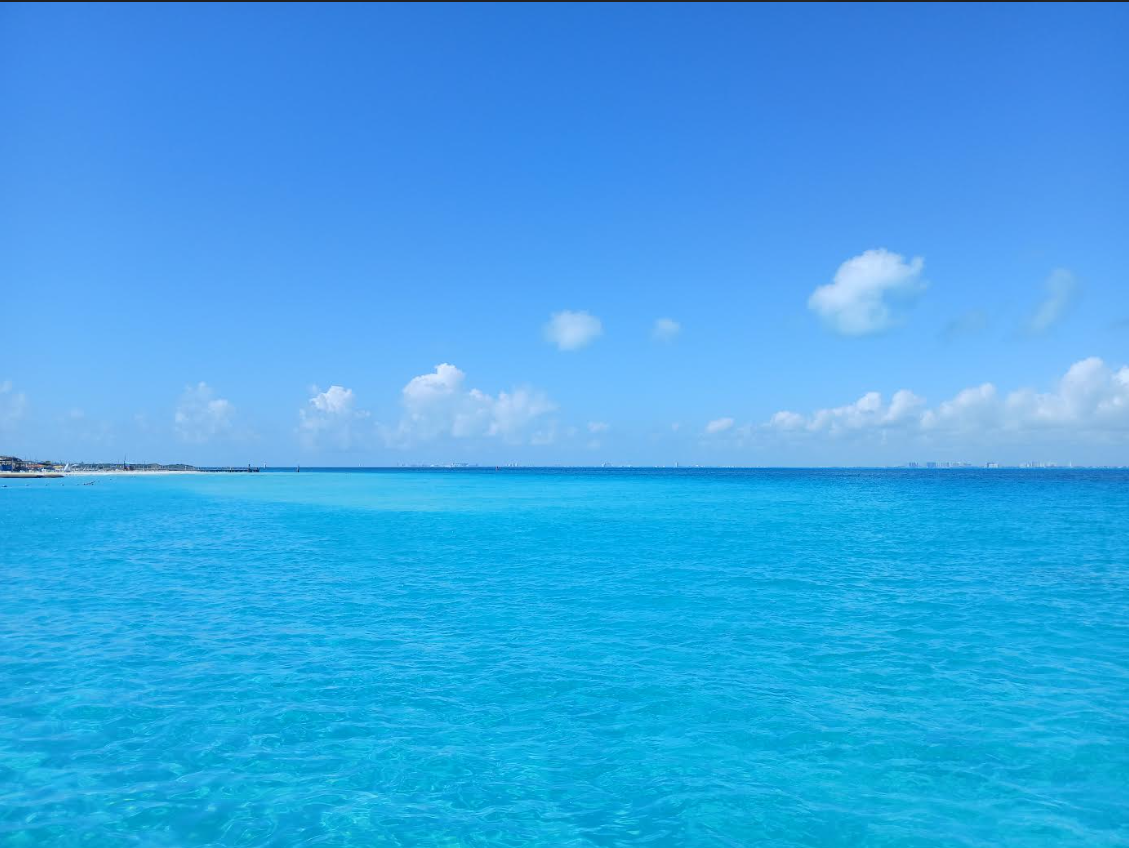
Ever since I set foot on the Appalachian Trail back in 2002, I kept a daily journal. Those hand-written missives from the AT are lost, but from then on, I wrote and posted them online. From my hike during a break from grad school along the West Highland Way, to my thru-hike of the Colorado Trail and the culmination of my summer of leading trail crews, I chronicled the rain, sleet, and snow. The blisters, spider bites, and those few times I caught myself on fire from my beer-can stove. Yes, there were multiple times. Over the years, I shared my joys and struggles with a small group of loyal blog-readers, but more importantly, I found great joy in writing for the love of writing. I didn’t care if anyone else read about day 56 on the Pacific Crest Trail or day 5 on the Sunshine Coast Trail, I loved waking up in the early morning and capturing the feeling of the day before. 

So when my body wouldn’t let me hike last fall, I decided to wake up early each morning, read the guidebook (shout out to Bonnie Henderson and her excellent resource), reference the FarOut app for real-time updates from other hikers, study the weather, decide how many miles to walk, where I would camp or find lodging, where I would eat, what interesting things I’d see during the day, and how I would navigate the many gaps in the trail. I wanted to turn this virtual hike into a visual journey as well, so I planned to create a story map that I would build on, publishing each new day on the story map as I would on an actual thru-hike.  The Oregon Coast Trail is a logistical melange of hazards like high tides, which make certain sections undoable, or eroding cliffs from a perpetually stormy sea. I wanted to experience those hazards, even if remotely, and decide how I would proceed if I were actually there.

Story mapping had become another passion by this point, and over the past few years, I had been creating them professionally for other organizations. The medium harkened back to my college days where I dove into multi-media projects, combining images with prose, sounds, and even videos. And since my virtual hike was quickly becoming another work/passion project, I decided to add on elements from a second business I had started recently, called Intentional Hiking

Yes, the title gives it away – with Intentional Hiking, I hosted several conversations a month about ways hikers could cultivate a deeper engagement with the world around them as they were out for a day hike, week-long backpacking trip, or a long thru-hike. I invited experts to talk about things like collecting data for Adventure Scientists, learning how to identify plants and animals to contribute to research projects on iNaturalist, or even how public land management agencies are integrating Traditional Ecological Knowledge of indigenous peoples into federal planning processes. To apply this to the Oregon Coast Trail, I decided I would identify several aspects hikers (and I) could engage with as we walked. Those items were categorized and marked on the maps as: Fun Facts, Trail Stuff, Environment, Military History, Exploration History, Tribal Nations, Art and Culture, and Take Action. Each morning, I would wake at my usual 4am, spend the next 4-5 hours researching, writing, and adding on to my story map, and publish that day’s hike on my blog. 

By the second week, my creative act had become a bit oppressive, given the sheer amount of time it was taking me to create each day’s exploration. The added weight of my painful body didn’t make things much easier. After my morning creation, my days were filled with appointments. They ranged from sessions with a physical therapist, massage therapist, chiropractor, acupuncturist, and my primary care doctor, with little result. I could barely move. 

I kept going because that’s what I do. I finished the project on October 31 to reflect when I would have finished in real time. I remember my neck and back were feeling a hair better…in fact, everything was feeling a tad better, that is, until I slipped and fell on a wet floor while shopping on November 1. It was the kind of fall that you knew would be bad on the way down. As my feet flew out from under me, I had long enough to notice the “caution wet floor” sign by my right leg, and also know I was in trouble. I landed hard on my right glute, whiplashed my head, and passed out. 

I will tell you the rest of the story another time, but needless to say, my troubles were only getting worse, and I was still about two months out from my cancer diagnosis. Life sucked, but it sucked less when I could focus on things like the virtual Oregon Coast Trail by ignoring my pain as much as I could to do something that brought joy.

I want to say many more things about how the creative act is survival. Many of you have seen it play out in real time through my blog this year, so stay tuned as I unpack more layers of pain and being so that I can continue to not just survive, but thrive through my creativity.

Slueika was in remission for 10 years before her cancer started growing again. The road ahead seems so long that I think the only thing that can get me through this is exploring what it means to be alive, creatively. And what a gift to the world that Slueika and her husband and musician Jon Baptist are giving to the world by doing the same. 

Check out American Symphony on Netflix if you want to learn more about these two, they take my breath away. 

River’s Giving

2025’s Thanksgiving on the River Crew – Cindy, Kirk & Moi (photo courtesy of Cindy)

Kirk and I have had a Thanksgiving tradition of heading to water for the last 10+ years. It probably started because he just loves a flowing river, and even though my river time had been limited before we met, I quickly took to the eddies and riffles as he showed me the ropes of paddling, rafting, and floating downstream. 

One of our first trips was a packraft adventure on the North Fork of the John Day River. You can read all about it here:

click for the full post…

We had many other adventures on the water, most frequently coming back to the banks of the Lower Deschutes River as it usually had the most water of any of Oregon’s rivers in late November. We would invite various friends, sometimes it would snow, sometimes it would drop into the single digits, and sometimes those friends never returned for another water-logged Thanksgiving trip…the cold really highlights how a four-day sufferfest can drive people indoors, even if we bring multiple pies.

This year my longtime friend Cindy decided to brave the unknown, and possibly rainy weather to accompany us on our float, and she was rewarded with mild temperatures and minimal splashing as I had asked Kirk to find the smoothest and driest lines through the rapids – my neck and spine still can’t tolerate much jostling. 

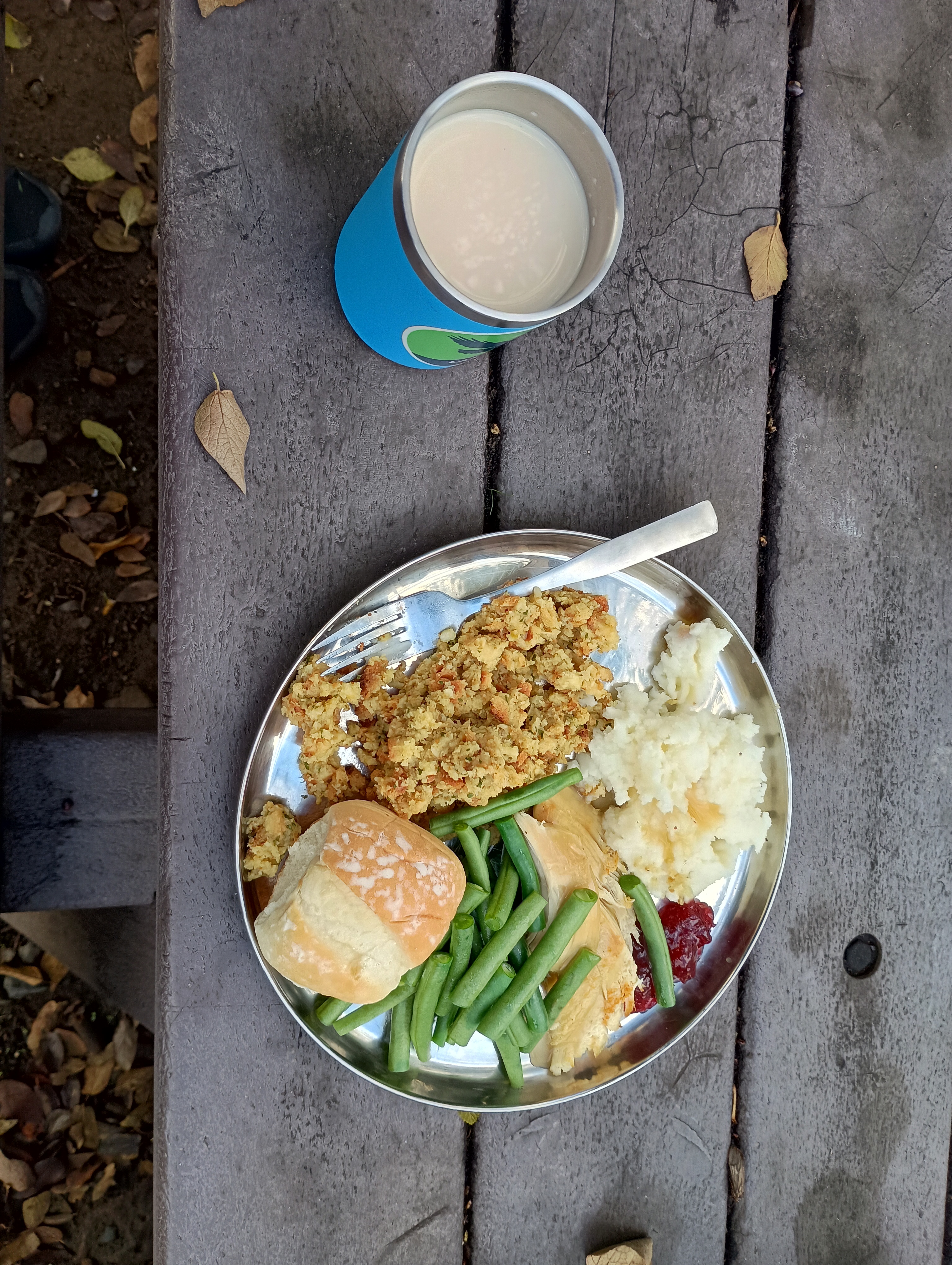
We launched on Thanksgiving morning and pulled over a few miles later to reheat our feast. I don’t think it was the best of our efforts as my turkey cooking the day before was a bit too zealous and left the meat on the dry side, and we skipped the fancy side-dishes for instant potatoes, stovetop stuffing, canned cranberry sauce, and store-bought pumpkin pie, but it was all gravy. As Edward Abby says, “Hunger is the best sauce,” and the smell of the cooking turkey had started my mouth watering a full day before our dinner.

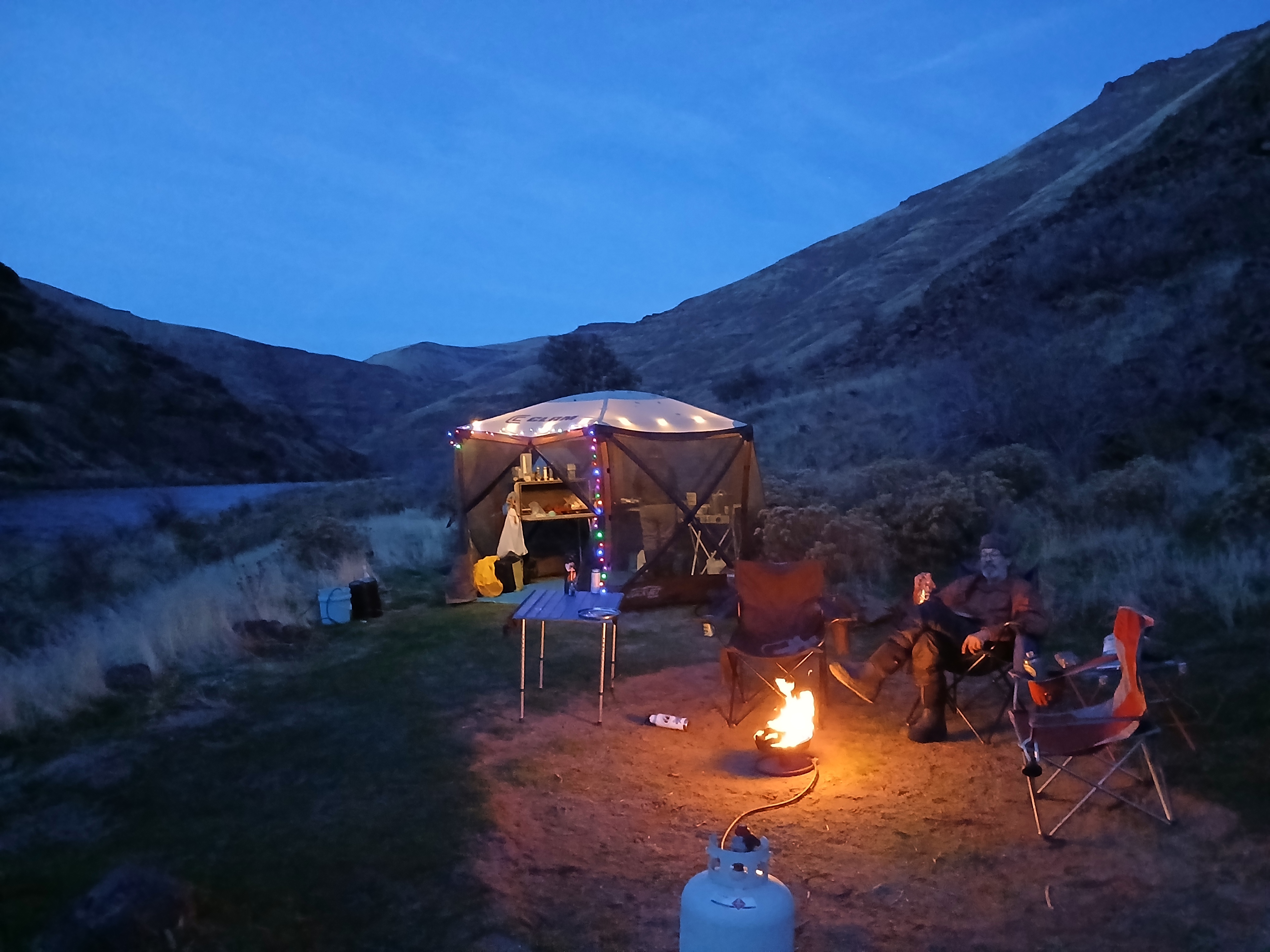
Dark comes early in late November,  but I added some festive cheer with some battery-powered lights and hot cider. 

The skies were blue and the nights dark, and we all got a solid 10 hours (or more!) of sleep each night.

It is such a gift to be on the river during this time of year. The blue heron was our steady companion each day on the water, and the sound of the current hushed any background noise that we carried over from day-to-day life.

This is everything.

Giving Back is Connection

The Oregon Trails Coalition team

It’s 0-dark-30 in Pendleton. My room sits eye-level to busy Highway 84, and I try to drown out the sound of trucks breaking and cars racing through the city by turning the fan on high. 

I arrived in the late afternoon and shook off the four-hour drive. A pain had just started to take hold of my lower back, but some light stretching and walking helped to ease the stiffness that had set in.

It’s time for the yearly Oregon Outdoor Recreation Summit, and arriving here brings back all sorts of memories of my body last year. What do I mean? Last year, I was in such debilitating pain, still blaming my condition on slow-healing injuries, that I was jacked up on pain meds and moved so deliberately that many people noticed something was wrong. Only weeks later would I be diagnosed with cancer, which explained the constant neck and back spasms that had been plaguing me for months. 

The Summit is designed and hosted by the Oregon Trails Coalition, the group I have been leading as Chair of the Steering Committee for the last three years, and this is my final summit in this volunteer role.

That first night I stopped in distillery where about 50 other summit folks milled about. Entering this room was both exciting and daunting. Many people knew of my challenging year because I’ve been quite public about it, but others had no idea. It was as if I was breaking out of a cocoon…a cocoon that had been smashed and thought destroyed, but not. I had emerged on the other side of my brush with mortality to find myself on a similar path I had been on before. It was both exciting and confusing.

But I digress. I wanted to write this blog post to talk about volunteering and how remaining involved in the Coalition has been a vital part of my healing. My fellow board members cheered me on this year, they ran the monthly meetings until I was able to engage again, and gave me lovely gifts like home-made granola, books, and a bright yellow t-shirt that I wear constantly. 

To have a purpose greater than yourself and to be of service to your community is a powerful motivator and force for healing. I was deathly ill a year ago, and now I’m walking upright. I still have the glow from the Portugal sun on my cheeks, and am reimagining my future. This summit doesn’t represent my swan song; it’s a re-awakening. It’s a rebirth. BTW, this seems an opportune time to mention Renee means “reborn” in French.  How can it be the first time I’m drawing this connection? 

So volunteering. Volunteering has helped pull me out of my self-focused fog. Sure, I could have dwelled on my pain, quit the Coalition, and sulked about my inability to backpack, but I decided to use what energy I had to continue supporting, promoting, and advocating for the preservation, development, and stewardship of a statewide network of trails. Using my precious hours in this world for good has always been vitally important to me. When I was faced with a million career options after college, I pushed that all away to become a Peace Corps volunteer in West Africa. I wanted my time to mean something to someone. I found that direct aid was the best way to disentangle myself from the rampant consumerism and individualism that modern society primes us for. Volunteering connects us to the collective, much like I believe hiking connects us to the land. And connection is healing.

My mom will be spending Thanksgiving and Christmas at a diner serving dinner to those in need. And with the SNAP benefit disaster, I expect this small act of kindness will have a dramatic impact on her community, and her outlook in the wake of my dad’s death.

Are you volunteering? 

My brother has always loved animals, so I’m encouraging him to look into animal shelters in his area and explore if they need help walking dogs or petting cats. Volunteering could look like anything. You could show up for children, the elderly, the sick, or the natural areas around you. You could pull invasive weeds or plant milkweed for migrating Monarch butterflies. It’s endless! And when it feels like everything is falling apart, volunteering can connect you with the beauty of what is working, what is alive around you.

If you are in Oregon, we are in our recruitment period for the Oregon Trails Coalition Steering Committee and Advisory Board. The Advisory Council strives to be truly representative of the Oregon Trails community of professionals, advocates, volunteers, and trail users. It advises the Steering Committee on coalition advocacy positions and campaigns, and helps implement and promote events and programs. The Steering Committee provides oversight and guidance to the Coalition Director, is responsible for carrying out the Coalition’s mission, and generally acts in accordance with the Advisory Council’s recommendations.… and you get to work with fabulous people. Please join us!

I’ll leave you with this post from my friend Jess, and I’d love to hear from you. How do you volunteer? How would you like to volunteer? I bet we could connect you with a meaningful opportunity that helps you see the beauty and richness of an engaged life.


Since commenting has been so buggy on this website, I’ve decided to share these posts on Substack , where commenting will be much easier.

Portugal Prep

Kirk and I took a day hike up to the base of 3 Finger Jack last weekend. It may look extreme, but this point is only 2ish miles from the trailhead! The worst part was driving up the washboarded dirt road, which was much harder on my neck than the hike.

I mentioned my intention to hike some of the Camino de Santiago thru Portugal in one of my last posts, and now, buoyed by all the good health news, I’m making it happen…and all of a sudden, the trip is soon, very soon (like September soon!) 

I’ll be writing here daily while I walk, and now my time is filled with logistics like: 

  • Whats up with the whole luggage transport system? Since my back/neck/shoulders still can’t support a pack I’ll be paying to have my roller carry-on bag transported each day. There are several companies that offer the service, and you only need to book 48 hours in advance, so that leaves room for serendipity…especially important because I don’t know how many miles per day my body will tolerate yet.
  • How do I book hostels, hotels, or auberges? Fortunately, many of these lodging options leave half their beds open for first-come walkers….In the day and age of cell phones and reservations, that is amazing, and again leaves some time for the hike to evolve as I see how the miles are feeling. I do have the first three nights booked, though.
  • Visa? Not needed
  • Money? Debit and credit cards will work, although I’ve had to check the international fees for both…since my trip is relatively short, just a few weeks, it sounds like getting cash from ATMs along the way will be an advisable way to go
  • Gear? I’m experimenting with a few different lumbar packs to carry things like a raincoat, umbrella, snacks, and water…I used the Gossamer Gear Piku this past weekend on a day hike, and loved how light it was, although the larger capacity (nine liters) means I can still put too much weight in it, like I did for a walk around town this week 😬. I have a Mountainsmith lumbar pack on order to try, although it comes off the shelf much heavier at 1.56 lbs vs the Piku at 8.9 oz.
  • Blogging? I thought I would bring my Surface tablet with keyboard to write at cafes along the way, but on my hike around town, it seemed heavy in the pack…I could just type on my phone like I do on regular backcountry hikes…we’ll see. I’ll take some more hikes with it and decide later.
  • Language? I’ve been taking some Portuguese lessons on Duolingo, but a big portion of the way will be in Spain (about 100 miles vs 70ish in Portugal), and I don’t have time to get good at two languages. Anyway, I hear English is pretty prevalent, and I can always rely on Google translate.
  • Sleeping? Since I’ll be in a bed each night and can transport whatever fits in my roller carry-on, I’m planning to bring my 40-degree feathered friends quilt, an inflatable pillow, and a silk liner for the beds. I hear i will need to be alert for bed bugs, so I am getting versed I need what to look for.
  • Food? It will be quite an urban experience, so I’ll have cafes and restaurants all along the way. I will also probably take advantage of grocery stores and hostel kitchens to buy and make my own meals…as for eating restrictions, I’m going to be a bit looser with my diet and eat what is fresh and authentic…I want to immerse myself in the experience, and if that means an occasional glass of wine or pastry with lunch, so be it!
  • Navigation? I bought the Wise Pilgrim guidebook and app, and I also made my own data book in miles vs kilometers, and have the route uploaded onto Caltopo, which I’ll use on my phone too.

There will be other questions that come up as I’m putting this trip together, and I’ll probably post once or twice more to share that with you. I’ll also post my gear list and anything else you might find interesting. Have other questions? Leave a note in the comments! 

I see this as the first of many Camino-style hikes I plan to take since my body is different now, and as I’ve mentioned to some of you, I see developing these type of hiking opportunities for the less-able bodied or people who simply want to eat good food and sleep in beds as a potential pivot for my business once I’m able to start working again. Exciting!

Testing out the Gossamer Gear Piku lumbar pack.

Cancer Update June 3

Did those few weeks even happen? The few weeks where Kirk and I lounged on beach chairs under thatched shade and watched waves the color of turquoise gently touch the white sand shore?

We went deep into sleepy vacation mode, and it now all seems like a quick dream.

And it’s June all of a sudden! Otherwise known as birthday month 🙂

Let the wild ruckus begin!

I have a feeling it will be similar to the birthday I celebrated on the PCT in 2006 at Walker Pass…

So many wonderful people are arriving this weekend for my party at Amber’s place, it’s going to be so much fun. She will be slinging her scrumptious wood-fired pizzas and I’m excited to be immersed in my most treasured place: among dear friends! 

Back in the real world I got a news update that had me in a great mood. Apparently exercise is ‘better than drugs’ to stop cancer returning after treatment. That’s just the news I needed to hear. I need to ramp up my miles if I want to hike some of the Camino this fall. My default state lately has been resting as I’m still dealing with neck, shoulder, and body soreness every day….but now I have more motivation to walk despite the aches. 

“Patients who began a structured exercise regime… had a 37% lower risk of death and a 28% lower risk of recurrent or new cancers developing, compared with patients who received only health advice, the trial found…Their weekly target was the equivalent of three to four walks of between 45 and 60 minutes, but patients could choose how they got more active. Some went kayaking or skiing, for instance.”

I mean, it’s like the world is begging me to keep hiking.

I still am getting caught up in the surprise of it all. That my life is 100% different than it was a year ago. 

A year ago Kirk and I spent Memorial Day snow camping and ski touring up our local back-yard mountain, Broken Top. We skied in with heavy packs and plenty of snacks for several days…a prospect I can’t even imagine right now. 

A year ago I was strategizing which trails to hike next and how to improve those trails through resource development…a la my trails consulting business.

A year ago I was hosting several conversations a month at Intentional Hiking, trying to encourage the trails community to take a more active role in the world we are hiking through.

Today, that is all gone. Well, not gone exactly; the trick now is to find out how to live what life I have now to the fullest, not knowing how much time I have left. Some argue we should always live this way….but I do know inside and and out that walking and hiking will still take center stage in whatever way I choose to live now.

Cancer Update April 30

Joy on the Oregon Desert Trail

When I was growing up, I believed the world was magical and filled with wonder and surprise. A childhood spent in nature only confirmed it. And then there were the movies and books I read. I already mentioned the all powerful Wizard of Oz, but this past week I’ve been going down the rabbit hole of all the childhood delights: Alice in Wonderland, The Neverending Story, The Last Unicorn, Mary Poppins, The Princess Bride, and most of them hold up. Screen time back in the day wasn’t like it is now. I would watch these once a year, or once we got a VCR, maybe monthly, because most of my time was spent outside…my mom would push me and my three brothers outside, and I am so grateful for that now.

Do I still believe in magic and majestic adventures?? I will admit that the wind has been taken out of my sails these past eight months (eight months of sickness so far!!!), but the magic has shown up in many of my relationships with you, and I find I’m so rich in amazing people in my life. 

And now that things are about to change, I can dive back into the wonder and awe that nature brings into my life. My hiking will be different now, but I know it will continue to bring complete strangers into my life and that they will quickly become great friends. And it doesn’t even have to be a thru-hike. I had an incredibly moving walk this weekend. Of course, spring had a lot to do with it, Bend is practically bursting at the seams with flowers and birds, and green everywhere….which is saying something for the desert. My walk helped to wipe the darkness from the corners of my mind. A darkness that was dragging me down to its sleepy hopelessness. (That reminds me of another movie: Legend, the 1985 version with a young Tom Cruise!) I took a walk and had some fantastic laughs with friends, and the world became whole and hopeful and wonderful again. Even if this is my last spring, this feeling is life, and I’m quite in love with it all. A walk is the engine for all the feels.

But thru-hiking, man, it just doesn’t get much better than that, and finding a good hiking partner that helps you see color is a real gift.

Check out this video I made of a short thru-hike of the Sunshine Coast Trail with Nemo back in 2018.

This sums up the feeling fairly well:

Will I carry a pack again in the wilderness? Will I be able to immerse myself in the far backcountry for weeks at a time? I don’t know, but I do know I have to make peace with this new body, or this new reality. And work? What the heck am I going to do if the focus of my business before was hiking a long trail to evaluate how to make it better, safer, easier for hikers to be successful? To make new trail resources and help a trail organization communicate with their hikers? Maybe I can help develop more hut-to-hut or bnb-to-bnb type trails in the US (Europe is spoiled for them) since those might be the only trails I can hike for a while. Maybe I’ll revamp the National Recreation Trails designation (something I’ve been wanting to do for years now! And a post for another day).

The news I got this week has helped fuel these thoughts. I know, I know, you will say I buried the lead, but I had my scans this week and met with my oncologist, and…it’s working! I’m officially in maintenance mode!! That means no more chemo for now. He said my body was chemo-d out…and man, do I feel it. I am still so tired. I have no appetite, I’m still losing weight and am quite nauseous, but the farther away I get from chemo, the more my body should find its equilibrium. The treatments have been working and he said I’m responding really well to the Tegresso and chemo…the combo helped to knock the tumors back a bit, and some of my brain ones are completely gone! I mean, I still have tumors, and might the rest of my life, but they are in check now. I’ll continue with the daily targeted med indefinitely and hope that I can regain my strength. This is a life-long disease, but I can see a life again. 

There were tears of happiness yesterday when I heard the news….I’m bursting with the news.

So, things are happening this May! I’ll be on the road a lot, and you might not hear from me for a while. I have some nature bathing to do, visiting family to do, and even a spot of vacation with Kirk…he has dealt with so much these past eight months. I hope you all have a Kirk in your lives who is there for you when something completely unexpected and wild is thrown at you like this was.

Don’t worry, I will still keep blogging…it’s my way of processing this whole thing, and has been the way I’ve been sharing my hikes with you for over 20 years now. You could fall down the rabbit hole of my hiking journals for weeks and months if you explore some of my past hikes in this blog. And there will be future hikes, I can just feel it. And I still have more I want to explore…more memories and past lives, it’s fun to rummage around in my youth to tease out the elements that have led me to where I am today. 

With that, my friends, remember that I’m having a big birthday party on June 7 in Corvallis. Please let me know if you want to come! Everyone is welcome.

Peace out, I’m going rafting! Or really, I’m going to sit on the raft very gently while Kirk rows, but I’ll take it!

Cancer Update April 15

The view from my hotel room in Madison

Should I be writing updates when things are heavy and dark? Maybe that’s exactly when I should be writing updates.

I learned yesterday that a friend from college’s husband, who has stage 4 lung cancer with the EGFR 20 mutation (mine is EGFR 19) is not doing well and has moved into hospice. OMG, I keep thinking this is something I will move past, but it’s claiming people I know!

And some family members are really not doing well.

And more hair is falling out.

And my pet’s heads are falling off. 

(Sorry, that’s a Dumb and Dumber movie quote that my highschool friends and I used to reference incessantly)

The gravity of my situation has been feeling so heavy lately. This last round of chemo really got me for some reason. I’m much more nauseous that I’ve been since the first round and can’t walk as far…and I am still struggling to eat enough to keep my energy levels up.

Enough! Chin up!

I keep hearing positivity is the key, but do I have to be positive every freaking minute? Can I feel the weight of this and cry and rage every once in a while? Of course. There are no rules, but are there? There are so many books that I’ve been reading about how to live with cancer, how to eat with cancer, how to survive cancer, and there seem to be rules….but they are different for everyone, so we can’t tell you exactly what they are, but know that if you don’t follow them it won’t be good, or might not. We don’t really know why some people make it out and some don’t. So do the right thing, we just don’t know exactly what the right thing FOR YOU is, so figure it out.

Ahhhhhhhh!

I know my body is fighting. Is that why my hair is falling out now, and I have no appetite? Or is that the poison of chemo working its way through all the cells in my body? Or is that the cancer advancing?

How about some good news? I made it to Madison after spending all day sick in bed the day before my flight. I even looked at flying out a day or two later, but ticket prices were RIDICULOUS to reschedule, so I put on my big girl pants, packed a puke bag, and hoped for the best.

I had a delicious breakfast where I felt like a normal person. Normal!

And I made it. Travel day wasn’t too bad after all, and I had a wonderful dinner catching up with Jasmine. We laughed over the “turkey vultures” bit (see the last blog if you don’t know what I’m talking about) and remembered that it really was “pig vultures”. We were trying to get under our little brothers’ skin after all. “Pig Vultures!” we would screech as we peddled away down the country roads. They would circle and circle the intersection on their bmx bikes, hurling insults back at us as we laughed hysterically and coasted down the hill on our bikes, giddy with freedom.

Jasmine!

It was fun to tell stories, and apparently, we lived about a mile from the Ice Age Trail…I knew we were close, but not that close!!! A national scenic trail was evolving in my backyard and I didn’t even know it existed! It was designated as an NST in 1980, I was three, so yes, it was most definitely there. I have to hike it. I have to live long enough to hike it. And Jasmine’s mom still lives in the house I know so well, she can be my trail angel! She just doesn’t know it yet. In fact, I have a friend thru-hiking it right now, and he calls it a pub crawl, so maybe I can arrange for some of my gear to be transferred from town to town so I don’t have to carry much, and there isn’t much elevation gain, so maybe this is a trail I can hike in my cancer years?? 

Whitney and I went out for dinner with Luke last night, the executive director of the Ice Age Trail, and we talked a lot about it. That’s the magic of these trail conferences: you get to meet the people that do the thing! And that thing is trails, which I love so much!

Jasmine also told me that she remembered that I was very philosophical when I was growing up, and remembered lots of deep conversations that we had during sleepovers. While dealing with a bout of nausea in the hotel room yesterday, I did finish watching Wicked online, the prequel to the Wizard of Oz. Then I had to watch the Wizard of Oz of course, and was immediately reminded of its influence in my life growing up. 

Gotta love the saltines!!

Back then we just had a TV with a few channels. It was even before the VCR days. The Wizard of Oz would come on once a year around Easter (wait a minute….Easter is this week, in real life!). The story of a long walk, meeting kind strangers you ended up loving and having good and scary adventures with, must have planted the seed for what would become my thru-hiking life. That and the Ice Age Trail in my backyard (right by Fountain Lake where we spent sooooo many days swimming) and my dreamy philosophical nature.

Check out this map:

The x is where I lived, the circle is where Jasmine lived, and the + is where our other friend Katie lived. My freaking back yard!!!

I feel down, but then I start thinking about how many trails there are left to hike, how many places to see and people to meet, and I get excited again. And sure, I probably won’t be hiking the Hayduke Trail that I had planned to do in 2026, and the Great Divide Trail in 2027 for my 50th birthday, but there are plenty of other trails where I don’t have to carry 7 days of food and 8 liters of water on my back that can be added to my list.

I can do this, right? 

My usual routine

I woke again about midnight. I haven’t been staying in bed until 3am like I promised all of you a while ago. Oops. Instead, I keep getting up and reveling in the quiet early morning hours to read, write, drink my coffee, and enjoy the quiet. I just like it, ok?

But my new med makes me quite tired during the day. I’ve struggled to keep my eyes open even when visiting with friends, and the extra napping is probably compounded by the short nights. That has been the main side-effect of my new mutation med so far, sleepiness.

This morning I was scrolling on Instagram when I decided to post a TBT image. TBT, you know “Throw back Tuesday” where you post a memory photo.

Then I started reading my blog posts from the Owyhee packraft trip and remembered that my favorite place to write isn’t at 2am at home when I can’t sleep from the cancer in my bones, it’s writing at 4am in my tent or spread-out cowboy-camping style on my tyvek when I’m hiking.

My tradition since starting to blog on my hikes many years ago is to write every day. Get up in the dark, make my coffee, and write. Write for hours even! This is the beauty of solo hiking too; I don’t have to work around anyone else’s schedule, I don’t have to keep quiet so I don’t wake them up, I don’t have to start walking before I’m ready, I can write and nap, and make a second cup of coffee, and write some more, and eat breakfast, and then hike out when I’m ready.

If you browse back through some of the many adventures that I chronicle on this blog, the routine is the same. I write every morning. That is my jam. That is my happy place. To be alone in nature, writing as the day breaks. I know I’ll get back there, I know it in my bones, so I have that to look forward to. This writing at home is the abnormal part. This writing at home is a placeholder for me in the dark in my tent.

So, instead of recapping this incredible adventure of packrafting a 175 miles of the Owyhee River as a water alternate to the hiking route, I’ll just link to my blog posts here for you. This trip did a great job of encapsulating what I love most about adventures….the going out and not knowing if something can be done, but trying anyway. I didn’t know if one could packraft the Owyhee river in July at 135 cfs, but I wanted to find out, so tried. That is true adventure, and the kinds of adventure I hope to get back to…and by going solo I have learned to rely on myself. I have learned to trust my instincts, trust my training, and trust the world to get me through.

I trust the world to get me through this cancer too.

So here are the posts from my 2-week Owyhee solo packraft trip. Enjoy!

Read about my full Oregon Desert Trail section hike here. (I was the 10th person to complete the route after getting the job to establish it the year before. I had to hike it to know what I needed!)

The end!