Blue Mountains Trail (Section 1) – Day 2: 16 miles (23.7 total)

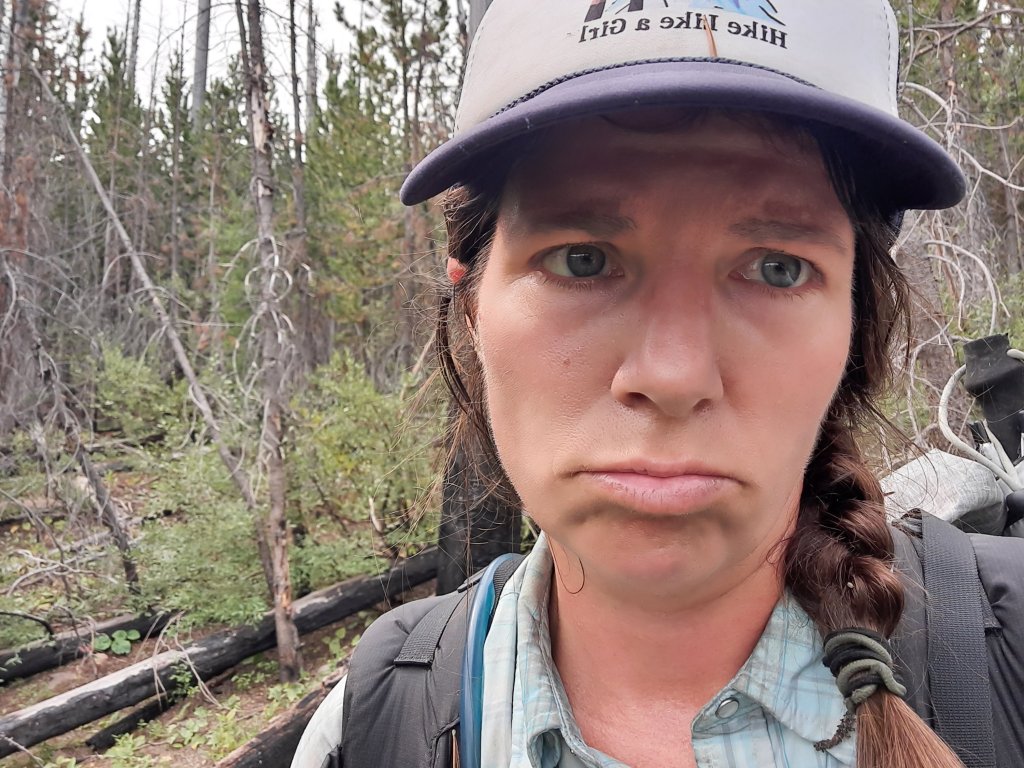
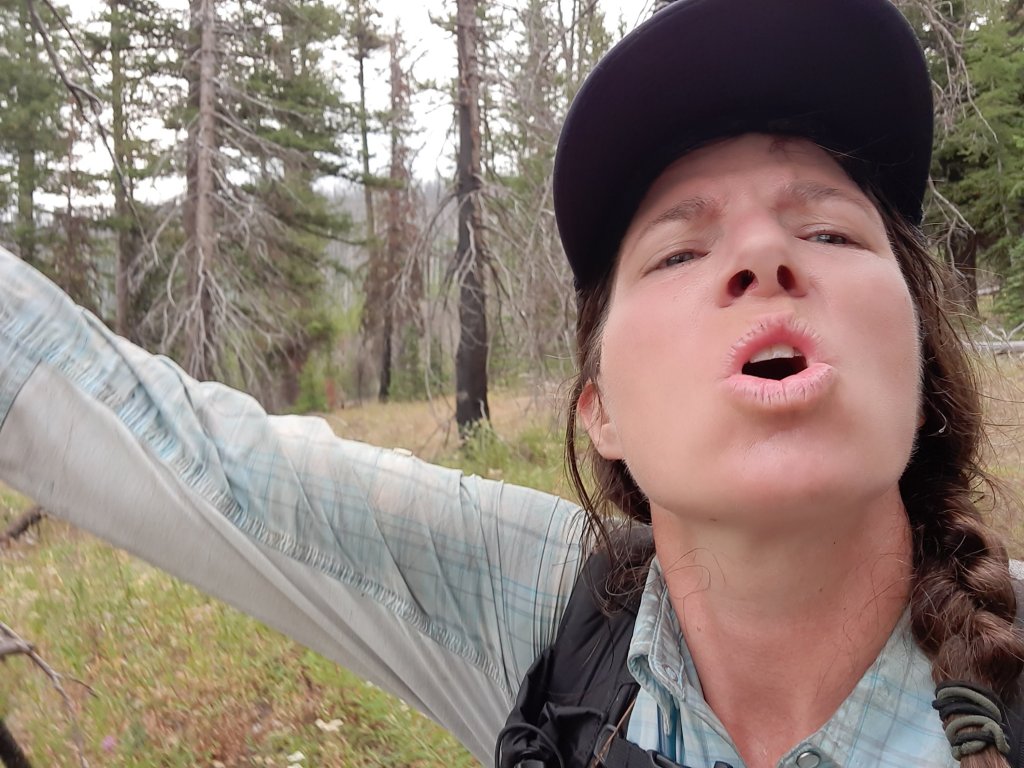
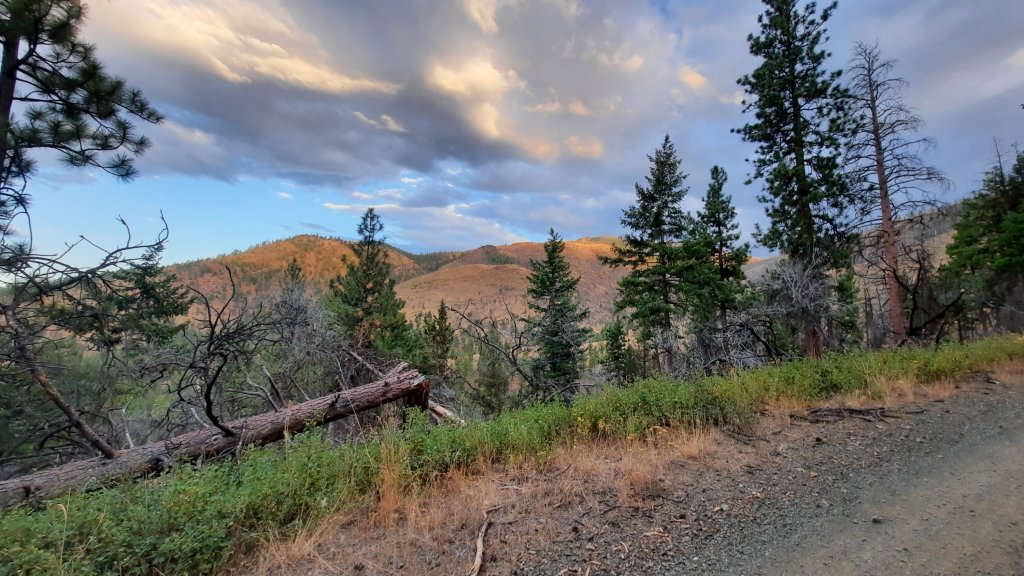
Today was hard. 16 miles of hiking along rocky ridges…it was stunning and rugged, and I’m wiped.

I took it easy in the morning, although I was up before the sun and walking by 6am. I hoped I hadn’t burnt my legs out yesterday with the climb, heat, 7 days of food, and lots of water.

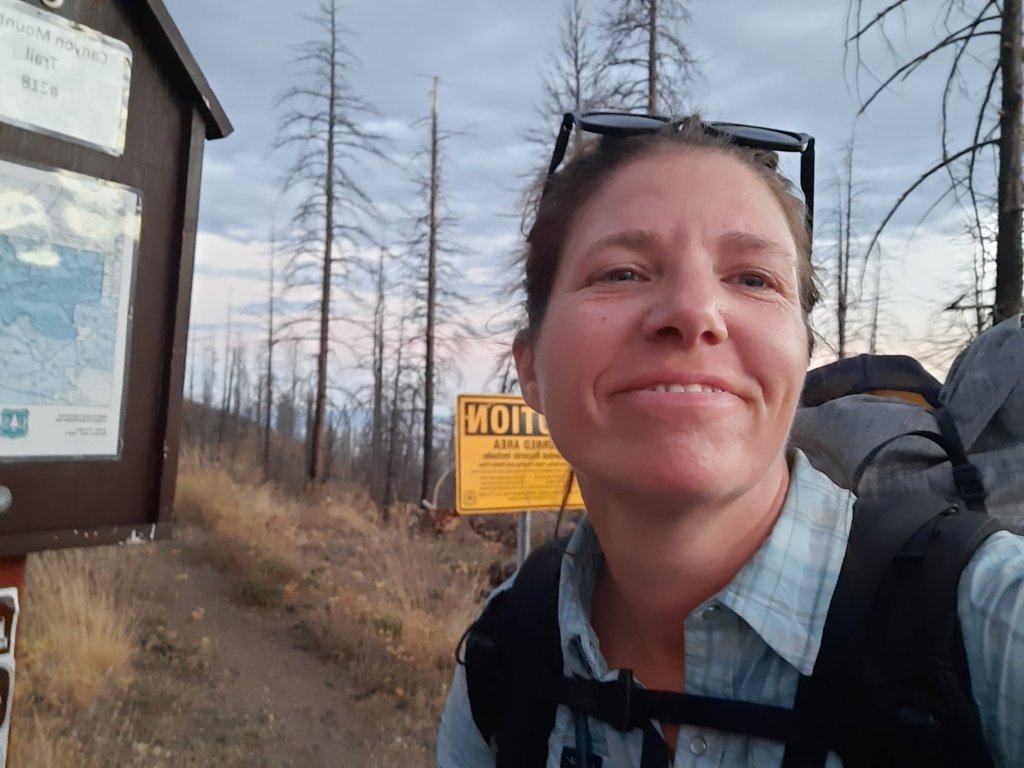
Sunrise with pack

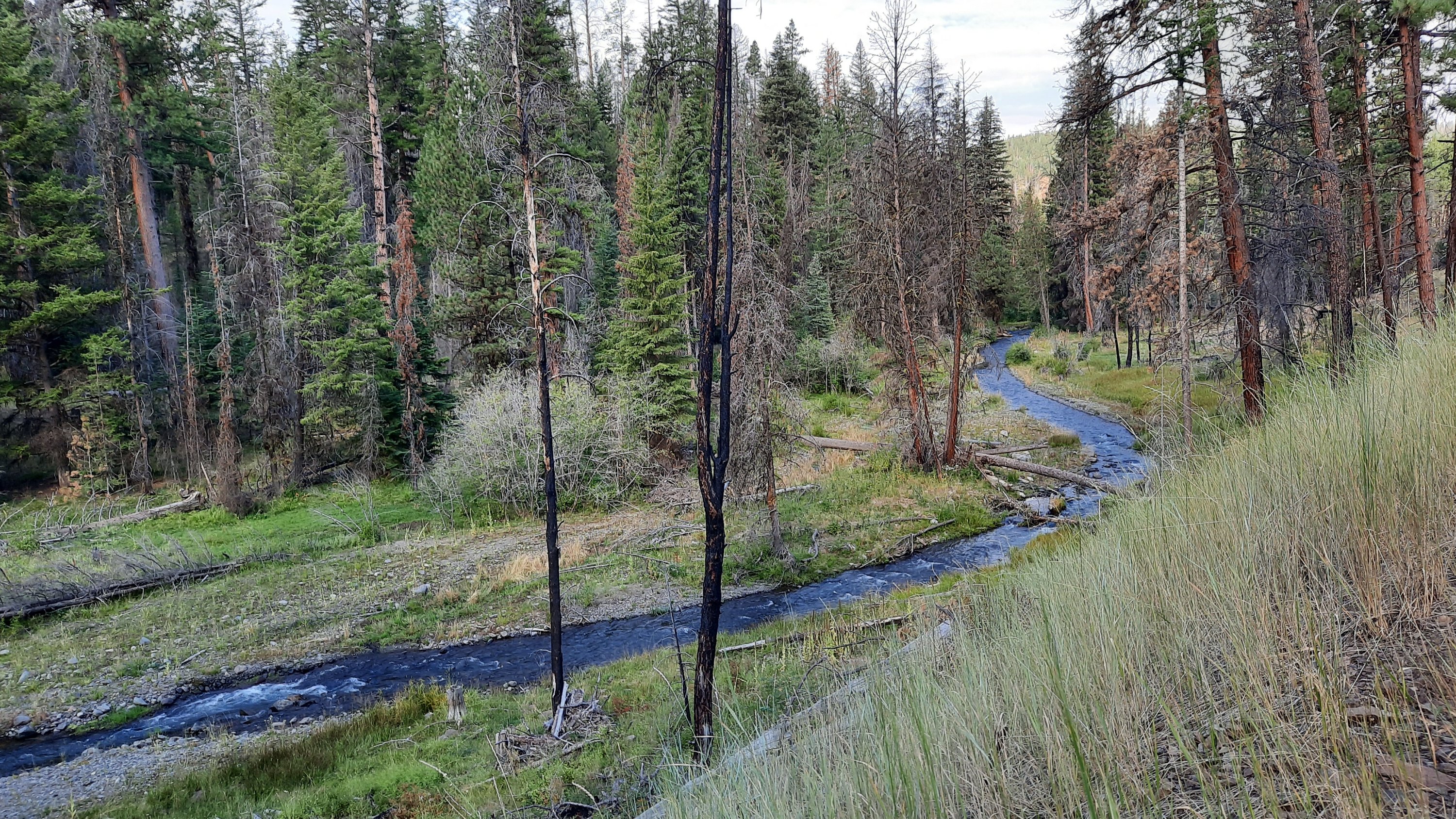
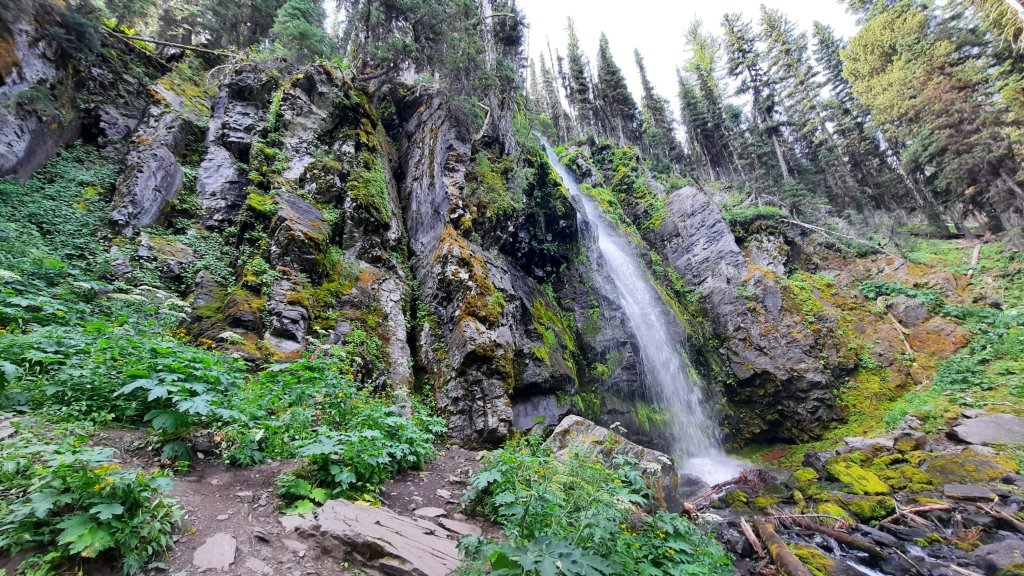
To my delight there was water in each of the drainages marked blue on my map. In fact, there was water flowing over the trail that didn’t even show up on the map. For a desert mountain range in the middle of August this was magical, and the opposite of what I had expected given my experience with desert mountain water sources on the ODT south of here.

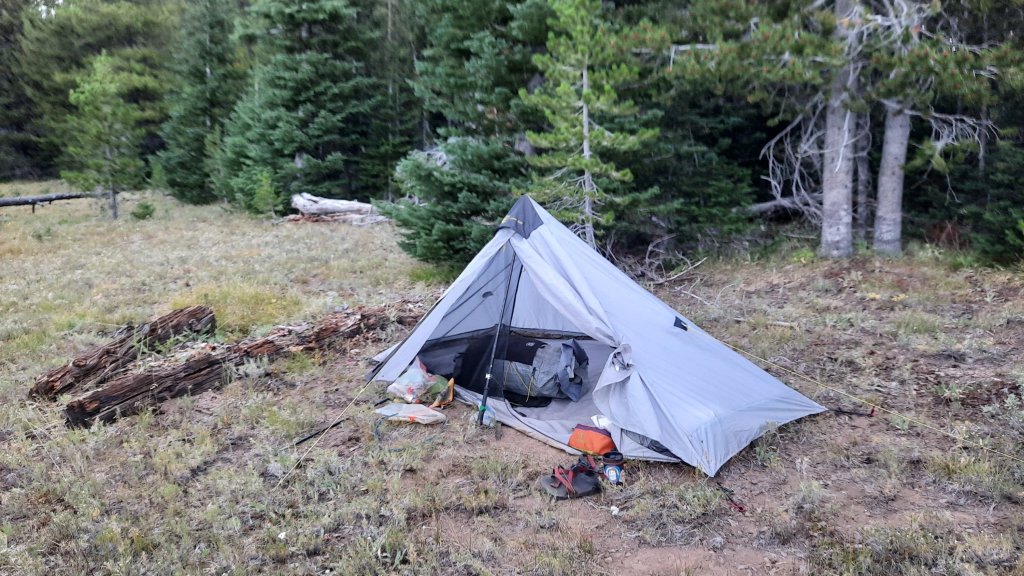
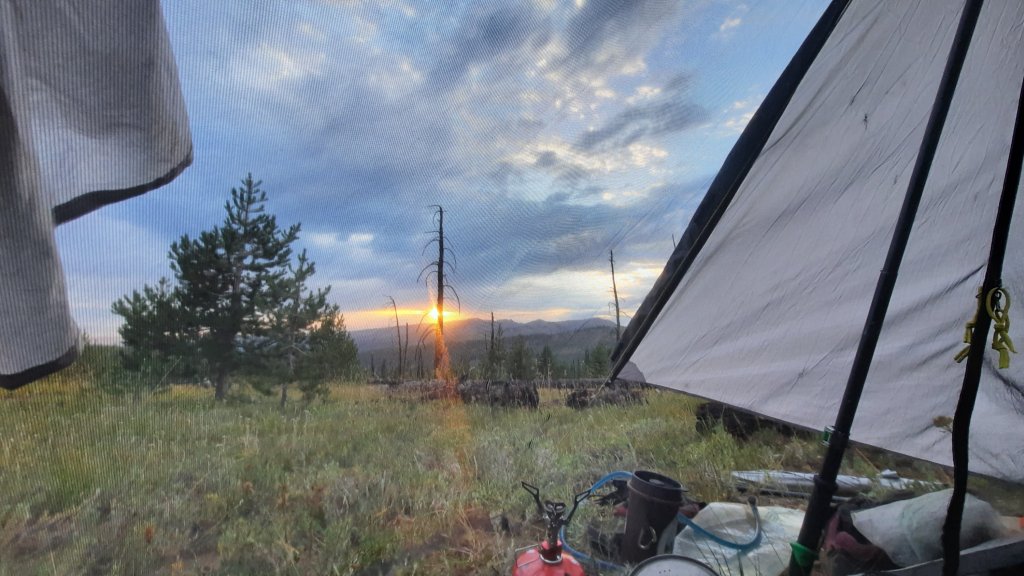
The saddle where I camped last night

I took some breaks but kept moving slowly up the trail. There was a lot of exposure, and it had me uber focused on each step I took to avoid a tumble down the mountains. The level of attention the hike demanded was exhausting…my body and mind were 100% focused on the task at hand: don’t fall off the mountain.

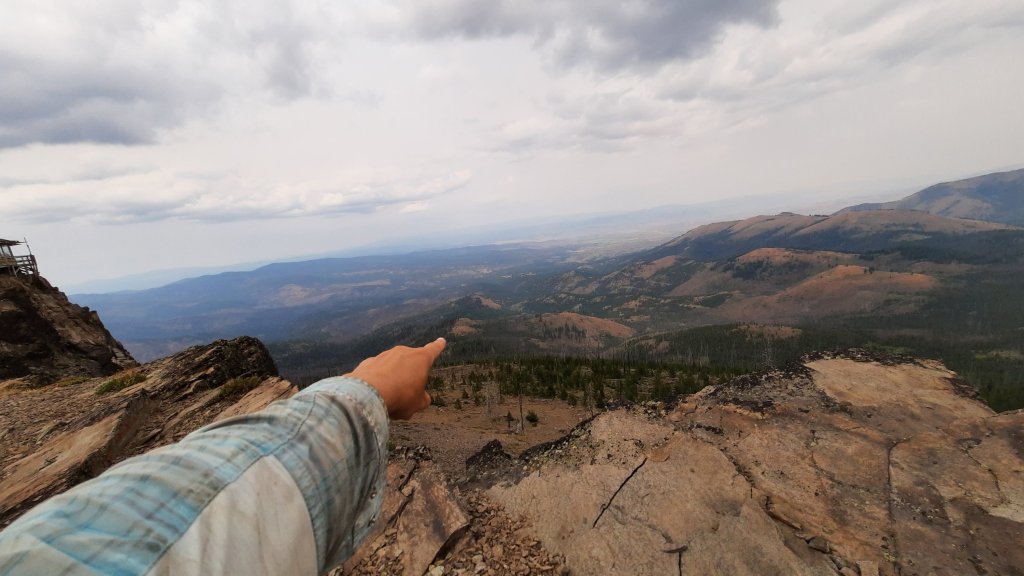
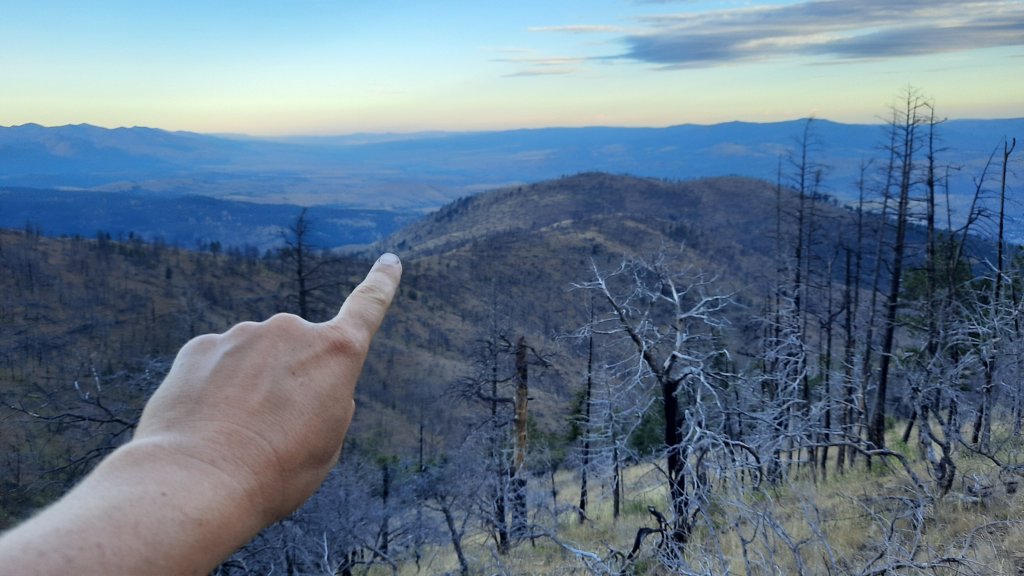
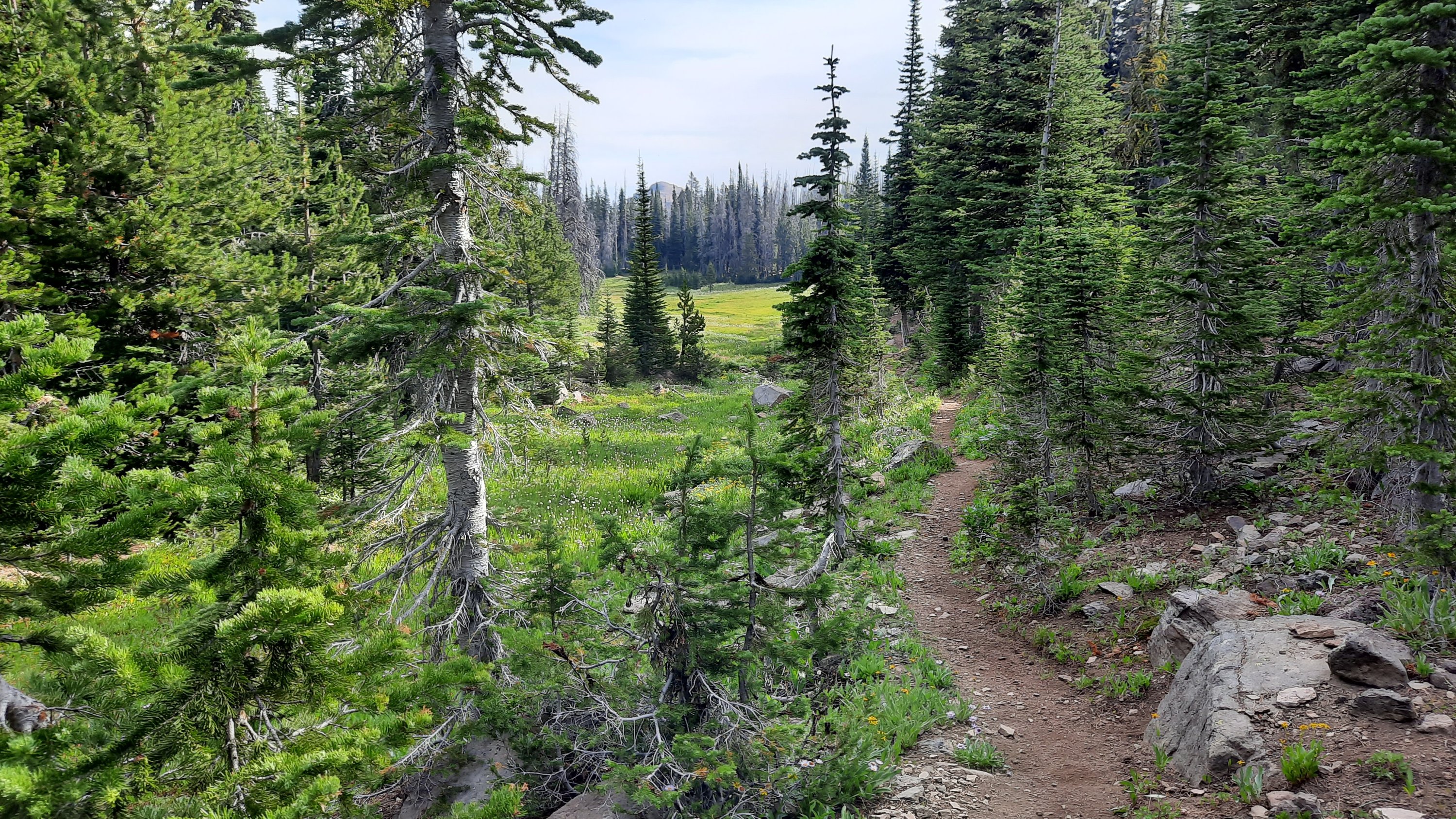
The views though…

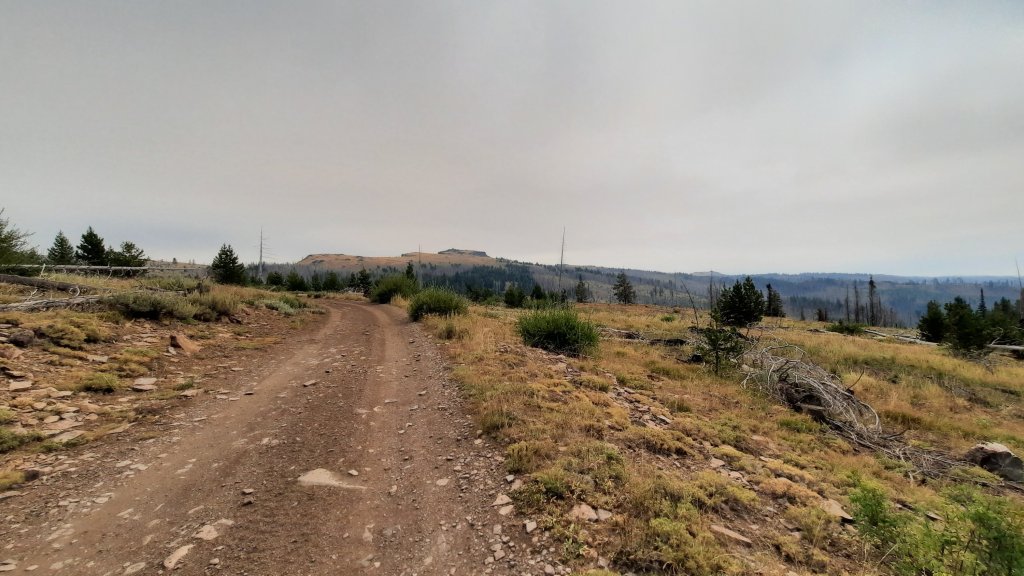
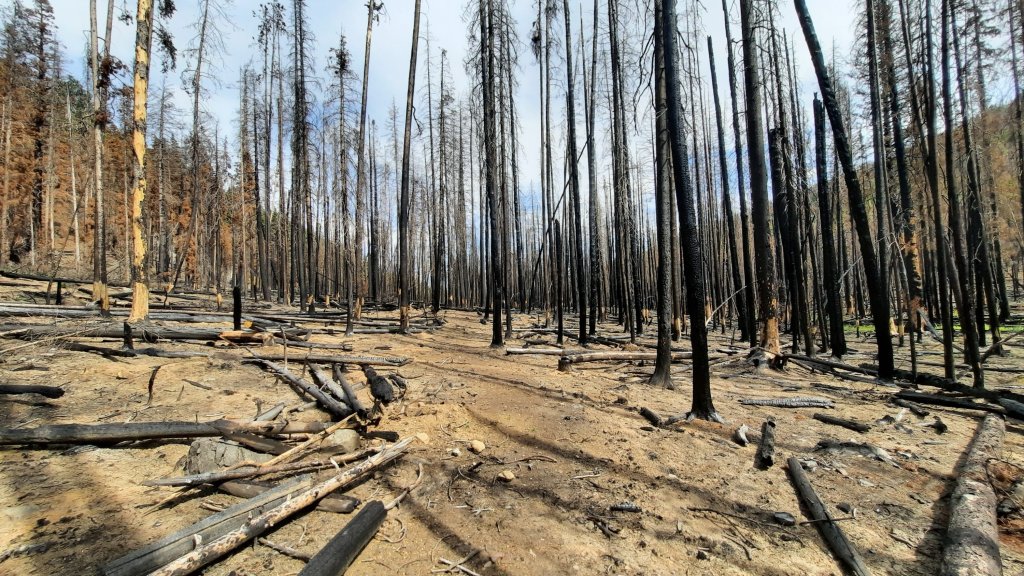
The trail took me through old burn areas where manzanita had started to encroach and obscure trail. Sometimes I just headed where I knew the trail was going, Sometimes I thrashed, hot and frustrated.

It was warm today, but some cloud cover helped me avoid triple-digit temps on the ridge walk.

The clouds gathered more steam, and a few drops practically sizzled on my skin when they decided to finally start falling. I passed an unmapped water source on the trail, setting my sights on camping at the next one just a little way up the trail. Of course, the trail went straight up (literally) from there, and when I arrived, wouldn’t you know it, this marked drainage was the first one without water the whole day. I had to backtrack, and there is no backtracking 😦

So tired. Rain, thunder, sleep. Tomorrow: more manzanita, the highest point on the route (for this section) and swimming potential…

Blue Mountains Trail (Section 1) – Day 1: 7.7 miles

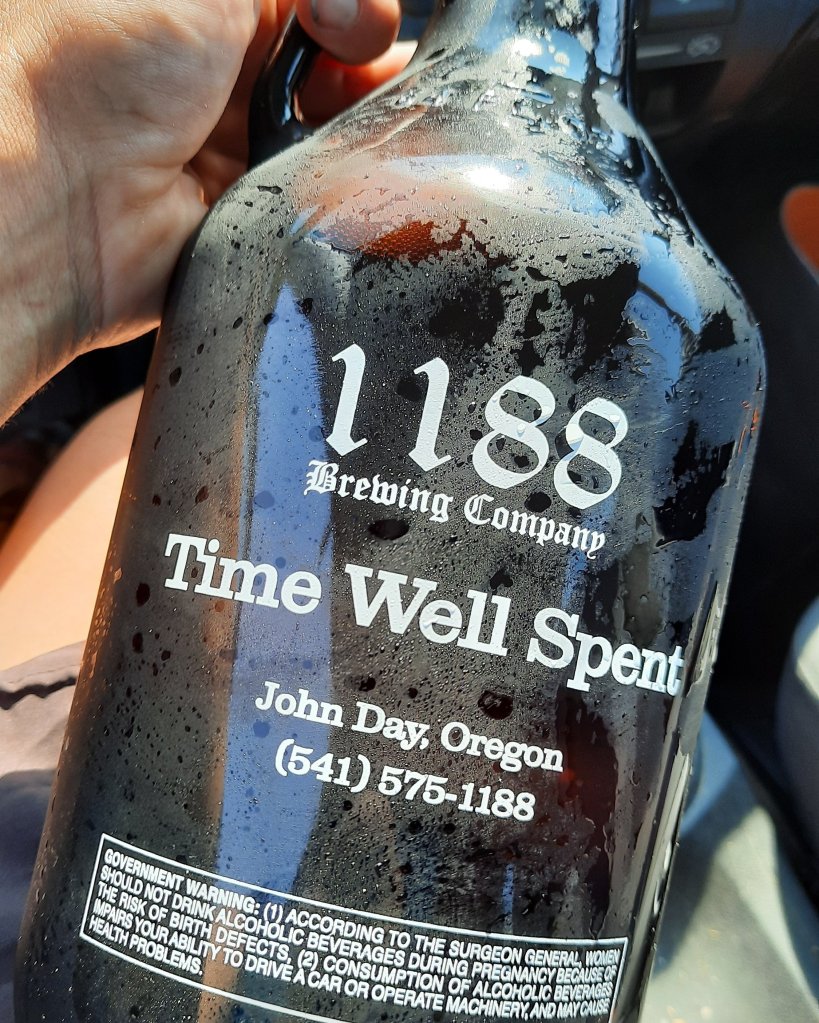
At 5:30pm it was still 99 degrees. I had walked out of town about 4pm, willing the temps to go down as I looked at the thousands of feet I needed to climb.

By 5:30 I had left the last of the paved road behind. It felt like walking through a broiler … the road was covered in fresh shiny black chip-seal…but I wasn’t a piece of cheese toast melting to perfection under that hot; I was a hiker with 7 days of food in their pack and an unbearable quantity of water. I was hiking something of sorts that hadn’t quite been done before…at least not from the town of John Day, and I had no water knowledge for the first 30 miles of this new route.

Just what is the BMT you might be asking? Hang with me friends, all will be revealed in good time. But for now, that climb, and the main goal: don’t pass out from the heat.

Thank goodness my boyfriend Kirk is a smart man. When looking at the logistics for this hike yesterday, I realized what the climb entailed and saw the crazy hot temps forecast. Kirk suggested I slackpack myself partway up the mountain.

I think that saved me.

As I was setting up my bike shuttle earlier (this is a self-contained, one tank of gas, as little contact as possible hiking trip.. cause you know…COVID) I drove to the end of the pavement and stashed a bunch of water and half my gear. Hike smarter, not harder. I would walk out of the Oregon mountain town, John Day, with my most precious cargo: a week of food, sleeping bag, and tent.

I lay sweating in the shade next to my cache for the next hour, waiting for the evening hours before setting out again. I had another 2,000′ on deck, up into the Strawberry Mountains Wilderness (did someone say strawberries?!?)

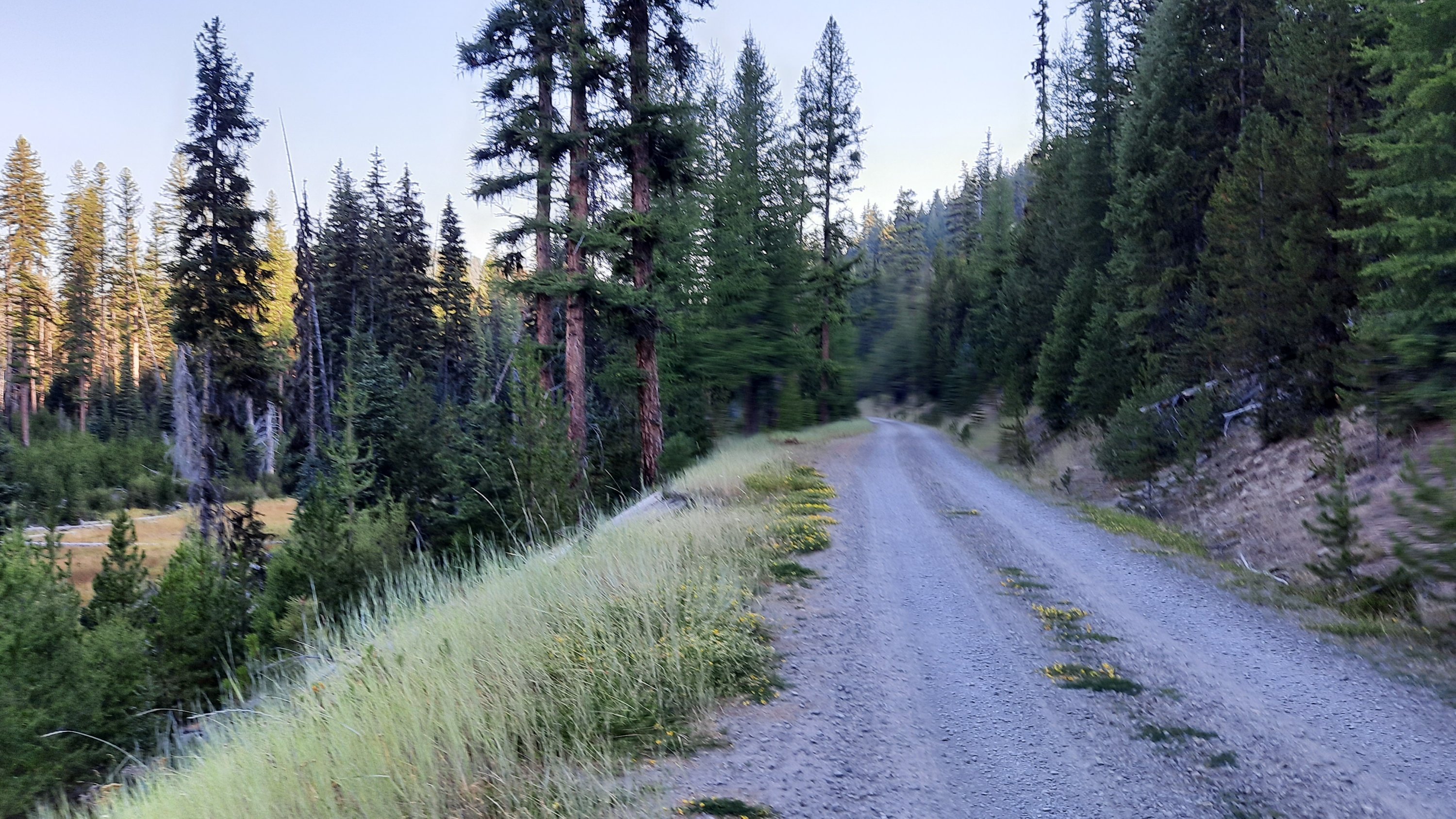
I didn’t have a set goal for the day, so I simply lumbered up the steep gravel road towards the Crane Mountain Trailhead.

I passed several water sources, but they were all below a former mining site; the map was sprinkled with mining prospects, and my sweet repose was next to some mounds of tailings….all signs that led me to pass on any water downstream of these places. Who knows what might have leached into those water sources.

I encountered no cars on the next few miles, and as I sweated my way to the trailhead (almost at the crest of the mountains) it was almost dark. Wanting to sleep on the trail for my first night, I started down the single-track dug into the steep sides of the ridge and wrapped around to a saddle just as I was having trouble seeing the trail anymore.

I found a flat-enough spot and set up my tent…it was windy and clouds threatened moisture, a threat I very willingly desired.

Night one on the BMT. Bring it.


Unconventional Gear

I love unconventional gear. Things you take on a backpacking trip or thru-hike that never make a gear list or line the shelves of your local outdoor store.

The piece I’m bringing on all upcoming backpacking trips is my pagna (think pawn-ya) from Burkina Faso. Twenty years ago I lived in a small village in the northern reaches of the West African country…drinking from the firehose of a Peace Corps experience… I was a recent college grad blundering my way through learning two new languages, working with local health staff to evaluate and address the pressing health needs of 15 small villages, and soaking in the culture of a place I never imagined I’d find myself.

In Africa, or at least West Africa, richly patterned and colored bolts of cloth were the foundation of the African wardrobe. Six-foot lengths of cotton, or pagnas, would be taken to the village tailor and sewn into shirts, dresses, brightly colored business suits, and any fashion we peace corps volunteers wanted (well kind of). We would tear out pages from a catalog, buy pagnas of flowers, intricate designs, or even historical figures (there were so many pagnas featuring Thomas Sankara…Burkina’s legendary leader from the 1980s…what a story there!), and take it to the tailor who would measure us for the fashion we desired, and two weeks later we turned up to get our new duds…sometimes a far cry from the beautiful dress we coveted in the catalog page.

These pagnas were also used to transport crops to market… giant bundles of mangos or onions would be tied up in the cloth and balanced on one’s head for the three-mile walk to the market. Babies would be tied to mother’s backs, and they could often be seen dozing as the moms worked the earth in the plots next to their mud and thatch huts….their little baby feet hanging out of the cloth, flopping around as they snoozed through the backbreaking work of subsistence farming.

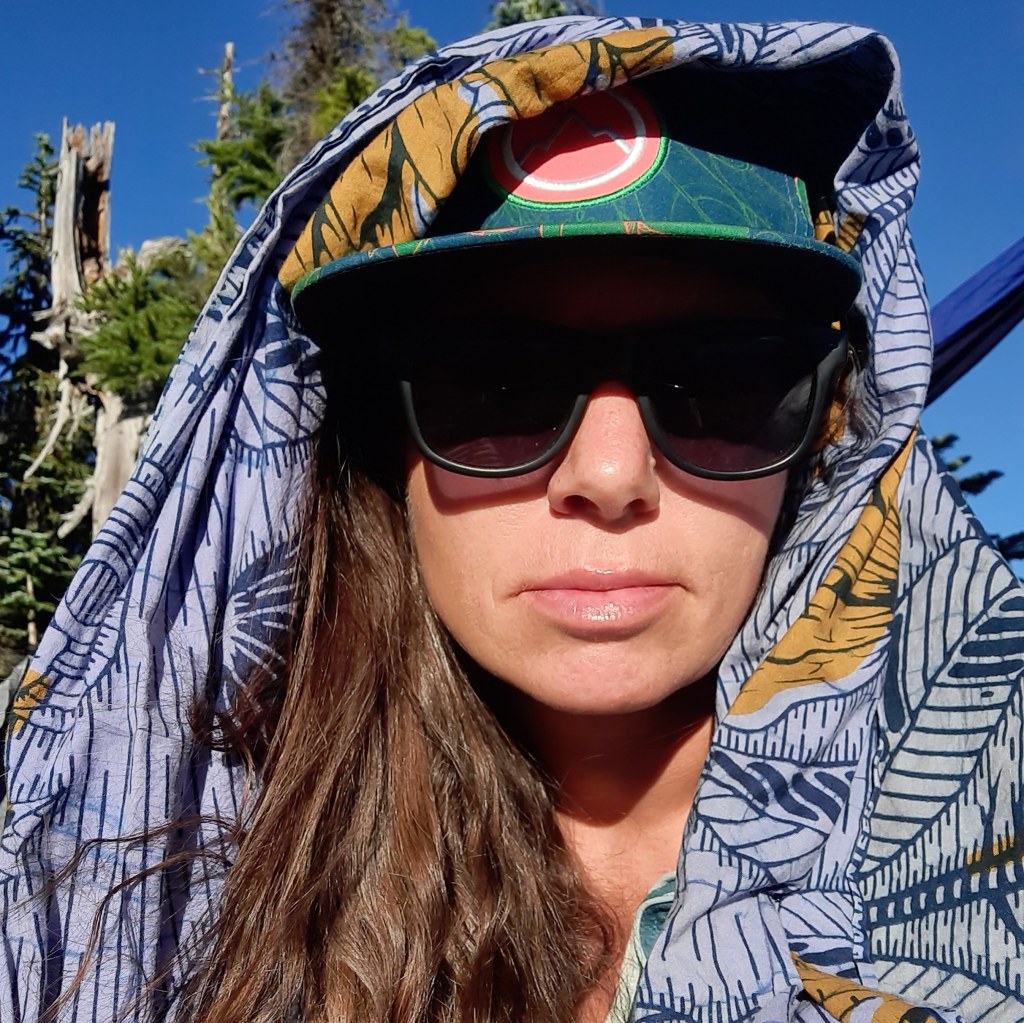
Pagnas are a blanket when you need it, a towel after a swim, a skirt, dress, a way to keep the sun off your shoulders….and now, backpacking, it’s my luxury item.

Lately I’ve been using it to keep the most vicious mosquitoes away from my head, and drop it over me when it’s too hot to put on another layer. It’s a sheet when the hot nights make me dread my down sleeping bag. It’s a towel and wrap after a dip in a trail-side lake. It’s what I wear while doing laundry in a trail town. It’s a cape when I’m channeling my inner superhero. 


I’m down to my last Burkina Faso pagna. Its been squirreled away for the last 20 years, and now I need this touchstone to the experience that jumped my life off the tracks of a typical Midwestern upbringing. I’m grateful I had the chance to live in the sub-Saharan desert village and see that life had infinite possibilities (especially with all my privileges)…and it was up to me to imagine the unimaginable. 
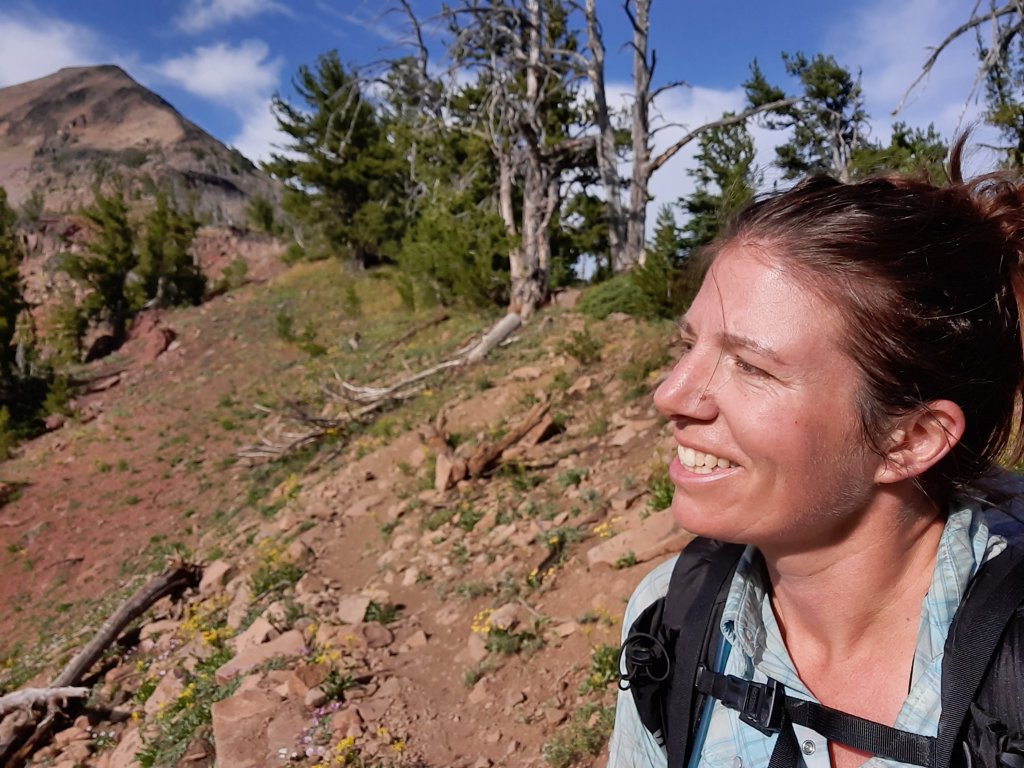

Today it’s walking all day, every day through the world and trying to see it for what it is….

Hiking can change the world…or at least us

A new podcast is on the scene…Andy of The Hiker Podcast found hiking recently, and is completely immersing himself in conversations with all sorts of hikers to dive deeper into what makes hiking such a transformative experience.

I shared some of my thoughts with him here…and I have to admit, it was one of the most engaging conversations I’ve had on the subject!

Enjoy:


Making a Difference (or trying to)

I’m incredibly proud to work for the Oregon Natural Desert Association. We make a tangible difference in the health of Oregon desert ecosystems thanks to thousands of hours of volunteer work each year. I’ve been fortunate to lead trail maintenance projects across the high desert with our dedicated members, primarily on trails that have had no record of trail maintenance…ever!
See photos from some of our trail work and stewardship trips here.

By creating and improving recreation opportunities across eastern Oregon, we are working to connect people to these landscapes and help them see the importance of intact ecosystems, of the value in a diversity of wildlife, of the value of our place within these biological systems. We are not apart from nature we are a part of nature.

Now in the times of COVID, I haven’t been leading hikes or trail work trips, but I have been reliving my multi-media and storytelling past through the creation of storymaps.

This is the first of many that I’ll be working on:

Click on the image, or click here to view

Skirts, Umbrellas, and Beer. Renee Patrick talks Trail-life

I had a blast talking with my cousin Sherry on her podcast: Pod, Sweat, and Tears with Sherry East about hiking, yoga, fitness, peeing standing up, helping everyone become comfortable and connected to nature, David Bowie, beer, thru-hiking, finding a regular sense of awe in your life and more. Give it a listen:

https://open.spotify.com/episode/7qz3Q2hWz9Q2PL1FCvv5bX?si=iNejLKhGSd-OHu56t7Fxrw


The Desert Trail is Cutting Edge

The Desert Trail is cutting edge. That may seem strange to say about the efforts of an organization that has been around for 48 years, an organization that has just recently decided to wrap up their efforts to establish another 2,000+ mile long-distance backpacking option, but I truly believe it. What the Desert Trail Association created is cutting edge.

I hiked part of the Desert Trail with the Desert Trail Association in Death Valley, 2018

Perhaps it’s just cutting edge for those of us who have grown up hiking trails, who have had the safety and security of precise GPS devices and apps that make navigation and route finding so much easier. As someone who is on the earlier side of my 40’s and has been backpacking long trails for almost 20 years, I do remember what it was like to get lost without a SPOT or InReach emergency beacon, but, that is a distant memory. Those pre-emergency beacon days were the norm though for all people throughout all time until recently. When the Desert Trail was founded by Burns biology teacher Russ Pengelly in the early 1970’s, there were no trails close to town. The places to play and roam and explore were remote desert landscapes, and the best way to discover their secrets was to hike. Hike without trails, hike without gps devices, hike with only your wits, good decisions, and strong legs.

Today, I and other hikers who have grown up on trails and technology find this type of hiking to be liberating. To hike without a trail, to look at the landscape and let your curiosity drive your feet is what freedom feels like. And it feels cutting edge to those of us who are just finding it for the first time.

Since I started working to establish the 750-mile Oregon Desert Trail (which is not a trail either…a la Desert Trail!), I’ve become convinced that the way forward for the long-distance hiking community is to embrace routes. Or maybe it’s the way back. It’s the way back to understanding how to travel up and down a mountain ridge in the most efficient way. It’s the way back to having to make your own decisions about macro and micro navigation…trails do that for you. It’s the way back to feeling a part of a whole landscape. You belong, you are a part of it, you have a role to play in these places. It’s the way back to understanding that you may not be the most important thing in these landscapes, and that ego-check is incredibly healthy.

Your desire to have a backpacking trip does not rise above the snowstorm battering the top of Steens Mountain or the six inches of mud that accumulate on the bottom of your boots as you try to walk across the Alvord Desert. Hiking a route means adjusting to the conditions, and the conditions aren’t always right for you to have a fun and enjoyable adventure. As Gary Snyder says, “Nature treats us as adults,” and that lesson is easily found on a route.

To hike a route like the Desert Trail, you need to rise to the occasion. You need to show up with your skills developed, the willingness to carry immense loads of water, and with the prospect that you may never see another human on your trip. BUT you may see incredibly rich ecosystems teeming with life. You may see the elusive bighorn sheep. You may see that all you need is very little to be comfortable and safe in this world.

The Desert Trail is cutting edge. Going back to hiking routes is the way forward to create an engaged, thoughtful hiking community and backpacking experience.


Read more about the Desert Trail and how the Oregon Desert Trail will continue their good work over on the ONDA blog.

A New Chapter
for the Desert Trail in Oregon

By Renee Patrick, Program Coordinator for the Oregon Desert Trail

When ONDA looked east in 2011 with the thought of establishing a desert hiking route that would connect into the important sagebrush steppe ecosystems they had been working to protect, defend, and restore since 1987, they looked to the Desert Trail.

The Oregon Desert Trail and Desert Trail? Yes, they are two separate long-distance hiking routes. The Desert Trail was founded by Burns biology teacher Russ Pengelley in the early 1970’s. Russ stood on the top of Steens Mountain five decades ago and envisioned a hiking route that stretched through the great basin and into the remote deserts of the west all the way from Mexico to Canada. Instead of building a trail, he envisioned a quarter-mile wide corridor suitable for hikers, mule packers, and equestrians. Read more here.


Black Lives Matter: I have been STRUCK by the systemic injustice that the recent #BlackLivesMatter movement and protests have highlighted over the past few weeks. I have been protesting and trying to understand what my role is to play in dismantling the power dynamics in place in this country that allows for people of color to feel unsafe on our streets, in our parks, and on our trails. More soon, but please spend some time on this yourselves. This is up to all of us to end the harmful and deadly effects of a country that was built on oppression.

Walking the High Desert: Encounters with Rural America Along the Oregon Desert Trail

Walking+the+High+Desert+Encounters+with+Rural+America+along+the+Oregon+Desert+Trail

This is the book I would have written if I could have.

Thank goodness Ellen Waterston did first, it’s much more eloquent 🙂 AND she was a rancher in Eastern Oregon and has an incredible perspective about the ODT and the issues facing the high desert (and rural America).

I had the chance to read one of Ellen’s drafts about a year ago during a week-long raft trip on the John Day River (our only undammed river in Oregon). I’ve literally been excited about this for a year!

I went to grad school at Goldsmiths (University of London) for design futures (trying to make the world a better place through thoughtful design) concentrating on museum exhibition design. I wanted to take the museum out of the museum, and for the last four and half years have been doing just that. The Oregon Desert Trail is my museum exhibit, and reading this book will help facilitate your journey through a three-dimensional space: eastern Oregon.

The book is available for preorder now on Ellen’s website, and join in for a virtual book launch on June 17 with the High Desert Museum.

Look at these recommendations!

“There is no better guide to Oregon’s high desert than Ellen Waterston. Her sense of place, her lyrical love of this sometimes hard to love place, her balanced yet passionate dissection of the issues roiling the big land of junipers and open sky is a wonderful match for her subject. While the West is full of poets who love the land, few of them are as intellectually nimble as Waterston.”
— Timothy Egan, author of A Pilgrimage to Eternity

“Walking the High Desert grows right out of the relatively new and little-traveled Oregon Desert Trail, but it is no trail guide, much less a braggadocious through-hike log. Ellen Waterston has given us her own very personal Baedeker to a little-known landscape that she knows well as both rancher and writer, hitting all the high points of the heart as well as in elevation. In language as crisp as the desert air, her book serves equally well as a primer on Western conservation, a lure into difficult but hugely rewarding country, and a who’s who and what’s what of high desert life and culture. Woven out of her own remarkable stories, her trek becomes an insightful research for how we might all get along, here and elsewhere, in a perilously shifting world.”
— Robert Michael Pyle, author of The Thunder Tree, Mariposa Road and Magdalena Mountain.

”Since time immemorial, humans have been living, loving and exploring the West’s high desert. In turn, those of us living here are influenced by how the desert is subtle, nuanced and rich. Ellen’s Walking the High Desert is at once profound and worthy of all these descriptors of the high desert. Uniting stories from across this diverse landscape—the humans and non-human voices—Ellen weaves an incomparable narrative of wonder, science, history and prose. This book deeply and cleverly explores the desert landscape and the complexity of the interplay of humans and this amazing piece of the Intermountain West.”
— Dana Whitelaw, Ph.D., Executive Director of the High Desert Museum

Bits of Calm

I had planned to write a blog post for Food for the Sole this spring. And things got not-normal. Things got (are) uncertain, bewildering, overwhelming, disappointing… and I found I couldn’t write about hiking, or packrafting, or any of the numerous things I wasn’t doing this spring.

So I wrote Bits of Calm


Guest Post: Renee Patrick

 Renee on ODT.jpg

In normal times, we would look to Renee for long distance hiking advice, fun tales from the trail, or bits of vicarious living through the unbelievable amount of time she gets to spend outside hiking. (As program coordinator for the Oregon Desert Trail we suppose it only makes sense..)

But, these aren’t exactly normal times are they? As many of us remain stuck in social isolation, without any normal structure or access to our normal activities, we need to find ways to bring joy to our lives.

Read on as Renee joins us with her thoughts on finding stillness inside, while we remain… still, inside.


Bits of Calm

This time will pass, or maybe it won’t.

What always passes, even if we are not there to see it, is the wind passing through the aspen trees. The sun arcing into a new day. The waves rippling around a lily pad in the pond.

Where do you find your calm? When getting outside far enough to watch clouds blend into dragons and whales is replaced by washing the dishes…yet again…how do you soothe the ache of every day showing up just like the next?

There are bits of calm to be found. I’m gathering them.

This song. Lay on the floor, close your eyes, and sink into the carpet while this plays.

This poem. Sip a mug of hot tea and let these words steep.

Bread baking. The smell alone is almost as good as the melting butter on the first slice.

Bare feet in the dirt. My yard and I are becoming more intimate with each day, just ask my feet.

Wearing silly hats. Even if no one is there to see how ridiculous you look, you know.

Sounds of night. Bring the night inside (put it on loop all night long).

I’m collecting bits of calm, will you share yours with us?


what to do during social isolation.jpg

High Desert Academy

Updated 5/5 with links to the recorded presentations


I had a full slate of presentations I was planning to give this spring, but like everything else lately, I’ve had to adjust to the new realities of a home-bound existence. I am lucky enough to still be working full-time, and have plenty of fun engaging projects to work on. I’m definitely pining for the hikes I was supposed to do this spring in eastern Oregon, and the communities I was planning on visiting. I am scheduled to led a number of stewardship trips this year, and it’s looking less likely that I’ll be able to do that.

So it’s exciting that ONDA is looking for ways to bring Oregon’s high desert to you.

We launched our High Desert Academy last week. This series will include stunning tours of high desert highlights, informative workshops that will teach you new advocacy skills, and tips to plan a safe and enjoyable desert adventure once it’s advisable to do so.  So grab a quaranTINI and join us at these High Desert Academy offerings.

Check out the full lineup here and join us!

I’ll be giving three talks in April:

Desert Hiking Tips & Trips

Do you have concerns about water, navigation, camping, animals, desert driving and more? We’ll answer your questions and offer ideas for your next adventure in Oregon’s Owyhee Canyonlands and beyond.
View the recording

Multi-Sport Adventures on the Oregon Desert Trail

The Oregon Desert Trail is not just made for hiking. Did you know there are sections that you can bike, paddle, horseback ride, and even ski in the winter? Join us as we dive into different options for “quiet recreation” on the public lands throughout Oregon’s high desert.
View the recording

Boots, Bikes, and Boats in Eastern Oregon

Go east on this virtual tour for a new desert adventure and a sense of solitude. You’ll learn about recreation and conservation opportunities in and around the Steens Mountain Wilderness, Fremont-Winema National Forest and the John Day River Basin.
View the recording

Maybe I’ll see you there!