I saw the neck surgeon this week to evaluate my collapsing C7 and look at my C4 three months post surgery, and I got the all clear! The doc said the C7 doesn’t have to be addressed, and that I can live with it (we didn’t talk about backpacking, I have a feeling a full-weighted backpack might paint a different picture). I then took some x rays which showed that my C4 is appropriately healed. So that means I can start taking my c-collar off. Get ready for some neck!
So the last few days I’ve been spending more time with it off, getting used to the weight of my head again. I’m practicing turning my head and nodding again, all things I haven’t been able to do for three months. A bulk of the work will come to play with my PT. I’m transitioning away from the in-home PT to an outpatient situation, and it’s like I’m graduating or something…I’m slowly being positioned to live without daily doctors appointments and check-ins. We are also looking at decreasing my meds…I’m already off the steroids and we are looking at the pain meds next. Am I in pain anymore? It’s hard to say. Are the meds masking pain or do I even have pain any more? I have discomfort for sure, but pain?
All this is coming as I look at making my first trip to the trails summit in Wisconsin in three weeks. Can I be ready to walk around without my collar most of the day in three weeks? Can I have a glass of wine at a happy hour in three weeks? Can I sleep without an adjustable bed in three weeks?
The rash is still rashing, but it’s not getting worse, I guess it’s clearing up, maybe a little?
I still feel the cancer in my spine and in my ribs. Is the tagresso doing it’s job? Maybe a little?
I’ve been sleeping a lot. Like half the day away, but again, I’m not fighting it. But I feel like I’m in a bit of a daze all the time. Sleeping so much puts a dream-like quality to everything. If I’m not myself right now it’s because I’m a dazed and dreamy version of myself.
I’m struggling with the habit of productivity. I went on a walk with a friend yesterday and we talked a bit about it. She wondered if it was a mid-western quality…this need to always be moving some ball forward, even when dealing with stage 4 cancer. What am I trying to be productive about? Well, writing here for one, diving into my past for two, and putting out there that I want to write a book (Really! Sometimes that just seems insane), and then writing thank-you cards for everything. That it’s ok to let some or all of it go. I know that it is, but the blog serves as a processing time as well, and it is keeping you all in my life, which I really need these days.
I got a card from a stranger, a hiker that has been reading my blog for years but I’ve never met, and I needed to read that card that day. It made such a difference in my morale and mood. I need all of you in my life, so I want to be productive enough to update the blog to keep you all informed and close. I need all of you.
I got another card recently from a volunteer that came on one of my trail work trips last year. I only met her that one time, and she wrote the most beautiful card with gifts of song and book recommendations. I love that, that kind of thing fuels my day, and I’m thrilled to add to my reading list too 🙂
So all of this to say, I don’t know where my need to be productive comes from, but I don’t want to give up the need to write, and sure maybe I’ll stitch some of this together into something that could be called a book, but I do want to give up the idea that I’m going to come out the other side of this looking for a publisher. I want to give myself time to just be. And right now that looks like a lot of sleeping. Not as much reading as I’d like (reading puts me to sleep right now), but I’m just going to let it be and not fight against it.
You will probably have to remind me of that from time to time!
In all honesty, I’ve seen a lot of change this week. For one, I’ve been sleeping! Something flipped last weekend and suddenly I was sleeping most of the night and sleeping throughout the day. I couldn’t sleep enough. I was in a dis-combubulated haze of sleep for a few days there, and didn’t fight it. I don’t know if it was transitioning from Trazodone to Magnesium Glycinate and a sleep THC/CBD tincture, or maybe it was decreasing the steroid I was taking, or maybe it was my body saying, “enough,” but it was time.
I’ve also been seeing changes in the form of some of those side-effects from my new mutation drug, Tagrisso. There was a line about adult acne in the list of side effects, and a few days ago my legs erupted in a red rash of something. It’s not really itchy, but it looks bad. Real bad. I had a consult with the docs this week and they prescribed a steroid cream for it, and my acupuncturist suggested drinking celery juice for it’s anti-inflammatory and cooling qualities (Note: for those of you suffering from high blood pressure, try some celery juice!) I fully believe that food is medicine, and hope to be learning more and incorporating more food medicines through this journey of mine.
What else has been going on? Oh it’s winter again, or it was for a while this weekend. Snow and ice have covered the ground and curtailed some of my daily walks…I think that has added to my malaise.
And I’ve lost my taste for coffee…I’ve gone several days without it, which is very odd. Oh and my stomach is a mess. I can’t seem to digest anything.
So in general I’ve been living in a foggy state of existence this week. I’m not sure if I’m snapping out of it? I woke up at 1am this morning and got up, so we’ll see.
As for shows, Kirk and I just finished season 1 of Severance, and just started season 2. Go Mark and the Innies!
In general all the changes seem to be not so productive. I haven’t seen a big difference in my pain levels, in the feeling in my spine and ribs. I hope the new med is working, but I guess we won’t know for a while. At least I don’t feel like the cancer has changed course since I started Tagrisso, but who knows.
I don’t think I’m going to deep dive into past stories today. Not feeling it.
Instead I’ll open one of those books and read until my eyes can’t stay open and then go to bed again.
What to do when all is chaos and uncertainty? The world around me is in chaos, and the body I inhabit is in chaos. I feel as though I’m balancing in the middle of this turmoil, in the eye of the storm. A step in either direction could be enough to suck me into the swirling blackness, or, I stay huddled in the calm center feeling relatively at peace… a disturbed, disjointed peace.
I’m going to start talking to a therapist. I’ve never done that before, but as I keep brushing up against the swirling madness all around me, it seems like a good idea. Is it better to ignore the bad all around me, or better to face it? Do I risk letting it in if I face it?
Does it help knowing that we are not alone? There are so many people in my life that have let me into their confidence, who have given me a glimpse into their personal eyes of the storm. Is that easier to do when both of us are dealing with some crazy shit? Perhaps it is.
One form of distraction has been to look at cheap places to stay in Europe. Check this website out. This morning I jumped on and first filtered for France. (I used to speak french 20 years ago in Burkina Faso, I know how to order breakfast and ask where the toilet is, I should be good, right?) Then I filtered for proximity to the sea, I choose 100m or less. Then I simply sorted by price. The results? I can stay in an apartment with a view of the ocean in France for a week for less than $300. From here I can monitor the cheap airfare websites, and depending on the window of time I have to travel, can easily book a flight, and find one of those cheap apartments almost anywhere in Europe. Why Europe? Why not? It’s somewhere? It’s anywhere? It’s relatively safe? I’m already out of my element, why not go further?
So yes, there is this insatiable desire to travel right now. I have my 170-mile Portuguese Camino trip all mapped out. I made a data book (translation: a spreadsheet of distances and logistics), and if I have a two-week window to walk it later this year I’m going to do it. At a 10-mile-a-day pace with a luggage transportation service and hotel or hostel lodging each night I can do it for a pretty reasonable price tag and not hurt myself. Surely I can walk 10 miles a day by this fall?
But those windows! Those windows of time and opportunity have been changing daily. I may have to get chemo infusions throughout April now…which I was thinking would be ending in March. I don’t have a good plan for my neck yet either. The three-month mark since my Corpectomy surgery is up on March 21, but with another collapsing vertebrae, and cancer still ravaging the entire region around neck and upper spine, is it really a good idea to take the brace off? My doctors are trying to get me in to see a specialist, but they are all so busy. The appointment I did have for March is now in April. Meanwhile my neck wants to be free…I am doing some exercises that my PT has recommended, and some of that is just sitting still with the brace off. Just balancing my head alone is a challenge right now. (Ahh, I just took it off, why not? I can sit still while writing).
Meanwhile we are nailing down details for my birthday party in June…that is something I can plan. I’m relishing the planning phase. So fun. It’s going to be so great to see many of you and eat Amber’s excellent wood-fired pizzas and play lawn games. I’ll open up the sign ups in about a week, so stay tuned!
Where shall we go tonight? It’s 1:26am and I have an oat milk latte on deck to get me though the next hour. Maybe we visit hikertrash? The hikertrash period of my life spanned from 2014 – 2017. Well, it really originated years before that…so tuck yourself in, here is the full story:
It starts with design. I love graphic design. Because I went to college from 95-99 we were in the early stages of multimedia and computer design software programs. I got to use the early versions of Photoshop and Illustrator and really test the limits of the programs. It was so much fun, and I made a couple of multimedia CD Roms during college (does anyone remember those?).
Senior year I made my poetry class the focus of my project. I asked each student in class to pick one of their poems, I recorded each of them reading their work, then I found a piece of art and music that I thought accompanied their poem well. When viewing the CD Rom, you would navigate by moving a piece of what looked like refrigerator poetry with the poet’s name on it up to a certain spot on the screen, then their poem would come up on screen. As the voice read the words, the words moved up the screen all the while music was playing. I had so much fun making that CD Rom, but unfortunately it’s lost to the fast-moving technology junkyard now. It can’t be played anymore, and so lives on in my memory of the thing, and now here on the page.
So anyway, graphic design. I loved (love) all aspects of it, and even when my attention was captured by hiking and sleeping on the ground, I always knew I had some skills I could dust off if needed. When I moved to Portland in 2004 after finishing grad school, the job I found was for a sign shop, Sign Wizards, where I would make signage for a wide variety of businesses. The one aspect that was very Portland and I really lucked out in, was following in the footsteps of a very creative and eclectic bike nerd at the sign shop, Dylan VanWeeldon. Dylan had cultivated relationships with many of the bike builders in town and would make logos, paint masks, decals and more for them. I inherited many of those relationships and really geeked out at helping to make frame art for bike builders like Ira Ryan, Sweetpea Bikes, and Aherne Cycles (and some of them are still around today, over 20 years later, woot!)
I also had to dial in my graphic design chops and create clean line art that could be traced by a router and made into a 3-dimensional shape. Now that was miles away from the messy layers of Photoshop that I had a habit of creating in college, and miles away from the multimedia timing of a voice to a line of poetry. It stretched me. The work stretched me.
One of my jobs was at the Portland airport. Back in 2005ish the airport opened a connecting passage to bridge two different areas of the airport, and our sign shop was hired to create all the new signage for the concourse connector, and of course, that spilled out into the concorses too as the arrows and all those big overhead signs had to be changed. Let me tell you about the Portland Airport blue PMS color….there were 10 different blues that had been used over the years! How to choose the blue that would match in one concourse, with a slightly different blue in the other one? Should I make them all the same blue or match to the existing blue? Then there was the different thickness of the aluminum used to make the signs. Again, sometimes we were only replacing one segment of a 4 piece overhead sign, do I match thicknesses or make all 150 different signs in the order with different thicknesses and different blues? It was quite the nightmare. But I learned. Oh how I learned! Then I had the pleasure of learning that what an architect draws is not what gets built in real life. I was given architectural renderings of what the moving concourses would look like in the new connector, and I had to design and order signs that would fit on the walkways, things like “watch your step” and “no babies on the rails”. I designed and ordered based off the prints and imagine my surprise when we showed up for the install and the actual walkway was a completely different design with no place to put the signs I had ordered three months prior based on the specs. WTF? How does anything get built?
Ok, that was my graphic design job from 2004-2006 before I left to hike the PCT.
What was next? That probably would have been 2008 when I moved to Bend to work in wilderness therapy. Wilderness Therapy will be a different story, but all the while I was traipsing about in the high desert with teenagers that really didn’t want to be there, I was still playing with design, and made some paint masks for “hikertrash,” a phrase that was ripe in the thru-hiking community. Hikertrash is both a badge of honor and a derogatory phrase. Dirt is the great equalizer on the trail and even the most well-behaved and proper among us has their hikertrash moments when they wash out their dirty socks in a grocery store bathroom, or they stink up a restaurant because they are too hungry to take a shower first before eating when they get to town. I by no means own the phrase hikertrash, have not tried to trademark or copyright it, I simply offered my own version of it to the world. Lint was a good friend at the time and he had hikertrash in an old english font tattooed across his belly, so I made a version of that and painted it onto his pack and made a few t-shirts from it that first year in Bend.
Lint was also the tall bike friend that I have already mentioned in some of my Portland memories. I thought tall bikes were so cool, and made a tall bike design that I started to screen print on things.
Oh, let me tell you about screen printing!
Kirk and I had started dating at this time, this was 2009 in Bend, and I decided to teach myself how to screenprint. I went to Goodwill and bought an old picture frame and some sheer curtains. I stapled the curtain to the frame and picked up some photo emulsion from Michaels. I printed my tall bike design onto a transparency (remember those from school all you OGs out there?), coated the picture frame screen in photo emulsion, then put my transparency on it, set it in the sun for like 20 minutes, then rushed it inside to rinse out the negative of the tall bike which would leave a stencil of sorts that I could then place on a shirt and ink…voila screen printing!
That first screen was junky and didn’t work great, but I still have it. It’s the origins of my first business! I traded up after that and bought actual screens to work with, and started Bike Bend Wear. Based off my first tall bike silhouette, I designed a bunch of other bike silhouettes, purchased used clothing from goodwill and other thrift shops, would screen print my design onto them, then sell them at bike events around town. Cyclocross was the big thing back in the day, so I usually had a booth at the races. It never made me any money. I always spent more on supplies than I made, but I had fun and it was a way for me to get creative and stay in the graphic design world for a bit while I was working in the outdoor industry.
Bike Bend Wear was only around for a few years, then I started working for Cascade Publications in 2010. I had just finished up a seasonal logistics gig at the Outward Bound base out of Odin Falls (Central Oregon) when I got a job to design and lay-out a monthly 40-page color art magazine and write feature articles. It was a HUGE career leap for both me and Pamela Hulse Andrews who hired me, and it quickly became apparent that my job was really the job of 3 people. I was supporting Pamela’s other publication, Cascade Business News, by designing ads and writing profile articles, while compiling and designing the monthly Cascade A&E. I was WORKED.
Many of the online versions of the magazine are still available if you are interested…
I had an editor’s column to write each month, a feature article to write about our cover artists, and any number of other articles that appeared in the magazine. Pamala would work as the air traffic controller and feed me press releases to place in the magazine, some with adequate photo sizes, others without. I got really good at finding ways to make art and photos work, tracking down the people who could send me the right files, and working fast. I was working soooooo fast. I had only one mode, and that was work as fast as humanly possible. I also had to learn the ways of printers. We changed printers several times during the four years I worked for there, and each time we got down and dirty with paper quality, 4-color presses, printing profiles, and more. Wow, again. Lots of learning.
Somehow during this time I had decided to thru-hike the Continental Divide Trail in 2015, and while dripples of Bike Bend Wear were still happening here and there, a friend and fellow-thru hiker in town suggested we start a business together. I had a few hikertrash designs out there and on shirts that people were wearing, and Brian Frankle was a business guy who saw potential. He had successfully started the backpack company ULA, (still around today) and sold it, and was dabbling in other business pursuits in town.
Brian has since become a big boating buddy of ours. The longer the river trip the better!
Together in 2014 we decided to launch hikertrash as a brand.
I had a number of new designs, we would get stuff printed in town: hats, shirts, coozies, etc. and sell online while raising money for the triple crown trails. This was in the day before the drop-ship companies, and it quickly became apparent the business was really about inventory and shipping, not so much the fun design side of things. I had a blast going to hiker events where I would often do live screen printing on the hikers and their clothing, and Kirk even made me a screenprinting press out of recycled materials (well 98% recycled materials, some of the screws were new).
We officially ran the business from 2014 until 2017. We had hats on all the triple crown trails! We had hikers tattoo my designs onto their bodies! It was all a rush, and even better to be giving back to the trails at the same time.
Ultimately both Brian and I tired of being a shipping company, and in 2017 decided to sell to another hiker friend of ours, Boomer, who had plans for a hiking pole company. It never really got off the ground and hikertrash ended up going away a short while later.
BUT hikertrash lives on, there are still hats out there, there are still shirts out there. I still have all the old designs, and even have thoughts of reinvigorating the brand as a fundraiser for my cancer year…it’s complicated though. I am looking into ways of getting the designs back out there, but not as a company, strictly as a fundraiser, but it gets messy with taxes and income and all of that. I still think it would be a worthy pursuit, especially if I have time, but only if it can be relatively easy and I don’t become a shipping and inventory hub again. I think with the drop ship printing capabilities today there is probably a solution, but it’s the back end stuff I’m just not sure about. I guess this is where I ask you all for your ideas and suggestions. Do you see a way where I can use a service like Printify to design a bunch of hikertrash merchandise, and then sell it online with the proceeds being a fundraiser for me, an individual? Without a bunch of tax and accounting headaches? Let me know…
(It’s now 2:22 and I just heated up some vegan banana bread I made yesterday…it’s delicious! I used flax for eggs, almond flour for regular flour, and flax oil for vegetable oil. It doesn’t hold together real well, but it tastes delicious!)
I think that’s enough remembering for tonight folks…time to find some photos for this post and get it out there into the world. Thanks again for coming on these night-time ramblings of mine, it’s great fun on my end. 🙂
Goldsmiths Graduation, 2005 (Annette, Professor John Wood, and me)
Last week’s chemo infusion was pushed back to this week to give my body a chance to recover from the rib radiation and for my new mutation med kick in, so I have a chemical drip-line to look forward to today. As I keep telling people, the chemo is so mild! Really, it is. The cocktail of drugs that are pumped into my port are so dialed in that I shouldn’t lose any hair, don’t really get sick (fingers crossed), and don’t get my insides torched along with the tumors.
I can’t remember if I told you about the port… it’s a small device that was surgically implanted in my chest about a month ago…it connects to a vein on the right side of my chest – above my lung but below the c-collar, and is used to draw blood and give chemo infusions without needing to go in through my arm vein. It will probably remain in place for the rest of this year(s)? There is a visible bump under my skin on my chest…tank top season this year is going to be lit!
So yes, the big item on my agenda today is chemo, then I’ll take my daily walk.
I’m up to a 45-minute walk! I can walk 45 minutes before my right hip starts hurting. There is so much going on in my right hip that my PT and I aren’t sure if the pain I am feeling is muscle or joint, tumor or not, so I’m doing a combo of stretching and strengthening to help rehabilitate that side while I try to gain back some semblance of my strength. This strength-building is going to take a while. I realized the other day that I’ve been in this compromised state for six months now. Six months! That’s half a year that I haven’t been able to go about life as normal. It really does feel like a time warp because there is no way I would have told you that I’ve been suffering from my injuries and this cancer, for that long. Time flies when you are in denial?
I’m also getting into the doldrums of the between treatment days. I binged the entire first season of Hacks yesterday. It didn’t feel great to stay in bed most of the day in front of HBO Max, but it also kind of did. I can see where it will be easy to slip into binge mode this year. I can be quite the sloth when I want to, and often feel there are two sides to me (I am a Gemini after all) duking it out…the extremely motivated side vs. the extreme sloth side. It’s almost as if these two sides have to balance each other out… I can be so incredibly on, so productive, so task and goal-oriented that the other side of the coin almost has to be a complete shut-down, reset, and veg mode. I seem to have two speeds. 120% and 3%. Is that such a bad thing? I guess it’s been working for me this far… let’s see how it shakes out in this cancer year.
These look-backs into pieces and slices of my past are almost all look-backs to the 120% of me, the other periods aren’t dramatic enough to have whole chunks of time worth reflecting on, maybe that’s why it works? There is moderation?
But today I think I’ll go back to 2003 and grad school. I’m doing a decent job of filling in the spaces for many of the other phases of life. We have:
Bend and Wilderness Therapy (these next chapters haven’t been explored yet)
Art & Publishing and hiking as career
Professional Hiking, the CDT and beyond…or the last 10 years
Grad School
What next? was one of the main questions I asked myself after returning from Burkina Faso and hiking the Appalachian Trail.
What next? I asked myself as I was in Washington DC interning at the Smithsonian.
What next?
Well, grad school seemed like the next logical step at this point.
I was exploring a career in museums at the time and grad school was almost a pre-requisite into that career choice. In DC I was surrounded by extremely educated people, and I’ve always been attracted to the school vibe. Most likely, my love of books goes hand in hand with my love of education, gorgeous college campuses, and libraries. Higher ed has always had a great allure and romanticism to it….and having grown up on college campuses (my dad worked at UW Stevens Point and then Bradley University) certainly played into that.
I wanted to go back to school. I was excited to go back to school.
So what does one study when they want to work in a museum? I had decided on museum exhibition design because I could combine my love of design, experiential learning, three-dimensional spaces, and education into creating exhibits that people could walk through, interact with, learn from, and engage with. I was very drawn to multi-sensory museum exhibits at the time, and the great thing about the Smithsonian museums was that they were free. I could pop into one of them and walk through for an hour, sit in one exhibit hall, or visit one corner and not feel like I had to spend all day because I had just dropped $30 on the entry fee. I fed my brain regularly on museum exhibits, and those trips all went into the big jumble of experiences that fed into my grad school applications.
Where would I even go? When researching master’s degree programs for museum exhibition design, I found that there weren’t many explicitly designed for my interests. That wasn’t a huge problem because I have lots of experience learning around a thing to get at the thing, and figured I’d need to piece together different aspects of study to get at my chosen field. The University of the Arts in Philadelphia did have a museum exhibition design program though, so that went on the list. Other ones I ended up applying to were Museum Studies at JFK University in San Francisco, the University of Washington Museum Studies program in Seattle, and the Design Futures program Goldsmiths College in London.
JFK University isn’t even around anymore…it closed in 2020, so I guess it’s good I didn’t go there? The museum studies program at U of W ended up being the only program I didn’t get into, which is just as well because I would have had to cobble together that degree to make it into what I wanted. Then there was the University of the Arts. I took a trip up to Philly to tour and interview at the school back in 2003. (This is another school that closed!!! Just last year in fact. That sucks). Had I chosen this program it would have explicitly involved designing museum exhibits, which seemed very practical at the time. On my visit I met many students in the program and had great fun looking at some of their dioramas of exhibits they were putting together (man, I love a good diorama!). University of the Arts would have been the most plug-and-play school choice for me; the program was designed to create exhibition designers, and the course work was very clearly created to prepare me solidly for that field. The Museum of the Arts was at the top of the list, but the exotic, multi-disciplinary, and non-traditional choice of grad school in London was pulling at me from the background. Museum of the Arts would have been a solid choice, and I was accepted into the program, but the expense gave me pause. It would have cost about $50,000 a year (for two years) to go to school there, and sure, I could take out loans for that amount (I was very lucky to get out of undergrad without any student loans), so it was clear sailing for me and the debt I would be taking on, but $100,000 grand for a fairly low-paying field of study did give me pause. (Side note; money has never really given me pause. I’ve never really had it, or thought much about it…money has never stopped me from doing what I’ve wanted to do, and I’ve always made enough to squeak by with my chosen lifestyle, but for some reason this debt did give me pause).
There were other reasons that London rose to the top of the list. There was a boy. A boy at the time who was going to grad school at London School of Economics. If I were to go to grad school in London, we could be in the same city and see what was what between us. So yes, the boy was a big factor at play when deciding where to go to school…we had in fact gone to the same high school and joined Peace Corps at the same time too. He served in Guinea, West Africa at the same time I was in Burkina Faso, and we reconnected back in Peoria after both of us had returned from our two years of mind-melting mid-west counter cultural experiences.
What else did London have going for it? Well the program I decided to apply for was called Design Futures and was a very interdisciplinary and utopian look at how good design could help make the world a better place, which were ultimately my operating principals at the time: making the world a better place. The Design Futures program was solidly above and beyond all the others for its aspirational goals. It was based out of Goldsmiths College, which was the University of London’s creative college, and best of all? I could use federal loans to go to school overseas. I would be in school for about a year and a half, continually, rather than the two years with summer off schedule in the US, and it would be cheaper (cheaper!) for me to go to school there. The only drawback was that the degree wouldn’t necessarily line up with a degree program in the states. Design Futures was non-traditional enough that it might not be recognized as a graduate program in the US system, but, as I rarely subscribe to the system, that aspect really didn’t matter to me at all.
Design Futures was a deep dive into sustainability, into deep ecology and theory, and heavily based in reading and writing. Each of us in the program chose our own method of design that we wanted to apply our thinking too. I chose museum exhibition design, while others in my class were furniture designers, textile designers, graphic designers, architects, etc. We were quite the eclectic group from all over the world. I loved that aspect. I was the only American; other students came from Norway, Spain, Japan, China, Korea, the Netherlands, the UK, and beyond. In fact, I was often the only American around during those few years, and I enjoyed it.
Shortly after arriving in London in August of 2003, the boy and I broke up, so I didn’t have any connections when I was trying to find my footing. It was a discombobulating time, but it was also a sink or swim time. I eventually swam, but it did take a while.
Soon after arriving I found a room to rent in a group house on Coldharbour Lane, a notorious street in SE London, and threw myself into becoming a Londoner for the next while. I loved my flatmates. Again, I was the only American, and lived with a creative and electric bunch: Franka and Janette were from Germany…Franka was an architect and Jenette was a fashion designer. Jesse was a Brit and was an illustrator, and David was from New Zealand and played music among various other pursuits. There were other housemates who came and went during my time there…they were all fun and eccentric in their own ways, and we had great times together.
My house was about three miles from campus, so I would often walk to classes. It took about the same amount of time to walk to school as it did to take the bus. At this time I was very very poor. Like count my pennies, I could only afford one-beer-a-week poor. Taking out loans and eeking my way in the expensive city of London became its own challenge, but fortunately my parents helped me out with some small loans of their own, and I also started working, which helped me eventually work up to a two-pints-of-beer-a-week allowance. Being poor in London wasn’t all that bad. I couldn’t afford to take the tube anywhere and instead walked the city. I was a hiker by that point anyway, and walking everywhere was natural. It was my entertainment too. It took me a while to make friendships while I was there, but I had my walking. On weekends I would walk to new destinations in the city, go to museums, visit a cafe or two, and always had my eye on free entertainment in the city. There was always music or street fairs, and being a student also helped with discounted tickets to shows and such.
My time in London was kind of a struggle, but a good struggle. Like I said before, a time of sink or swim, and after treading water for a bit, I swam.
So school, what was that about? From the start my professor, John Wood, was feeding us ideas around designing utopias and creating new social and design structures that would foster community and societal order. It was brilliant. We looked to Buckminster Fuller and many philosophers. The schooling was incredibly different than what I was used to in the states. We would have one full day of lectures a week, and the rest of the time was ours. We had four essays to write during the length of the course with a dissertation at the end. That was it! We had to read and think and apply those principals to our chosen design disciplines. It was much like the Peace Corps in that we were left to our own devices to make of it what we could.
I am really good at writing papers, and found I was well-suited to the structure. I spent many hours in the library, and many hours visiting different museums around London. I even had a short stint, not really an internship, at the London Portrait Gallery. There was a relationship of sorts with the museum I had interned at in DC, and I pulled on those connections to get me a gig at the London museum. I spent a few days with their staff behind the scenes, but after I almost cut my finger off with an Exacto knife on one of the first days I was there, the gig didn’t really turn into much. I think they thought I was too much of a liability…no matter though, much like the DC museums, many of the London museums were free so I could come and go frequently and pop into exhibits that I was drawn to.
I was very interested in multi-sensory exhibit experiences….and I’ll stress experiences here. I thought the more senses an exhibition could entice, the richer and more evocitiave the exhibition experience could be. At the time the Tate Modern had a wonderful exhibit by Olafur Eliasson that I would visit again and again. It was called the Weather Project, and the old turbine hall was turned into another world. The ceiling had been plastered with mirrors, and on one end half of a glowing sun appeared against the mirror, evoking a sunset atmosphere. Clouds of moisture would be puffed out from time to time, and the experience was so immersive that people would lay down on the floor and bask in the sun. It was an experiential exhibition to the core, and I loved it.
So what came out of my time there? Ultimately I decided that I wanted to take the museum out of the museum, and my dissertation was all about developing an “eco-interplay ethic” where museums could be a safe place to study and play with ideas, many around sustainability, and give visitors a chance to see and interact with different sciences and disciplines side by side. It was about moving away from an object-based museum to an experience-based museum where an object could come alive with more interpretation around its holistic story….a story that included people, place, setting, and purpose.
I still have the program from our year-end degree show which encapsulats all the thinking we were doing that year. The show was called “Yet/Still to Come” and may do a better job at illustrating what I was doing during this time than my words above do.
At the end of the Design Futures program, I wanted to stay in London and work in a UK museum, but none of my job applications went anywhere, and I ran out the time on my student visa, but not before making a wonderful trip to Norway with one of my classmates Elizabeth to visit her home country and spend some time in Oslo and the country-side. I returned to Illinois in October 2004 and made a quick turnaround time to order to move to Oregon that November. That means I became an Oregonian just over 20 years ago! Does that mean I’m an Oregonian, or do you have to be born here??
How has that time influenced my work today? Well, like I said before, after grad school I moved to Oregon and couldn’t find a job in museums, so hiked the PCT in 2006. From there on the desire to live and work outside has become more of a framing reference for ideas and aspirations, but Design Futures still lives on….
It was quite a jolt years later when I realized after I got the job to establish the Oregon Desert Trail that I finally had my museum exhibit. I had created an opportunity where I was curating a three-dimensional multi-sensory experience in a thru-hike so that a hiker could immerse themselves in place, learn about the history, ecology, flora, fauna, conservation opportunities, public land issues, all the while walking through one of the most remote landscapes left in the US.
THIS was my dissertation.
THIS was me putting my grad school experience into practice.
Through the full-bodied, holistic, experiential experience of thru-hiking a trail and creating the resources and experiences for hikers to learn and interact with, I am creating a better world. Good design can change the world, and by designing a hiking experience with the goal of creating a more engaged and informed hiker, I am putting Design Futures into practice.
So yes, grad school has been an important phase of my life and continues to influence everything I do today. Living in a world of ideas for a while can have practical implications, but I wonder if ideas don’t always get enough time and space for thoughts to fully develop…we need to give ourselves and each other the time and space to think, dream, read, write, be, and explore. I will always go to bat for a liberal arts education…it helped make me who I am today, and a realm of study where we can apply different principles to many of life’s disciplines is invaluable.
So with that I’ll close my grad school chapter and retun to the land of cancer to think and read and look at this time of pause in my life as another experience of playing with space and time…perhaps I’ll come out the other end of this nebulous cancer year with a bunch of new ideas and ways to apply my thinking to the trails community, or maybe I’ll fully embrace my sloth state to binge watch a bunch of TV and read a ton of books. Regardless, I know the inputs, and conversations, and musings of this year will go into the big stew–pot of my experiences and will somehow influence future me…the how is yet to be determined.
I woke again about midnight. I haven’t been staying in bed until 3am like I promised all of you a while ago. Oops. Instead, I keep getting up and reveling in the quiet early morning hours to read, write, drink my coffee, and enjoy the quiet. I just like it, ok?
But my new med makes me quite tired during the day. I’ve struggled to keep my eyes open even when visiting with friends, and the extra napping is probably compounded by the short nights. That has been the main side-effect of my new mutation med so far, sleepiness.
This morning I was scrolling on Instagram when I decided to post a TBT image. TBT, you know “Throw back Tuesday” where you post a memory photo.
Then I started reading my blog posts from the Owyhee packraft trip and remembered that my favorite place to write isn’t at 2am at home when I can’t sleep from the cancer in my bones, it’s writing at 4am in my tent or spread-out cowboy-camping style on my tyvek when I’m hiking.
My tradition since starting to blog on my hikes many years ago is to write every day. Get up in the dark, make my coffee, and write. Write for hours even! This is the beauty of solo hiking too; I don’t have to work around anyone else’s schedule, I don’t have to keep quiet so I don’t wake them up, I don’t have to start walking before I’m ready, I can write and nap, and make a second cup of coffee, and write some more, and eat breakfast, and then hike out when I’m ready.
If you browse back through some of the many adventures that I chronicle on this blog, the routine is the same. I write every morning. That is my jam. That is my happy place. To be alone in nature, writing as the day breaks. I know I’ll get back there, I know it in my bones, so I have that to look forward to. This writing at home is the abnormal part. This writing at home is a placeholder for me in the dark in my tent.
So, instead of recapping this incredible adventure of packrafting a 175 miles of the Owyhee River as a water alternate to the hiking route, I’ll just link to my blog posts here for you. This trip did a great job of encapsulating what I love most about adventures….the going out and not knowing if something can be done, but trying anyway. I didn’t know if one could packraft the Owyhee river in July at 135 cfs, but I wanted to find out, so tried. That is true adventure, and the kinds of adventure I hope to get back to…and by going solo I have learned to rely on myself. I have learned to trust my instincts, trust my training, and trust the world to get me through.
I trust the world to get me through this cancer too.
So here are the posts from my 2-week Owyhee solo packraft trip. Enjoy!
Read about my full Oregon Desert Trail section hike here. (I was the 10th person to complete the route after getting the job to establish it the year before. I had to hike it to know what I needed!)
Hanging out in Burkina Faso. I spent hours and hours and hours with these guys playing cards.
I have the feeling that I’m very quickly going to slide into the next phase of this cancer journey…the phase where I start feeling better, start leaving the house more, start interacting with the outside world, and slow down on the updates. I’m already missing you and these blog posts.
What will this blog turn into then?
As you all know I love writing; maybe I’ll continue to devote time to words, maybe I’ll lose interest in the middle-of-the-night journaling thing (especially as I start sleeping more), or maybe I’ll dive into trying to put all of this into a book project (oooo, I said it out loud!).
No real secret here, but I’ve wanted to write a book since I started reading books…writing and reading have always been two of the most important things in my life, and I revere authors. I do! I’m so lucky to have many friends who have written books, and that makes the prospect achievable and a bit less daunting.
Here are some books that friends of mine have written:
Wow, I know some talented people! Making this list is also reassuring; I have a lot of resources and knowledge to turn to should I need it. These peeps have gone through traditional publishing houses and self-published. It runs the gamut. I’m not sure which way I would go…but I’m open to your suggestions and stories if you have them. Please check out the list above; I hope some of you find a new book or two to read. And here’s a plug for independent booksellers: buy from Bookshop.org if you buy online, or your local indy bookseller in person.
I think a book project will be worth it even if I write something that three people read (I’m looking at you Mom and Dad!), so maybe I’ll start putting something together that could be considered a book. (BTW, what are some good books about the writing process that you know of? I like John McPhee’s Draft #4: On the Writing Process, and Stephen King’s On Writing.)
If I’m diving into writing and reading in this post, I may as well talk about the time I read more books than ever…that’s the two years I spent sweating in my village of Zogore, Burkina Faso where my coping mechanism was reading. I read well over 200 books during that time and spent many, many hours hiding from the sun (and myself) by reading in my mud hut.
How did I even end up going into the Peace Corps in the first place? I can solidly place that portion of my life into the “I want to make a difference in the world” phase. (Hmmm, have I ever left that phase? Debatable.)
I can tell you what prompted me to turn in my application…
During my junior year of college, it was time to get an internship and put into practice all of the classwork I had been immersed in, which included a smattering of graphic design, communications, and writing courses. I wanted something creative, so I found one of the most creative positions I could in one of the least-creative industries: tractors. Peoria, Illinois was home to the Caterpillar tractors world headquarters at the time, and I found an illustrious position writing for the parts and service support newsletter.
I don’t want to knock Caterpillar. Many of my friends have worked or currently work for Caterpillar (including my brother Jeff), and there are many, many ties between the company and Bradley University. It was a natural fit to find an internship there (and I remember it paid really well!), but as I reported to my cubical in Morton, Illinois, in a sea of cubicles the same size, I quickly became disillusioned. I had a creative gig, oh yes! And the team of people I worked for were some fun creatives as well, but the output left something to be desired. I interviewed people, took photos, wrote articles and I had the great privilege of updating and designing the CCTVs around the Morton facility with the current day’s lunch menu. I alone could choose font colors and fun backgrounds. Fun!
Many of my classmates were gearing up for jobs in advertising agencies, PR firms, or ones like the Caterpillar gig, and I couldn’t be more turned off (sorry, not sorry). At Caterpillar, I worked in a cubical the same size as a guy who had been there 40 years, and I just couldn’t see myself there, so when the Peace Corps popped into my awareness, I jumped at it.
The application process was long. There were essays to write and letters of recommendation to get. There were medical tests to schedule and interviews to sit for. Honestly, I had no idea what I was getting myself into. I wanted to have a grand adventure, and I had no real idea what being a Peace Corps volunteer would mean other than it was the exact opposite of the Caterpillar internship. Joining the Peace Corps would be a giant leap into the unknown, and if there is something I gleaned from reading thousands of books over my lifetime, it was that I had an eagerness for the unknown.
It was during spring break of senior year that I got the news of my Peace Corps assignment; I was going to the francophone country of Burkina Faso. I eagerly grabbed the first world atlas I could find, and there was no Burkina Faso. Hmmm. I had no idea what continent it was on…and couldn’t find it on a globe either. Where was I going???
It turns out Burkina Faso used to be Upper Volta until its name change in the 1980s, and the references I was using pre-dated the name change. (This was before the internet was everywhere…we had to wonder a lot before we had computers in our pockets!)
Zogore was about 15 kilometers west of Ouahigouya.
Ok, for the sake of time and effort (and a bit of laziness on my part at 2:02am) here is a chat GPT overview on the history on Upper Volta/Burkina Faso:
“Upper Volta, a landlocked country in West Africa, underwent a significant transformation to become Burkina Faso in 1984. This change was spearheaded by Captain Thomas Sankara, a charismatic and revolutionary leader who came to power in 1983 through a coup. Sankara sought to break the country’s ties to its colonial past and foster a sense of national identity and pride. The name “Burkina Faso,” meaning “Land of Incorruptible People” in the Mossi and Dioula languages, symbolized this vision of integrity and unity. Sankara implemented sweeping reforms, including land redistribution, promotion of women’s rights, and campaigns to eradicate corruption and improve health and education. Though his presidency was short-lived, Sankara’s renaming of the country remains a lasting legacy of his effort to redefine its future.”
Upper Volta had been colonized by the French, and Sankara successfully kicked out all the colonizers until his best friend, Blaise Compaoré, killed him and rekindled the foreign influences once again. “The coup was fueled by internal dissent and external pressures from powerful nations and regional actors who were uneasy with Sankara’s radical reforms and pan-Africanist stance. Compaoré’s takeover marked a sharp departure from Sankara’s revolutionary ideals. He justified the coup by accusing Sankara of endangering Burkina Faso’s international relationships. Under Compaoré, the country reverted to policies more favorable to Western interests, prioritizing economic liberalization over the socialist-inspired policies Sankara had championed. Compaoré ruled Burkina Faso for 27 years, during which his administration faced accusations of corruption, repression, and growing inequality, leaving Sankara’s vision of a self-reliant and equitable society unrealized.”
Peace Corps and all the other international development NGOs that typically blanket African nations didn’t start coming back until the 90’s. Our group of 1999 volunteers was only year 4 into the return to the country, and it was an interesting time to be in Africa. Overall, the Burkinabe welcomed us, they weren’t as jaded and corrupted by foreign influence as some of the neighboring countries, and the people still carried the pride of Sankara with them. They were an independent nation for a minute, they were going to be the future of Africa, they were a sign that things could be different.
But it was poor and struggling too.
“In 1999, Burkina Faso was ranked as the third poorest country in the world, with the majority of its population living on less than a dollar a day. The country’s economy was heavily reliant on subsistence agriculture, which employed around 80% of its workforce but remained vulnerable to erratic rainfall and desertification. Cotton was the primary cash crop, but fluctuating global market prices and a lack of industrialization limited its profitability. Burkina Faso’s economy also faced significant challenges, including a lack of natural resources, underdeveloped infrastructure, and limited access to education and healthcare. Despite its poverty, the country received international aid, and efforts were underway to implement structural adjustment programs encouraged by the World Bank and the International Monetary Fund (IMF). However, these reforms often placed a heavy burden on the rural poor, as subsidies were reduced and public services were privatized, exacerbating inequality and slowing progress toward sustainable development.” (thanks again Chat GPT)
So, 1999. I was going to Burkina Faso less than a month after graduating from Bradley; getting on the plane was one of the hardest things I had ever done to that point in my short and sheltered life. As I wrote about the other day, we had a few days in Washington, DC to get oriented before we left the country, and once we got there I just remember the heat. The plane door opening felt exactly like opening the oven door after baking a cake. The rush of hot air was overwhelming, and immediately after disembarking I remember one of our group immediately turned around and decided to go home. That rush of hot air was all it took for the reality of what we had signed up for to rush over her. I think we only lost one volunteer that day, but more dropped off as the three months of training went on. And plenty more left during the next two years. I think we showed up as a group of 45 in June of 1999, and left as a group of 25-30 in the summer of 2001.
Collaine and I with our host mom during training.
I was surprised to find that I was one of the younger in our group. Many of my fellow volunteers had been working for a while, or were mid-career. Some were on their second Peace Corps tour, and several were quite a bit older. I was very naive about it all; I had envisioned that all of us were there to make a difference and to help make the world a better place. In reality, many of the other volunteers were there for their own personal reasons, and some even joined for a resume builder. These people were the most shocking to me. As soon as these folks got into med school or law school they were gone. I couldn’t wrap my head around it.
All in all, we bonded hard, that class of 1999. We came from all walks of life and from all over the country, and I still keep in touch with quite a few folks (hello all of you reading this!!)
Geoffrey, Cindy & Anne in Ouahigouya
So what was my job?? This is a great question. What is the job of the Peace Corps volunteer? It turns out they take the pressure off and consider ⅔ of being a volunteer as a cultural exchange. That means ⅓ of your job is being an American in the country. ⅓ is talking about your experience when you return (I’m working right now!) and ⅓ is the actual job you have been assigned to do in country. I was slated to be a health education volunteer, while many others were teachers. I wasn’t just a health education volunteer either…there were a small sub-section of us that were selected to help eradicate Guinea Worm. I’m not sure why I was selected for this special task, and I was literally freaked out by the prospect.
My AI friend tells me: “Guinea worm disease, a parasitic infection caused by consuming contaminated water, plagued many rural African communities in the late 20th century, trapping millions in cycles of pain and poverty. By the 1980s, the disease was particularly prevalent in countries with limited access to clean drinking water, including Ghana, Sudan, and Nigeria. Former U.S. President Jimmy Carter and the Carter Center took on the eradication of Guinea worm as a major humanitarian mission starting in 1986. Through their efforts, the Carter Center collaborated with local governments, health workers, and international organizations to implement education campaigns, distribute water filters, and improve access to clean water sources. By the end of the 1990s, the eradication program had achieved remarkable progress, reducing the number of Guinea worm cases from an estimated 3.5 million in 1986 to fewer than 100,000 by 2000. This initiative highlighted the power of targeted health interventions and grassroots partnerships to combat neglected tropical diseases.”
One of the chief’s of village had guinea worm…even the chief’s got it!
The Carter administration had invested A LOT into the eradication efforts, and our Peace Corps group was essential to that goal. I was assigned to the small village of Zogore in the northern part of the country (not too far from Mali), and had 15 satellite villages under my purview. All of us volunteers were given shiny new green trek bicycles to get around our villages (riding mopeds was a no-no!), and my job was to help out the small health clinic in Zogore, and make progress in guinea worm eradication. I was also taught to do a health needs assessment and generally be of service to the community.
When I arrived in country, there were about 30 cases of guinea worm in the 15 villages I was in charge of, but the villagers really didn’t see the worm as a problem. You see, guinea worm usually proliferates during a rainy season. In the rainy season, there are more water sources that can be infected, and because the villagers were primarily subsistence farmers, they would drink out of these puddles, some becoming infected. Over the next 9-12 months the worm would grow in the infected farmer and burrow through muscle and tendons, growing about three feet long (ew!). From there it would form a hot boil in the foot or ankle just about the time of the rainy season the next year. To relieve the heat and pressure the farmer would walk into the fresh puddle and the worm would sense this and burst out of the body, sending millions of eggs into the water source, again, creating a nasty infected worm puddle for the next farmer to drink from as he was watering his crops. Essentially, worms were the sign of a good crop year. Worms popping out of the foot meant there would be water for growing food, and food meant there would be eating.
So we had to work against the tide of villagers not really seeing the guinea worm as a problem.
How did we fight the worm? Sometimes we just passed out simple filters in wooden frames…even filtering the pond water through a t-shirt would be enough to remove the worm larva. Then we had educational materials like picture books that we would bring with us to the villages which showed the life cycle of the worm.
A side note here: communication was tough. Basically, I had to learn French to communicate with the village health staff, and then the health staff had to speak the local language to the villagers. I walked around with a French/English dictionary most of the time, and got really good at talking around something when I couldn’t find the right word. Most of the villagers didn’t speak French, it was the colonizer’s language after all, they only learned French if they went to school, and many of them didn’t. There were over 50 different local languages in the country, and my region spoke Moore. I did learn some Moore, but not a lot. Not enough to tell them about the life cycle of the guinea worm and why it was a good idea to put your foot in a bucket when you felt the worm blister coming on. If you put your foot in the bucket until the worm popped out, then you could throw the worm juice onto the ground and not infect the rainy season puddles again.
Interestingly enough, the worm burrowing through the body wasn’t the main health concern, it was the open wound and inevitable infection that would form after the worm popped out. Picture a strand of angel hair pasta coming out of your leg. That’s about how thin the worm was, and the three feet of it didn’t leave the body all in one go, no. It took a few weeks for it to fully exit the leg, so common practice was to wrap the worm around a stick and give the stick a turn or two a day until it had fully come out. Pulling or cutting the worm out wouldn’t do any good…it would then calcify in the body and cause other problems, so the stick method was the way to go. And because these folks were farming shoeless in the dirt, infection on the foot or ankle was all but guaranteed.
Fighting the guinea worm was a challenge. It was an elusive and slow-moving fight. Sometimes, people would show up from the ministry of health with some chemicals that we would pour into a known infected water source, and sometimes a foreign NGO would just show up in the village to build a pump that would bring up clean water, water that couldn’t be infected. But usually, we just had to talk about the life cycle with our picture books and make visits to check in on people.
Let me tell you, it was crazy how foreign development worked in Burkina. People from random countries would just show up and do things, or build things, or drop things off for the villagers. There was little to no communication ahead of time, and they were often surprised to find a white 20-something american living in the village. Sometimes I would benefit from the visits and get a fun treat or chocolate or something, but often I was a distraction and didn’t fit into their neat narritive of coming to the rescue.
I loved visiting these guys on market day. They had been scooped up and served in WWII on the front lines before being returned to Burkina.
But, back to my job. The guinea worm stuff didn’t take up a lot of my time. When I did my needs assessment and really spent some time talking with the villagers and observing what many of them came into the health center for during the week, I determined that the greatest health needs of my village were very simple. Many of them came down to keeping the health center clean and reporting the right information back to the Ministry of health.
Nursing was a civil service job in Burkina Faso, and students from all over the country would go to school then get assigned to a village for a year or two to be a nurse. Same with the teachers that were often found in village. The nurses and teachers were usually not from the area, and they were some of the only other people who could speak French, so they became our friends. But because the nurses weren’t from the village, they didn’t always care so much about the villagers and doing their jobs.
My first nurse Abdule was a great guy
Overall, I wanted the health clinic to be much cleaner, it was often disgusting. There were bats that roosted in the ceiling and bat droppings would fall onto all the surfaces. The paperwork was usually not filed in an orderly manner, and I spent many hours trying to straighten up and clean things. This was all important because when a villager did come in for a health reason, I didn’t want them to go away with an infection because of a dirty examination room. This was the most pressing health concern.
But the villagers didn’t always come. Many days, I would show up at the health clinic, and there was no one there. I would bring my book, or break out cards to play with the dudes that always seemed to show up and hang out around town. There were no set hours to keep, and no one cared when I showed up or didn’t show up, but with my American, type A personality, I went to the health clinic every day, even if the nurse didn’t leave their house. I would sit under the tree and at least be there. Many, many hours were passed during the two years just sitting under trees. It became difficult at times to feel like I was doing anything of importance, so would console myself in the ⅔ ratio of my job. I was doing ⅔ of my job just by being there! It was ok! I wasn’t failing!
Drinking millet beer on market day
Actually, making a difference during the Peace Corps was kind of a joke. We volunteers often felt useless. The teachers, too. Sure, teaching was important, but was an American volunteer displacing a local Burkinabe teacher who could have the job? Probably.
So I read books. I read a lot of books. There wasn’t much else to do. I drank millet beer, played cards, goofed around with the teachers, road my bike, and read. That was about it.
I could dig up countless stories, we had adventures, sure we did! We took vacations to the Ivory Coast where we got caught up in the coup of Christmas 2000, we went to Ghana and Togo. I had to get a root canal and they flew me to Senegal to the dentist! We survived Y2K on a beach, and I lived through stepping on a dirty hypodermic needle in one of the largest hot spots of AIDS in West Africa. Oh, there were the sicknesses too. I got Giardia about 5 times, amoebas, and other such parasites too. But mostly it was me and the books. I became really good at being alone. Sure, I was lonely and thought the world was passing me by, and had to constantly remind myself that I was the one having the adventure. That reading my 134th book was the adventure.
Actually, reading a book led me to my next big thing, hiking. I picked up There are Mountains to Climb during one of the first months in my village and instantly knew that hiking the Appalachian Trail would be my next thing. I only had two years to wait and think about that one!
But much like hiking, the best part of the whole experience were the people. In fact there is supposed to be a Burkina Faso Peace Corps reunion this August in Portland! It’s not just for our class either; it’s for all volunteers that were in the country, so that should be a blast.
Play this song while reading today’s update. It will help set the tone.
Progress!
I had the last of my radiation treatments this week…the last for a while at least.
We have radiated what can be radiated, and it’s time to give my new medication a chance to work.
New medication?? Yes, that’s right.
We have an answer! We have a mutation!
Even though the biopsy last week was a dude, the bloodwork provided the missing link. I officially have my mutation and plan moving forward….put your hands together for EGFR19!
OR not…we don’t want to encourage this thing to thrive any more than it already has. It’s time to show it the door.
So what exactly is the EGFR19 mutation?
Let’s dive in!
In short, EGFR is a protein found on the surface of both healthy cells and cancer cells. When the protein is damaged because of a genetic mutation, it doesn’t perform the way it should, causing rapid cell growth and helping the cancer spread. So we still don’t know why this protein was damaged, or how, but it must have been something to do with the state of my body last summer/fall; there was just the right combination of environmental and stress factors to make this protein malfunction and start allowing the cancer to have it’s way with my bones.
So the 19 version is actually quite common, and that means is has been studied and there have been medications used to combat it for quite a while. What a relief. My enemy is known, named, and now can be combatted.
EGFR19 accounts for about 60% of lung cancer mutations and is the most common activating mutation in advanced non-small cell lung cancer – that is, people who don’t smoke.
I’m ok not being special here. I’m fine with having the run-of-the-mill lung cancer mutation. I don’t have to be special all the time!
And the medications! There are proven medications I can take. Whew.
Word on the street is that I’m going to start taking Osimertinib soon. We need to give my body a few days to process the last round of radiation, to soak up the chemo that is coming today, and then bam….hello Osimertinib!
I’m happily using lots of !! today. It seemed like an appropriate day to !! it up.
The brand name for this drug is Tagrisso, and wow, do the drug companies take advantage of us cancer patients to get filfy rich off of our sickness. Just a bit of digging told me that taking this drug could cost somewhere like $17,000 a month for an annual cost of $210,000. WHAT?!?!?!?!🤯
Those are scary numbers. I can’t afford a month, much less a year of the stuff. Fingers crossed for insurance to come in. This is why cancer patients spend all of their savings and go bankrupt. Do the drug companies need to charge us $294.68 per pill? It’s criminal.
Back to what it does. Osimertinib is a Tyrosine kinase inhibitor (TKI), which means the drug will inhibit the EGFR signaling; in other words, it will slow or stop the growth of cancer cells.
This will be a once-a-day pill that comes with a whole slew of fun side effects, including diarrhea, rashs or dry skin (I’m going to need to be very careful in the sun, especially because the skin rash could look like acne with nasty pus-filled bumps). Oh joy. I might also have nail or hair changes, fatigue, appetite loss, and a cough or respiratory issues. But seriously, all in all, these side effects don’t seem too challenging.
Best of all? This drug can cross the blood-brain barrier, offering benefits in cases of brain metastases. That means it will probably work on the 27 tumors I have floating around in the fluid outside my brain. Hazzah!
So, if my body tolerates and responds to the drug, my survival rate could be as high as 88%! The median overall survival rate is 38.6 months…that’s over three years, which I guess is good? If I can milk the highest success rates out of this drug and do all the other things to stop or slow cancer like focus on exercise, diet, lifestyle, etc, than hopefully, I can live a somewhat normal life?
I still have the case of the collapsing C7 to deal with, so that’s a wrench in my body’s recovery, but I’ll be seeing someone at the end of the month about that. My collar is due to come off in a few weeks and I’m already working on some neck strengthening exercises so that I can manage the floppy neck, and soon I might be able to start driving again. Sweeeet. I know my meds will change quite a bit with the introduction of this new drug, and I hope I can come off most of them.
What else? I need to focus on getting my strength back. I’m walking now, hope to walk a bit more each day, I need to build my muscles back, and I can’t wait to get back into yoga. It still might be a month or more to start doing yoga again because I’ll have to wait a while for the meds to work on the neck and spine and rib tumors. Actually I have no idea how much time any of this will take. I imagine there will be frequent testing to see how I’m responding. And I need to respond because right now I’m still having significant pain in my neck/back/ribs, and I know my bones are compromised. They will need to have a chance to heal before I get all twisty on the mat.
So time. It sounds like I’m going to need to give my body time to knit itself back together and for the medication to have an effect on the cancer. I have time, though. I filed for disability this week, so that process has started, I have a ton of books to read, I have writing to write, I have some nice puzzles and other projects to work on, I have walking to do, I have friends like you to visit with, I have a birthday party to plan and get excited for, I have nintendo games to play and an endless amount of streaming TV and movie channels to watch. I have all the fun things that come to Bend in the year…hopefully I’ll be able to start interacting with the outside world more soon!
So yeah, you all are up to date now.
I have my third chemo treatment today with one more on the books for the end of the month, then the new medication to take.
I’m turning 48 on June 9, and feel like this is the year to go big with all of you and have a party! My dear friend Amber lives in Corvallis on an acre of land, has a wood-fired pizza cart, and offered to host.
We are still working out details, but we are envisioning a Saturday afternoon/evening shin-dig. Folks can camp or get a hotel/air bnb nearby, or just come for a few hours.
We’d get a keg, some wine, a porta potty. Amber will make some pizzas, maybe we have a band or ask some musicians to come and play too?
I’m so excited thinking about how fun this can be!
We’ll probably set up an eventbrite or something to figure out numbers and to help cover costs to throw this party…so more details to come, but for now mark it on your calendar; can’t wait to see you!
I don’t really know how to think or feel most days.
Many of you remark on my positivity and resiliency, but I think a lot of that comes down to what my body and mind’s basic operating principles are: to be optimistic and hopeful. I think a lot of my current mental state can still be chalked up to denial, or disbelief. I truely can not conceptualize that I have Stage 4 cancer (at some point I said it was Stage 3, but really it’s Stage 4 due to the levels it has spread in my body…this is all an imprecise science…but at this point I don’t think it’s useful to pretend it’s better than it is).
I had another biopsy last week to try and figure out what mutation I have and determine the best course of treatment, but somehow that went awry and they sampled plain old bone that doesn’t have tumor. I’m not sure how that’s possible given the CT scanner that was used to try and target the tumor for sampling, but I’m left with a useless test and no more answers than before. I haven’t talked to my oncologist yet about the bum test, I’m sure he’s NOT HAPPY, so I’m not sure if I’ll get scheduled for another, or if he will have enough information from the blood testing that was done a little over a week ago.
Regardless, I’m left in the hazy in-between state of not knowing. I’ve been in this not-knowing place for many months now, and it forces me to live in the present like never before. I really want to plan my year. Typically I would have multiple hikes, trips, local river adventures, etc. mapped out for 2025, but all I can really do are pencil in some ideas about what Kirk and I would like to do, if I’m able, later this year. I am really good at going with the flow, but I’m also a lover of spreadsheets and calendars and get a lot of joy and satisfaction out of planning. For now I’m planning for the maybes. Why not map out a 2-week Portugal Camino walk just in case I can do it at some point this year? Why not think about river trips we might be able to take this year if I’m stable enough? That gives me something to look forward to, and a reason to keep on despite the not-knowing.
The not-knowing is also a great place to look-back. The looking back at past periods in my life has been a fun adventure, and I’ll admit, a challenging one. I posted my PCT video montage a few days ago, and had a complete break-down when I got to the northern Washington section. It probably had a lot to do with my music selections (Phish’s Swept Away (sob!) and David Grey’s Slow Motion (), but also it really brought home the fragileness of life now, life then, and the fact that some people don’t make it out of this cancer journey. Some do pass on to another state. I keep not believing that’s my path, so it’s overwhelming when some of that pierces through my optimism.
I’ve lost people. Missy, my best friend in high school and college lost her cancer battle (lung cancer in a non-smoker!) a year ago in October. It was fast too. From March to October we rallied around Missy (me in my typical disbelief) as she and her wonderful husband Garrett and cutest young son ever, Parker, and her family did everything they could to keep her going. Our group of friends were able to have a video call with her just a week or two before she passed, and I was so grateful to have had that time to connect with her again. I didn’t believe she would actually go, or that I would find myself dealing with something similar a little over a year later. So today I’m going to go back to explore my time in Wisconsin; Missy’s Celebration of Life was the last time I visited Wisconsin in October of 2023.
Here are a few photos of my dear friend and I:
So here I am, feeling a bit more raw than usual on this Monday morning in March. Wisconsin has always been an important part of my story, and I credit my time(s) there with helping me become the person I am today.
Wisconsin can be broken down into two phases:
Childhood (I was born a cheese head and lived there till I was 12)
Post Peace Corps (I moved to Madison for about 7 months in 2001 after I returned from the Peace Corps)
Most excitingly, I have an upcoming trip to attend the International Trails Summit in Madison in mid-April too! I really hope I’m healthy enough to go, and if any of you cheese-heads are reading this and want to connect while I’m there, please let me know! I have a bit of time on the front end, and would be willing to tack on a day or two on the other end as well…
Childhood
No trip back to my birth would be complete without explaining how my adventurous and amazing parents ended up in the Midwest. For all of the non-traditional life paths I have taken, a pretty big deviation from the technical and engineering-focused life choices of my three brothers, hearing more about the early Wisconsin years puts a lot into context. My folks did a great job of showing me that anything is possible, and that idealism can be a good way to make decisions in life.
My dad grew up in California in the San Jose area, and joined the Air Force after college. He was stationed in West Virginia when he met my mom in the 70s. My mom found her way to West Virginia from Lafayette, Louisiana when she took a job as a nurse and moved out of the south with her brother, my Uncle Al, also in the Air Force.
Legend has it my uncle was planning to introduce her to a dude named Steve at an Air Force party. She met Steve and it was a quintessential head-over-heels love affair, but as it turned out her Steve wasn’t Uncle Al’s Steve! Didn’t really matter though, my folks were quite taken with each other. The wedding happened a short while later, and that’s when the adventurous spirit that I inherited from them both appeared.
I will probably get some of these details wrong, but essentially my Dad had decided to leave the Air Force, and the plan was my folks would get in a car, road-trip across the country, and find a place to call home along the way. That place happened to be Wisconsin. They made it to central Wisconsin, and happened upon an old farm house in a very rural part of the state that spoke to them. Somehow, the idea of living like the Amish, a kind of back-to-the-earth ethic, was strong at the time, and the white-washed old farm house with apple orchard in the rolling glaciated idyllic Wisconsin was going to be the setting for their new start.
The nearest big cities were Stevens Point (where I was born), and Waupaca (where I went to school), and the farm house was bracketed by the small little towns of Almond and Wild Rose. I mean, just the names sound so picturesque. I don’t remember a ton about the farmhouse, but stronger memories remain from when my folks bought some property and started building their own house by hand a few miles away when I was about 5. Community and friends were a huge part of their (and my life) during that time. My folks formed some strong bonds with other young couples, and we spent many hours together as our the families came together for cider pressing and chicken plucking parties. Many of the families were also doing a homesteading-back-to-the-earth thing in central Wisconsin, and we 70s kids benefited.
Then there was the earth-bermed house. My parents were very interested in energy efficiency and sustainability at the time, and decided to build an earth-bermed house. It would face south to get the passive solar rays, and have dirt mounded against the sides and back of the house to the roof to help create a stable temperature inside. This earth-bermed house would later be eclipsed by the house they built in Illinois a few decades later, a real earth-ship! The Illinois house was completely ensconced in earth (about 5 feet on top of the poured concrete structure) complete with solar tubes to bring some light into the back corners of the house. My dad called it the hobbit hole, and it was about the coziest place around. They left their hobbit hole in 2020 when they decided to move to Lafayette to be closer to family as they aged, but those houses and the memories of living close to the earth and the natural rhythms of nature left strong mark.
Wisconsin and our little slice of paradise was the perfect place to grow up. I’m a solid generation X kid, and a true product of the 80s. I don’t think we got more than a few TV channels until I was in high school, and even the VCR got very limited action in our house. My three younger brothers and I spent the majority of our childhoods running around outside, climbing trees, building forts, riding bikes, reading books, and finding ways to entertain ourselves.
My parents were still quite ensconced in the community vibes of the area after the new house was built, and we had multiple families with kids our ages within biking distance in all directions of our house. We had acres of woods to explore, and there were lakes and ponds and creeks and corn fields that featured heavily in our play. We lived close to several Amish families, and when their horse and buggies would drive past the house, we would play dodge-the-horse-poop on our bikes. Sometimes we would visit them to buy fresh eggs and marvel at the peacocks that would parade in their yard. My parents let us on a looooong leash, and we would often spend all day adventuring with our friends in the woods. Because I had three younger brothers, I would need to find my own escapes, and would often climb a tree with a book to find some quiet. I became quite attached to reading books outside…one of my great loves to this day. I 100% believe this upbringing is what paved the way for me as an adult to be so comfortable outside, with being alone in the wilderness, with change and uncertainty…I learned how to occupy myself. I learned to find awe and wonder in nature. I learned how important friends and community were, and grew up with the wisdom of Mr. Rodgers and Sesame Street guiding my upbringing. It was as good as it could get.
When I was 12, my Dad, who had been working in computing at the University of Wisconsin, Stevens Point, took a job at Bradley University in Peoria, Illinois. I remember this time with excitement and anticipation… perhaps that was because I was on the cusp of my teenage years and the premise of moving to a larger town with malls and more boys was quite exciting. I was solidly into my New Kids On the Block obsession phase, and did I mention boys?
Post Peace Corps
It wasn’t until 2001 that I returned for my second Wisconsin phase, the post-peace corps pre Appalachian Trail time. It was all because of Cindy that I returned to Wisconsin. Cindy was a fellow volunteer, and I remember meeting her at the beginning of our Peace Corps time. We spent a few days in Washington DC in the summer of 1999 when we all had to report for the start of our service, and got whisked around town for a few days getting LOTS of shots and going through various orientations. It was a bewilderment of activity…but I remember sitting next to Cindy on the bus and discovering our Wisconsin connection.
Fast forward to training…we lived with host families in Bobo-Dioulasso during the first three months while we were in country. Cindy and Mia’s family lived fairly close to us (I roomed with Collaine…and fun fact, all four of us are currently Oregonians!), so she became part of my core friend group…which was cemented when we received our village assignments and were both sent to the far northern part of the country. Cindy and I both traveled to the regional center of Ouahigouya to get things like mail and interaction with other volunteers. We spent long hours playing cards, drinking beer, and sweating under the hot hot sun. More to come on the years we were in Burkina Faso, but it was during the first few months of my service that I had decided that I would hike the Appalachian Trail when I was done, and somehow convinced Cindy to hike it with me.
When our time was coming to an end in 2001 and I was still planning to hike the AT in 2002, Cindy convinced me to move up to Wisconsin and spend the fall/winter in Madison as we prepared for the hike. It was an easy sell…I found a job at the university, moved into a group house with some of Cindy’s college friends, and embraced my cheese-head origins for a short while.
How would I characterize this second Wisconsin phase? To start I’d encourage you to play Brian Eno’s Ambiant 1 Music for Airports.
The house I lived in was off of Monroe Street (near the football stadium and Lake Wingra) and was pretty crunchy. What do I mean by that? My housemates listened to records, we didn’t have a TV, they brewed beer and were very wholesome. A record I played over and over and over was Peter’s Ambiant Music for Airports. This became my musical touchpoint for this phase of life.
I got a job in the Department of Landscape Architecture at the University of Wisconsin Madison, and while I didn’t really have a background or much interest in landscape architecture, it was a very Wisconsin department to work in. I ended up really loving the professors and faculty that I worked with, and this is where some seeds were planted in my brain, or the seeds of influence started overlapping. There is a big conservation ethic and history to Wisconsin, and several influential people like Aldo Leopold and John Muir were also cheese-heads.
Leopold was extremely important to the Landscape Architecture department as he experimented with the revolutionary notion of restoring ecosystems damaged by human activity, both on his own land along the Wisconsin River and at the university’s arboretum. In his book, A Sand County Almanac, he weaves science, history, humor, and prose to articulate the bond between people and the natural world with the hope that people would treat the land with love and respect…an ethic and operating principle that I now hold central. I seek to use long-distance hiking as a way to deepen our connection with the natural world. If we can understand that we are a part of nature, and that what happens to the natural world is happening to us, we will act differently.
So this Wisconsin time was fruitful. Ideas and influences were taking root. Philosophies and ethics were germinating, and this whole time was one great meditative and contemplative phase for me. Cindy was living in Milwaukee at the time, and we would meet occasionally to hike and talk about gear (neithor of us really knew what we were doing with the whole hiking/backpacking thing), but we kind of figured some things out that winter. I didn’t know many people in town, so spent many hours walking the city, reading books, visiting coffee shops, and generally flaneuring my way around town.
I didn’t have a lot to do as a student liaison in the Department of Landscape Architecture, so I took it upon myself to find useful projects to keep my brain busy and help out. I decided to redesign their website, so I taught myself web design using Dreamweaver (the platform of the day) and had great fun designing the website after a technical landscape architecture rendering. This was when I started to apply my design skills to whatever I happened to be working on, and credit a lot of my creativity and out-of-the-box thinking to trying to be useful and learn something wherever I happen to be. I also took it upon myself to archive the department’s records, which stretched back decades. I carefully organized and catalogued file box after file box of papers and materials that choked the office. It was a way of keeping myself busy, which was the main goal. There is nothing I hate more than having to pretend to be busy or occupied. I’d much rather give myself a daunting and impossible task than have nothing to do.
All in all, this second phase of Wisconsin life was fairly short and sweet. In the spring of 2002, Cindy and I made our way out east and started hiking the Appalachian Trail…something that obviously has become the passion and obsession of my life.
My April trip back to Wisconsin is going to be a wonderful overlapping of all of these worlds. The nonprofit American Trails puts on an International Trail Summit every two years, and their Executive Director, Mike Passo, happens to call Marshfield, Wisconsin home (Marshfield wasn’t too far from where I grew up). I’ve been getting to know Mike and Candace at American Trails since I started my consulting business two years ago, and gave a webinar presentation through their weekly series right after I started. Give it a watch if you like!
When I started my second business, Intentional Hiking, in the fall of 2023, I hosted American Trails during my launch event and our connections continue to this day as they might take on some of the work I had planned for 2025. More to come on this come, but I’m very grateful for the work American Trails does!
So for all of you Wisconsin people that may read this blog post, like I said in the beginning, if you want to connect while I’m there, please let me know asap and we can try and make something happen.
It’s about time for either another cup of coffee or a green tea, so I’m going to sign off and see about this Monday.
Sleep feels like a wonder drug right now…especially when I don’t get it on a regular basis. And it breaks my heart that so many of you also struggle to get regular sleep! It seems like an epidemic of sorts. My hope for all of you, for us together during this time, is to cultivate better sleep habits…our brains need it, our bodies need it, our communities need it.
Will you do that with me?
What is one action you could take to work towards better sleep?
One that I have been avoiding but seems the simplest to do is to stay in bed until at least 3am. I did not do that today. I woke up several times as usual, but got out of bed at about 1am. If I can stay put and at least try to sleep until 3am (given my usual 7pm bedtime) that would mean I’m giving myself a chance at 8 hours. I pledge to do that the rest of the week. Pinky swear.
So biopsy. I had my deep bone biopsy yesterday at St. Charles Hospital in Bend. I had to get propped up on my stomach so they could take the sample; it was a CT-guided biopsy of the ovoid mixed lytic and sclerotic osseous lesion within the L4 vertebral body….that means they put me through a CT scanner to find the meatiest tumor which happened to be in my back rib. I was awake during all of it, but was pumped full of pain medications, so I felt pressure when the doctor pushed a drill into my bone, but not pain. Very trippy.
The doctors and nurses were most kind, and the world being the magical place that it is, I even had a connection with my recovery nurse when we found out that we had thru-hiker friends in common. Thank you world, you show me support in the most unexpected places!
Lets see, shall we go down memory lane again today? Lets explore the time after my Pacific Crest Trail thru-hike…that hike was so exhilarating and transformative that I decided I needed to find a job outside, somehow related to hiking. No matter that I had just gotten my master’s degree a few years before; I felt a very strong pull to the hiking community and wanted to immerse myself in that world. (Grad school happened at Goldsmiths College in London from 2003-2004 following my Smithsonian internship and will be a story for another day).
I finished the PCT on September 20 with Nemo and Pouch, and returned to Portland to figure out what the heck I would do next.
A triumphant She-ra at the PCT border monument.One of the best things about hiking the PCT in 2006 was meeting NEMO.Pouch and NEMO fell in love on the PCT and now are married and live on a farm in upstate NY!They are some of my best friends to this day.
This seems like a good place to tease my own PCT photo montage video that I made. This one isn’t as long as the class of 2006 one that Pro-Deal made, but at 45 minutes, it’s a commitment!
When I returned to Portland after the trail I found a new place to live…before the PCT I had been living in a group house in SE Portland on 44th and Lincoln (near Mt. Tabor), and this time I found another room to rent up in NE near the Lloyd Center. I didn’t go back to my graphic design job, and instead worked as a metal roofer for a few months.
I know! Random, right? Metal roofing? What the heck?
I became good friends with several other Portland hikers while we were hiking the trail that year, and it seemed like a good temporary job to work with them for the winter on metal roofs. In retrospect, metal roofing in the cold/wet/gray/rainy season of the Willamette Valley in Oregon wasn’t a brilliant move, but because I was working with friends, it was a pretty fun winter gig.
Luigi and Lint and I had spent some good time on the trail together that year; and as for the job, most days we carpooled together down to a Portland suburb to work. I didn’t know what the heck I was doing, but I am pretty good at following directions so was able to figure it out and do a passable job. A kayaker friend of a friend owned the business, and there was a whole group of us hikers/kayakers who worked together.
Those few months in Portland were so much fun. We were big bike nerds then and got into the whole bike-punk, zoo-bomb scene, which basically meant we rode kids bikes and tall bikes around town; we went on midnight mystery bike rides and got into a whole bunch of other shenanigans. Too much fun!
Here are some more pics from that time…
So during this time I was also trying to figure out what a job in the outdoors meant, and how I would get one. Another friend I made on the trail that year was Jack “Union” Haskel, who ended up being a pretty big influence on my next few career moves. I learned that getting certified as a Wilderness First Responder would help me get a job in the outdoor industry, so that winter I took the 80-hour course so I could be qualified to lead trips in the outdoors.
We also decided to apply to be the Backpacker Magazine’s Get Out More team, which would have meant traveling the country in 2007 and talking to people about hiking and camping and all things backpacking. We didn’t get the gig, but I started applying my graphic design and writing skills to outdoor work, which is still a big part of what I do today.
I designed our Get Out More Team Application to look like pages from Backpacker Magazine.
I applied for a bunch of seasonal jobs for the 2007 season, and finally got some traction with the Southwest Conservation Corps (SCC) which was based out of Durango, Colorado. Trail work was another side of the trail community that seemed essential to the thru-hiking world, so I found an Americorps program where I could train to become a trail crew leader with SCC and then lead trail maintenance crews around Colorado that year. I knew I was in the right place at the right time when I had my interview and learned that SCC had just hired a new Executive Director, Nelson Cronyn, who just happened to be my Peace Corps Burkina Faso Country Director! What a small world is that!?!?!
I left Portland in February of 2007 to head down to Durango for a few months of crew leader training, and jumped in head-first to the trail maintenance world.
Of course I met some amazing people down there, and folks who I am happy to still call friends today.
In fact, Amber is coming to visit me TODAY!
Amber and I led a group of tribal youth in a front-country hitch in Colorado that year, and have remained friends ever since. She now lives in Corvallis, Oregon with her wife Anne…You may remember I just mentioned Amber in a recent blog post, we hiked the Corvallis to Sea Trail together a few years ago. Amber still puts her trail work to good use and has been instrumental in keeping the C2C trail clear of logs…she is great on the chain saw!
Amber, me, Laurie, Nicole, Jonah, Artec & Carith (one of our leaders) in the Great Sand Dunes.Amber has skills.
Learning how trails are built and maintained has been core to how I’ve progressed in my career and as a hiker, and my time at the Southwest Conservation Corps was elemental in that journey. Over the next seven months we worked in places like Canyon of the Ancients, Mesa Verde, and the Great Sand Dunes; there were hitches in state parks and on backcountry trails; and I learned how to build massive rock and log retaining walls, cut down trees with hand tools and chain saws, and so much more.
All the time I was working around Colorado that year, the promise of the next trail I would hike was always hovering in the background. Durango happens to be the southern terminus of the Colorado Trail, and overlaps with quite a bit of the Continental Divide Trail too.
I decided to do a solo thru-hike of the Colorado Trail that fall and hiked out of Durango in mid-August and walked up to Denver (some 500ish miles) by the end of September.
You can read all about that hike on trail journals here:

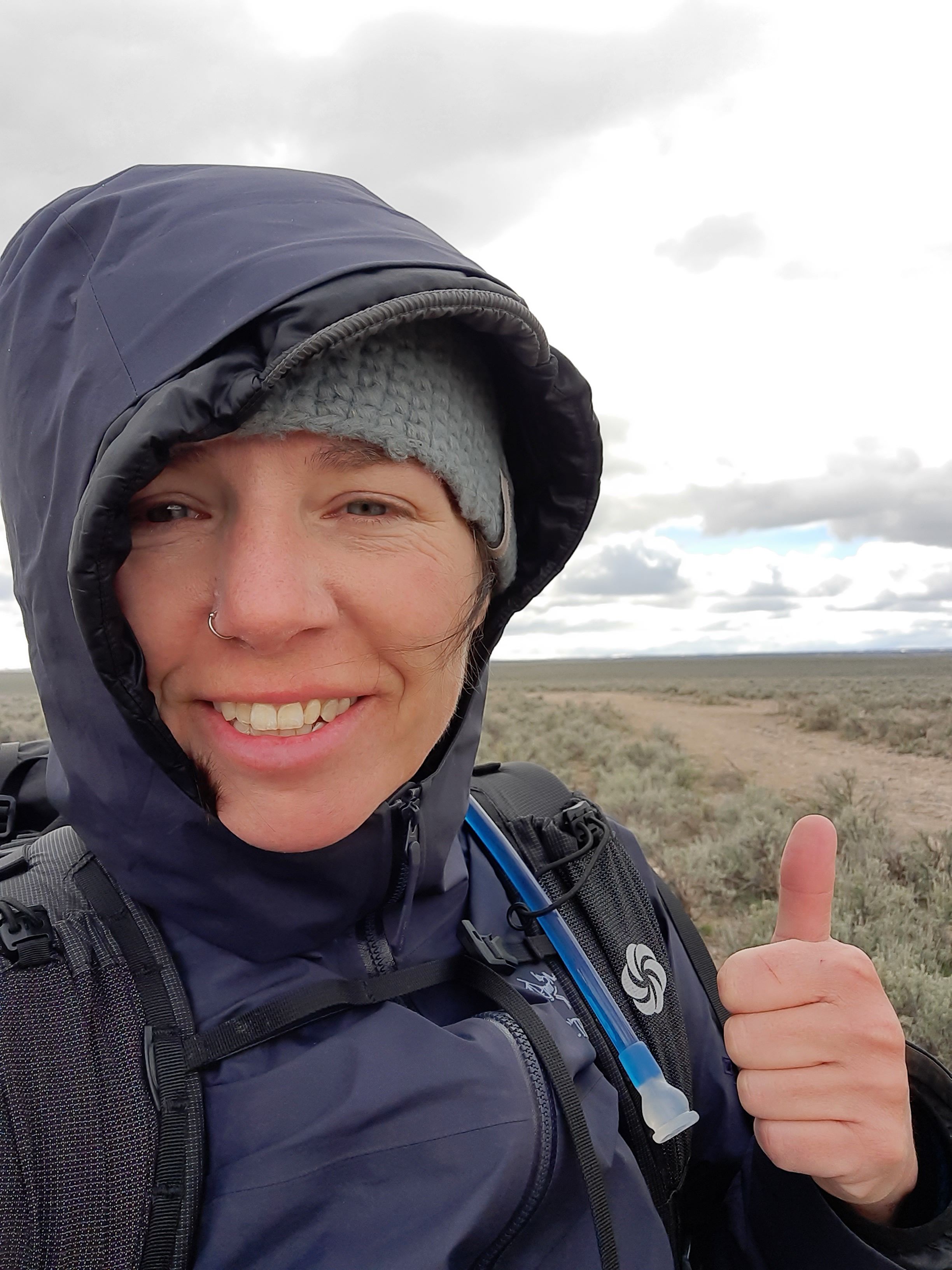


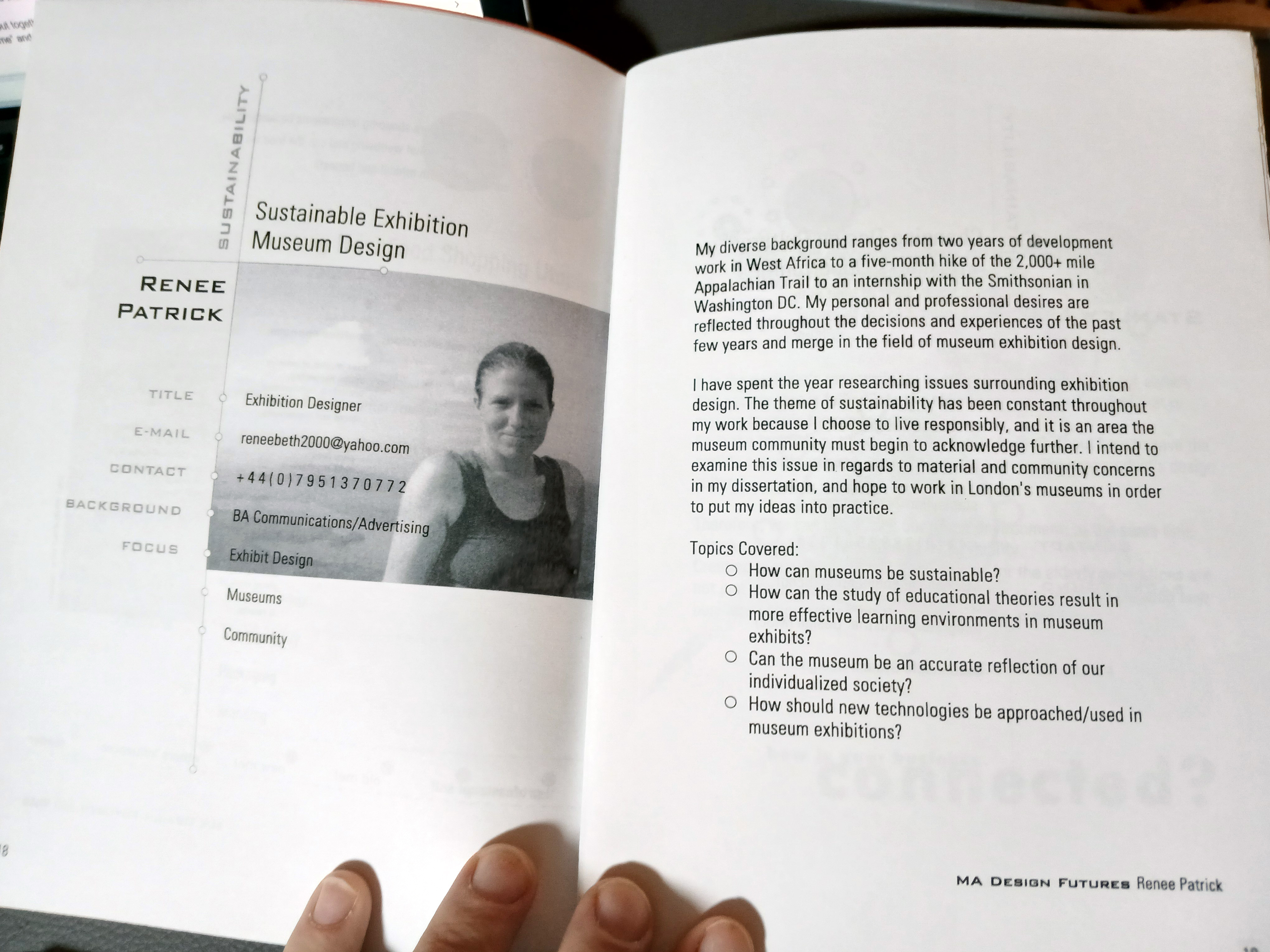


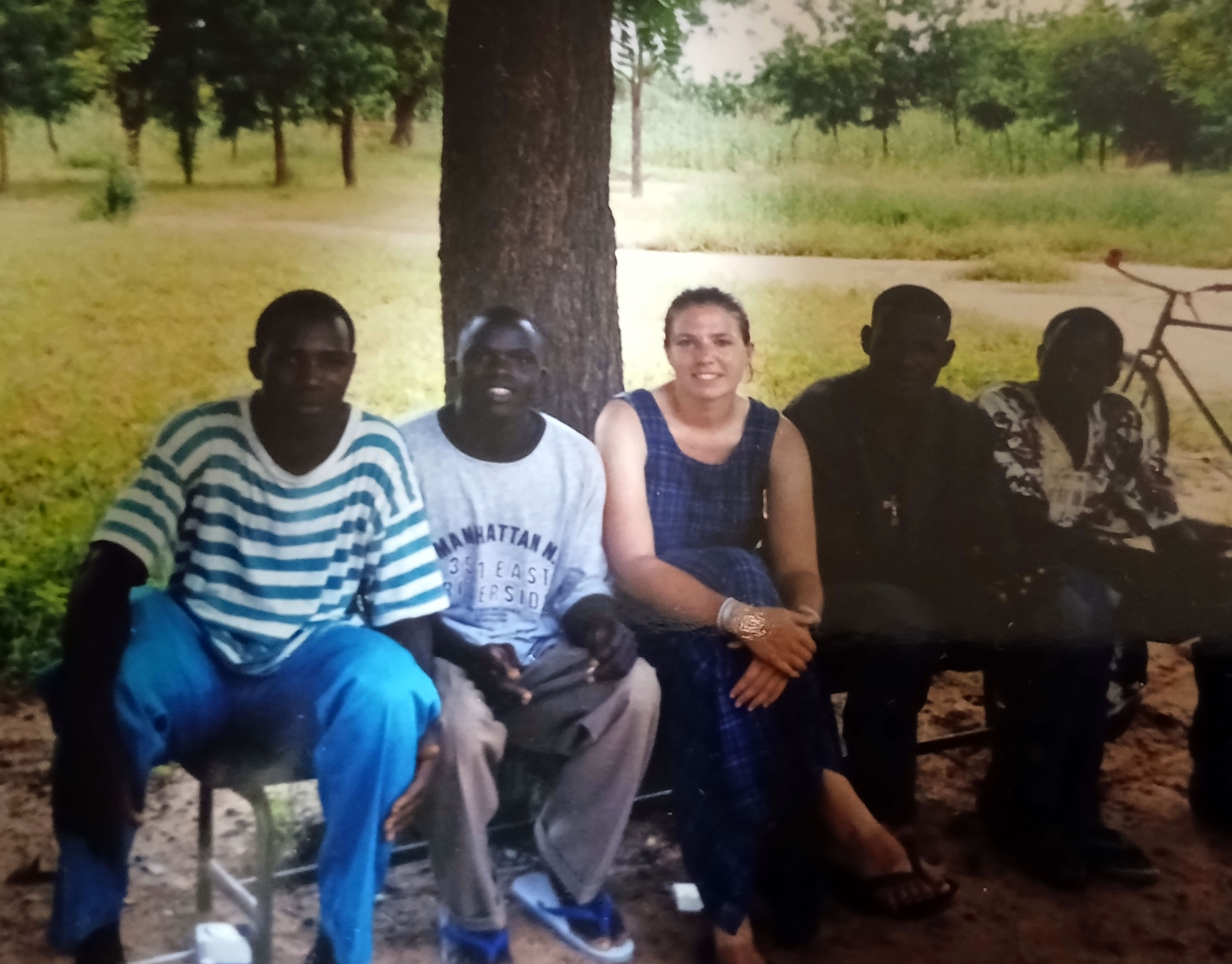
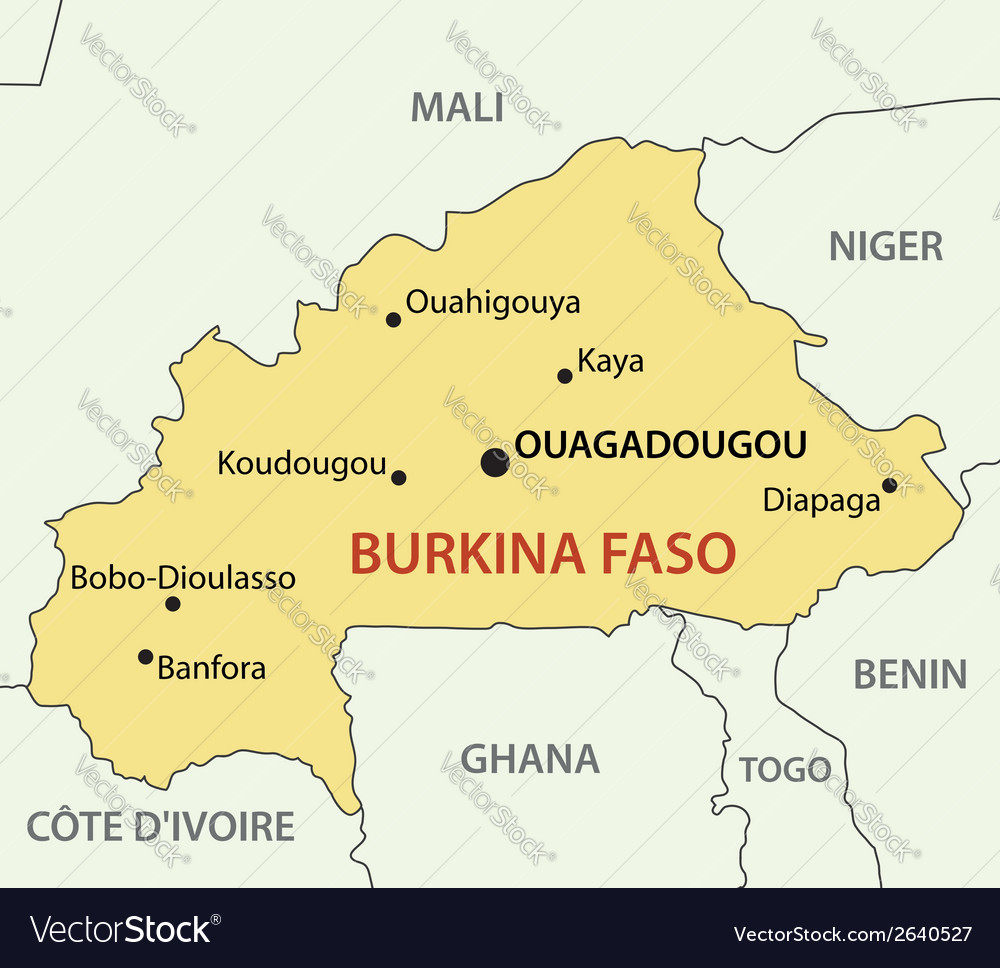

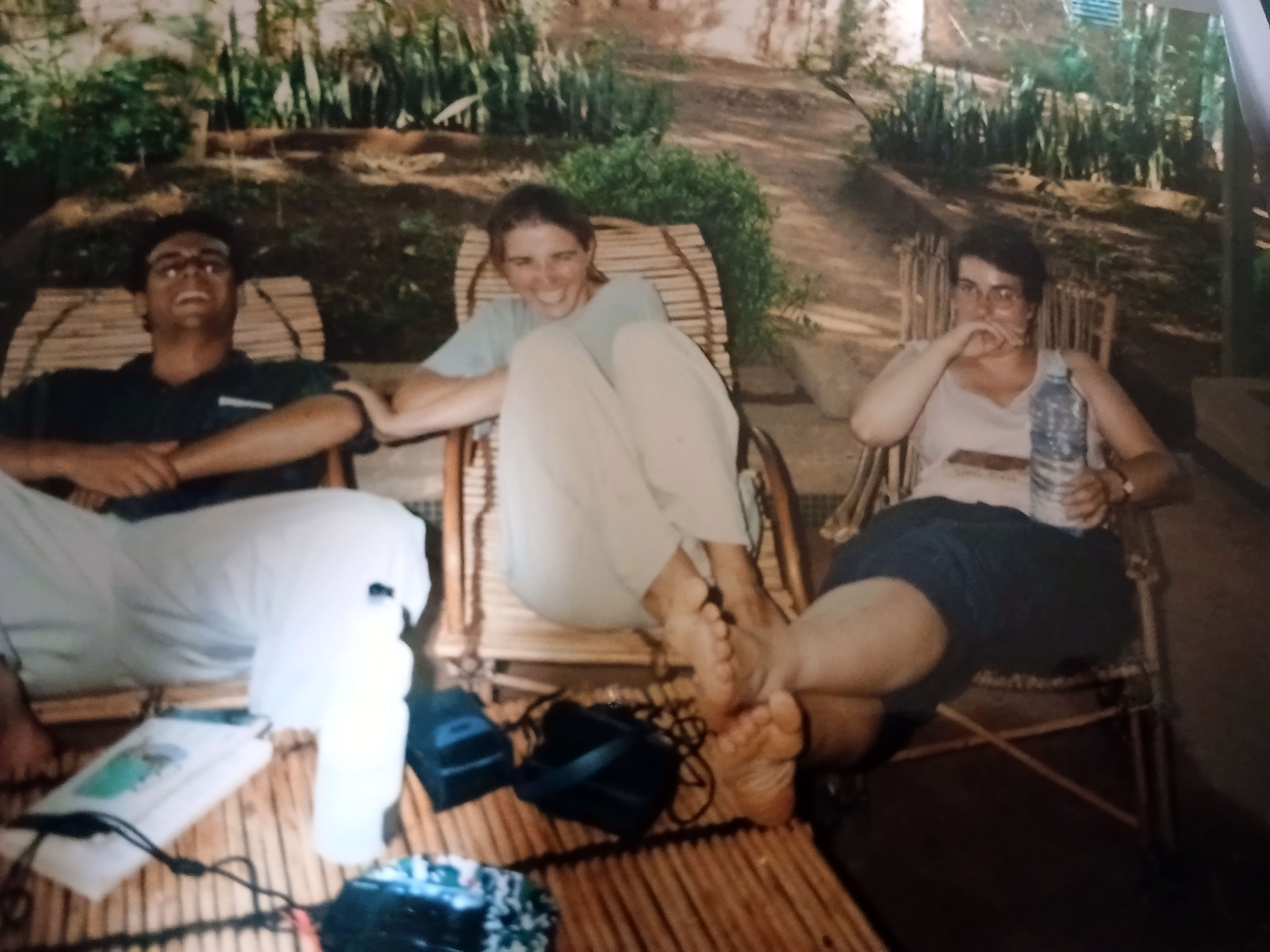




 ), but also it really brought home the fragileness of life now, life then, and the fact that some people don’t make it out of this cancer journey. Some do pass on to another state. I keep not believing that’s my path, so it’s overwhelming when some of that pierces through my optimism.



 She-ra Hikes