In lieu of another cancer update this morning, I’m going to repost something I just shared over on my Facebook page:
Thanks for the pic Mark Trails! Mark and I had a great stay at Ghost Ranch along the CDT in New Mexico (click for day 32 of my CDT hike here), and I got to take a side trip into Santa Fe to hang out with Extreme Alan (Alan Scott) for a few days too!
Hard to believe this was 10 years ago.
And I’m glad for the memory because there is ALOT of uncertainty and chaos around how our trails and public lands are going to be managed this year.
This week the Continental Divide Trail Coalition is heading to Washington DC with the Partnership for the National Trails System and American Hiking Society to speak to congress on our behalf. These organizations are celebrating their 28th year of Hike the Hill, a joint effort to bring together the trails community to advance shared trail priorities with congressional and federal agency leaders.
They will be advocating for trails funding, public lands management and conservation, equitable access, and other top priority issues that sustain trails and improve access to public lands.
THIS YEAR the trails community faces a sense of urgency unlike any seen in recent years as a new administration and Congress look to reshape the federal government and funding.
It is paramount that the trails community’s voice is heard by attending in-person or if unable to come to DC, to meet locally with district staff to form or strengthen key relationships and demonstrate the importance and value of trails.
This was on our “Can’t plan a pandemic” Gila Wilderness River Trip in March of 2020. Quite the adventure!
I’ve had a good couple of days since my second chemo treatment, and that even includes a stomach-blow-out near-miss yesterday. I have been handling this round like a champ, and I do have to credit my care team who has tweaked the meds and formulas that I’m on to give me a smoother ride. Thank you!
All of this does make me reflect on the incredible changes that have come to the chemotherapy realm for us cancer patients. The chemo of old would make your skin peel off. It would turn the soles of your feet black, it would poison your tear ducts and make all of your hair fall out. Unfortunately, we are not immune from the cumulative effects of this poison in our body. A quick search tells me over time these things can compound as:
Dental problems
Early menopause
Hearing loss
Heart problems
Increased risk of other cancers
Infertility
Loss of taste
Lung disease
Nerve damage
Memory issues
Osteoporosis
Problems with digestion
Reduced lung capacity
But it’s worth knowing that not everyone who has cancer treatment gets each of the late effects. Different chemotherapy medicines cause different late effects. So if I didn’t receive the chemotherapy medicines that can cause infertility, I shouldn’t be at risk for that effect (I’m too old anyway, so there!)
But that pushed me in the direction to find out what really has changed, and why? Is now really the best time to get cancer because things have gotten so much better? Why and what does that mean?
This article does a pretty good job at giving an overview, and I’ll distill it here:
Checkpoint Inhibitors
The 2010’s started with clinical trial results centered on the use of checkpoint inhibitors, drugs that unleash a powerful immune system attack on cancer cells and the results helped usher in a new era of cancer immunotherapy.
Checkpoint inhibitors seek to overcome one of cancer’s main defenses against an immune system attack.
Immune system T cells patrol the body constantly for signs of disease or infection. When they encounter another cell, they probe certain proteins on its surface, which serve as insignia of the cell’s identity. If the proteins indicate the cell is normal and healthy, the T cell leaves it alone. If the proteins suggest the cell is infected or cancerous, the T cell will lead an attack against it. Once T cells initiate an attack, the immune system increases a series of additional molecules to prevent the attack from damaging normal tissues in the body. These molecules are known as immune checkpoints.
This is where the cancer gets sneaky, but the drugs got sneaky too. Tumor cells often wear proteins that reveal the cells’ cancerous nature, but they sometimes commit what might amount to identity theft, arraying themselves in proteins of normal cells. Research has shown that cancer cells often utilize immune checkpoint proteins such as CTLA-4 and PD-L1 to suppress and evade an immune system attack. Deceived by these normal-looking proteins, T cells may allow the tumor cell to go undisturbed.
The superpower of checkpoint inhibitors come into play here because their goal is to remove the blinders that prevented the T cells from recognizing the cells as cancerous and ultimately for the immune system to lead an assault on them. Huzza!
Demystifying cancer genetics
I won’t lie, this is the silver bullet I’m waiting for.
The sequencing of human cancer genomes over the past decade has demystified the genetics of cancer. We now have a blueprint of cancer genes in every type of cancer and information about the frequency and type of mutations that occur. This has revealed new genes and pathways important for cancer development and in some cases has already led to new approved cancer therapies.
Genetically sequencing tumor tissue samples guides the therapeutic agents selected for a subset of cancer patients. This tailored approach, termed precision medicine, selects patients most likely to respond and spares those that are unlikely to respond from untoward side effects. Recent discoveries that it’s possible to sequence DNA in the blood to detect cancers provide hope that this approach can be used to identify cancers earlier and follow the response to therapy.
Identifying high-risk individuals
Nooooo, please not the cheeto test.
If there was a cheeto test to help identify cancer, I would have been in trouble a long time ago. Cheetos contain Yellow 6, the third most widely used dye and has been linked to adrenal gland and kidney tumors in animal tests and contains small amounts of carcinogens. But all joking aside, we have real agency over how high-risk we allow ourselves to be based on what we eat, where we live, and more. This topic does sink me into a vegetative funk because of how bad the environmental toxins have gotten around the world. Here are just a few ways we are being poisoned on a daily basis:
Industrial Emissions. Factory and manufacturing industries produce common emissions during production. Sulfur dioxide, nitrogen oxides, and volatile organic compounds may be deteriorating air quality and causing acid rain.
Agricultural Chemicals. Pesticides, herbicides, and fertilizers in agriculture have adverse effects, most of which end up in water bodies through infiltration. If released into the water, these chemicals can pollute it, harm aquatic organisms, and get into the water being used as a drinking water source.
Household Products. Many common-use products, ranging from cleaning detergents to paints to solvents, are normally enriched with dangerous chemicals. Disposal or accidental spilling of these products pollutes the soil and water resources, threatening the lives of people and nature.
Waste Disposal. Industrial, agricultural, and domestic waste, when not disposed of properly, pollute the environment through the release of toxic substances. Most dumps, uncontrolled dumping, and Waste disposal through burning contribute to the emissions of some compounds like heavy metals, dioxins, and POPS into the environment, including the soil.
And the pathways to these exposures include:
The air we breath. Interior pollutants mostly result from cigarette smoking, the use of cleansers, and emissions from cooking, while exterior pollutants are from industry chimneys, automobiles, and suspended particles. Suspended particulate matter, nitrogen oxides, and volatile organic compounds are dangerous because they cause respiratory and cardiovascular diseases.
The water we drink and bathe in. Drinking water that is contaminated is dangerous due to such contents such as heavy metals, pesticides, or industrial chemicals and brings with it diseases such as gastro and neurological disorders. Rivers, lakes, or oceans that get polluted by the effects of polluted water from agriculture, industries, and inadequate disposal of wastes also disrupt ecosystems and health-related perils by consuming polluted fish or exposing themselves to those water bodies.
The soil we grow our food in. Pesticide residue and fertilizer in agricultural soils can contaminate groundwater and enter the food chain. Sediment pollution in urban areas is facilitated by industrial operations, waste disposal, and vehicular emissions, which increase the concentration of heavy metals and other dangerous substances that are toxic to plants and human health.
The food we eat (damn you cheetos! Why are you so good??) Pesticide residues become potentially toxic when fruits and vegetables are consumed raw due to their accumulation in the human body, which results in several hazardous effects, such as endocrine disruption and cancer. Furthermore, processed foods contain chemicals like food dyes, preservatives, and even flavoring agents, which are feared to have various effects on the human body in the long run.
Enough of that…lets get back to why things are better now that we have all thoroughly dispaired in how things are worse. 😦
Personalized therapy
We finally know that one size does not fit all. This allows us to personalize therapy to a much greater extent than ever before. In some patients, this means we can treat them with less-intensive therapy and still obtain excellent results. Others may require more extensive therapy or benefit from a different therapeutic approach. For all patients, this means better, more effective care, fewer side effects, and, for many, a longer life.
Translating findings to clinical medicine and improving equity
Ah yes, improving equity and access. SOOOOOOOOO much can be gained by improving equity and access, especially in the medical realm.
We’ve made strides in ensuring that evidence from cancer research studies actually makes its way into clinical practice. For too long, research findings often seemed to remain in academia without being translated to clinical medicine.
Professional and patient advocacy organizations have undertaken a variety of steps to not only implement these advances in the clinical setting but also to make sure they’re sustainable. For example, organizations such as the American Society of Clinical Oncology (ASCO) and cooperative research groups regularly inform the broader public about research results and work at the state and federal level on behalf of patients. The development of “implementation science” is having a sizable impact on clinical practice.
Where equity issues have traditionally involved issues such as race, gender, and socioeconomic status, we’re broadening the focus to include considerations of gender identity, patient location (where patients receive treatment may affect their outcome), and treatment of the very youngest and oldest patients. These efforts will help ensure that advances in cancer medicine reach all populations.
So yes, there is more hope than ever that I (we) can go through these intensive cancer treatments and live a well-adjusted life after the fact. I’m not under the illusion that things will go back to normal, and the 25 year-old-Shera will be able to do the same things as the 50-year-old Shera can, but I know there can be a quality of life where backpacking, adventure, and regular time in nature is still a reality.
Now I want to talk about the gifts I received this weekend:
Carrie
Kirk
Brooke and Adryon
Mr. President (AKA Bill Tickner)
Robert Andrews
I want to name a few of my lifelines, not to make them blush (are you blushing?) but because each of these folks is an example of what is happening on a much larger scale for me lately. Their energy and gifts are fractal in nature. (Do you love fractals as much as I do?) In fact, some may say fractals are a lever to change the world.
Fractals are self-repeating intricate patterns that are found throughout nature. From trees, leaves, flowers, ferns, to the tissues and cells of our brains, lungs, kidneys, our artery network and capillaries to the mountain ridges, river beds, or coastlines, fractals form an integral part of our surroundings and our own being. To put it simply for the purpose I want to illustrate here, I have been experiencing patterns of kindness and generosity from my community in just a small sampling of my weekend interactions…and these interactions can have much larger and important implications beyond me and the weekend. These people shared their gifts of time and energy with me, and that pattern multiplies the more they and I do the same for others in our lives. By doing on the small scale, we can impact the large scale. We can pay it forward to make real change around us.
Hippy love for all! 🙂 Ok, back to the peeps and a brief ode to their awesomeness
Carrie. Oh Carrie. Carrie and I have known each other since middle school when I moved to Dunlap, Illinois as the awkward 12-year-old who still thought I could perm my straight hair and look cool. I did not look cool, especially as I tried to coax my locks into any of the gravity-defying hairspray styles of the early ‘90s, but somehow, she saw through the bad hair and became friends. We even spent a few years at Bradley University together (senior year housemates!) and in 2008 she made the leap out to Bend, Oregon and moved here to find out how the other side lives (having spent a corporate career in finance in Chicago and NY). Bend has been a welcome change of pace and now I get to have her as a neighbor and bestie and see her all the time! This weekend Carrie came over to give Kirk a respite. He escaped to the snow and climbed some buttes and worked those legs that hadn’t seen skis yet this year. (that is a feat in itself…Kirk and I are usually skiing ASAP in the year and spend almost every weekend in our camper up in the snow parks cross-country skiing, skate skiing, downhill skiing, or back country skiing. This winter has been an ADJUSTMENT, and Carrie’s gift was giving him the time to enter the white room. She also helped me do some paperwork, scan some items for insurance, prepare some things to mail, and most importantly, introduced me to the Apple TV show, Shrinking. We sat on our bed eating some delicious vegan lasagna that Marina had dropped off the night before and sank into some TV time together. It’s the little things, and I needed my Carrie time this weekend!
Kirk. What can I say about Kirk? He does all the things, he takes it in stride even when I get a little snippy and start demanding things 20 steps ahead of where we are now. “When you fill my water, can you also make me a mint tea, but put it in the blue cup, and bring me some blue berries and remember to check the mail, and bring me the book from the other room and after that I might want some lunch and I’ll need to use the bathroom. Oh and my feet are cold, do you see any socks that I left out, and the room is a bit funky, can you light a candle? Sometimes I see him take a deep breath and untangle the list of demands I just threw at him, sometimes he turns it back at me: “one thing at a time” and I’m forced to slow down and ask just one things at a time. It’s not always pretty, but we are managing, and Kirk has made all of this infinitely more tolerable and even pleasurable in ways. My Captain Kirk!
Brooke and Adryon. These ladies, the above folks have been making up my core team and I am all the better for it. We’ve been friends with Brooke and Adryon for well over 10 years now, and I believe it all started over some really good snacks – probably cheese. We bonded over snacks and the friendship blossomed to much much more over the years. B & A are my rocks, they bring us things we didn’t even know we needed, grocery shop to make sure the fridge is full, send us funny videos and texts throughout the day, cook us amazing food and make yummy juices. This weekend we were going to go over to their place for dinner, but the stomach erupting episode had intervened in my plans, and I opted instead to stay in bed and eat saltine crackers. They came over and we had just as good of a time as we would have over a risotto dinner at their place. Good friends can make any space better.
Mr. President. Bill’s trail name is Mr. President, and even though I’ve only known him for about a year, he has brought a wonderful energy and presence into my sphere. Bill joined the board of the American Long-Distance Hiking Association last year, and he had big ideas of ways to introduce long-distance backpacking to new audiences, and provide them with the knowledge and tools they would need to be successful out on the trail. The ALDHA West rucks are an annual event series that takes place in Feb/March each year, and I have been going to them for years, both as a presenter to talk about new trails like the Oregon Desert Trail, but also to participate in the community and help bring a welcoming tone to curious thru-hiking types. Last year Mr. Pres and I developed an online webinar “thru” the lens of climate change where I hosted a panel of expert hikers to talk about the challenges of snow, water, and fire that hikers will encounter on the trails. You can watch it here:
So, putting the panel together is what brought us together, but it just grew from there, and when he was traveling up from the Bay area to go to next weekend’s ruck in Cascade Locks (there is still time to register folks! Check it out: https://www.aldhawest.org/rucks) he asked if he could stop by and say hi. Oh man, what a wonderful visit! He brought beautiful flowers, and I had just mentioned that I was looking to expand my dark roast coffee collection, and he brought up five different varieties from the Bay. Oh lucky me!! But the best part is the conversation of course. Bill has been doing amazing things getting an ALDHA-West Diversity Scholarship Application open to help fund and outfit new hikers with all they need to start thru-hiking. You see, we think thru-hiking can (and has) changed the world, and the more people out there hiking the better, especially those who don’t traditionally feel safe or welcome in the backcountry. Bill put together a self-sustaining scholarship for new hikers (this year’s recipients will be announced soon!) and we spent the afternoon talking about how hiking, empathy, connection, and community can help right a lot of the wrongs we are feeling in the world. There are those fractals again! We will be doing our best to fractal these thoughts and energy into the world, and if you are so inclined to pick up on some of it and pass it on, all the better!
Robert Andrews. This was the cream on the top of the weekend. I don’t know Robert well, he came on my trail work trip to the Steens Mountain in September when things were starting to fall apart for me. I had been planning to thru-hike the Pinhoti Trail right after our trip and since Robert grew up in Alabama, we had lots to talk about, including how in the world to pronounce “Sylacauga” Alabama. I still find it to be a tongue twister. So in a way Robert was there from the beginning of all of this. So, I might as well go into another phase of my troubles that I haven’t touched on before…(Lets make this a new section, I can come back to finish up on my great visit with Robert after…)
The Neck/Shoulder Problems
Ok, so I told you the other day about how all this began, with a trip to the Wallowas sitting all crunched up in the front of our truck and then pulling my intercostal muscles later that month when I was visiting my parents. But the next part is a critical piece to the puzzle.
I normally lead a few stewardship/trail work trips for the Oregon Natural Desert Association each year, even now that they are a client of mine since I started by businesses. I had a trip scheduled to do some trail work at Reynolds Pond right outside of the Badlands Wilderness just a few weeks after tearing my ab muscles, but I was determined to still lead the trip, preform very light duty, and wear a brace and be responsible like a good injured trip leader would. It was just a day trip, and I did a pretty good job at giving direction. The first part of the day we removed an old barbed-wire fence line from near the pond that wasn’t needed anymore; we unclipped the wire, spooled it up and carried it back to cache it in one spot. The second half of the day we were helping improve the ADA visibility of the trail…some crushed gravel had been added to the trail, and our task was to find rocks to line the path to make it a more visible barrier and to block/prevent any sharp drop-offs into the lake that someone in a wheelchair or is visibility impaired might need some help identifying. I might have pushed it a bit too far in the afternoon rock gathering session. I kept a straight back, lowered myself to the ground, and picked up the smallest rocks I could still reasonably carry to add to the trail. I was definitely overcompensating for my hurt abs, and for some reason keeping a very straight back and not engaging the core seemed like a good idea.
Ok, that trip happened and nothing major came of it, so I decided that I could do the same for a 4-day trail work trip to Steens Mountain Wilderness for National Public Lands Day. I traditionally run these trail maintenance days, and we have a great working relationship with the Burns BLM District, so I was looking forward to the project we had on deck to continue reestablishing the Fred Riddle Trail – a project we started last year
I wore my lumbar brace like a good trip leader, let everyone know I was on light duty, tried to duty as light as I could (which is honestly hard for me), and overall did a pretty decent job of not reinjuring myself….at least at the beginning. Steens Mountain is almost a day’s drive for my volunteers who came from Portland, so we had 2 full days of work planned with travel days on either side. (AND Steens is the half way point of the Oregon Desert Trail. If you haven’t immersed yourself in the ODT yet, check out this video that Oregon Field Guide produced on the trail a few years ago….
And I have a daily blog too from my hike in 2016 out there. (You can really go down the rabbit hole if you want to)
So, end of day 2, I was feeling ok, but there was a tightening in my left shoulder. As the night progressed it started getting tighter and soon I was feeling something like a spasm coming on in my neck…it became so painful that I begged off early to bed where I ended up laying in my tent in excruciating pain all night long. Something had triggered neck spasms in the left side of my neck that were so debilitating that no pain meds I had could touch it, every swallow brought on a 5-second spasm, and I lay there in agony with tears running down my face unsure how I would get home the next day.
A few hours before sunrise I managed to emerge from the tent, Leslayann, a new volunteer friend (who has actually been reading my blog for years and wanted to meet me) woke up too and helped me slowly pack the truck with gear. I wasn’t sure if I should drive since my neck and shoulders were so compromised, but ultimately, I decided to risk it and once the truck was all packed started the long slow drive out. By this time my neck had been spasming for at least 10 hours and I loaded up on ibuprofen and it had started to slow down on the drive, thank goodness. It took me five hours to drive back to Bend and I immediately went to the urgent care and let Carrie (who also happens to work at ONDA) know what was happening with me, so she could help out. I had no idea what had caused the spasms other than I was carrying my body weirdly from the intercostal muscle injury. The clinic didn’t do any x-rays because there really wasn’t a mechanism for injury, and we chalked it up to sleeping on my neck wrong. Carrie helped me get home and return the vehicle to ONDA. I picked up some muscle relaxers and called it a day.
This whole time, by the way, I had been intending to fly out the next morning to attend the Pinhoti Fest in Alabama, and start my 400-hike that weekend. The plan was to hike south to north on the Pinhoti Trail, connect to the Benton MacKaye Trail and follow that to Springer Mountain and finish at the southern terminus of the Appalachian Trail to then get a ride and go to the Benton MacKaye Trail Fest before heading home.
Part of my long-distance trail consulting business strategy is to identify trails that could be improved and hike them to do an analysis of what and how they could be enhanced to help the hiker experience. I didn’t have a contract to do the work on either trail, but I wanted to hike, and they seemed like trails that were established enough but could use a little polishing on the edges to make them the best they could be…so I was trying to establish relationships with the leaders of both trail orgs at the same time. Maybe paid work would come out of it later.
But I was in pain and didn’t think I could hike. I postponed my flight a week, and that also happened to be the weekend Hurricane Helene hit the east coast. It was a perfect storm of my body revolting and extreme damage to the trails out east. That next week I got some acupuncture, still convinced that I could walk off whatever was happening to my neck and shoulders and that I just needed to calm it down. But I was thinking the Pinhoti might not be the best trail to hike. The Alabama sections faired ok, but it seemed a bit tone-deaf to go frolicking through the woods next to some of the most extreme devastation that part of the country had ever seen….and my plan had been to end at the AT, and that was all closed too. So I came up with my back-up plan to hike the Oregon Coast Trail.
The Oregon Coast Trail would be the perfect solution! I could take public transportation to it, I could hop off at any time if my injuries were too much for the hike, there were plenty of towns and friends and people I could tap if I needed some extra help. It was the win win, and I was all packed. Kirk and I took the camper that next weekend up to Waldo Lake so he could get in some foil boarding, and the plan was he was going to drop me off in Eugene on Monday morning before he made his way down to the Sotar raft factory to drop off one of our rafts that needed to be repaired. I would take the bus up to Astoria, see my friend Amy McCormick while up there, then start the hike.
Saturday morning though, I had the unfortunate realization that I would probably not be hiking. I was doing some exercises for my neck and shoulders when I tweaked something again and immediately everything froze up and I lost much of my mobility. We still went up to Waldo that weekend, but I was walking around on egg shells trying not to trigger anything else, knowing that what was happening would take a while to deal with. My October hike was off.
Over the next month I saw doctor after doctor. Chiropractor visits, PT visits, massage, acupuncture…pretty much everything I could think of to calm my neck and shoulders down. It kind of worked, ish? But then on November 1 I slipped and fell in 7/11 and everything got much worse. You know that story by now.
So the abs combined with the neck and shoulders, combined with the lower back all equaled out to a very messed up body. I had registered for the Partnership for the National Trail System conference in Tuscon in November and was determined to still go and participate as I could in the events. I took the wheelchair service through the airports on the way there and back, that helped, and I kept my heating pad and tens unit on stand by so I could plug in and treat at a moments notice. I was in pain the whole time I was there, but grinned and beared it. I had a wonderful time connecting with new friends and old and made a lot of fantastic connections that I know will be fruitful in the future.
My last conference of the year was for the Oregon Outdoor Recreation Summit, I am the chair of the Oregon Trails Coalition who hosts the summit, and we had a fabulous few days at the Sunriver Resort to talk about all things trails around the state. I was keeping the pain at bay, but barely so, and had to skip out on some of the fun like ice skating and late-night dance parties.
My trip to Lousiana happened the following week, but not before a fresh set of muscle spasms started on the right side of my neck and shoulder…thus far it had only been on the left. I was a mess and was looking forward to having my Mom take care of me for a few weeks…and well, we all know what happened when I got down there.
So now you know all the ins and outs of my injuries, so lets get back to Robert!
Robert signed up to bring me dinner this weekend via my Meal Train, and even though we didn’t know each other well, I remembered that he had worked for High Desert Orthopedics and probably had some insight into what I was dealing with.
He was texting with Kirk and mentioned wanting to bring a model/replica of a spine so we could talk about what was going on, I was immediately excited to have him over. And what a knowledge drop! We talked through my imaging, what I was experiencing in my spine, and even what some solutions might be to my collapsing C7 (not necessarily surgery!!! I was stoked to hear there might be non-surgical options!) and that got us into his whole field of practice as a Physiatrist. A what? A Physiatrist. It’s not a well-known position in the spine world, but plays a really important part in all of it.
A physiatrist is a medical doctor who specializes in physical medicine and rehabilitation. They diagnose the cause of the pain and develop a comprehensive treatment plan. They treat conditions of the bones, muscles, joints, brain, and nervous system. These could range from back pain to cancer to multiple sclerosis, and physiatry is a medical specialty that deals with the treatment of people who have a disability, chronic pain, or some other physical problem. The specialty is sometimes called physical medicine and rehabilitation. Physiatry uses physical therapy, pain medicine, and other procedures to treat people rather than surgery. It looks at the physical, vocational, and social needs of the patient. Unlike other medical specialties, it aims to treat the whole person.
Robert was the perfect person to talk about all this with, and on top of that he brought a delicious curry lentil soup with some fresh striatta bread. AND we talked about food. He’s been vegan for a long time, and recommended that I check out chef Ottolenghi for some delicious and simple recipes. I mean, check this one out: https://ottolenghi.co.uk/pages/recipes/mushroom-risotto-crispy-mushrooms-kecap-manis-drizzle
Drool
So those are a few of my gifts from the weekend. I’m feeling energized (although it’s 2:12am and I need to lay down now) and am ready for another week of WTF is happening now???
I woke up about midnight in excruciating pain. My neck and shoulders were on fire, and I could barely move without setting off waves of muscle spasm. Imagine if this was happening in my tent, 10 miles from the nearest out.
I couldn’t.
This was the reason I wasn’t out hiking this October. I would not be watching the colors slowly change in the trees as the trail tread gradually disappeared under splashes of gold, red, orange, yellow, and maroon. This was the reason I had to distract myself from the huge gaping hole left in the wake of what I love to do more than anything and can’t do…so much so that I designed my whole career around it…what was I going to do if I wasn’t thru-hiking?
The answer is obviously to try and fix the body. But that will require rest and very little movement for the near future…something I’m not so good at.
My neck and shoulders have been painful for two weeks now, and I think that pain was triggered by a rib injury that I sustained almost a month ago now. Several trips to urgent care and lots of epsom salt baths later and now I’m trying the chiropractic route. Last night was probably the most pain I’ve been in this whole time, but after the first two adjustments I finally feel like there is progress in my quest to return to backpacking condition. And yoga! I haven’t been able to do yoga for a month now, or much of anything else. I’m turning into jello with every passing day. How does anyone stand the inactivity?
If I had been hiking the Pinhoti right now, where would I be? Lets see. I would have started walking the Sunday after Pinhoti Fest ended…that was a little over a week ago now, and at a 15 mpd pace, I would have hiked about 135 miles.
Instead of making my first cup of coffee in the zero-dark hours on trail, hunkered in my sleeping bag, trying not to spill it all over myself as I start writing this blog on my phone, I am in front of my laptop in my office at home, drinking coffee through a straw. It hurts too much to bend my neck to sip, so I have to bring the coffee to me.
This not-hiking is agony, and I have weeks of it ahead of me. I am not working during this time; my brain needed a good long walk as much as my body did. Walking is what feeds it with new ideas, hiking causes it to play parkour with ponderings and musings. I need to give this hardworking brain of mine a rest too, so I am going to play a little game with myself while I heal. I’m going to give myself a virtual hike along the Oregon Coast Trail.
Wait, the Oregon Coast Trail? Yes, well, after I had pushed my departure off for the Pinhoti Trail for a second time, I stewed in self-pity for a few days before glomming onto the idea that I could rest another week and still go hiking. The Oregon Coast trail was close, had plenty of towns (outs) to bail if my body couldn’t take it, and I could talk a lot about real-time trail issues our long trails in Oregon are facing (a la Oregon Trails Coalition ).
I could even take public transportation! Walk out my front door, hop on a bus, then another, and arrive in Astoria. From there I could walk as far as my body would let me, and bus back home from wherever I made it to on the coast. A true masterpiece in connectivity. And talk about connectivity! The Oregon Coast Trail ties into other trails that are included in the Oregon Signature Trails project. There’s the Salmonberry Trail , a work in progress that will connect Portland with the coast, and potentially share some tread with the Oregon Coast Trail, and also the Corvallis to Sea Trail …the route Amber and I walked three years ago to its western terminus at Ona Beach. I’d walk right past it!
Then there are all the bazillion times I’ve been to the coast in the 20 years I’ve lived in Oregon. The first time I went to Beverly Beach with some new friends, we whipped ropes of seaweed like 13-year olds. Then there was the time Cindy and went hiking for New Years, and some hoodlums shot a bullet into our rental car. Or the time I taught a light-weight backpacking course at Portland Community Collage and we overnighted on the coast.
With a virtual hike of the trail, I could imagine and research what I would be experiencing in real time. What would that look like? What would I see and learn about the area? Where does the trail go, and why? What are the issues facing the Oregon Coast Trail and the coast itself? For the rest of my convalescing time, I’ll take myself on a virtual journey and share it with you like I usually do in my daily blog. BUT since I’m at home and love maps and multi-media storytelling, I’m going to make a story map of my virtual hike so you all can learn alongside me, in real time.
Each day I’ll “hike” my miles, and the next day will keep up my morning writing routine with you here. I’ll cover 400ish miles, create a story map, and share it with you.
Ok, lets go. (click below to start the journey- This story map is best viewed on a desktop, laptop, or tablet.)
I’ve been planning my Pinhoti thru-hike for most of the year, and now it’s not happening.
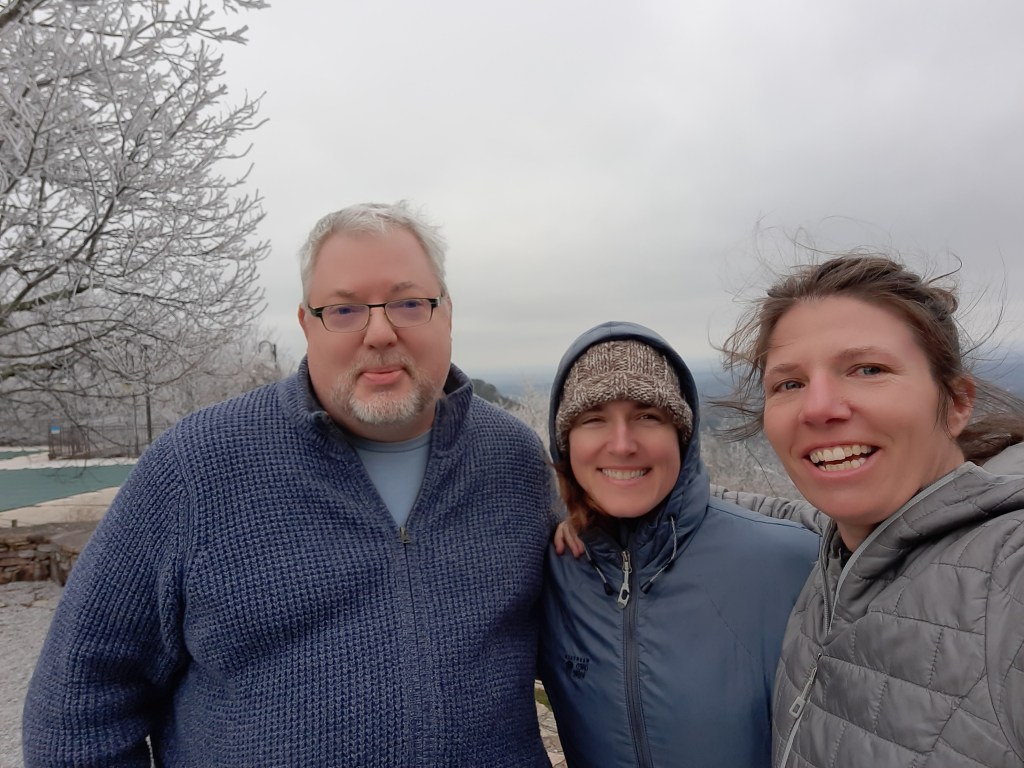
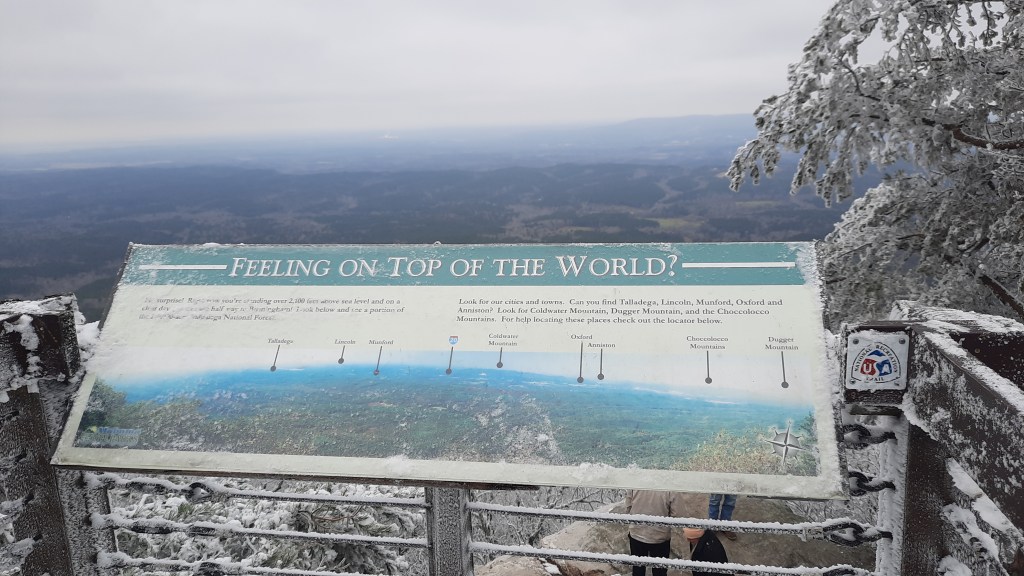
The Pinhoti Trail has been on my radar since 2022 when Cindy and I visited our Peace Corps friend Richard and spent a rare snowy Alabama afternoon at Cheaha State Park.
I’ve been hiding from the reality that this is not the right time to hike for about a week now…an injury (actually a series of injuries) and the devastating hurricane that battered the East Coast have contributed to this change in plans, and oh how I’ve been resisting all of it!
Fortunately, the Pinhoti Trail has been spared the destruction of hurricane Helene, but the Appalachian Trail has not. A full third of the trail is now closed, and it could take a looooong time for a full recovery. There are many ways we can help in sending money and support for the communities affected along the East Coast, and I’ll be modifying my fundraiser soon to recognize East Coast recovery efforts along with raising money for the Oregon Trails Coalition.
September has been the hardest month of my life, hands down. The heaviness of this current moment comes from many different aspects of my life…and most of it I am unable to control. I ache for the solace and peace that extended time in nature brings, but what does that look like if I can’t hike?
My body controls my future at this point….I can’t rush the healing, and I can’t let my stubbornness and determination derail my ability to backpack in the future by heading out too soon with full pack weight.
So, I wait, I plan, I come up with backup plans, and backup backup plans. I still have hope I’ll be able to do some hiking in October, but I have to let go of expectations and take each moment as it comes.
After the hike through the Gila, I attended the Continental Divide Trail Coalition’s Trail Days festival in Silver City to host the first of my Intentional Hiking fireside chats.
A big thanks to Silver City Daily Press for covering the evening and capturing some of the sentiment shared by hikers and community members:
Community members and hikers gathered around a campfire Saturday night at the old Silver City Waterworks to discuss building on the sense of community that draws people along the Continental Divide Trail to Grant County in particular.
The Waterworks opened to accommodate CDT hikers for Trail Days, with about 40 tents booked each night for camping.
Veteran hiker and original CDT ambassador Renee Patrick led the discussion focusing on the relationships between hikers and the communities and people along the trail. She is the founder of Intentional Hiking, which offers an online discussion series about various hiking-related themes. One point of discussion was that hikers need to remember to be humble — they are just one of hundreds each year who make the trip from border to border.
Kristy Lopez, owner of Doc Campbell’s Post in Gila Hot Springs, said she tries to give hikers the benefit of the doubt, but sometimes it can be difficult.
“They say, ‘I hiked all the way from Mexico,’” Lopez said. “Two days ago there was a guy that came in, and I said, ‘That’s awesome. So did all the 12 other people on the porch.’”
But hikers have generally been helpful for her family business, she said.
“We wouldn’t be where we are now if it wasn’t for hikers sitting down with us and spending time to tell us what they need and what they don’t need,” Lopez said.
“I think we have to be humble and be thankful for what we have access to in the communities. Sometimes we forget that,” said hiker Mike “Just Mike” McClue. “It’s amazing to talk to the local people and understand the history. It’s not just about us.”
Michael Darrow, tribal historian for the Fort Sill Chiricahua Apache Warm Springs Tribe, agreed that hikers should know about the history of the land.
“For us, the whole thing is considered sacred land,” he said of the Gila region. “Historical events took place all along the way, and they were special to people in our tribe. Keep in mind some of the things that have taken place before, and it can have an influence on the way you think, the way you feel as you go through the area.”
Likewise, people in communities should get more involved with the CDT, Raul Turrieta said. Locals have gone to the Gila River and the Gila Wilderness for recreation for years, he said, but hiking has not been a big activity for people who live.
“We need to spend more time on hiking, because they don’t really understand how important the CDT is,” he said. “Next year, I would really like to get involved in stimulating the community and bringing in the Mining District also for them to come out and do a lot of hiking.”
Turrieta said it’s also important for hikers to share their experiences with youth to help them get interested.
Overall, the CDT is about connections, Patrick said, including the physical connection across the continent, connection to nature and connection to each other.
“That’s something that long-distance hiking has really helped me realize, is I’m connected to everything, I’m a part of everything,” she said. “Finding that connection is what’s so unique about what we do. It helps us understand that in a way that’s hard to do when we’re in our walls, roofs and Wi-Fi all the time.”
—JUNO OGLE
Stay tuned…I plan to hold another discussion at PCT Days this August!



 She-ra Hikes