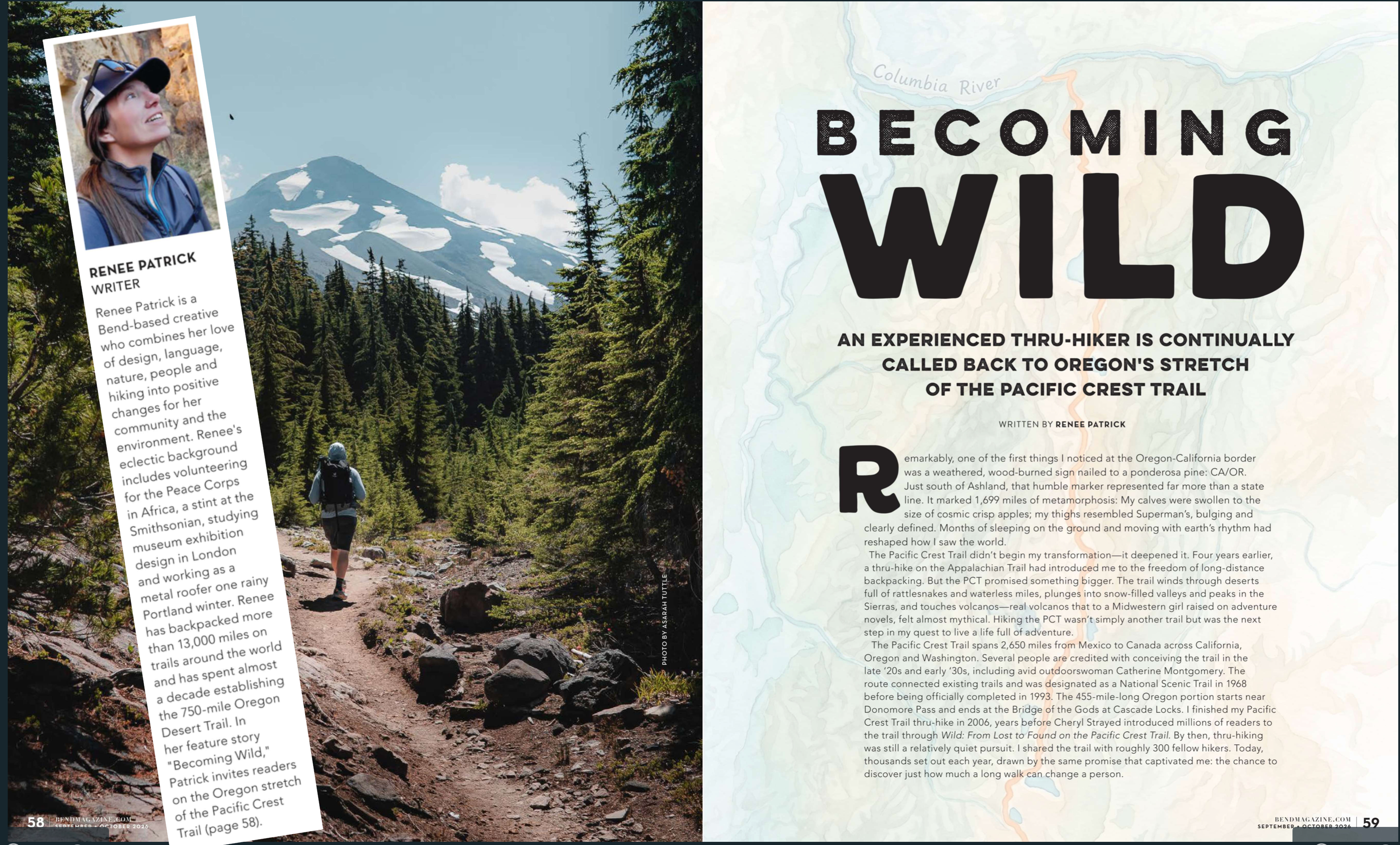
When Bend Magazine asked if I would write an article about my thru-hike on the Pacific Crest Trail 20 years ago, I was thrilled to be able to share a few slices of the experience that changed my life.
Even though I feel many miles away from the person I became on that trip, I know she underpins all of what I do and how I see the world now.
Click here to read the full story on Bend Magazine‘s website.
Getting edited for a travel magazine was something new to me, and even though they added lots of practical tidbits to the story, I prefer one of my earlier drafts which I’ll share with you here.
I don’t know if it’s frowned upon to share a draft of an article that becomes something else at the end, but here I am, doing it!
Wander through the Wonder on the Pacific Crest Trail
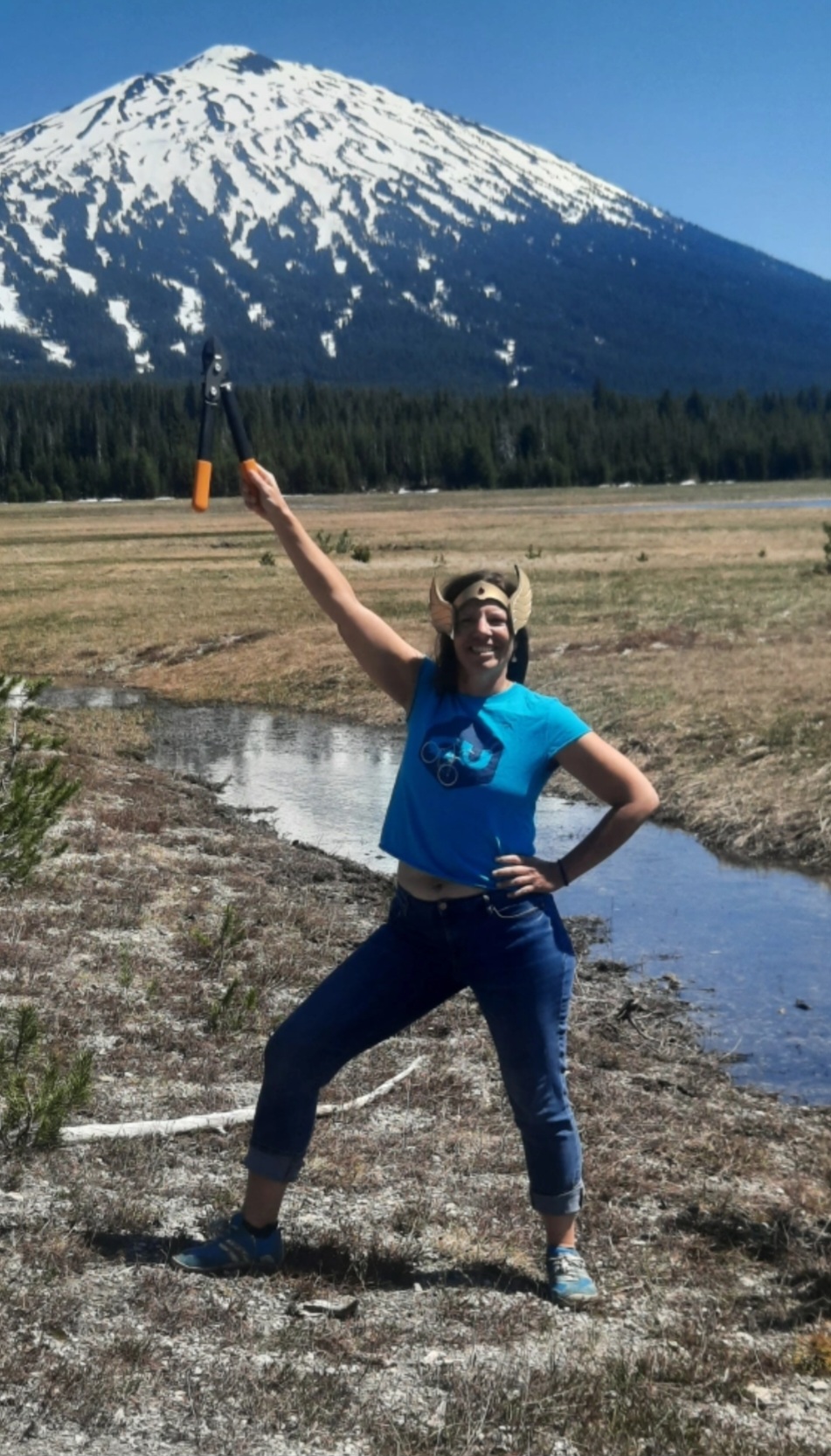
At the Oregon/California border of the Pacific Crest Trail I found a simple wood-burned sign nailed to a ponderosa pine. That sign, just south of Ashland, marked the transformation my body had taken over the previous 1,699 miles: my calves were swollen to the size of cosmic crisp apples, blisters were a thing of the past, and my thighs bulged out like Superman’s. By the time I walked up to that sign the miles had honed me into an invincible hiking machine, and now, Oregon was to be savored.
Oregon proved to be the indulgent treat I had waited for, especially when I gazed at the fathomless depths of Crater Lake with a water bottle full of wine; I watched the stars wink into being that soft evening and resolved to live this trail life forever. The granite expanse of mountains in California were astonishing, but the standalone chain of basalt and pumice peaks was somehow more welcoming. The trail gently ushered me through the gateway of volcanos, high cool lakes, and the kind of trail where the mind could wander around the wonder of the Pacific Northwest.
To this mid-western girl, the thought of walking the far-away lands of the PCT reminded me of the adventure books I devoured as a girl. Back then I wanted to live a life full of exploration and exploit; I still do. I walked to Canada that year, five months after I left the Mexican border, and my quest to live and work outside the bounds of the ordinary brought me back to Central Oregon two years later; I came back to hike. The trail in Oregon was originally named “The Skyline Trail” before it became part of the PCT, and it was aptly named. Our local tread ushers you along the shoulders of volcanos including South, Middle, and North Sister; past Mt. Washington; Three Finger Jack; and the hulking Mt. Jefferson.
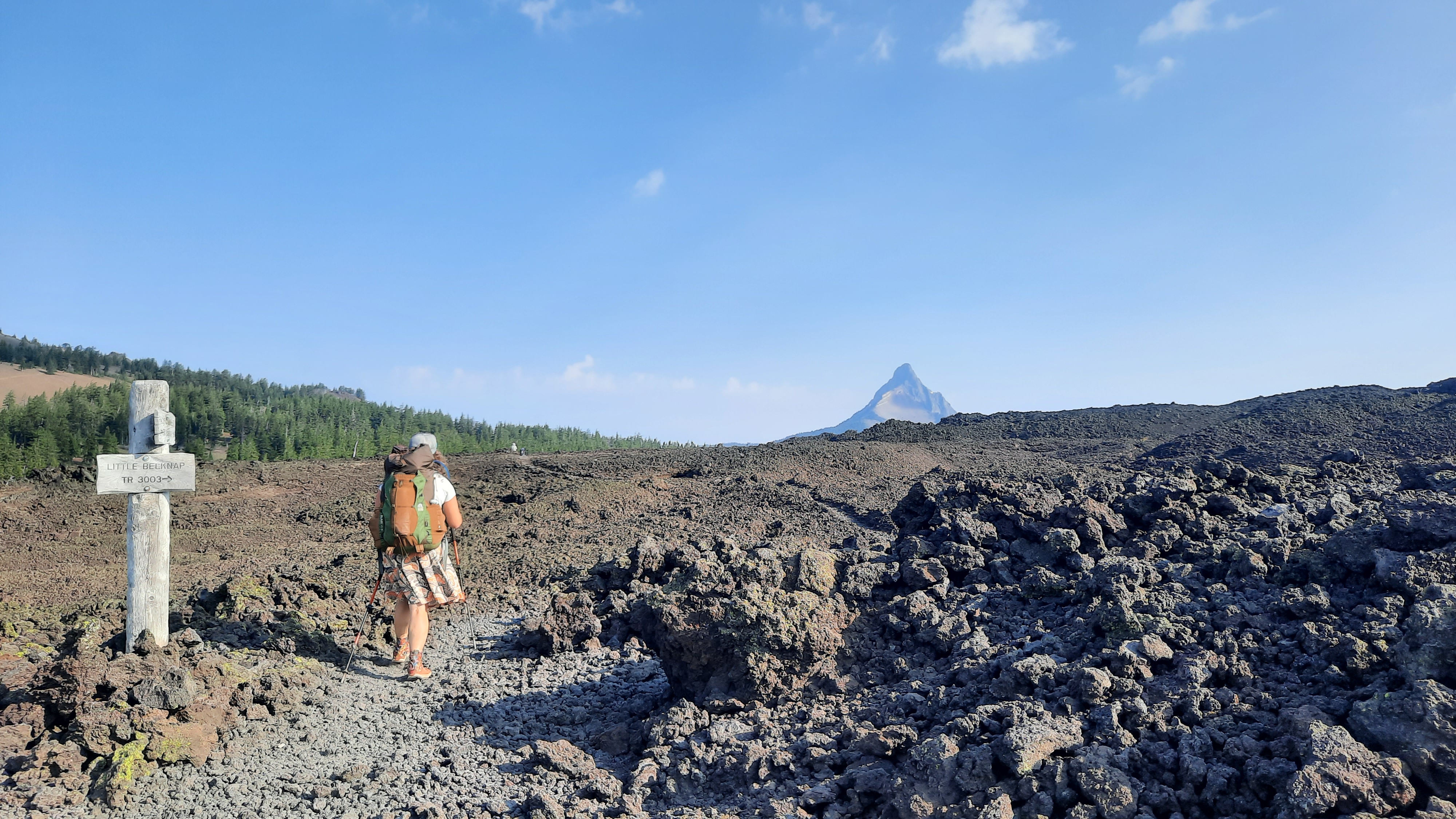
The PCT was the brainchild of avid outdoorswoman, Catherine Montgomery, back in 1926. I thru-hiked the trail 80 years later in 2006, well before another notable woman, Cheryl Strayed, made the PCT famous in her book, Wild. Cheryl stopped her 1995 hike at Cascade Locks, 455 miles on the opposite side of Oregon from that CA/OR sign, but you need not hike for months to find the respite that she did on trail. Those who want to experience the iconic volcanic section of the Oregon PCT will need a Cascades Wilderness Permit for a day hike or short backpacking trip, but it’s worth it! Gear shops in Central Oregon employ knowledgeable hikers that can help with gear choices or would be happy to pour over maps with you. Ready to head out? From Santium Pass, a short 6-mile hike will find you walking below the summit of Three Finger Jack. At Willamette Pass a 3-mile walk uphill ushers you to the clear blue waters of Rosary Lakes where you can camp and swim. Elk Lake is only a mile off trail, and if you head to the resort for lunch you are sure to see hungry thru-hikers that can’t resist the idea of cheeseburgers and beer so close to the trail.
In the years since moving to Oregon’s dry side, I’ve discovered that all the seasons offer different excitements. Cooler fall temps mean a lack of bugs, and when permit season ends in mid-October, it’s easy to head up for a short day-hike from Mirror Lakes trailhead or McKenzie Pass; well-trained eyes can spot delicious Chanterelle mushrooms, a welcome addition to any trail meal.
In the winter Ray Benson Sno-Park hosts cross country ski trails along the PCT; I’ve made it a new year’s tradition to sluice through the snow. For backcountry adventurers, skiing into Mt. Thieson’s shoulder to snow camp will give you a thrill every time you peak outside the tent on long winter nights, and a rigorous day-trip could even be made out of the skin-track up South Sister or Broken Top.
You are not excluded from the wonder if you can’t (or don’t want to) walk the dusty miles. Hang out at one of the mountain passes with a cooler of cold drinks or pick up a thru-hiker trying to get into Sisters for a shower and a meal. You will be able to identify them by their skinny, dusty legs (could be dirt or tan) and the tiny backpack. Give a hiker a ride or soda and you just might make a friend for life.
Another reason to explore the PCT is to learn more about this amazing planet we live on. Maybe your interests lie in history, or is geology your thing? Trail guidebooks, apps, and kiosks illuminate specific details about each area, and now in the age of cell-phones, it’s common for hikers to download podcasts or audiobooks about what interests them. Many use iNaturalist or Seek apps to learn the names of flowers and trees around them, and some may even contribute to a community science project about the flora or fauna they find.
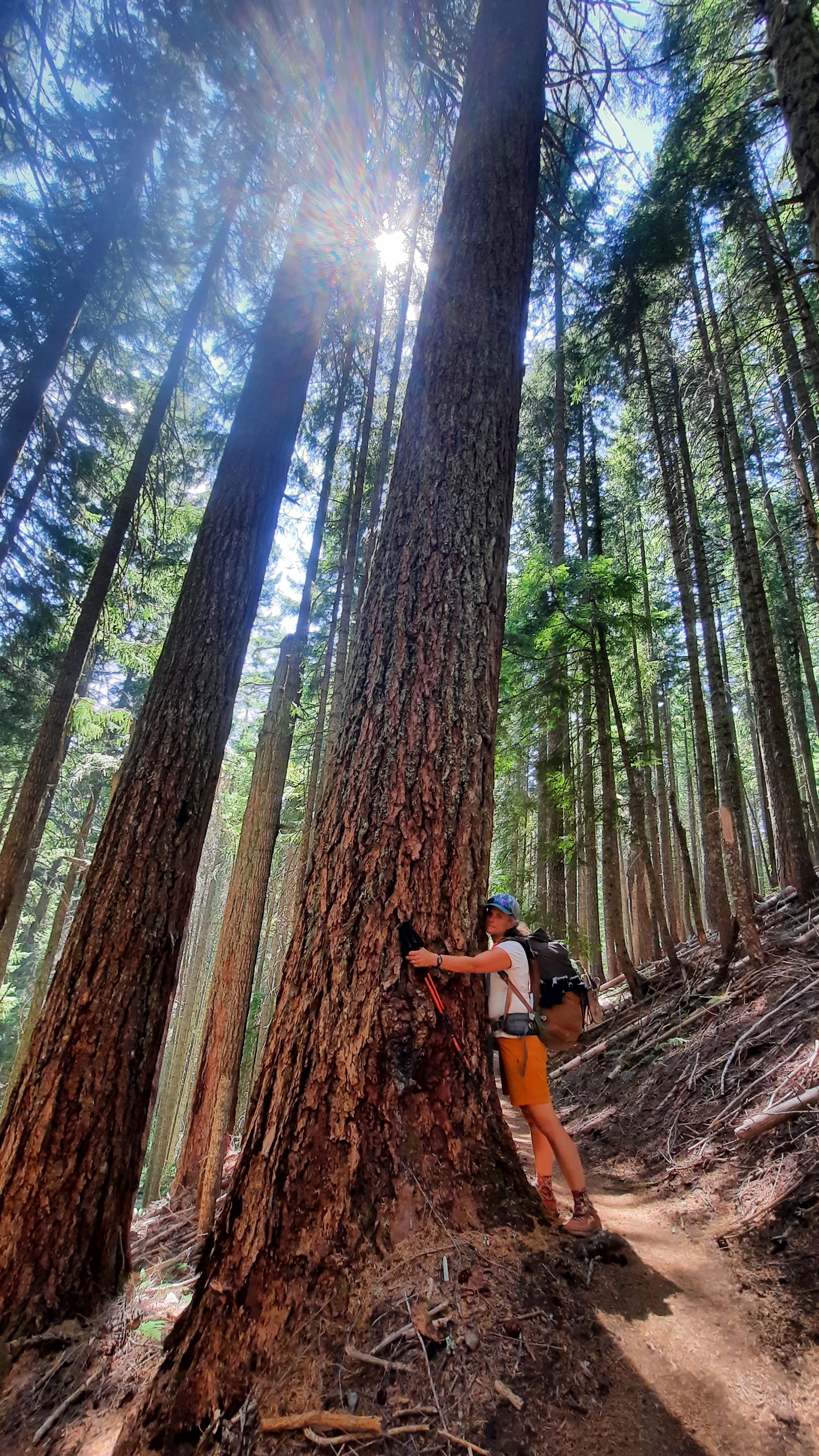
There is much to discover about the land along the PCT, but my favorite part is the connection I make to place. The trail becomes home, and in fact has been home to many since time immemorial. The richness of a life lived outside can be measured in sunrises, in the number of clouds that slowly drift overhead. My wealth increases each time I take a nap under a ponderosa tree, listening to the wind swaying the heavy branches overhead. I smell tangy manzanita in the summer heat and feel the sun warming me into my slumber. I sink into the forest floor and know I am connected to this place. I am part of it. We all are. To hike is to go home.




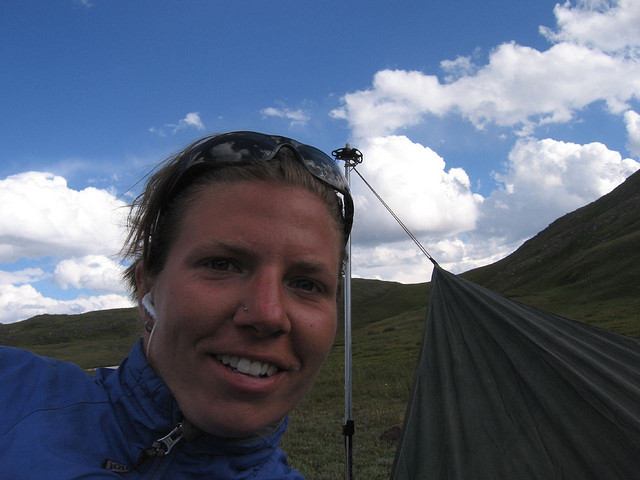
 She-ra Hikes