My feet & legs feel great! Time to hike!
Oregon Desert Trail (1st Section Hike): Day 9 – 0 Miles
The mosquitos are bad. Frenchglen borders the south side of the Malheur National Wildlife Refuge, which is a large wet, marshy area. All this water is what makes the area spectacular for birding, but ripe with mosquitos. I had slept in my bug condom (mosquito netting that goes over my sun umbrella with elastic to cinch at my waist- it fits under my tarp too to keep the bugs off my face and arms when I sleep), which worked out fine, but waking up and making some coffee exposed too much skin. I spent the morning in the laundry room to to escape the bugs, and put a big dent in the book I was reading.
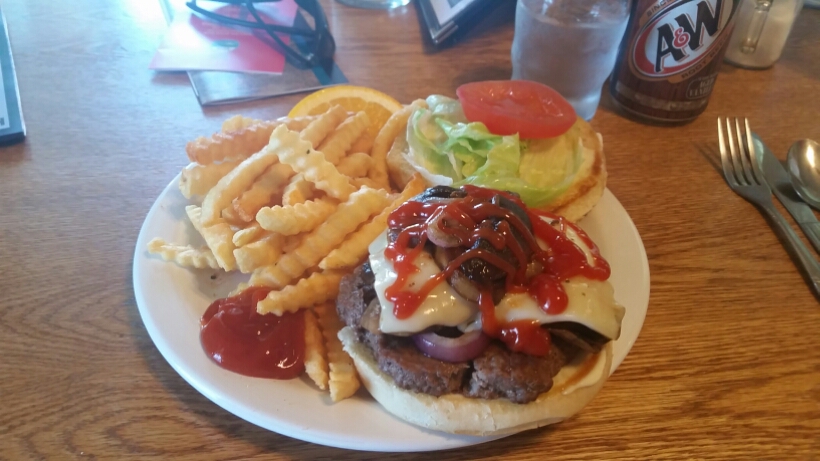
I decided to go up to the Frenchglen hotel for lunch (breakfast & lunch are open to the public, dinner is family style and is by reservation only…if there is room after the guests of the hotel eat), so started on the 3 mile walk up there, when a guy in a backhoe offered to give me a ride up there. He went and got his ATV, and it was then I met Orritt. Orritt works for the Refuge and just happens to live in the house where ONDA was founded about 30 years ago. (For those of you just tuning in, I work for ONDA – the Oregon Natural Desert Association- a conservation group who has been working for 30 years to protect, restore and defend Oregon’s high desert. They created the Oregon Desert Trail to get people out to experience this incredible place). He knows a lot about the area, and I was glad to meet him. He recommended I get the Steens burger, and when I sat down to order, I found out his wife Twyla works there! Twyla and Dawna took good care of me, and since I was the only one there at that time Twyla sat down and had lunch with me.
I think a big part of the hiking experience in these remote places are the people you meet. This hike gives you the chance to meet people who have often lived in these areas for generations and who know the land extremely well. It’s primarily ranching land out here, and while ranching and conservationists don’t always see eye to eye, I thinks it’s important to understand both sides of the issues like grazing on public lands. So far I’ve been welcomed and helped by almost everyone I’ve met, even if we don’t always agree on all the issues. I think hikers will find a lot of trail angels out here who have no concept of what “angeling” is, but just friendly folks who see some who might be in need of a ride, or water, or a cold beer.
Anyway, the Steens burger was AWESOME. In fact I found they had room for dinner tomorrow, so I’ll be back for that, and will probably have breakfast when I hike out the next day. Too good to pass up!!
I chatted with Melina at the Mercantile next door and she was curious about what hikers would like to eat…she has plenty for a basic resupply if you aren’t picky, and I told her about some fuel options hikers might like, and some other meal options like Backpackers Pantry.
I sat on the porch of the hotel for a while reading my book and drinking a Steens Mountain Brewery beer before Orritt returned to see if I wanted a ride back to the campground. See?? Good people!!
I went back to my spot in the laundry room, and a few hours later after chatting with Debbie and learning the cabin I’m renting tomorrow night is open tonight too, decided to splurge and sleep in a bed tonight too and forgo the buggy tarp situation.
Ahhhhh!
I checked out a few DVD from their library and spent the rest of the afternoon / evening watching the boob tube.
Life is good!
Oregon Desert Trail (1st Section Hike): Day 8 – 5 miles (146.2 miles)
I just looked back at the first week of the CDT for some perspective on milage…by day five last year I had gone 89 miles. This year on the ODT it was 107.6 miles. Yep, I guess I needed to remember to ease into the miles. Such is life!
I thought I would talk a bit about blister care out here. When a blister forms I take out my sewing needle, and put a short amount of thread in it. I sterilize the needle with a lighter, and smear a small amount of triple A ointment on the thread, then pop the blister and “thread” it, leaving the thread going through it. This will hopefully keep the blister draining and prevent it from closing back up and filling again. Then I smother with more antibiotic ointment and bandage. It’s important to start with clean skin. I carry wet wipes for this purpose. Once the bandages are on I go hiking!
At every break I take my feet out, remove the bandages and try to get some sun on them. That’s something a hiker named Billy Goat told me on the PCT. Get those feet in the sun and let it dry them out. Those blisters will toughen up and turn your feet into calluses and the hoof-like walking machines they need to be to hike steady 20-30 miles days. For me at least it’s a process I go through on just about every trail. No pedicures for me! I need all the tough skin!

Ready to go!
So after my morning blister care, I sat and tried to decide what to do. Fact: my feet and body need some time off. Fact: I have a reservation to stay in a cabin at Steens Mountain Ranch in a few days. Fact: if I take time off where I am, I won’t make it my cabin rental in time…and EVERYTHING has been booked, so I don’t want to pass up my one chance at a bed on this trip. So, I decided to hike to the road and try to hitch up to Frenchglen. I’ll camp out for a few nights at Steens Mountain Ranch, air out the feet, rest the legs, and stay in my cabin, hiking out from there…continuing West. That means I won’t be hiking up and over the Steens on this trip, but that’s ok. I want to come back this summer/fall and spend some time in the Fields area anyway looking at a few route options, so I’ll just tack on a few days and hike this 50 or so miles that I’m bypassing now. It’s all good! And I feel happier and stronger already. Just remind me to schedule in some rest days next time!

Making a sign helps to get a hitch, at least i think so.
So I walked the few miles to the highway, and after an hour and a half a pickup pulls over. Woody and Chris were going to Burns to do some shopping (the 3 hour drive is the closest “big” town for them). I was really glad they picked me up, because they have lived in the area for a while and were full of great information. Woody’s mom works at the Fields Station, and Chris cuts firewood for them. Woody runs a tour operation and will take folks out to cool spots in the desert, and more importantly runs a tow service. If you get stuck on the playa or trying to get back to do a section of trail, he will come pull you out. I’ll be adding him to the trail town guide. BUT the biggest thing I learned was that there isn’t water available at the Alvord Hotsprings, but there is at Frog Springs, just a few miles south from there on the road. This is critical because there is no potable water between Fields at the climb up into the Steens…some 20ish miles. It was an awesome hitch, and I was stoked to meet those two.
One in Frenchglen I picked up some snacks at the Mercantile and walked the 3 miles to the Steens Mountain Ranch. Debbie & Mark who run the place are incredibly helpful, and their place has everything a hiker could need: wifi, laundry, showers, camping, cabins, small camp store, power (gotta charge those electronics!).

Frenchglen is on the edge of the Malheur Refuge which means water, birds, and mosquitos!!
Time to rest and refuel! And they have a little book library, so I’m diving into a V.C. Andrews book, which brings me flashbacks to junior high.
Oregon Desert Trail (1st Section Hike): Day 7 -17 miles (141.2 miles)
And today is the day my body…and the trail…tells me to slow down. Sure, I’ve had a few blisters, and my legs have been burning, but that’s what I always do on a thru-hike. Oh wait, I’m not on a thru-hike. And for some reason I didn’t schedule myself any rest days; I always do that on a thru-hike. 20 mile days for 2 weeks, that’s not much, right? Well today the trail and my feet sat me down to tell me what’s what.
I only had 9 miles to make it into Fields, and I had breakfast on the brain, so of course I got there by 9:30 this morning. Then I rested until 4pm, that should be enough, right? Do another 8 miles? Well after the miles I sat down to find massive new blisters, one where it doesn’t even rub! What’s up with that?
Then, the hike out this afternoom was quite extraordinary. I walked by Borax Lake and hot springs. But not the kind you soak in. Think Yellowstone where it will melt your face off. But so beautiful in the evening light. Then I get to where the trail goes cross country towards Alvord Lake, and it appears to be water. Hmmm. Someone told me today that the area has had the most rain in ten years. It’s wet out there, and on an alkali desert that is something I don’t want to walk through.


So i get the message. I’ll slow down. I’m going to find someplace to hole up for a day or two and rest this body, then continue on. It is my job afterall! I can come back and do this section multiple times.
Oh, and the highlight today? I had someone ask me if I was hiking the Oregon desert trail. ..and she just happened to be a blog reader of mine! Jen is from Eugene and was out to do some birding, and had just read some of my posts…and just thought it might be me. I think the damp socks drying in the sun might have given me away. And she was wearing a Purple Rain skirt! Hiker, and cool chick. As she was leaving she walked over with a beer, Picky Bar, and Epic Bar. Score! First trail magic of the trip!
Whew. Time to turn in. What tomorrow brings I don’t know, but isn’t that the adventure?
Oregon Desert Trail (1st Section Hike): Day 6 – 16.6 miles (124.2 miles)
It took me 13 hours to go 16 miles. That folks, are the Pueblo Mountains.
It will take everything you’ve got with the elevation gain, primarily cross country travel, some knarly bushwacking at times…but so worth it. It’s definitely a range you should spend days in, with minimal miles so you can savor the stunning beauty.

Denio canyon
Denio Canyon was very choked with willows and such, but starting from the south I could see lots of traces of the old road, and if that wasn’t passible, would side hill on the talus until i could see a path on the road again. Once the drainage split it was impossible to stay near the water, but climbed the south west side and found a good animal trail. I’ll try and draw it out on a map when I get home.
The sage definitely took a toll on my legs. I had my tall gaiters on all day, but the little skin showing got thrashed from the miles and miles of bushwacking before I put on my long john bottoms for protection. Bring pants & gaiters!!!
Once I reached Cairn #20 (this is a route developed by the original desert trail…in the 70s I think) and they put up a series of cairns in lieu of trail), I could tell this section was much more traveled….there was almost a trail at times.

Brilliant!
I could write more, but I’m exhausted. I’ll head into Fields tomorrow and try to take most of the day off. Feeling a little beat up.
Oregon Desert Trail (1st Section Hike): Day 5 – 23.2 miles (107.6 miles)
I slept so hard last night, and my legs had stopped the buzzing ache from the night before. They were getting stronger!
This morning was a bit of road walking to meet up with no name creek where I then followed it cross country for a few miles. I soon discover what looked like a trail going in the path of least resistance from one side of the creek to the other. Those cows. I was thankful for them this morning as their path made for easy walking. Then it was some uphill cross country to Windy Point where I took a long break.
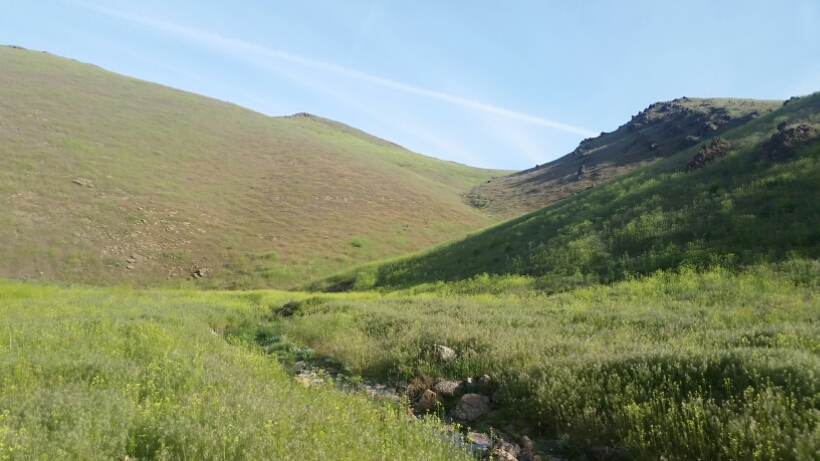
Just follow the creek!
Next up was a long hot descent to the Denio valley. The next 15+ miles I would walk across the flat. The afternoon was hot. The sun on the light colored sandy road reflected back up at me, and even though I was using my sun umbrella, I felt like I was getting cooked.

It felt like a million miles to the south end of the valley
I keep switching out my footwear from the Oboz Lunas to my chacos. My feet arn’t perfect in either until they toughen up more, but I think the variety helps.
I hobbled into Denio (just on the border of Nevada) to see what was there and try and get some good water. The small town was silent. It was Memorial Day, so even if there had been a store or something it probably would have been closed. I sat in front of the library and used their outdoor faucet. I couldn’t even find a plug to charge my electronics. There are simply no services in Denio. There is another town, Denio Junction, another 4ish miles south, but I didn’t want to go that far. The fact that there were no cars didn’t even tempt me to hitch.
I walked back out of town and cut over to Denio Canyon. I’m camped just inside the narrow walls. It’s already brushy. We’ll see what tomorrow brings!
Oregon Desert Trail (1st Section Hike): Day 4 – 23.5 miles (84.4 total)
My legs are shot.

That's what I'm climbing this afternoon
I woke up early again, but stayed in my sleeping bag until the sun hit me. Most of the day was on old dirt roads, dipping in and out of the swells of the Trout Creek Mountains. I saw with irony where I toiled up to climb into the mountains what seemed like a short distance away. And I can see the Steens. And they are snowy. I’m really not sure what kind of conditions I’ll find in the snow. We got fresh snow out here last week, but the weather has cleared since Friday, and should be clear and warm for the next week…so it could conslidate some, and be like the PCT snow I hiked in the Sierra Mountains 10 years ago, or it could be fresh and slidey like on the CDT in Colorado last year. Regardless I’ll have to wait and see. It will be a brutal climb from the Alvord Desert 4,500 feet below the crest of the mountain at 9,500. In 25 miles. It just all depends on the snow. At least I’ll have a soak at Alvord Hot Springs before I head up.
Lots to do before the Steens though, like climb into the Pueblo Mountains via what is supposed to be a really brushy slog. We’ll see if it’s any different going up than coming down. More climbing! But really, that’s what it’s all about. We are linking mountain ranges with some hot valley walking in between, but it’s vast out here. There are plenty of mountains out here. I’m looking into Nevada right now thinking I want to go hike in some of those mountains.
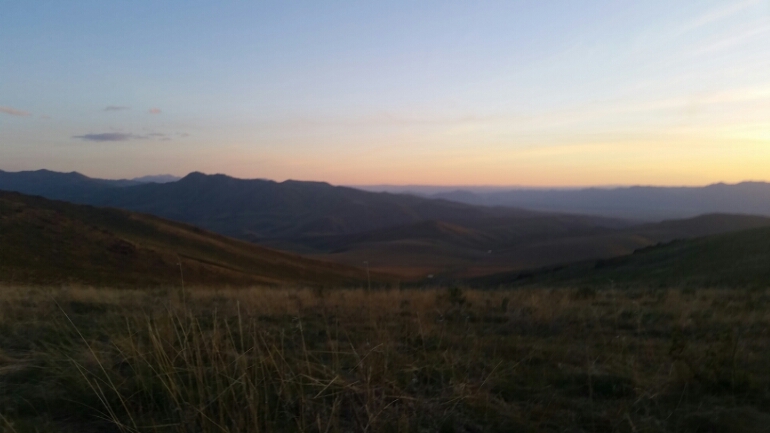
Nevada
But back to the hike today. It was another pleasent morning, every water source was flowing or there, but I could have choosen better. I waited before a 10ish mile dry stretch to fill up at Chicken Spring, where my choice was beteen muddy tank water, or skuzzy moss/floaty water. I went with the floaty water and made the mistake of not prefiltering the first bit, immediately the flow was slower. I took off my zip tee and made a pre-filter for the water into my coffee cup. There were a lot of living things in that water!
I climbed higher in the Trout Creeks until there were patches of snow. My legs are just aching. I know they are being destroyed each day, and each day I ask a little more. I really do rememer what it’s like to charge up a mountain and not break a sweat, but you can’t get there without spending some time here, in the ache phase.
Ok, more walking, down to Trout Creek and some lovely aspen, around and through some more aspen, and I find myself at the start of the descent to No Name Spring, and the start of the next section which will take me by Denio, NV – a trail town that’s probably just a post office. Then, into the Peublos!
Oregon Desert Trail (1st Section Hike): Day 3 – 20 miles (60.9 miles)
No wonder I have already almost fallen asleep. In the first half of the day I climbed over 5,000 feet to meet back up with the ODT on top of the Trout Creek Mountains. Tired.
I fell asleep early yesterday and as a result woke about 3am this morning feeling rested. Hmm, a little early, so I laid back down until 4am when I could see a hint of dawn coming. I was walking before the sun popped up, and fortunately, I would need those extra hours of sunshine to get myself up in the mountains.
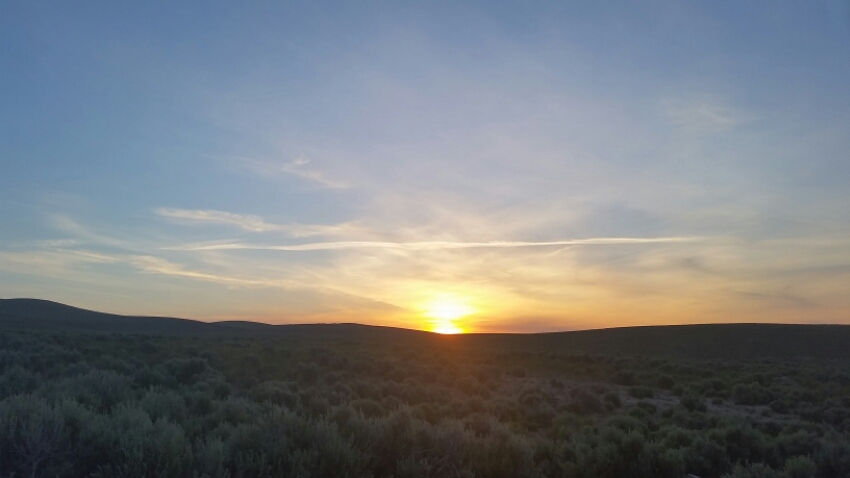
Good morning
The hiking continued for a few miles on the well maintained dirt road before it was time for me to leave the security of the road and start climbing cross country. There were no trees, and the cross country was pretty easy since there was’t much sagebrush. I had to navigate over and around rock outcroppings, each time thinking I’ve made good progress, only to find I had more to climb and thousands of feet left to climb. I took semi-frequent breaks and continued climbing. Finally almost to the top of it all I took a long lunch break under a stand of trees that had escaped being burned up by a big fire that whipped through here a few years ago. Then for the final push up to the top…and whew, there is a road that runs the length of these mountains, a road on a flat top, almost like a mesa. It reminded me of the CDT last year, it could have easily been in Idaho or Montana.
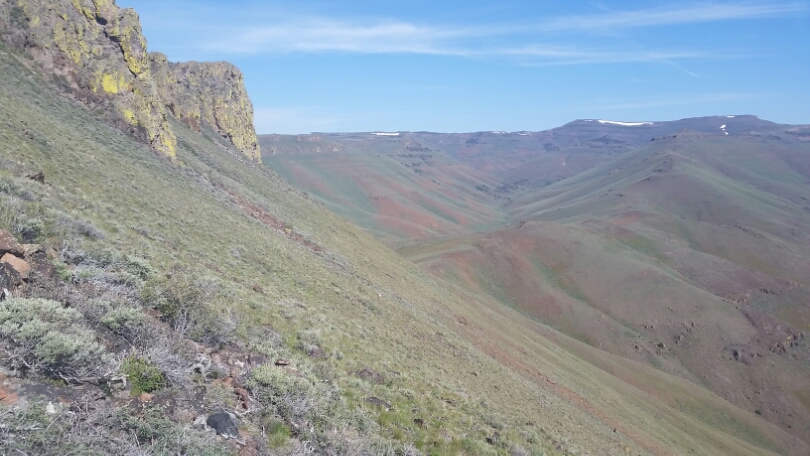
Once I connected my alternate back up to the trail I took a nice long break. The next few miles would float up on top of the world.
Camp in tucked cowboy style away in some sagebrush. Tired.
Oregon Desert Trail (1st Section Hike): Day 2 – 20 miles (40.9)
I slept better last night, but my desire to camp perched on a cliff meant a windy night. The tarp flapped, flapped away. Still worth it.
I had looked up the weather, and it was forcasted to be a clear, dry week! I really am lucking out with the weather. As I wound my way down the cliffs to the open range land below I had a slight breeze, and the temps were quite pleasent. I was a long dirt road walk into town, but in those moments I like to pull out a podcast and give my brain something to chew on. Before I knew it I was in town.

Coming out of the mountains
I went to the Ideal Market to retreive my box and get a few suppies, then headed over to the Say When Casino to have lunch at the cafe. A fried chicken sandwich and slice of apple pie later, I picked up my things and headed over to a picnic table I had seen down the street at the Library.
The library isn’t open on Fridays, but the table was shaded, there appeared to be a plug so I could charge the electronics, and a spigot on the front of the building was on. Score!

I spent some time repacking and reshuffling, did a little reading, a little laying around on the grass, and finally about 2:30 decided to head out. I had hiked 10 miles this morning, and I would be happy with another 5-10. It was another road walk out of town, but it was a treat to be walking towards the mountains and wondering what my “alternate” route would be like. Already this side of the valley seemed dryer. I have 5 days of food and 5 liters of water…all that adds up to a HEAVY pack, and it looked like a lot of the next 20 miles would be climbing up into the Trout Creek mountains. So worth it.
I made my way up into the foot hills, and found a spot tucked into a sagebrush ravine. There are a few cars about, I saw a sign on my way in about rock hounding…maybe I’ll find a rare and beautiful stone while I am out here!

My legs are aching. The first week or two of a long hike there is always some pain…it’s just that since I’m only doing 300 miles I’ll be done just as my body is getting used to it.
Oregon Desert Trail (1st Section Hike): Day 1 – 20.9 miles
Well, starting off the hike with some miles! Sometimes I forget that winter makes my feet soft, but I think I did pretty good today.
I woke up when the sun just started over the side of the canyon. Mike was up already and had made the group coffee. Very nice way to start the day! We had a campfire and the group ate their breakfast around the ring, talking about the day. Soon I was packed up and the group saw me off. First up was to cross West Little Owyhee, which we had driven over last night, so I had my chacos on and splashed through the water while the others waved goodbye.

The morning was clear and I enjoyed the easy walking on a variety of roads. The way dipped in and out of little canyons, and everything had water. There was much much more water than was referenced on the ODT maps. With all this water were wildflowers. I had really hit this section at the perfect time.

Soon I started some cross country sections, and while the navigation was pretty straight forward, the sagebrush and rocks everywhere made for some deliberate walking. To not pay attention would be to twist an ankle or fall, which I only managed to do once today.

I didn’t really pay attention to my pace, but stopped when I was tired for breaks. I can feel the ache of a first long day of a hike, plus I didn’t sleep well last night.
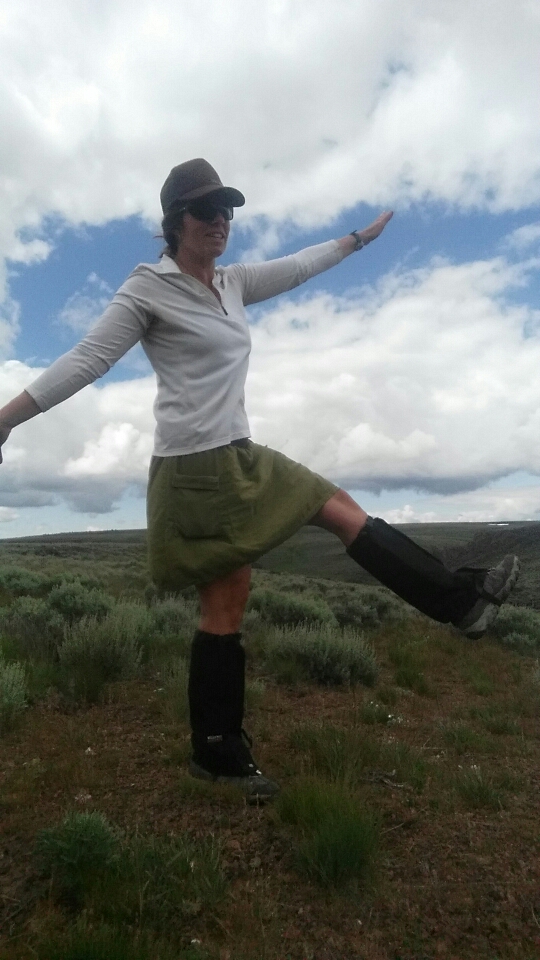
There's ticks! So the long gaiters go on.
Regardless I enjoyed the day, and marveled that there was still snow in the Little West Owyhee canyon. Beautiful!

I started on an alternate that will take me right into McDermitt, and found the perfect perch on the side of a series of cliffs. One of my top campsites for sure.

 She-ra Hikes