Op Ed: Recreation at Risk without Public Land

Two days in a row! I’m grateful for the outdoor companies I’ve been working with for an opportunity to share how important it is to keep our public lands public for all the different kinds of recreation we are involved in. Today my Op Ed piece was published on MSR’s blog.


What do hikers, mountaineers, climbers, mountain bikers, rafters and skiers have in common? We need rivers, trails, mountains and that sweet craggy rock; we need remote and wild places in order to have our adventures, make first ascents or descents, and explore our physical limitations.

Now, much of this is in jeopardy with the push to sell, give away or exploit our public land. This public land belongs to all Americans, a legacy that is now at risk.

Since I began backpacking long trails 15 years ago, I have hiked through more national forests, wilderness areas, national parks and Bureau of Land Management lands than I can count. I’ve literally walked across more than 10,000 miles worth of public land. I fell in love with the freedom found in exploring remote corners of our country, sleeping in the dirt, swimming in the rivers and reveling in the fact that my body was capable of such feats.

What I hadn’t considered as I planned adventure after adventure was the elemental framework that creates the foundation for each of these long-distance trails: the public land used to design them. I sought to walk unencumbered across the country, but had given little thought to what made routes like the Pacific Crest Trail and Arizona Trail possible.

Public Land

Today, it is more important than ever to start advocating for the future of our land. Beyond recreation, there are plenty of other benefits tied directly to public land: increased economic growth for communities close to public land (Headwaters Economics, West is Best study), enhanced quality of life, climate change resiliency, energy production (increasingly in the renewable energy field), wildlife habitat and healthy ecosystems that support clean air and water.

What endangers these lands and puts these benefits at risk? Local and national governments have engaged in initiatives that encourage ceding much of America’s public lands to the states – a move that special interests have pushed in state legislatures across the West. Weaker protections at the state level make it easier to sell our public lands off to private parties and developers. It’s a foreseeable risk given that state governments would have to bear the financial burden of managing and maintaining millions of acres of new land—and one way to relieve that cost is to simply sell the land off.

In addition, some legislators have drafted a variety of bills and resolutions aimed at dismantling our public land management agencies, making it harder for these agencies to do their job of maintaining public lands for multiple uses.

Instead of transferring our lands to the states and hindering our federal agencies’ ability to do their job for the benefit of all, we need to hold our government accountable to the will of the people, urge them to keep public lands in public hands, and craft legislation to protect our national heritage.

Public Land

What you can do

Start paying attention to the areas in which you recreate. Do they have any form of formal protection? For what purpose are they managed and which agency is charged with their stewardship?

Let your representatives and senators know where you stand on these issues. Town halls, emails, petitions, phone calls, letters and postcards are all good options when trying to reach your elected officials.

When I started working for the Oregon Natural Desert Association in late 2015 to help establish a new long-distance hiking route, the Oregon Desert Trail (ODT), I started to pay attention—the trail was being created by an organization that has been working for 30 years to protect, defend and restore high desert public land in eastern Oregon.

I spent over six weeks in 2016 walking and packrafting the entire route, immersing myself in the solitude of these often over-looked mountain ranges and deserts, and talking with people I met along the way. I learned that this land is valuable for its remote canyons, rivers and mountains; it is valuable to the hikers, hunters, ranchers and all who live nearby.

In building the ODT, we had a unique opportunity to explore public land issues with recreation as the guiding framework. We created trail materials that educate hikers about the various land designations they’ll find along the route, including wilderness, wild and scenic rivers, and areas of critical environmental concern. The handouts explain why those areas are important, what their protections mean, and what our collective role is in advocating for their future.

It’s time for all of us who love to play in these wild and remote places to act to ensure we will be able to hike 2,000 miles, climb the high peaks, and raft the whitewater on our public land in the future.

Much of the current legislation that directly impacts recreation is on the state level. Information about state legislation can be found here: https://www.congress.gov/state-legislature-websites. On the national level consider: 1) Congress voted to repeal a Bureau of Land Management (BLM) policy called Planning 2.0, which provides for more public involvement, more transparency and faster results when it comes to making decisions about managing our public lands. 2) Bill 622 removes the law enforcement powers of the BLM and U.S. Forest Service. 3) House Joint Resolution 46 would make it easier to drill for oil and natural gas at 40 National Parks.

How Thru-Hiking And Protecting Public Lands Go Hand-In-Hand

Originally published at Oboz Footwear last fall, I had the opportunity to share my post on the importance of public lands to thru-hiking with Outdoor Research:


A version of this article first appeared on the Oboz blog, and is used with permission.

Since I began backpacking 14 years ago, I’ve hiked through more national forests, wilderness areas, national parks and tracts of BLM land than I can count…literally over 10,000 miles through public lands. But their worth has only recently been on my mind. I guess you could say I’ve taken for granted that the United States is incredibly rich in wild places.

I’ve seen  how the long-distance trails on public lands are a melting pot of people and cultures from other countries. And many of those hikers come to the U.S. because of the lack of public lands in their home countries. Their wild lands are gone, developed, extracted, or patchworked so that one would never be able to walk 2,000 continuous miles for months on end in a space that has been left for the trees, elk, butterflies, rivers and recreation.

Since starting to work on establishing the Oregon Desert Trail with the Oregon Natural Desert Association (ONDA), I’ve begun to pay closer attention to public lands. ONDA has been working for 30 years to protect, defend and restore the land in Eastern Oregon, and the Oregon Desert Trail passes through some of the most spectacular areas east of the Cascade Mountains. Not all of these lands are equally protected; not all are managed for wildlife or river health, or recreation. I’ve learned there are many layers to the puzzle of public land throughout Oregon and the rest of the country. Why does this matter?

Public land access isn’t guaranteed
There’s no guarantee the land we currently love to explore will be open to us next year, or in perpetuity. Our modern culture of wants and desires often do have an impact on the world around us; consumption on a global scale affects where we get our lumber, minerals for technological devices and oil to fuel the cars we love to road trip in.

Those resources come from the land. So the question becomes: Where is it appropriate to extract, versus protect? If we extract too much or cause environmental damages—intentionally or not—we can destroy the very land that sustains us and our wildlife and way of living.

Land use issues are deeply complex
If we protect everything from development and extraction, the cost of those goods and services can go up. It affects those who make a living from timber harvest, mining or drilling. What to protect, and what to extract is not an easy question, not an easy answer. But since working to build a 750-mile route through Eastern Oregon, I’m ready to tackle the hard questions.

Our land management agencies are trying to strike a balance between extractive practices and protective measures. A balance that strives for sustainability, but it’s often difficult to manage for all purposes out there …even recreation.

Management must account for multiple purposes
Working to build this route taught me about the different layers of public land management: What influences it, what threatens it, what happens if pieces don’t get protected, what happens if they do. It’s given me the chance to know a place on a much deeper level than I ever considered before, when my main concern was simply getting to Canada before the snow falls.

Public land is essential for outdoor recreation, and while my recreation has been a relatively personal experience in the past, I now have the opportunity to help facilitate recreation experiences for a much bigger audience: hikers, ultrarunners, boaters, bikers, horseback riders, snowshoers, skiers and more.

Be the change you wish to see
I love the saying “We must be the change we wish to see in the world,” because, for my part, I wish to better educate myself on public lands issues, and want to help others to do the same. Through understanding, I believe we can better care for and steward our special places.

I plan to explore these layers of land management by using the Oregon Desert Trail as a guide. As one hikes, bikes or paddles across Eastern Oregon, the maps, guidebook, and companion materials can be a tool to understand the different landscapes, their importance in the ecological diversity of the area, and the ways in which they are managed.

We all have a say in the future of public land, and I believe the first step is through exploration and adventure in these wonderful and wild places. The next is through education. So keep getting out there and learning about the public land around you, so you, too, will be better equipped to protect it properly for the future.

How to Prep for a Long-Distance High Desert Hike

I had the opportunity to share some tips with the Hiking Project about preparing for a desert hike. Check it out!


How to Prep for a Long-Distance High Desert Hike

Cold winter days and long, dark nights are the perfect time to start planning your next adventure.

We sat down with Renee Patrick, Oregon Desert Trail coordinator for the Oregon Natural Desert Association (ONDA), to get some tips on pre-hike prep. Renee has hiked nine long-distance trails and racked up over 10,000 miles on some of the popular trails—and brand-new routes all over the country.

Renee Patrick | Photo courtesy of ONDA

How should someone start planning for a thru-hike?

I like to start by reading a journal or five from someone who has hiked the trail I’m interested in. The websites Trailjournals and Postholer have thousands of journals from long trails all around the world. Next, head to the website of the organization that maintains or manages your trail, and download or buy the resources they have available. On routes like the Oregon Desert Trail or Grand Enchantment Trail, it is especially useful to do a lot of research as there are many more factors to consider on a route that may be unmarked, have long distances between water sources, or contain a lot of cross-country travel.

How does planning for a route differ from planning for a trail?

The biggest difference probably comes in honing some of the skills you will need on a route. Having solid navigation skills is a must. Even with great GPS-based resources like the Hiking Project that can be used on a smartphone in the backcountry, know that electronics can fail or break. It’s extremely important to always carry paper maps and a compass. If you aspire to hike a route but don’t have those navigations skills dialed in yet, consider taking a class at your local REI or check out an online tutorial. Then practice, practice, practice.

Navigation skills are a must. Photo courtesy of ONDA

Water is next. Many of the popular desert routes out there (Oregon Desert Trail, Hayduke Trail, Grand Enchantment Trail) and even some of the trails (Pacific Crest Trail, Arizona Trail) can’t be done without caching water [read: hiding water along your route] ahead of time. Sometimes helpful “trail angels” will cache water for hikers, but unless you place your own water out in the desert, it’s best not to rely on public caches. A caching strategy is key. We’ve developed some caching guidelines to help hikers figure out some best practices, but your water needs could vary drastically from the next person. You will have to do some math. Look at the water resources available, (many routes and trails have a water chart that lists sources, reliability, and location), calculate the distances between reliable sources, and based on your estimated daily average, you should be able to figure out where and how much water to cache.

It’s important to know that the season you choose for your hike could drastically impact water availability and needs. Plan to pack all of your caches out as you reach them. Plastic gallon jugs of water are easy to crush or cut up so you can fit them in your pack.

How do you plan for what gear you’ll need?

Each trail or route will have a different set of challenges, and therefore a different set of gear needs. On desert trips, a sun umbrella could make the experience much more pleasant. Keeping the sun off your head and shoulders while walking can save your skin and keep you much cooler. An umbrella works great in the rain or snow, too.

Look at the temperature and projected weather. If you are hiking in July, you probably don’t need your 20-degree sleeping bag and can take a lighter and smaller bag. Likewise, if hiking in the fall, temperatures could get very cold, so having extra layers or a shelter that can withstand an early snowfall is a good idea. If you think you’ll be hiking in the rain, go hike in the rain. If you think you’ll be hiking in the snow, go hike in the snow. Use your gear, do a test run or two, and make sure all your systems are a go before you find yourself in the middle of the backcountry.

https://www.instagram.com/p/BPgJyKjA8xB/embed/?cr=1&v=7

How do you plan out a resupply strategy?

Some trails and routes have compiled a list of towns and resources you can expect to find along the hike. These resources are a great place to start.

Once you have your estimated mileage figured out (it’s always best to underestimate how many miles you can hike during the first few weeks), and know the distance between trail towns, you can then look at the resources available in those towns. For example, the Oregon Desert Trail has a few stops where a hiker could not buy enough food to last a week on the trail. In that case, it’s a good idea to send a resupply box ahead of time or put together a box in a larger town and mail it ahead to the smaller town. I really like this last strategy as I often don’t know how many miles I’ll be hiking a day, especially along a route where there is a lot of cross-country travel.

Always send your resupply boxes via priority mail, as they can be forwarded on at no charge if your plans change (and it only takes two to three days for delivery). Don’t be afraid to make some calls to find out what is available if the resources are lacking.

https://www.instagram.com/p/BQON1LiggH1/embed/?cr=1&v=7

Planning for stove fuel is another big resupply issue. Many small towns might not have canister fuel or white gas. I have been using a wood burning stove recently, and love that I don’t have to figure out how to ship or find fuel along the trails anymore.

Any other advice?

A great resource is another hiker. If you can find someone locally who has hiked the trail you are interested in, take them out for a beer and pick their brains. You never know what wisdom will emerge after an IPA or two!

Oboz Trail Tales / Now, More Than Ever, Public Land Matters

As part of my ambassador roll with Oboz Footwear, I’ve been writing a series of blog posts for them the past two years. While I sat down in the days after the election to write my final blog of the year about nutrition on the trail, I just couldn’t bring myself to start the post when my head was a swirling mess of surprise, anger, confusion, and disappointment at the results of the presidential election. A lot of what I hold dear is in jeopardy under this new “leadership,” so I wrote this essay instead:

Now, More Than Ever, Public Land Matters

Cover image: Wildhorse Lake embodies the incredible beauty of wild places in Eastern Oregon. All images by Renee Patrick

Since I began backpacking 14 years ago, I have hiked through more national forests, wilderness areas, national parks, and tracts of BLM than I can count…literally over 10,000 miles worth of public lands. But their worth has only recently been on my mind. I guess you could say I have taken for granted that the United States is incredibly rich in wild places.

Public Melting Pots

I’ve seen clues…the long distance trails are a melting pot of cultures from foreign countries. Many of those hikers come to the U.S. because of the lack of public lands in their home countries. Their wild lands are gone, developed, extracted, or patchworked so that one could not walk 2,000 continuous miles for months on end in a space that has been created for the trees, elk, butterflies, rivers and recreation.

Oregon Desert Trail

Since starting to work on establishing the Oregon Desert Trail with the Oregon Natural Desert Association (ONDA) last year, I’ve begun to pay closer attention to public lands. ONDA has been working for 30 years to protect, defend, and restore the land in Eastern Oregon, and the Oregon Desert Trail passes through some of the most spectacular areas east of the Cascade Mountains. Not all of these lands are equal; not all are managed for wildlife or river health, or recreation. I’ve learned there are many layers to the puzzle of public land throughout Oregon and the country.

Why does this matter?

No Guarantees

Because there’s no guarantee the land we currently love to explore will be open to us next year, or in perpetuity. Our modern culture of wants and desires do have an impact on the world around us; consumption on a global scale does impact where we get our lumber, minerals for technological devices, and oil to fuel the cars we love to road trip in.

And those resources come from the land. So the question becomes, where is it appropriate to extract versus protect? If we extract too much or cause environmental damages (intentional or not), we can destroy the very land that sustains us and our wildlife and way of living.

Economic Impacts

If we protect everything from development and extraction, the cost of those goods and services can go up; it impacts those who make a living from timber harvest, mining, or drilling. It’s not an easy answer; it’s not an easy question. But since working to build a 750-mile route through Eastern Oregon, I’m ready to tackle the hard questions.

Our land management agencies are trying to strike a balance between extractive practices and protective measures…that balance strives for sustainability, but is often difficult to manage for all purposes out there…even recreation.

After 5 sections and over 6 weeks, Renee finished the entire Oregon Desert Trail.

Multi-Purpose Management

Working to build this route provides an opportunity to learn about the different layers of public land management: what influences it, what threatens it, what happens if pieces don’t get protected… if they do…it’s given me the chance to know a place on a much deeper level than I ever considered before when my main concern was getting to Canada before the snow falls.

Public land is essential for outdoor recreation, and while my recreation has been a relatively personal experience in the past, now I have the opportunity to help facilitate recreation experiences for a much bigger audience: hikers, ultrarunners, boaters, bikers, horseback riders, snow shoers, skiers…the list goes on.

Be The Change You Wish To See

I love the saying “We must be the change we wish to see in the world,” and for my part I wish to better educate myself on public lands, and want to help others to do the same. Through understanding, I believe we can better care for and steward our special places.

The Steens Mountain Wilderness became the first cow-free wilderness in the United States in 2000

I plan to explore these layers of land management by using the Oregon Desert Trail as a guide. As one hikes, bikes or paddles across Eastern Oregon, the maps, guidebook, and companion materials can be a tool to understand the different landscapes, their importance in the ecological diversity of the area, and the ways in which they are managed.

Speak Up

We all have a say in the future of public land, I believe the first step is through exploration and adventure in these wonderful and wild places…the next is through education.


TOAKS Titanium Review

Toaks Photo in use 2

TOAKS on the Owyhee River section of the Oregon Desert Trail

As an avid long distance backpacker, I’ve spent years researching gear in the effort to lighten up my pack weight. It may seem obvious, but a lighter pack translates to less stress on your legs, knees and feet, and more importantly, the ability to hike longer days and more miles. While a lighter pack makes a lot of sense when you are backpacking for months on end during a thru-hike, it is equally important when hikers set out for a weekend or few days in the backcountry.

I’ve seen many weekend hikers porting huge packs up and down the trails, grumbling about the torturous experience, and perhaps souring them on backpacking in the future. Don’t let this happen to you!

In this day and age there are many ultralight products to choose from, and in the 14 years I’ve been backpacking I’ve owned multiples of just about every piece of gear. But technology advances, and big improvements are made all the time in outdoor gear.

Since being introduced to TOAKS titanium products earlier this year, I’ve decided to try out a few items while hiking for my new job as the Oregon Desert Trail Coordinator. For a thru-hiker, getting to help establish a new long distance hiking trail is a dream job come true. This 750 mile trail traverses the desert of eastern Oregon, and has only been around for a few years, so in order to determine what the trail needs to move forward, I had to do the only obvious thing: hike it!

Oregon Desert Trail through the Alvord Desert

Oregon Desert Trail through the Alvord Desert

I decided to make a break from using traditional backpacking stoves and try out the TOAKS Titanium Backpacking Wood Burning Stove.  I’ve used lots of other stoves, but what they all have in common is fuel. There are as many types of fuel for backpacking stoves as there are stoves, and it can be a real challenge to find the right kind of fuel in the area of the world you are hiking. Finding fuel for a wood burning stove is as easy as it sounds.

So far I’ve carried this stove on 425 miles of the Oregon Desert Trail, 140 of those miles along the remote Owyhee River corridor. In all instances there was plenty of fuel to choose from. Dry pieces of sagebrush burn hot and leave almost no traces once burned down, and even along the river I was able to find dry driftwood to fuel the stove. It was such a peace of mind to know I didn’t have to figure out how to mail or find fuel along the eastern Oregon route.

Toaks Photo in use 1
There are a few things to know about cooking on a wood burning stove: 1) the fire does need your attention during the cooking phase, 2) cooking does take a little longer, and 3) cooking over an open flame will cover your stove and pot with soot. The benefits include: 1) stove weighs 7oz, 2) no need to carry fuel, 3) stove fits perfectly into the TOAKS Titanium 1100 ml pot, and 4) the set-up is stable, I had no concerns over the flames spilling out to surrounding grasses.

To keep the flame going long enough to boil water or cook you food, it’s a good idea to make a pile of small pieces of wood to keep feeding into the stove when the flame gets low. I like making a pile of 2-3 inch long pieces; these will be easy to add into the bottom chamber while your cook pot sits on top. Paying attention to your stove is always a good idea, and to make sure the flame doesn’t go out, it’s a good idea to put aside your other camp tasks and focus on the fire. Bonus: on cold nights or mornings you have some extra heat!

Because you are burning wood, the flame will release soot that can coat your stove and pot. Having a storage bag is important to keep the rest of your gear clean. I didn’t mind the black dust, and since I always carry some wet wipes, I was always able to clean off any smudges I might get on my hands.

Hikers will still need to pay attention to fire bans in certain areas during dry times of the year. In places where any open flame-type stoves are not allowed, the wood burner will not be the best choice, but for most environments this stove is a great option.

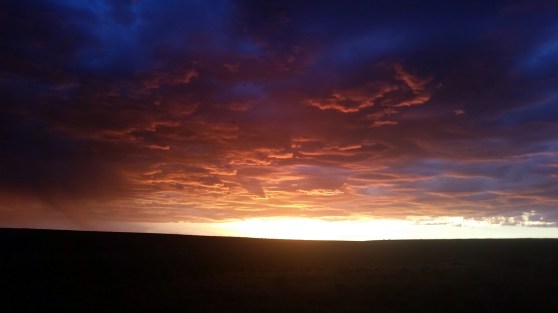
the sky seems bigger in the desert

When using a wood burning stove it’s important to pay attention to fire restrictions in the backcountry.

Have some damp wood you are trying to use? I’ve been using cotton balls with a bit of Vaseline on them. This hiker hack will burn long enough to dry out some of the smaller twigs, and the excellent air flow from the bottom of the stove will help your other pieces of wood dry out until they catch fire.

To round out my gear updates this summer, I’ve been using TOAKS Titanium tent stakes. Since Titanium is stronger than other popular aluminum stakes, these are not as likely to bend when trying to pitch your tent in hard-packed ground. They are incredibly lightweight, and easy to use.

Titanium is one of the lightest materials on the market, and TOAKS does a great job integrating it into their products so you will not only have some of the lightest gear on the market, but it will be incredibly durable and perform well in the backcountry.