Giving Back – Creating Awareness and Action

In May I participated in the Hike Like a Woman Summit where I had the great pleasure to meet and connect with other passionate women from around the world.

Dr. Debbie Early was one of those women, and I enjoyed learning about her life on a remote island in New Zealand along the Queen Charlotte Track (a path I hope to hike one day!). Debbie’s work is focused on nature-based solutions to support wellbeing and adaptation during times of change. Find out more about her and her business, The Art of Awareness, here.

We caught up recently and recorded our conversation about what we have done since the summit to raise awareness and action around nature connection.

In the video I mention a few of my Intentional Hiking events that were held this summer:

An upcoming event I mentioned (registration is open now!)

A hiker, biker, and equestrian walk into the Oregon State Capitol

Punch line?

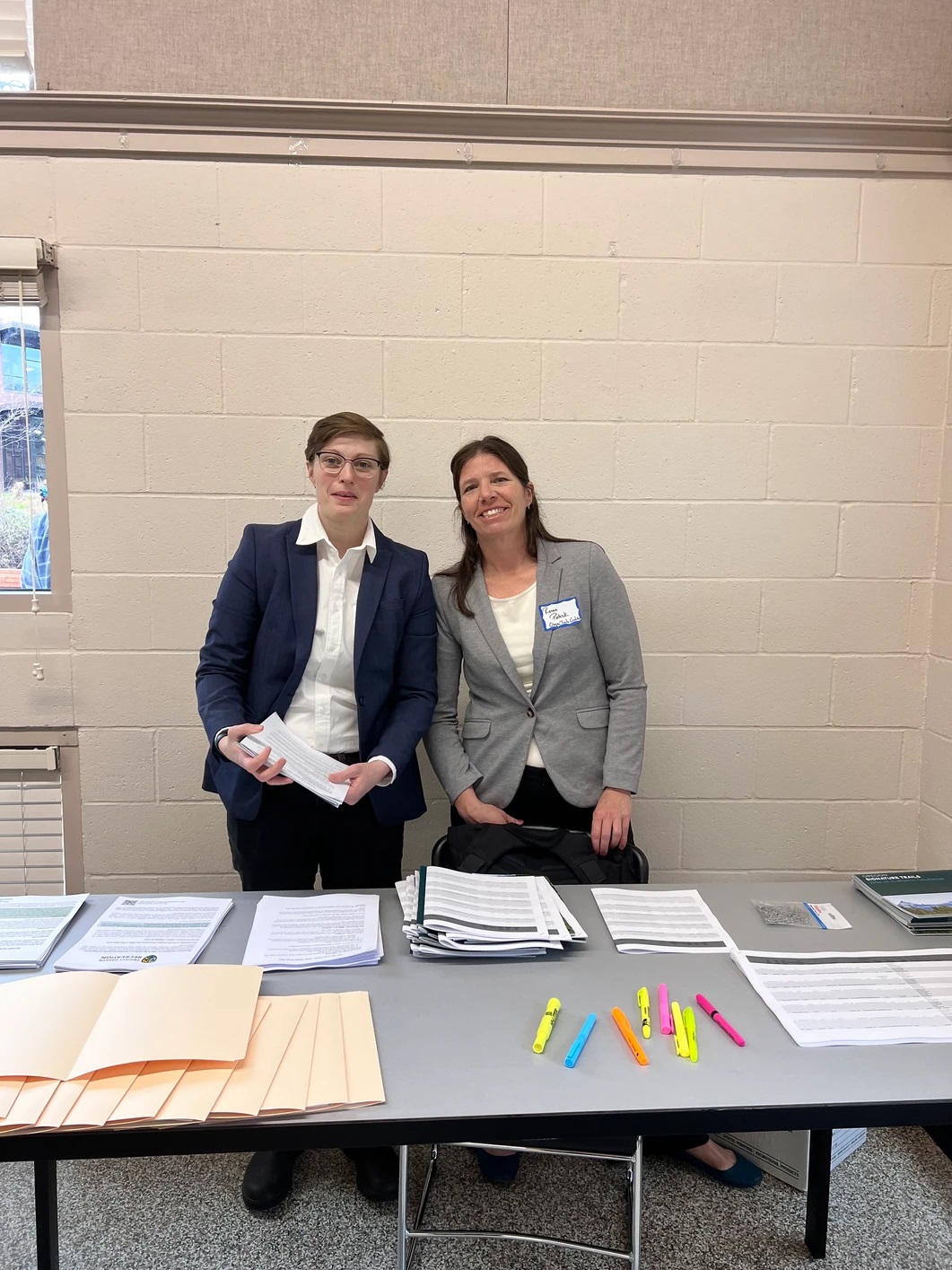
Nope, this isn’t a joke about trail conflict or politicians…it’s the scene from our first-ever Oregon Trails Coalition Trails Day at the Oregon Capitol in mid-February.

All photos by Oregon Trails Coalition

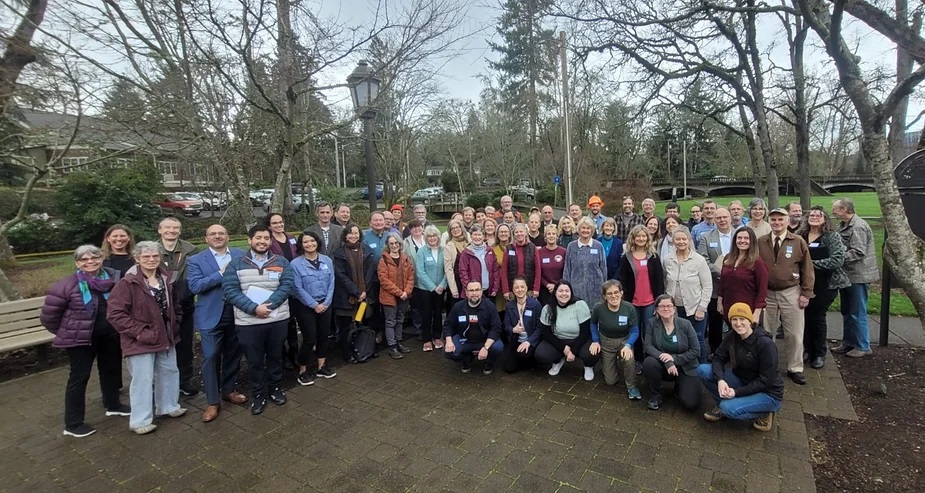
Over 70 of us traveled from all corners of Oregon to learn more about face-to-face advocacy with our elected officials.

Many of us have never stepped into legislative chambers before, had never been moved to take such a big step to advocate for our interests, but we’ve had a galvanizing issue in Oregon that has transcended the many different trail user groups in the state…our trails are closing, and many more are at risk.

You see, there is a law called recreational immunity which encourages landowners to open lands to the public for recreational use by protecting the landowner if a recreational user seeks damages after an injury. A court ruling last fall changed all of that when a woman slipped on a wooden footbridge on an improved trail accessing a beach and filed a lawsuit against the City of Newport. She alleged the city was negligent in maintaining the bridge and not putting up warning signs, and the courts agreed with her. You can read more about the issue on our blog, watch this recorded webinar for an overview, or read this article.

Since then, some local governments have proceeded to close trails (I think the number is over 20 now), and other land managers are scrambling to decide how to address this new level of liability.

Because the Oregon Trails Coalition is the state-wide cooperative body of broad-based, statewide trail interests dedicated to supporting, promoting, and advocating for trails, we decided to act.

As chair of the OTC steering committee for the next few years I was excited to take my advocacy game up a few notches as well. Because I was making the transition from writing letters, sending emails, signing petitions, and making phone calls to having face-to-face meetings with my electeds, I had a fair bit of nervousness about making my voice heard in this official way, but with the amazing leadership of our Executive Director Steph Noll, she organized a thoughtful training session for all of us to get tips on holding meetings, delivering clear messaging, and following through with a clear ask.

Are we ready? We are ready!

Representative Helm welcomed us and helped set the stage for the day

A few of us from Central Oregon banded together to speak to our state representatives, and it came as a little thrill when we realized while speaking to Representative Jason Kropf that the three of us were there on behalf of hiking, biking, and equestrian users….and we were all women…a power team! Emmie Andrews, Kim McCarrel, and I had met many times at Oregon Trail Coalition functions, and it was quite fun to all be taking this first step in our advanced-advocacy journey together.

So what happened after 70 of us descended on the capitol to ask for a legislative fix to recreational immunity in the short session this year? First, you can read the recap from the day here, the bill we were supporting (SB 1576 A) passed on the Senate Floor last week, and the bill is now scheduled for a public hearing in the House Judiciary Committee at 8am today, followed by a committee work session on Thursday when we hope it will be passed to the House Floor. And who is chairing the House Judiciary Committee? None other than Representative Jason Kropf.

So now what?

Update!!

On March 5, Senate Bill 1576 passed the House 50-0!
Read more here.

Thanks to Oregon Trails Coalition, some clear steps have been outlined:

If you live in Central Oregon:

Emails and testimony on behalf of Central Oregon organizations or businesses and just from individual constituents that care about trails are all great!  Nothing needs to be on letterhead; just  send a quick email ASAP to Representative Jason Kropf at Rep.JasonKropf@oregonlegislature.gov
and/or submit testimony before Tuesday’s hearing through this form.

If you live in Oregon:

Send a short email to your Oregon Representative letting them know that recreational immunity is important to you, and ask them to vote yes on SB 1576 AYou can find some talking points here, but it’s best just to send a brief note in your own words about why keeping local trails open and trail improvement and development projects on track is important to you.


By the way, this day of action was a wonderful follow up to the January 10 Intentional Hiking event I held with American Trails and Partnership for the National Trails System about what your role can be in speaking up for trails with our elected leaders. Funny how that works!

Finding Comfort in the Uncomfortable

John Day River Trip – In January!?!?!


This blog has been quiet. I haven’t had any epic or not so epic extended adventures to chronical…and honestly I can’t seem to access the wonder, words, or desire to write extensively when I have a million distractions in the “real world.” Nature tends to even me out, smooth down the sharp pointy reminders of my to-do list, and leave me with the space to let my mind wander over the scenes and musings of the day. I need at least an overnight excursion to shake off the incessant access to the information superhighway and my weak resolve to find focus in a day filled with distractions.

I must go outside.

And here I am. Outside. A brewing cup of french press coffee waits outside the tent in the early morning darkness as a rising John Day River expands its capacity to hold all the water from rain and rain on snow.

It’s raining in January. In fact, it’s 50 degrees in January. It has been a disconcerting winter so far. One of warmth, ice, snow, rain on snow, then cold…thus more ice. The skiing has been dismal. And as we were looking at another depressing warm spell in the mountains, Kirk and I went to the river.

To our favorite section of our beloved river. In fact, you visited it with me last year on the Columbia Plateau Route….well, not this exact section… a hike is never the same as a river trip. They are entirely different trips in the same geography. A reason to visit a place more than once.

As we floated today, I pointed out all the places that I had packrafted or hiked in the canyon.


Our friend Brian had joined us. And it was his first time down this stretch of the river; I could see the effect of this magnificent place on his face and in his voice. It was simply too grand for photos. There was too much to take in; you could only sit back and grin.

I needed this trip so badly. I have been working from home now for almost a year, and the dreary winter kept us home more weekends than not over the past few months. I haven’t had any big trips, and paired with several ice storms and gray skis that practically shut the state down for weeks, I was bursting at the seams for a change of perspective.

We knew rain was on the menu for the weekend, but there was also the hint of sun and 50 degree tempatures. It could be positively balmy out there.

As we drove in, the muddy roads gave a little warning of what awaited us ahead, and clumps of snow still wedged in deep cracks of rock and shady folds of the earth gave the eye a bright how-do-you-do in the browns and gray of the darkening day.

It was dark by the time we parked the truck at the top of a muddy and washed-out grade down to the river, and we walked our packrafts and gear to a lovely little camp below.

Flash forward: putting up the tent in the rain and mud is a test of patience and relationships. Fortunately Kirk and I passed the test….by a slim margin. We tried to make the best of bringing half the wet and mud with us inside. Of course we could be at home in a cozy bed instead of in the mud, but this was way better. This was living… finding comfort in the uncomfortable. We were soon dry, though…as long as we didn’t move from our sleeping-pad islands.

We played cards and went to bed when it felt late. It had been dark for hours, and we had no time to keep. But one glance at my airplane-mode pocket computer showed some glowing numbers starting in the 7s.. Sunrise is about 7:30am, so we were in for a long night.

It rained and throughout the dark hours we slowly turned over and over in our sleeping bags, settling deeper into our muddy nook of a campsite; the sounds of the rushing water working its way deeper into our dreams.

Shortly after the day lightened, the rain stopped.


We broke open from our long night and started the river prep.

But first coffee.

Bags in bags, drysuit gaskets stretched, and packraft zippers zipped. River shoes and pfd’s on, and when all the pieces and parts were assembled, we had liftoff.

And really, isn’t boating like flying?


The feeling of weightlessness and smooth speed immediately depressurized my brain a few notches. I was so full of ideas and conversations and planning and budgeting and contracts and taxes, that I desperately needed to open a release valve in my brain to let that excess mental heat out. An overnight trip could only accomplish a fraction of the relief needed; a long hike is the better cure, but I had to table that carrot for a while. It wasn’t time for the type of trip where I could really shake off the excess. And there is so much excess in the world right now. Ok, excess isn’t the right word. Maybe weight is a better word? The weight of war, climate change, injustice, the upcoming election, ice storms, gray days…all the things.

What this weekend indicates is that I need to be better about taking these short bursts of joy and freedom so that I don’t blow a gasket from going too hot for too long.

Noted!

Words fail us here. The sun came out and we floated the day away with giant smiles on our faces.

Camp had a view of an intricate basalt wall and mountains all around…but then all the campsites do out here.

Tents drying in the sun, camp chairs, and puffy coats. Ahhhh.

An afternoon stroll up to a ridge hundreds of feet above the river helped me relax into the day even more.


I think a river trip is one of the most calming things out there. The rushing river acts as metronome to the day, and tends to smooth out most frictions.

Did I say Ahhhh yet?

The trip is too short, but has once again proved that the more time I spend outside, the better. I’m better.

Imagine Sutton Mountain

This article originally appeared in the Fall + Winter 2023 Desert Ramblings for Oregon Natural Desert Association


Hiking for a plan to permanently protect this landscape.

When I pitched my tent on the edge of the lumbering Sutton Mountain, the views were obscured by heavy rain clouds. My dry island of nylon was an escape from the drenching spring rains, and while I lamented missing out on the scenic vista that was buried in layers of hazy moisture, I knew a good soaking rain was something to encourage and even celebrate in this desert landscape. Some bright bloom or newborn babe would grow an extra inch in this wet, and for that I was grateful.

Luckily enough, my optimism for a dry morning and relief from the low-lying clouds was realized, and when I zipped open the tent fly the next day, the world revealed itself. I could see the brilliant Painted Hills, fresh and vibrant as if the rain dialed the hues up a notch, and beyond, in layers of ridgelines, sat the far reaches of the Ochoco Mountains…with a dusting of fresh snow! Even though I was backpacking in early May, winter’s grip lingered.

I celebrated the views, one: because I would be able to hike the edge of this fault block sentinel and enjoy the unique vantage point that the ancient geology and plate tectonics provided, and two: because I would be ending my exploratory nine-day backpacking trip through the John Day River Basin on a high note. Hiking up and over Sutton Mountain was to be the grand finale.

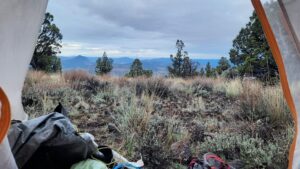
View from tent atop Sutton Mountain. Photo: Renee Patrick

What is it to know the land? To our hiking hearts, it is to walk through it, to sleep between stands of bunchgrass, to drink from elusive desert springs, and climb up to rocky bluffs only previously traversed by bighorn sheep. Folks fortunate enough to spend time in this area become intimate with the plants, animals, geology, and human history unique to the area. We come to understand the importance of the largest intact expanse of federal public lands in the John Day River Basin, and why it needs to be permanently protected, with Sutton Mountain as the pinnacle of these lands.

I prepared for this hike by printing out pages of text to read in the evenings when my legs wouldn’t cooperate after 15 miles of walking up and down the steep (so steep) terrain along the John Day River. I had information on geology, history, public lands, and even a little poetry. I wanted bits of inspiration and intrigue to help me understand the place I was walking through. I wanted information that would help illustrate why the John Day River basin was so important, and places like Sutton Mountain, so unique.

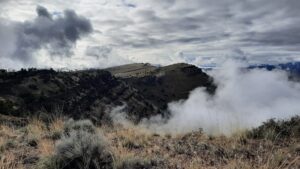
Clouds on Sutton. Photo: Renee Patrick

And what did I learn?

Geologically speaking, I had to imagine myself standing here millions of years ago when this landscape was being buried by ash, lava, and volcanic mud, solidifying and preserving ancient plants and animals.

Ecologically speaking, I learned that Sutton Mountain was the nexus of important migration patterns of elegant creatures like the Rocky Mountain elk, sleek pronghorn antelope, and the nimble mule deer. Above, equally intricate patterns emerge from winged fauna drafting in the air currents; golden eagles and ferruginous hawks soar, while sage sparrows and red-naped sapsuckers flit in the wooded brush below.

Culturally speaking, I was walking through the original homelands of the Warm Springs Tribes and the Northern Paiute peoples, homelands that probably appeared much as they did thousands of years ago, for this area, in particular Sutton Mountain, hasn’t been disrupted by extractive industries, expansive development, or intrusive management. Sutton Mountain is as it has been, and that is why permanent protection for this area is so important: so it stays that way.

Hikers walking the length of the dramatic Sutton Mountain fault line will sometimes keep company with the clouds, other times with expansive views. Photo: Renee Patrick

Each year, hundreds of thousands of visitors travel to the Painted Hills National Monument just across the road from Sutton Mountain. In fact, the iconic painted hills don’t end at the monument’s boundary. If we step back into the imagination machine when I watched layers of ash and basalt build into the hulking ridgeline of Sutton Mountain, those compounding layers would also resemble the colorful neighbor across the street, as the lower reaches of the mountain continue to reveal.

Clouds on Sutton Mountain. Photo: Renee Patrick

If visitors turned around to consider Sutton Mountain as their next destination, they would find more than just a stunning backdrop, they would find secluded valleys, rolling grassy hills, and outcrops of impressive volcanic rock…all the things I love to explore on a hiking trip into this special area. But without more consideration and planning, it is easy to imagine the destruction that unmanaged recreation or development could bring and already has to nearby desert destinations. That is why a thoughtful and inclusive plan to permanently protect Sutton Mountain will be so important. It is through improved conservation management that we can sustain the values that make a hike here today, and in 100 years, so compelling.

I think the wonderful thing about visiting Sutton Mountain is that much is left to the imagination. This is a place prime for following your curiosity as very few established trails will tell you where to go. Instead, you can ramble at will, and if you keep the values of ecological diversity, intact habitats, and respect for cultural, historic, and local communities in mind, recreating with respect and intention can be in harmony with this place and its future.

I invite you to climb up to the rolling grasslands of Sutton Mountain’s flank, walk the edge of the dramatic fault, and when you arrive at the 4,700-foot summit, picture what this place will look like in a few hundred years. You won’t have to imagine it, it will look like this.

Oofta! What a week

I don’t know how I made it through.

Do you have weeks like that? Things are at such a level of overwhelm that the only pace you can take is at break-neck speed?

I know I do it to myself, but last week factors outside of my control helped create the perfect confluence of angst.

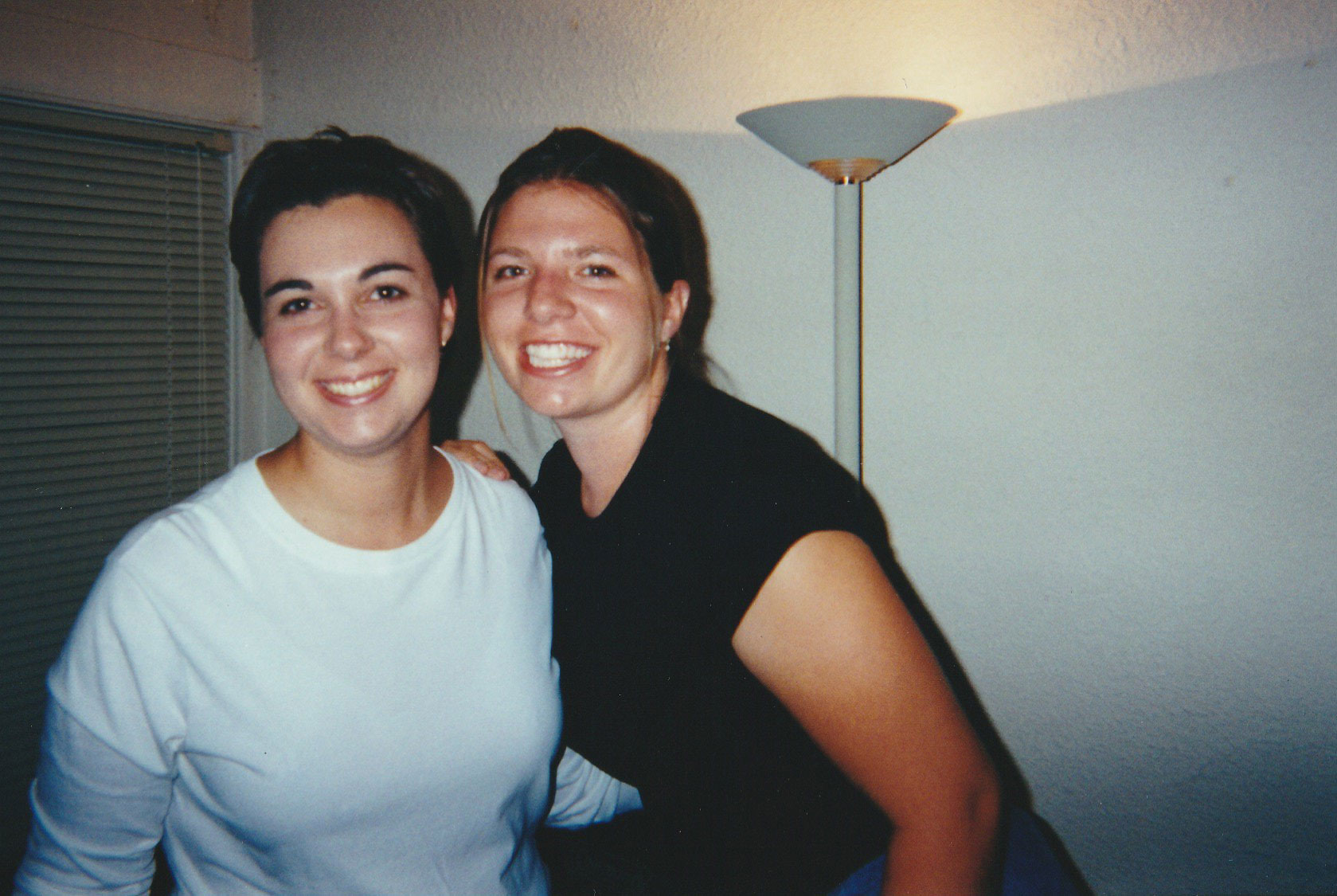
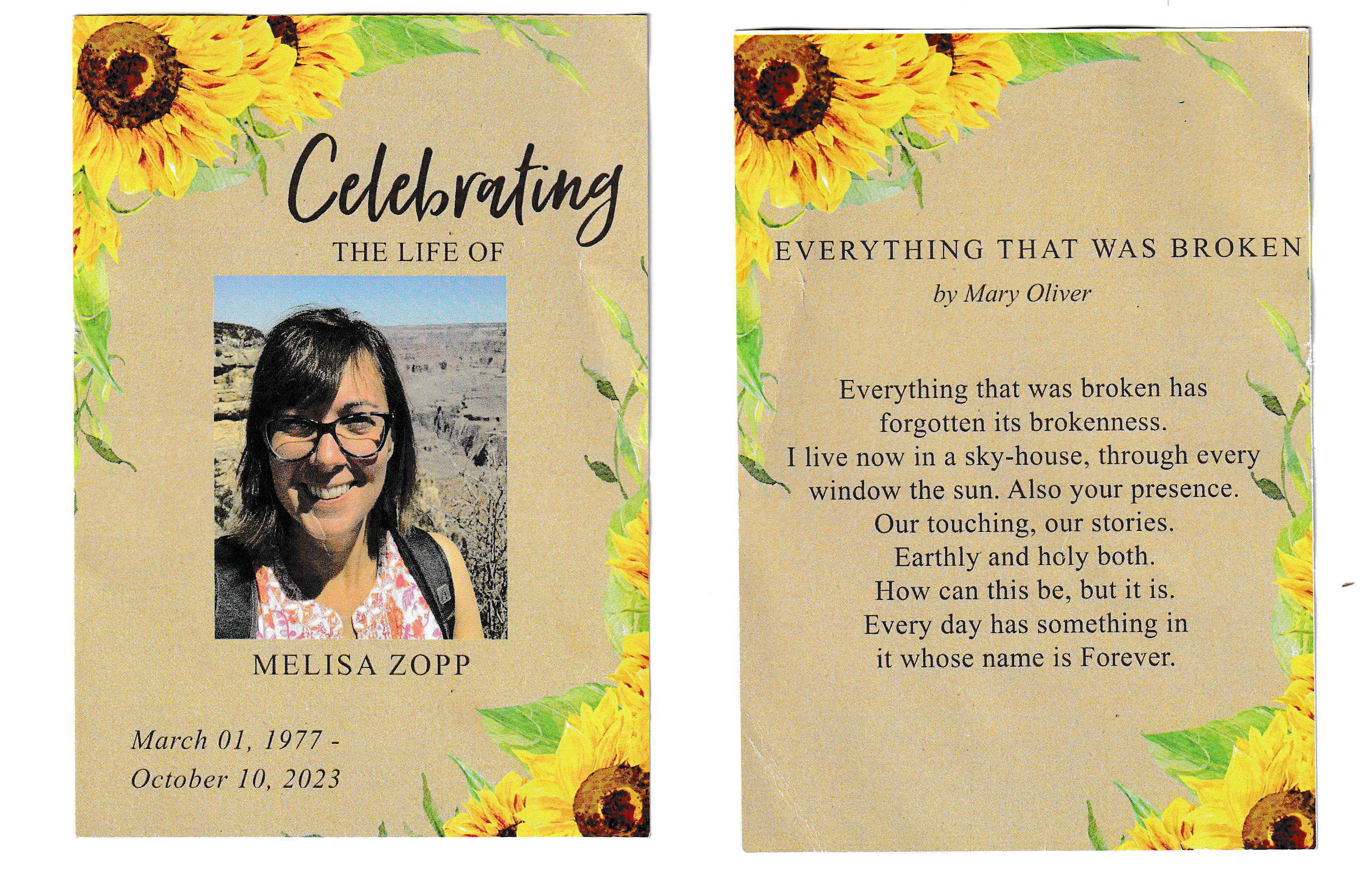
To start with, I lost my best friend from high school and college: the lovely Missy (Borino, Benard, Zopp) from cancer.

There are no words to describe what an amazing human being she was. Her celebration of life was last weekend in Milwaukee, and I just had to go and see her family and our other friends.

I was so grateful to spend the weekend around friends and her loved ones, and I just had to trust that the rest of the week would happen smoothly. You see, I had scheduled the launch event for my new Intentional Hiking business for Monday evening, and my flight back from Wisconsin was due to arrive back in Central Oregon a few hours before that event. Any delays or missed connections would be unimaginable, so I just didn’t imagine it.

And I arrived back in time…but technical issues presented a nailbiter of a few hours until go time (warning…this is going to get a bit meta…I know some of you attended the launch, or plan to attend future events, so talking about putting them on might be more of a peak behind the curtain than some of you want…)

I couldn’t get the sound to work, but then I did.

I couldn’t get music to play upon intro, so decided not to worry about it.

I hadn’t had time to practice my transitions and the flow of the event because I was in Wisconsin, so did my best to emanate a sense of confidence and ease.

I had some problems with registrations and some folks that REALLY REALLY wanted to be there didn’t get my invites (so sorry NEMO!!!), but I am reinforcing my systems for next time around and am even looking at changing event platforms.

I had lower attendance than I would have liked (I know, I know, I’m just starting…it will take time to grow my audience), but kept on as if there were 200 people on the Zoom.

I had a coughing fit during the event, (embarrassing…and on video), but I kept going like everything was fine.

And it was fine. It turned out great in fact! The folks that attended were wonderful and engaged, and I came away incredibly excited and even more energized for the next events.

Do you want to watch the launch?

So that was just Monday.

Tuesday my Wilderness First Responder recertification course started. Every two years I need to take a 3-day training on responding to medical issues while in backcountry situations. If you don’t keep your training up to date, the consequence is an 80-hour training course for those who lapse. I had to do that a few years ago, and vowed to not let that happen again. It’s an intense program, with real consequences. In fact, I had to decide to evacuate someone for a medical issue from a trip I led this summer! To work with people in the backcountry is to take on a level of responsibility to care for them when things aren’t going according to plan.

So I had class from 8-5 last week, and I had also managed to schedule my first Blue Mountains Trail presentation for Tuesday night. Had I been able to prepare for the talk? Not as much as I would have liked…again. Did I get there in time to help set up? Yes! Did I have help from my wonderful friend Marina? Yes! Did the event go smoothly? Better than I could have hoped.

It was a packed house with about 120 people present!

I was elated that so many folks wanted to learn more about the Blue Mountains Trail and my hike, but why did I have to schedule it the day after my business launch and the first day of an intensive medical training course? Ask Renee from four months ago…

Somehow it all worked, I attended training the next day and practically danced around the block when another event I had committed to on Wednesday after class was rescheduled.

Note to self: try not to overbook yourself like this again.

So, I’m on the other end of that week, and looking at a mellower week ahead: I only have the Oregon Outdoor Recreation Summit to attend, several meetings to host/facilitate/introduce, and a presentation to give, so it’s much more manageable. 🤨

But in good (or not good news) my cold weather backpacking class with Central Oregon Community College was canceled – not enough registrations – so I have a bit more of leeway in my schedule next week

Generosity and Gratitude

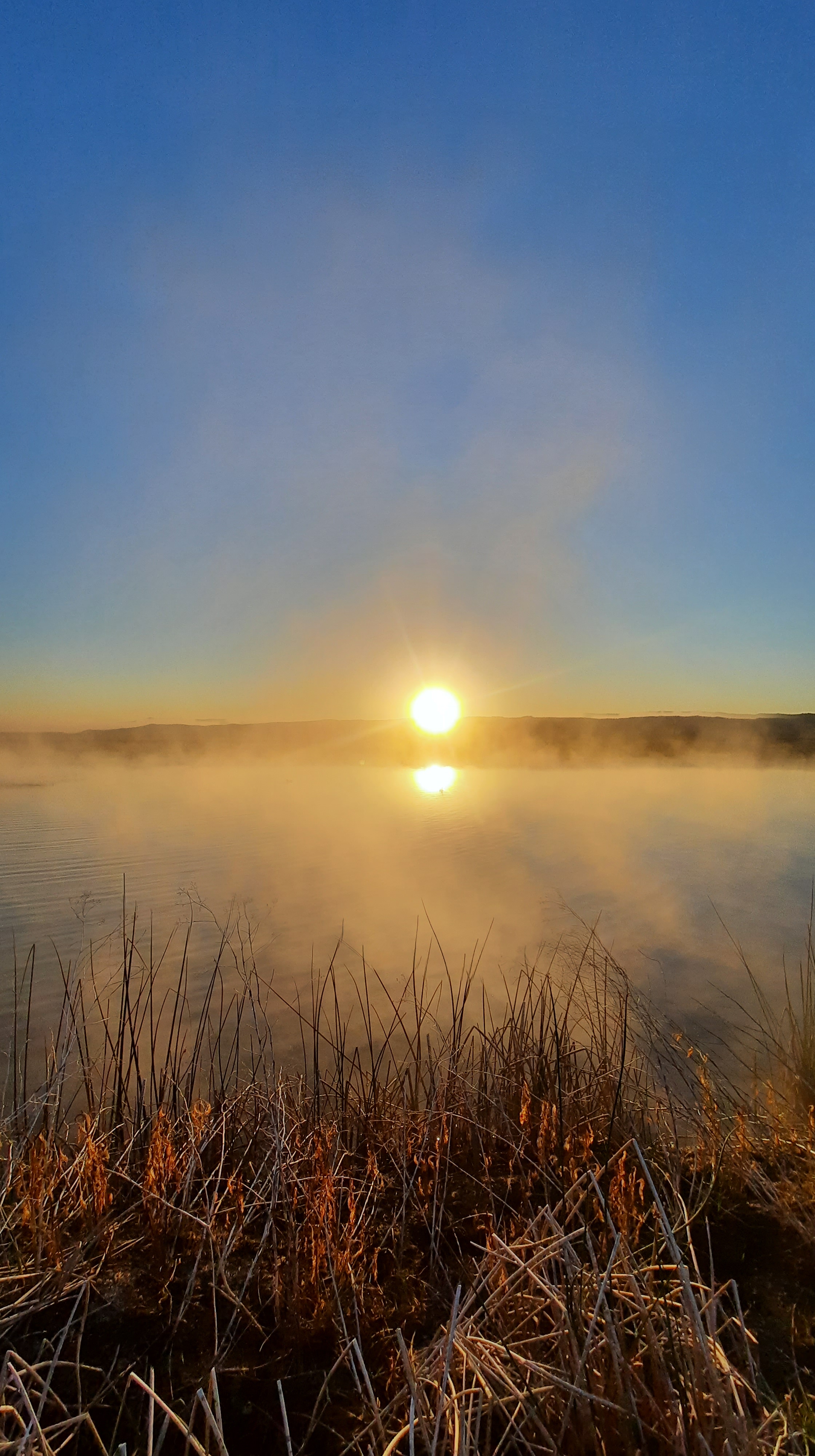
Imagine this sunrise. Close your eyes and soak in the warmth.

This song stats playing:

You are grateful. For this moment, for the light, for the music, and for the overwhelming desire to share this feeling with as many people as possible.

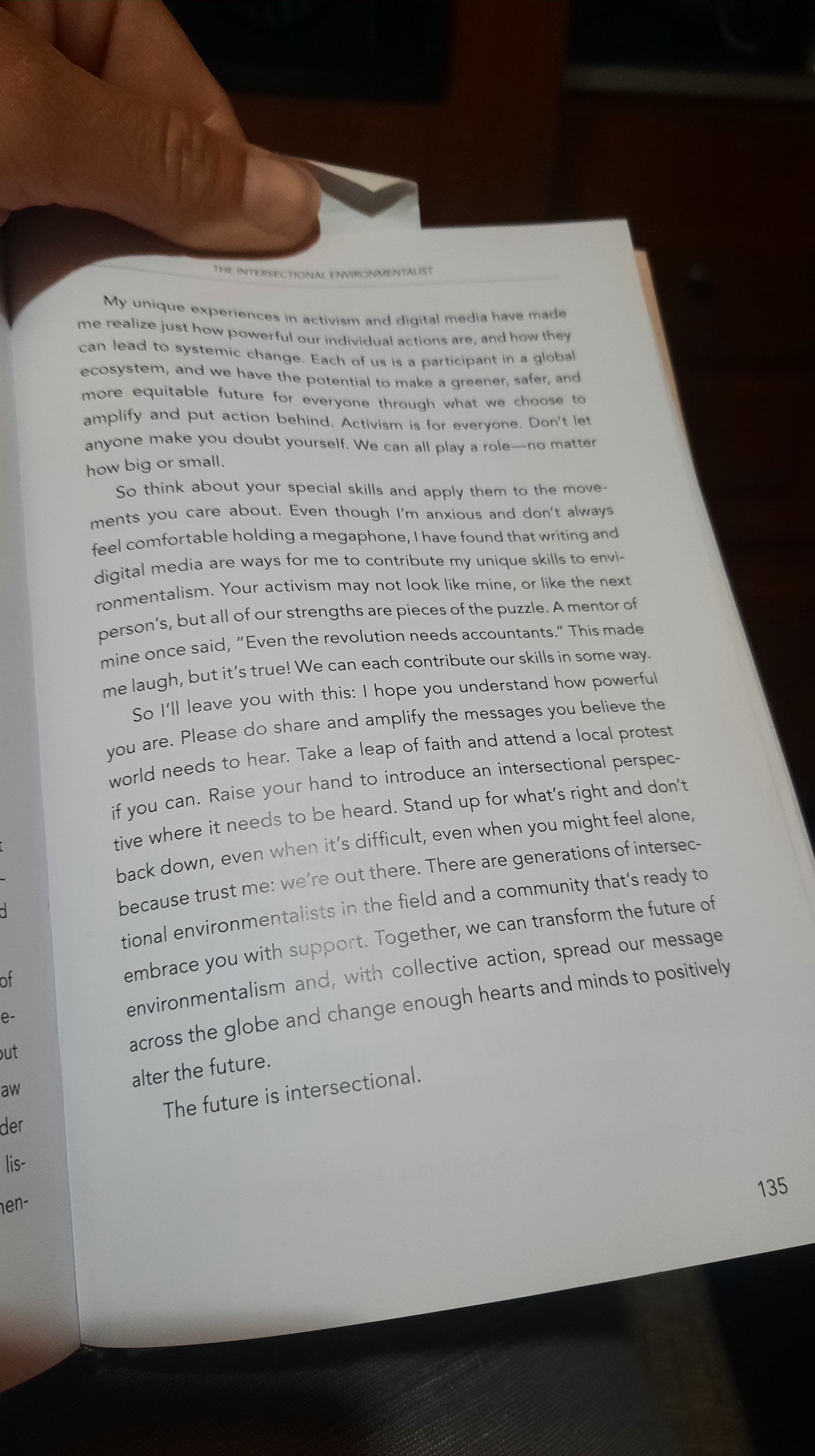
Now read this page from The Intersectional Environmentalist:

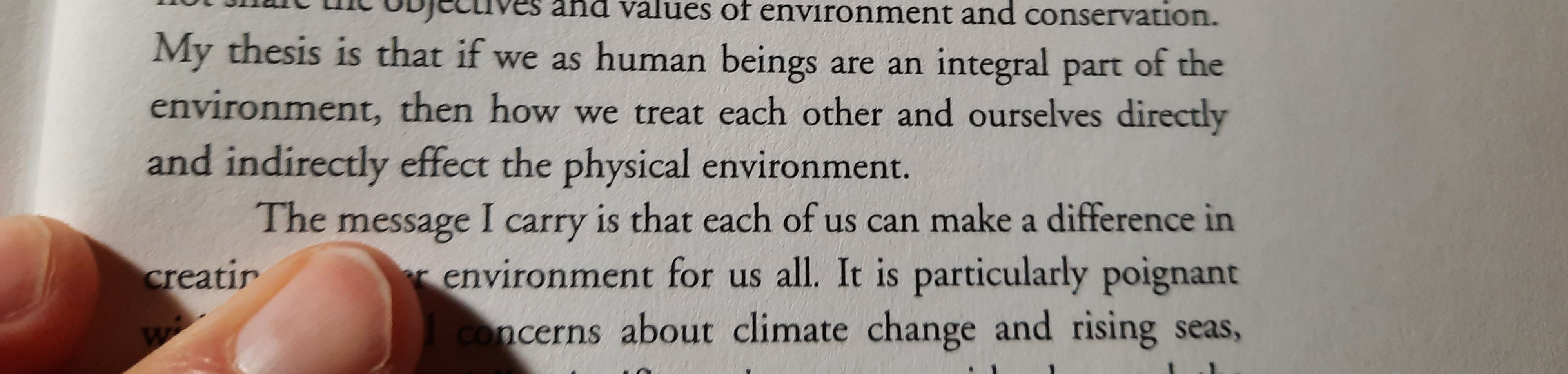
I can make a difference. You can make a difference.

May your day be filled with hope, optimism, and purpose.

I’m launched

Well, the American Trails webinar last week went really well! I had an audience from all over the world and was thrilled to learn about all the interest out there from trail organizations and conservation groups about engaging the recreation community in conservation issues.

But first! Have you filled out my hiker survey yet?

  • Have you hiked a trail and wished the planning was easier?
  • Would a different or improved resource have helped you on the trail?
  • Are you concerned about environmental issues affecting your trail experience?
  • What will the future of thru-hiking look like with accelerated climate change?

*A long-distance hiker doesn’t need to have completed a thru-hike. You are the best person to determine if you are a long-distance hiker. Some folks hike 30 miles in a day; others hike 30 miles in 3-5 days. If you spend more than 2 nights on trail, no matter your daily mileage, I’d love to hear from you.

And please enjoy the video from my presentation last week:

Next Steps in my Quest to become Professional Hikertrash

I’ve been quiet on the blog since coming home from the Appalachian Trail last summer, but all has not been quiet, in fact, I’ve been dreaming and scheming…sometimes for hours every day. Why? I have figured out my next step in hiking-as-a-profession…I’m starting a long-distance trail consulting business!

This business idea is a natural evolution of what I’ve been thinking and doing for the past seven years (since starting work on the Oregon Desert Trail in 2015), but it goes deeper than that. I could say it’s a natural evolution of what I’ve been thinking about for over 20 years now.

Back in the late 90’s when I was navigating my way through a bachelor’s degree in communications and looking at my choice of major and minor (graphic design & writing), I was well suited to glide into the slick world of advertising. Through ad campaigns and persuasive TV commercials, I could have made my mark with clever visuals and turns of phrases, but this niggling desire to have my 40 hours a week count towards change in the world…positive change in the world…redirected my vision. Instead of moving up to Chicago to work for a fancy ad agency, I hitched my cart to international development in the Peace Corps.

There was a fair amount of flailing about in Burkina Faso, West Africa. I spent long hours, weeks, and months sweating in my village, wondering at my life choices thus far, and sinking into loneliness and cultural bewilderment…but I also learned to show up each day, chit-chat in a new language, and find meaning in the work. Then there were the books. I read hundreds of books during the two years I spent in the village of Zogore…one of the most pivotal being There are Mountains to Climb about a woman’s hike on the Appalachian Trail. 

That book helped direct my attention once again, and I set off on my attempted Appalachian Trail thru-hike on the first day of spring, 2002. Even when I reached Katadhin five months and two days later, I didn’t know how the long-trail experience would become the narrative thread to my career and life all these years later, but I definitely became comfortable with challenge, with being uncomfortable, and with trying new things. I was someone who wondered what was over the next mountain and enjoyed the steps it took to get me there. Curiosity was, and continues to be, my constant companion.

So I started thinking about change. How can I change the world for the better with my skills and interests? I narrowed down my focus to information design…specifically, I enrolled in grad school in London in the Design Futures program at Goldsmiths College. Design Futures was, and is, very idealistic. It asked us: How can we create a better world through design? Or better yet: How can we design a better world? It was the perfect next step for my thinking…and I had the fresh experience of half a year spent outside to marinate the ideas of broad cultural change…of systems design.

My dissertation focused on museum exhibits…before grad school, I had completed an internship at the Smithsonian in Washington DC where I played with the idea of information design within museum exhibits. I loved the idea that in an exhibit, a person could walk through a three-dimensional space and come out the other side having had an experience, perhaps one that would influence the way they see the world, or at the very least, present some new information or art that communicated something of importance…information design! But I took that idea a step further and posited that we needed to remove the museum exhibit from the museum, we needed to create experiences – that is where the true influence and learning will come from…an interactive, full-body, curated three-dimensional space with a theme. Then I called it the Eco-Interplay Ethic. Now I call it a long-distance trail.

In the years between grad school and starting to develop the Oregon Desert Trail (my real application of these ideas into trail form), I hiked many more miles, worked professionally on trails and as a graphic designer and writer, and continued to explore the intersection of hiking, extended time in nature, cultural change, and design.

Over the past few years I have hiked a series of trails and routes where I wanted more: I wanted maps to show exactly the features and information I needed, I wanted a data book that made it easy for me to plan the day’s mileage and overall flow of the hike, I wanted resources that would streamline my planning and hiking experience. So I created them. I had been creating trail resources for the Oregon Desert Trail for years now, refining and editing the materials so that hikers would have everything they needed to be successful on the 750-mile hike. But what the Oregon Desert Trail also offered, was an opportunity to embed environmental and public lands information into the hiking experience. The ODT was created to connect the recreation community to conservation issues along the route, I was designing my “museum exhibit.” 

When the Greater Hells Canyon Council started re-envisioning the Blue Mountains Trail and wanted to develop a similar concept to the Oregon Desert Trail, things started to align in my mind. Trails could be a more intentional path to engaging hikers with the issues affecting the trail…can long-distance hikers be the advocates that environmental and conservation organizations need? 

Yes. 

In this business, I will improve the hiking experience on long-distance trails through developing new/enhanced/better trail resources like maps, guidebooks, and digital tools. I will help trails with community, hiker, agency, and stakeholder development. I will create systems to better manage trail information updates, trail maintenance needs, and hiker expectations. Basically, I will be the creative problem solver for long-distance trail organizations and developers and go even further if my interests align with the trail organization. I will embed environmental and conservation information into the trail materials to activate the recreation community in stewarding and participating in the issues that affect that particular trail. And the real ulterior motive? Help hikers see they are connected to the world we hike through, that what affects the forests and rivers affects us too, and maybe, just maybe, we will make different decisions based on those connections.

And the really good news? ONDA and the Oregon Desert Trail is my first client…I will continue to manage the route and help hikers be successful out there.

Through this blog you have come along with me on many of my long-distance hikes over the years, and I hope you will come along with me in this new venture as well. I will explore this new direction in my professional life through this blog, and don’t worry, there will be many more morning coffee-induced blog posts coming! One of the best ways I will know what a trail needs is to hike it. 🙂

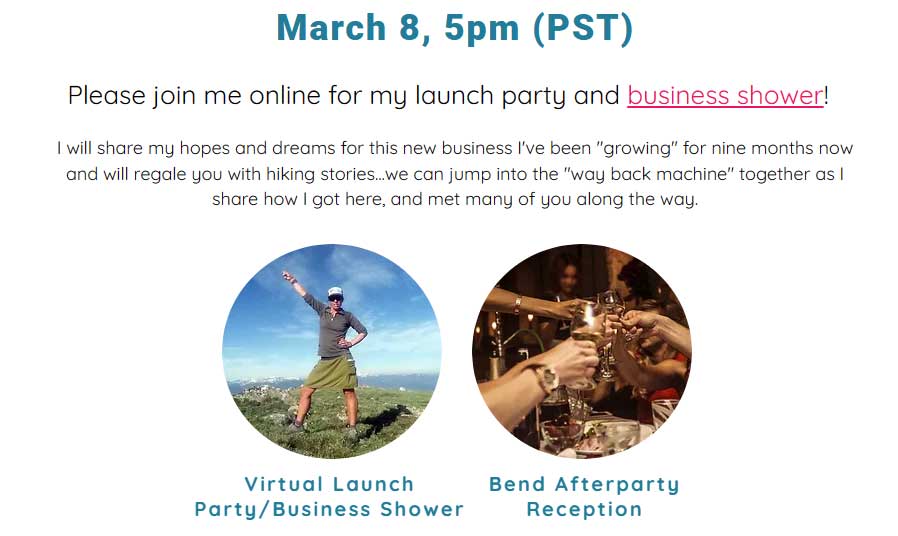
I am planning a fun online launch party on March 8. Please come if you are interested! As part of the launch, I am also hosting a business shower. This is the first (and probably only) time I will be asking for financial support from my community. One of the fun things about working as a volunteer and for non-profit organizations for much of my adult life is I don’t have a massive savings account…even $5 will offset the cost of my business phone number for a few weeks.

If you do want to come, please shoot me an email…I have some important updates that I’ll be sharing with folks via email before and after the event (including some party favors!) so please give me a heads up so you get the full experience. And I’m doing everything I can to make it an enjoyable experience.

Thank you for sticking with me on this blog through the many challenges and opportunities long-distance hiking has put in my path. There is so much more to come. 
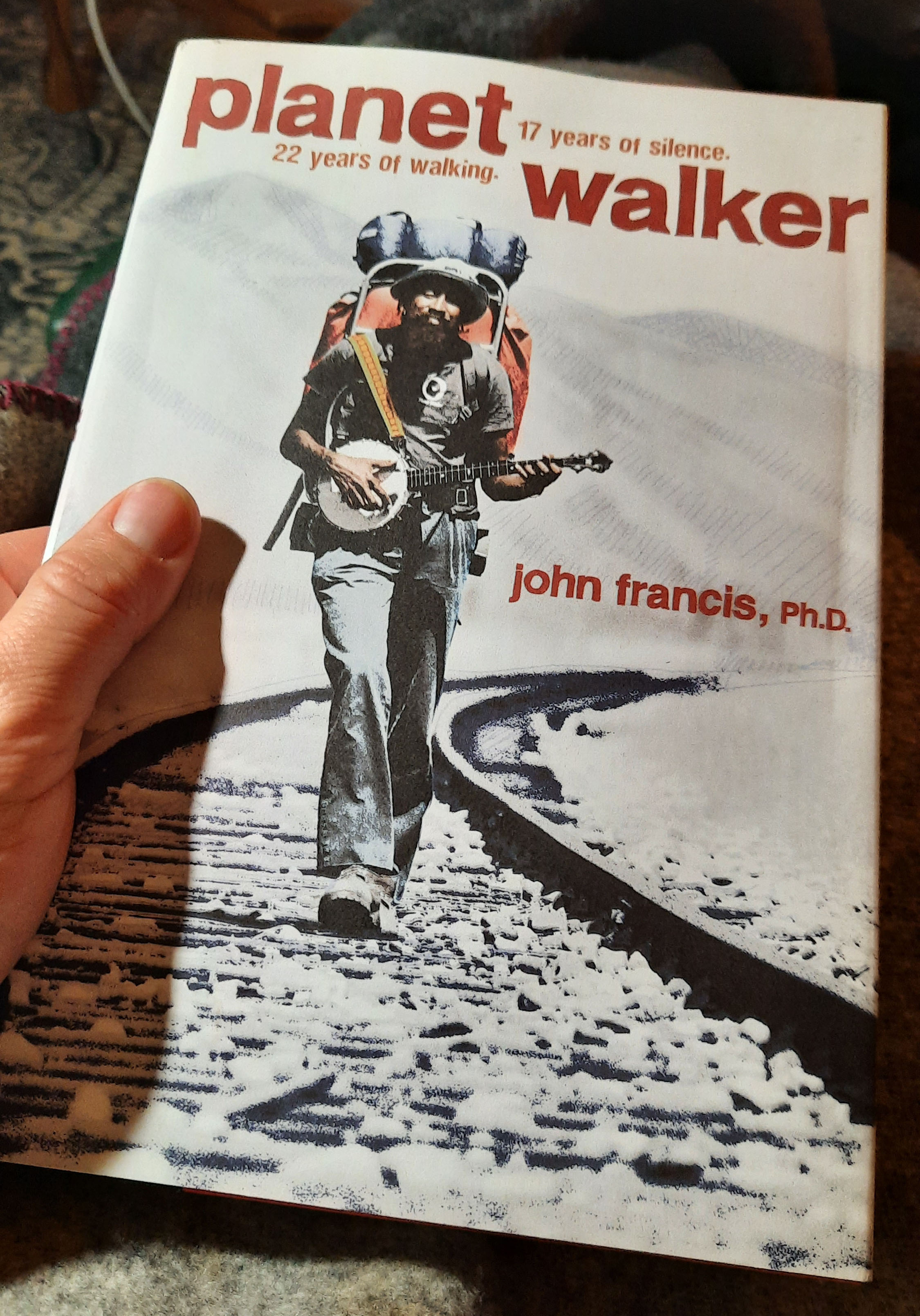
Planetwalker

If you have ever listened to the podcast, The Tim Ferriss Show, you know that he likes to ask his guests a series of the same questions at the end of each show. I finally know the answer to one of those questions:

What is the book you have given most as a gift?

I will be giving this book to everyone I know from now on. Consider this me giving it to you…

The other question I love to hear the answers to is: If you could put anything on a billboard for millions of people to see, what would it be?

My answer is one of my favorite quotes from Annie Dillard:

“How you live your days is how you live your life.”


It was in the first few pages that John Francis really captured me, and held my respect and excitement until the end of the book. (I’m still excited.)

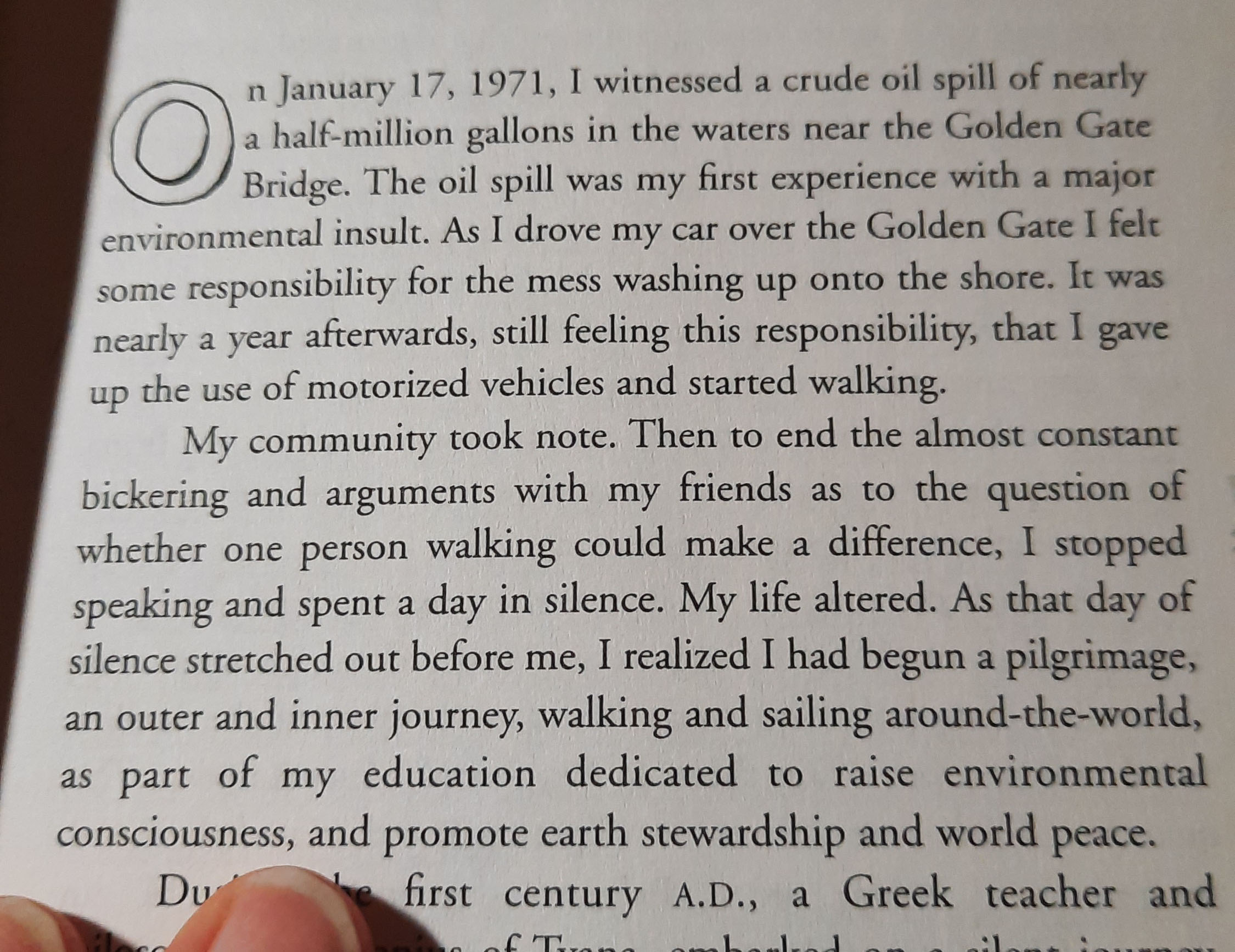
Here are a few more fabulous excerpts:

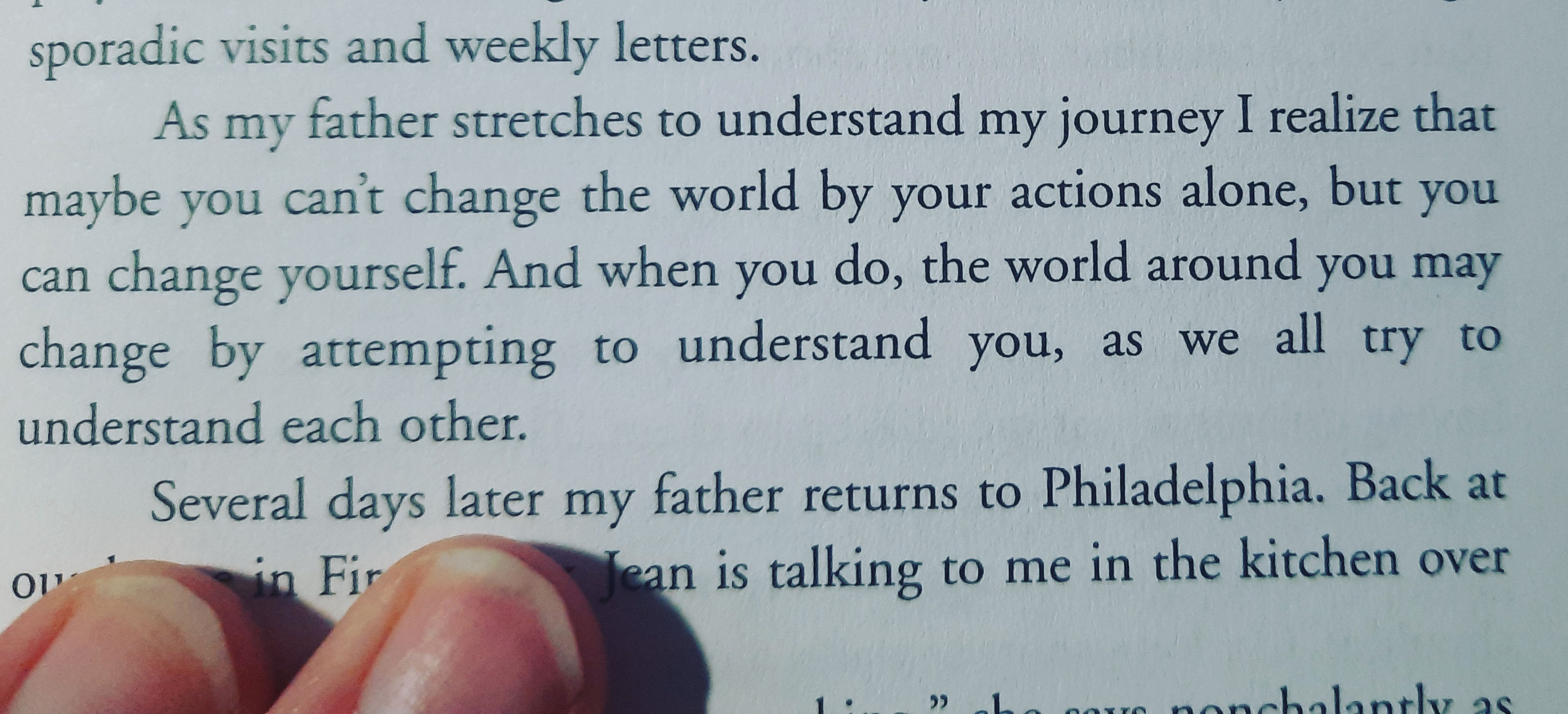
Your actions do matter. Your actions have a ripple effect. Your actions are fractals in the world (see adrienne maree brown’s book Emergent Strategy for more on this line of thinking.)

Listen to John Francis’ TED Talk here:

Buy his book here,

and visit his website here.

I can’t wait to hear what you think!

Sutton Mountain

I decided to backpack into Oregon’s next National Monument, Sutton Mountain.

Ok, it’s not a National Monument yet…ONDA has been working towards permanent protection of this stunning fault block mountain for far longer than my tenure at the organization, and recently Senator Jeff Merkely introduced legislation to make this area a Monument….right across the street from an existing one: Painted Hills National Monument. Painted Hills is a fantastical landscape of colored hills, the colors running in bands that appear to bleed around the corners of each fold…a mesmerizing sight.

Even though I had been to the area countless times to paddle the John Day River which borders the area to the south, this was my first time hiking in. Last summer when Kirk and I spent the month of June trying to travel the free flowing John Day from the source to the mouth, we floated on by. There is also a boat-launch nearby that we like to use for overnight trips on the river…regardless to say,  I’ve had Sutton Mountain on my mind for quite some time now, and this terribly warm February weekend would be the chance to check it out. 

Last year I built an independent stewards project for Sutton mountain actually, and had poured over maps, and traced roads and trails along the contours of this Wilderness Study Area (WSA) for a monitoring project with the Prineville BLM. I built the materials for ONDA volunteers to hike, drive, and note recreation impact issues. This was one of 12 WSAs in the project. 

There aren’t many trails here….at least none that go up to the top of the fault block mountain which towers over the painted hills 2,000′ below. But there was a path (drainage) I could hike up: Black Canyon. 

This would also be a training hike. 

Training?

Yes, training. I’ve never trained for a hike before, and now that my body is breaking down I can’t just frolick at will through the mountains without consequences…at least for now. My hope is if I build up my return to walking all day every day, I won’t have a repeat of the Corvallis to Sea trail in November. By the end of that hike I had riled up my planter fasciitis so bad that now, almost four months later and countless chiropractor, podiatrist and physical therapy appointments in the books, I’m methodically walking further and with more weight on my back in hopes of a less crippling hike next time around.

Back to Sutton!

I started hiking mid morning, already sweating in my thin fleece layer (have I told you that it’s been TOO warm this winter?) 

So I walk up Black Canyon, slowly, admiring the basalt cliffs and a very deep silence. I get to a pour-over where water is pouring over….and need to figure out how to walk through. I manage, while soaking a foot, and soon climb up out of the drainage that gets choked with willows and the kind of green things that are home to these desert waterways.


That was the general trend the rest of the hike: look for the path of least resistance (often game trails), sometimes finding a footprint of someone else who has come before me.


It’s pretty much cross country hiking.

Towards the top I decide to go straight up. My lungs, legs, and feet were too late in their protest. And halfway up to the top I almost regretted my decision…but kept going and collapsed up top for snacks.

This was the hardest I’ve pushed in a long time, and I felt it. But I would encounter trails and climbing at least as steep or more back on the Appalachian Trail this summer…this was training after all.

After some almonds, liquorice and a bite of a soggy sandwich I wouldn’t finish, I walked the final mile to the top.

Much delight!

The air was still, a few sounds from the road and trails below drifted up, but all in all it was a completely serene moment. 

On the hike down I again followed the path of least resistance, which is usually quite different than the path when climbing. I also had to adopt my favorite mantra: one step at a time. My legs were heavy and stumbly, the ground a bit muddy yet also icy….hiking alone comes with the responsibility to not trip and fall and take a rock to the head, or a pointy stick to the eye, so I pushed through the brush and plodded down the rocky canyon bottom having turned my mantra “one step at a time” into a song to the tune of Whitney Houston’s “One Moment in Time.”

I made it past the crux of the canyon without getting my feel wet this time, and found a tree to set up my new tent under.

Oh yeah! This is a new tent hike too!

When one tries to spend as much time hiking as I do, there are reasons to have a variety of tent and tarp options for every occasion…afterall, this is my life, not just an expensive hobby.

I purchased the Big Agnes Fly Creek tent this winter. I figured a semi-freestanding, double walled tent would be handy this summer on hot buggy nights in New England. The semi-freestanding is fab for setting up on almost any ground surface, and the light weight factor would be important for my aging back and feet. (I sound like I’m decades older than my 44 years; older hikers tell me to just wait…the real fun was just beginning).

I set up the tent and hung some drying lines inside for things like stinky wet socks.
I passed out early after a hearty dinner of biscuits and gravy (Food for the Sole’s new meal) and a chapter in the book I lugged with me.

In the morning I woke up well before the sunrise, which is my usual these days, and poured boiling water into my areo press. Kirk and I went backpacking last weekend (a much shorter, easier hike up a small butte) and I brought the areo press on a whim instead of our usual French press mugs. It makes a much better cup of coffee, so I threw it in my food bag again on this trip. Who knows! Maybe I’ll carry it on my two-month hike this summer, why not??!?

I only have a short jaunt back to the car, so the hike is essentially over. Short and sweet, and my planter fasciitis hasn’t started screaming at me yet, so all in all, a wonderful journey and training hike into our next National Monument!