What is even going on?

Monday, January 12 

I finally had an appointment with my oncologist to go over all the great test results from the weeks before, but when I described the increasing pain I had been experiencing for months now (8-10 seconds after I stand up, a throbbing pain pulses through my lower skull and shoulders and lasts 5-10 seconds….often I have to close my eyes and grimace to get through it), she discounted my working theory that it had something to do with low blood pressure. 

Frowning at my description, she said, “Lets order a cervical spine MRI to see if something else is going on.” I was relieved that she took the pain seriously and wanted to help me figure out what was going on.

I don’t have cancer right now, but something is going on that doesn’t seem right.

I had gone to yoga that morning, modifying greatly as I do lately, but after meeting with her, decided that I would minimize extraneous movements in my neck for now. The MRI was scheduled for Friday morning, and I had my surgeon follow up on Tuesday. I was going to get some answers. 

Wednesday, January 14

I walked to my acupuncture appointment in the balmy 50-degree weather that had been plaguing Central Oregon this June-uary. Kym found my neck to be incredibly tight, but my shoulders were the most relaxed she had encountered during the year I had been visiting her. Hmmm, strange, I thought. 

I reiterated my complaint of throbbing pain in the lower half of my skull and shoulders when I stood up, the same thing I told my oncologist on Monday, and that a neck MRI had been ordered. While I was resting with her needles tapped into my muscles and meridians, Kym consulted a physical therapist in her office and came back with the suggestion to tuck my chin into my chest when standing up, using only my legs. I practiced the movement and was delighted to feel less pain upon standing. The theory was that something in my neck was getting pinched when I was standing up, causing the pain. I walked home, and every time I stood up the rest of the day tucked my chin into my chest. 

Ok, so what was causing the pinching?

Thursday, January 15

I was up in the wee morning hours again. This time it wasn’t the steroids that woke me up like last year during my chemo treatments; this time I was worried about my neck. I woke up and couldn’t get my sore neck off my mind. I had additionally started to feel a “pulling” on the back left side of my skull. It felt like things were progressing. 

I kept replaying that week’s appointments and pain in my head in an infinite loop when I finally decided to get out of bed. I put on an episode of Poledark, a show both my mom and I had been watching on Netflix.

One particular scene and line stood out, and I rewound the episode enough times to write it all down:

You can not fight all the world. You can only make your own small corner a fairer place.

We are living in such a tumultuous time, I was living in such a tumultuous body, that I found real solace in that passage. 

We can only do what we can do in our small corner of the world. 

It’s easy to throw up our hands in despair when we see things on a world scale. That shared story has been true always and everywhere. It really doesn’t matter if it is the 1790s mining communities of Cornwall, or today in the streets of Minneapolis. We have to do what we can do in our corners. I was happily ruminating on that line and its implications when suddenly the potential of my situation hit me like a ton of bricks.

My body was trying to tell me something and I hadn’t been listening. It’s time to put my neck brace back on. 

My brain had been playing doctor’s appointments over and over in my head, I kept focusing on my pain and the really tight and sore neck, not seeing the trees for the forest. I even had the audacity to tell a few people that I didn’t trust my body anymore…it didn’t know acceptable pain from damaging pain. I didn’t have cancer so why is my neck pain increasing?

Duh!

My neck pain was increasing because something was wrong in my neck. 

  • My neck muscles were sore from trying to stabilize the bowling ball that was my head. 
  • The pulling feeling in my skull had to be related from my body trying to stablize itself. 
  • I had started to move my body instead of my head when looking to cross the street. 
  • I had ordered a $90 “Level 5” CBD pain ointment for my neck and shoulders. 

When I let my brain catch up to what my body had been telling me the last month, and I admitted to myself that something was very wrong in my neck, I was devastated. 

I heard Kirk’s 4am alarm go off, and went into the bedroom sobbing so hard that he jumped from the bed in alarm. I pointed to the closet and was finally able to eke out the words “I need to wear my brace again, it’s in the closet.” 

Something was wrong.

I was convinced my condition could be an emergency, so I messaged my surgeon to give him a heads up on my symptoms and to prepare him for the MRI coming in the morning. I also mentioned we had planned to drive to the coast for a friend’s birthday weekend, but I could cancel the trip if my neck was too vulnerable.

I didn’t hear back from the doctor that day, but the neck brace and pain meds were helping tremendously. I felt safer. The muscles that had been working overtime were able to relax, and I took my pills without wondering if I should. 

My concerns were legitimate.

Friday, January 16 

Thank goodness my MRI was at 6:55am. I didn’t have to wait long, and once I was in the machine surrounded by the clicking and buzzing, I almost relaxed. 

Something was being done. 

I expressed my sense of urgency to the MRI tech. Last time I felt this way I had been wisked away to the emergency room and surgery. She assured me if it was an emergency someone would get in touch.

I went home in a strange calm.

The My Chart results came in an hour later.

It sounded bad, real bad, and I couldn’t decipher most of it. Parts of my spine were mentioned that had never been mentioned before. “Severly compressed vertebral body fracture,” was a phrase I knew, but the severely part was new. A “mildly compressed vertebral body fracture” in a completely new part of the spine was recorded, my pain was likely due to a “degenerative marrow edema,” and other “scattered degenerative findings” told me one thing: my spine is crumbling. 

I waited for a doctor’s call, but none came.

I slowly packed and prepared to head to the coast. During the drive I kept my phone close, but no call came. By 5pm on Friday night I decided I wouldn’t be getting a call, and I’d need to wait until my appointment with the surgeon on Tuesday afternoon.

The Weekend

I kept the pain meds on deck, and let myself experience the joy of fabulous company in a beautiful part of the world. Oh, and I ate a cheeto for the first time in a year! And a strawberry starburst! I wasn’t fighting cancer at the moment, so I let my guard down and ate some food because why not! My spine is collapsing! 

The pain and throbbing continued, but as long as I wore my brace and took my pills, It was manageable and I was able to keep the demons at bay.

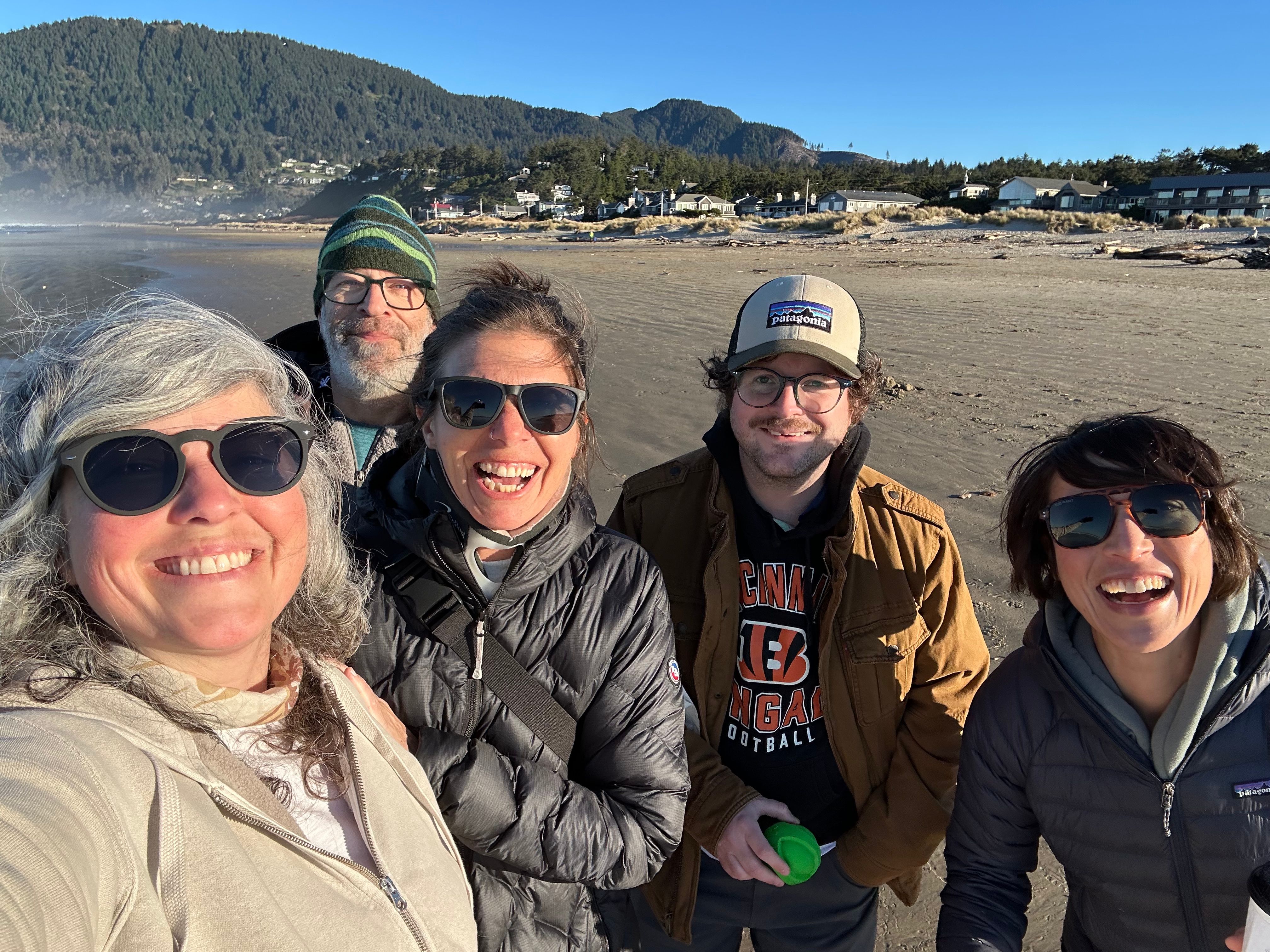
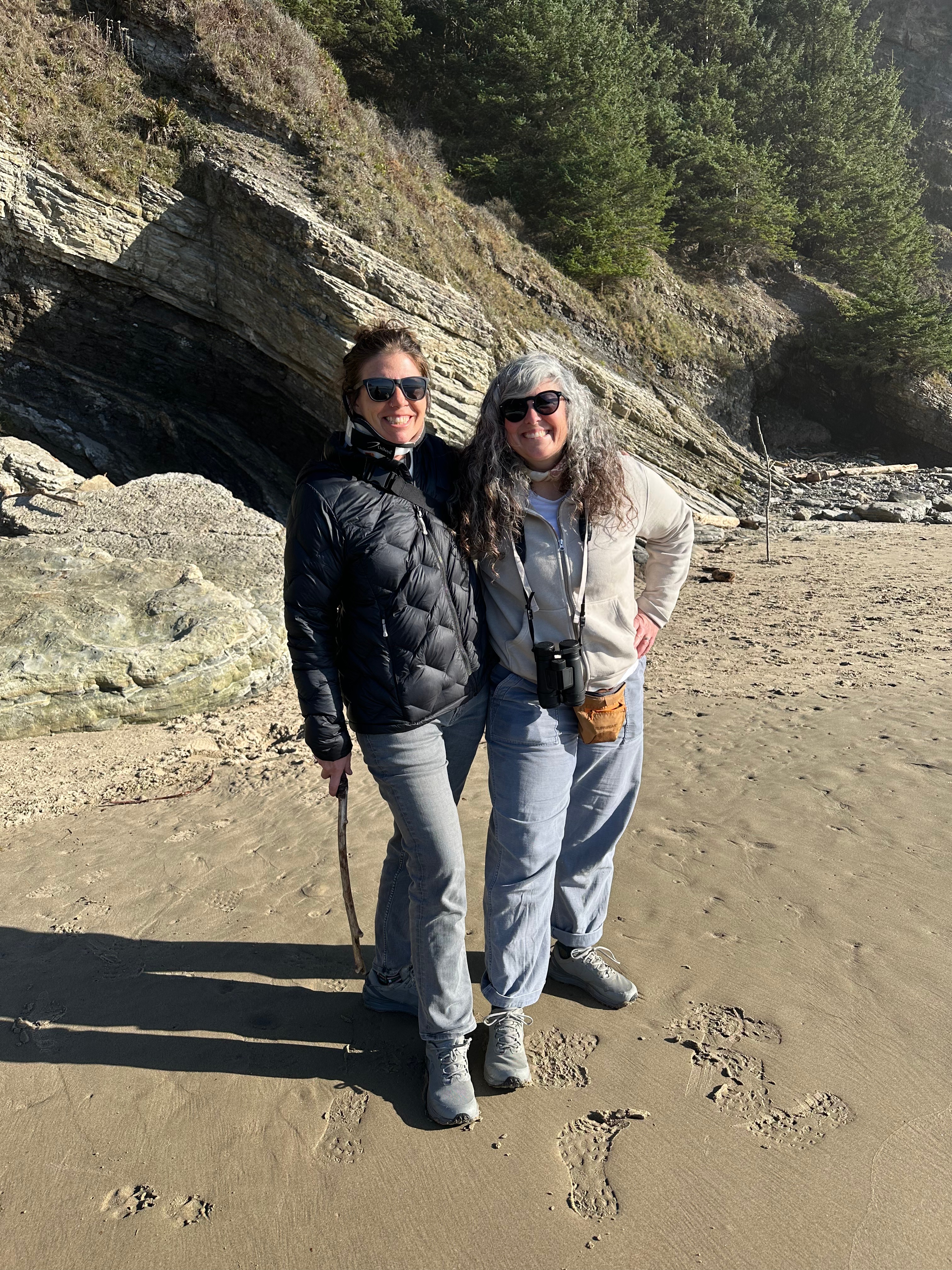
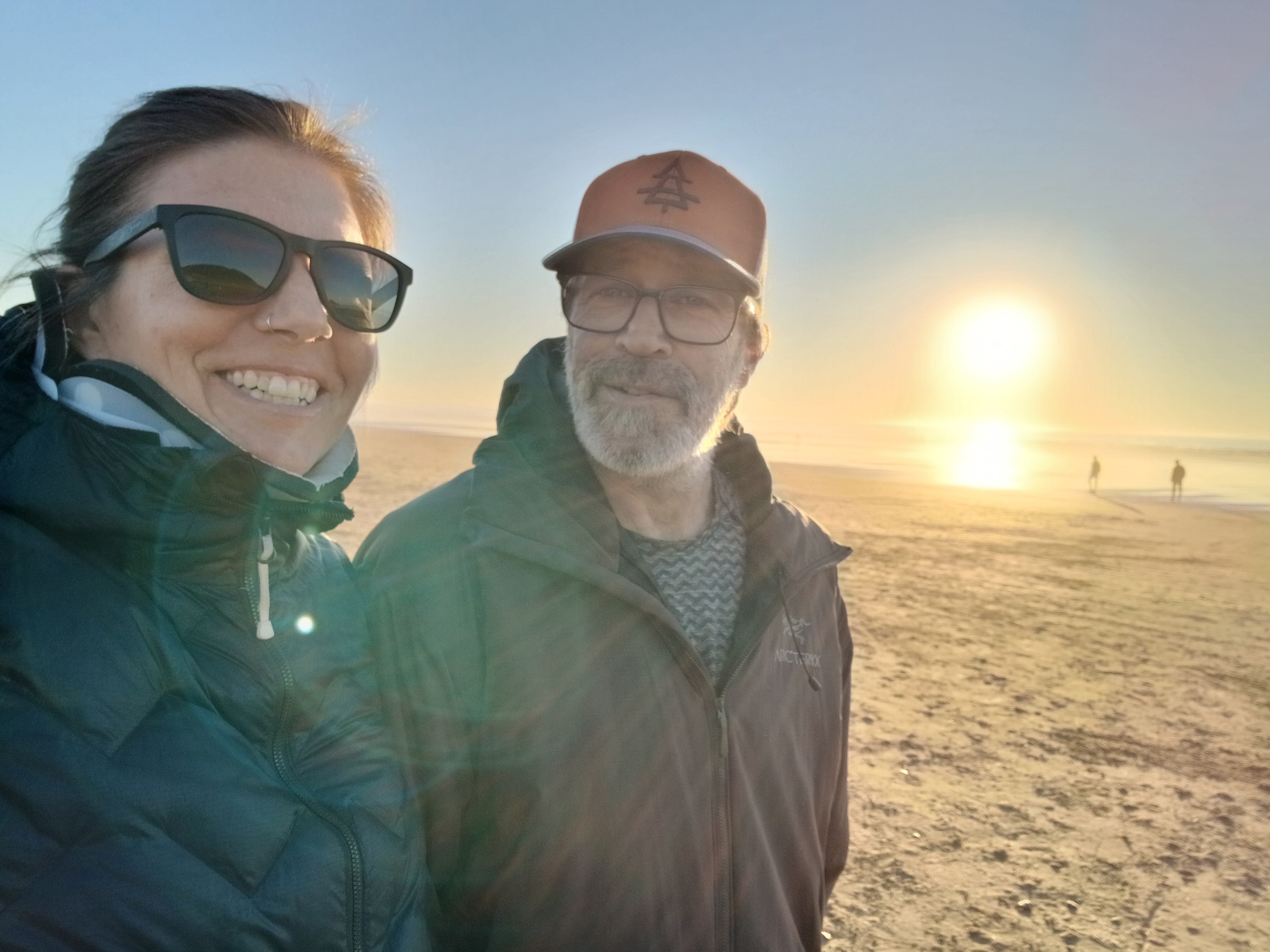
We walked on the beach, ordered pizza, put puzzles together, ate birthday cake, watched football, and walked on the beach some more. It was perfect.
On Monday morning I realized the “pulling” I had described at the back of my skull was really a spasm that was by this point, throbbing rhythmically at the back of my head. If I took pain meds the spasming stopped, so I kept on a steady regimine of drugs. 

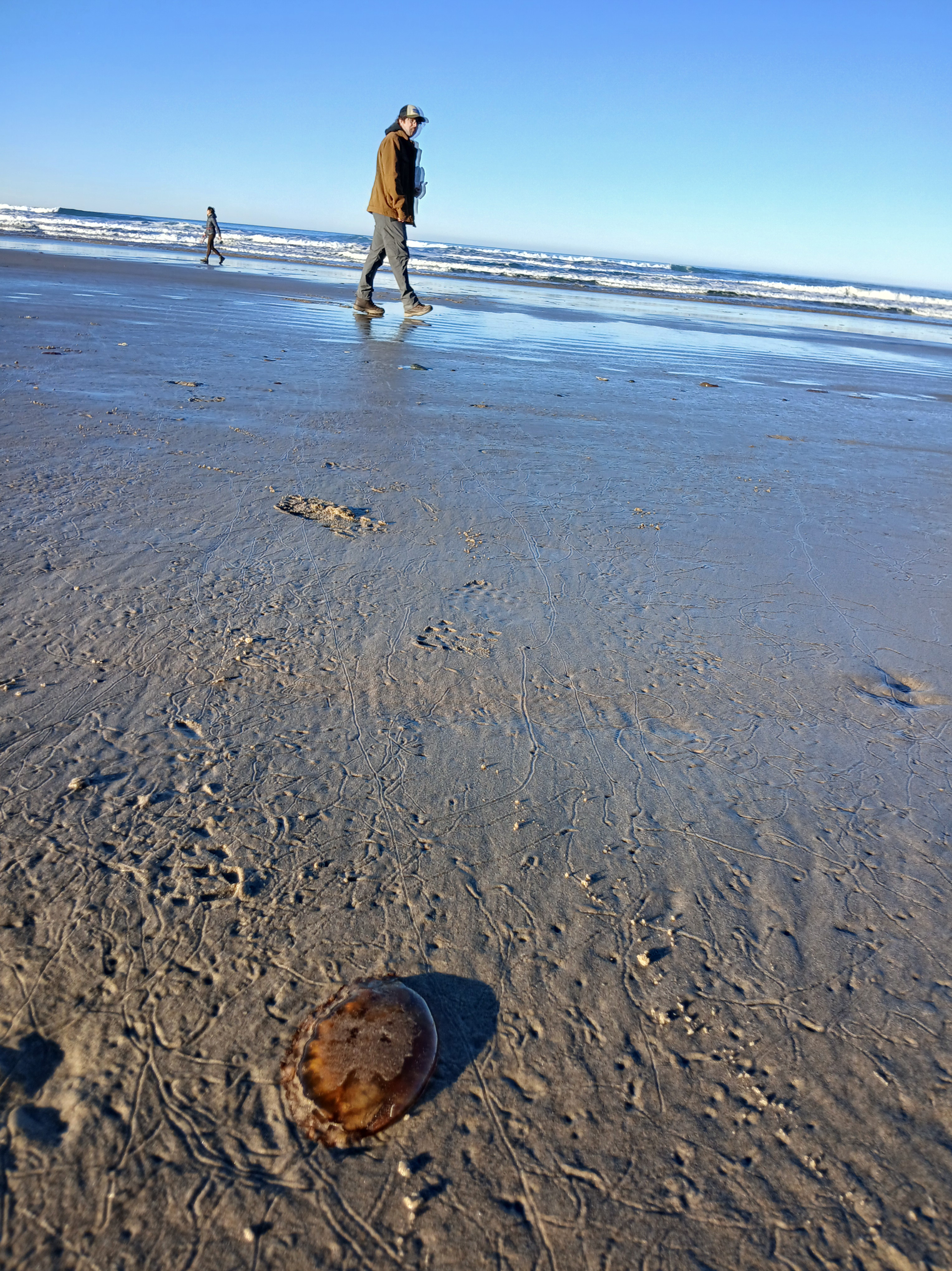
And this was it. This was the moment to put the “live now” blathering into action. If I was faced with a crumbling spine, which probably meant surgery, radiation, or some other combo of hospitals and extended bed rest, then I was going to have this day with the people I love and only focus on what was in front of me. That morning, it was a marionberry scone and delight at the jelly fish we found washed up on the beach. It was walking with the love of my life, my heart bursting with joy at spending the weekend with Brooke, Adryon, and Alex (Brooke’s brother). 
I would die happy if today was my last day.

Tuesday, January 20 

I was calm. 

I woke, drank coffee, and made plans with Kirk to go to the surgeon’s appointment together later in the day. I slid into an easy morning. 

I would have answers today. There was no reason to fear. 

I had a phone interview with a woman working on a story about the Blue Mountains Trail, had a zoom with my creatives freelancing group, and heated up leftover curry for lunch while I watched more Poledark.

I started to get a little agitated when we got in the car to head to the hospital. I surveyed the clock to make sure we would get there on time…or early, I do like to be early. And by the time we walked into the waiting room my name was being called. 

Yes!

Kirk and I sat waiting for the doctor to arrive and I surveyed the graphic of a spine on the wall. Ok, now my T3 was collapsing. The T3 supports upper body movement and respiratory function, and affects the lungs and upper chest. 

Ok, got it.

The doctor came in, noted my c-collar, and I explained that I feel more comfortable with it on. I go over what I’ve been feeling, and he takes a big breath and explains that my spine looks stable in the imaging. I stammer, “But more vertebrae are collapsing, I feel like it’s crumbling.” He assured me I am not crumbling, and says again, “Everything looks stable, it looks really good in fact.” I look at Kirk in disbelief. “But, the pain?” Somehow, he doesn’t address the pain and the head and shoulder throbbing, and the skull spasms, other than to say nothing is wrong in the imaging.

It’s a short appointment. We walked out of there completely bewildered. “But!” I start again and again, “That doesn’t make sense!!”

I’m suddenly questioning everything. 

Am I really feeling pain? 

Is it all in my head? 

But the My Chart results sounded so bad! 

Even my oncologist said they looked bad, but she isn’t a spine specialist. 

Am I making it up? 

But what about the pain? 

We drive in silence to Deschutes Brewery. I took off my neck brace. We walked in and ordered some food. 

I’ll get a second opinion.

Maybe it’s not related to my spine.

Something must be wrong.

Maybe nothing is wrong?

But the pain? Is that real? I know it’s real!

I text my mom and some friends who were in the know. I hadn’t wanted to blog about my situation for this very scenario: maybe nothing was wrong. Maybe I was wrong

This experience had been a week-long mindgame. I was convinced I was crumbling, then told I wasn’t crumbling.

What the %$##^$$#%!

Wednesday, January 21

Ok, maybe it isn’t my spine that is the problem

Google, what do you have to say about it?

I spent some time going through the MRI results, copying and pasting each finding into the search bar to decode the medicalese.

The plain truth of terms like “new sclerosis of the left C4 articular pillar” became much more innocuous when worded as “new hardening and increased density in the bone of the left C4 vertebra’s facet joint, usually a sign of osteoarthritis or wear-and-tear degeneration in the neck. It causes potential pain, stiffness, and reduced movement, and can be managed with conservative care like PT, anti-inflammatories, or sometimes injections.”

“Degenerative marrow edema,” became “fluid buildup in the bone marrow, often from degenerative joint diseases that causes pain, swelling, and restricted movement. It is treated with rest, anti-inflammatory drugs, physical therapy, and sometimes core decompression for severe cases, typically resolving over months.”

“Scattered degenerative findings in the cervical spine without thecal sac stenosis,” is “common, age-related wear and tear in your neck, but this wear is not compressing the main spinal canal where the spinal cord sits. This is a very common MRI finding, particularly in individuals over age 40, and often represents the normal aging process of the spine.”

Well shit.

Should I have googled all of this before letting my mind go hay-wire? Should My Chart results be shared without a doctor’s interpretation? Should I still get a second opinion?

And that my friends, is where I am today.

Cancer Update 2/11/25

Hiking part of the Desert Trail with the DTA in Death Valley

It’s another midnight hour and I’m slowly waking up to the glowing screen on my tablet. It’s balanced on my lap with one of those bean-bag platforms. I’ll tell you, this contraption has been a game changer. I can balance bowls of soup on here, and if I wear a bib tucked into my c-collar, I can feast in bed with minimal mess. 

Sure I could lay back and try for sleep again, but I feel like writing, so I’m gonna write.

There have been so many things to adjust to with this new body over the past few months, and by far one of the biggest adjustments has been wearing the c-collar ALL THE TIME. I’ve been wearing it full-time since my back surgery on December 21, and if my timing is right, I have another 5 and a half weeks to go. It does come off at night now when I can fully rest my neck against a solid surface and lower the top of my bed down with the remote we got for our adjustable spilt king Tempurpedic bed (game changer!) This bed has been worth every penny, especially because of all the tumors in my back and spine and ribs, I can’t lay down by myself. And the split means Kirk and I have our own sides. I don’t have to wake him up in the middle of the night when I want to raise my head or legs slightly…. I can’t stress enough how important it is for him to get enough rest to deal with me. Really! There have been some rough spots when I was on so many medications and I wasn’t quite sure what I could take when, and with what, so I was getting up every few hours during the middle of the night to take another pill. That meant Kirk got up too. I had had a few instances where I thought I was self-medicating properly, but then would later find pills in my lap, unsure if they actually got in my mouth, or not.  On one occasion I was sure I hadn’t taken an oxy, only to go practically comatose an hour later when the second dose went into effect. We decided I needed supervision after that instance.

But we did finally get some help with spacing out the meds with one of the pharmacists…I have a detailed spreadsheet (of course I do!) that lists all the meds and the times of days I could take them and the hours apart they needed to be taken (some were every 4 hours with food, some every 6-8 as need, some once a day at morning or night). It was a spreadsheet of confusion and heartache, but she helped us whip it into shape with the primary goal of having as many hours of uninterrupted sleep as possible. Things have been much better since then. There is nothing worse than a sleep-deprived Kirk trying to deal with all the day-to-day stuff. We gotta get that man some rest.

But then there is my bladder! I can’t get myself into the bathroom on my own, and in fact our old mill house is so old that the door to the bathroom is narrow enough that we need to park the wheelchair in the hallway, then I need to stand up using the crutches (that my lovely friend Meredith is letting me borrow) to then crutch my way into the toilet. That production is too much for your average pee, so we have a system where I sit on some towels on the edge of the bed and pee into a jar using my backpacking psytle. It works! But I need Kirk there to help hold the jar, stabilize me on the bed, all the things. I’m trying to be more independent there because again, some nights I’m getting up every 2 hours and he is not getting solid REM sleep. I can certainly pee into a container by myself…well at least we are trying that technique for a few nights.

Back to my neck. I get a few hours of neck-free relief. But as soon as I sit up again, it’s collar on. The titanium plate that replaced my C4 needs to steady itself in my body with all the titanium screws that were embedded into the surrounding tissue, and apparently, my bone will grow back into the screen they provided…so I think that’s some of the sensation that I’ve been feeling…bone growing back! I know I still have tumors back there, so I wonder is the bone growing in compromised? I have lots of questions, and since we are still waiting on finding out more about my genetic mutation, the approach my care team will take, and mulling over some of the recent MRI test results that were posted to my account, I’m going to take us into a new segment of this blog called: 

Interpreting a My-Chart test result in the middle of the night with no doctor supervision

The real doctors out there might be shuddering as I go into this segment, but for those of you who get test results posted days or even weeks before someone explains them to you, you know what I’m talking about. How can you not investigate? 

This test result was from an MRI I had on my neck and spine on February 1. I know that I’m at risk of reading something out of context or doing a deep dive into a new terminology or new finding without having the full grasp of the situation. I know that, but here I am, publicly sharing them with you in the middle of the night. Weee! Lets go! 

I’ll attempt to break down the top findings of the MRI below:

  1. The primary finding was “Scattered osseous metastatic disease involving the left C4 pedicle, as well as the C7, T2, and T3 vertebral bodies as described above, with a severe pathologic anterior compression fracture of C7, with approximately 80% central and anterior vertebral body height loss.”
    • Ok, we knew about the other tumors and the big chuck of tumor left in the C4 pedicle, but the part of the sentence that threw me for a loop was “a severe pathologic anterior compression fracture of C7, with approximately 80% central and anterior vertebral body height loss.” What the what?? I spiral and cry. I’ve been sitting on this one for a week not sure what it really means…but I’m going to try to and wrap my head around it below. Hang in there with me.
  2. The next result was “Postsurgical changes of prior C3-4 and C4-5 ACDF, without MR evidence of hardware complication.
    • Hmmm, ok, I’m reading that as a positive and they haven’t found any hardware complications with my C4 surgery spot. That sounds ok. They did fuse the C4 to the C3 and C5 with titanium screws to prop it back up (they said I might have gotten a smidge taller in the process). So no real new information here, moving on!
  3. Mild multilevel degenerative changes throughout the cervical spine as described above, most notable for mild left neural foraminal narrowing at C6-7.
    • I went to Chat GPT on this one (I know, I know, you can pass judgment on me another time, I happen to find it useful to reference and cut down on the crazy google results I get when I try to find answers…)
      1. Mild multilevel degenerative changes: This refers to the early stages of wear and tear (degeneration) on the discs or joints in the cervical spine at multiple levels (more than one location) in the neck. “Mild” means that these changes aren’t severe, but they are noticeable.
      2. Throughout the cervical spine: This indicates that the changes are present in multiple areas of the neck, not just one specific level. As described above: This suggests that the previous part of the report has detailed the specific levels of the spine where these degenerative changes are happening.
      3. The most significant finding is mild narrowing of the neural foramen on the left side at the C6-7 level of the cervical spine. The neural foramen is a space through which the spinal nerves exit from the spinal cord. Narrowing of this space can put pressure on the nerves, leading to symptoms like pain, numbness, or weakness. “Mild” indicates that the narrowing is not severe, but it may still cause mild symptoms.
      4. Further investigation beyond Chat GPT told me that Foraminal stenosis is like what happens to an electrical cord when you shut a door on it, wedging it between the door and frame. Eventually, the pressure on the cord can damage it, affecting how it conducts electricity. Likewise, foraminal stenosis can put pressure on affected nerves. Eventually, that can affect signals traveling through the nerve and cause nerve pain, and sometimes, permanent nerve damage. It goes on to say it’s quite common: Some studies indicate up to 40% of people have at least moderate foraminal stenosis in their lumbar spine by age 60. That increases to about 75% In people aged 80 and older. However, most people with foraminal stenosis don’t know they have it, even when it’s severe. Only 17.5% of people with severe foraminal stenosis have symptoms.
      5. So in the grand scheme of things, this isn’t one of those problems that is rising to the top of the list, and some of the complications will probably be addressed with one of the numerous cancer treatments I’m getting. The internet tells me a cure could be as easy as some solid rest and PT! And as long as I’m symptom-free, I probably don’t need treatment. Whew! 

Lets get back to that “severe pathologic anterior compression fracture of C7, with approximately 80% central and anterior vertebral body height loss.” though. What is that all about?

Turns out the fracture in the C7 isn’t new. I remembered something about the C7 when we were getting all the test results in Louisiana, and there was even a bit about a hole being drilled in the bone by a tumor. What other shenanigans did that tumor get up to down there? That vertebrae was completely overshadowed by C4 at the time. Lets go back.

An MRI on 12/18 reported: There is also a fracture along the superior endplate of C7 with mild loss of height. The remaining vertebral heights are preserved. And interestingly ”Osseous metastatic disease in the lumbar spine and sacrum, with pathologic fracture along the superior endplate of L2. L2 is the back rib where my biopsy was taken, they had mentioned a fracture in that rib, but for the life of me can’t imagine what it was from.

So what happened between December 18 and February 1? I have much more compression in my C7 with 80% loss of height. Lets look at where all these bones and things are in the back. 

Ok, lets break it down: Severe pathologic anterior compression fracture of C7:

  • Severe: The fracture is significant or advanced.
  • Pathologic: This means the fracture is caused by an underlying disease or condition (like osteoporosis, a tumor, or infection), rather than from an injury or trauma alone.
  • Anterior compression fracture: “Anterior” refers to the front of the vertebra, and “compression” means that the vertebra has been squashed or collapsed in a way that it loses its normal height. So, it is a collapse in the front part of the C7 vertebra (the 7th cervical vertebra in the neck).
  • With approximately 80% central and anterior vertebral body height loss: This means that the height of the C7 vertebra has been significantly reduced. Specifically, it has lost about 80% of its normal height in the central and front (anterior) parts of the vertebra. This indicates a major collapse of the bone structure in that area.

Yep, I gathered that, so treatment options? What might I expect? 

  • The treatment for a severe pathologic anterior compression fracture of C7, especially with significant height loss, will depend on several factors, including the underlying cause of the fracture (like osteoporosis, a tumor, or infection), the severity of symptoms, and the patient’s overall health.
    • Conservative (Non-Surgical) Treatments:
      • Bracing or Collars: A cervical collar or brace may be used to immobilize the neck and provide support during healing. This can help prevent further movement or strain on the fractured vertebra. (already doing that!)
      • Pain Management: Medications, such as non-steroidal anti-inflammatory drugs (NSAIDs), acetaminophen, or opioids (for severe pain), may be prescribed to control pain. Muscle relaxants can also help with muscle spasms. (already doing that!)
      • Physical Therapy: Once pain is managed, physical therapy may help to strengthen the muscles around the neck and improve mobility. This can also aid in preventing further injury and help with posture correction. (I’ll be doing that after the collar comes off)
      • Activity Modification: Rest and avoiding activities that could strain the neck, such as heavy lifting or twisting motions, is often recommended. (definitely doing that)
    • Treating the Underlying Condition (it makes sense that we will probably go this route first):
      • Tumor-related fractures: If the fracture is due to a tumor, treatment might involve chemotherapy, radiation therapy, or surgery to remove the tumor, depending on the type of tumor. (yes, yes, makes sense)
    • Surgical Treatments: (maybe some of this will come up? Now at least I know what some options might be…)
      • Vertebroplasty or Kyphoplasty: These are minimally invasive procedures used to treat compression fractures. In vertebroplasty, a special bone cement is injected into the fractured vertebra to stabilize and strengthen it. In kyphoplasty, a balloon is used to create space in the vertebra before injecting the cement, which may help restore some of the lost height in the vertebra.
      • Anterior Cervical Discectomy and Fusion (ACDF): If the fracture has caused instability in the cervical spine or if there’s nerve compression, surgery may be done to remove damaged or compressed discs and fuse the vertebrae together to stabilize the spine.
      • Spinal Fusion: If the fracture is severe and the vertebra is unstable, the surgeon may decide to perform a spinal fusion, where the fractured vertebra is fused with adjacent vertebrae to prevent movement and reduce pain.
      • Cervical Laminoplasty or Laminectomy: In cases where there is pressure on the spinal cord or nerves, procedures like laminectomy (removing part of the vertebra to relieve pressure) or laminoplasty (surgical modification of the vertebra to relieve pressure) may be performed.

Alright folks, I’m exhausted. That was a good long mid-night run of words and googling and I’m ready to lay down for a while again.

I have a new request of you though! I’ve been enjoying my morning cup of coffee (half decaf, oat-milk latte) with some music. I would love for someone to organize a collective morning music mix that I can listen to when I wake up and feel the coursing black gold running through my veins (bonus points for good dark roast coffee recommendations!). 

I created a collaborative spotify playlist called “Renee’s morning coffee playlist” and I put in one of my favorite morning songs, Three Little Birds by Bob Marley.

When I worked in wilderness therapy the first few years I lived in Bend we would often wake the kids up with a song. Three Little Birds was one of my favorites to sing. I don’t sing, but the sentiment and love in the lyrics seemed to transcend my morning voice. It was a simple pleasure we had out there. The morning song.

Three Little Birds
Song by Bob Marley & The Wailers


Rise up this mornin’, smile with the rising sun
Three little birds pitched by my doorstep
Singin’ sweet songs of melodies pure and true
Sayin’, “This is my message to you”
Singin’, “Don’t worry about a thing
‘Cause every little thing is gonna be alright”
Singin’, “Don’t worry, don’t worry ’bout a thing
‘Cause every little thing’s gonna be alright”

Here’s more technical stuff about it: How To Make a Collaborative Playlist — Spotify

Hopefully, it’s pretty straightforward. I enabled the playlist so that friends can add and reorder tracks. Lets try it out!