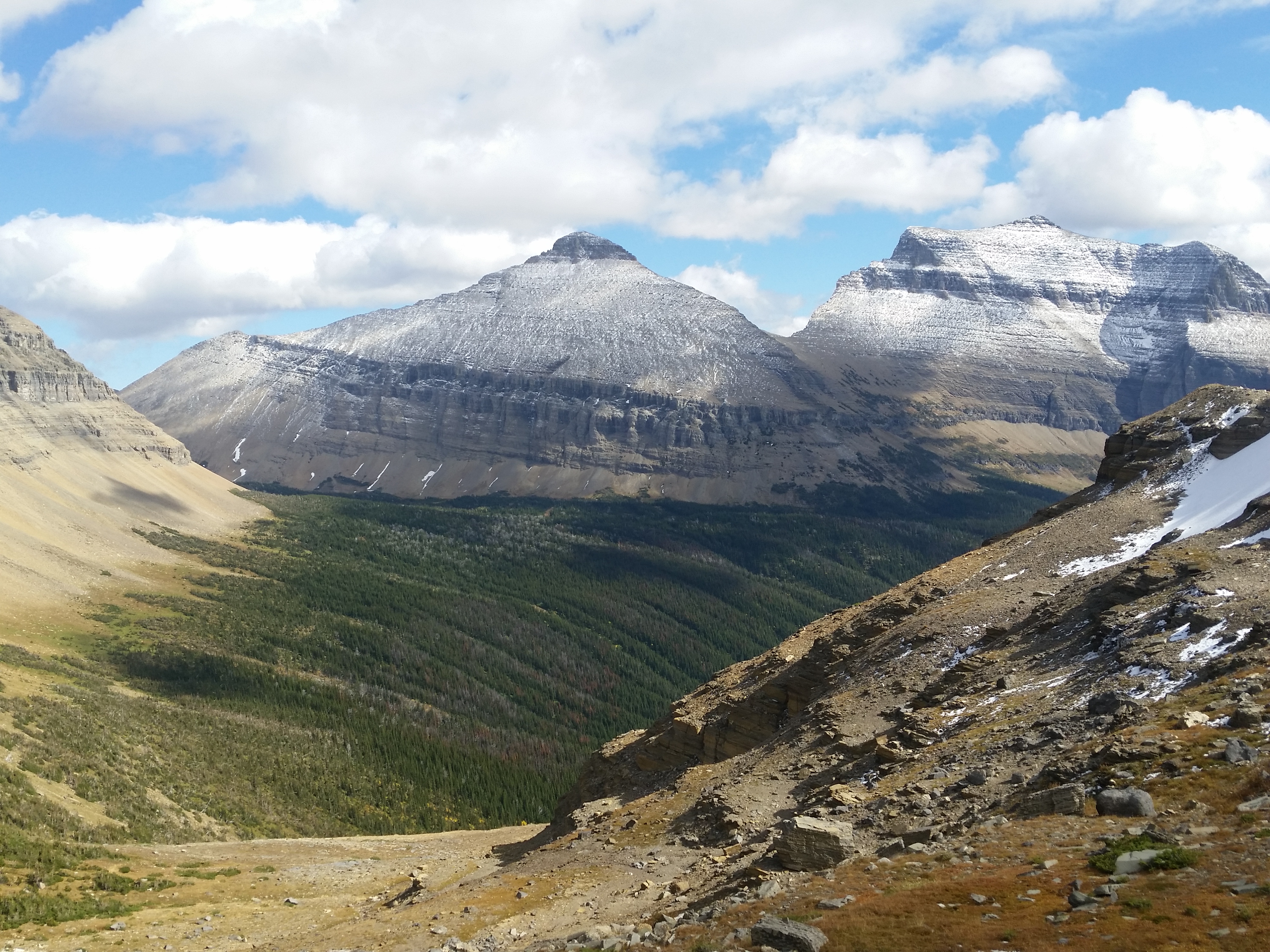
We walked through lava fields and lava flows. Through burns and one little patch of not burn that was quite refreshing. The air was still enough and the sun bright enough that it slowly cooked our brains as we plodded through the miles of ridges and flows.
We kept hopschotching with Battery a thru-hiker from Germany we had met at the campground last night. Each time she stopped to snack, or we stopped to eat gummy worms and gummy butterflies, we got to know her a tiny bit better. By the time mid afternoon rolled around, the three of us had stopped to pluck huckleberries together. Battery was headed to Sisters from Santium Pass this afternoon, and we were stopping sooner than that at a pond that was reported to be both small and big.
As the day progressed, our feet and muffin tops felt the miles, but we were quite pleased with our 17 miles for the day. I thought we would see more thru-hikers, but we had to take into account the triple vortex: MacKenzie Pass, Big Lake Youth Camp, and Santium Pass offer hikers the delights of town, resupply and showers.
All in all, we spent the day focused on our feet, being careful not to trip and scrape our faces off on the jagged lava rocks.
Dinner was a NEMO-made mac and cheese special. Going horizontal was dessert.
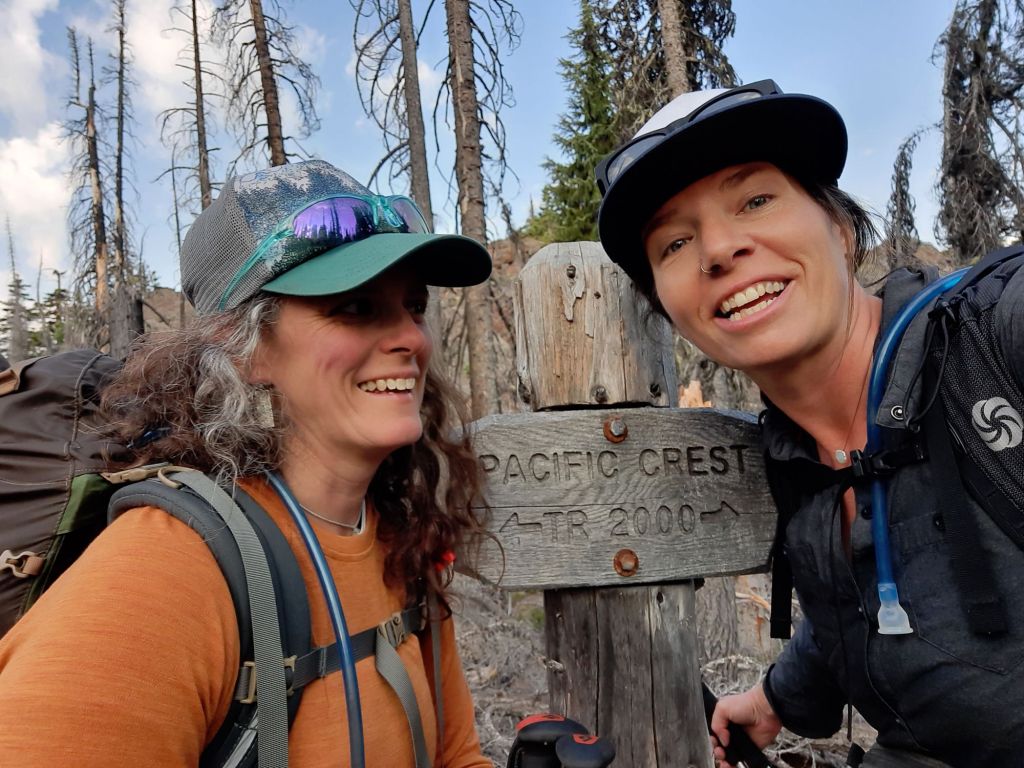
Every few years NEMO and I reunite to have a hiking adventure. There have been hikes on the Arizona Trail and Northville Placid Trail, the Sunshine Coast Trail and Appalachian Trail, but this time we would be returning to the scene of our friendship. We would be returning to the Pacific Crest Trail.
We both agree…there is something about the PCT that shines a bit brighter in our lives.
Maybe it was our age?
We both turned 29 that summer.
Maybe it was the community?
With a class of only 300, 2006 was an intimate time to hike and get to know some incredible people.
Maybe it was the landscape?
Yes. It was most definitely the landscape. We walked the length of mountain ranges from the Sierra to the Cascades, and each mountain meadow and chilly tarn was more dramatic than the next.
We fell in love on this trail: with the world, with ourselves, with possibility. We can do anything, and believed it. Still do.
Nemo was out for a week, and the plan included trail and river. After a 4-day jaunt on the PCT we would head to the lower Deschutes River for a splashy few days. It’s summer baby!
I put her on a bike for a margarita lunch date and cruise along the river before we hopped on a piece of inflatable pizza for a float.
When in Bend!
The first day was topped off with some Olympics and snoozing on the couch.
Nemo threaded the needle of family vacations, summer sicknesses, and a bursting garden to arrive in Central Oregon and our smoky skies. We were in the thick of fire season, and the toxic air was a risk factor to our plans. We watched the AQI and headed out the door with levels below 100. (Not far over the mountain though, Oakridge was well into the 400s. That’s poison air).
Kirk took us up to McKenzie Pass, and planned to pick us up 60 miles to the north in four days.
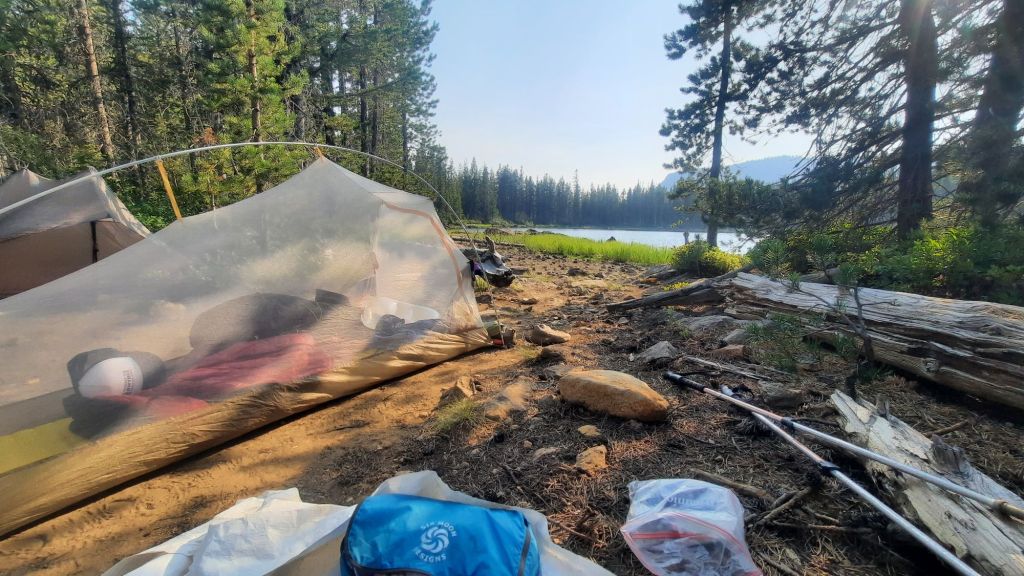
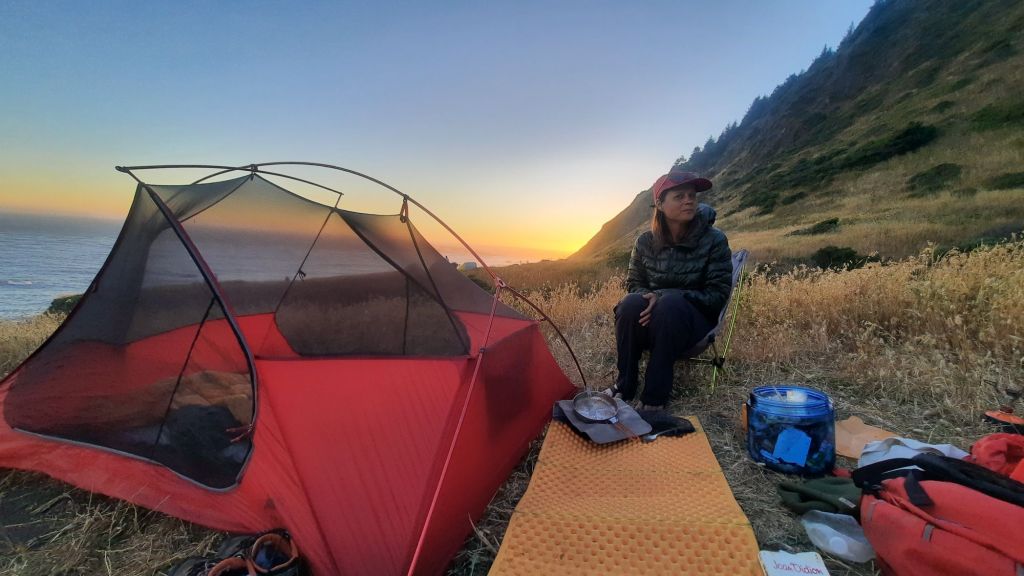
I went to bed thinking that I might regret sleeping without the rainfly on the tent due to dew and moisture and stuff in the coastal air, but things remained dry despite the early morning fog. Winning!
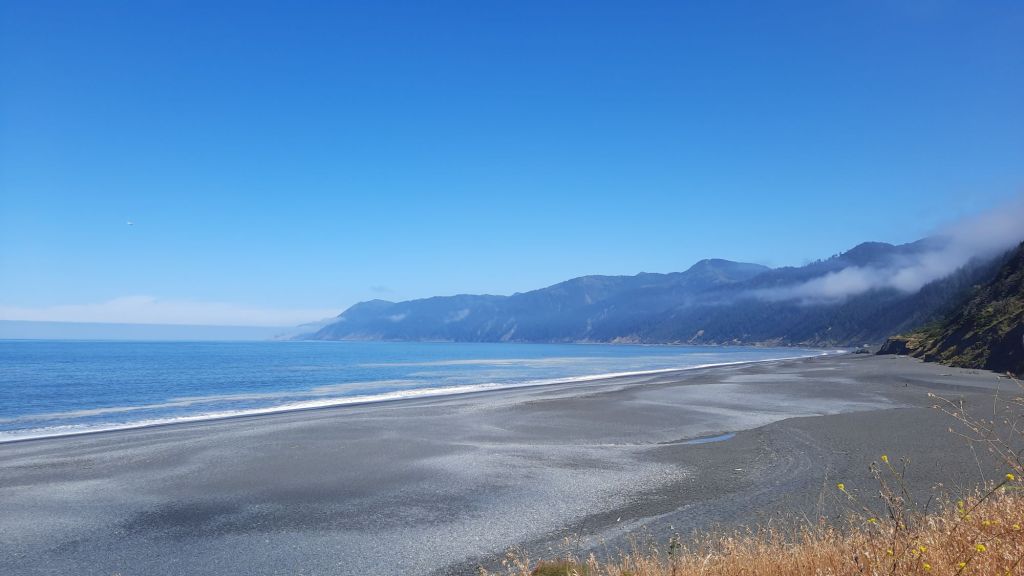
I had to make a trip to the beach to do my business, a beach that was all baseball-sized rocks. The drop-off into the water was sharp and I kept my eye on the ocean….it could have been disaster if a rogue wave had caught me precariously perched on that steep rocky slope of ball-bearings, but I made it through. The view was worth it!
This part of the trail has some of the deepest waters along the entire west coast. Check out these fun facts about the section of trail we would hike today:
“As you’re pinned against the cliffs, dodging waves and the occasional rock-fall, remember this: Just south of Shipman Creek, the ocean plunges into sudden depths of a channel of the Delgada Submarine Canyon. It gets deeper faster than almost anywhere else on the West Coast.
This canyon is a massive chute for sediment as it flows down into the deep sea. It is a remnant of the San Francisco Bay drainage. As the Pacific and North American plate slide past each other, it has migrated north at a few centimeters per year.” (From an online guide to the trail. There are other fun facts in there too, like the story of a hippy comune that took up residence at a lighthouse that we passed yesterday, and to get rid of them the BLM burned down all the buildings! 😯)
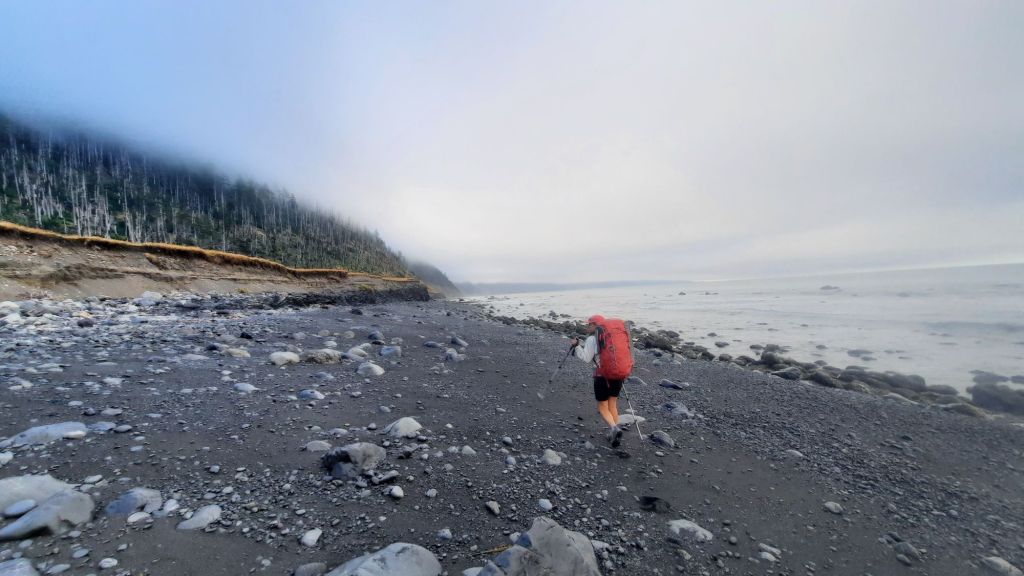
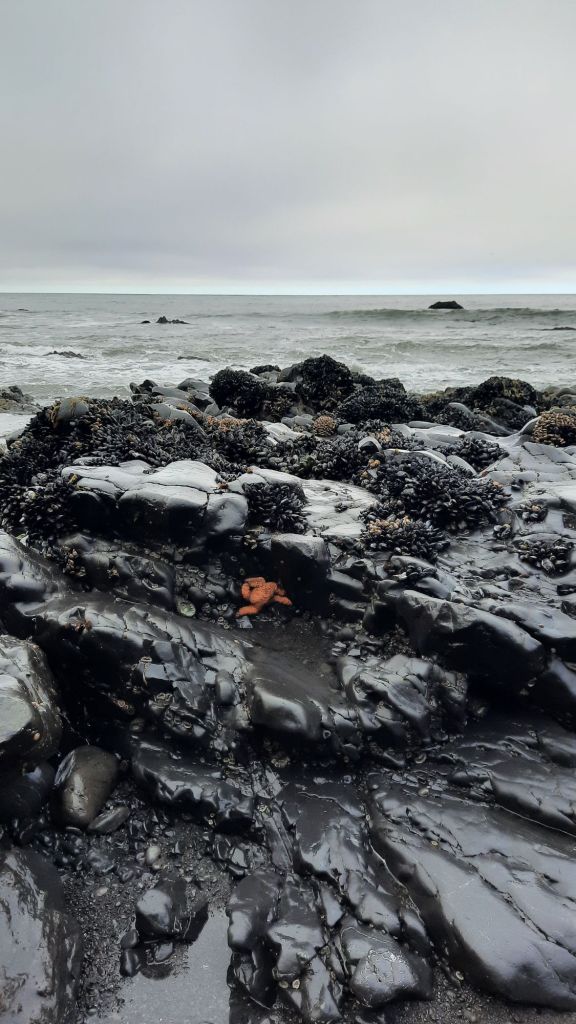
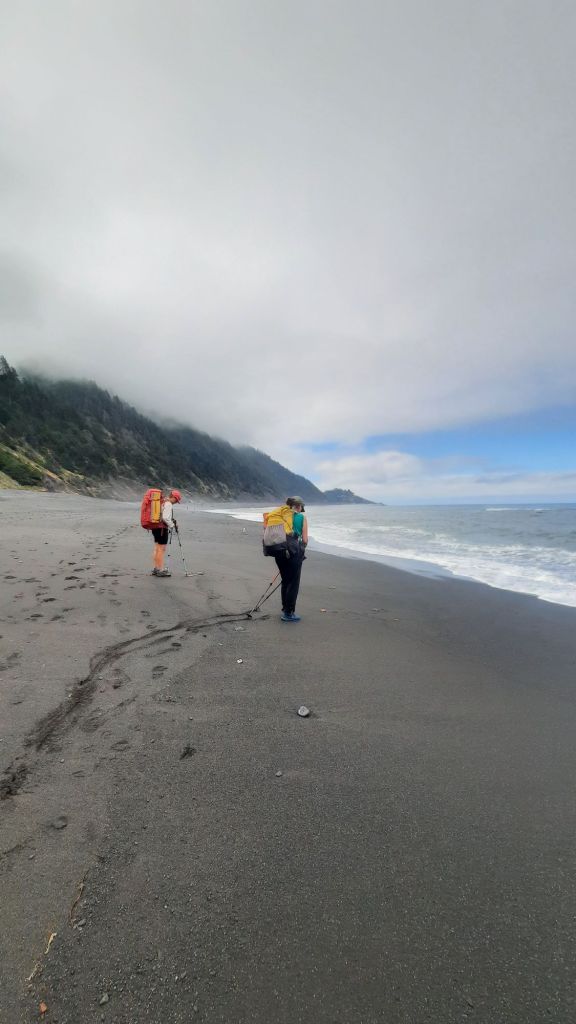
Back to the day…Cindy took off before we were packed up, she was feeling strong and spry…and is training for a Colorado Trail thru-hike later this summer. Lace and I walked along the hard-packed wet sand in the overcast day; it was a very pleasant morning because we had expected a slog through deep sand. Low tide was at 9:30 this morning, so we had ample exposed beach to walk. This part of the coast seemed much more abundant, and we started seeing starfish and other sea creatures in the tide pools…the tide pools to the north had been devoid of life to our disappointment. There was also a blissful absence of trash! Lace and I had only picked up three plastic bottles between us, and a few small pieces of colored plastic on the hike so far.
We dodged waves that broke on the beach when we got too close to the water, and stopped to smile at a few seals napping on rocks just off the shore.
We caught up to Cindy about half way into our mileage for the day as we walked towards Shelter Cove. The houses perched on cliffs above the sea steadily got larger, and we started talking about lunch options. Sure I could eat my last tuna packet for lunch, but I could also eat a burger in town….🤔 there really wasn’t a decision to be made 😉 we would reach the car about 11am, a hot meal was in our future shortly after.
We hadn’t been sure of our pace with the tide miles, so had given ourselves ample time to make it back to Bend….tomorrow if need be, but our early arrival at the car meant we could easily make the 9-hour drive back to Bend in time to sleep in our beds. Brilliant!
After burgers at the campground we walked over to view the coast stretching to the south and finally saw the namesake cove of Shelter Cove. We even saw whales breach the water! It was a fitting end to the trip.
After sufficient coffee and food, we broke camp and entered poison oak ally. In short stints today, we would have to push through thigh-high bushes of danger and we tried to remind ourselves again and again to not touch our pants or our faces. You have never wanted to touch your face more than when you can’t.
On the beach, we had a 4-mile low tide zone, or to be more accurate, a below 3-feet tide zone. The planning materials for the Lost Coast Trail gave a helpful hiking window tied to the tidal schedule each day, so essentially, we had until about noon to hike this section. Not all days are created equal, though, and other days, the hike window is shorter or at inopportune times. These few days lined up perfectly.
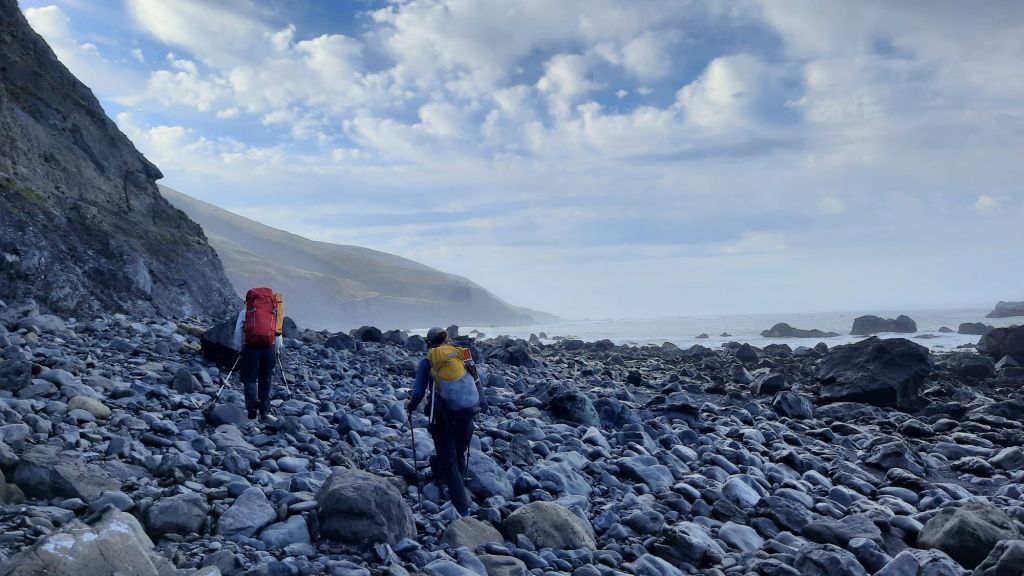
We had a buffet of surfaces today…the next up were basketball sized rocks covering the beach. Most were fairly stable, but a few would rock and roll when you stepped on them.
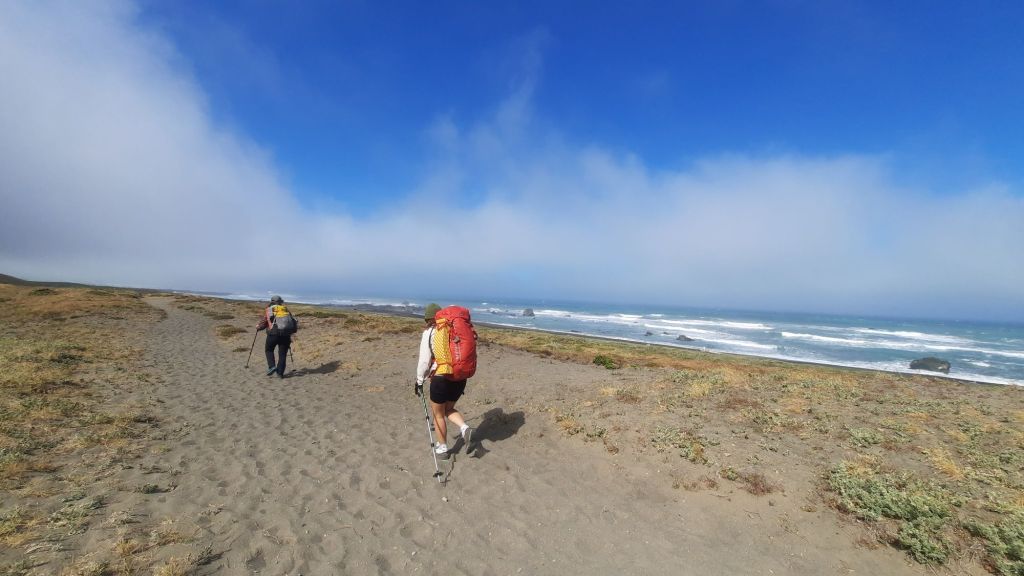
Then more sand. The walking was firmest in the wet sand close to the waves, but you had to be careful to avoid getting caught in those sneaky ones. All in all, it was a pleasant morning, and soon we were out of the danger zone and snacking in the sun.
The weather has just been perfect. Sunny, mild, a bit foggy and humid, but not oppressively so. We were all getting a healthy dose of vitamin D, but like the responsible mid-40s women we were, wore sunshirts and sunscreen.
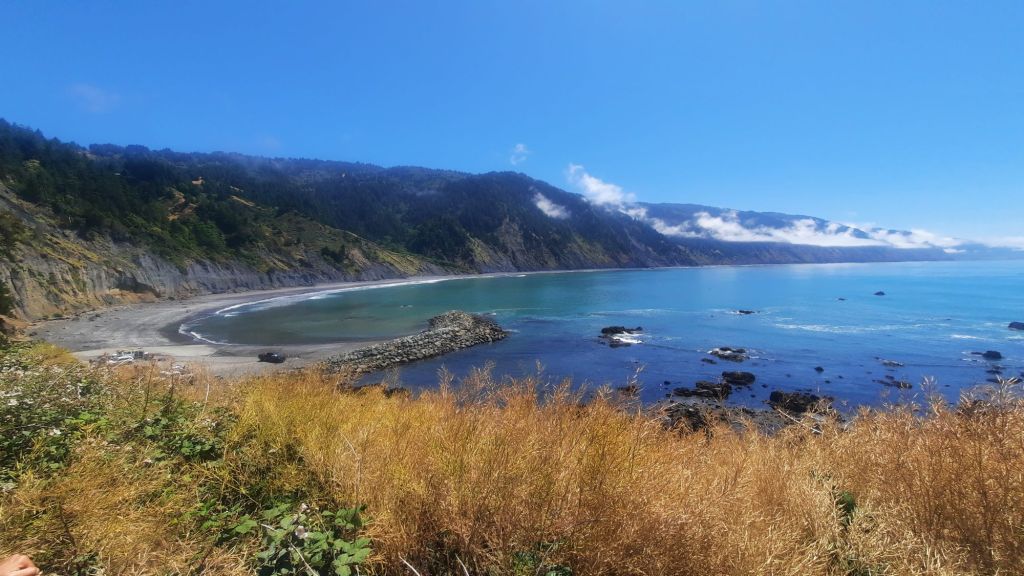
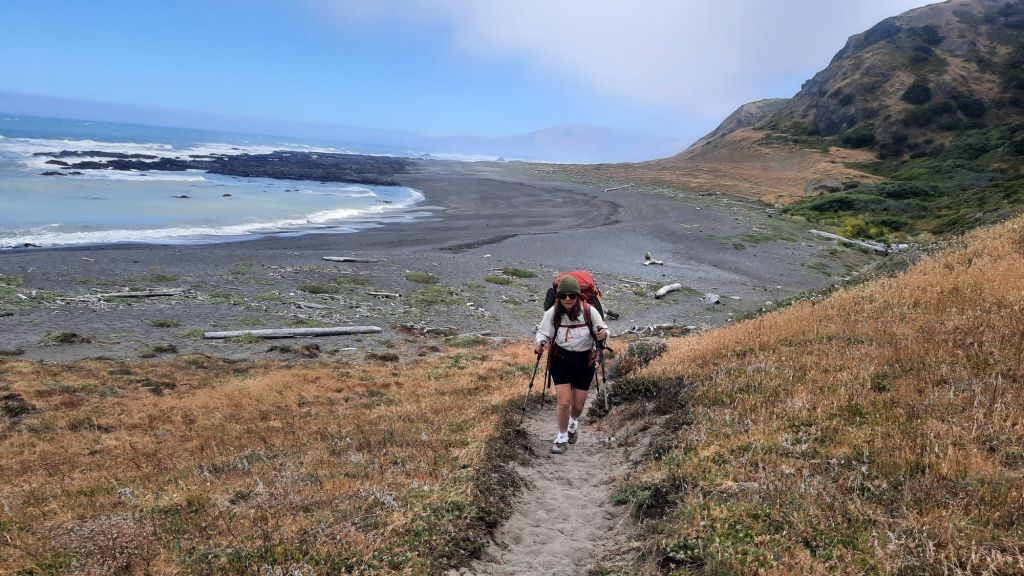
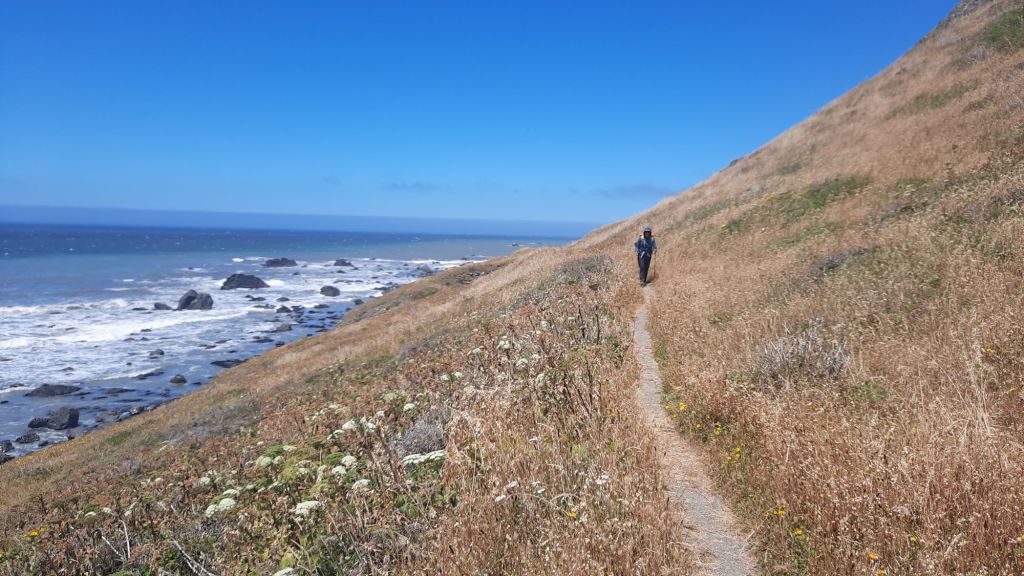
The next stretch was primarily on grassy bluffs above the sand where the walking was firm and fast. We cruised past a number of private cabins, and one even had their own airstrip. A flight in might be the easiest access, oh sure, there were trails that plunged off the steep mountains, providing access from the top, but as one guidebook explained, one of the trails out here has 2,000′ of elevation change in 1 mile, making it one of the steepest trails in the state. Ooffta. Now I know why it’s called the Lost Coast. Many don’t want to make the journey, either by carefully planning the tide tables as we are doing or dropping down a steep poison oak laden slope.
We lunched with a view and continued on.
Here is something interesting I had never done before on a hike: instead of walking inland away from the beach to dig a cat hole, we were instructed to dig our holes in the sand below where the next high tide would wash it away. Poor fish.
Camp was a big wide flat called Big Flat. We crossed the Flat River to find a charming camp nestled in the trees. We had shade, driftwood benches, and plenty of soft sand to make our nests for the night.
We had another happy hour spread with a bit more cheese, fruit, chocolate, and crackers that we had squirreled away, and lazed about reading and napping until it was time to make dinner and watch the sun set.
The hike would be done tomorrow, but in spite of the short miles, the trip felt immersive and all-encompassing. Maybe it was the sea, constantly reminding us of a force larger than ourselves, a timeline where we were only a grain of sand in the expanse of everything. Regardless, it has been a wonderful hike, and our group of three travels well together.
The ocean holds our itinerary. We can’t out hike her tides, and along this northern California coast, that means long hours of leisure between miles of no-go zones. Some of these zones stretch a 4 rocky miles, miles that are under water all but 5 or 6 hours a day. So we wait. We snack and nap and watch the sea lions and elephant seals play king of the mountain.
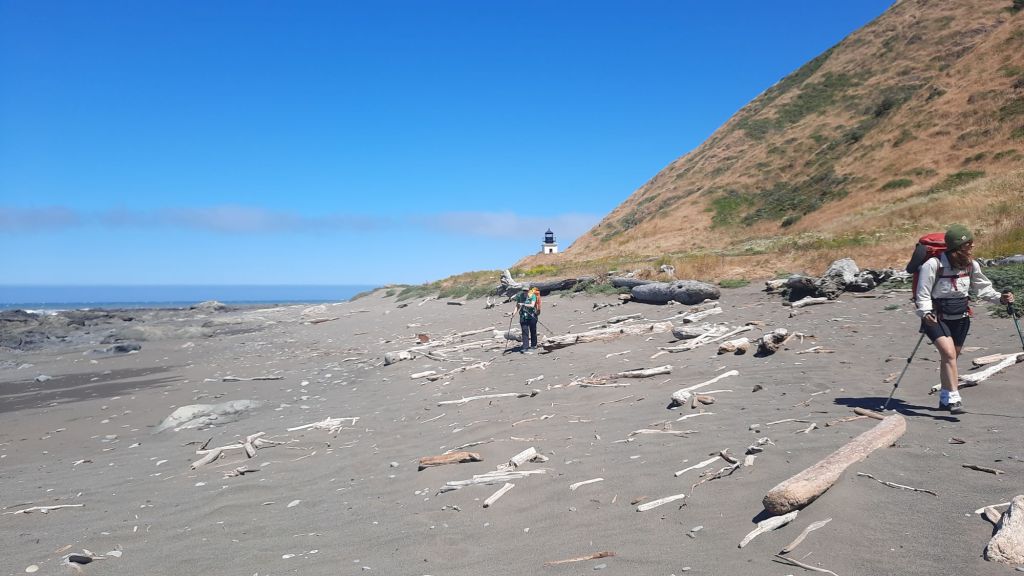
Speaking of elephant seals, I was walking the trail by the Punta Gorda Lighthouse when I had to stop and decide if the large lump ahead of me on the trail was a log, rock, or 4,000 pound elephant seal. When I realized it was a seal, Lace and I tiptoed onto the beach to avoid its slumber (they can be agressive…but we aren’t quite sure what that could look like) only to find more lumps of seal lazing about on the sand. We threaded the needle, tiptoeing between them, and passed by without incident. It was pretty cool.
But I haven’t told you how we got here… this morning, we woke up in the Shelter Cove campground, a bit bleary-eyed from the constant bouey echos just off shore, then packed up and drove to Black Sands Trailhead to meet our shuttle bus. Eight other hikers materialized with packs and poles, and at 7am sharp, we gathered for the safety talk, which included warnings about tides, pinch points, poison oak, and elephant seals. Then, to the bus for two hours of gut flipping mountain roads. We climbed and descended ridges and peaks, and I marveled at the houses we passed, perched on the steep sides. Our driver was full of interesting info…like the fact that this part of Humbolt County made a name for the California weed industry. It was so remote that folks could grow here back in the day, and law enforcement usually wouldn’t bother with them. Now that the drug is legal, the ease with which others can grow in the valley compared to the effort it takes to run a grow operation up here has cut into their hold on the market, so the plant has to lean on its brand of “original Humboldt County weed.”
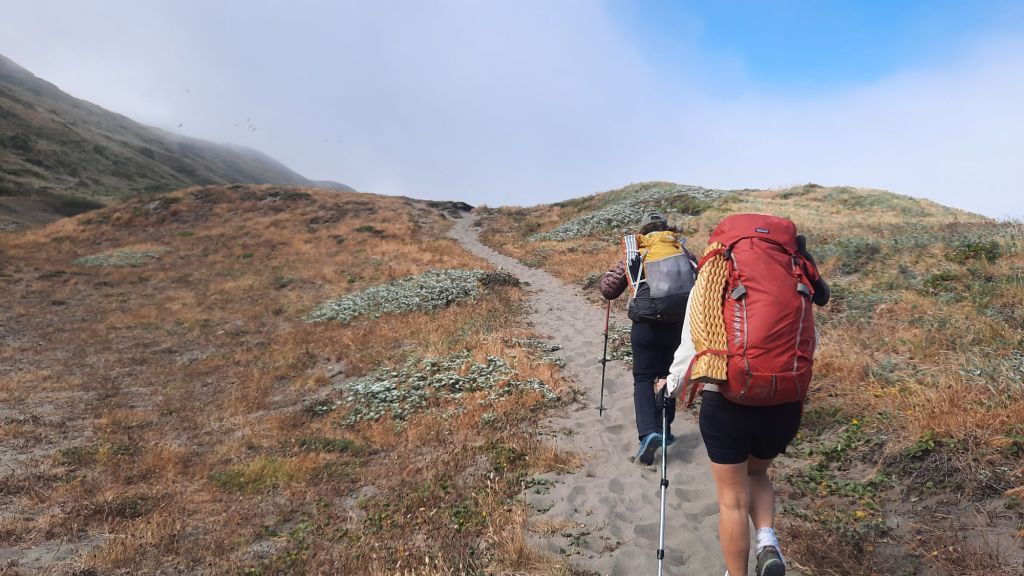
We finally arrived at our northern terminous, Mattole Trailhead, without anyone puking, and gratefully piled out. Packs on, we took our start photos and headed into the dunes. The first few miles, we walked in deep sand amid grasses clinging to the slopes, and we all put on layers to manage the cool California fog.
We decided that you can add “California” in front of most items to get the accurate nomenclature out here. Like California poppy, California pelican, and California sparrow. Lace is quite the interptive ranger and regales us with bird IDs using the Merlin app. Flowers carpet the slopes above the sand; most of the beautiful yellow splashes of color are courtesy of bountiful dandelions. California dandelions? We decide these flowers have gotten a bad rap from the roundup folks… Have they been demonized as yard weeds simply so this conglomerate can sell us poison? Dandelions are a food source! How can something beneficial be a weed?
Back to the walking. The walking was a bit arduous in the deep sand, but walking above on the grassy slopes was hard too…the poison oak is sneaky in the area, it carpets the ground and also uses the surrounding vegetation as a ladder and can get quite tall. It’s practly everywhere, so I choose to walk the beach more often than not.
The sand, though. I dump it out of my socks and shoes and lament that I didn’t bring gaiters to keep the grains out. Lace’s technique involves a bandana tied around each ankle, but success is mixed.
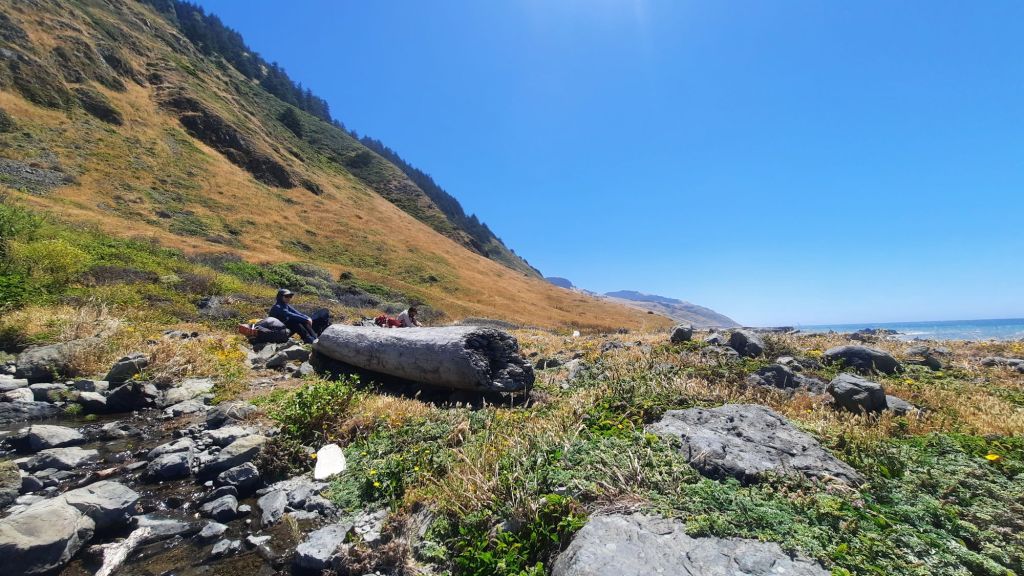
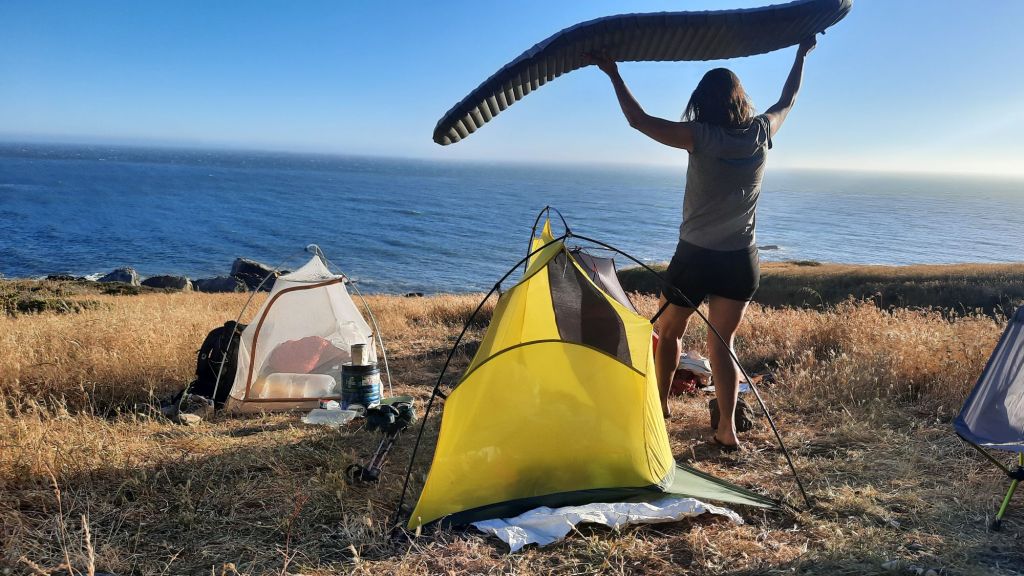
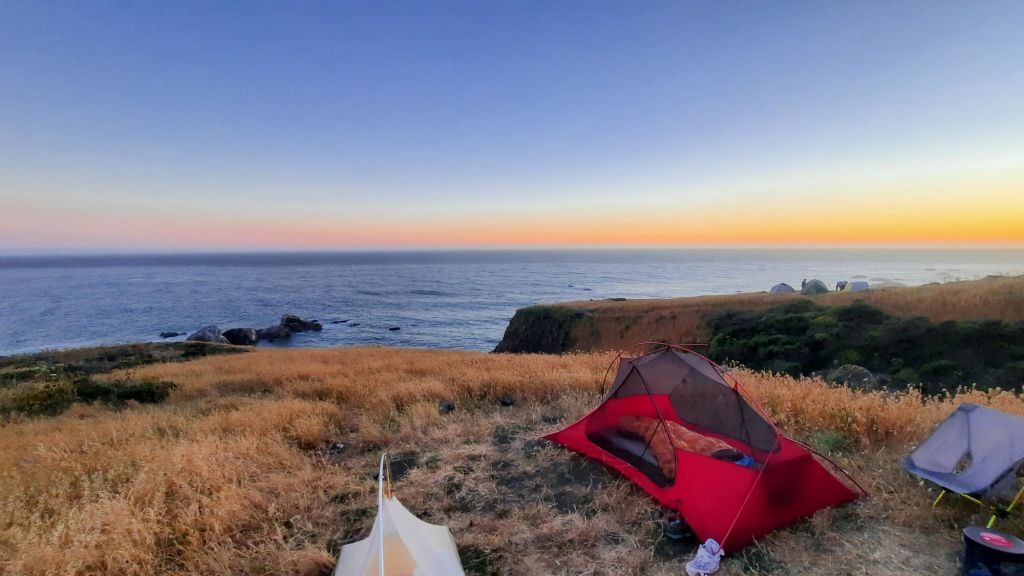
After only 4.9 miles, we make it to the next tidal zone, and it’s too late in the day to scoot ourselves through the four-mile beach. It’s almost covered in water, and will be until 5am tomorrow. So we make camp on a tilted perch 200 feet above the ocean and next to a little shady oasis of a creek. Thank goodness for the creek because there is no shade to be found at camp, and we pass long afternoon hours by the water and Lace even busts out a gormet happy hour spread with six kinds of cheeses. Cindy and I provided the wine, and we feasted like queens amid the poison oak.
Numerous groups hiked up and past and are all crowded into a few camp spots around the corner from us. We were a bubble of hikers that would most likely be leapfrogging each other the rest of the way as we timed our walk to the sea.
Most impressive was a family of five with three young ladies. I love to see it.
When the sun finally went down, we retreated to our tents for the night, lulled to sleep by the groans and honks of the seals.
Cindy, my road trip partner from the April eclipse and Big Bend hike arrived in town this morning after a very early drive from Portland, and Lace, a friend and former work colleague, came from a few neighborhoods over. The three of us piled backpacks, car snacks, and selves into Cindy’s Corola, and we were off for a tide-driven walk along the northern California coast.
Have you heard of the Lost Coast Trail? Lost is accurate, for a large percentage of the hike is under water due to tides, and hikers must plan their walks along long stretches of narrow beach carefully. Very carefully. On this trip, we would have the added gauntlet of breeding elephant seals. Really! An alert had been sent out warning us of these massive creatures and their anger. Added to the normal challenges of deep sand walking, wet rock hopping, poison oak laden trails around pinch points, and those short tide windows, and we were looking at an exercise in scheduling for this 25-mile hike.
I know! 25 miles isn’t a lot! But it will take us almost three days to put the puzzle pieces of challenges together. Let’s go!
Not long after driving into California, we popped out at the coast in Crescent City. This was the Cresent City of the Bigfoot Trail, the western terminus that is. The Bigfoot Trail is one of my trail clients this year…their 360-mile trail through 7 wilderness areas in the rugged Klamath Mountains wanted some help, so I did a through analysis of their trail materials and surveyed many of their stakeholder groups to produce a 40-page report of findings and recommendations for how they can shore things up and meet their goals. Great fun! This is what I want to do for all trails! The next step will be helping them implement some of those suggestions if we can find funding…I’m figuring out the whole business of trails things. It’s exciting, and I’ve taken the attitude of learning-by-doing.
The learning-by-doing nature of the Loast Coast Trail will include short stretches of hiking and long stretches of hanging out, looking at the high tide, and snacking. It’s very hikertrash of me to be thinking about the snacks on this short hike, but hey… you can take the hiker off the trail, but you can’t take the hikertrash out of the hiker.
We arrived at Shelter Cove, where we would meet our shuttle driver in the morning, and set up our tents at the campground perched near the sea. Next, dinner. We made our way over to the nearby pub for beers and dinner. Shelter Cove is a bit of a misnomer. By looking at a map, it seemed neither sheltered nor a cove…at least where the campground was. In fact, a post dinner hike revealed many houses too close to the ocean that I feared for their future in rising seas. But today the cliffs held and we luxuriate in a glorious sunset….the first of the trip!
Bedtime to the roiling sound of the sea.
P.S. There is indeed a cove at Shelter Cove, south of the campground. The maps are right 😄
Ya’ll may remember I was the first solo hiker to complete the Blue Mountains Trail in 2020…and since then I’ve been a member of the Blue Mountains Trail Committee helping to promote and advance the establishment of this new long-distance trail in Oregon.
Christof set off on the Blue Mountains Trail in 2022, and I just caught up with his trip via this movie he made of the trip:
You may be shivering after viewing Christof’s troubles on the Wenaha River Trail, but good news! Earlier this spring, the Senate Interior Appropriations Subcommittee passed a funding package that included $300,000 dollars for the Umatilla National Forest to finally restore the Wenaha River Trail along its entire length, a windfall only made possible by the efforts of partners and legislators to recognize the Blue Mountains Trail as one of Oregon’s Signature Trails (I made this story map yo!).
More good news? Lots of trail work is happening along the Blue Mountains Trail, if you have the time and inclination, sign up for one of these trips:
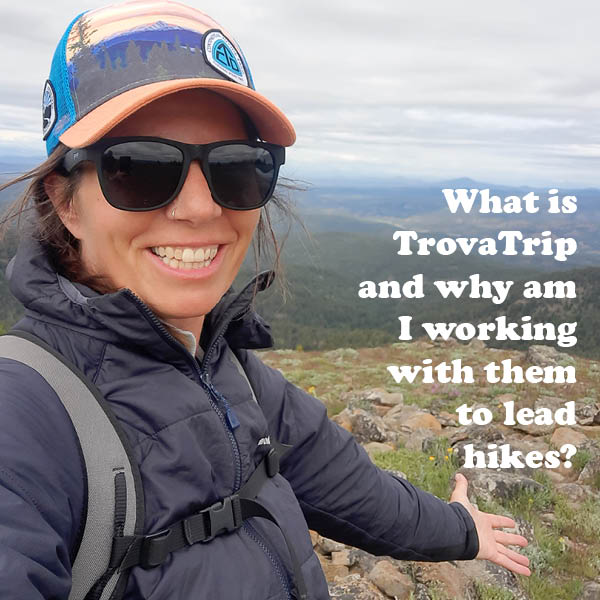
TrovaTrip is a platform that connects travelers with hosts (like me) to create group travel experiences. It is a 3-sided marketplace, meaning they serve hosts (me), travelers (you), and tour operators with logistics, planning, and support for professionally designed trips.
The operators do most of the work once we get to our destination because the local professionals have the best understanding of the location’s language, culture, and a stake in its economy. Operators are the folks on the ground who run their own separate tour companies and help bring the itineraries offered through Trova to life.
Operators are the masterminds behind creating pre-built itineraries for trips. They’re usually about a week-long, with spots ranging from 8-25 people, and take place in destinations around the world. Each itinerary is created around a general theme (food, yoga, camping, etc.) and filled with activities reflecting that theme.
Operators are also in charge of actually running the trip on the ground. They provide English-speaking local guides, book accommodations and transportation, oversee activities, and generally ensure that everyone on the trip has the best possible experience. Operators and their guides don’t work for Trova any more than hosts do; rather, they’re the trusted (and vetted) partners who’ve joined Trova’s platform to run their businesses and reach new clients.
Basically, the initial base price of a trip is set by the operator to cover their expenses (local guides, transportation, accommodation, entry fees, etc.). Then the host will set a margin to cover their time and work promoting the trip. Finally, Trova will earn a percentage of the total price for their real-time support, payment management, planning and booking, and use of the platform itself. However, all of this only happens if a trip is “confirmed”, meaning if enough Travelers sign up by the deadline to make it a go. Otherwise, down payments are fully refunded and no money changes hands.
This platform is legit and several hikers and businesses I know are running trips through it. Please fill out the survey to join me on an amazing destination around the world.
I’m thinking of hosting a hiking adventure somewhere special – whether it be in the US or abroad, and I’d like to go with you. Think a small group trip – 8-16 folks – with a bit of the hikertrash flavor, but the most important thing…you don’t need to be a thru-hiker, extreme backpacker, or adrenaline junkie. All folks are welcome!
One of my favorite things about leading hikes, trail work parties, and stewardship trips over the past 15 years has been meeting all of you! Seriously. People are one of my favorite things about hiking all over the world, and I’d love to go hiking with you in a beautiful place.
What would that look like? We will take day hikes together in a beautiful place but with a bit of luxury (beds, delicious food, spa days?). There are so many fun things we could add to a trip depending on where and what you’d like to do.
Please fill out this 2-minute survey to let me know your info and where you’d like to go, what your budget would be, and other helpful stuff. I need to have 100 responses to start planning the trip, so even if you aren’t sure that you would like to go, chime in! Help me get to 100! (Hint: responses with budgets of at least $2,000 are suggested)
Email me with any questions you might have, or add a comment to the post.
It was a true delight to be in conversation with CdV Saizan on her new podcast Kinward: Here, we orient Kinward: exploring solidarities, affirming entanglements, playing with Others, courting rapport—and skillsharing practices that move us into deeper alignment with Life.
“Renee walks us into this episode with a case study of Intentional Hiking from her own life, sharing examples of how she immerses herself into her journeys with the intention of growing deeper connections with the place she’s hiking through: studying its histories; its people; its needs, conservation priorities, and resource conflicts; and then feeling into the ways that a particular place nourishes, holds, and shapes those who move through it.”
I absolutely love how CdV has created the space to dive into thoughtful conversation through this podcast. Please give it a listen!


















 She-ra Hikes