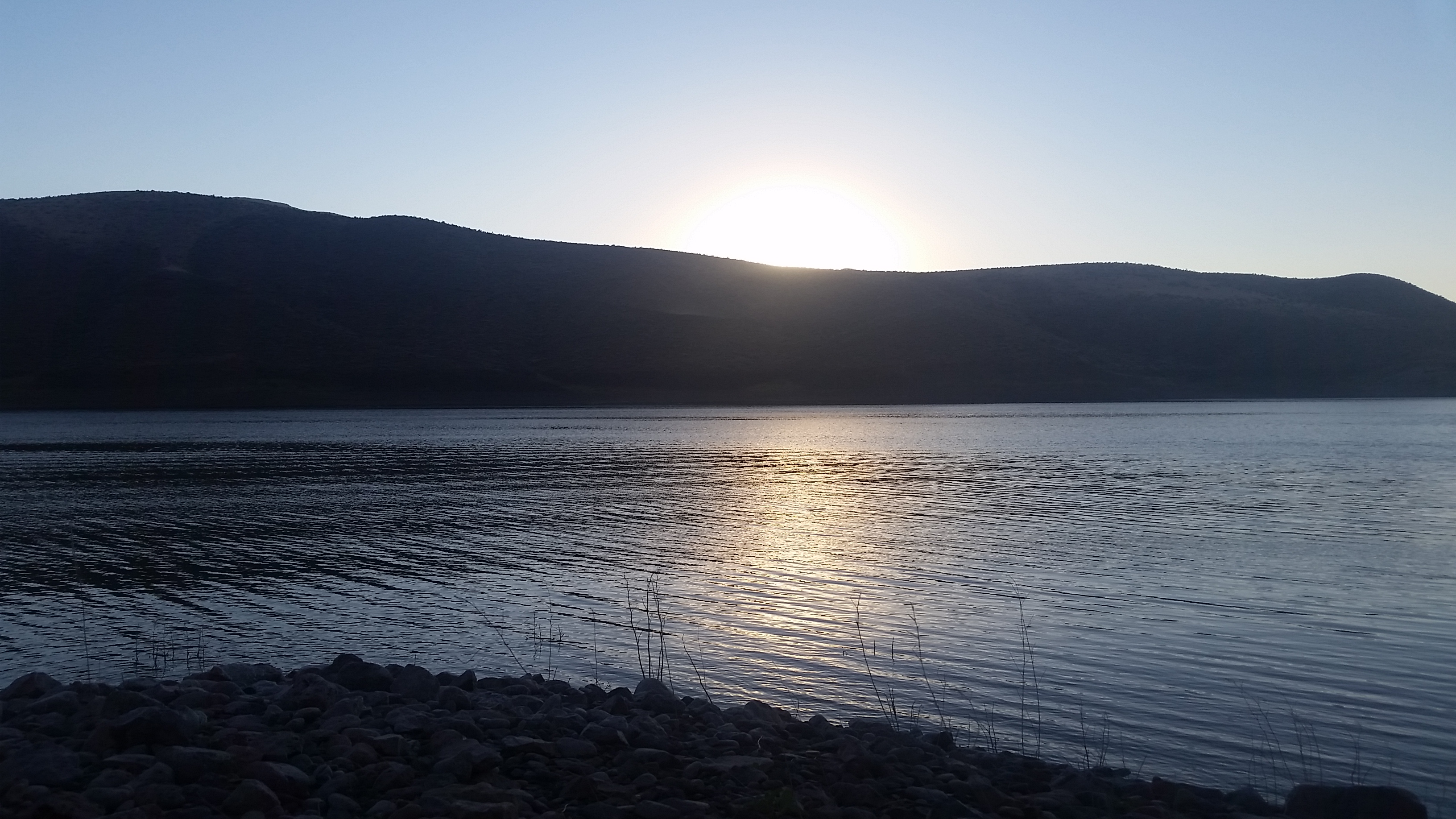
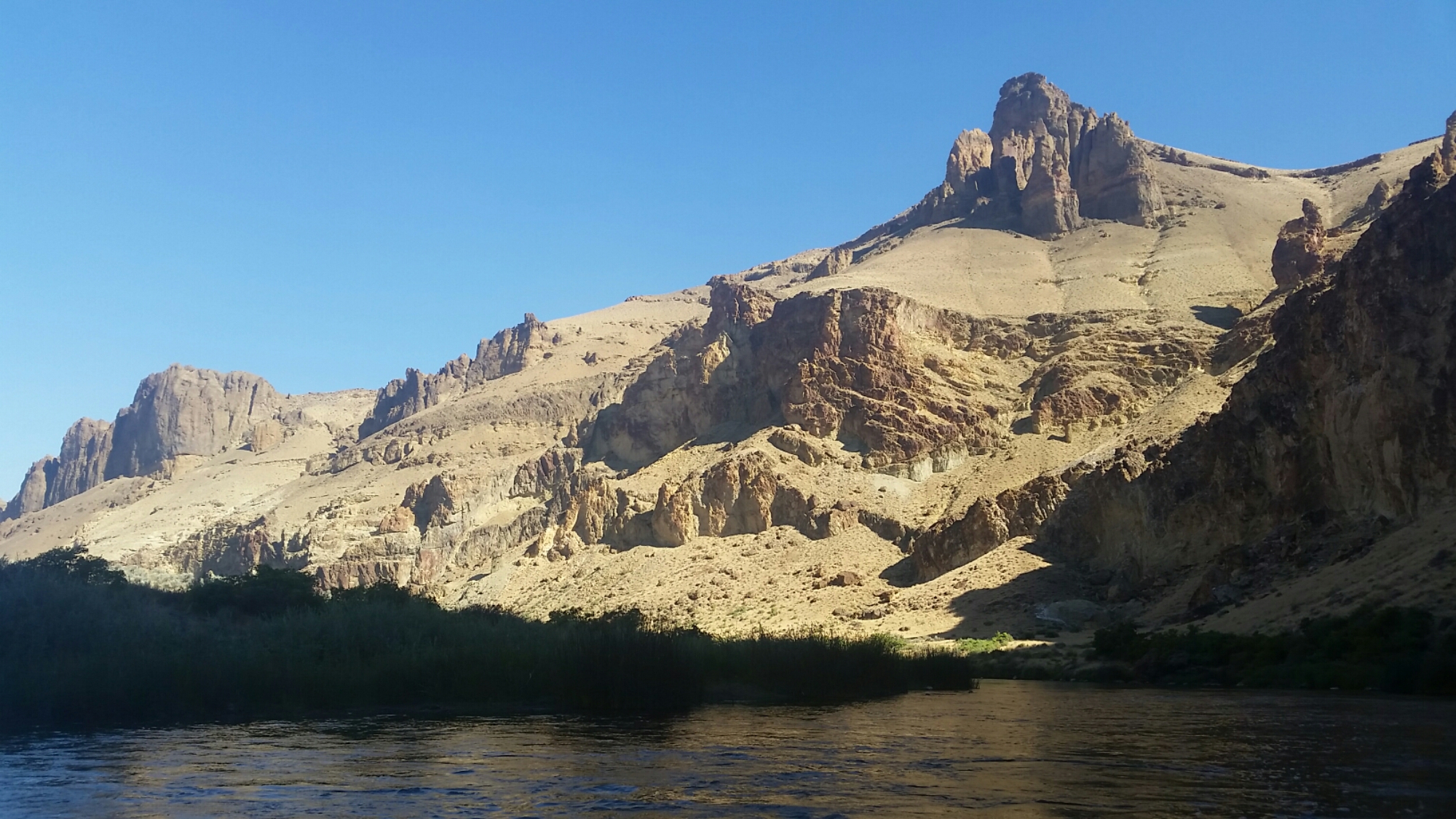
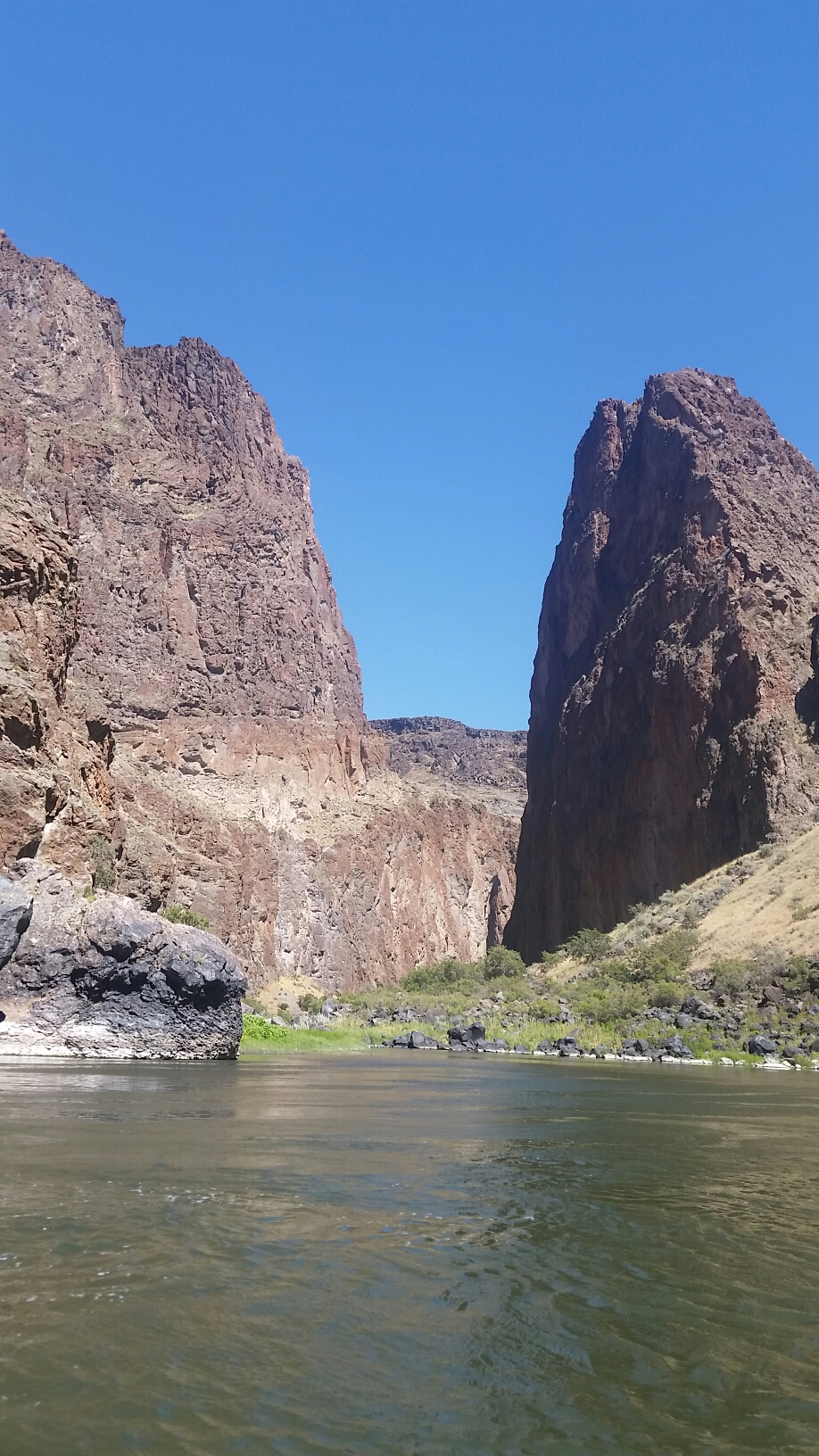
Fall hiking at its best…more ODT!

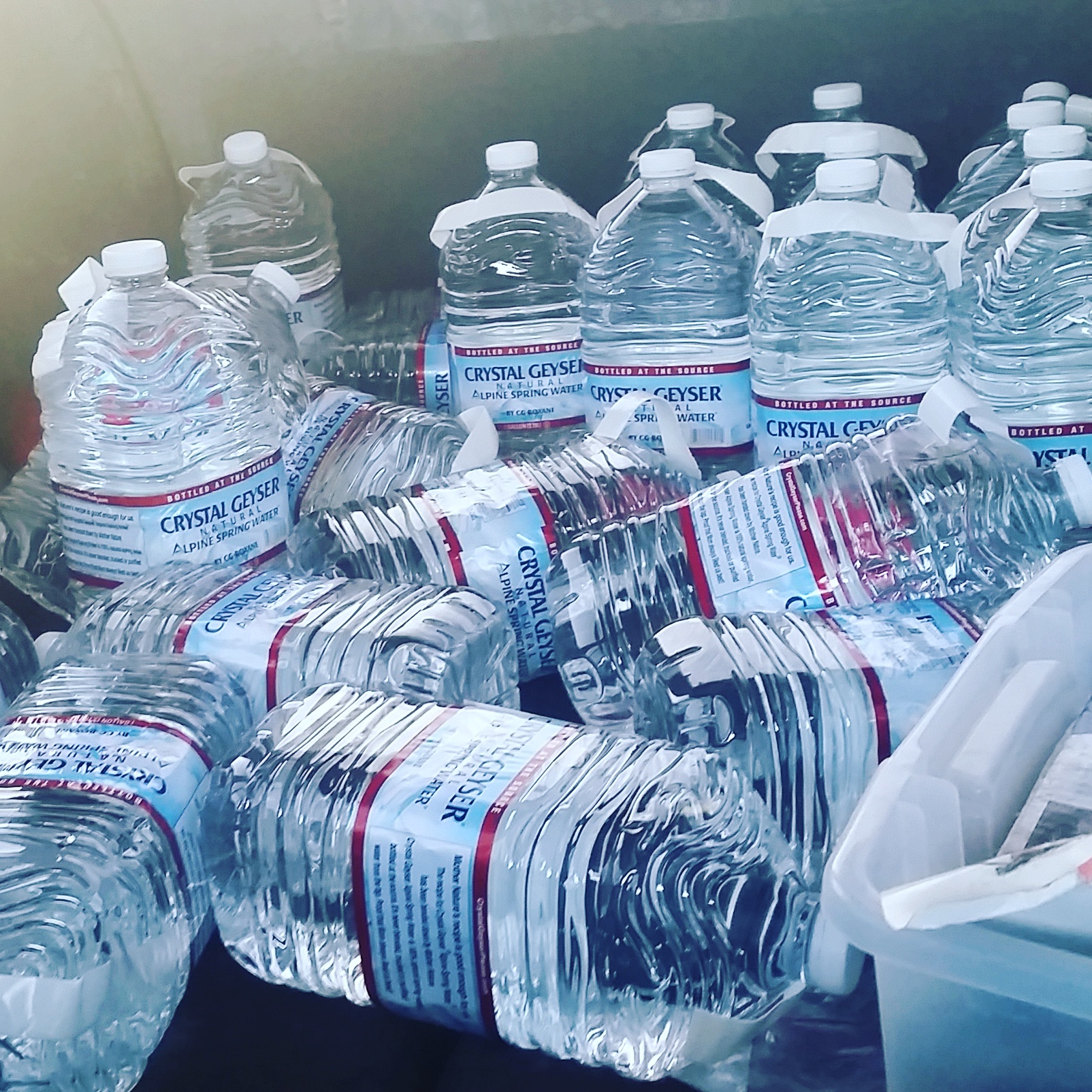
I’m packing for my next section of Oregon Desert Trail…this will be a drier 250 miles including the area east of Bend down to Hart Mountain, so I spent Friday caching 25 gallons around the desert for myself and two other hikers who will be out there soon.
img_20160909_070959

img_20160909_150038

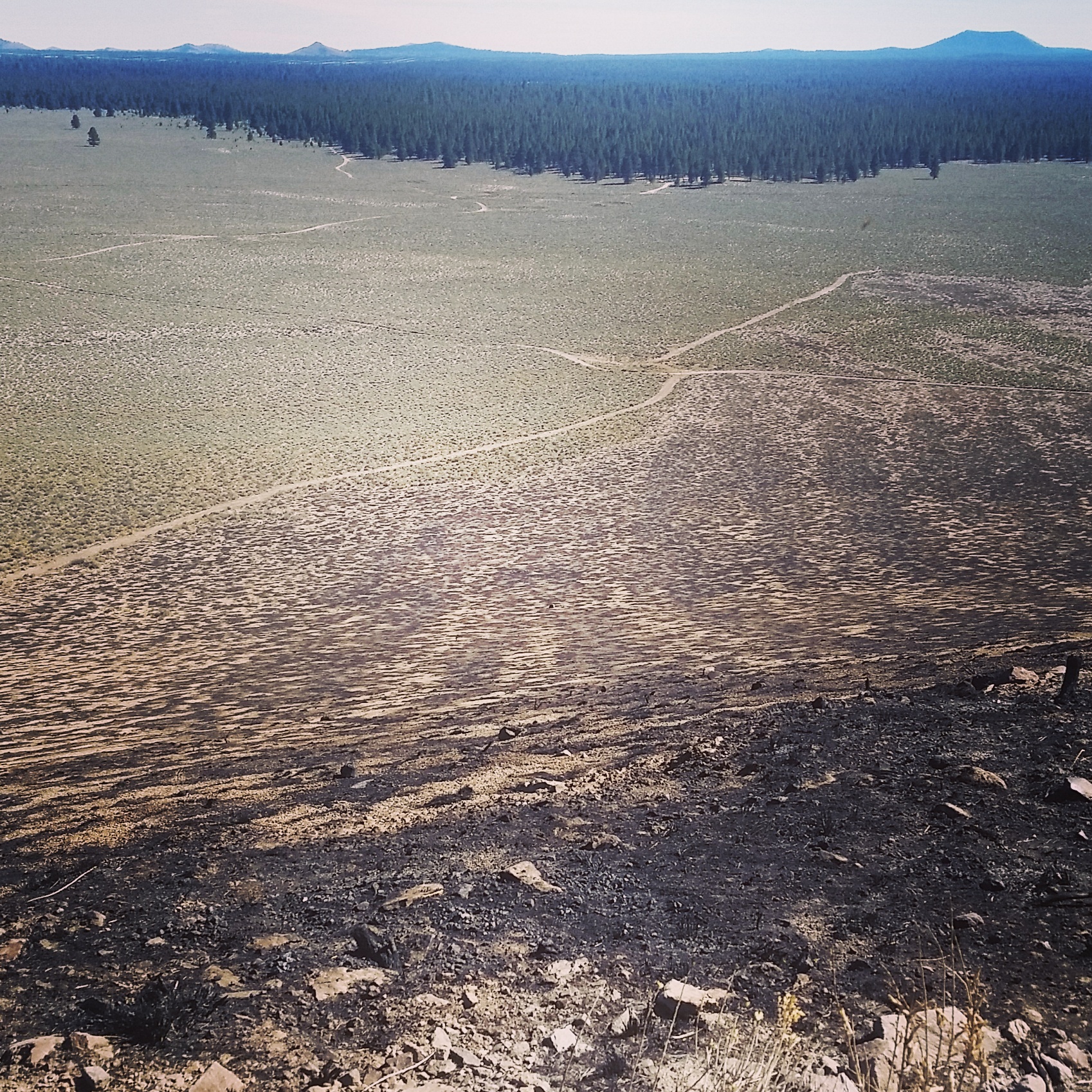
While caching water I passed the site of a fire on the south side of Pine Mountain
img_20160909_090250

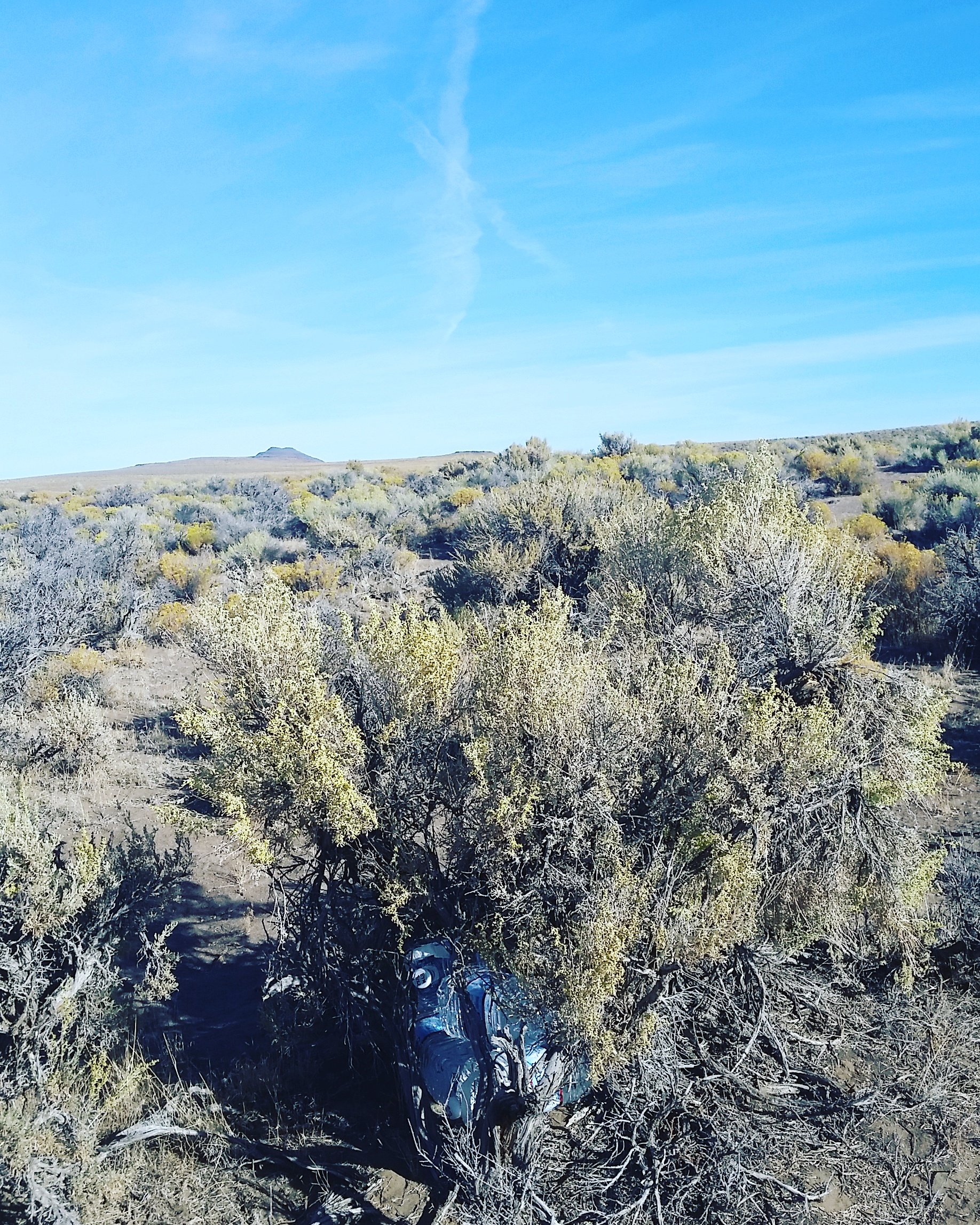
I tried to camo the water caches as much as possible

I love hiking in the fall, and am looking forward to the route which walks the edge of Abert Rim, through the Fremont Forest, up Diablo Peak, and an alternate I’m taking through Crack in the Ground, up Green Mountain, and by 2 caves. Should be a fun 250 miles! Blog posts will be starting in a few days for this section hike.

Here’s a blog I wrote for Outdoor Research about fall hiking on the ODT:


DREAMING OF SOLITUDE AND STARS? HIKE THE OREGON DESERT TRAIL

I woke to the sound of yipping and sharp barks echoing off the cliffs around me. Dogs? No, I was backpacking deep in the Oregon desert … it must be coyotes. I scanned the canyon and found a high-speed chase unfolding before my eyes. Two coyotes were racing up the hillside with two more close on their tails. I burrowed deeper into my sleeping bag while watching the show. The blur of fur streaked across my view for a good 10 minutes and I laughed at the spectacle—I’ve seen something surprising every day on the Oregon Desert Trail.

I decided to section-hike this 750-mile route across the Oregon desert, not only because it’s a fantastic way to discover my backyard in Bend, Oregon, but also because I had just started a new job as the Oregon Desert Trail Coordinator. To learn what one of the newest long-distance trails in the country needed to help it get established, I did the only obvious thing: hike it. My coyote variety show was about 400 miles into the endeavor, in the remote Owyhee River canyon, just one of the unique and spectacular regions along the route.

Founded by a conservation organization, the Oregon Natural Desert Association, the Oregon Desert Trail connects remote mountains, canyons and dry lakebeds with a mixture of trail, old roads, and cross-country travel. Places like the Hart Mountain National Antelope Refuge, Steens Mountain and the Owyhee Canyonlands immerse hikers in the very land ONDA has been striving to protect for 30 years. Perhaps by introducing more people to these amazing landscapes, the Oregon Desert Trail could help foster a sense of responsibility: responsibility to help protect, defend, and restore Oregon’s high desert for generations to come.
Now that fall is approaching, I’m eager to shoulder the pack and head out into the desert for the final 300 miles. Cooler autumn days are the perfect time to explore eastern Oregon. Solitude is abundant, and if you’ve struggled through the heavy traffic of other long distance trails, the Oregon Desert Trail will be a breath of fresh air. Literally.

How does one hike a route versus a trail? At this stage, Oregon Desert Trail hikers need to be experienced with map and compass and/or very comfortable using a GPS device, since the route is unmarked and requires quite a bit of off-trail cross-country travel. If you’re looking to break free from a traditional trail experience, this is the hike for you. There is freedom in the desert—freedom to make your own routes, to explore a nearby butte or canyon, and truly dive into the landscape, since there’s no official trail.

What can one expect on a day, week or month on the Oregon Desert Trail?

True solitude. It’s hard to find real solitude on the major trails these days with the recent popularity surge in long-distance hiking.
Hot springs. Soak the aches and pains of a day on the trail in one of the numerous hot springs along the trail.
History. The oldest human remains in North America have been found in this part of the desert, dating to some 14,000 years ago!
Habitat. The high desert is the perfect habitat for hundreds of different desert species like pronghorn, sage grouse, mule deer and jackrabbits.
Stars. The southeastern corner of Oregon has one of the last uninterrupted night-skies left in the country.
Rad rocks. Volcanos and plate tectonics play a big part in what makes this part of Oregon unique including the largest fault-block mountains in the country along Abert Rim and Steens Mountain.
Trail towns. Many of the 16 communities along the ODT are tiny, but offer amazing hospitality and are a great resource for learning more about the area.

The ODT can more accurately be called a route, instead of a trail, since about 30 percent of the 750 miles consist of cross-country travel, over 50 percent follows old roads that cross the desert, and the rest is on well-defined single track. Don’t let the lack of trail markers dissuade you from experiencing the remote beauty of the Oregon desert—we’ve put together a variety of resources to help you plan and navigate a trip on Oregon Desert Trail.

Maps
The trail is broken down into four regions, with each region spanning about 160 to 200 miles. Those four regions are divided into 25 sections, each with detailed maps indicating the type of tread (cross country, trail, or road), waypoints, mileage between waypoints, water sources, trail town info and declination information.

Guidebook
It’s nice to have a play-by-play account of what you will encounter in each section of the trail, and the guidebook will tell you to “take a left at that tree,” or “look out for pictographs around the next corner.” It references the waypoints on the maps and the databook, and includes a bunch of helpful information on planning your hike.

Databook/Waterchart
The databook includes information found on the maps and in the ODT guidebook. In addition, a water chart ranks water sources from reliable to questionable to unreliable, and is color coded to match the maps. Included is historical data from the past five seasons that hikers have been inventorying or hiking the trail, with a column for this year’s hikers to include their information on water sources. Better yet? It’s a Google Sheet; hikers who like to use their smart phones can download and update the chart electronically while they’re hiking. Once connected to data or Wifi again, the info will update automatically for the next hikers.

GPS Waypoints
You don’t NEED a GPS to hike this trail, but they sure are helpful. We have downloadable waypoints you can use.

Hiking Project Website & App
This is the age of the app, and the thanks to the website and mobile app, the Hiking Project, the first 270 miles of the trail are available for free with remaining miles due to be uploaded by the end of the year. Included are elevation profiles, a slimmed down version of the guidebook and a real-time view of where you are on the route at all times. Important junctions between cross-country and trail sections are marked, as well as water sources…and all match up with the waypoints and info you will find in our other ODT resources.

Water Cache Guidelines & Maps
The first 160 miles of the ODT are fairly dry, but luckily the hikers who have already completed the trail gave us detailed notes and maps on where they successfully cached their water. We also drafted some caching guidelines because caching can be a tricky thing if you’ve never done it before. Depending on how many miles you like to hike in a day, you may want to cache more than what’s suggested, and as time goes by and more people head out into the desert, we should have more information available.

Town Guide
There are 16 communities along or near the trail that can provide important services to hikers along their journey. Town can be a generous term in some cases as many of these spots consist of a single store/gas station/restaurant/bar/post office all in one building. The guide is available in draft form, and when complete will offer maps of each town with a directory of where you can eat, resupply, sleep, and more so tired hikers will know where to find the closest nachos, pizza and beer.

Gear for the ODT:

Sun protection
Exposure is no joke in the desert—you won’t find any trees in some sections. So a sun shirt is a great investment. Outdoor Research makes the Reflection Shirt, which is lightweight, and includes UPF 50+ protection in the fabric. And always carry lots of sunscreen.

Shelter
Eastern Oregon can be quite dry much of the year and hikers may find they don’t have to set up any shelter at all (hint: cowboy camping provides great views of the night sky), but it can rain, snow, or storm almost any month of the year. It’s a good idea to carry at least a lightweight tarp. Something like the MSR 12oz Thru-Hiker 70 Wing is a good option, or even the 4oz ZPacks Hexamid Pocket Tarp.

Footwear
Much of the terrain on the Oregon Desert Trail can be rocky. It’s a volcanic landscape and there are multiple sections with jagged lava rock to navigate. But in truth, over 50 percent of the route is on old dirt roads in the middle of the desert. Taking two pairs of footwear can be a good idea, 1) to give your feet a break from the long miles in the same pair of shoes, and 2) because you can. A rugged shoe like the Oboz Luna can hold up to the miles, and taking a second light weight sandal like the Luna Leadville Trail or a pair of Chacos can be a relief when walking along those old roads.

Misc.
Most of your other backpacking items are similar to what you would take on any multi-day trip, but there are a few miscellaneous things that will be really helpful to have on this route. Gaiters like the Outdoor Research Veraglas Gaiters are a great way to protect your legs on the cross-country sections. It’s surprising how much cell phone reception can be found along the route, but in several of the more remote spots along the trail including the 175-mile section along the Owyhee River Canyon, it’s nice to have a satellite GPS device like the Delorme InReach Explorer.
Oregon Desert Trail: 175-Mile Packraft on the Owyhee River: The Prep

This is a repost from a blog I wrote for the ONDA website:


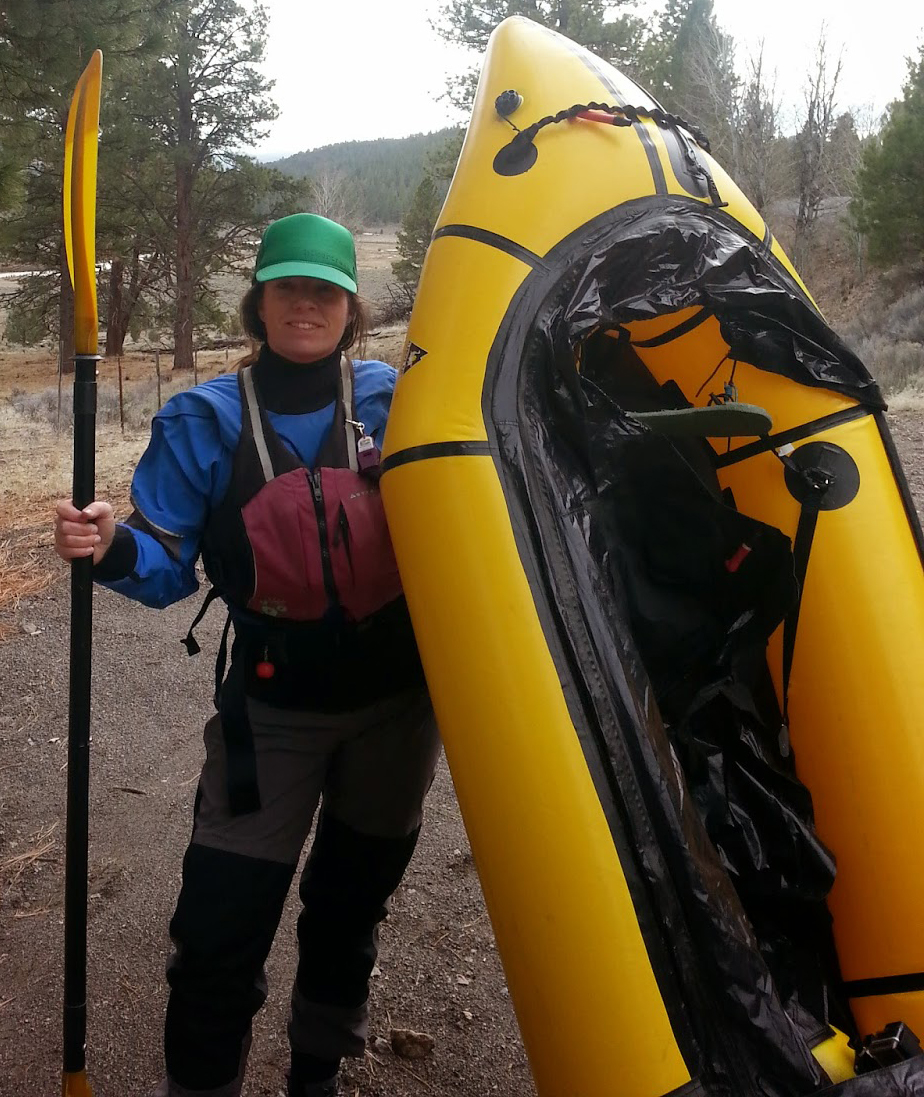
Ready to packraft the Chewaucan River outside Paisley in 2015

Ready to packraft the Chewaucan River outside Paisley in 2015

I have been looking forward to the exploring the Owyhee River section of the Oregon Desert Trail (ODT) ever since I visited Anderson Crossing with Sage Clegg on her 2013 thru-hike. Even though it was early July when we went to the Little West Owyhee that year, I saw pools of water and fish darting into the shadows; the sight had me dreaming of coming back with my packraft. I wondered: Is it boatable in the summer at lower flows? How low is too low? Do I have the skills to packraft the entire river? Could I create a river “alternate” to the 175 mile hike of the ODT in this area?

And so the seed of a great adventure was planted in my imagination. Couple that with my new job as the Oregon Desert Trail Coordinator, and ONDA’s efforts to protect the stunning wilderness of the Owyhee Canyonlands, and I had multiple reasons to immerse myself in the remote canyon.

Before I could start the next section of the trail I had some serious planning to undertake. Since I would be making the trip solo and adding in a more “risky” sport like packrafting on top of backpacking, I wanted to be sure I was going about the trip in a safe and smart manner. In addition, I was paddling a river I had never been on before that contained Class IV and V rapids, so I needed to be confident in my abilities, and my ability to get help if I needed it.

My boyfriend Kirk and I have been paddling remote rivers in our Alpacka Rafts since 2012, and I have enjoyed broadening my horizons beyond just backpacking. Since we live in Bend, many of our high desert rivers only flow in the spring, or usually have low flows. When I was a beginner packrafter I enjoyed paddling low-flow rivers, and have loved getting out sections of the North Fork John Day River, North Fork Malheur River, Chewaucan River, Crooked River, Wychus Creek, and others.

North Fork Crooked River

The North Fork of the Crooked River was one of my first packrafting trips in 2012

A large component to running remote rivers – either at low flow or at high – is scouting. I knew I would have to scout (or get out of the river to look for safe passage) a lot on the Owyhee River, especially since some of the larger rapids like Half Mile and Widowmaker were most likely impassable in my little boat. I tried to look up trip reports online to get a feel for what I would encounter, but didn’t find much about what these rapids would look like at 200 or less cfs (a river measurement for cubic feet per second). To give you perspective, a normal raft trip down the Owyhee River would not launch below 1,000 cfs, and many people run the river up to 10,000 cfs. 100 cfs would seem impossible to many…but to a packraft? I’d find out!

Renee Scouting

Scouting rapids is crucial for a safe and fun river trip

With 7 years of paddling experience, and 5 years of packrafting on desert rivers, I felt confident in my ability to make the right decisions in the Owyhee canyon to keep myself safe. Going solo, however, added another layer of risk which required me to consider all the scenarios of what I would encounter, and pack extra gear to cover my bases. My safety gear included a helmet, PFD (personal flotation device), a throw bag (could also use to line my boat down the river as I walked along the side), patch kit, well-stocked first aid kit, and Delorume InReach GPS device. The Delorume Inreach could send text messages during my trip, the device would track my progress every hour so Kirk could stay up-to-date on where I was, and in the event that I did need help, I could press the big red button that would bring search and rescue as a last resort. All of this helped put my and Kirk’s mind at ease.

Packing was another story. Since I wasn’t sure how many miles I would have to backpack down the West Little Owyhee before getting to a spot on the river with enough water to paddle, I was prepared to spend over a week in the first 87 miles of the route. I knew the West Little Owyhee was extremely challenging. Navigating in and around the boulder-choked narrow canyons and thick willows could make the trip so slow that my planned seven days to reach Rome (the half-way spot) could easily stretch into 10 or 12. But something I learned on my Continental Divide Trail thru-hike last year was to be prepared to be unprepared. I packed extra food, extra boating gear, extra shoes, extra everything so I could make decisions on the ground. But in reality all that added up to a HEAVY pack.

Renee packraft gear

Packrafting means lots of gear

Renee pack

Regardless of the results of my river trip, I was excited to be able to explore a different mode of travel along the Oregon Desert Trail, and asses the skill level needed to take this “water alternate.”

To the river!

Stay tuned for another blog post coming soon about the trip. Questions? Contact Renee at renee@onda.org.

Photos from my Oregon Desert Trail trips so far – 425 miles of awesomeness

wp-image-1423864038jpg.jpg

I’m hiking the Oregon Desert Trail in sections this year, and will be uploading photos periodically to the Oregon Natural Desert Association Flickr page. You can see the slideshows here:

Section 25

Section 24

Section 23

Section 22

Section 21

Section 20

McDermitt Alternate

Section 18

Section 17

Section 16

Section 15

Section 12

Section 11

Section 10

Oregon Desert Trail (2nd Section – Water Alternate): Day 13 – Getting Home

I slept well next to the groaning and mutterings of the RVs around me. I packed up, made a cup of French press coffee for the road, and headed up to the road to walk myself to a point where I would be more likely to get a ride.

It was a beautiful morning, and a bit of cloud cover made for a pleasent walk.

I passed a couple more boat ramps and my optimism soared, even if I had to wait all day, surely some day trippers would be heading to town later.

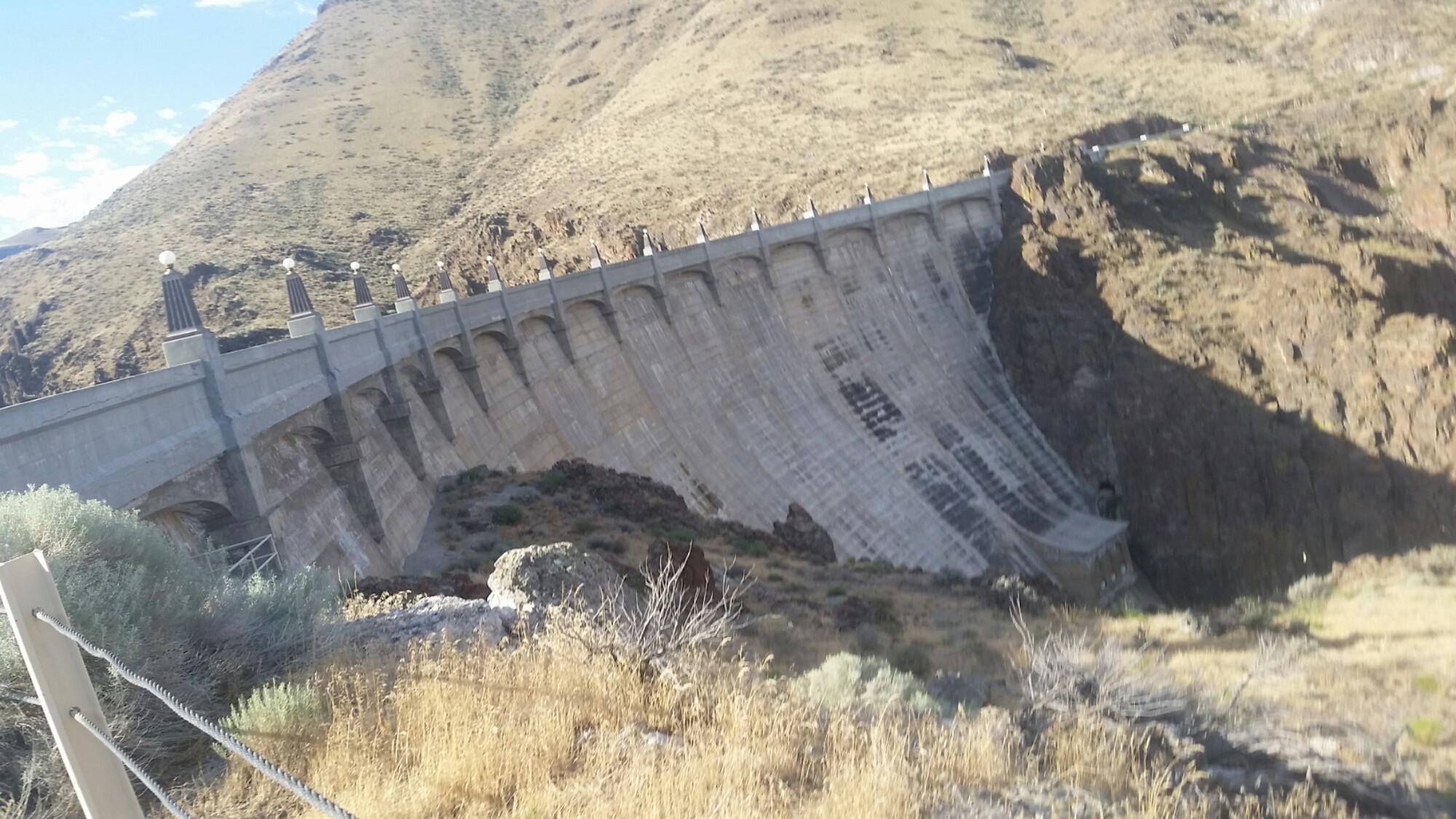
After about 5 miles I hit the dam, I guess the Lake Owyhee dam was a test run for the Hoover Dam back in the day.

At the base of the dam were a few houses and some more camping. I could see a few fishermen in the river. I will get a ride today!

I sat down by the entrance to the community at the base of the dam and made myself a new hitching sign. The one I made last night said “help to Ontario” and I made another that said “help to town”. I didn’t want to limit myself.

After about an hour a few cars had passed, but when a truck with a top camper passed, it slowed down and backed up. Oh please…

Mark & Karna Berg hopped out and made room for me in the truck. The couple was from Albany, Oregon and was taking their first vacation in years. It was so nice to be in the truck knowing I had my ride. After a while they mentioned their plan was to head to Paulina Lake just outside Bend, and they would be happy to take me all the way back to town. What!?!?! Yes please. The Bergs saved me a whole day of trying to get home. What incredible generosity.
In Vale we stopped for lunch where I treated us all to some big burgers, then I sat back to relax on the 4 hour drive back home.

Done and done!

Oregon Desert Trail (2nd Section – Water Alternate): Day 12 – 22.5 miles & done!!! (175.3 total)

That’s 141.5 river miles, 33.8 hiking miles.

Today was brutal.

I woke up before the sun and made quick order of the morning. I may not know how many miles it was to the end point of the reservoir at Indian Springs Campground, but I was going to make it there. Determination had me in my boat by 6am. I took my coffee to go and had it perched between my feet so every so often I would take a 5 second break to re-up my caffeine levels.

The water was utterly still in the morning, and I made good time, paddling steadily north, only taking a few seconds to drink coffee and stretch my hands which were going to be stuck in a claw grip by the end of the day.

20160725_061921

The wind remained at bay most of the morning and I motored along, marveling at my surroundings as I steadily paddled. About 11am I passed a big group of houses…only water access here and I started to see more motor boats coming and going. I think I was still about 12+ miles out, and would TOTALLY live here if I had a chance. How cool! I had paddled past a house where someone had waved at me, and a short while later the man and his dog show up near by and slowed down to talk.

20160725_104604

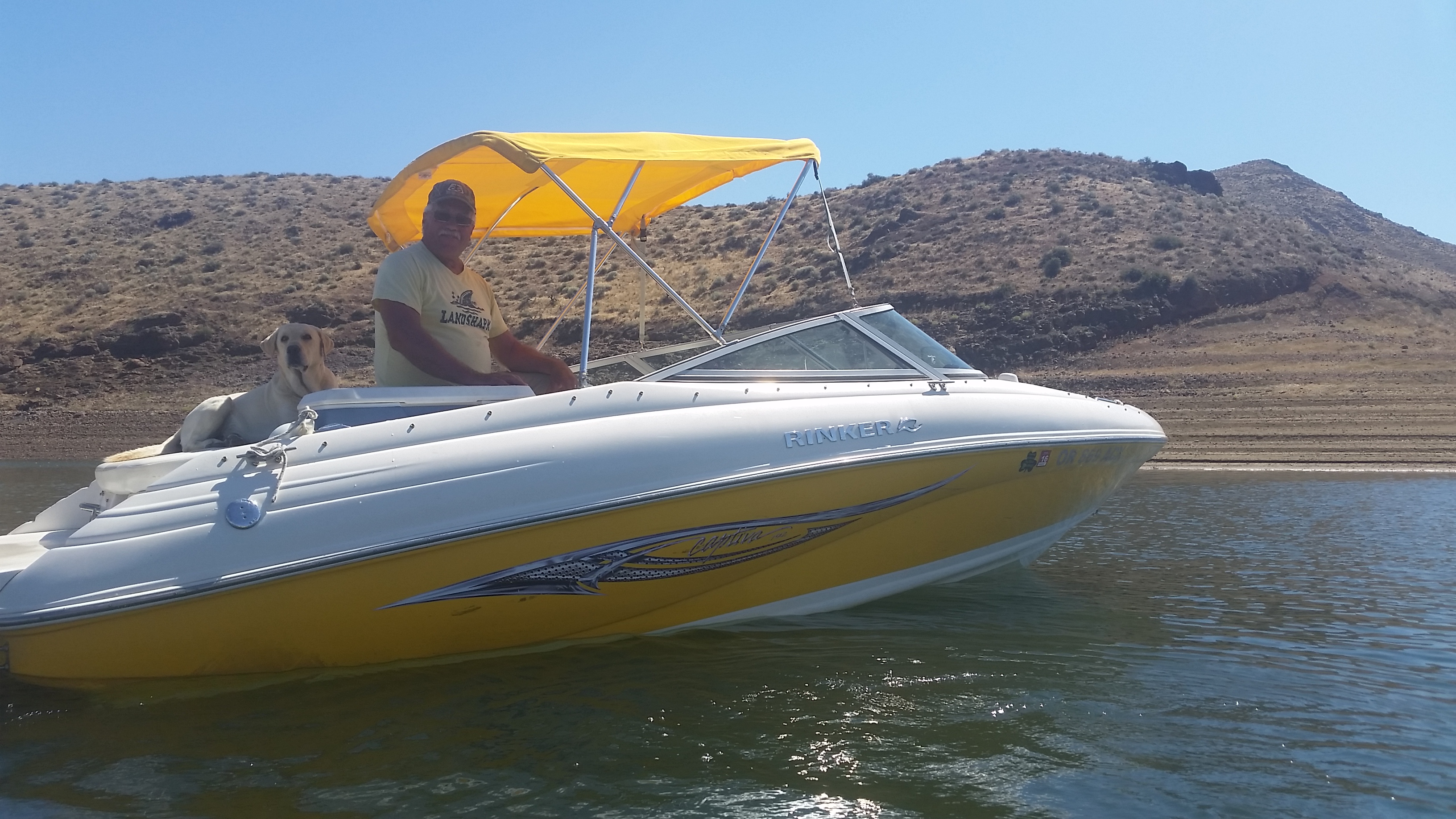
Dave and his dog Clue had spent a few days at their cabin and were heading home that afternoon. He gave me some cold water, and we shared a beer there in the middle of the lake. Dave told me they didn’t know why all the fish had died this year and the water didn’t recede any faster than it normally does. He also mentioned a large algae bloom was the blame for all the green slime in the water, again, folks weren’t quite sure why that had happened either. Change is a foot in nature! Dave offered to give me a ride to the end, but I wanted to get there under my own steam, so thanked him and was on my way again. It was the longest break I had taken all day, and was grateful to give my arms a rest for a minute.

As soon as I turned the next corner the wind hit me full force. What I didn’t realize was that I would be paddling into the wind for the next 5 hours. Ouch. I gave the paddle another hour before I pulled over and tried to eat something and lay on the rocks in complete exhaustion. But I couldn’t stop. Had to keep motoring, and now that I was going against the wind I had to paddle harder and longer to go the same distance. THIS is why I was hesitant to paddle in the reservoir. But here I was and any pause to my paddling rhythm had me getting blown backwards. Curses!

I went into machine phase. For the next solid 5 hours I paddled. I paddled and tried not to think about the pain stretching through my shoulders, the fact that my wrists and elbows were straining under the repetition. With each stroke I would try and stretch my fingers a bit to give them a break, but I couldn’t stop. I had to keep going.

I’m not sure where my mind went during those hours. For a short while I sang whatever songs I could remember the words to really loudly into the wind. That helped. Then I tried to listen to some music on  my phone, and then just didn’t think at all. I was the paddle. I was the wind. I just was.

I continually checked Gaia to see what the most efficient route would be. Without it I surely would have taken a detour into one of the many arms of the lake, it was hard to tell what the route should be, so THANK YOU gps app. I made a pretty straight shot.

Screenshot_2016-07-29-07-58-02

When I finally knew I was getting close it was hard to keep up the rhythmic motion, I so badly wanted to stop. Finally, finally I saw the rocky jetty just behind Indian Springs Campground that was the official ending point of the Oregon Desert Trail. I thought about getting out and climbing up on the rock as I floated by, but then just figured I was close enough!

The end!

I reached the boat ramp at 4:45pm and even though I wanted to collapse on dry ground, if I had any chance of hitching out of the lake I would need to keep moving. My exit plan was simple. Catch a ride to Vale or Ontairo Oregon where there was a bus that left each morning at 9am for the trip to Bend. If I could get a ride to town tonight, I could be on the bus tomorrow and home. If I had to wait until the morning to get a ride, I would have to wait another whole day for the bus. Granted that wouldn’t be all bad…an air conditioned hotel room, probably some delivery pizza…not too bad at all! But I was eager to be home and have a few days to relax in my own space.

I deflated my boat, packed up everything and started sweating up the hill about a mile where I found the first shady spot along the road, and sat down to see if anyone from either of the 2 close by campgrounds would be leaving. 2 hours later at 7pm I new the gig was up, and that I should make my way to one of the campgrounds for the night. I had finally been able to relax in the shade of that tree by the side of the road. In fact I was horizontal in the dirt, not caring a bit I was so tired. I made some cold-soak Backpackers Pantry pasta and played solitare on my phone, just content to not be moving.

But I wouldn’t get a hitch tonight. I walked back to McCormack campground, got a spot, took a shower wearing all my clothes, and dripped dry in the hot evening night. I was surrounded by RVs and looked quite silly as I spread out my Tyvek and cowboy camped. No car, no RV, no tent. Just me and the dirt.

Oregon Desert Trail (2nd Section – Water Alternate): Day 11 – 11 miles – 2 mile hike, 9 river miles  (152.8 total)

I slept well despite being visited by some animal in the night. I think it might have been a raccoon after all the dead fish.

After my coffee I loaded my boat and started paddling the last few miles to the take out. I soon came upon Willow Creek where the trail meets the reservoir. I saw where hikers will skirt the edge of the water, and after Spring Creek will need to climb up about 100′ to avoid some pretty steep terrain along the water. Spring Creek even had a little trickle in it.

Gittin it done!

Gittin it done!

I got to the boat ramp just as the only car in sight was leaving. I took the next hour to transition to my hiking gear and fill up my 5 liters of water. Just as I was leaving a pickup comes in and pulls over. Ross and his friend were out for a drive, and we chatted for a few minutes about my trip and the incredible history of the area. They gave me a bottle of cold water before they left, thanks guys!

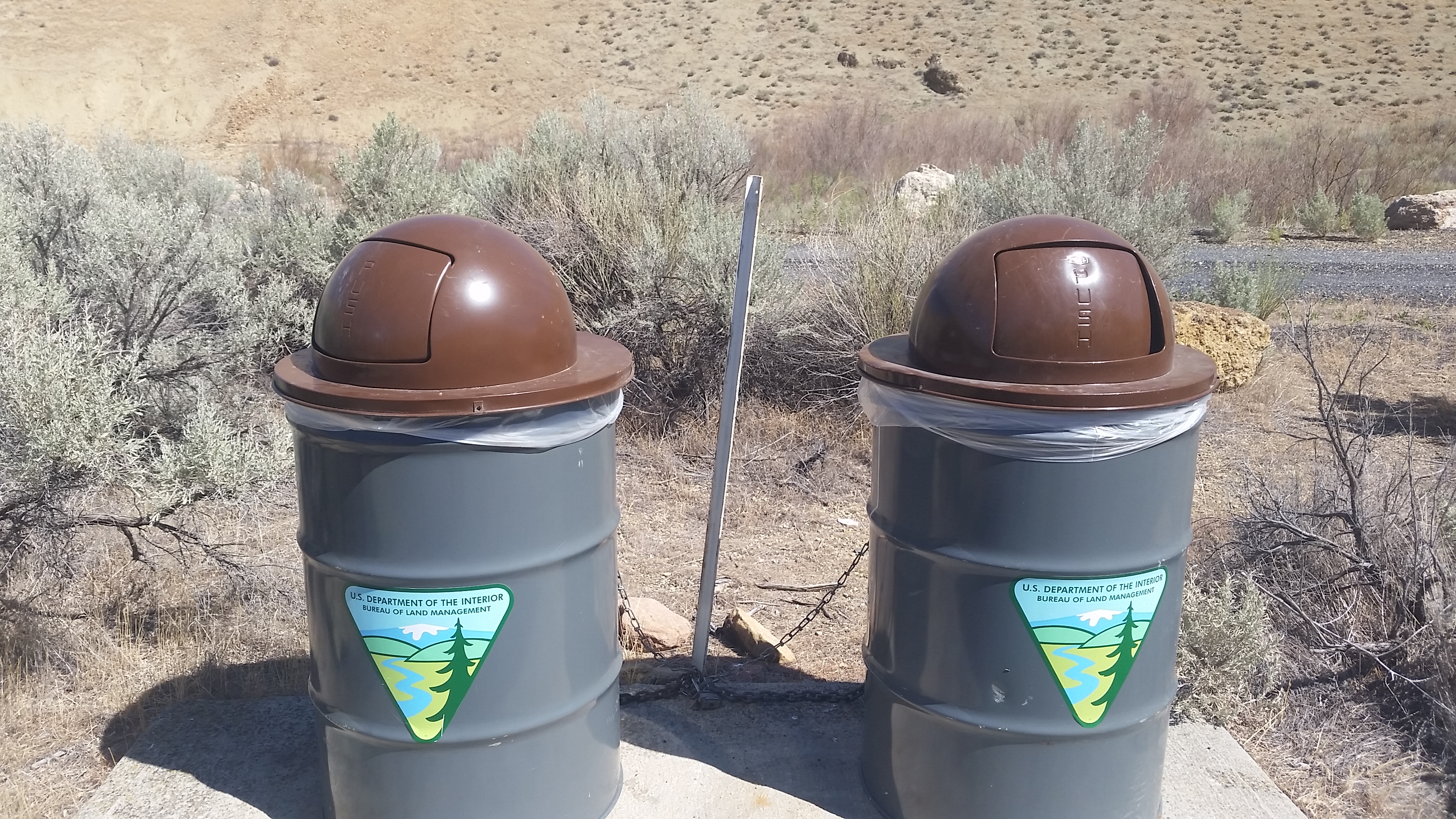
Trash cans at Lesley Gulch! It's the little things...

Trash cans at Lesley Gulch! It’s the little things…

As I walked up the road I immediately began second guessing my plan to hike the remaining 30 miles to the end. It was hot. So hot that I thought I might get myself in trouble. Heat exhaustion, heat stroke…I didn’t like my chances.

I sat down on the side of the road trying to decide what to do. Night hike? Paddle to the end? Get a ride out? Being this close to the end I’m mentally almost checked out. Packing up here would be so easy…but I’m so close. What to do…

After a long break I decided to go back to the water and inflate my boat and paddle to the end point. As I was walking back to the boat launch a truck pulled over and asked if I wanted a ride. “Sure!” I said, relieved to not have to walk that hot mile again. I hopped in the back of their pick up and they drop me off at the sheltered picnic tables where I would repack my boat. The couple was from Portland and were very curious about the Oregon Desert Trail and in fact they had seen the Patagonia article that Jeff Browning had written about running this section. I’m pretty sure they came out here because of that article and they loved the Owyhee region so much that they thought they would bring their kids here next year instead of Zion as they had originally planned. They were true trail angels and left me with a cold Gatorade and can of Guinness for later.

I had been hesitant to paddle in Lake Owyhee because paddling flat water in the packcraft is not very efficient, but I seem to do OK on the slow river this week, and given it was so hot out this seemed like the best decision.

I texted Kirk the change of plans and I paddled for a few hours. When the wind began to pick up I pulled over and made camp. The water levels are about 15 feet below where you can tell they normally are. There are less dead fish but I still had to flip a few away from my camp spot. The water has a filmy green algae floating in it, and since I’ve been swimming frequently now I smell like algae and dead fish too.

The best part of the day was when that hot hot sun set.

The best part of the day was when that hot hot sun set.

I not sure how many miles it is to the end at the Indians Springs campground but I’ve been using the tracking function on my gaia gps app so I should know when I get there. I’m guessing it’s about 20 miles from where I am. Kirk later texting me that it was over 100 degrees out. No wonder if feels so bloody hot. I’m really glad I decided not to hike; it would have been a nightmare. I hope Christof who is trying to run the trail right now is doing okay in the heat. I’ve been thinking about him a lot out here; when I was in Rome he was approximately halfway, but its been much hotter since then. I’m looking forwad to finding out how he’s doing. And getting in some air conditioning.
Update: Christof finished his run of the trail on July 29! 18 days, 750 miles. 

Oregon Desert Trail (2nd Section – Water Alternate): Day 10 – 24 miles (141.8 total)

I pulled over early this morning to look for some pictographs I knew were in the area and found some faint images. I’ve heard people were living in the Owyhee region from 11,000 to 12,000 years ago. Makes our modern age feel like a blip on that scale. I also passed an abandoned ranch. I’m sure life must have been hard out here but I could totally see the appeal.

When I got to Greely Bar I went in search of the hotsprings that are supposed to be there, but they were quite shallow and with the heat of the day already coming on I just didn’t feel like getting in. The rocks were amazing. All the way to Birch Creek they were towering and magistic.


I thought I might see people at the Birch Creek takout, but there was only one group there, and they didn’t act real curious. Most river trips take out here as the Lesley Gulch takeout another 19 miles ahead can be half slack water when the Owyhee reservoir is full. 

I had on and off current until the end, and enjoyed a nice mellow float while listening to some podcasts like All Songs Considered, Reply All, Invisibila and Tim Ferris.
Kirk told me about some more hotsprings about 5 miles from the takeout, and while I didn’t think I would make it that far today,  I found myself there by 5pm. There wasn’t much to find, and the area had been trampled by cows. To top it off there were dead fish everywhere. The water levels were low, and must have fallen fast because rotting fish were beached everywhere. Yuck. I shouldn’t have come so far because now I’m left camping in this mess. I had entered the low reservoir and there is no paddling up stream!

I went around the corner and tried somewhere less offensive to camp. Ugg.

View from camp


Only about 4 miles to Lesley Gulch where I will transition back to hiking for the final 30 miles to the end of the Oregon Desert Trail and my second section of the trail!

Oregon Desert Trail (2nd Section – Water Alternate): Day 9 – 19 miles (117.8 total)

It’s been a full moon this week, and even though I haven’t set up my tarp once, I’ve been using my umbrella/bug condom combo so I’ve been able to sleep. It’s so bright out I would be much more tired without it.

On the river maps I’m using (Jefferson from work let me borrow his copy), there are a few notes about cultural sites, and this morning I took some time to look for the Lambert Inscription, not knowing exactly what it was, but didn’t find anything. JJ marked a bunch of spots that I’ll pass tomorrow, so I’m looking forward to that.

I found some hotsprings near Lambert Rocks, but they were too hot for me. Where one spilled out into the river I was able to soak there for a few minutes with the help of some cooler river water mixed in. Then I floated by the Chalk Basin. Wow!! Stunning views! And it would keep getting better.

I lunched after Whistling Bird rapid, and then started into the Iron Point area. Towering walls of rock squeezed in on both sides of the river. It was hard to take it all in. Amazing. I think the Owyhee is my favorite river I’ve ever floated. Its that good.

After a few more rapids I made camp where the landscape opens up again. There’s also an old road bed river right that I’m going to make an alternate so hikers can get down by the water again.

I’m make much more progress on the river than I thought I would, might finish up this section a little early!

Oregon Desert Trail (2nd Section – Water Alternate): ​Day 8 – 21 Miles – 1 mile hike, 20 river miles (98.8 total)

I forgot to include the 1/2 mile walk from Rome launch to Rome Station, and since I had to walk it back this morning and I don’t want to “skip” a mile I’ve included it today.

I got myself a cup of coffee from the cafe to drink while I was packing up, and set about putting another 7 days of resupply in my pack. I think that’s the heaviest thing I’m carrying out here-all the food. Then I want back to the cafe for breakfast and ordered a much too big plate of biscuits and gravy, eggs and sausage. I definitely don’t have hiker hunger, but sometime I forget!

Once I launched back on the river it was a flat slow 5 miles to get back to the canyon. It was already HOT and it’s supposed to get up to 100 today! Thank goodness for the river.

To pick it up, or not to pick it up…have I been on the river long enough?


It was a relief to be back in the towering rock walls, and was delighted to see numerous springs dumping fresh water into the river. There were so many springs I think it’s made a big difference in the water levels. The CFS at Rome was 135, but the rapids all have enough water to run, the boney pointy rocks are covered up for the most part, and there seems to be more push to the water. 

There’s gotta be more water now

Don’t know? I don’t think there is a river gage below Rome, so who knows. What it made for though were easy and smooth spots to run the numerous Class III rapids, and bigger wave trains in the riffles. I think I’m moving along quicker too. It’s more of a 3 mile an hour river now (with paddling). So much so that I made 20 miles by 5pm. That’s a lot espically since I didn’t get started until 8:30.

I’ve seen and heard a lot of fish suckling on rocks today. I have no idea why.
 I’ll be floating and he a sucking noise, and look over to see a big fish with its mouth on a rock by the shore. They are slurping off something delicious I guess!

Since I had a relatively early camp, I pulled out a book I bought in Rome, In Times Past by Hazel Fretwell-Johnson about the history of the Jordan Creek Area, or the area around Rome. Turns out the settlers here had some of the bloodiest skirmishes of all the west with the Native Americans here. It’s fascinating. I should pass some pictographs and other archeological sites tomorrow…looking forward to it!


I also packed out a can of wine to enjoy tonight. Nothing but the finest on the Owyhee!

Oregon Desert Trail (2nd Section – Water Alternate): Day 7 – 7 miles (77.8 total)

Here’s a view of packing my boat, made all the easier with the dry bags that store gear inside the boat.

When i put on the river i soon realized i was playing hide and seek with some river otters. They would pop up their heads, if they were close to me I could almost hear them say “ahh, she’s close!”and they would dive back under.
Then I passed be where a fire had been last month. Luckily the riparian area right next to the river was still intact.

The landscape soon change and the towering cliffs flattened out. I started to see fences again, and knew I was close to civilization.
Before I was ready, there was the Rome takeout. Rome is a one stop kind of place, but it had everything I needed. I had called ahead to make sure I could send a box there, and knew the grill would be on. Time for a burger!

At the boat ramp I met a nice family from Idaho who was fishing, and when I was packing up my boat, the woman came over and offered me a beer. When in Rome!

I walked over to Rome Station, ordered my burger, and settled into my cabin for an afternoon of bad TV and air conditioning.