Imagine Sutton Mountain

This article originally appeared in the Fall + Winter 2023 Desert Ramblings for Oregon Natural Desert Association


Hiking for a plan to permanently protect this landscape.

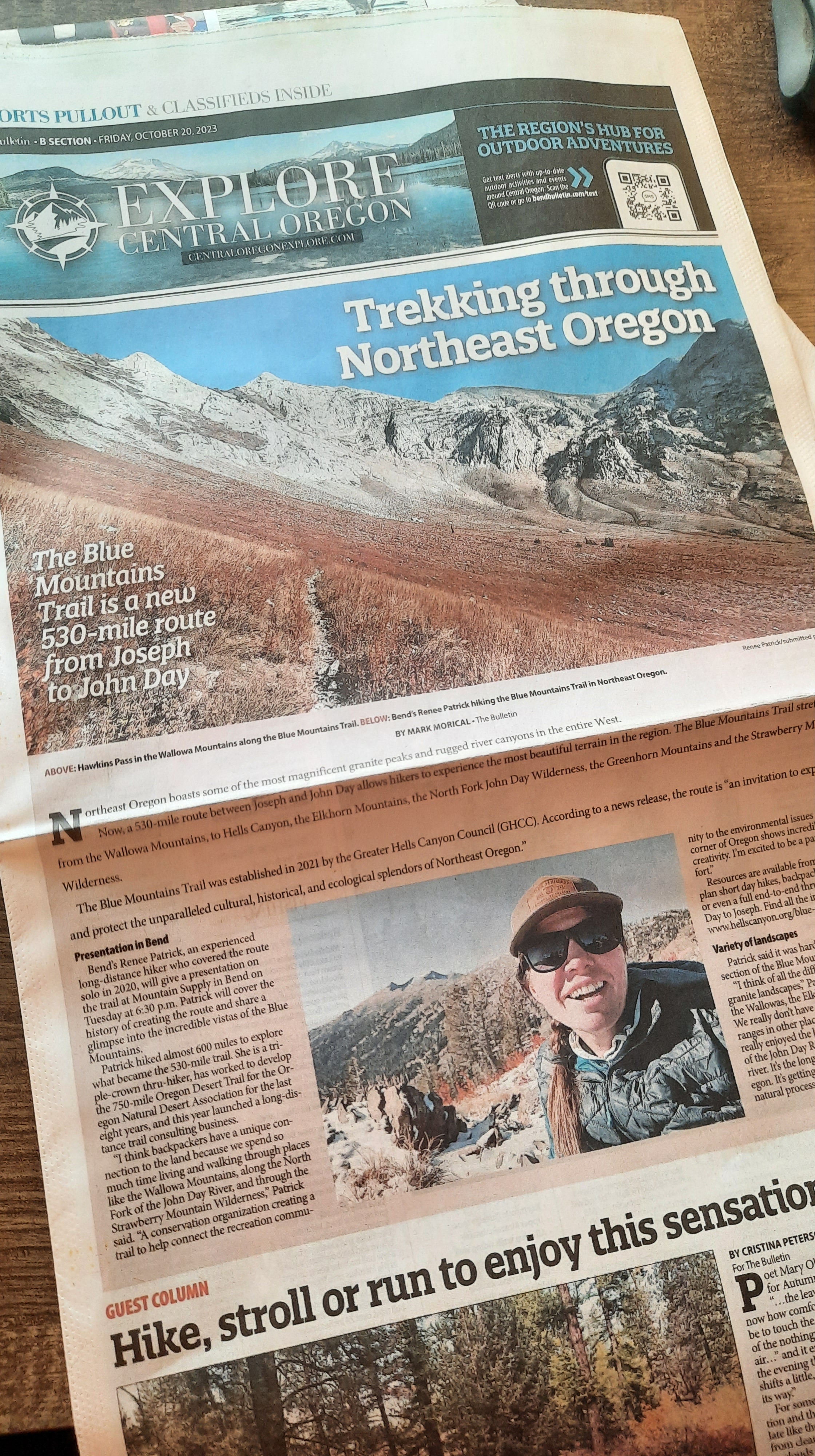
When I pitched my tent on the edge of the lumbering Sutton Mountain, the views were obscured by heavy rain clouds. My dry island of nylon was an escape from the drenching spring rains, and while I lamented missing out on the scenic vista that was buried in layers of hazy moisture, I knew a good soaking rain was something to encourage and even celebrate in this desert landscape. Some bright bloom or newborn babe would grow an extra inch in this wet, and for that I was grateful.

Luckily enough, my optimism for a dry morning and relief from the low-lying clouds was realized, and when I zipped open the tent fly the next day, the world revealed itself. I could see the brilliant Painted Hills, fresh and vibrant as if the rain dialed the hues up a notch, and beyond, in layers of ridgelines, sat the far reaches of the Ochoco Mountains…with a dusting of fresh snow! Even though I was backpacking in early May, winter’s grip lingered.

I celebrated the views, one: because I would be able to hike the edge of this fault block sentinel and enjoy the unique vantage point that the ancient geology and plate tectonics provided, and two: because I would be ending my exploratory nine-day backpacking trip through the John Day River Basin on a high note. Hiking up and over Sutton Mountain was to be the grand finale.
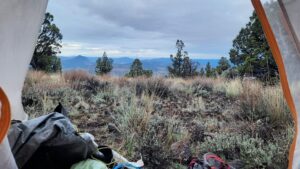
View from tent atop Sutton Mountain. Photo: Renee Patrick

What is it to know the land? To our hiking hearts, it is to walk through it, to sleep between stands of bunchgrass, to drink from elusive desert springs, and climb up to rocky bluffs only previously traversed by bighorn sheep. Folks fortunate enough to spend time in this area become intimate with the plants, animals, geology, and human history unique to the area. We come to understand the importance of the largest intact expanse of federal public lands in the John Day River Basin, and why it needs to be permanently protected, with Sutton Mountain as the pinnacle of these lands.

I prepared for this hike by printing out pages of text to read in the evenings when my legs wouldn’t cooperate after 15 miles of walking up and down the steep (so steep) terrain along the John Day River. I had information on geology, history, public lands, and even a little poetry. I wanted bits of inspiration and intrigue to help me understand the place I was walking through. I wanted information that would help illustrate why the John Day River basin was so important, and places like Sutton Mountain, so unique.
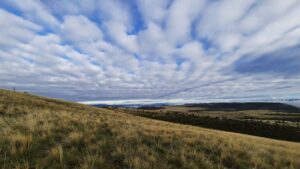
Clouds on Sutton. Photo: Renee Patrick

And what did I learn?

Geologically speaking, I had to imagine myself standing here millions of years ago when this landscape was being buried by ash, lava, and volcanic mud, solidifying and preserving ancient plants and animals.

Ecologically speaking, I learned that Sutton Mountain was the nexus of important migration patterns of elegant creatures like the Rocky Mountain elk, sleek pronghorn antelope, and the nimble mule deer. Above, equally intricate patterns emerge from winged fauna drafting in the air currents; golden eagles and ferruginous hawks soar, while sage sparrows and red-naped sapsuckers flit in the wooded brush below.

Culturally speaking, I was walking through the original homelands of the Warm Springs Tribes and the Northern Paiute peoples, homelands that probably appeared much as they did thousands of years ago, for this area, in particular Sutton Mountain, hasn’t been disrupted by extractive industries, expansive development, or intrusive management. Sutton Mountain is as it has been, and that is why permanent protection for this area is so important: so it stays that way.
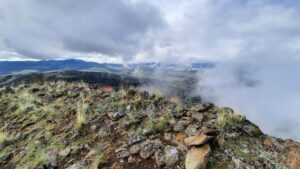
Hikers walking the length of the dramatic Sutton Mountain fault line will sometimes keep company with the clouds, other times with expansive views. Photo: Renee Patrick

Each year, hundreds of thousands of visitors travel to the Painted Hills National Monument just across the road from Sutton Mountain. In fact, the iconic painted hills don’t end at the monument’s boundary. If we step back into the imagination machine when I watched layers of ash and basalt build into the hulking ridgeline of Sutton Mountain, those compounding layers would also resemble the colorful neighbor across the street, as the lower reaches of the mountain continue to reveal.
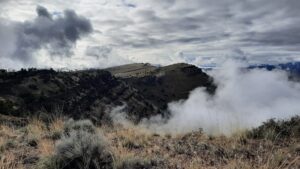
Clouds on Sutton Mountain. Photo: Renee Patrick

If visitors turned around to consider Sutton Mountain as their next destination, they would find more than just a stunning backdrop, they would find secluded valleys, rolling grassy hills, and outcrops of impressive volcanic rock…all the things I love to explore on a hiking trip into this special area. But without more consideration and planning, it is easy to imagine the destruction that unmanaged recreation or development could bring and already has to nearby desert destinations. That is why a thoughtful and inclusive plan to permanently protect Sutton Mountain will be so important. It is through improved conservation management that we can sustain the values that make a hike here today, and in 100 years, so compelling.

I think the wonderful thing about visiting Sutton Mountain is that much is left to the imagination. This is a place prime for following your curiosity as very few established trails will tell you where to go. Instead, you can ramble at will, and if you keep the values of ecological diversity, intact habitats, and respect for cultural, historic, and local communities in mind, recreating with respect and intention can be in harmony with this place and its future.

I invite you to climb up to the rolling grasslands of Sutton Mountain’s flank, walk the edge of the dramatic fault, and when you arrive at the 4,700-foot summit, picture what this place will look like in a few hundred years. You won’t have to imagine it, it will look like this.
Oofta! What a week

I don’t know how I made it through.

Do you have weeks like that? Things are at such a level of overwhelm that the only pace you can take is at break-neck speed?

I know I do it to myself, but last week factors outside of my control helped create the perfect confluence of angst.

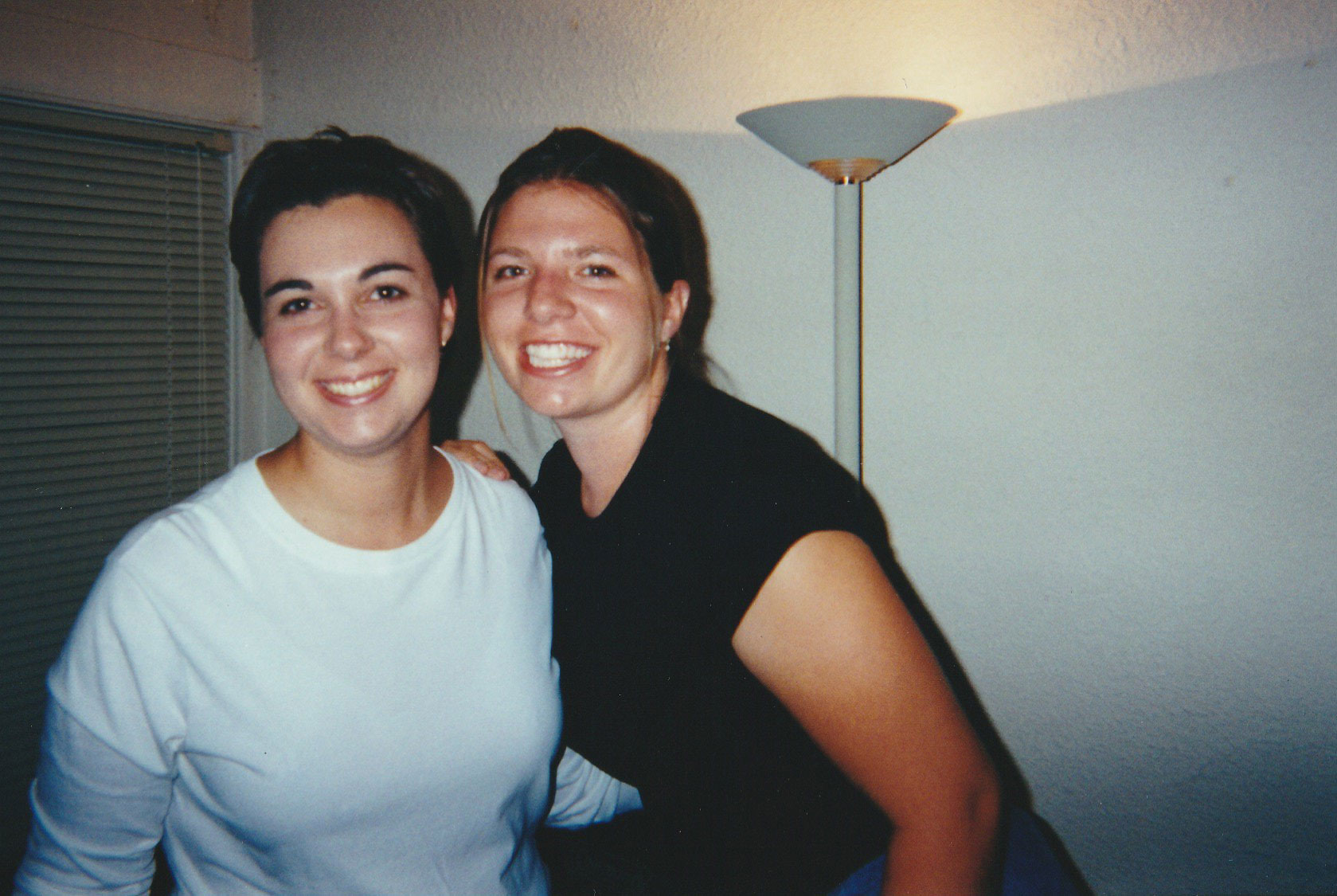
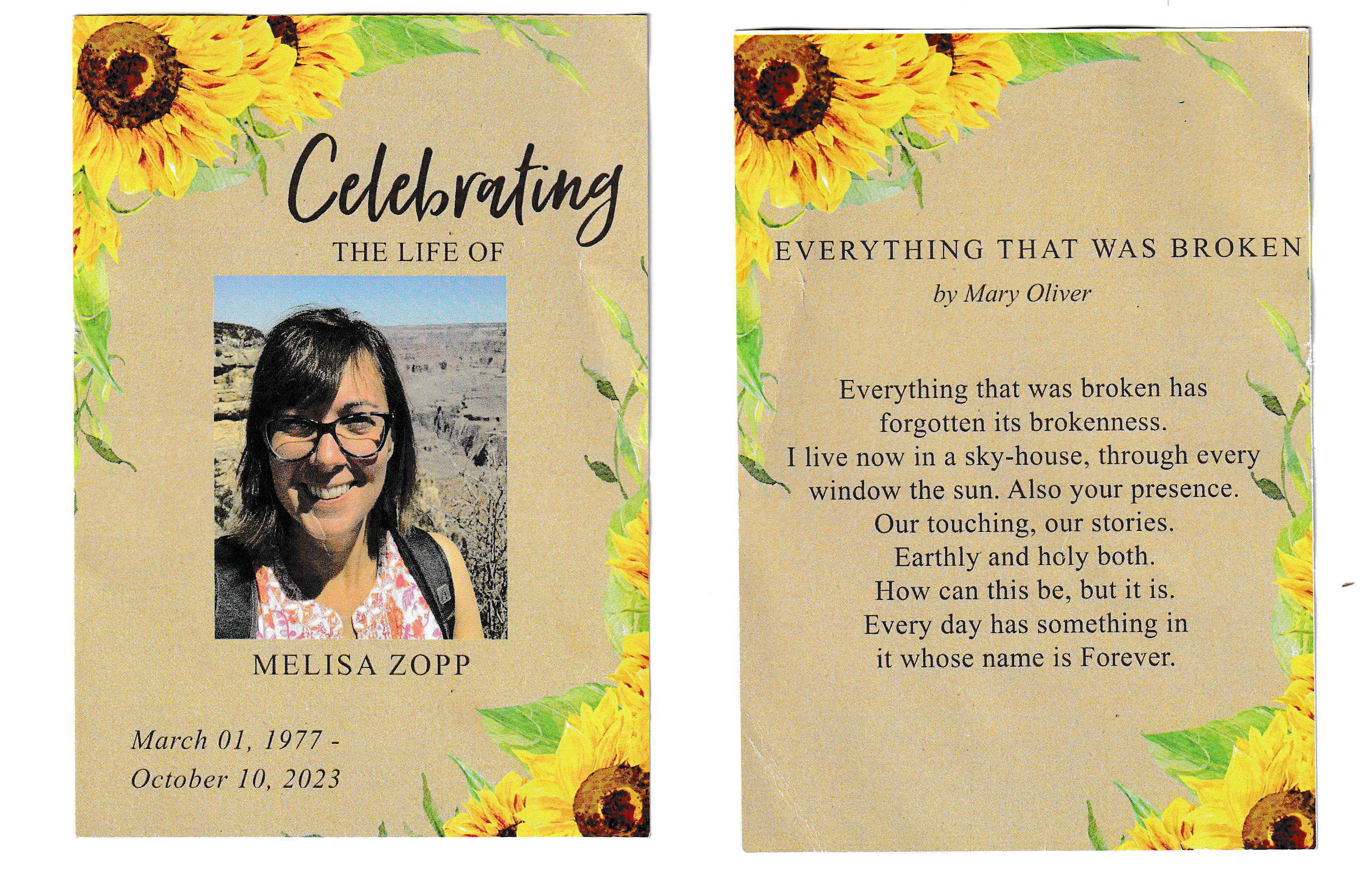
To start with, I lost my best friend from high school and college: the lovely Missy (Borino, Benard, Zopp) from cancer.

There are no words to describe what an amazing human being she was. Her celebration of life was last weekend in Milwaukee, and I just had to go and see her family and our other friends.

I was so grateful to spend the weekend around friends and her loved ones, and I just had to trust that the rest of the week would happen smoothly. You see, I had scheduled the launch event for my new Intentional Hiking business for Monday evening, and my flight back from Wisconsin was due to arrive back in Central Oregon a few hours before that event. Any delays or missed connections would be unimaginable, so I just didn’t imagine it.

And I arrived back in time…but technical issues presented a nailbiter of a few hours until go time (warning…this is going to get a bit meta…I know some of you attended the launch, or plan to attend future events, so talking about putting them on might be more of a peak behind the curtain than some of you want…)

I couldn’t get the sound to work, but then I did.

I couldn’t get music to play upon intro, so decided not to worry about it.

I hadn’t had time to practice my transitions and the flow of the event because I was in Wisconsin, so did my best to emanate a sense of confidence and ease.

I had some problems with registrations and some folks that REALLY REALLY wanted to be there didn’t get my invites (so sorry NEMO!!!), but I am reinforcing my systems for next time around and am even looking at changing event platforms.

I had lower attendance than I would have liked (I know, I know, I’m just starting…it will take time to grow my audience), but kept on as if there were 200 people on the Zoom.

I had a coughing fit during the event, (embarrassing…and on video), but I kept going like everything was fine.

And it was fine. It turned out great in fact! The folks that attended were wonderful and engaged, and I came away incredibly excited and even more energized for the next events.

Do you want to watch the launch?

So that was just Monday.

Tuesday my Wilderness First Responder recertification course started. Every two years I need to take a 3-day training on responding to medical issues while in backcountry situations. If you don’t keep your training up to date, the consequence is an 80-hour training course for those who lapse. I had to do that a few years ago, and vowed to not let that happen again. It’s an intense program, with real consequences. In fact, I had to decide to evacuate someone for a medical issue from a trip I led this summer! To work with people in the backcountry is to take on a level of responsibility to care for them when things aren’t going according to plan.

So I had class from 8-5 last week, and I had also managed to schedule my first Blue Mountains Trail presentation for Tuesday night. Had I been able to prepare for the talk? Not as much as I would have liked…again. Did I get there in time to help set up? Yes! Did I have help from my wonderful friend Marina? Yes! Did the event go smoothly? Better than I could have hoped.

It was a packed house with about 120 people present!

I was elated that so many folks wanted to learn more about the Blue Mountains Trail and my hike, but why did I have to schedule it the day after my business launch and the first day of an intensive medical training course? Ask Renee from four months ago…

Somehow it all worked, I attended training the next day and practically danced around the block when another event I had committed to on Wednesday after class was rescheduled.

Note to self: try not to overbook yourself like this again.

So, I’m on the other end of that week, and looking at a mellower week ahead: I only have the Oregon Outdoor Recreation Summit to attend, several meetings to host/facilitate/introduce, and a presentation to give, so it’s much more manageable. 🤨

But in good (or not good news) my cold weather backpacking class with Central Oregon Community College was canceled – not enough registrations – so I have a bit more of leeway in my schedule next week

Upcoming Events

I went out to the Oregon Desert Trail in the Fremont-Winema National Forest to try and catch the annular eclipse this past weekend. The clouds had other plans for our viewing party.

I am preparing for a busy fall season with a number of upcoming events some of you may be interested in:

  • Oregon Outdoor Recreation Summit – North Bend, Oregon – Big Ideas in Outdoor Recreation – Applying UX Design Principals to Trails – November 2, 10:34am (PDT)

Other events:

Even with no ring of fire to be seen, we still had a great time.

Intentional Hiking Launch Event October 23

Please join me and American Trails on October 23 for the first of many Intentional Hiking events.


Topic: How Can We Improve the Hiking Experience?

Join host Renee “She-ra” Patrick to discuss improving the hiking experience in the first of this twice-a-month event series.

  • Learn how Intentional Hiking events will work.
  • Hear about how the event’s non-profit partner, American Trails, is making a difference in this important work.
  • Have a chance to win giveaways from Triple Crown Coffee
  • Have a conversation with other intentional hikers about the topic 

Non-profit Partner:  Help raise money for American Trails by leaving a donation when you register.

My Lever for Change

Where does drive come from? Why do we have the motivations we do?

Ever since I can remember I have wanted to spend my time adding to the net positive impact on people and the world around me. That desire can border on hubris…that I actually have the power to change anything…but my default alternative usually trends towards despair. Not appealing. So I choose to believe that individual actions can make a difference, and we can influence the world around us. (I love adrienne maree brown’s description of the fractal nature of influence and change…check out her book Emergent Strategy: Shaping Change, Changing Worlds.)

Hiking has put us on the front lines to witness the compounding effects of climate change, encroaching development, loss of biodiversity, water and public lands issues and more. Sure, we can put our heads down and walk through wildfire smoke and droughts concerned with our personal experience and the miles we want to make that day, but anymore I get the sense we are Nero fiddling while Rome burns. Yes, now is probably as good as it will ever be as we stare down the future of untold impacts to our world and the ability of the human race to adapt and exist in a rapidly changing ecosystem, so let’s go hike and enjoy what we have. Yes. We have to find the beauty and bliss in the natural world, but can we use that beauty and bliss as motivators to make some kind of difference? Even the littlest bit?

“Action is the antidote to despair.” ~ Joan Baez

I will be the first to admit that some days despair wins out over action, but on the days where I see promise, watch out!

Today is that day. Tomorrow is that day.

My lever for change in the world is tied to action, and now my action is to start a new project that seeks to inspire and challenge hikers to think harder socially and environmentally about what mark they leave on the trail, and the world.

Learn – Hike – Act

Introducing Intentional Hiking: a conversation.

Intentional Hiking: a conversation is an online discussion series focused on our relationship with the environment, our trails, and each other.

This event will happen twice a month, and cover topics around how we as hikers can be more intentional about how we spend our time on trails. Themes for these conversations will be broken down into five categories:

  • Be = philosophical oriented topics (purpose, awe, connection, etc.)
  • Do = action oriented topics (data collection, monitoring, etc.)
  • Create = creative oriented topics (poetry, painting, photography, etc.)
  • Learn = educational oriented topics (history, culture, geology, etc.)
  • Regional = regional oriented topics (trail town spotlight, regional environmental issues, etc.)

Each event will host a guest speaker on one of the above themes, then, it will be time for the conversation. During the second half attendees will be sorted into small groups of three to discuss the event topic. Conversation prompts will be provided, and participants will be encouraged to focus the discussion on tangible actions they can take following the event. These opportunities to connect with fellow hikers will be centered with respect, curiosity, and kindness.

The events will end with an opportunity for attendees to share their takeaways and one action they will commit to take as a result. Accountability will be encouraged through sharing the results of their actions.


You may be wondering: How did I get here and what happened to my consulting business? It’s all related (as everything tends to be!)

As part of my new business launch this year, you may remember that I developed a hiker survey to help me understand the needs and opportunities out there in the long-distance hiking community. I received many great ideas and connected with a wide range of people who want to be a part of the change to make the long-distance trail experience more accessible, educational, and want to take action on behalf of the landscapes that make hiking possible. It became clear we as a hiking community could be talking about this more and sharing these ideas with each other.

So I saw the opportunity to work within the hiking community to help encourage intention, respect, and action while also working with trail organizations to create materials, resources, and develop the information that hikers need to be successful (and inspire action on behalf of the environment, of course)!

I’m coming at the issue from multiple angles now. That’s how much of an opportunity I see in the work, and the potential for us all to take collective action in a way that speaks to us…and action starts with intention.

What we decide to focus on not only informs our view of the world, but will also guide our path through it.” ~ unknown (someone wise obviously!)

My lever for change is helping others to see that change isn’t hopeless, in fact, sure, one action alone can feel hopeless, but hundreds of actions taken together can make a difference.

It all starts with intention.

AND, you don’t have to be a long-distance hiker to find value in these conversations. Most of the topics covered in the events can apply to walks on your neighborhood path or your favorite day-hike near you. 

Please come be part of the conversation! More info coming soon about the fall event series and launch.

Oregon Coast Trail: another day

Lets try another one of those tide/river crossing math problems for the Oregon Coast Trail.

Say I want to hike north from the campground to the next town of Bandon = 16 miles. The New River needs to be crossed at low tide = either 6:47am or 7:24pm. The New River is 11.3 miles from where I am camping. Oh yeah, this is the hardest section of the Oregon Coast Trail (says the guidebook) because of the deep soft sand I will be hiking through. Some say my progress will be 1.5 miles an hour, I’m betting I can walk 2 miles an hour.

What time do I have to leave camp if I want to cross the New River at low tide?

If I want to cross in the morning, I would need to leave camp just after midnight, and hike all of the miles to the river in the dark (sunrise is around 7am here). I don’t want to do that. If I’m going to hike the coast, I want to see it!

If I want to cross in the evening, I would need to leave camp after noon, cross the river at 7:24, and have 5 more miles to hike into Bandon. Sunset is at 7:04pm, so that would mean the river crossing and my last miles into town will be dark, and I would get in around 10ish. That is more doable, especially if I were staying at a hotel in Bandon, but I’m not, and don’t want to make Kirk drive up that late.

So, what I’ll do is an out and back. Hike north when I feel like it, and turn around when I feel like it. (Day hiking seems like quite the luxury some times!)

The last few days have been full of unhurried bliss.

We walked the beach at Bandon
And paddle boarded on the canal to the New River

This is especially sweet because I’ve booked a very busy next few months which includes a new business launch, three Blue Mountains Trail presentations (in Bend, Boise & La Grande), two ONDA stewardship trips, a wilderness first responder recert, teaching a Central Oregon Community College class, presenting at the Oregon Outdoor Recreation Conference and spearheading a Signature Trails calendar fundraiser as the incoming board chair for the Oregon Trails Coalition, visiting my folks in Louisiana, heading out on our annual Thanksgiving river trip, trying to catch the October eclipse in remote SE Oregon, and plenty more I’m sure! I only seem to have 2 modes: full steam ahead at 110%, or extreme sloth at 10%. I guess that’s my balance? But I can see that the inflection point for that balance is migrating. I seem to need more down time between the busy times…I guess that is the aging process?

Ok, beach time.

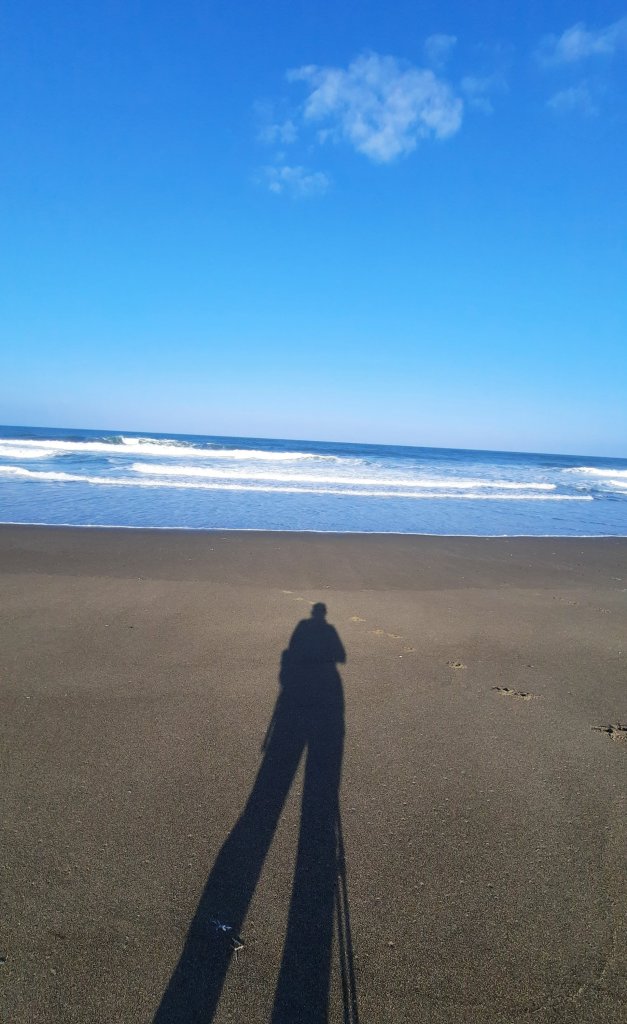
I walk.

I plod slowly up the beach.

Moving next to the constant ocean is to be in a timeless feedback loop.

Everyone always has walked this. This is what we do.

I don’t have the same motivation on an out and back trip that I do on a linear trail. I could turn around at any point. There is no real goal. I will be where I need to go even if I don’t leave. Eh. Then why go? I like progress. The kind of progress where the quickest way out is through.
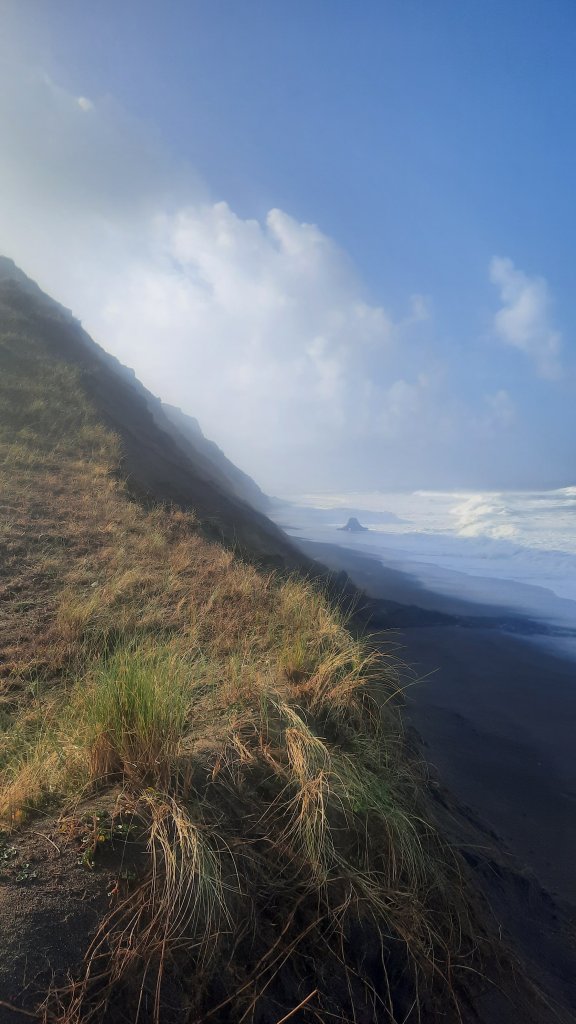
I find what looks like an extra outlet for the New River far before where it should be, but thats what happens on the ocean: rivers migrate, water finds a way to make new inlets and outlets. The tide is rising and I can see that water passes between river and ocean here, and I don’t want to be on the wrong side of the tide… especially since the next low tide isn’t until tonight. So, I only walk another half hour north before turning around.

After I make it back to the south side of the river breech I find a windblock of a sand dune and spread out my tvek for a break.

Then I walk back and watch the colorful sails race up and down the lake.

Look close….there are about 20 folks out there

When a week is so slow and meditative that you are ready to get back to the frey, than its time to go. We’ll be wheels up in the morning (or later if there is wind for one last foil session).

Mission accomplished. I’m sufficiently rested and ready to taken on the world.

Oregon Coast Trail: A day – 16ish miles

Nothing like a little adversity to put some pep in your step.

Low tide was at 4:45am. The Sixes river crossing was 5ish miles from our campground. The Elk River was another handful of miles past that. Both should be crossed at low to mid tides. High tide is at 11:15am. What time should I start?

😬

Add in storm surges and rain.

😬😬

I decided on a 4:30am start, 3:50am wake up to make coffee and pack my day bag.

Out by headlamp. I should get to the first river crossing just at first light. No problem, right? Just hike hard and don’t stop.

Fortunately, Kirk and I hiked a few miles of this section of the Oregon Coast Trail a few days ago when it was merely pouring, not dark and pouring. It was a lovely little coastal tree tunnel of a hike then. Now it is a dank dripping dark tunnel of odd shapes playing in the shadows of my headlamp. Let’s do this!

Kirk and I are based out of Flores Lake for the last week of September for some much-needed R&R. Kirk has fallen down the foil boarding rabbit hole for a while now, and we were camping next to one of the best places to foil board in Oregon. (The link is not a photo of Kirk…maybe one day he’ll get some air!) Flores Lake is an inland lake that sits a mere sand dune away from the ocean, and all that wind is perfect for wings, kites, and sails.

He saw water. I saw trail.

We were also camping on the Oregon Coast Trail, well, everywhere on the coast is the Oregon Coast Trail. I had done small sections here and there, but nothing very deliberate. This would be the same: more opportunistic than intentional. I perused my copy of Bonnie Henderson’s Hiking the Oregon Coast Trail. Bonnie’s book is a wonderful resource and has most of the information you could want…aside from real-time conditions, which turns out is very important! I can imagine hiking the whole trail is a daily race against the tides…but then again there is something wonderfully humbling about walking next to the ocean. Your agenda becomes very small next to the expanse. You are on ocean time out here, and that is something you can’t forget.

But back to the hike.

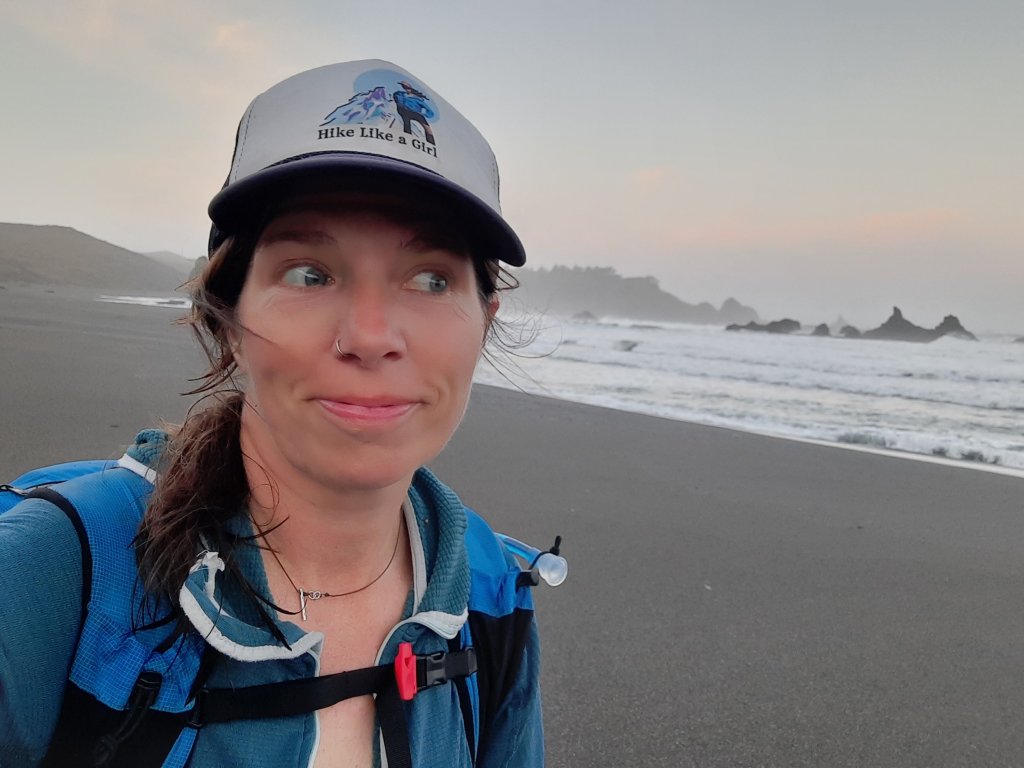
The sky dried up shortly after I left the warm camper, and brought a brillant blue to keep me company.

I kept a brisk pace and made it through the river fords in time. Both crossings were almost fanny pack deep. Almost, but not quite.

I thought I could relax then…I had been hiking hard for about five hours and was ready for a sit-down. I found a bluff perched over the incoming tide and puzzled over the next section. The guidebook didn’t say anything about high tide and the beach disappearing on the last stretch to Port Orford, but there I was, looking down at a beach with just feet of sand showing and the tide continuing to rise. No mam! I would NOT be walking that spit of beach. It must be the storm surges, surging up on the beach I was supposed to walk. I could wait hours for it to come back down again, or find a way around.

That’s a hard no for me.

After quite the deliberation and some fancy map work, I managed to get myself to Highway 101 and continued my hike south from there. It wasn’t as picturesque as the beach would have been, but it was safer, and on a thru-hike, it’s about connecting footsteps, right?

But I wasn’t on a thru-hike. I was on a day hike. 😔

Nevertheless, I did what all good thru-hikers do when they get to town: look for food. I came up to Crazy Norwegian’s Fish and Chips shop and ordered a snack while I waited for Kirk to come meet me for lunch.

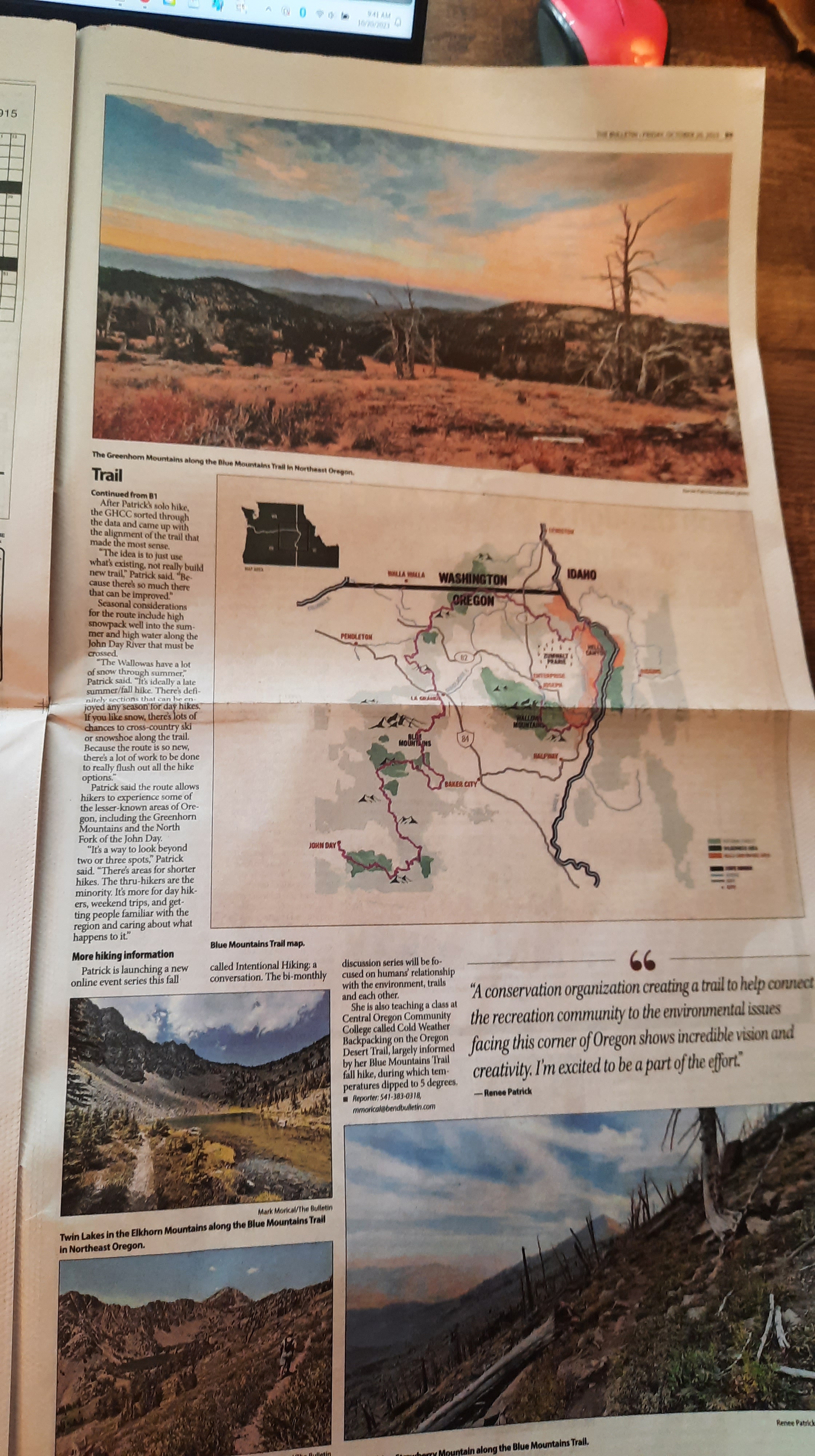
The higher-than-usual tides and river crossings certainly make the Oregon Coast Trail something to respect and plan for. When I come back I’ll bring a packraft….those river crossings would be a cinch most of the time with one of the tiny inflatable boats like I used on the Columbia Plateau Route this spring.

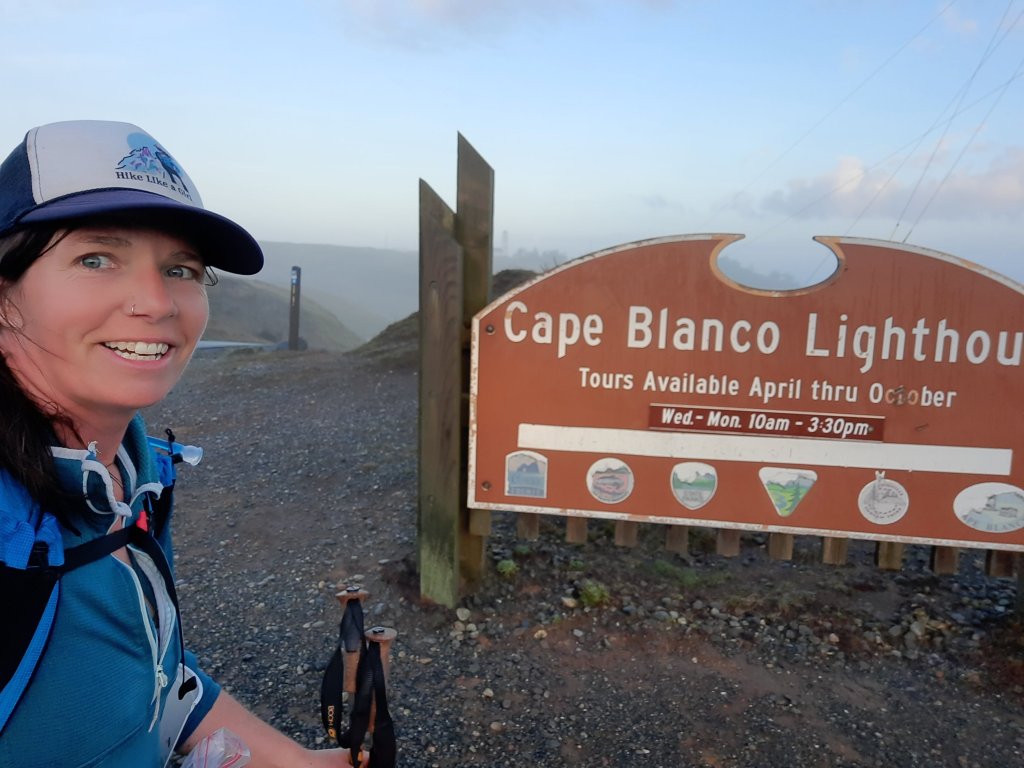
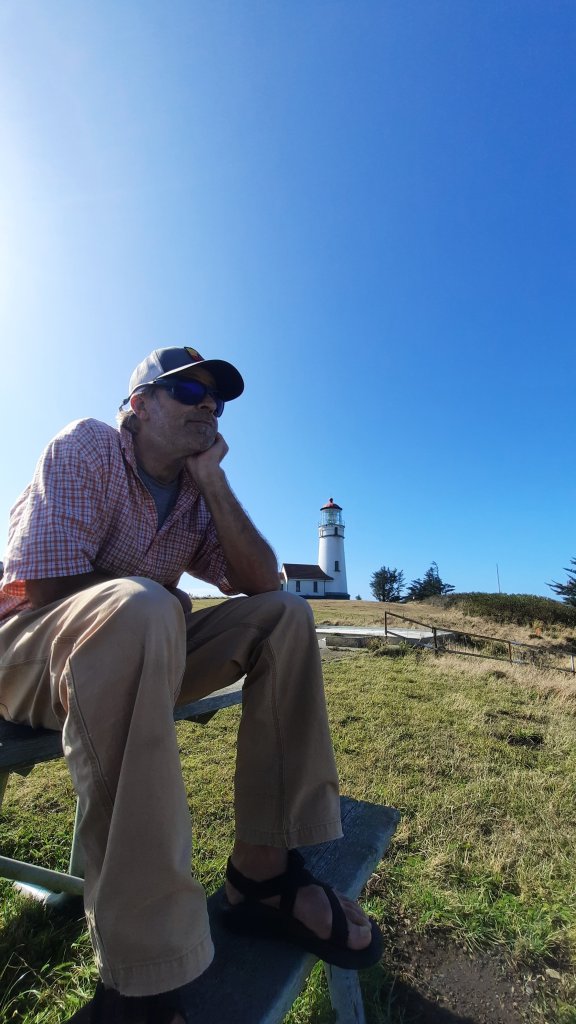
The rest of the afternoon we did the tourist thing, walked the beach (!!) And visited the Cape Blanco light house which I had crusied by hours ago.

I’m not sure when I’ll be back to hike more (or all), but you can be sure it is on my list, that ever-growing list of trails and routes. I’ll be back, oh yes! I’ll be back.

If you have read this far, thanks! If you want a sneak peak at what I’m up to next, click here. More info coming soon 🙂